NIO(09866)

Search documents
【快讯】每日快讯(2025年11月11日)
乘联分会· 2025-11-11 08:47
Domestic News - The new energy vehicle credit ratio requirements for 2026 and 2027 are set at 48% and 58% respectively, with specific relaxations for small manufacturers based on fuel consumption reductions [3] - Starting from November 10, 2025, Shanxi province will implement a public lottery system for applying for vehicle scrapping and renewal subsidies, requiring consumers to obtain qualification through a notarized lottery [4] - From January to September 2025, Hunan province's exports of high-end equipment, including rail transit equipment, increased by 31% year-on-year, with electric vehicles and lithium batteries seeing a 77.4% increase [5] - GAC Group has signed a capital increase agreement with Honda, raising the registered capital of GAC Honda from $541 million to $867.22 million [6] - NIO's Firefly model will connect to NIO's fifth-generation battery swap stations, with plans for a larger battery pack that offers a 50% increase in capacity [8] - FAW Audi has signed a strategic cooperation memorandum with Zhejiang Deao Automotive Group, focusing on dealer channel development and new media collaboration [9] - The iCAR V23, a pure electric SUV, was unveiled in Malaysia with a starting price of 145,000 to 155,000 Malaysian Ringgit (approximately 248,300 to 262,600 RMB) [10] - Baidu's autonomous driving service, "萝卜快跑," has launched its first large-scale fully autonomous operation in Abu Dhabi, following a strategic partnership with AutoGo [11] International News - Japan's new car sales in October 2025 decreased by 1.8% year-on-year, marking the fourth consecutive month of decline after a recovery in the first half of the year [12] - Skoda plans to expand its factory in Vietnam to start producing electric vehicles, enhancing local production capabilities [13] - Subaru is reassessing its nearly $100 billion electrification investment plan, aiming for annual cost savings of 200 billion yen by 2030 to offset U.S. import tariffs [14] - France has successfully tested the world's first dynamic induction charging highway, achieving instantaneous charging power of 300 kW and an average of 200 kW [15] Commercial Vehicles - The Jianghuai 1 Card Kunpeng ET9 was launched at the Wuhan International Commercial Vehicle Exhibition, featuring innovative technologies aimed at logistics efficiency [16] - Zero One unveiled its electric heavy truck "Jingzhe Leizhenzi," which boasts advanced energy efficiency and performance enhancements [17] - Dongfeng Light Vehicles announced a new brand and strategy focused on high-end products and rapid development of new energy vehicles, aiming to lead the market by 2027 [18] - The new commercial vehicle brand "Zaihe" made its debut at the exhibition, showcasing a range of innovative models designed for various logistics needs [19]




德银:蔚来-SW10月销量创新高 目标价82港元
Zhi Tong Cai Jing· 2025-11-11 08:02
Core Insights - Deutsche Bank reports that NIO-SW (09866) achieved a record high October sales of 40,397 vehicles, representing a year-on-year increase of 93% and a month-on-month increase of 16% [1] - The company's management expects the automotive gross margin for the third quarter to rise from 10.3% to between 13% and 14%, primarily benefiting from operational leverage due to rapid sales growth [1] - The bank maintains a "Buy" rating for NIO, with a target price of HKD 82 [1] Sales Performance - The flagship model ES8 SUV has delivered over 10,000 units within 41 days of its launch [1] - Weekly delivery figures for October are approximately 6,400, 7,300, 10,600, and 10,300 vehicles for the first to fourth weeks, respectively [1] - The monthly delivery figure of around 40,000 vehicles aligns with the actual delivery of 40,397 vehicles [1]
德银:蔚来-SW(09866)10月销量创新高 目标价82港元
智通财经网· 2025-11-11 08:00
Core Insights - NIO-SW (09866) reported a 93% year-on-year increase and a 16% month-on-month increase in October sales, reaching a record high of 40,397 vehicles [1] - The management expects the automotive gross margin for Q3 to rise from 10.3% to between 13% and 14%, driven by operational leverage from rapid sales growth [1] - Deutsche Bank has assigned a "Buy" rating to NIO with a target price of 82 HKD [1] Sales Performance - The flagship model ES8 SUV achieved over 10,000 deliveries within 41 days of its launch [1] - Weekly delivery figures for October were approximately 6,400, 7,300, 10,600, and 10,300 vehicles for the first to fourth weeks, respectively [1] - The monthly delivery figure of around 40,000 vehicles aligns with the actual delivery count of 40,397 [1]
蔚来电池科技公司高层调整,李斌由董事长变更为董事
Cai Jing Wang· 2025-11-11 07:45
Core Points - NIO Battery Technology (Anhui) Co., Ltd. has undergone a change in its business registration, with Li Bin transitioning from Chairman to Director, and He Xu taking over as the legal representative, Director, and General Manager [1] - The company was established in October 2022 with a registered capital of 2 billion RMB [1] - NIO Battery Technology is wholly owned by NIO Holdings Ltd. [1]
投资者提问:公司如何把握一体化压铸技术带来的市场机遇?特斯拉、蔚来、小鹏等...
Xin Lang Cai Jing· 2025-11-11 04:01
Core Viewpoint - The company is well-positioned to capitalize on the market opportunities presented by integrated die-casting technology, particularly as major automotive manufacturers like Tesla, NIO, and Xpeng adopt aluminum alloy high-pressure die-casting processes [1] Group 1: Company Positioning - The company is one of the earliest players in China to focus on large magnesium-aluminum alloy die-casting equipment [1] - It possesses large vacuum die-casting equipment with capacities of 6100T and 4200T, enabling a comprehensive service capability from mold development to die-casting forming, precision machining, and testing [1] - The company has established die-casting bases in East, Central, and South China, creating a certain scale effect [1] Group 2: Product Offerings - The products manufactured by the company include core components for new energy vehicles such as electric motors, electronic controls, and battery packs [1] - The company has successfully entered the supply chains of notable clients including Tesla, BYD, Thyssenkrupp, and Harman [1]


蔚来汽车李斌谈被网暴
Xin Lang Cai Jing· 2025-11-11 00:35
Core Viewpoint - NIO's CEO Li Bin addressed issues related to online harassment and the company's fourth-quarter performance, emphasizing the importance of achieving profitability in Q4 as a foundation for sustainable development [2][3]. Group 1: Company Performance - In October, NIO delivered 40,397 vehicles, setting a new monthly record and representing a year-on-year increase of 92.6% [3]. - The cumulative delivery of NIO vehicles reached 913,182 units as of October 31, 2025 [3]. - NIO's revenue for the first half of 2025 was 31.043 billion yuan, a 13.5% increase from 27.355 billion yuan in the same period last year [3]. Group 2: Profitability Goals - Li Bin stated that achieving profitability in Q4 is essential for demonstrating operational efficiency and management capability [2]. - The company has no new vehicle launches planned for Q4, and most capital-intensive activities were completed in Q3, which may create opportunities for profitability [2]. - Li Bin outlined three key areas for achieving profitability: effective marketing of key models, supply chain cost reduction, and timely delivery of high-quality software updates [2]. Group 3: Financial Improvements - NIO's CFO reported that cost reduction and efficiency measures have begun to show results since Q2, with a more than 30% improvement in non-GAAP operating losses excluding organizational optimization costs [3][4]. - The company is approaching a structural turning point in its financial performance, aiming for a sustainable positive cycle and continuous performance improvement [4].

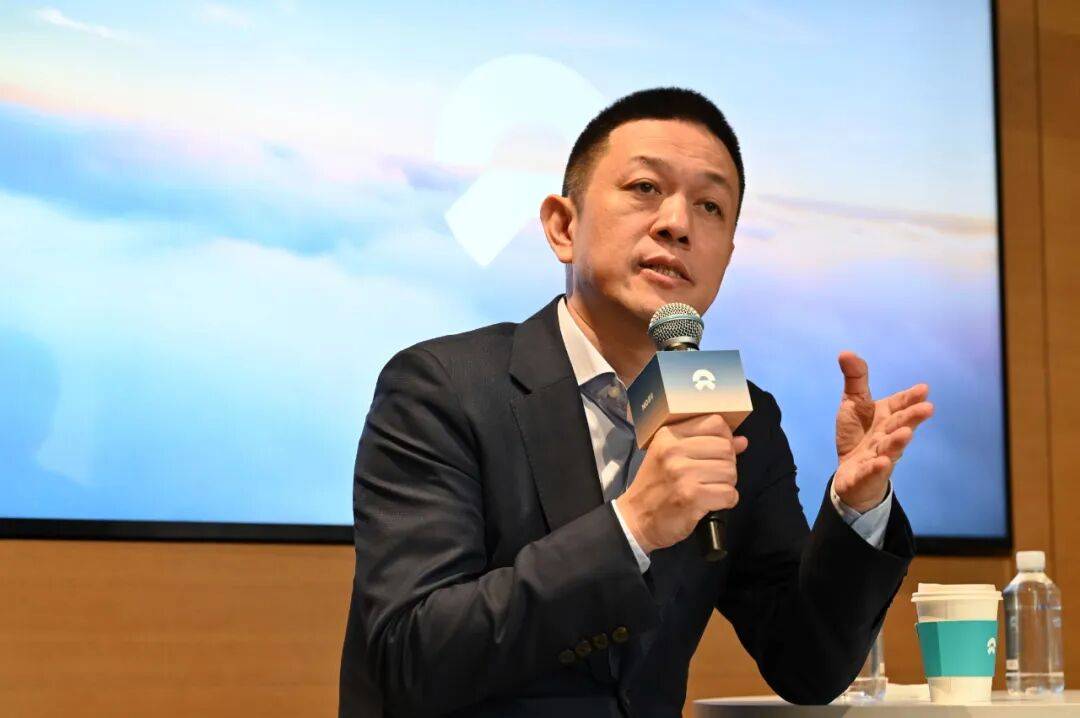
蔚来李斌回应被网暴:CEO责任之一是娱乐大家,只要不说我的家人、我的用户
Sou Hu Cai Jing· 2025-11-10 09:37
Group 1 - Li Bin, the founder of NIO, addressed the issue of online harassment during a user event, stating that as long as the comments do not target his users or family, he remains indifferent to the rumors and online attacks [1] - Li emphasized the responsibility of a CEO to entertain the public and mentioned that any significant defamation against the company or its users is unacceptable, indicating that the legal team is actively involved in handling such matters [1] Group 2 - Recent business changes at NIO Battery Technology (Anhui) Co., Ltd. were reported, with Li Bin transitioning from chairman to director, and He Xu taking over as the legal representative and general manager [3] - The company, established in October 2022 with a registered capital of 2 billion RMB, is involved in various sectors including battery manufacturing, sales, and research in electronic materials and artificial intelligence [3] Group 3 - NIO's latest financial report revealed that the company generated revenue of 19.01 billion RMB in Q2 2025, marking a year-on-year increase of 9% and a quarter-on-quarter increase of 57.9% [3] - The net loss for the same period was reported at 4.995 billion RMB, slightly improved from a net loss of 5.046 billion RMB in the same quarter of the previous year [3]
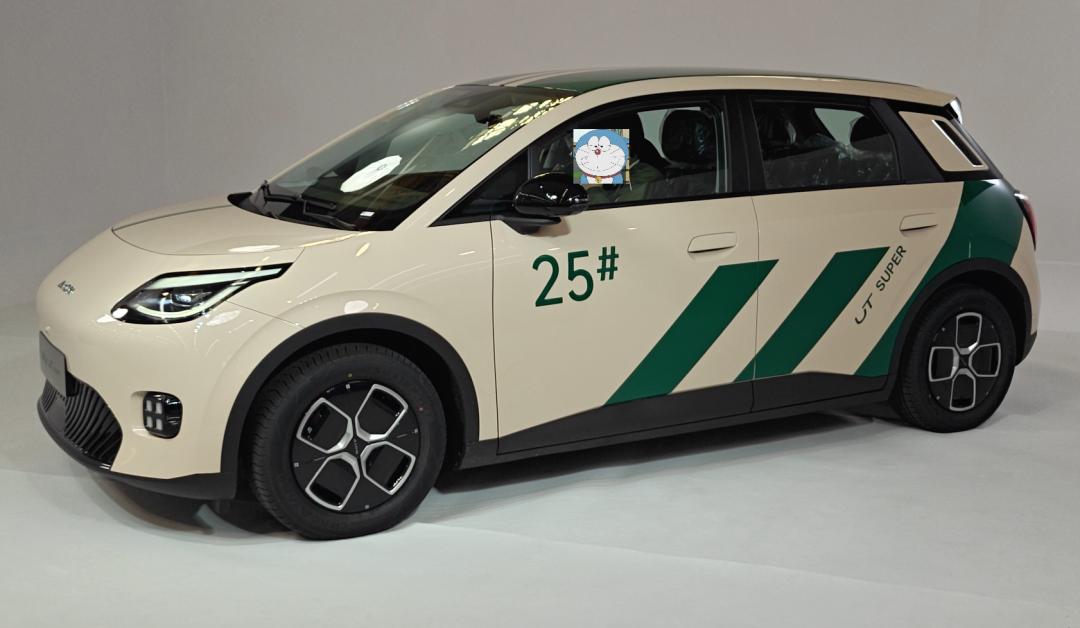
刘强东入局换电:京东5万开卖“网约车神车”,88秒补能500km,首发华为“云车机”
3 6 Ke· 2025-11-10 09:33
Core Insights - The article discusses the rapid advancements in electric vehicle (EV) charging technology in China, particularly focusing on the new Aion UT Super model, which can recharge 500 km in just 88 seconds, aligning charging speed with traditional refueling [3][12][20] - The collaboration between GAC and CATL is highlighted, as they aim to lower the cost of battery swapping and enhance the speed of energy replenishment, making EVs more accessible [5][15] Group 1: Vehicle Features and Pricing - The Aion UT Super is priced at 89,900 yuan for outright purchase, or 49,900 yuan with a battery rental option, with monthly fees starting at 399 yuan [3][14] - With various subsidies, the final price can drop to as low as 45,400 yuan, making it one of the most affordable EVs on the market [5][14] - The vehicle features a 14.6-inch central control screen and utilizes Huawei's cloud technology for enhanced smart capabilities [8] Group 2: Battery Technology and Swapping - The Aion UT Super uses CATL's 25 lithium iron phosphate battery, providing a range of 500 km, with a battery swap time of 88 seconds [12][10] - CATL has established 777 "chocolate" battery swap stations, with a goal of reaching 1,000 by the end of the year and a long-term target of 30,000 stations [18][20] - The introduction of affordable battery swapping technology is expected to drive significant growth in the EV market, with estimates suggesting NIO's battery swap counts could exceed 100 million by early next year [20] Group 3: Industry Dynamics and Competition - The entry of major players like JD.com into the battery swapping market is seen as a pivotal moment, with JD providing comprehensive services from user research to after-sales support [15][18] - NIO is responding to the competitive pressure from the Aion UT Super by enhancing its own battery swapping infrastructure and partnerships, indicating a shift in the competitive landscape [23][24] - The collaboration between GAC, CATL, and JD.com is expected to accelerate the adoption of battery swapping technology, marking a significant shift in the EV industry [20][15]


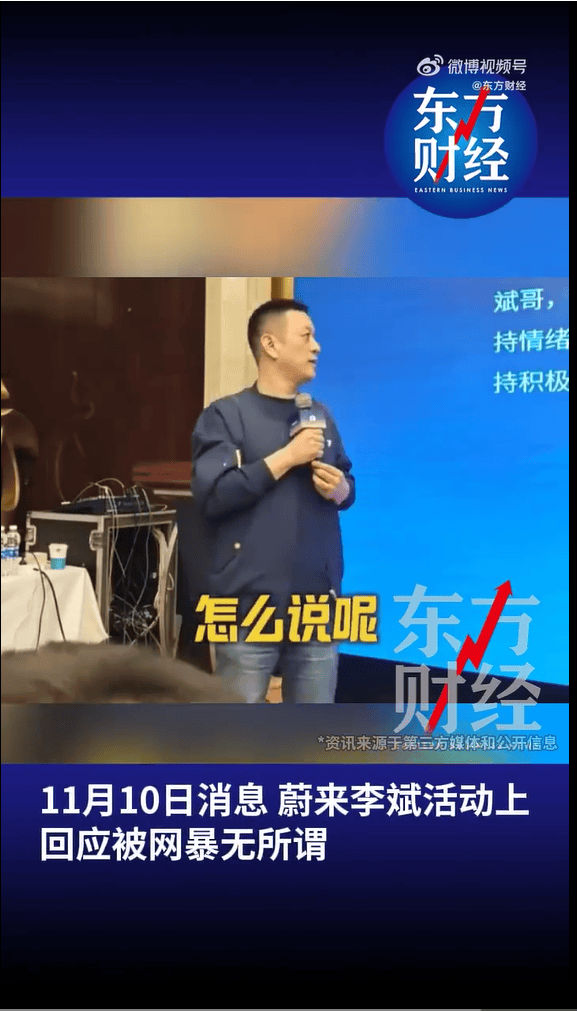
蔚来李斌回应被网暴:CEO责任之一是娱乐大家,只要不说我的家人、用户,不抹黑公司
Sou Hu Cai Jing· 2025-11-10 08:37
Group 1 - The core viewpoint of the article revolves around NIO's founder Li Bin addressing the issue of online harassment and rumors during a user event, emphasizing that as long as the comments do not target his users or family, he remains indifferent to them [1][3]. - Li Bin stated that the responsibility of a CEO includes entertaining the public, and he believes that negative comments about the company that significantly impact it are unacceptable, particularly those that defame users [3][5]. - Recent corporate changes were reported, with Li Bin transitioning from chairman to director of NIO Battery Technology (Anhui) Co., Ltd., and a new general manager being appointed [5]. Group 2 - NIO Battery Technology (Anhui) Co., Ltd. was established in October 2022 with a registered capital of 2 billion RMB, focusing on battery manufacturing, sales, and various technological developments [5]. - According to NIO's latest financial report, the company reported a revenue of 19.01 billion RMB for Q2 2025, reflecting a year-on-year increase of 9% and a quarter-on-quarter increase of 57.9%, while the net loss was 4.995 billion RMB, slightly improved from a loss of 5.046 billion RMB in the same period last year [5].
【月度分析】2025年10月份全国乘用车市场分析
乘联分会· 2025-11-10 08:08
Core Insights - The article provides a comprehensive analysis of the Chinese passenger car market for October 2025, highlighting trends in retail, wholesale, production, and exports, particularly focusing on the performance of new energy vehicles (NEVs) and the competitive landscape among domestic and foreign brands [17][18][19]. Market Overview - In October 2025, retail sales of passenger cars reached 2.242 million units, a year-on-year decrease of 0.8% and a month-on-month decrease of 0.1%. Cumulative retail sales for the year reached 19.25 million units, up 7.9% year-on-year [17]. - The wholesale volume for October was 2.932 million units, marking a historical high for the month, with a year-on-year increase of 7.6% and a month-on-month increase of 4.9% [21]. - Production in October totaled 2.951 million units, a year-on-year increase of 11.4% and a month-on-month increase of 3.7% [20]. New Energy Vehicle (NEV) Market - NEV retail sales in October reached 1.282 million units, a year-on-year increase of 7.3%, while cumulative sales for the year reached 10.151 million units, up 21.9% [23]. - The penetration rate of NEVs in the domestic market was 57.2%, an increase of 4.3 percentage points year-on-year [27]. - NEV wholesale volume was 1.621 million units in October, up 18.5% year-on-year, with cumulative wholesale reaching 12.058 million units, an increase of 29.9% [23]. Export Performance - In October, total passenger car exports reached 568,000 units, a year-on-year increase of 27.7% and a month-on-month increase of 7.5%. Cumulative exports for the year reached 4.567 million units, up 14.2% [20]. - NEVs accounted for 44.2% of total exports in October, with 251,000 units exported, reflecting a year-on-year increase of 104% [28]. Competitive Landscape - Domestic brands achieved a retail volume of 1.55 million units in October, a year-on-year increase of 4%, capturing a market share of 68.7% [19]. - Traditional automakers like Geely, Changan, and Great Wall have shown significant improvements in market share, while joint venture brands faced challenges with a 10% decline in retail volume [19][20]. - The new energy segment saw strong performances from brands like BYD, which sold 436,856 units, and other domestic brands also reported robust sales figures [30][31]. Future Outlook - The market is expected to see continued growth in November due to year-end purchasing urgency driven by tax incentives and seasonal factors [33]. - The export momentum is likely to persist, supported by increasing recognition of Chinese NEV brands in international markets [34].