BIDU(09888)

Search documents
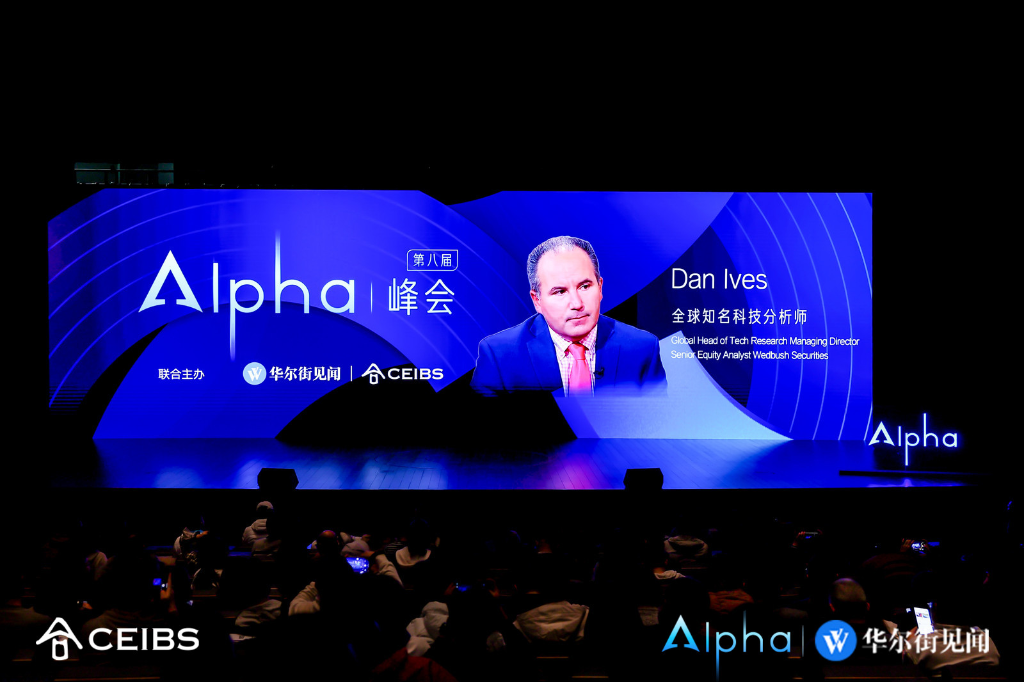
全球知名科技分析师Dan Ives:AI派对才刚开始,2026是“变现之年”,真正的消费者AI革命将由苹果开启|Alpha峰会
Hua Er Jie Jian Wen· 2025-12-20 01:27
Core Insights - The AI revolution is likened to a party that started at 9 PM and is currently at 10:30 PM, indicating that it is still in its early stages with significant growth potential ahead [4][5][13] - The current phase is compared to 1996, suggesting that it is not a bubble like 1999, as the leading companies are financially robust with substantial cash flows [4][5][21][22] - Nvidia's chips have a multiplier effect of 8 to 10 times across various sectors, indicating strong demand and a significant capital expenditure cycle [4][7][28] - The year 2026 is projected to be a critical moment for monetization in AI, distinguishing successful companies from those that fail to execute [10][36] AI Market Dynamics - The AI market is characterized by a supply-demand imbalance for Nvidia chips, with a ratio of 12:1, highlighting the robust demand for AI technologies [4][28] - The AI revolution is expected to create substantial opportunities in the second, third, and fourth layers of derivatives, particularly in software, cybersecurity, and infrastructure [4][7][35] - The consumer AI revolution is anticipated to be led by Apple, leveraging its 2.4 billion iOS devices to reach a broad audience [10][26] China and Global Competition - China has a significant advantage in power supply, particularly in nuclear energy, which is crucial for AI data centers [8][29] - The robotics sector in China is highlighted as a leading area of innovation, with human-like robots being a key focus [8][19] - The relationship between the US and China is viewed as one of interdependence rather than decoupling, with both countries needing to collaborate for the AI revolution to reach its full potential [8][24] Future Projections - By 2030, it is expected that 20% of cars will be autonomous, and one in every 10 to 15 households will have a humanoid robot [10][19] - The technology sector is projected to see a 25% increase in stock prices by next year, with growth expected to continue through 2027 [10][22] - The focus on AI applications is expected to expand significantly by 2026, with a shift from hype to tangible revenue generation [10][36]





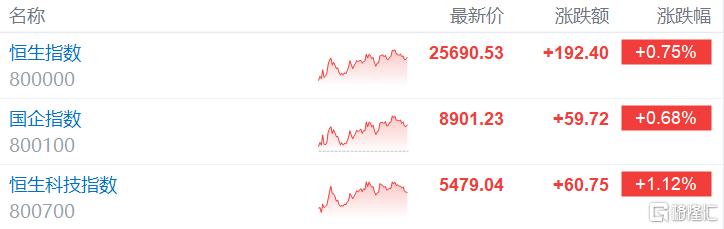
恒恒生医疗强势爆发,科技、互联网、大消费等紧随其后
Ge Long Hui· 2025-12-19 20:58
Group 1 - The Hang Seng Index showed a recovery, rising by 0.65% at midday, with healthcare stocks leading the gains [1] - The healthcare sector surged by 2.67%, with WuXi Biologics increasing by 6.48% and 3SBio rising by 3.7% [3] - The technology sector also performed well, with a midday increase of 1.67%, driven by Meituan's 2.27% rise and other major players like SMIC, NetEase, Tencent, and Baidu all seeing gains above 1% [3] Group 2 - Banking stocks remained relatively weak, with a slight increase of 0.26% at midday, as major banks like Bank of China, Agricultural Bank of China, and China Merchants Bank saw minor gains, while Standard Chartered and Bank of China (Hong Kong) experienced slight declines [3]




百度会下场做GEO吗?
Sou Hu Cai Jing· 2025-12-19 18:11
Group 1 - The core idea of the news is that Baidu has introduced a Generative Engine Optimization (GEO) solution aimed at enhancing brand visibility in AI-generated content, but there are concerns about the reliability of information generated by AI due to the presence of fabricated content [1][3] - The GEO solution is designed to optimize content structure, semantic matching, and authoritative sources to increase the likelihood of brand mentions in generative AI responses, thereby boosting brand exposure [3] - There are significant concerns regarding the quality of GEO services in the market, with reports of some providers flooding AI models with fake articles and misleading information, which could undermine the credibility of AI outputs [3] Group 2 - Baidu's Q3 2025 financial report indicates a revenue of 31.2 billion yuan and a net loss of 11.2 billion yuan, marking a decline in both revenue and profit, transitioning from profit to loss [4] - Traditional online marketing, which previously accounted for 80% of Baidu's revenue, has seen a continuous decline, with Q3 revenue dropping to 15.3 billion yuan, a year-on-year decrease of 18%, marking the sixth consecutive quarter of decline [4]


我们准备好让AI“看”世界了吗?
Xin Lang Cai Jing· 2025-12-19 12:14
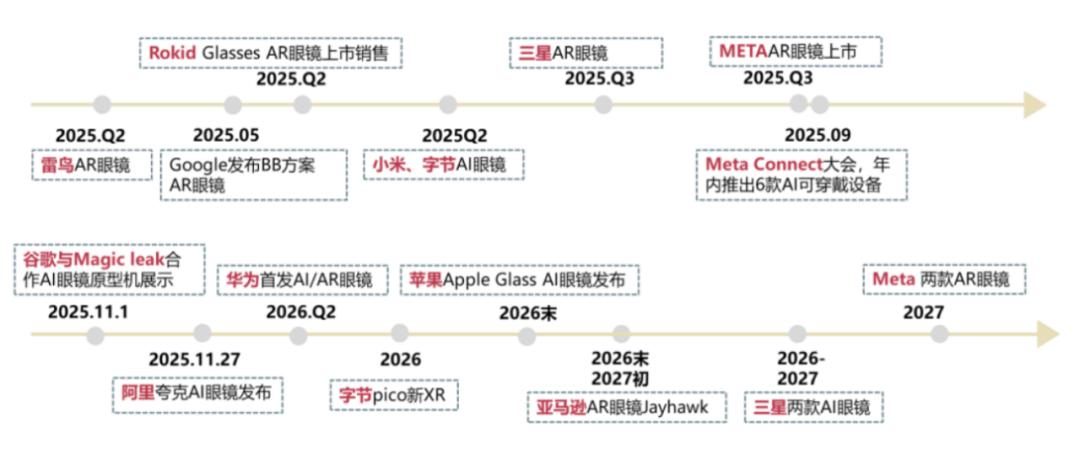
Core Insights - In 2025, AI glasses have emerged as a significant trend in the tech industry, with major companies like Meta, Google, and Apple making substantial advancements and product launches in this space [1][3] - Domestic companies in China, including Huawei, Xiaomi, Alibaba, and ByteDance, are also actively developing AI glasses, with notable products like Alibaba's Quark AI glasses experiencing high demand [1][3] - The competition landscape is diverse, with various types of AI glasses categorized into AI audio glasses, AI photography glasses, and AI+AR glasses, each with distinct functionalities [3][7] Industry Overview - The AI glasses market is driven by advancements in large model technology, with companies recognizing the necessity to invest in AI glasses to avoid falling behind in the AI race [3][21] - Meta's Ray-Ban smart glasses have set a successful precedent, selling over 1 million units and demonstrating the feasibility of integrating AI capabilities into eyewear [3][21] - The market is expected to see significant sales growth, with projections indicating that AI glasses could reach 7 million units sold, with Meta accounting for 5 million of that total [9] Competitive Landscape - Major competitors in the AI glasses market include: - Internet platform companies like Alibaba, Baidu, and ByteDance, leveraging their ecosystem advantages [8] - Hardware manufacturers such as Xiaomi and Huawei, utilizing their supply chain and user base [9] - New automotive entrants like Li Auto, which are creating niche products tailored to specific use cases [9] - Specialized XR/AR companies like Rokid and Thunderbird, focusing on optical display technology and lightweight designs [9] Market Dynamics - The pricing of AI glasses varies widely, from hundreds to thousands of yuan, reflecting the differentiation in product features and target markets [12] - The current market is characterized by a mix of established tech giants and agile startups, each pursuing different strategies to capture market share [10][20] - The demand for AI glasses is still being evaluated, with concerns about whether consumers truly need such devices compared to existing technologies like smartphones [13][19] Future Outlook - The AI glasses market is anticipated to evolve, with companies needing to address privacy concerns and enhance user experience to transition from novelty items to essential tools [17][24] - The exploration of AI glasses is seen as a stepping stone towards more advanced human-machine interactions, potentially leading to future innovations like implantable devices or brain-computer interfaces [24][22] - As the market matures, companies are expected to focus on validating the value of AI glasses in B2B applications while nurturing consumer interest in C2C scenarios [20][22]




港股收评:恒指涨0.75%,大型科技股齐涨,生物医药、博彩股集体活跃





Ge Long Hui A P P· 2025-12-19 08:48
Market Overview - The US CPI annual rate decline has led to a rise in US stocks, boosting risk market sentiment [1] - The Hang Seng Index opened higher and closed up 0.75%, with the Hang Seng China Enterprises Index and Hang Seng Tech Index rising by 0.68% and 1.12% respectively [1][2] Sector Performance - Major technology stocks saw collective gains, with Tencent up 1.49%, Kuaishou up 1.45%, and Meituan up 1.28% [4] - Pharmaceutical stocks were active, with WuXi AppTec and other related stocks rising [2] - Gaming stocks continued to rise, with MGM China leading with a 6.6% increase [2][5] - AI-driven demand boosted optical fiber and cable stocks, with Yangtze Optical Fiber rising 12% [2] - Automotive, wind power, education, photovoltaic, insurance, and Apple-related stocks also experienced gains [2] Notable Stock Movements - Xpeng Motors rose 7.65%, Horizon Robotics up 7.04%, and Li Auto up 3.81% [4][10] - Electronic cigarette stocks saw significant increases, with China Tobacco Hong Kong up 6.68% [5] - Chinese brokerage stocks rose, with China International Capital Corporation up over 4% [7] - Intelligent driving concept stocks surged, with Youjia Innovation up 31.22% [8] Weak Performers - Heavy machinery stocks faced declines, with China National Heavy Duty Truck Group down over 6% [13] - Gold and precious metal stocks were weak, with several companies experiencing declines of over 2% [16] - Oil stocks also fell, with China Petroleum & Chemical Corporation down 1.52% [15] Capital Flows - Southbound funds recorded a net purchase of HKD 3.371 billion, with net selling from Shanghai-Hong Kong Stock Connect and net buying from Shenzhen-Hong Kong Stock Connect [18] Market Outlook - CITIC Securities suggests that after a strong performance in September, Hong Kong stocks are undergoing a mid-term adjustment, with quality assets entering a high-value zone [18]
AI眼镜:我们准备好让AI“看”世界了吗?
3 6 Ke· 2025-12-19 08:46
Core Insights - In 2025, AI glasses have emerged as a significant trend in the tech industry, with Meta's Ray-Ban smart glasses selling over 2 million units by February and projected to reach 4-5 million units for the year [1][3] - Major companies like Google, Samsung, and Apple are re-entering the AI glasses market, while domestic firms such as Huawei, Xiaomi, Alibaba, and ByteDance are also making significant moves in this space [1][3] - The competition is driven by the need for companies to stay relevant in the AI race, with hardware becoming a new frontier for user engagement and data collection [3][20] Market Dynamics - AI glasses are categorized into three types: AI audio glasses, AI shooting glasses, and AI+AR glasses, with the latter being seen as an advanced form that integrates AR technology [4][6] - The market features a wide range of AI glasses with prices varying from hundreds to thousands of yuan, reflecting the differentiation in product positioning [6][10] - Key competitors in the domestic market include internet platform companies (Alibaba, Baidu, ByteDance), hardware manufacturers (Xiaomi, Huawei, OPPO), automotive newcomers (Li Auto), XR/AR specialists (Thunderbird Innovation, Rokid), and AI hardware startups [6][7][10] Competitive Landscape - Xiaomi is leveraging its supply chain and channel advantages to capture market share, with its AI glasses priced as low as 1,630 yuan [7][10] - Li Auto's AI glasses, Livis, are priced starting at 1,999 yuan and are designed to integrate with vehicle systems, targeting a specific user base [8][10] - Companies like Rokid and Thunderbird Innovation focus on optical display technology and have experience in specialized applications, although they face challenges in expanding to consumer markets [9][10] User Demand and Experience - The current AI glasses market is characterized by a lack of clear consumer demand, as many features offered are already available on smartphones [11][12] - Privacy concerns are significant, as AI glasses can record and capture data, raising issues similar to those faced by Google Glass [12][13][14] - For AI glasses to transition from novelty items to essential tools, they must address real-world needs and provide seamless integration into daily life [15][16][19] Future Outlook - The potential for AI glasses to become mainstream hinges on their ability to solve specific problems in B2B scenarios, such as in industries like energy and healthcare [16][18] - The evolution of AI glasses may lead to more advanced forms of human-computer interaction, with future devices potentially being embedded or non-intrusive [25][26] - The market for AI glasses is expected to grow significantly, with investments in related technologies and components reaching nearly 4 billion yuan [22][23]
百度昆仑芯变更为股份公司,增资至4亿元
Xin Lang Cai Jing· 2025-12-19 02:11
昆仑芯(北京)科技股份有限公司成立于2011年6月,法定代表人为欧阳剑,经营范围含计算机系统服 务、基础软件服务、应用软件服务、数据处理、产品设计、模型设计、经济贸易咨询、企业管理咨询 等。股东信息显示,该公司由百度(中国)有限公司、通用技术高端装备产业股权投资(桐乡)合伙企 业(有限合伙)、比亚迪(002594)等共同持股。 12月17日,百度集团在港交所公告,有媒体报道公司拟分拆非全资附属公司昆仑芯(北京)科技有限公 司进行独立上市。公司澄清,目前正就拟议分拆及上市进行评估。倘进行拟议分拆及上市,将须经相关 监管审批程序,而公司并不保证拟议分拆及上市将会进行。 来源:智通财经 天眼查工商信息显示,12月16日,昆仑芯(北京)科技有限公司发生工商变更,企业名称变更为昆仑芯 (北京)科技股份有限公司,注册资本由约2128万人民币增至4亿人民币,增幅约1780%,同时,部分 高管也发生变更。 ...

认知偏差、落地断层、体验割裂是目前AI产品的三大痛点|百度王颖@MEET2026
量子位· 2025-12-19 01:01
Core Insights - The article discusses the evolution of AI from a conversational partner to an action assistant, highlighting the increasing complexity of tasks that users face despite advancements in AI capabilities. It identifies three main challenges: cognitive bias, implementation gaps, and fragmented experiences [1][5][14]. Group 1: AI Challenges - Cognitive bias, implementation gaps, and fragmented experiences are identified as the three major pain points for users of AI products [5][14]. - Users often experience a disconnect between AI's capabilities and their ability to execute complex tasks, leading to frustration [14]. Group 2: GenFlow and AI Development - GenFlow serves as the core scheduling hub for Baidu's super personal intelligent agent framework, achieving a monthly active user base in the tens of millions, making it the largest general-purpose intelligent agent globally [5][10]. - The recently updated GenFlow 3.0 integrates a memory system that allows it to retain user interactions and preferences, enhancing personalization [13][17]. Group 3: Product Innovations - Baidu Wenku launched the AI learning platform OREATE AI, which has surpassed 1.4 million monthly active users within a month of its launch and topped the ProductHunt global daily rankings [37]. - Baidu Wangpan has expanded its services to 175 countries, featuring multilingual subtitles and AI camera functionalities, receiving positive feedback globally [39]. Group 4: Future Vision - The vision is to create a super personal intelligent agent that empowers users to become super individuals, enhancing their capabilities in various tasks [8][9]. - The integration of Office Agent and GenX aims to facilitate seamless collaboration between users and AI, enhancing productivity and creativity [20][28].

百度秒哒朱广翔:AI生成应用要打破专业壁垒 下一步以用户规模与商业化收入为核心目标
Zheng Quan Shi Bao Wang· 2025-12-18 14:36
Core Insights - The most valuable segment in the AI-generated application industry is AI Coding, which serves as a productivity tool that spans research, production, supply, sales, and service, creating new value and demand space, with significant market potential due to the current technological climbing phase and large disparities among companies [1] Group 1: AI Coding Overview - AI Coding has become the hottest sector in the industry since the second half of this year, opening up prospects for the commercialization of AI [1] - AI Coding refers to the process of using artificial intelligence to assist or automate code writing, significantly improving development efficiency and reducing labor costs [1] - The core goal of the company is to liberate application development from a few professional developers, allowing more people to directly build usable, operational, and monetizable business applications through a "natural language" approach [1] Group 2: Unique Features and Differentiation - The company has set up a differentiated demand transformation phase to address the challenges faced by non-technical users in clearly describing complex application logic, utilizing an intelligent product manager to convert vague requirements into detailed product design documents [2] - Unlike other similar products, the company focuses on the application layer of the Baidu AI ecosystem, targeting small B-end and non-professional C-end developers, leveraging Baidu's underlying capabilities [2] Group 3: Commercialization Strategy - The company's business model consists of two main phases: charging users for large model invocation during the development phase and for cloud resource hosting fees during the operation phase, with the company already entering the paid commercial usage stage [2] - The future core customer direction is B2B, avoiding traffic advertising and relying on value-based charges, with a unique aspect of blurring the lines between C (individual) and B (business) users [3] - The company aims to achieve significant user growth and commercial revenue, believing that the current market is still in its early stages with substantial room for growth [3]
百度沈抖秒哒大会新论:AI时代创造门槛降低 人人可创收超50亿场景已现
Sou Hu Cai Jing· 2025-12-18 13:21
Core Insights - AI technology is transforming creative processes from being exclusive to technical elites to becoming a widely participatory social activity for the general public [1][3] Group 1: AI's Impact on Production and Entrepreneurship - AI has deeply penetrated core production scenarios such as code writing, product design, data analysis, and operations management, allowing creativity to extend from specialized R&D departments to frontline employees and entrepreneurs [3] - The traditional entrepreneurial model is being disrupted by AI, promoting a reverse approach of "validating value before establishing a company," which significantly reduces trial-and-error costs and accelerates innovation [3] - The Baidu Xiaoda platform has generated over 500,000 commercial applications in just 8 months, creating economic value exceeding 5 billion yuan, demonstrating the practical economic benefits of no-code development platforms [3] Group 2: Initiatives to Foster Entrepreneurship - Baidu Xiaoda launched the "Creator Dream Plan" to support 1 million creators in income growth over the next three years through measures like traffic support, revenue sharing, business connections, and technical assistance [4] - The platform aims to provide full-chain support from idea to commercialization for high-potential projects, with an estimated economic value creation of over 10 billion yuan expected next year [4] Group 3: Societal and Industrial Transformation - The technological revolution driven by AI is reshaping the industrial ecosystem, enabling individuals to convert creativity directly into commercial value, thus unleashing unprecedented social innovation vitality [5] - Baidu Xiaoda's practices indicate that AI is not only reconstructing production methods but also nurturing a new generation of digital-native entrepreneurs [5]