BABA(09988)

Search documents
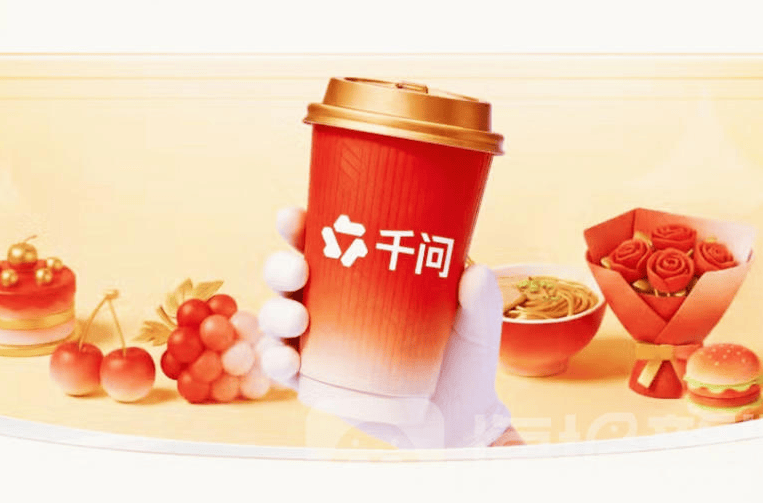
外媒看中国AI大战,科技巨头春节前展开补贴争夺战,奶茶店陷入疯狂,阿里千问引发大规模排队
Sou Hu Cai Jing· 2026-02-09 11:44
Core Insights - The article highlights the intensifying competition among major Chinese tech companies in the AI sector, particularly around the Chinese New Year, with significant marketing strategies and subsidies being employed to capture market share [2][5]. Group 1: Marketing Strategies - Alibaba launched a "New Year Treat Plan" with a budget of 3 billion RMB to promote its Qianwen AI application, offering no-threshold 25 RMB milk tea vouchers, which led to a surge in user engagement and participation [2][4]. - The promotional campaign included a social sharing mechanism, allowing users to earn additional vouchers by inviting friends, which facilitated viral growth and widespread participation [4]. Group 2: Market Impact - The campaign generated over 10 million free milk tea orders worth approximately 250 million RMB within just 9 hours, showcasing explosive market response and overwhelming demand [4]. - Qianwen's rapid rise to the top of the Apple App Store's free application chart reflects its successful positioning in the competitive AI application landscape, surpassing Tencent's Yuanbao application [4][5]. Group 3: Competitive Landscape - The AI competition among tech giants is characterized by substantial financial incentives, with Tencent offering 1 billion RMB in cash rewards for its Yuanbao application and Baidu allocating 500 million RMB for its Wenxin models [5]. - The strategies employed by these companies mirror historical trends in China's internet development, utilizing subsidies and promotional tactics to quickly capture market share and expand user bases [5].


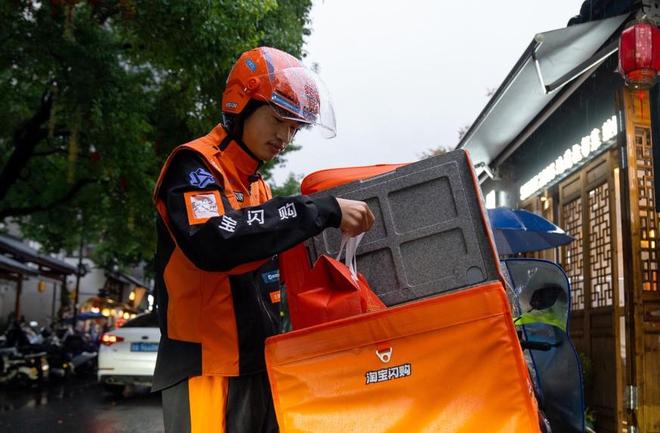
淘宝闪购再加码激励 骑士春节跑单可多挣上万元
Huan Qiu Wang Zi Xun· 2026-02-09 11:40
Core Insights - The demand for food delivery services has surged during the Spring Festival, leading to increased earnings for delivery riders, with some earning over 10,000 yuan in a month [1][4]. Group 1: Incentives and Earnings - Taobao Flash Delivery has invested nearly 2 billion yuan to enhance service during the Spring Festival, ensuring that riders can earn thousands more than usual, with those in first-tier cities potentially earning over 10,000 yuan [1][4]. - Various reward programs have been introduced, including holiday incentives, long-term activities, and new rider bonuses, with many riders expected to receive year-end bonuses of 10,000 yuan during the festival [1][4]. - In specific regions like Beijing and Hangzhou, riders can earn between 9,000 to over 20,000 yuan during the holiday, with additional bonuses for referring new riders [2][4]. Group 2: Operational Enhancements - Taobao Flash Delivery has upgraded its AI assistant for riders, introducing features like a "Today's To-Do Guide" to streamline operations and improve efficiency [5][7]. - The company has implemented measures to enhance collaboration with merchants, reducing delays in food preparation and improving the overall delivery experience [8]. - New services such as the "Tap to Open" feature have been launched, allowing riders to enter residential areas quickly, covering over 15,000 communities across more than 200 cities [8][9].
资讯日报:日本自民党在众议院选举中取得胜利-20260209
Guoxin Securities Hongkong· 2026-02-09 11:30
Market Overview - The Hang Seng Index closed at 26,560, down 1.21% for the day and 3.02% for the week, but up 3.63% year-to-date[3] - The S&P 500 index rose by 1.97%, marking its largest single-day gain since May of the previous year[9] - The Nikkei 225 index increased by 0.81%, supported by expectations surrounding the upcoming House of Representatives election in Japan[13] Sector Performance - The lithium battery sector saw gains, with Zhongchuan Aviation rising over 5% and Ganfeng Lithium up over 2%[9] - The automotive sector also performed well, with NIO up nearly 7% and Li Auto increasing by over 3%[9] - The cryptocurrency sector faced significant declines, with New Fire Technology Holdings dropping over 7%[9] Economic Indicators - U.S. consumer credit increased by $24 billion in December, the largest rise in a year, exceeding all economists' expectations[13] - The semiconductor industry is projected to grow by 26% in revenue by 2026, surpassing $1 trillion for the first time[15] Investment Sentiment - There is a notable increase in risk appetite in the market, as evidenced by the rebound in silver prices by nearly 10% and Bitcoin rising close to 12%[9] - Concerns remain regarding the high capital expenditures in AI, with major tech companies like Amazon and Google experiencing stock declines despite overall market gains[10]





智通港股通活跃成交|2月9日





智通财经网· 2026-02-09 11:02
Core Viewpoint - On February 9, 2026, Tencent Holdings, Alibaba-W, and the Yingfu Fund were the top three companies by trading volume in the Southbound Stock Connect, with trading amounts of 4.681 billion, 3.740 billion, and 2.531 billion respectively [1] Group 1: Southbound Stock Connect Trading - Tencent Holdings ranked first in Southbound Stock Connect trading with a total trading amount of 4.681 billion and a net buying amount of 0.904 billion [2] - Alibaba-W ranked second with a trading amount of 3.740 billion and a net selling amount of 0.100 billion [2] - The Yingfu Fund ranked third with a trading amount of 2.531 billion and a significant net selling amount of 2.515 billion [2] Group 2: Deep Southbound Stock Connect Trading - Tencent Holdings also led in Deep Southbound Stock Connect trading with a trading amount of 3.490 billion and a net buying amount of 0.896 billion [2] - The Yingfu Fund was second with a trading amount of 2.051 billion and a net selling amount of 2.040 billion [2] - Alibaba-W ranked third with a trading amount of 1.611 billion and a net buying amount of 0.151 billion [2]
狂撒45亿红包雨!AI大战谁能笑到最后?
Xin Lang Cai Jing· 2026-02-09 10:54
Core Insights - The 2026 Chinese New Year "red envelope war" is not just about traditional monetary gifts but represents a collective bet by major internet companies on the future of AI [1][10] - The competition has shifted focus from payment platforms to the next generation of AI traffic entry points, indicating a potential reshaping of the internet landscape in China [4][13] Group 1: Investment and Strategy - Tencent has launched a 1 billion yuan cash red envelope initiative, while Alibaba has committed 3 billion yuan for its "Spring Festival Treat Plan" [3][12] - Baidu and ByteDance have also joined the fray, with Baidu offering 500 million yuan in red envelopes and ByteDance becoming the exclusive AI cloud partner for the 2026 CCTV Spring Festival Gala [3][12] - The total investment from just Alibaba and Tencent reaches 4 billion yuan, highlighting the seriousness of this competition compared to the 500 million yuan red envelope initiative in 2015 [3][12] Group 2: Market Dynamics - The user base for generative AI in China reached 515 million by June 2025, doubling in six months, with a penetration rate of 36.5%, indicating a shift from early adopters to early majority [5][14] - Analysts suggest that the 2026 red envelope war is fundamentally different from previous years, as it focuses on establishing AI as a mainstream internet entry point [4][13] Group 3: User Engagement and Retention - High-frequency usage during the red envelope campaign is expected to create dependency on AI applications, which could lead to higher user retention post-campaign [6][14] - The effectiveness of this strategy will depend on maintaining high daily active users and usage frequency after the campaign ends [15] Group 4: Challenges and Feedback - Current AI applications still require improvements in user experience and stability, as evidenced by user feedback regarding the need for precise input when using AI for tasks like ordering food [9][16] - Both Alibaba and Tencent experienced service disruptions due to high traffic during their respective campaigns, indicating the need for better infrastructure to handle sudden surges in user activity [9][16]

00后,民办本科,他们是怎么在外贸赛道上「闷声发财」的?
后浪研究所· 2026-02-09 10:36
Core Viewpoint - The article highlights the entrepreneurial journeys of young individuals from Zhengzhou Xias College, inspired by the success of alumni like Wang Ning, who have successfully ventured into foreign trade despite lacking traditional resources and backgrounds [3][41]. Group 1: Entrepreneurial Background - Wang Ning's success story serves as a beacon for students, encouraging them to explore entrepreneurship rather than traditional employment [3]. - Many students have engaged in small business ventures during their college years, gaining practical experience in commerce [3][41]. - The entrepreneurial environment at the college has led students to seize opportunities in the foreign trade sector, capitalizing on China's supply chain advantages [3][41]. Group 2: Growth in Foreign Trade - In 2021, China's goods trade reached a record high of 39.1 trillion yuan, with exports growing by 21.4%, indicating a booming foreign trade environment [5]. - Young entrepreneurs like Li Jiale and He Jiakun have reported significant revenue growth, with some achieving annual revenues of 20 million to 30 million yuan by 2025 [3][41]. Group 3: Individual Success Stories - Li Jiale started his foreign trade business at 19, initially focusing on low-cost products like swim rings, and achieved rapid growth in inquiries and orders [5][10]. - He Jiakun, motivated by family business aspirations, began his foreign trade journey with a focus on fitness equipment, achieving significant sales growth within a year [12][41]. - Both entrepreneurs have adapted their strategies to the evolving market, leveraging personal experiences and insights to build successful businesses [12][41]. Group 4: Challenges and Adaptations - The article discusses the challenges faced by these entrepreneurs, including fluctuating market conditions and the need for continuous adaptation in their business strategies [30][32]. - Li Jiale and He Jiakun emphasize the importance of maintaining focus on core business operations and avoiding distractions from social engagements [30][34]. Group 5: Future Aspirations - The young entrepreneurs have set ambitious revenue targets for the coming years, with plans to expand their businesses significantly [41][45]. - They aim to serve as mentors for future students, sharing their experiences and insights to foster a new generation of entrepreneurs [41][45].
周末,被奶茶刷屏了
债券笔记· 2026-02-09 10:31
Core Viewpoint - Alibaba's 30 billion yuan promotional campaign is a strategic investment aimed at long-term returns rather than a mere expense, designed to attract new users and enhance AI capabilities [3][5]. Group 1: Promotional Strategy - The 30 billion yuan initiative is likened to a restaurant's free trial period, intended to lower the barrier for users to experience the AI service, thus attracting a larger customer base [3]. - The campaign generated over 10 million orders within 9 hours, showcasing its immediate impact and user engagement [2][4]. Group 2: AI Development - The orders placed through the AI service serve as practice for the AI, allowing it to learn and improve its functionality, which is more effective than artificial training methods [4]. - Accumulating millions of orders will enable the AI to handle more complex tasks in the future, enhancing user experience and increasing the likelihood of continued usage [4]. Group 3: Competitive Positioning - The promotional effort is seen as a way to secure a competitive edge in the AI market, similar to how ride-hailing services used subsidies to gain market share [4]. - Alibaba's comprehensive ecosystem allows the AI service to integrate with various platforms, providing a unique advantage over competitors that offer more limited functionalities [4]. Group 4: Long-term Investment Logic - The 30 billion yuan is characterized as "seed money," with the expectation of significant returns in the future, akin to planting seeds for future harvests [5]. - The initiative is expected to create a positive feedback loop where increased user engagement leads to smarter AI, which in turn attracts more users, solidifying Alibaba's position in the AI landscape [5].

千问请客现象级出圈,暴露了阿里“AI+云+芯”的王炸底牌
Sou Hu Cai Jing· 2026-02-09 10:23
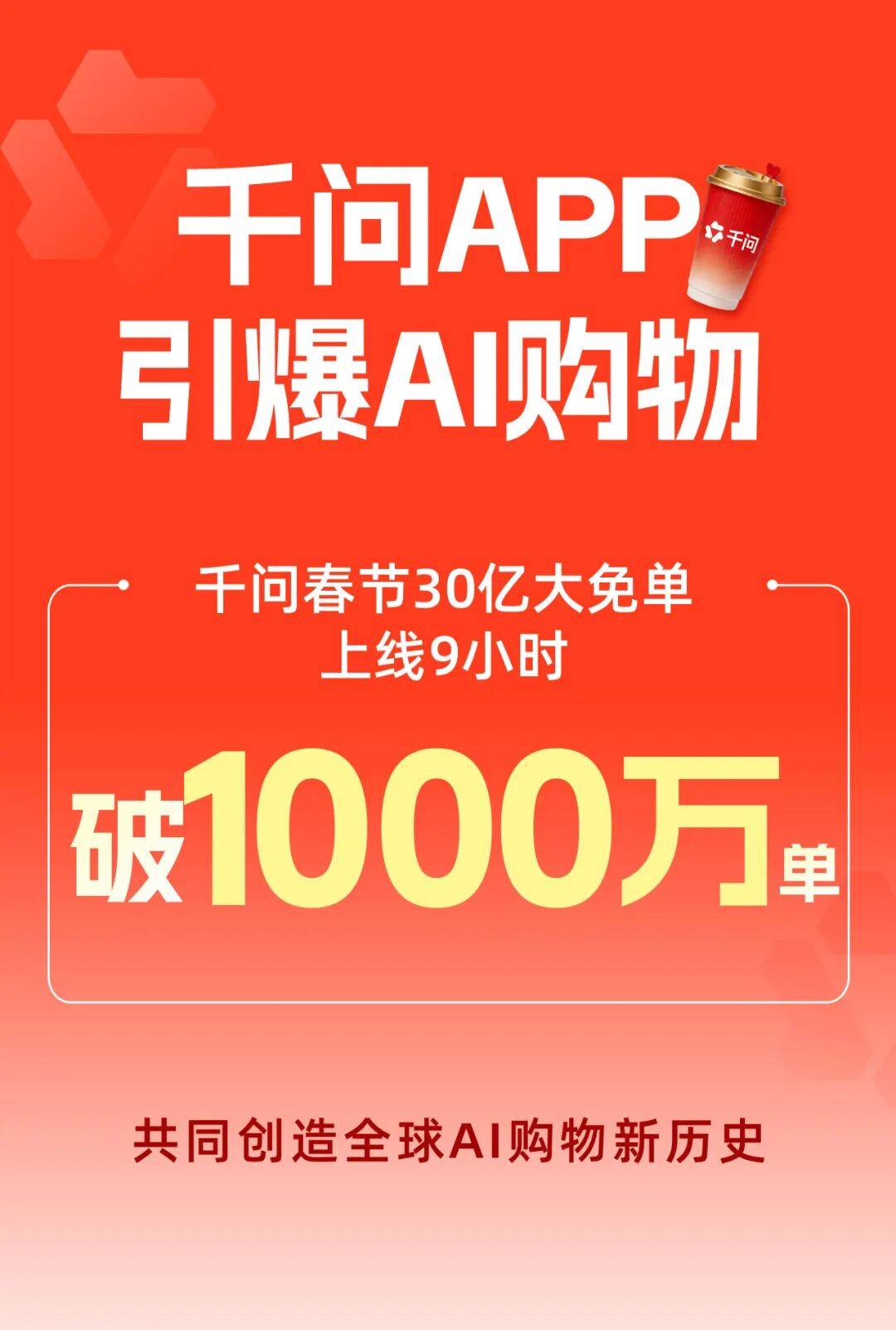
Core Viewpoint - Alibaba's Qianwen launched a "30 billion yuan free order" campaign before the Spring Festival, which quickly gained popularity and resulted in over 10 million orders within 9 hours, marking a significant milestone in AI application in consumer scenarios [1][4]. Group 1: AI Application and Market Strategy - The campaign represents a new round of user competition among major tech companies focused on AI application entry points, aiming to transition AI from mere conversation to practical tasks [3][4]. - The "AI treat" initiative allows users to order milk tea for just 1 penny, showcasing the practical capabilities of AI in everyday life [4][5]. - The event not only targets consumer engagement but also aims to enhance Alibaba's B2B capabilities in the instant retail sector, thereby improving the efficiency of local services and delivery systems [5][6]. Group 2: Technological Infrastructure and Competitive Position - Alibaba's strategy is supported by its "Tongyun Ge" AI triangle, which integrates AI chips, cloud computing, and large models, positioning the company as a formidable player in the global AI landscape [6][7]. - The self-developed AI chip "Zhenwu 810E" has surpassed Nvidia's A800 in performance, marking a significant advancement in Alibaba's AI chip capabilities [8][10]. - Alibaba Cloud is recognized as the largest cloud service provider in China and Asia, with extensive infrastructure that supports the company's AI initiatives [10]. Group 3: Future Investments and Implications - Alibaba plans to invest at least 380 billion yuan in cloud computing and AI infrastructure over the next three years, exceeding its total investment in the past decade [16]. - The success of the milk tea campaign may serve as a catalyst for broader AI applications in e-commerce, potentially creating a transformative effect similar to that of "Double 11" in traditional retail [16].
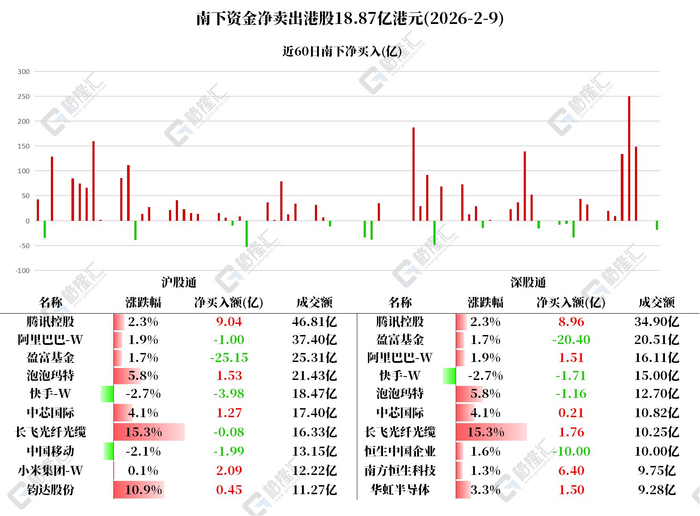
图解丨南下资金连续6日净买入腾讯,共计172亿港元
Ge Long Hui A P P· 2026-02-09 10:23
Group 1 - Southbound funds recorded a net sell of HKD 18.87 billion in Hong Kong stocks today [1][3] - Notable net purchases included Tencent Holdings at HKD 1.8 billion, Southern Hang Seng Technology at HKD 639 million, and Xiaomi Group-W at HKD 209 million [1] - Significant net sales were observed in the Tracker Fund of Hong Kong at HKD 4.555 billion, Hang Seng China Enterprises at HKD 1 billion, and Kuaishou-W at HKD 568 million [1] Group 2 - Southbound funds have consistently net bought Xiaomi for 8 consecutive days, totaling HKD 3.82029 billion [1] - Tencent has seen net purchases for 6 consecutive days, amounting to HKD 17.192 billion [1] - Alibaba has been net bought for 4 consecutive days, totaling HKD 4.43042 billion, and Pop Mart has also seen net buying for 4 days, amounting to HKD 1.22911 billion [1]


微信解禁千问、元宝红包口令:一场春节流量博弈的微妙妥协
Xin Lang Cai Jing· 2026-02-09 10:20
2月8日,记者实测发现,阿里千问APP与腾讯元宝的红包口令在微信内已恢复可复制功能。 Body正文 微信方面虽未明说,但业内普遍认为,此次封禁源于其《外部链接内容管理规范》中关于"诱导分享、关 注、下载"的条款。千问早期活动页面包含"邀请好友得额外免单"等任务链,被系统判定为"过度营销", 触发自动屏蔽机制。 值得注意的是,微信并非首次出手:- 2025年曾限制百度文心一言红包跳转;- 2024年对抖音"集卡"链接 实施深度拦截;- 此次连自家元宝亦未能幸免,凸显其规则执行的"一视同仁"姿态。 为何又解禁?三方压力下的务实调整 短短48小时内政策回调,背后是多重力量推动:1. 用户反弹:#微信不让复制红包# 登上热搜,普通用户 抱怨"连口令都抄不了,还怎么过年?";2. 舆论关注:多家财经媒体质疑"超级平台是否滥用生态控制 权";3. 监管信号:国家近期强调"保障春节期间网络服务畅通",平台需避免"非必要限制";4. 竞合现 实:腾讯自身也在推元宝红包,若长期封锁,恐遭反制。 一位接近微信团队的人士透露:"短期封禁是技术风控自动触发,解禁则是人工复核后的体验优化。" 技术细节:从"文本屏蔽"到"可控开放" 2 ...