
闪购业务

Search documents
阿里巴巴-W:坚定投入以抓住AI时代机遇-20260320
HTSC· 2026-03-20 05:45
Investment Rating - The investment rating for Alibaba is maintained as "Buy" for both Hong Kong and US stocks [6]. Core Insights - Alibaba's total revenue for 3QFY26 was 284.8 billion RMB, a year-on-year increase of 1.7%, which fell short of both consensus expectations and Huatai's forecast of 4.0% [1]. - The adjusted EBITA for the same quarter was 23.4 billion RMB, down 57.3% year-on-year, with an EBITA margin of 8.2%, also below expectations [1]. - Management emphasized that the company is in a phase of reinvestment aimed at capturing opportunities in the AI era, targeting over 100 billion USD in annual revenue from cloud and AI commercialization within five years, corresponding to a CAGR of 40% [1]. - Despite short-term fluctuations in profitability due to investments, Alibaba is expected to gradually convert early investments into profits, potentially increasing cloud margins to around 20% [1]. Summary by Sections Financial Performance - Alibaba's revenue for 3QFY26 was 284.8 billion RMB, with a year-on-year growth of 1.7% [1]. - The adjusted EBITA was 23.4 billion RMB, reflecting a decline of 57.3% year-on-year, with an EBITA margin of 8.2% [1]. - The Chinese e-commerce group's revenue increased by 5.8% to 139.3 billion RMB, while CMR grew by 1% [2]. - The adjusted EBITA for the Chinese e-commerce group was 34.6 billion RMB, down 42.7% year-on-year [2]. Cloud Business - Alibaba Cloud's revenue for 3QFY26 grew by 36.4%, surpassing the consensus expectation of 34.8% [3]. - External revenue increased by 35%, continuing a trend of accelerating growth [3]. - AI-related revenue has seen triple-digit growth for ten consecutive quarters, with management expressing strong confidence in future growth and margin improvement [3]. Profit Forecast and Valuation - Adjustments to Alibaba's FY26/FY27/FY28 non-GAAP net profit forecasts are -17.0%, -7.6%, and +0.4%, resulting in estimates of 78.0 billion RMB, 101.3 billion RMB, and 138.7 billion RMB respectively [4][17]. - The target price based on SOTP valuation is set at 185.4 USD for US stocks and 181.7 HKD for Hong Kong stocks, corresponding to 29.5x and 21.6x FY27/FY28 non-GAAP forecast PE [4][17].

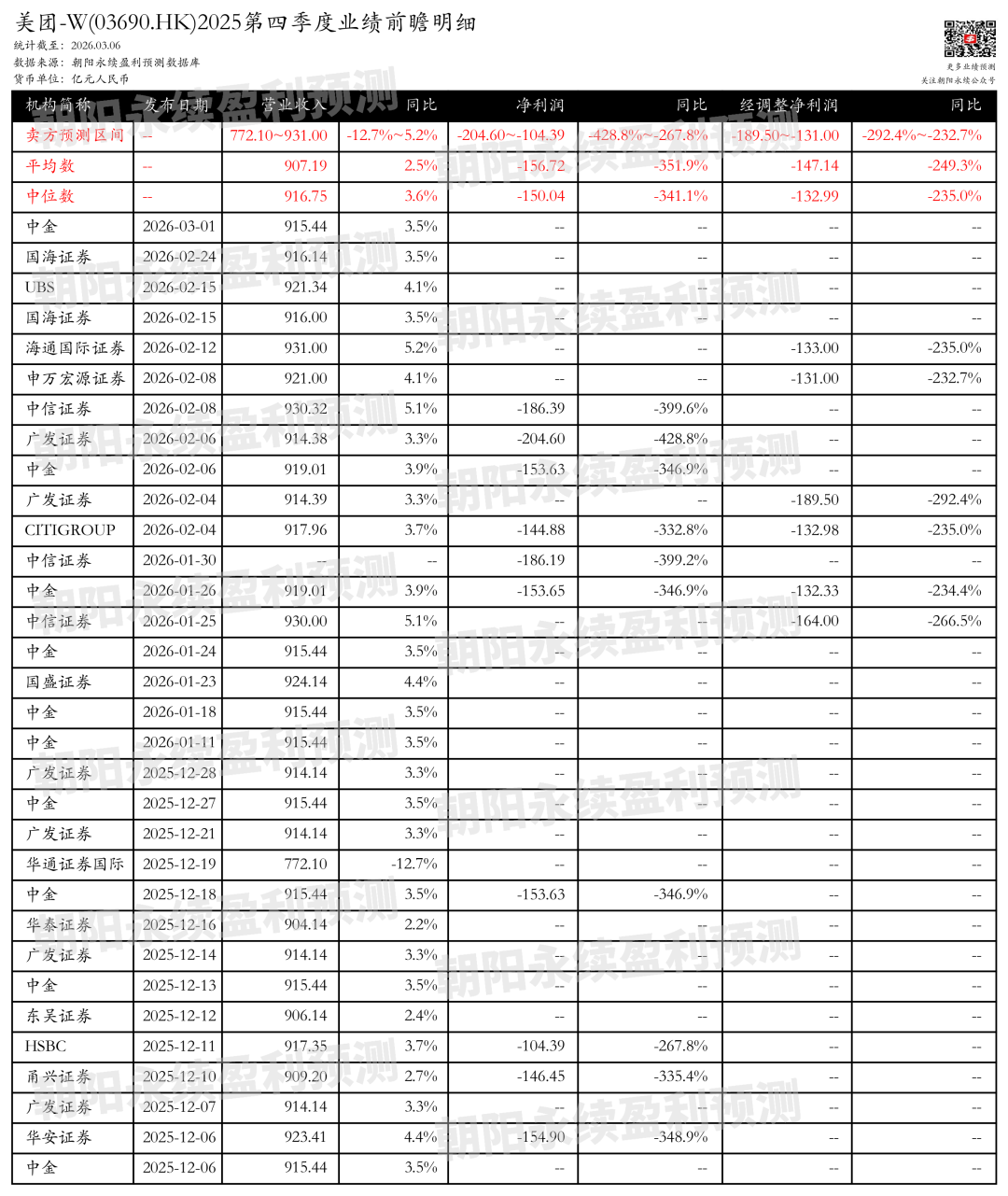
美团-W:营收增长放缓,亏损扩大,预测第四季度营业收入772.10~931.00亿元,同比变动-12.7%~5.2%
Xin Lang Cai Jing· 2026-03-06 12:36
Core Viewpoint - Meituan-W is expected to report a mixed performance for Q4 2025, with revenue forecasts ranging from 772.10 to 931.00 billion RMB, reflecting a year-on-year change of -12.7% to 5.2% [1][7]. Revenue Forecast - The predicted total revenue for Q4 2025 is between 772.10 and 931.00 billion RMB, with an average estimate of 907.19 billion RMB, indicating a 2.5% year-on-year growth [2][8]. - The median revenue forecast is 916.75 billion RMB, representing a 3.6% increase year-on-year [2][8]. Profit Forecast - The expected net profit for Q4 2025 is projected to be between -204.60 and -104.39 billion RMB, showing a significant year-on-year decline of -428.8% to -267.8% [1][7]. - The adjusted net profit is forecasted to range from -189.50 to -131.00 billion RMB, with a year-on-year change of -292.4% to -232.7% [1][7]. Business Segment Analysis - **Core Local Business**: Expected revenue of 648 billion RMB, a decline of 1% year-on-year, with the food delivery segment projected to generate 391 billion RMB, down 11% [3][9]. - **Flash Purchase Business**: Anticipated revenue of 89 billion RMB, reflecting a 32% year-on-year increase, with order volume expected to grow by 30% [4][10]. - **In-store and Travel Business**: Forecasted revenue of 162 billion RMB, up 11% year-on-year, with Gross Transaction Value (GTV) expected to increase by 15% [4][11]. - **New Business**: Projected revenue of 268 billion RMB, a 17% increase year-on-year, but with an expected operating loss widening to 45 billion RMB [4][11]. Competitive Landscape - The company is increasing investments in its ecosystem to address competition in the instant retail sector, including enhanced marketing, rider incentives, and merchant support [3][9]. - The competitive pressure is expected to ease slightly in Q4 2025, with total revenue anticipated at 931 billion RMB, a 5.3% year-on-year growth [5][11]. Future Outlook - The adjusted net loss for Q4 2025 is expected to be 133 billion RMB, an improvement from 160 billion RMB in Q3 2025 [5][11]. - The company anticipates a reduction in unit economic losses in the food delivery segment from 2.6 RMB per order to 2 RMB per order due to decreased winter subsidies [5][11]. - For 2027, the adjusted net profit is projected to reach 234 billion RMB, with a target price of 84 HKD based on a 20x price-to-earnings ratio [5][11].


阿里巴巴-W(09988):FY2026Q3业绩前瞻:闪购投入延续加码,AI云保持快速增长
Soochow Securities· 2026-01-19 23:40
Investment Rating - The investment rating for Alibaba-W (09988.HK) is "Buy" (maintained) [1] Core Insights - The report anticipates that Alibaba's total revenue for FY2026Q3 will reach 292.9 billion yuan, representing a year-on-year growth of 4.6%, primarily due to a slowdown in e-commerce revenue growth. The company is expected to continue investing in flash sales, which will pressure profits, with an adjusted EBITA forecast of 30.61 billion yuan and an EBITA margin of 10.5% for the quarter [7] - Alibaba Cloud is projected to achieve a revenue of 42.85 billion yuan in the same quarter, reflecting a robust year-on-year growth of 35.0%, driven by strong demand for AI computing power and services. The EBITA margin for Alibaba Cloud is expected to remain stable at around 9.0% [7] - The report maintains Non-GAAP net profit forecasts for FY2026, FY2027, and FY2028 at 101.53 billion yuan, 141.56 billion yuan, and 184.65 billion yuan, respectively, with corresponding PE ratios of 28.4, 20.4, and 15.6 times [7] Financial Projections - Total revenue projections for Alibaba are as follows: - FY2024A: 941.17 billion yuan - FY2025A: 996.35 billion yuan - FY2026E: 1,068.58 billion yuan - FY2027E: 1,158.75 billion yuan - FY2028E: 1,269.02 billion yuan - Year-on-year growth rates for total revenue are expected to be: - FY2024A: 8.34% - FY2025A: 5.86% - FY2026E: 7.25% - FY2027E: 8.44% - FY2028E: 9.52% [1][8] - The projected net profit figures are: - FY2024A: 80.01 billion yuan - FY2025A: 130.11 billion yuan - FY2026E: 82.64 billion yuan - FY2027E: 122.87 billion yuan - FY2028E: 166.01 billion yuan [1][8]
华泰证券今日早参-20260112
HTSC· 2026-01-12 07:22
Group 1: Macroeconomic Insights - The forecast for the US GDP growth in 2026 has been raised to 2.6%, up from a previous estimate of 2.3%, driven by factors including the upcoming midterm elections and potential policy changes from the Trump administration [2][3] - The report highlights a potential rebound in inflation in the second half of 2026, despite a slight downward adjustment in inflation predictions due to various economic factors [2][3] - Structural issues in the US economy, such as asset price inflation and income inequality, are expected to worsen, indicating a "K-shaped" recovery [2][3] Group 2: Real Estate Policies - The Trump administration has announced a series of real estate policies aimed at stimulating demand, including a $200 billion mortgage-backed securities purchase plan and restrictions on large institutional investors in the single-family housing market [3][4] - These measures are expected to provide marginal support to the real estate market but may not effectively address housing affordability issues [3][4] Group 3: Employment Data - In December, the US added 50,000 non-farm jobs, falling short of the Bloomberg consensus estimate of 70,000, with the unemployment rate decreasing to 4.4% [5] - The labor participation rate declined to 62.4%, while hourly wage growth showed a slight increase, indicating a mixed employment landscape [5] Group 4: Sector Performance - The report suggests that the A-share market is experiencing a "spring rally," with a focus on sectors such as gaming, duty-free, batteries, engineering machinery, and agricultural chemicals for potential investment opportunities [7] - The Hong Kong stock market is expected to benefit from a combination of factors, including improved liquidity and upward revisions in profit expectations [8] Group 5: REITs Market - Recent policies from the China Securities Regulatory Commission and stock exchanges are expected to enhance the REITs market, promoting high-quality development amid OCI disturbances [22] - The report indicates that the REITs market may experience improved sentiment and quality as it enters a new phase of development [22] Group 6: Semiconductor Industry - The report emphasizes the growing demand for cleanroom facilities in the semiconductor industry, driven by increased capital expenditure from global tech giants [23] - The cleanroom engineering services sector is expected to see a rise in order rates, benefiting from the demand for advanced manufacturing processes [23]


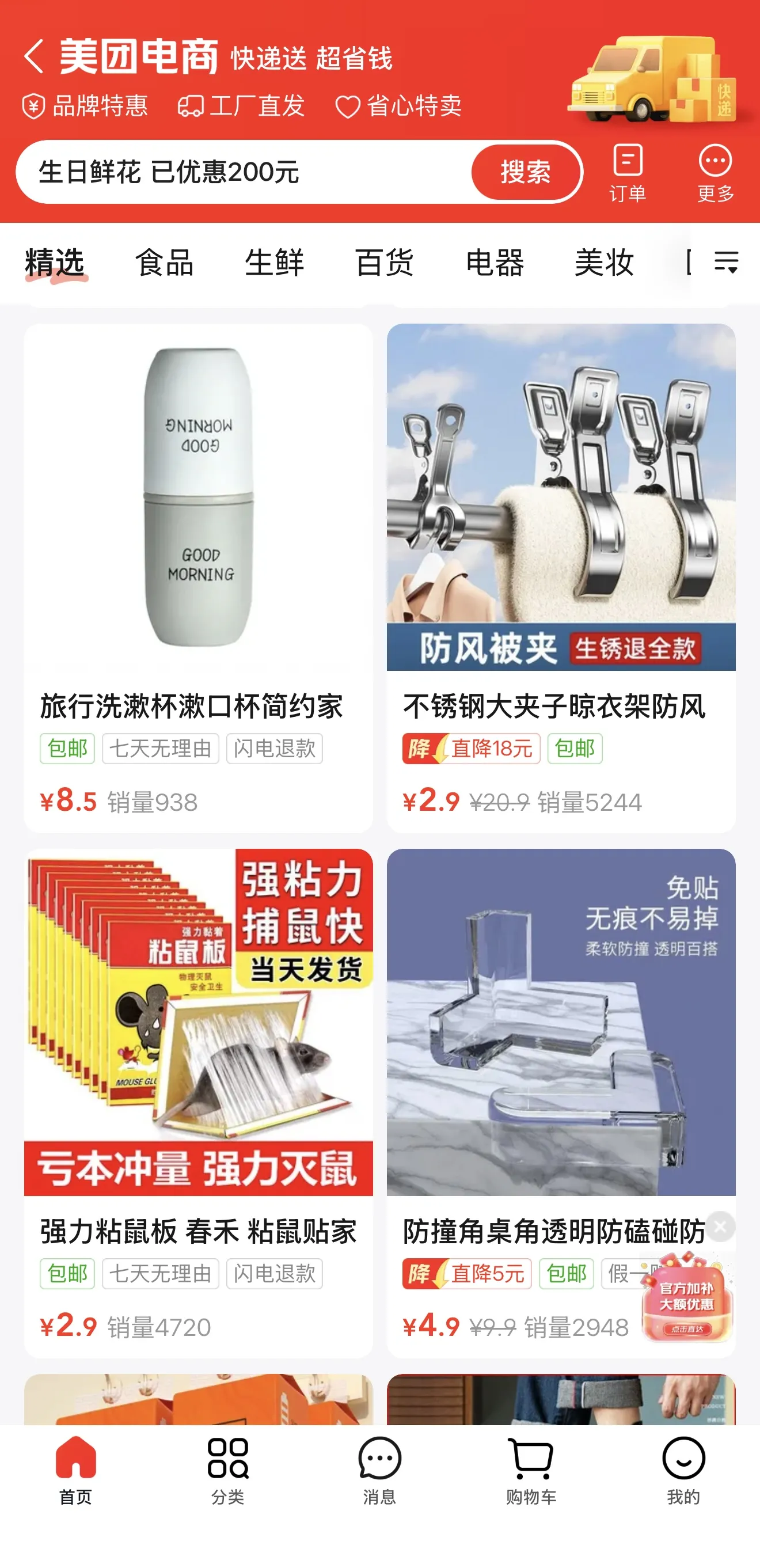
美团暂停“团好货”,内部邮件称“快递电商难以承接即时零售用户需求”
Cai Jing Wang· 2025-12-18 09:19
Core Insights - Meituan has decided to suspend its "Tuan Hao Huo" (Meituan E-commerce) business to focus on exploring new retail formats [1][4] - The decision comes as the grocery retail industry evolves, and the current express e-commerce model struggles to meet the demands of instant retail consumers [1] - Meituan's Q3 financial report indicates strong growth in its new business segments, particularly in grocery retail [1] Group 1 - The "Tuan Hao Huo" business was launched in August 2020 as a B2C e-commerce initiative and was later integrated into the Meituan app [1] - The internal email from Meituan highlights the need for change in response to industry trends and consumer needs [1] - The company plans to communicate with affected personnel regarding future plans following the business suspension [1] Group 2 - Meituan has been actively exploring new retail formats and has announced plans to expand instant retail services, including the continued expansion of its flash purchase business [1] - The "Xiang Xiao Supermarket" service network has already reached over 30 cities, including major urban centers like Beijing, Shanghai, and Guangzhou [1]
美团暂停“团好货” 曾尝试用外卖导流电商
Bei Jing Shang Bao· 2025-12-15 05:10
Core Insights - Meituan has decided to suspend its "Tuan Hao Huo" business to focus on exploring new retail formats, indicating a strategic shift in its operations [2] Group 1: Business Overview - "Tuan Hao Huo" was launched in August 2020 as a B2C e-commerce initiative and was later integrated into the Meituan app as a primary entry point [2] - The business aimed to accumulate experience in product retail but faced challenges in meeting the demands of instant retail users in the evolving grocery retail sector [2] Group 2: Strategic Shift - Since 2025, Meituan has been intensifying its exploration of new retail formats, aiming for a strategic transformation in retail [2] - In June, Meituan announced plans to expand its instant retail offerings, including the continued diversification of its flash purchase business and the gradual expansion of "Xiang Supermarket" to all first- and second-tier cities [2] - Currently, "Xiang Supermarket" has established a service network covering over 30 cities, including major urban centers like Beijing, Shanghai, Guangzhou, and Shenzhen [2]
美团暂停“团好货”,曾尝试用外卖导流电商
Bei Jing Shang Bao· 2025-12-15 04:54
Core Viewpoint - Meituan has decided to suspend its "Tuan Hao Huo" business to focus on exploring new retail formats, responding to the evolving demands of the grocery retail industry [1] Group 1: Business Decision - The internal email from Meituan's grocery retail management team indicates that the decision to pause the Tuan Hao Huo business was made after thorough research and discussion [1] - Tuan Hao Huo, initially launched in August 2020 as a B2C e-commerce initiative, was integrated into the Meituan app in December 2020 and later rebranded as Meituan E-commerce [1] - The email states that while Tuan Hao Huo has accumulated experience in product retail, the rapid innovation in the grocery retail sector has made it challenging for express e-commerce to meet the immediate retail needs of users [1] Group 2: Strategic Shift - Since 2025, Meituan has been intensifying its exploration of new retail formats, aiming for a strategic transformation and upgrade in retail [1] - In June, Meituan announced plans to fully expand into instant retail, including the continued diversification of its flash purchase business and the gradual expansion of its "Xiaoxiang Supermarket" to all first- and second-tier cities [1] - Currently, Xiaoxiang Supermarket's service network covers over 30 cities nationwide, including major cities like Beijing, Shanghai, Guangzhou, Shenzhen, Wuhan, Nanjing, and Xi'an [1]
美团暂停团好货业务,转向零售新业态
Cai Jing Wang· 2025-12-15 03:47
Core Viewpoint - Meituan has decided to suspend its "Tuan Hao Huo" business to focus on exploring new retail formats, following years of attempts to drive e-commerce through food delivery services [1] Group 1: Business Strategy - The "Tuan Hao Huo" business, a B2C e-commerce initiative launched in August 2020, has been rebranded as Meituan E-commerce and was integrated into the main app by December 2020 [1] - The internal email indicates that while the business has accumulated experience in retail, the rapid innovation in the grocery retail sector has made it challenging for delivery e-commerce to meet the demands of instant retail users [1] - Meituan is actively seeking to adapt to market trends and is undergoing a strategic transformation in its retail operations [1] Group 2: Financial Performance - Meituan's Q3 financial report indicates strong growth in its new business segment, particularly in grocery retail [1] - The company has announced plans to expand instant retail, including the continued diversification of its flash purchase services and the gradual expansion of "Xiaoxiang Supermarket" to all first- and second-tier cities [1] - As of now, the service network of Xiaoxiang Supermarket has reached over 30 cities across China, including major urban centers like Beijing, Shanghai, Guangzhou, and Shenzhen [1]

恒生科技最近怎么了?
Xin Lang Cai Jing· 2025-12-11 09:43
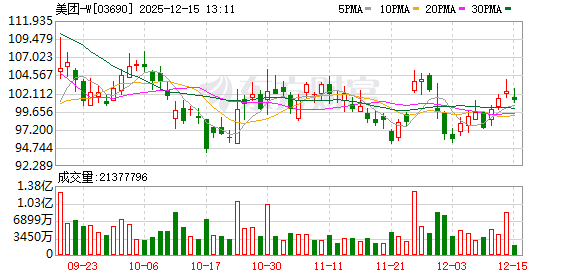
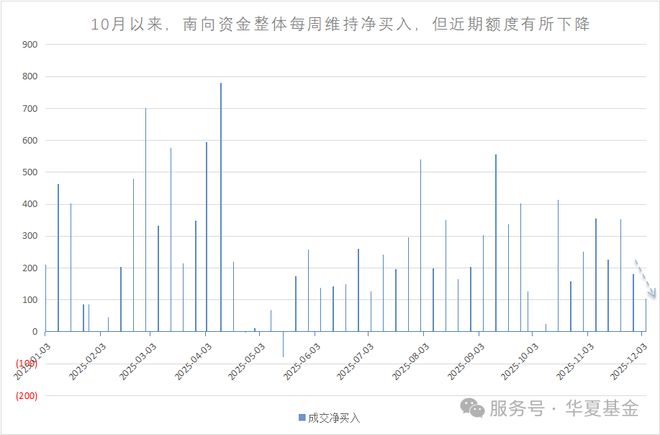
Positive Aspects - The performance of AI is strong, and there is anticipation regarding the resolution of the "food delivery war" [2] - The fundamentals of Hong Kong tech stocks remain solid, with the Hang Seng Tech Index closely tied to major companies like Alibaba, Tencent, and Meituan [2] - Recent earnings reports from Alibaba and Tencent show good returns from AI investments, while Meituan's struggles in food delivery have already been priced in by the market [2] - The "food delivery war" impact on companies like Alibaba, JD, and Meituan has likely peaked, with signs of stabilization in stock prices following earnings announcements [2] Negative Aspects - There is a slowdown in capital inflow, with some divergence in foreign investment [3][4] - Southbound capital has seen a net inflow of over 1,292.815 billion yuan this year, but the inflow has decreased in recent weeks [3] - Foreign investment is also net inflowing, but there is a split between active and passive funds, with active funds continuing to see outflows [4] Market Conditions - Attention is needed on the potential interest rate hike by the Bank of Japan, which could lead to a return of funds to Japan and increase liquidity pressure on Hong Kong stocks [7] - The recent rate cut by the Federal Reserve had a muted market reaction, indicating a cautious market sentiment [7] Investment Strategy - Monitoring trading volume is crucial, with a recommendation for dollar-cost averaging as a strategy to navigate current market conditions [8] - The average daily trading volume for the Hang Seng Index this year is 257.998 billion yuan, while the Hang Seng Tech Index averages 79.296 billion yuan [8] - A significant increase in trading volume above 100 billion yuan is necessary for a potential market turnaround, as current sentiment is low [9] - The Hang Seng Tech Index is currently undervalued at a price-to-earnings ratio of 23, indicating potential for future growth if market conditions improve [9]
餐饮会员流量跟踪系列:从美团与霸王茶姬财报再议外卖大战的得与失
Guoxin Securities· 2025-12-01 15:30
Investment Rating - The report maintains an "Outperform" rating for the industry [5][37]. Core Insights - The report analyzes the recent financial performance of major players in the food delivery sector, including Meituan, JD Group, Alibaba, and Bawang Chaji, highlighting the impact of the ongoing delivery battle on their operations and profitability [1][2][3]. - It emphasizes that the low-frequency, low-ticket order subsidies are the primary reason for the significant losses in the instant retail business, which includes food delivery [2][19]. - The report suggests that the platforms are likely to return to a more rational subsidy strategy, focusing on high-ticket orders to improve unit economics [2][19]. Summary by Sections Meituan - In Q3 2025, Meituan reported revenues of 954.9 billion yuan, a year-on-year increase of 2.0%, but faced an adjusted net loss of 160.1 billion yuan, shifting from profit to loss [1][6]. - The core local business revenue was 674.5 billion yuan, down 2.8%, with an operating loss of 140.7 billion yuan [8][10]. - The food delivery segment is expected to see a 15% increase in order volume, but a 13% decline in revenue due to a decrease in average order value (AOV) and lower monetization rates [8][10]. JD Group and Alibaba - JD Group's Q3 2025 new business losses reached 157 billion yuan, while Alibaba's instant retail business incurred losses of approximately 361 billion yuan, with a per-order loss of about 5.3 yuan [2][17]. - Both companies are experiencing significant pressure on their overall performance due to the losses in their instant retail segments [2][19]. Bawang Chaji - Bawang Chaji reported a revenue of 32.08 billion yuan in Q3 2025, a decrease of 9.4%, with an adjusted net profit of 5.03 billion yuan, down 22.2% [3][21]. - The company has chosen a cautious approach to the delivery battle, avoiding price wars to maintain brand integrity and product strategy [3][32]. - The report notes that Bawang Chaji's same-store GMV declined by 27.9% in the Greater China region, reflecting the competitive pressures in the market [21][32]. Recommendations - The report recommends focusing on leading restaurant brands that are likely to benefit from increased subsidy efforts and are in a strong operational season, such as Guoquan, Haidilao, Yum China, and Xiaocaiyuan [3][37]. - It also highlights the potential of tea brands like Guming and Mixue Group, which are actively expanding their product offerings and private traffic strategies [3][37].