
HDPI(600027)

Search documents
电力股集体走低 广东等地长协电价陆续出炉 机构称沿海省份电价预期或均有松动
Zhi Tong Cai Jing· 2025-12-29 03:17
Group 1 - Power stocks collectively declined, with Huaneng International down 7.13% at HKD 5.73, Datang Power down 4.27% at HKD 2.24, Huadian International down 2.88% at HKD 4.05, and China Resources Power down 2.19% at HKD 17.39 [1] - The announcement of long-term electricity prices for 2026 in Guangdong and other regions indicates a significant drop, with Guangdong's average trading price at 372.14 cents/kWh, a decrease of 19.72 cents/kWh year-on-year, approaching the lower limit of the benchmark price [1] - Jiangsu's average centralized bidding price for January 2026 is 324.71 yuan/MWh, reflecting a 17% decrease from the benchmark price, suggesting a potential easing of electricity price expectations in coastal provinces [1] Group 2 - The National Energy Administration reported that the total electricity consumption in November 2025 reached 835.6 billion kWh, a year-on-year increase of 6.2% [2] - The power generation in November 2025 was 779.2 billion kWh, with a year-on-year growth of 2.7%, averaging 25.97 billion kWh per day [2] - Breakdown of power generation shows thermal power at 496.95 billion kWh (down 4.20%), hydropower at 96.68 billion kWh (up 17.10%), wind power at 104.55 billion kWh (up 22.00%), and nuclear power at 39.81 billion kWh (up 4.70%) [2]



电价预期逐步明朗,如何看待火电行情表现?
Changjiang Securities· 2025-12-28 15:40
Investment Rating - The investment rating for the industry is "Positive" and maintained [7] Core Insights - The annual electricity price expectations are gradually becoming clearer, with multiple factors constraining electricity price levels. The average transaction price for Guangdong's annual electricity trading in 2026 has reached the lower limit of the medium to long-term trading price, indicating a downward price expectation [2][6] - Despite the clear downward expectation for electricity prices, the thermal power sector has shown relative stability, outperforming the hydroelectric sector, which is less impacted by price fluctuations [2][6] - The recent decline in coal prices and the expected increase in capacity prices for 2026 are expected to provide a buffer against the downward trend in long-term contract prices, supporting market expectations for thermal power company profitability [2][6] Summary by Sections Electricity Price Expectations - The electricity supply and demand situation is at risk of deterioration, and there are non-seasonal risks associated with coal prices. The market's expectation for the 2026 annual electricity price has been negatively impacted by weak monthly and spot electricity prices in some provinces [2][7] - The average monthly prices for Guangdong and Jiangsu this year were 373 and 377 cents/kWh, respectively, down by 47 and 52 cents/kWh year-on-year. The announcement of the annual trading results has confirmed the market's previous pessimistic expectations [2][6] Thermal Power Sector Performance - The thermal power sector has shown resilience despite the downward price expectations, driven by two main factors: a significant "inverted V" trend in coal prices since October and the expected stepwise increase in capacity prices for 2026 [2][6] - The price of Qinhuangdao Q5500 thermal coal peaked at 834 yuan/ton in late November but has since dropped to 672 yuan/ton by December 26, a decrease of 162 yuan/ton [2][6] - The expected increase in capacity prices by approximately 65 yuan/year·kW across provinces is anticipated to enhance the profitability stability of thermal power companies [2][6] Investment Recommendations - Recommended companies include Huaneng International, Datang Power, Guodian Power, Huadian International, China Power, China Resources Power, and Funiu Co., as well as Inner Mongolia Huadian, which represents "coal-electricity integration" thermal power [2][12][13] - For the hydroelectric sector, recommended companies include Yangtze Power, Guotou Power, Chuan Investment Energy, and Huaneng Hydropower [2][12][14] - In the renewable energy sector, companies such as Longyuan Power H, Xintian Green Energy H, China Nuclear Power, and Zhongmin Energy are recommended due to their potential for growth [2][12][15]

政策调控+成本刚性为港口煤价提供底部支撑
Guotou Securities· 2025-12-28 15:39
Investment Rating - The report maintains an investment rating of "Outperform the Market - A" for the coal industry [6]. Core Insights - The coal pricing policy in China has shifted from administrative price stabilization to market-oriented flexible regulation from 2022 to 2025, with a focus on optimizing supply structure and enhancing cost support [1][17]. - The complete cost of coal enterprises in major production areas provides a bottom support for port prices, with the support level estimated at approximately 574 RMB/ton for Shanxi and Shaanxi regions [2][30]. - The coal industry is expected to maintain its role as a cornerstone of China's energy system, with supply constraints and gradual energy structure transformation supporting a high price level for coal [11]. Summary by Sections 1. Special Research - The shift in coal pricing policy aims to stabilize energy supply while ensuring reasonable profits for coal and electricity sectors [1]. - The complete cost structure of coal enterprises includes production costs, period expenses, and taxes, with a focus on maintaining energy security and sustainable development [21]. 2. Market Review - The Shanghai Composite Index rose by 1.91% from December 13 to December 26, while the coal index fell by 0.35%, underperforming the overall market [3][32]. 3. Market Information Tracking - As of December 24, 2025, the average price of thermal coal in the Bohai Rim was reported at 695 RMB/ton, reflecting a decrease of 8 RMB/ton from December 10, 2025 [4]. - The price of coking coal at Jing Tang Port was reported at 1740 RMB/ton, an increase of 110 RMB/ton from December 12, 2025 [9]. 4. Industry Dynamics - The National Development and Reform Commission has issued guidelines to enhance the clean and efficient utilization of coal, encouraging upgrades and improvements in coal projects [10]. - The 2026 National Energy Work Conference emphasized the importance of policy support in addressing development challenges within the energy sector [10]. 5. Investment Portfolio and Recommendations - The report suggests focusing on companies with high long-term contract ratios for stable profits, such as China Shenhua, Shaanxi Coal, and China Coal Energy [11]. - It also highlights cyclical stocks like Yanzhou Coal and Jinkong Coal, as well as integrated coal and power companies like Xinji Energy and Huaihe Energy as potential investment opportunities [11].


电力中长期交易新规发布,广东等地2026年长协电价陆续出炉
GOLDEN SUN SECURITIES· 2025-12-28 12:36
Investment Rating - The industry is rated as "Maintain Buy" [3] Core Insights - The new long-term electricity trading regulations, revised for the first time in five years, aim to promote market pricing and the entry of new entities. The National Development and Reform Commission and the National Energy Administration have issued the "Basic Rules for Long-term Electricity Market," with local implementation details required by March 1, 2026. Long-term trading volume accounted for 95.9% of total market trading volume in the first three quarters of 2025, indicating the importance of this regulation in adapting to the full market entry of renewable energy and establishing a unified national electricity market [2][14] - The new regulations are expected to enhance revenue certainty for thermal and renewable energy companies. They allow for flexible pricing mechanisms linked to monthly coal price indices and spot market averages, reducing the impact of coal price fluctuations on thermal power profits. Green electricity trading is now integrated as a primary trading category, with clear pricing structures established [2][14] - The regulations expand the scope of trading participants to include new entities like virtual power plants and independent storage, defining their rights and obligations. They also eliminate the previously mandated time-of-use pricing for direct market participants, allowing for a more market-driven pricing mechanism [2][15] Summary by Sections Industry Overview - The electricity market is undergoing significant regulatory changes aimed at enhancing market efficiency and stability. The new rules are designed to accommodate the increasing integration of renewable energy sources and to create a more flexible and responsive pricing environment [2][14] Market Performance - The Shanghai Composite Index closed at 3963.68 points, up 1.88%, while the CSI 300 Index closed at 4657.24 points, up 1.95%. The CITIC Power and Utilities Index closed at 3115.63 points, up 0.67%, underperforming the CSI 300 Index by 1.28 percentage points [62][63] Key Trading Data - In Jiangsu, the average price for centralized bidding in January 2026 was 324.71 yuan per megawatt-hour, down 19.9% year-on-year and 17% below the coal power benchmark price of 391 yuan per megawatt-hour. The total transaction volume was 60.92 billion kilowatt-hours, a decrease of 7.1% from January of the previous year [7][15][16] - In Guangdong, the average transaction price for 2026 was 372.14 cents per kilowatt-hour, reflecting a 5% decrease from the previous year and a 17.8% drop from the coal benchmark price of 453 cents per kilowatt-hour. The total transaction volume increased by 5.4% to 3594.37 billion kilowatt-hours [11][15]
中国华电雄安总部项目开工
中国能源报· 2025-12-28 08:42
Core Viewpoint - The article highlights the significant progress in the construction of headquarters for central enterprises in Xiong'an New Area, emphasizing its role in alleviating non-capital functions from Beijing and promoting regional development and innovation [1]. Group 1: Project Developments - The headquarters projects for China Agricultural Development Group, China Huadian Corporation, and China Chengtong Holdings Group have commenced in Xiong'an New Area from December 25 to 28 [1]. - As of now, all four central enterprise headquarters from the second batch have started construction in Xiong'an [1]. - The Xiong'an New Area has successfully attracted eight central enterprise headquarters to relocate, demonstrating its effectiveness in the "14th Five-Year Plan" period [1]. Group 2: Regional Development and Innovation - Xiong'an New Area aims to drive regional development through the relocation of non-capital functions, leading to significant advancements in technology and industry innovation [1]. - Currently, over 400 central enterprise branches and more than 4,000 enterprises originating from Beijing have established operations in Xiong'an [1].


公用事业行业周报(2025.12.22-2025.12.26):用电增速维持高位,长协电价或存压力-20251228
Orient Securities· 2025-12-28 05:41
Investment Rating - The report maintains a "Positive" investment rating for the utility sector [4] Core Views - Electricity consumption growth remains high, but there are signs of pressure on long-term contract electricity prices due to falling coal prices and high inventory levels [7] - The utility sector is viewed as a defensive asset, with low-priced utility assets worth attention [7] - The report suggests that the electricity market will gradually allow for better pricing of electricity attributes to support the complex new power system [7] Summary by Sections Electricity Consumption - In November 2025, total electricity consumption increased by 6.2% year-on-year, a recovery from October's 4.2 percentage point decline, with a cumulative growth of 1.0% for January to November 2025 [10] - The growth rates for different sectors in November 2025 were: primary industry +7.9%, secondary industry +4.4%, tertiary industry +10.3%, and residential consumption +9.8% [10] - The report anticipates that December 2025 will see electricity consumption growth maintain around 5-6% due to ongoing growth in sectors like charging services and information technology [10] Electricity Prices - From December 19 to December 26, 2025, the average clearing price in Guangdong's electricity market was 308 RMB/MWh, up by 3.9% year-on-year [21] - In contrast, Shanxi's average market price dropped to 179 RMB/MWh, down 54.9% year-on-year [21] Coal Prices - Port coal prices continue to decline, with the Qinhuangdao Q5500 coal price at 672 RMB/ton, down 4.4% week-on-week [24] - The report notes a divergence in pit coal prices, with Shanxi's Q5500 coal price stable at 550 RMB/ton, while Inner Mongolia's price fell by 1.7% [24] Hydrology - The Three Gorges Reservoir's water level was 171 meters, with a year-on-year increase of 3.1 meters, while inflow rates decreased by 13.7% year-on-year [31] Market Performance - The utility sector index rose by 0.8% but underperformed compared to the Shanghai and Shenzhen 300 index, which increased by 1.9% [40] - Among sub-sectors, gas showed the highest weekly increase at +2.6%, while hydropower decreased by 0.8% [42] Investment Recommendations - The report recommends focusing on utility stocks, particularly in thermal power, hydropower, and nuclear power, citing improved business models and growth potential [7]




我国在建海拔最高双曲拱坝电站 叶巴滩水电站首批机组投产发电
Ren Min Ri Bao· 2025-12-27 22:00
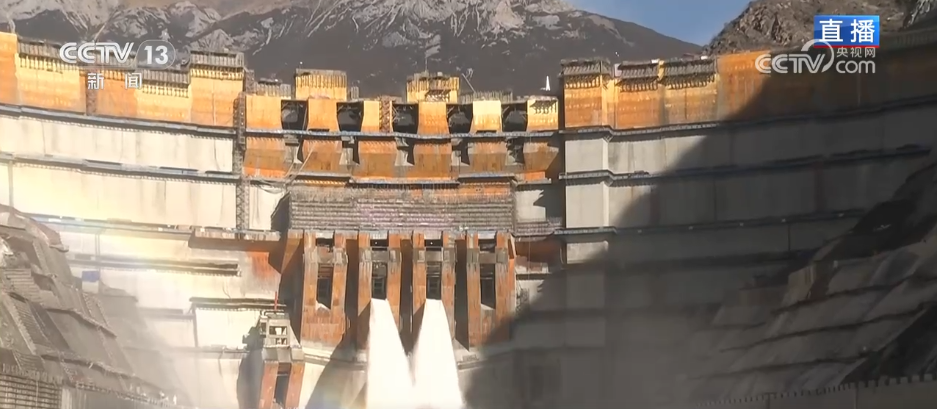
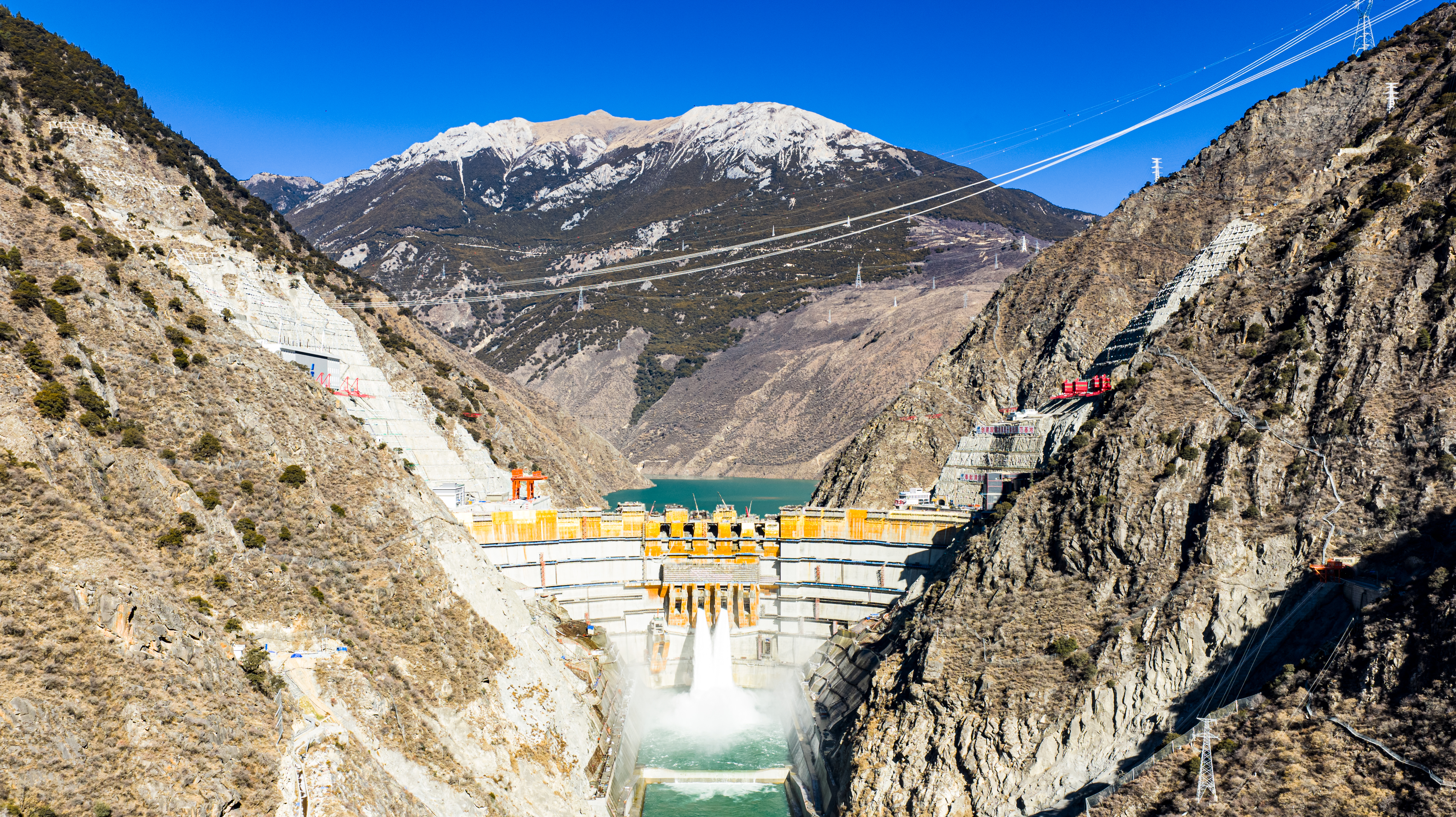
Core Viewpoint - The Yebatan Hydropower Station, the highest arch dam power station under construction in China, has officially commenced power generation with the first batch of units, marking a significant milestone in the country's "14th Five-Year Plan" major projects [1] Group 1: Project Overview - The Yebatan Hydropower Station is located on the Jinsha River, at the border of Baiyu County in Sichuan and Gongjue County in Tibet, and has the largest installed capacity of 2.24 million kilowatts in the upper reaches of the Jinsha River [1] - The dam has a maximum height of 217 meters and features characteristics such as high altitude, high cold, ultra-high arch dam, high ground stress, deep burial, and large-span underground powerhouses [1] Group 2: Technological Innovations - The project team has conducted research on concrete construction technology for ultra-high arch dams in high-altitude cold regions, achieving uninterrupted concrete pouring year-round for the first time in such conditions in China [1] Group 3: Environmental Impact - The first units to commence operation are Units 3 and 4, with the project expected to generate an average annual power output exceeding 10.2 billion kilowatt-hours, saving approximately 3.1 million tons of standard coal annually and reducing carbon dioxide emissions by over 8.3 million tons [1] - The clean electricity generated will be transmitted to Central China through the Jinshang-Hubei ±800 kV ultra-high voltage direct current transmission project [1]
大国工程进行时 | 投产发电!“云端电站”彰显我国水电建设“硬核”实力
Yang Shi Wang· 2025-12-27 07:23
Core Viewpoint - The Yebatan Hydropower Station, the highest arch dam in China, has officially commenced power generation with its first two units, marking a significant milestone in the country's "14th Five-Year Plan" for major engineering projects [1][3]. Group 1: Project Overview - The Yebatan Hydropower Station is located at an altitude of 2,894 meters and has taken nearly 10 years to construct [3][5]. - The dam features a unique double-curved arch design, allowing it to effectively manage the immense water pressure by transferring it to the surrounding mountains and solid rock foundation [5][7]. - A record-breaking concrete core sample, measuring 38.1 meters, was extracted from the dam, showcasing the robust construction quality and the advanced capabilities of China's hydropower engineering [7]. Group 2: Environmental and Ecological Impact - The hydropower station not only contributes to carbon reduction but also supports a thriving local ecosystem, with various protected wildlife species present in the area [7]. - The construction methods employed, including winter insulation measures, ensure the dam's integrity and safety during extreme temperature fluctuations, which can reach over 30 degrees Celsius [13]. Group 3: Future Developments - The remaining three units of the Yebatan Hydropower Station are currently being installed and tested, with full capacity expected to be achieved by the second half of next year [9]. - The power generation capacity of the station is substantial, with the current units capable of supplying electricity to over 40,000 households annually [15].
华电金上叶巴滩水电站首批机组正式投产发电
Xin Hua Cai Jing· 2025-12-27 06:26
Core Insights - The first batch of units at the Yebatan Hydropower Station, the highest arch dam power station under construction in China, officially commenced operation on December 27, contributing to the development of a new energy system and the construction of an energy powerhouse [1] Group 1: Project Overview - The Yebatan Hydropower Station is located on the Jinsha River, straddling the counties of Baiyu in Sichuan and Gongjue in Tibet, and is a major project under China's 14th Five-Year Plan [1] - It has a total installed capacity of 2.24 million kilowatts and a maximum dam height of 217 meters, characterized by five high and one large features: high cold, high altitude, ultra-high arch dam, high ground stress, high burial depth, and large-span underground powerhouse [1] Group 2: Operational Impact - The first units to be put into operation are units 4 and 3, achieving a "double launch" in one month [1] - Once fully operational, the station is expected to generate an average annual electricity output of over 10.2 billion kilowatt-hours, saving approximately 3.1 million tons of standard coal and reducing carbon dioxide emissions by over 8.3 million tons annually [1] Group 3: Energy Transmission and Environmental Benefits - The clean electricity generated will be transmitted through the world's first large-capacity water-solar complementary direct current transmission line, the Jinsha to Hubei ±800 kV DC project, to the central China region [1] - This project is significant for optimizing China's energy structure, promoting green and low-carbon energy transition, and enhancing national energy security [1]
11月电力数据:火电出力由增转降,用电增速同比+6.2%
CHINA DRAGON SECURITIES· 2025-12-26 13:41
Investment Rating - The industry investment rating is "Recommended" (maintained) [2] Core Viewpoints - In November, electricity consumption increased by 6.2% year-on-year, with total electricity consumption reaching 835.6 billion kilowatt-hours [6] - The report highlights a shift in electricity generation, with thermal power output declining while hydropower and renewable energy sources like nuclear, solar, and wind power showed growth [6] - The report suggests that the demand for electricity across various industries has remained stable, with significant growth in sectors such as high-tech and equipment manufacturing [6] Summary by Relevant Sections Electricity Generation Data - In November, the industrial electricity generation was 779.2 billion kilowatt-hours, a year-on-year increase of 2.7%. The average daily generation was 25.97 billion kilowatt-hours [6] - For the first eleven months, the total industrial electricity generation was 8,856.7 billion kilowatt-hours, up 2.4% year-on-year [6] - Breakdown of generation types in November: - Thermal power decreased by 4.2% year-on-year - Hydropower increased by 17.1% - Nuclear power grew by 4.7% - Wind power increased by 22.0% - Solar power surged by 23.4% [6] Electricity Consumption Data - Total electricity consumption for the first eleven months was 94,602 billion kilowatt-hours, reflecting a year-on-year growth of 5.2% [6] - Breakdown of consumption by sector in November: - Primary industry: 11.3 billion kilowatt-hours, up 7.9% - Secondary industry: 5,654 billion kilowatt-hours, up 4.4% - Tertiary industry: 1,532 billion kilowatt-hours, up 10.3% - Urban and rural residential consumption: 105.7 billion kilowatt-hours, up 9.8% [6] Investment Recommendations - The report recommends focusing on companies in the thermal and renewable energy sectors, including Huaneng International, Huadian International, Guodian Power, and Datang Power, as well as hydropower companies like Huaneng Hydropower and State Power Investment Corporation [6]