Sinopec Corp.(600028)

Search documents
原油周报:委内及中东地缘溢价修正,油价反弹-20260111
Xinda Securities· 2026-01-11 14:05
Investment Rating - The report maintains a "Positive" investment rating for the oil processing industry [1]. Core Insights - The international oil prices experienced a rebound due to geopolitical tensions, particularly involving Venezuela and Iran, with Brent and WTI prices reaching $63.34 and $59.12 per barrel, respectively, as of January 11, 2026 [2][9]. - The report highlights a significant increase in U.S. crude oil imports, which rose by 27.98% to 6.339 million barrels per day, while exports increased by 23.92% to 4.263 million barrels per day, resulting in a net import increase of 37.21% [47]. - The oil and petrochemical sector showed a mixed performance, with the sector rising by 0.29% while the broader market (CSI 300) increased by 2.79% [10]. Summary by Sections Oil Price Review - As of January 9, 2026, Brent crude futures settled at $63.34 per barrel, up $2.59 (+4.26%) from the previous week, while WTI crude futures rose to $59.12 per barrel, an increase of $1.80 (+3.14%) [26]. Offshore Drilling Services - The number of global offshore self-elevating drilling rigs remained stable at 376, and floating drilling rigs also held steady at 129 as of January 5, 2026 [32]. Crude Oil Supply - U.S. crude oil production was reported at 13.811 million barrels per day, a decrease of 16,000 barrels from the previous week, with active drilling rigs down to 409 [42]. Crude Oil Demand - U.S. refinery crude processing increased to 16.909 million barrels per day, with a refinery utilization rate of 94.70%, unchanged from the previous week [50]. Crude Oil Inventory - Total U.S. crude oil inventories decreased by 3.587 million barrels (-0.43%) to 833 million barrels as of January 2, 2026, with commercial inventories down by 3.832 million barrels (-0.91%) [62]. Refined Oil Products - As of January 9, 2026, U.S. average prices for diesel, gasoline, and jet fuel were $88.99, $72.69, and $78.96 per barrel, respectively, with varying price changes compared to the previous week [85].





——基础化工行业周报:多晶硅、丁二烯价格上涨,关注反内卷和铬盐-20260111
Guohai Securities· 2026-01-11 13:03
Investment Rating - The report maintains a "Recommended" rating for the chemical industry [1] Core Insights - The chemical industry is expected to experience an upward cycle due to the implementation of "anti-involution" policies in China and the accelerated exit of some European facilities [29] - The report highlights the potential for domestic substitution of semiconductor materials from Japan due to rising geopolitical tensions, which could benefit various companies in the sector [5] - The chromium salt industry is undergoing a value reassessment driven by increased demand from AI data centers and commercial aircraft engines, with a projected supply-demand gap of 340,900 tons by 2028 [8] Summary by Sections Industry Performance - The chemical industry has shown strong relative performance with a 1-month increase of 10.7%, 3-month increase of 9.6%, and a 12-month increase of 45.1%, outperforming the CSI 300 index [3] Price Trends - Key products such as lithium carbonate and polysilicon have seen significant price increases, supported by policy guidance and industry self-discipline [12] - The price of chromium salts has remained stable, with metal chromium priced at 82,000 CNY/ton as of January 9, 2026 [15] Investment Opportunities - Focus on companies with low-cost expansion capabilities, such as Wanhu Chemical and Hualu Hengsheng, as well as those in sectors with improving market conditions like chromium salts and phosphates [6][9] - High dividend yield opportunities are identified in state-owned enterprises like China Petroleum and China National Chemical [10] Key Company Tracking - Companies such as Dongfang Shenghong and Huabei Yihua are highlighted for their earnings potential, with projected EPS growth for 2026 [30] - The report tracks specific price movements for various chemicals, including a notable increase in the price of ammonium phosphate and a stable price for urea [17][19]



基础化工行业周报:中国石化与中国航油实施重组,尿素市场迎开门红-20260111
Huafu Securities· 2026-01-11 08:51
Investment Rating - The report maintains a positive outlook on the basic chemical industry, highlighting strong performance in various sub-sectors and suggesting potential investment opportunities in specific companies [3][4][5]. Core Insights - The restructuring of China Petroleum & Chemical Corporation (Sinopec) and China Aviation Oil (China National Aviation Fuel) is a significant development, marking the first major state-owned enterprise restructuring in 2026, which is expected to enhance the production and application of sustainable aviation fuel (SAF) [3]. - The domestic urea market has shown signs of recovery, with prices rising to over 1700 RMB per ton, a 9% increase from the lowest point in October 2025, driven by steady demand and reduced supply [3][4]. - The report identifies several investment themes, including the competitiveness of domestic tire manufacturers, the potential recovery in consumer electronics, and the resilience of certain cyclical industries [4][5][7]. Summary by Sections Market Performance - The Shanghai Composite Index rose by 3.82%, the ChiNext Index by 3.89%, and the CSI 300 Index by 2.79%. The CITIC Basic Chemical Index increased by 5.39%, and the Shenwan Chemical Index by 5.03% [13][16]. - The top-performing sub-sectors included rubber additives (17.27%), electronic chemicals (15.08%), and modified plastics (9.87%) [16]. Key Industry Dynamics - Sinopec and China Aviation Oil's restructuring aims to streamline operations and enhance the production of SAF, positioning the companies for future growth in a low-carbon economy [3]. - The urea market is expected to continue its upward trend, with a forecast for moderate price increases in the near future due to favorable supply-demand dynamics [3][4]. Investment Themes - **Tire Industry**: Domestic tire manufacturers are becoming increasingly competitive, with recommended stocks including Sailun Tire, Senqcia, General Tire, and Linglong Tire [4]. - **Consumer Electronics**: A gradual recovery in consumer electronics is anticipated, with upstream material companies expected to benefit. Recommended stocks include Dongcai Technology, Stik, Lite-On Optoelectronics, and Ruian New Materials [4]. - **Cyclical Industries**: Focus on industries with strong resilience and inventory destocking, particularly in phosphate and fluorine chemicals, as well as polyester filament [5][7]. - **Vitamin Supply**: Attention is drawn to vitamin products due to supply disruptions from BASF, which may lead to market imbalances [7].


“绿色航油”新巨头来了!详解中国石化、中国航油重组
Sou Hu Cai Jing· 2026-01-10 14:31
Core Viewpoint - The restructuring between Sinopec and China Aviation Oil represents a strategic integration aimed at creating a "super refinery" and supply system, enhancing collaboration across the entire supply chain rather than merely combining resources [1]. Group 1: Reasons for Restructuring - The aviation industry is experiencing a strong recovery, with global jet fuel demand projected to reach 389 million tons by 2025, reflecting a year-on-year growth of 3.9%. Domestic jet fuel demand is expected to exceed 40 million tons, indicating significant growth potential in this sector [2]. - Sinopec seeks more direct sales channels, while China Aviation Oil aims to secure more stable upstream resources and reduce intermediary costs through this restructuring [2]. Group 2: Strategic Significance of the Restructuring - Sinopec's sustainable aviation fuel (SAF) has been successfully tested on domestic large aircraft such as the C919 and ARJ21, with the potential to reduce carbon emissions by over 50% compared to traditional jet fuel. China Aviation Oil plays a leading role in the promotion and application of SAF, serving 585 global airline customers [3]. - This restructuring is expected to facilitate the transition of "green jet fuel" from demonstration flights to large-scale commercial use [3]. Group 3: Impact on Consumers and Investors - As the demand for overseas travel among Chinese citizens increases, a robust Chinese aviation fuel service provider can offer more reliable and unified refueling services for international flights, benefiting industry development [6]. - Jet fuel typically accounts for one-third of an airline's total costs. The restructuring is anticipated to eliminate intermediary costs, potentially lowering jet fuel prices and alleviating profit pressures on airlines, thereby enhancing route stability and service quality [6].

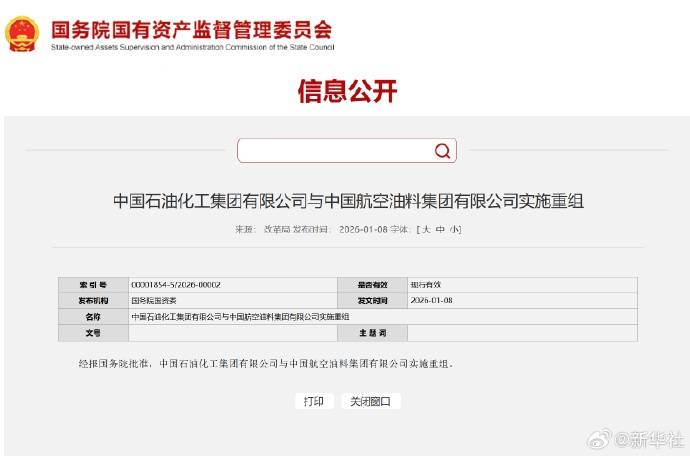
炼油炼化点评:中国石化与中国航油重组,有望加速国内SAF应用
Guoxin Securities· 2026-01-10 08:30
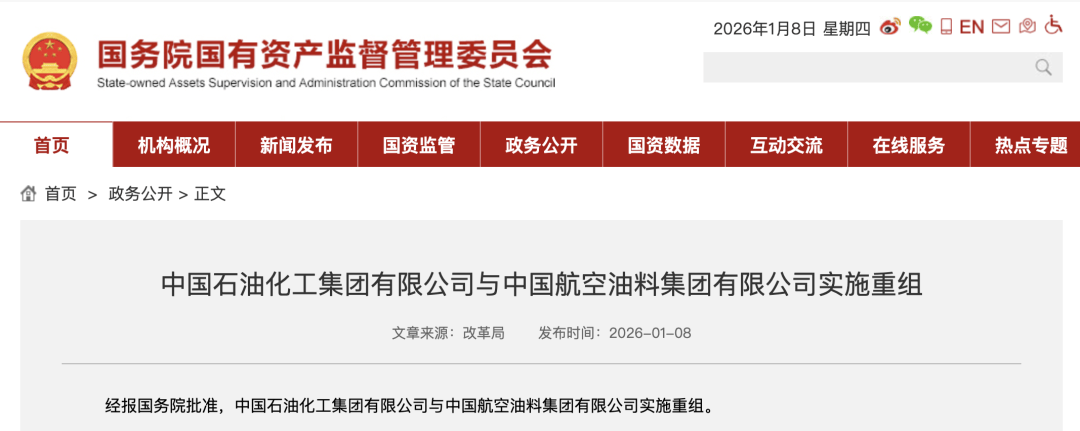
Investment Rating - The report maintains an investment rating of "Outperform the Market" for the oil and petrochemical industry [2][10]. Core Insights - The restructuring of Sinopec and China National Aviation Fuel (CNAF) is expected to enhance the resilience of China's aviation fuel supply chain [4][11]. - The merger will allow for complementary advantages in the production, sales, and refueling of aviation fuel, thereby increasing the international competitiveness of China's aviation fuel industry [4][12]. - The restructuring is also anticipated to promote the application of Sustainable Aviation Fuel (SAF) domestically [4][13]. Summary by Sections Restructuring Impact - The merger between Sinopec and CNAF, approved by the State Council, is set to take place on January 8, 2026 [3]. - Sinopec is a leading producer of aviation kerosene in China, with a projected consumption of approximately 38 million tons for the year, and a forecasted increase to 75 million tons by 2040, representing over 100% growth [5]. Competitive Landscape - CNAF is the largest aviation fuel supplier in Asia, providing services to 258 transport airports and 454 general airports in China, and supporting 585 global airline customers [11]. - The merger will streamline operations, reduce supply costs, and enhance energy security for China's aviation sector [11]. Sustainable Aviation Fuel (SAF) - Sinopec has been a pioneer in SAF production, with significant advancements in technology and production capacity since 2011 [13]. - The National Development and Reform Commission and the Civil Aviation Administration of China have initiated pilot applications for SAF, with plans for regular use starting in March 2025 [13][14]. Investment Recommendations - The report recommends investing in companies with advantages in aviation kerosene production, specifically China National Petroleum Corporation (CNPC) and companies involved in biodiesel and SAF, such as Zhenhua Energy [4][16].
中国石化申请金属单原子修饰氧化铟催化材料专利,在氨分解制氢反应中有着较高的反应活性
Sou Hu Cai Jing· 2026-01-10 06:23
Group 1 - The State Intellectual Property Office of China shows that Sinopec Limited has applied for a patent titled "Metal Single Atom Modified Indium Oxide Catalytic Material and Its Preparation Method and Application," with publication number CN121288855A and application date of July 2024 [1] - The patent abstract reveals that the invention discloses a catalytic material modified with single metal atoms in indium oxide, where the metal is from Group VIII and exists in a single atom form, demonstrating high reactivity in ammonia decomposition for hydrogen production [1] - Sinopec Limited, established in 2000 and located in Beijing, primarily engages in oil and gas extraction, with a registered capital of 12,173.97 million RMB, having invested in 268 companies and participated in 5,000 bidding projects, holding 45 trademark records and 5,000 patent records [1] Group 2 - Sinopec Petroleum and Chemical Research Institute Co., Ltd., established in 2022 and located in Beijing, focuses on research and experimental development, with a registered capital of 300 million RMB, having invested in 2 companies and participated in 3,895 bidding projects, holding 1,646 patent records [2] - The institute also possesses 293 administrative licenses, indicating its active role in research and development within the industry [2]
两大央企重组!能源领域格局再变→
Sou Hu Cai Jing· 2026-01-10 02:35
Group 1 - China Petroleum & Chemical Corporation (Sinopec) is the largest supplier of refined oil and petrochemical products in China, the world's largest refining company, and the second-largest chemical company, with the second-highest number of gas stations globally [2] - China Aviation Oil Holding Company (China Aviation Oil) is the largest integrated aviation fuel procurement, transportation, storage, testing, sales, and refueling service provider in Asia [2] Group 2 - The restructuring of Sinopec and China Aviation Oil is expected to create green collaborative value in the context of China's "dual carbon" goals, particularly in the civil aviation sector, which is a key area for carbon emission reduction [3] - Sustainable aviation fuel (SAF) is identified as a critical pathway for reducing emissions in the aviation industry, with Sinopec focusing on the development of new energy technologies and sustainable aviation fuel as a key area of interest [3] - Analysts believe that the collaboration between Sinopec and China Aviation Oil in green energy transition will not only reshape the competitive landscape of the traditional energy market but also have a profound impact on the green transformation of China's aviation industry [3]
12月CPI涨幅创34个月新高,周五沪指站上4100点 | 财经日日评
吴晓波频道· 2026-01-10 00:21
Economic Indicators - In December 2025, China's Consumer Price Index (CPI) rose by 0.8% year-on-year, marking the highest increase since February 2023, with the previous value at 0.7% [2] - The Producer Price Index (PPI) fell by 1.9% year-on-year in December, continuing a decline for the 39th consecutive month, although the rate of decline narrowed by 0.3% compared to the previous month [2] - The core CPI, excluding food and energy, increased by 1.2% year-on-year, maintaining a growth rate above 1% for four consecutive months [2] Real Estate Sector - New policies allow for a five-year extension on loans for projects on the "white list" under the real estate financing coordination mechanism, providing more time for real estate companies to sell properties and potentially stabilizing market prices [4][5] - The total loan approval amount for "white list" projects has exceeded 7 trillion yuan, indicating significant financial support for the real estate sector [4] Corporate Developments - China Petroleum & Chemical Corporation (Sinopec) and China Aviation Oil have undergone a strategic merger, which is expected to reshape the domestic aviation fuel market and enhance Sinopec's position in the aviation fuel sector [6][11] - Vanke's CEO, Yu Liang, has retired due to age, marking a significant transition in the company's leadership amid ongoing liquidity challenges in the real estate market [8][9] Automotive Industry - Honda's sales in China fell by 24.28% year-on-year in 2025, marking the fifth consecutive year of decline, with total sales dropping nearly 1 million units from peak levels [12][13] - The company has announced plans to reduce production capacity significantly, reflecting the challenges faced by traditional automakers in adapting to market changes [12] Stock Market Performance - The Shanghai Composite Index rose above 4100 points, with a trading volume of 3.12 trillion yuan, indicating strong market performance and investor interest in new sectors such as AI and commercial aerospace [16][17] - The recent market rally has exceeded expectations, with significant participation from various sectors, suggesting a potential continuation of the upward trend into the new year [17]





【石油化工】两大石化集团实施战略重组,提升成品油、贸易全产业链竞争力——中国石化集团跟踪报告之五(赵乃迪/王礼沫/蔡嘉豪)
光大证券研究· 2026-01-10 00:04
Core Viewpoint - The restructuring of China Petroleum & Chemical Corporation (Sinopec) and China Aviation Oil Group aims to enhance operational efficiency and competitiveness in the energy sector, particularly in aviation fuel supply and logistics [4][9]. Group 1: Company Overview - Sinopec is the largest supplier of refined oil and petrochemical products in China, recognized as the world's largest refining company and the second-largest chemical company, with a vast network of over 100 subsidiaries [5]. - China Aviation Oil Group, established in 2002, is Asia's largest aviation fuel enterprise, providing comprehensive services including procurement, transportation, storage, and sales of aviation fuel across numerous airports [6][7]. Group 2: Financial Performance - In 2024, Sinopec reported total revenue of 31,388 billion yuan, a decrease of 3.3% year-on-year, and a net profit attributable to shareholders of 578 billion yuan, down 13.0% from the previous year [5]. - The aviation fuel segment of Sinopec produced 31.43 million tons and sold 27.86 million tons in 2024, indicating a significant operational scale in the aviation fuel market [8]. Group 3: Strategic Implications of the Restructuring - The merger will create a closed-loop industrial chain for aviation fuel, integrating crude oil import, refining, transportation, and airport refueling, which is expected to reduce costs and enhance market influence [8]. - The restructuring aligns with the broader goals of state-owned enterprise reform, focusing on optimizing state capital layout and enhancing core competitiveness through strategic mergers and acquisitions [9].
2.8万亿元,改写能源行业版图!中石化和中航油合并
Sou Hu Cai Jing· 2026-01-09 22:24
Core Viewpoint - The restructuring of China Petroleum & Chemical Corporation (Sinopec) and China Aviation Oil Group is a strategic move approved by the State-owned Assets Supervision and Administration Commission (SASAC), aiming to create the largest vertically integrated entity in the domestic aviation fuel sector, with a combined asset scale of nearly 2.8 trillion yuan [1][4][9]. Group 1: Company Overview - Sinopec is the largest supplier of refined oil and petrochemical products in China, recognized as the world's largest refining company and the second-largest chemical company, with a total number of gas stations ranking second globally [4]. - China Aviation Oil Group is the largest aviation fuel procurement, transportation, storage, testing, sales, and refueling service provider in Asia, supplying fuel to 258 transport airports and 454 general airports in China [4]. Group 2: Financial Metrics - In 2024, Sinopec reported an operating income of approximately 407.49 billion USD (about 2.93 trillion yuan) and total assets of around 375.39 billion USD (approximately 2.69 trillion yuan) [6]. - In the same year, China Aviation Oil Group had an operating income of about 33.45 billion USD (approximately 240.83 billion yuan) and total assets of around 10.59 billion USD (approximately 76.27 billion yuan) [7]. Group 3: Strategic Implications - The merger is expected to lower aviation fuel supply costs, enhance the competitiveness of China's aviation fuel industry, and promote the green and low-carbon transition of the aviation sector [9][12]. - The integration of Sinopec and China Aviation Oil Group is anticipated to facilitate a more market-oriented development of the aviation fuel industry, potentially altering the competitive landscape [10]. Group 4: Industry Context - The restructuring reflects a broader trend of strategic and professional consolidation among central enterprises, with several other significant mergers occurring in various sectors [13][15]. - The move aligns with national goals for energy security and the dual carbon targets, emphasizing the need for a balance between enhancing state-owned enterprise competitiveness and deepening market reforms [16][17].