
Sinopec Corp.(600028)

Search documents
中国石化:第九届董事会第十次会议决议
Zheng Quan Ri Bao Wang· 2026-01-09 14:13
Group 1 - The core point of the article is that Sinopec (600028) announced the approval of multiple proposals, including the adjustment of the members of the ninth board of directors' special committee during its tenth meeting of the ninth board [1] Group 2 - The announcement reflects the company's ongoing governance and structural adjustments [1] - The adjustments may impact the company's strategic direction and operational efficiency moving forward [1] - The meeting signifies the company's commitment to maintaining effective oversight and management practices [1]
华夏时评:央企大手笔重组,国资从“做大”到“做强”
Hua Xia Shi Bao· 2026-01-09 13:16
Core Viewpoint - The restructuring of China Petroleum and Chemical Corporation (Sinopec) and China Aviation Oil Group marks a significant step in the acceleration of state-owned enterprise (SOE) reforms, aligning with the goals set forth in the 14th and 15th Five-Year Plans [2][3] Group 1: Restructuring and Reform - The restructuring of Sinopec and China Aviation Oil is part of a broader trend of strategic mergers among central enterprises, with six groups of ten SOEs undergoing strategic restructuring during the 14th Five-Year Plan [2] - This merger integrates the entire industrial chain from crude oil refining to aircraft refueling, enhancing energy security for the aviation industry and boosting international competitiveness in aviation fuel [2] Group 2: Characteristics of the 15th Five-Year Plan - The 15th Five-Year Plan is characterized by four overlapping phases: strategic function enhancement, deep transformation, risk prevention, and seizing opportunity windows [3] - Central enterprises are expected to elevate their strategic capabilities and support the modernization of China while focusing on reform and innovation to achieve quality and efficiency improvements [3] Group 3: Key Tasks for Central Enterprises - Central enterprises must focus on effective investment expansion, particularly in key areas such as infrastructure, energy resource security, and emerging industries, to support domestic demand and stabilize employment [4] - The restructuring of Sinopec and China Aviation Oil aligns with the goals of ensuring energy resource supply and fostering development across the industrial chain [4] Group 4: Future Development and Innovation - Central enterprises are positioned as key players in national technological innovation and will focus on developing new productive forces, particularly in artificial intelligence, new energy, and advanced manufacturing [5] - The challenge lies in nurturing emerging and future industries that are large enough, fast-growing, and promising, as part of the ongoing transformation to strengthen and optimize state-owned enterprises [5]


两大央企重组打造航油“巨无霸” 重塑产业格局
Zheng Quan Ri Bao Wang· 2026-01-09 13:02
Core Viewpoint - The restructuring of China Petroleum & Chemical Corporation (Sinopec) and China Aviation Oil Group is a strategic move aimed at enhancing competitiveness and optimizing resource allocation in response to international competition and green transformation [1][2]. Group 1: Restructuring Overview - The restructuring is not merely a stock or asset adjustment but a strategic integration that emphasizes specialization and resource optimization [1]. - This move is seen as a significant step in deepening state-owned enterprise (SOE) reforms and is expected to create a synergistic effect, achieving greater efficiency through collaboration [1][2]. Group 2: Industry Context - China Aviation Oil is the largest aviation fuel service provider in Asia, serving 258 transportation airports and 454 general airports, while Sinopec is the largest supplier of refined oil and petrochemical products in China [2]. - The integration is expected to leverage the complementary strengths of both companies, enhancing aviation fuel supply capabilities and reducing reliance on international markets [3]. Group 3: Market Dynamics - Post-restructuring, the companies are anticipated to reduce homogeneous competition and create a "refining-aviation fuel" synergy, improving supply chain efficiency and cost control [3]. - The restructuring aims to position the combined entity to compete with global energy giants like Shell and BP, enhancing market share and pricing power [3]. Group 4: Industry Growth Potential - The aviation fuel market is projected to grow, with China Aviation Oil reporting a 4.8% increase in sales volume and a 4.6% increase in revenue during the 14th Five-Year Plan period [5]. - The demand for aviation fuel is expected to rise significantly, driven by an increase in passenger transport, with projections of 8.1 billion passenger trips by 2026 [6]. Group 5: Green Transition - The restructuring aligns with the green transition goals, as sustainable aviation fuel (SAF) is becoming a key focus for the aviation industry [7]. - Sinopec has been a pioneer in bio-jet fuel, with successful applications in domestic airlines, which will facilitate the acceleration of energy transition in the aviation sector post-restructuring [7].
东兴晨报-20260109
Dongxing Securities· 2026-01-09 12:29
Economic News - The Ministry of Commerce responded to the export control of dual-use items to Japan, stating that China aims to prevent Japan's militarization and nuclear ambitions through legal measures [1] - The Ministry of Foreign Affairs condemned the U.S. for seizing a Russian-flagged oil tanker, emphasizing that such actions violate international law [1] - The Ministry of Commerce commented on Meta's acquisition of Manus, indicating that the government supports lawful international business operations [1] - The Ministry of Commerce discussed South Korean President Lee Jae-myung's visit to China, highlighting agreements to deepen economic cooperation [1] - The State Administration for Market Regulation held discussions with the photovoltaic industry association and leading companies to prevent market manipulation [1] - The Ministry of Industry and Information Technology warned against irrational competition in the lithium battery industry [1] - The Ministry of Finance plans to issue a 1-year fixed-rate bond totaling 135 billion yuan and a 30-year bond totaling 32 billion yuan [1] Company Insights - Sinopec announced a restructuring with China Aviation Oil Group to enhance supply chain efficiency and promote sustainable aviation fuel development [4] - Beifang Changlong plans to acquire 51% of Shunyi Technology, which is expected to constitute a major asset restructuring [4] - Quanxin Co. intends to issue convertible bonds to raise up to 312 million yuan for aviation communication projects and working capital [4] - Yingqu Technology forecasts a net profit of 540 million to 660 million yuan for 2025, driven by stable growth in various business segments [4] - Wens Foodstuff Group expects a net profit of 5 billion to 5.5 billion yuan for 2025, a decline attributed to lower sales prices of pigs and chickens [4] Industry Analysis - The securities industry is expected to see improved performance in 2026 due to supportive policies and accelerated consolidation [6][7] - The average daily trading volume has increased since early 2025, indicating improved market activity [7] - Regulatory support for technology growth companies has led to increased IPO and financing activity, benefiting brokerage revenues [8] - The self-operated investment segment is becoming crucial for brokerage firms' profitability, with a focus on maintaining stability amid market volatility [9] - The securities industry is likely to experience further consolidation, with notable mergers already occurring among leading firms [11]


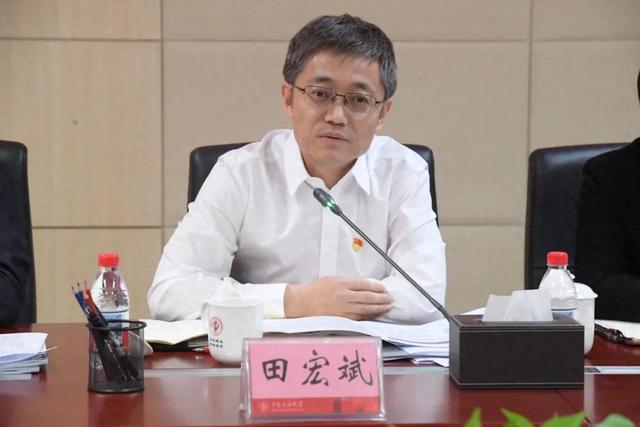
中组部决定:田宏斌履新
Bei Jing Ri Bao Ke Hu Duan· 2026-01-09 12:28
Group 1 - The core point of the article is the appointment of Tian Hongbin as the Deputy General Manager and a member of the Party Leadership Group of China Petroleum & Chemical Corporation (Sinopec) [1][3] - Tian Hongbin has a background as a senior engineer with a master's degree in engineering and has held various leadership positions within Sinopec, including roles in the Guangzhou branch and the refining division [3] - Sinopec is a large integrated energy and chemical group with a registered capital of 326.5 billion RMB, recognized as the largest supplier of refined oil and petrochemical products in China, and the world's largest refining company and second-largest chemical company [3]
中国石化取得气态介质监测仪专利无需特意配置物理分离设备即可实现对循环水监测
Sou Hu Cai Jing· 2026-01-09 12:11
Group 1 - The State Intellectual Property Office of China has granted a patent for a "gas medium monitoring instrument" to China Petroleum & Chemical Corporation and Sinopec Shanghai Gaoqiao Petrochemical Company, with the patent announcement number CN223784245U and application date of November 2024 [1] - The patent describes a gas medium monitoring instrument designed to detect leakage gases in circulating water, consisting of a sampling pipeline, gas collection component, and conductivity monitor [1] - The instrument features a simple structure that does not require special equipment for physical separation of gases from water, and it allows for external gas analysis measurement devices to be selected based on actual conditions, enhancing compatibility and functionality [1] Group 2 - China Petroleum & Chemical Corporation, established in 2000 and located in Beijing, primarily engages in oil and gas extraction, with a registered capital of approximately 12.17 billion RMB [2] - The company has invested in 268 enterprises, participated in 5,000 bidding projects, and holds 45 trademark records and 5,000 patent records, along with 41 administrative licenses [2] - Sinopec Shanghai Gaoqiao Petrochemical Company, founded in 2016 and based in Shanghai, focuses on oil, coal, and other fuel processing, with a registered capital of 1 billion RMB [2] - This company has invested in 16 enterprises, also participated in 5,000 bidding projects, holds 30 trademark records and 41 patent records, and possesses 7,775 administrative licenses [2]
股票行情快报:中国石化(600028)1月9日主力资金净卖出3.34亿元
Sou Hu Cai Jing· 2026-01-09 11:53
Core Viewpoint - As of January 9, 2026, Sinopec (600028) closed at 6.16 yuan, reflecting a 1.48% increase, with a trading volume of 6.8939 million hands and a turnover of 4.286 billion yuan [1] Group 1: Financial Performance - For the first three quarters of 2025, Sinopec reported a total revenue of 2,113.441 billion yuan, a year-on-year decrease of 10.69% [1] - The net profit attributable to shareholders was 29.984 billion yuan, down 32.23% year-on-year [1] - The net profit excluding non-recurring items was 30.552 billion yuan, a decrease of 30.51% year-on-year [1] - In Q3 2025, the company recorded a single-quarter revenue of 704.389 billion yuan, a year-on-year decline of 10.88% [1] - The single-quarter net profit attributable to shareholders was 8.501 billion yuan, down 0.5% year-on-year [1] - The net profit excluding non-recurring items for Q3 was 9.337 billion yuan, an increase of 11.35% year-on-year [1] - The company's debt ratio stood at 54.69%, with investment income of 7.342 billion yuan and financial expenses of 11.25 billion yuan [1] - The gross profit margin was reported at 15.68% [1] Group 2: Market Activity - On January 9, 2026, the net outflow of main funds was 334 million yuan, accounting for 7.78% of the total turnover [1] - The net inflow of speculative funds was 213 million yuan, representing 4.97% of the total turnover [1] - Retail investors contributed a net inflow of 120 million yuan, which is 2.81% of the total turnover [1] - Over the past 90 days, 10 institutions have given buy ratings for the stock, with an average target price of 7.34 yuan [2]

中国石化取得沸腾床-固定床系统及停工方法和应用专利
Sou Hu Cai Jing· 2026-01-09 11:53
Group 1 - The State Intellectual Property Office of China has granted a patent to China Petroleum & Chemical Corporation (Sinopec) for a technology titled "Fluidized Bed-Fixed Bed System and Shutdown Method and Application," with the announcement number CN119570523B and application date of September 2023 [1] - China Petroleum & Chemical Corporation, established in 2000 and headquartered in Beijing, primarily engages in oil and gas extraction, with a registered capital of 12,173,968.9893 million RMB [1] - Sinopec has made investments in 268 companies, participated in 5,000 bidding projects, holds 45 trademark registrations, and possesses 5,000 patents, along with 41 administrative licenses [1] Group 2 - Sinopec Ningbo Zhenhai Refining & Chemical Company, founded in 2018 and located in Ningbo, focuses on oil, coal, and other fuel processing, with a registered capital of 3,450,000 million RMB [1] - The company has invested in 4 enterprises, engaged in 5,000 bidding projects, holds 8 trademark registrations, and has 201 patents, in addition to 32 administrative licenses [1]
据中央组织部任职决定,田宏斌同志任中石化副总经理、党组成员
Xin Jing Bao· 2026-01-09 11:47
据介绍,中国石油化工集团有限公司的前身是成立于1983年7月的中国石油化工总公司。1998年7月,按 照党中央关于实施石油石化行业战略性重组的部署,在原中国石油化工总公司基础上重组成立中国石油 化工集团公司,2018年8月,经公司制改制为中国石油化工集团有限公司。公司是上下游、产供销、内 外贸一体化特大型能源化工集团公司,注册资本3265亿元人民币,董事长为法定代表人,总部设在北 京。 据中国石油报1月9日消息,根据中央组织部任职决定,田宏斌同志任中国石油化工集团有限公司副总经 理、党组成员。 公开信息显示,田宏斌,高级工程师,工程硕士。他曾任中国石化(600028)股份公司广州分公司副总 经理、党委常委,中国石化股份公司广州分公司总经理、党委副书记,中国石化集团资产公司广州分公 司总经理,中国石化股份公司广州分公司代表、党委书记等职,于2024年5月任中国石化股份公司炼油 事业部总经理。 ...
中国石化与中国航油实施重组,保障航空业能源安全
Ren Min Ri Bao· 2026-01-09 11:13
Group 1 - The core viewpoint of the news is the restructuring of China Petroleum & Chemical Corporation (Sinopec) and China National Aviation Fuel Group Corporation (China Aviation Fuel), which is expected to enhance the resilience of the aviation fuel industry chain and ensure energy security for the aviation sector [1] - Sinopec is the world's largest refining company and the largest aviation fuel producer in China, while China Aviation Fuel is the largest integrated aviation fuel service provider in Asia [1] - The restructuring is predicted to leverage the integrated advantages of refining and reduce intermediate links, thereby lowering supply costs and providing strong support for energy security in China's aviation industry [1] Group 2 - During the 14th Five-Year Plan period, the demand for aviation fuel in China is expected to grow at an average annual rate of around 4%, reaching approximately 50 million tons by 2030 and about 75 million tons by 2040 [1] - The merger is anticipated to enhance the international competitiveness of China's aviation fuel industry, which currently has production, sales, and refueling operations spread across different companies [1] - The restructuring will facilitate the combination of strengths in sustainable aviation fuel technology, research and development, and international trade, contributing to carbon reduction in the aviation industry [2]