
CITIC Securities Co., Ltd.(600030)

Search documents
机构行为更新专题:理解‘平准基金’的三个视角
Guoxin Securities· 2026-02-06 01:20
Investment Rating - The report maintains an "Outperform" rating for the non-bank financial sector [5][4]. Core Insights - The report emphasizes that the intervention of stabilization funds has become a normalized and institutionalized mechanism in capital markets, which requires institutional investors to adapt their asset allocation strategies to include policy variables for long-term considerations [2][11]. - The shift from direct intervention in individual stocks to a focus on broad-based ETFs represents a strategic evolution aimed at maintaining market stability while minimizing distortions in price signals [3][52]. - The report highlights that the actions of the "national team" in stabilizing the market have led to a gradual formation of a "slow bull" market, improving the operating environment for non-bank financial sectors and enhancing long-term valuations for brokerages and insurance companies [3][12]. Summary by Sections Overseas Perspective - Stabilization funds are viewed as essential stabilizing forces in capital markets, with examples from Japan and the U.S. demonstrating their long-term operational roles rather than short-term emergency measures [2][11]. - Japan's central bank has become a major player in market interventions, with its ETF holdings reaching approximately 37 trillion yen by the end of 2025, indicating a shift to a normalized intervention strategy [14][20]. Domestic Practice - Since 2023, the central financial institutions in China have optimized their strategies by focusing on increasing holdings in broad-based ETFs like the CSI 300 and SSE 50, which has effectively reduced irrational market volatility and guided investors towards core market assets [3][12]. - The report notes that this transition from precise stock interventions to macro-guided asset combinations has laid a solid foundation for a long-term value return in the market [3][12]. Key Company Earnings Forecasts - The report provides earnings per share (EPS) and price-to-earnings (PE) ratios for several companies, all rated as "Outperform": - China Ping An: EPS 7.87 (2025E), PE 8.56 (2025E) [4] - China Life: EPS 6.07 (2025E), PE 8.02 (2025E) [4] - China Pacific Insurance: EPS 5.40 (2025E), PE 8.28 (2025E) [4] - CITIC Securities: EPS 2.21 (2025E), PE 12.83 (2025E) [4] - Guotai Junan: EPS 1.53 (2025E), PE 13.08 (2025E) [4] - Industrial Securities: EPS 0.39 (2025E), PE 17.69 (2025E) [4] - Dongfang Securities: EPS 0.69 (2025E), PE 14.84 (2025E) [4]






中信证券吴威辰:产业趋势与基本面双轮驱动 固态电池板块步入价值兑现期
Zhong Guo Zheng Quan Bao· 2026-02-06 01:18
Core Viewpoint - The solid-state battery sector is experiencing a transition from a conceptual phase to an industrialization phase, supported by improvements in the fundamentals of related companies and accelerated industry development, indicating strong rationality and sustainability [1][2]. Industry Performance - The solid-state battery index has shown a fluctuation with a year-to-date increase of 12.15% as of January 23, which later adjusted to a 5.52% increase by February 5 [2]. - The strong performance of the sector is attributed to dual support from improved fundamentals and accelerated industry development, moving away from mere thematic speculation [2]. Industry Developments - The release of the draft national standard for solid-state batteries on December 30, 2025, is seen as a milestone that positions China to gain a competitive edge in global industry standards [2]. - Successful vehicle testing of solid-state batteries by companies like Guoxuan High-Tech and FAW Hongqi marks a significant step towards practical application [3]. Technological Advancements - The solid-state battery industry is overcoming technical bottlenecks and is expected to transition from a conceptual phase to a realization phase, indicating long-term investment value [4]. - Key challenges include the maturity of material systems and the production capacity of solid electrolytes, with prices for lithium sulfide expected to drop significantly by 2026 [4][5]. Investment Opportunities - The solid-state battery sector presents a gradient of investment opportunities, with equipment, materials, and battery segments benefiting sequentially from industry development [7]. - Equipment manufacturers are expected to be the first beneficiaries, with significant investments required for specialized equipment, which is projected to yield performance contributions starting in 2026 [7]. - The solid-state battery shipment volume is anticipated to reach 27 GWh by 2027, with a focus on investment opportunities in core areas such as electrode materials and manufacturing processes [8].
1月A股融资融券新开户数同比增157% 中资券商估值修复可期(附概念股)
Zhi Tong Cai Jing· 2026-02-06 01:03
Group 1 - The core viewpoint of the articles highlights the strong performance of A-share brokerage firms in their margin financing and securities lending business, with a significant increase in new accounts and profits expected for 2025 [1][2] - In January 2026, the number of new margin financing and securities lending accounts reached 190,500, representing a month-on-month increase of 29.5% and a year-on-year increase of 157% [1] - Major brokerages like CITIC Securities and Guotai Junan are expected to maintain their market leadership, with CITIC Securities projected to achieve a net profit exceeding 30 billion yuan for 2025, while Guotai Haitong anticipates a year-on-year profit growth rate exceeding 100% [1] Group 2 - The brokerage sector's performance is driven by strong growth in brokerage and proprietary trading businesses, with smaller brokerages like Guolian Minsheng expected to see a net profit growth rate exceeding 400% in 2025 [1] - The overall market activity is expected to remain high, supported by policy measures that promote counter-cyclical adjustments, leading to a historical high in margin financing balances [1][2] - A report from CITIC Jiantou indicates that the net profit of listed brokerages is expected to grow significantly, benefiting from an increase in average daily trading volume and sustained high margin financing balances, with many brokerages seeing profit increases exceeding 70% [2]
中信证券:具备药险资源整合能力与技术壁垒的平台型公司 有望脱颖而出
Mei Ri Jing Ji Xin Wen· 2026-02-06 00:53
Core Viewpoint - CITIC Securities believes that with the gradual clarification of the boundaries of basic medical insurance management, commercial insurance is expected to become the core incremental payment source in the healthcare industry, driven by policy dividends, data assets, and the iteration of commercial health insurance products [1] Group 1: Industry Trends - The next phase is expected to see commercial insurance comprehensive service providers addressing talent and data constraints at insurance companies, thereby unlocking structural bottlenecks faced by innovative pharmaceutical and medical device companies [1] - The industry is anticipated to enter a new development cycle of diversified payment systems in healthcare [1] Group 2: Investment Opportunities - The increasing penetration of commercial insurance payments and the maturation of cost control models driven by data intelligence are expected to favor platform companies with drug insurance resource integration capabilities and technological barriers, allowing them to emerge as industry leaders [1] - Three investment themes are suggested: 1. Platform companies empowering drug insurance collaboration, initiating a "gear shift upgrade" in the payment system [1] 2. Innovative pharmaceuticals and medical devices are likely to benefit from the incremental payment amounts brought by commercial health insurance and the enhancement of valuation systems [1] 3. Private medical terminals are set to welcome new payers, opening up future growth potential [1]
中信证券:看好存储产能扩张及技术迭代加速 半导体核心供应商空间广阔
Di Yi Cai Jing· 2026-02-06 00:37
Core Viewpoint - The report from CITIC Securities indicates that strong demand for AI will drive sustained high demand for storage, with price increases for storage chips expected to continue throughout 2026, providing ongoing industry catalysts [1] Group 1: Industry Outlook - The storage demand is projected to remain robust due to the strong demand from AI applications [1] - Price increases for storage chips are anticipated to persist, contributing positively to the industry [1] Group 2: Company Prospects - Domestic storage giants are expected to expand production capacity and accelerate technological iterations [1] - The usage of semiconductor materials related to wafer manufacturing processes is expected to increase significantly [1] - Core suppliers of materials and components for major manufacturers are likely to benefit substantially, leading to significant growth in operational data as downstream capacity comes online [1]
券商晨会精华:继续坚定看好中国资产重估进程
Xin Lang Cai Jing· 2026-02-06 00:17
Group 1 - The three major indices narrowed their declines after initially dropping over 1%, with the North Stock 50 Index falling over 2% [1] - The total trading volume in the Shanghai and Shenzhen markets was 2.18 trillion, a decrease of 304.8 billion compared to the previous trading day [1] - Over 3,700 stocks in the market declined, while the consumer sector saw significant gains, particularly in food and beverage, retail, film and television, and tourism [1] Group 2 - CITIC Securities predicts faster profit growth in sectors such as aerospace, electricity, and non-ferrous metals based on industrial indicators [2] - The Industrial Prosperity Index, constructed using six industrial indicators, shows a strong correlation with profit growth in manufacturing companies [2] - The index indicates that over 60% of industry prosperity indices correlate with corresponding profit growth rates above 50% [2] Group 3 - Huatai Securities reports that the ongoing negotiations regarding Indonesia's coal production quotas for 2026 are impacting spot coal exports [3] - The reduction in Indonesian coal spot exports is estimated to affect China's monthly average thermal coal consumption and import volumes by 0.5% and 4.2%, respectively [3] - The timing of the quota negotiations coincides with the Lunar New Year, which may amplify the emotional impact on coal consumption beyond the fundamental effects [3]
已经涨了10倍!中信证券太疯狂,给出百利天恒1322元目标价
Xin Lang Cai Jing· 2026-02-05 23:57
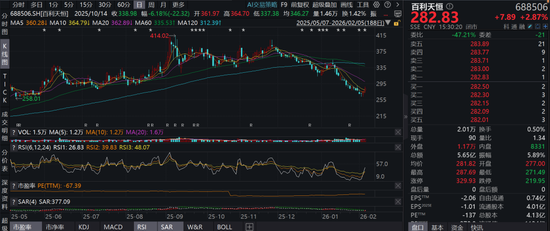
Core Viewpoint - The report from CITIC Securities on January 26, 2023, set a target price of 1322 CNY for Baillie Tianheng (688506.SH), suggesting a potential increase of 367% from its current price of 282.83 CNY, which has drawn significant attention online [1][17]. Group 1: Company Performance and Financials - Baillie Tianheng reported a net loss of 11 billion CNY for 2025, which was a 130% year-on-year decrease in net profit, contradicting CITIC's earlier prediction of a loss of 7.6 billion CNY [17][19]. - The company has experienced substantial research and development expenditures, with figures of 3.75 billion CNY, 7.46 billion CNY, 14.43 billion CNY, and 10.39 billion CNY for the first half of 2025, indicating that R&D costs have significantly outpaced revenue [22][23]. - The company’s revenue for 2022 was 701.83 million CNY, with projections of 560.42 million CNY for 2023 and 5.82 billion CNY for 2024, reflecting a substantial increase in expected revenue [23]. Group 2: Product Development and Market Position - Baillie Tianheng's drug Iza-bren (BL-B01D1) has entered a priority review process for a new indication, which is expected to enhance the company's market position significantly [19][21]. - The company has a total of 17 clinical-stage candidates, with 6 currently undergoing trials in the United States, showcasing its robust pipeline of innovative drugs [21]. - The strategic partnership with BMS, valued at 8.4 billion USD, represents one of the largest global licensing deals in the ADC field, further solidifying Baillie Tianheng's market presence [21]. Group 3: Market Sentiment and Analyst Predictions - The target price of 1322 CNY, which was later removed from the latest report, indicates a highly optimistic outlook from CITIC Securities, despite the company's recent financial struggles [19][20]. - The stock price of Baillie Tianheng has increased over tenfold since its issuance price of 24.7 CNY in January 2023, raising questions about its sustainability at current levels [27]. - Historical context suggests skepticism regarding CITIC's predictions, as similar past forecasts have not materialized positively, such as the case with Moutai [24].


投顾大扩容:新增超7000人 “ETF+投顾”成新战场
2 1 Shi Ji Jing Ji Bao Dao· 2026-02-05 23:46
财富管理"新旧动能"加速转换。 头部券商投顾数量优势显著。截至去年年底,共有22家券商的投顾人员规模超过千人,国泰海通投顾数 量5990人排名第一,中信证券以4817人紧随其后,广发证券、中国银河、中信建投、华泰证券、国信证 券等5家券商投顾数量超三千人。 Wind统计数据显示,截至2月3日,证券投资顾问人数已突破8.78万人,距离9万人大关仅一步之遥。与 2024年末的8.06万人相比,投顾队伍净增人数已超过7000人,刷新了历史纪录。 在证券行业整体"瘦身"、从业总人数回落的大背景下,这一结构性调整的背后,是行业发展逻辑的变 革。 "降费对券商行业形成了短期收入承压,长期生态重塑的核心格局,代销收入、分仓佣金等传统业务直 面冲击,同时倒逼行业加速向买方投顾与综合财富管理转型。"中航证券分析师薄晓旭认为,在此背景 下,以资产配置、持仓复盘、市场解读为核心的买方投顾服务成为行业竞争核心。ETF等低费率产品竞 争力进一步凸显,成为券商代销布局的重点方向。 易方达财富副董事长、首席投资官安伟则表示,ETF投资看似简单,但实际隐藏着较高的认知门槛与策 略复杂度。在客户资产配置需求不断提升的背景下,有必要通过专业的投 ...
大金融、大消费板块联袂逆势上涨
Mei Ri Shang Bao· 2026-02-05 22:56
Market Overview - The A-share market showed weakness, with the Shanghai Composite Index falling over 1% during the day and closing down 0.64% at 4075.92 points, while the Shenzhen Component Index and ChiNext Index dropped 1.44% and 1.55% respectively, with total trading volume around 2.19 trillion yuan, a decrease of over 300 billion yuan from the previous day [1] Financial Sector Performance - The financial sector, particularly banks and brokerages, performed actively in the afternoon, with notable gains in stocks such as Xiamen Bank, Chongqing Bank, and Shanghai Bank [2] - Institutions expect recent fiscal and monetary policies to support banks' performance, with a stable recovery in earnings projected for 2025 [2] - 中邮证券 forecasts that the insurance sector will see over 2 trillion yuan in new market funds by 2026, increasing demand for high-dividend assets [2] Brokerage Sector Insights - The brokerage sector also strengthened, with companies like Huayin Securities hitting the daily limit [3] - Major brokerages reported positive earnings for 2025, with CITIC Securities achieving revenue of 748.3 billion yuan and net profit of 300.51 billion yuan, both showing significant year-on-year growth [3] - Investment institutions believe that the brokerage sector will benefit from China's economic development and capital market reforms, enhancing its long-term investment value [3] Consumer Sector Trends - The consumer sector saw a collective rise, with retail, food and beverage, and tourism sectors performing well, highlighted by stocks like Maoye Commercial and Sanjiang Shopping hitting the daily limit [4] - The Ministry of Finance and other authorities announced a "zero tariff" policy for imported goods purchased by residents in Hainan Free Trade Port, which is expected to boost consumer spending [4] Food and Beverage Industry Analysis - The food and beverage industry is currently at a historical low in valuation, with potential investment opportunities emerging as market conditions improve [5] - The sector is expected to benefit from the application of AI technology, enhancing efficiency in retail operations, with the smart retail market projected to grow to approximately 64.5 billion yuan by 2030, at a compound annual growth rate of 22% [6]




中信证券吴威辰: 产业趋势与基本面双轮驱动 固态电池板块步入价值兑现期
Zhong Guo Zheng Quan Bao· 2026-02-05 21:03
Core Viewpoint - The solid-state battery sector has entered a phase of adjustment after an upward trend since the beginning of the year, driven by improvements in the fundamentals of related companies and accelerated industry development, indicating strong rationality and sustainability [1][2]. Industry Performance - The Tonghuashun solid-state battery index experienced a 12.15% increase by January 23, but the growth receded to 5.52% by February 5, highlighting a period of volatility [2]. - The strong performance of the sector is supported by dual factors: improved performance fundamentals and accelerated industry development, moving away from mere thematic speculation [2]. Performance Forecast - Companies in the solid-state battery sector are primarily rooted in the lithium battery supply chain, which is expected to see a comprehensive reversal in prices, orders, and profits by 2025, with many companies already issuing significant profit forecasts for that year [2]. - The sustained improvement in performance provides a solid foundation for valuation, transitioning from reliance on speculative themes to a dual driver of "performance + valuation" [2]. Industry Breakthroughs - The solid-state battery industry is witnessing multiple key breakthroughs, with the release of the national standard draft on December 30, 2025, marking a significant milestone for China in establishing industry standards and enhancing global influence [2][3]. - Successful vehicle testing of solid-state batteries by companies like Guoxuan High-Tech and FAW Hongqi indicates a critical step from laboratory to practical application [3]. Technological Advancements - The core challenges in solid-state battery production include the maturity of material systems and the scalability of production processes, with significant improvements expected in the coming years [4]. - The price of lithium sulfide is projected to drop from 2 million to 4 million yuan per ton in 2025 to below 1.5 million yuan in 2026, significantly reducing production costs [4]. Investment Opportunities - The solid-state battery sector is expected to present tiered investment opportunities, with equipment, materials, and battery segments benefiting sequentially from industry development [7]. - Equipment manufacturers are anticipated to be the first beneficiaries of the surge in industry demand, with specialized equipment for solid-state battery production expected to see significant investment [7]. - The solid-state battery shipment volume is projected to reach 27 GWh by 2027, with half-solid-state batteries expected to see initial volume in consumer electronics and automotive sectors [8]. Strategic Recommendations - The solid-state battery sector's market capitalization has surpassed 1 trillion yuan, with the sector index significantly outperforming the CSI 300 index since 2025 [8]. - As the industry transitions from a technological breakthrough phase to the initial stages of industrialization, it is recommended to focus on structural investment opportunities in battery, material, and equipment segments [8].