
SAIC MOTOR(600104)

Search documents
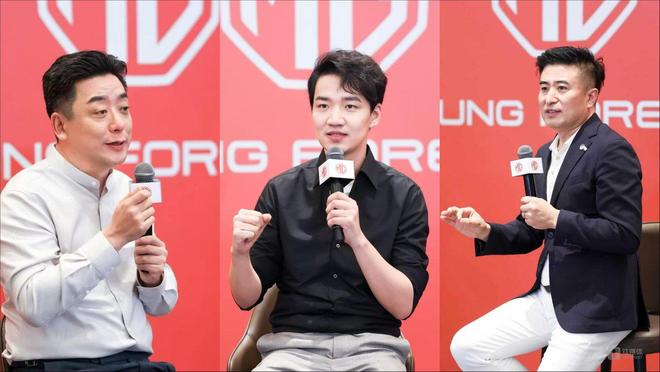
海外风光,国内冷场:MG4能否打破本土困局|钛度车库
Tai Mei Ti A P P· 2025-08-13 02:34
Core Insights - The article discusses the competitive landscape of the electric vehicle market, particularly focusing on the MG brand's new model, MG4, which aims to capture market share in the highly concentrated segment of electric hatchbacks [2][7] - MG's international success contrasts sharply with its underperformance in the Chinese market, highlighting a significant brand recognition challenge domestically [3][5] - The company plans to launch multiple new models in the coming years to enhance its product lineup and address the competitive pressures in the local market [4][9] Group 1: Market Positioning - The MG4 is positioned with a starting price of 73,800 yuan and features advanced technologies such as a semi-solid-state battery and a maximum range of 530 kilometers, aiming to compete effectively against established players like BYD Dolphin and others [2][8] - MG's overseas sales reached 243,400 units in 2024, with a 18.6% year-on-year increase in the first half of 2025, while domestic sales lagged significantly, achieving only 42,800 units in the first five months of 2025 [3][4] Group 2: Strategic Initiatives - MG plans to introduce four new or updated models in both 2025 and 2026, with two key models expected to launch in 2026 aimed at achieving monthly sales exceeding 10,000 units [4][5] - The company emphasizes a differentiated strategy focusing on user needs, leveraging unique technologies rather than merely competing on price and specifications [7][8] Group 3: Challenges Ahead - MG faces the challenge of effectively communicating its technological advantages to consumers, ensuring that features like the semi-solid-state battery translate into perceived benefits [9] - Building brand recognition and trust among Chinese consumers is crucial, as the brand needs to establish a strong narrative around its technology and design to resonate with local preferences [9][10]


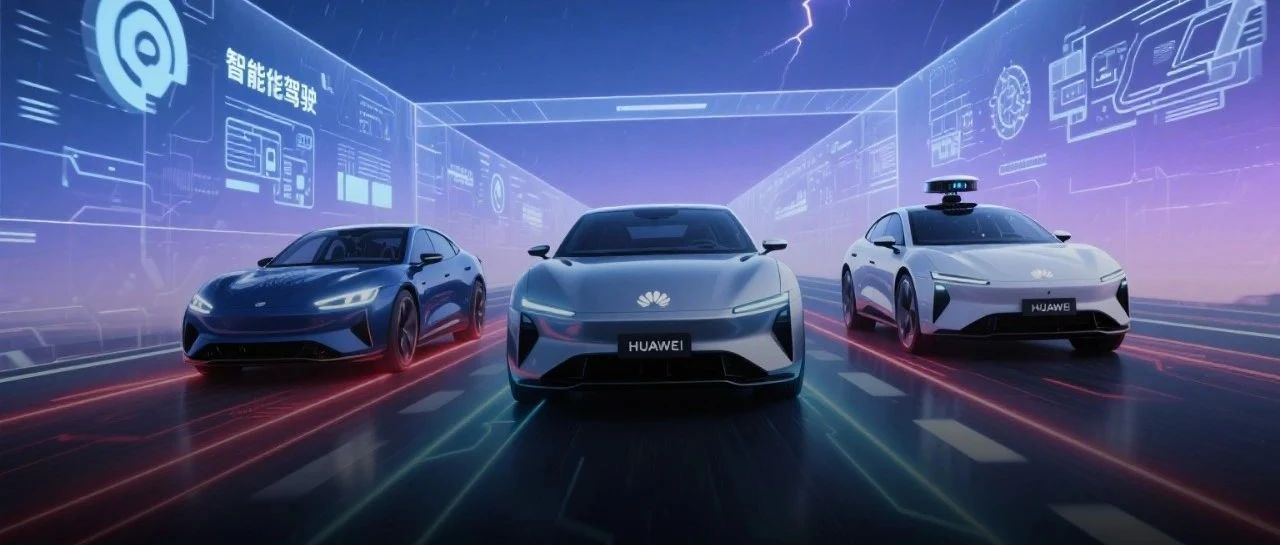
引望巧入新战场,或也取名“界”系列
汽车商业评论· 2025-08-13 01:50
Core Viewpoint - Huawei's establishment of Shenzhen Yingwang Intelligent Technology Co., Ltd. as an independent unit for its smart automotive solutions marks a strategic shift towards an "open technology platform" aimed at capturing a larger share of the Chinese automotive market through its HarmonyOS Intelligent Driving initiative [3][6]. Group 1: Huawei's Automotive Strategy - The HarmonyOS Intelligent Driving model initially showcased through Huawei's mobile devices has evolved into dedicated dealerships for the HarmonyOS Intelligent Driving brand [3]. - Yingwang focuses on providing core components such as intelligent driving systems, smart cockpits, and LiDAR to automotive manufacturers, while also offering a full-stack smart automotive solution under the HI model [3]. - By 2025, the HI model is expected to upgrade, with partnerships leading to the creation of new brands rather than just co-branded vehicles [3]. Group 2: GAC Group's New Brand Initiative - GAC Group has established Huawang Automotive Technology Co., Ltd. with a registered capital of 1.5 billion RMB to create a high-end smart automotive brand in collaboration with Huawei [4]. - The new brand will leverage the strengths of both GAC and Huawei in areas such as smart technology and ecosystem integration, aiming to redefine product development and marketing processes [4][6]. - Huawang Automotive plans to announce its brand by the end of 2024, with the first model expected to launch by the end of 2026 [4][6]. Group 3: Competitive Landscape and Market Dynamics - The automotive market in China is highly competitive, with GAC Group entering a "wartime state" to address challenges in its current brand strategy [10]. - Other companies like Dongfeng and Avita are also exploring similar models to enhance their offerings, indicating a broader industry trend towards collaboration with Huawei [10][13]. - Dongfeng's recent stock suspension hints at potential developments related to new brand creation in partnership with Yingwang [10]. Group 4: Future Brand Developments - Dongfeng has established a new company to collaborate with Yingwang on a new smart automotive brand, indicating a significant shift in their strategy [13]. - The collaboration between Dongfeng and Yingwang is seen as an upgrade from previous partnerships, with a focus on creating high-end vehicles [13]. - The potential naming conventions for these new brands remain uncertain, with speculation around the "Wang" series versus the "Jie" series [13][14]. Group 5: Huawei's Broader Brand Strategy - Huawei's HarmonyOS Intelligent Driving has expanded to include multiple brands, with the latest addition being the "Shangjie" brand, which aims to leverage Huawei's extensive resources [14][15]. - The establishment of Anhui Zhijie New Energy Co., Ltd. marks Huawei's first independent brand under the HarmonyOS umbrella, focusing on integrated operations [15]. - The collaboration with Chery for the Zhijie brand signifies a strategic move to alleviate pressure on Huawei's existing brands while aligning with the broader market trends [15].


香港自保保险公司增至6家上汽集团自保公司发出开业授权
Xin Lang Cai Jing· 2025-08-13 01:04
记者从香港保险业监管局(以下简称"香港保监局")了解到,近日,该局向由上海汽车集团股份有限公司成立的专属自保保险公司——上海汽车集团保险有限公司(以下简称"上汽集团自保公司" 香港保监局行政总监张云正表示,这已是香港今年第二家获得授权开业的自保公司。截至目前,香港一共有6家自保公司,分别为上汽集团自保公司、Wayfoong(Asia)Limited(汇丰集团的 与普通商业保险公司不同,自保公司也被称作专属自保保险公司,一般由大型企业成立,根据划定的承保范围管理其集团的内部风险。自保公司的所有权归母公司,一般情况下仅服务于集团内部 从大型企业设立自保公司的优势来看,香港保监局相关负责人对《证券日报》记者表示,自保公司的行政成本及合规门槛较低,可以提高集团的成本效益和生产力。美国全国保险监督协会的统计 对外经贸大学创新与风险管理研究中心副主任龙格对记者分析称,大型企业资产规模庞大、风险集中且地域分散,设立自保公司可定制化覆盖传统保险公司难以承保的特定风险,如海外项目、巨 上述香港保监局相关负责人介绍,该局已制定策略,专注内地国有和私人企业,以及香港本地跨国集团不断变化的风险管理需要。同时,该局正研究纳入额外专属自 ...
上汽集团获融资买入1.03亿元,近三日累计买入2.25亿元
Jin Rong Jie· 2025-08-13 00:44
融券方面,当日融券卖出4.38万股,净买入0.06万股。 8月12日,沪深两融数据显示,上汽集团获融资买入额1.03亿元,居两市第189位,当日融资偿还额1.43 亿元,净卖出4023.12万元。 最近三个交易日,8日-12日,上汽集团分别获融资买入0.47亿元、0.76亿元、1.03亿元。 ...
上汽集团(600104):巨头变革向上周期开启 携手华为缔造第二成长极
Xin Lang Cai Jing· 2025-08-13 00:29
Group 1 - The core viewpoint is that SAIC Motor Corporation is undergoing significant internal reforms and external support from the Shanghai government to enhance its competitiveness in the automotive market, particularly in the electric vehicle sector [1] - In 2018, SAIC held a dominant position in the traditional gasoline vehicle market with a market share of 28.7%, but faced challenges post-2018 due to slow electrification and declining joint venture performance [1] - The company is expected to see a decline in sales for its joint ventures, with SAIC Volkswagen and SAIC General Motors projected to sell 1.148 million and 435,000 vehicles in 2024, representing year-on-year decreases of 5.5% and 58.3% respectively [1] Group 2 - The company has implemented a management overhaul, with changes to the roles of 63 executives in the passenger vehicle sector planned for February 2025 to accelerate business transformation [1] - A restructuring of the passenger vehicle segment is set to occur in October 2024, merging the Roewe and Feifan brands to form a "large passenger vehicle segment" aimed at improving operational efficiency [1] - The company is enhancing its electric and intelligent technology capabilities, with the release of a new version of its "seven technology bases" in May 2024 to support its own brands [1] Group 3 - SAIC has extended its joint venture agreement with Volkswagen until 2040, with plans to launch 18 new models by 2030, injecting new momentum into the partnership [1] - The company has seen positive growth in sales from February to July 2025, with a year-on-year increase in operating profit of 5.348 billion yuan in Q1 2025, marking a turnaround from previous losses [1] - The company is a leader in automotive exports, ranking first in export volume from 2016 to 2023, with overseas sales accounting for 26.1% of total sales by mid-2025, up from 7.0% in 2020 [2] Group 4 - The company is adapting to changes in the EU market, with a significant drop in EV sales due to new tariffs, but plans to introduce multiple hybrid models in Europe starting in the second half of 2024 [2] - Emerging markets such as South America, the Middle East, and Southeast Asia are becoming key growth areas, with sales in Africa reaching 28,600 units in the first half of 2025, a year-on-year increase of 264.1% [2] - The company has partnered with Huawei to create a new brand, Shangjie, which will feature advanced driving technology, with the first model, Shangjie H5, set to launch in September 2025 [3] Group 5 - Revenue projections for the company are optimistic, with expected revenues of 694.035 billion yuan, 815.677 billion yuan, and 907.197 billion yuan for 2025 to 2027, representing year-on-year growth rates of 10.6%, 17.5%, and 11.2% respectively [3] - The net profit attributable to shareholders is forecasted to reach 12.40 billion yuan, 15.35 billion yuan, and 18.40 billion yuan for the same period, with substantial growth rates of 644.3%, 23.8%, and 19.9% [3] - The company is positioned to enter a new growth phase driven by internal reforms, accelerated overseas expansion, and the launch of new technology-enabled brands [3]
香港自保保险公司增至6家 上汽集团自保公司发出开业授权
Zheng Quan Ri Bao· 2025-08-12 23:47
香港保监局行政总监张云正表示,这已是香港今年第二家获得授权开业的自保公司。截至目前,香港一 共有6家自保公司,分别为上汽集团自保公司、Wayfoong(Asia)Limited(汇丰集团的全资附属公 司)、上海电气保险有限公司、中广核保险有限公司、中石化保险有限公司,以及中海石油保险有限公 司。从设立自保公司的企业主体类型来看,6家公司中有5家为国有企业,1家为跨国企业。 记者从香港保险业监管局(以下简称"香港保监局")了解到,近日,该局向由上海汽车集团股份有限公 司成立的专属自保保险公司——上海汽车集团保险有限公司(以下简称"上汽集团自保公司")发出开业 授权。这意味着香港的自保公司增加至6家。 责任编辑:张文 对外经贸大学创新与风险管理研究中心副主任龙格对记者分析称,大型企业资产规模庞大、风险集中且 地域分散,设立自保公司可定制化覆盖传统保险公司难以承保的特定风险,如海外项目、巨灾风险等, 同时节省保费成本并提升现金流灵活性。 上述香港保监局相关负责人介绍,该局已制定策略,专注内地国有和私人企业,以及香港本地跨国集团 不断变化的风险管理需要。同时,该局正研究纳入额外专属自保保险公司的架构,以及扩大风险保障 ...
车市迎“金九银十”,南京车企加速“上新”
Nan Jing Ri Bao· 2025-08-12 23:41
Group 1: Market Trends and New Models - The automotive market in Nanjing is accelerating the launch of new models in anticipation of the "golden September and silver October" sales period, with six new models introduced by the end of August, including electric vehicles and fuel light trucks [1][4] - The new MG4 electric hatchback, which features a "hand-car interconnection" system, received over 11,067 orders within 24 hours of its pre-sale launch [1][2] - The deep blue S07 iteration is set to debut in late August, following the success of its predecessor, which has sold over 220,000 units since its launch [8][9] Group 2: Investment and Production Capacity - The South Auto Jiangbei New District base has invested 3 billion yuan in the "E3 new energy platform" project, which aims to transition from traditional energy to new energy vehicles, with 70% of its production capacity dedicated to electric models [2][4] - Changan Mazda has invested nearly 200 million yuan in upgrading its production line for the EZ-60 model, which has received over 38,000 orders since its launch [3][4] Group 3: Strategic Developments - Changan Mazda's "double hundred" strategy aims to invest over 10 billion yuan in new energy-related businesses and achieve over 10 billion yuan in export revenue [3] - SAIC's Leap brand is focusing on a dual strategy of electric and diesel vehicles to meet diverse market needs, emphasizing the importance of diesel engines in specific logistics scenarios [6][7] Group 4: Industry Growth and Statistics - Nanjing's automotive manufacturing industry saw a 16.1% increase in value added in the first half of the year, with new energy vehicle production rising by 45% [4] - The emergence of micro-buses, such as the "Chuangwei Urban Elf," reflects the trend of "public transport turning small," addressing urban transportation challenges [9]

上证智能交通指数上涨0.44%,前十大权重包含航天电子等
Jin Rong Jie· 2025-08-12 16:31
Group 1 - The Shanghai Intelligent Transportation Index (H50035) rose by 0.44% to 1892.42 points, with a trading volume of 17.419 billion yuan [1] - The index has increased by 8.14% over the past month, 10.83% over the past three months, and 12.35% year-to-date [1] - The index series reflects the performance of listed companies influenced by changes in economic and consumption structures during the urbanization process, focusing on themes such as intensive, intelligent, and green low-carbon development [1] Group 2 - The top ten weighted companies in the Shanghai Intelligent Transportation Index include SAIC Motor (10.39%), Hongfa Technology (9.56%), Aerospace Electronics (9.15%), and others [1] - The index is composed entirely of companies listed on the Shanghai Stock Exchange, with a 100% representation [1] - The industry composition of the index sample shows that industrial companies account for 31.00%, consumer discretionary for 29.43%, information technology for 28.24%, and communication services for 11.33% [2] Group 3 - The index sample is adjusted biannually, with changes implemented on the next trading day following the second Friday of June and December [2] - Weight factors are generally fixed until the next scheduled adjustment, with special circumstances allowing for temporary adjustments [2] - Companies that are delisted or undergo mergers, acquisitions, or splits are handled according to specific calculation and maintenance guidelines [2]


香港自保保险公司增至6家
Zheng Quan Ri Bao· 2025-08-12 16:15
上述香港保监局相关负责人介绍,该局已制定策略,专注内地国有和私人企业,以及香港本地跨国集团 不断变化的风险管理需要。同时,该局正研究纳入额外专属自保保险公司的架构,以及扩大风险保障范 围的可行性,从而增加香港的全球竞争力。 从内地自保公司来看,目前,共有4家保险公司,分别为中石油专属财产保险股份有限公司、中远海运 财产保险自保有限公司、广东能源财产保险自保有限公司,以及中国铁路财产保险自保有限公司。上述 自保公司的经营情况显示,大多公司保持着持续盈利状态,具有"小而美"的特征。2024年,上述4家公 司全部实现盈利。 龙格认为,自保公司经营业绩较好,主要得益于股东风险数据透明。未来,预计还有更多的大型国有企 业通过设立自保公司的方式创新风险管理方式。 香港保监局行政总监张云正表示,这已是香港今年第二家获得授权开业的自保公司。截至目前,香港一 共有6家自保公司,分别为上汽集团自保公司、Wayfoong(Asia)Limited(汇丰集团的全资附属公司)、上海 电气(601727)保险有限公司、中广核保险有限公司、中石化保险有限公司,以及中海石油保险有限公 司。从设立自保公司的企业主体类型来看,6家公司中有5家为 ...
华为切入五菱,尚界之外的另一场布局
Jing Ji Guan Cha Bao· 2025-08-12 11:35
Core Insights - Huawei and SAIC-GM Wuling's collaboration is set to introduce a new price segment in China's smart driving market, with a joint project expected to launch within the year [1] - This initiative likely adopts Huawei's HI model, indicating a deep cooperation rather than mere component supply, with a new SUV priced around 150,000 RMB featuring Huawei's advanced driving system [1][2] Group 1: Market Positioning - If successful, this will mark Huawei's first entry into the high-end driving capabilities below the 200,000 RMB price point, expanding its market reach [2] - SAIC's strategy involves a dual approach across different price segments, with the new brand "Shangjie" targeting the mid-to-high-end pure electric market priced between 150,000 to 200,000 RMB [2] - The collaboration aims to enhance Wuling's brand positioning, with Baojun already attempting to integrate advanced driving features into models priced around 100,000 RMB [2] Group 2: Technology and Supply Chain - The technology route relies on Zhuoyue Technology, which has transitioned from DJI's vehicle division, focusing on cost-effective high-end driving features [2][3] - The introduction of Huawei's ADS into Baojun's higher-end models may lead to more advanced features being available in lower-priced Wuling models, creating a layered supply chain [3] - Huawei's HI model not only provides software and hardware solutions but also engages deeply in system architecture and upgrades, appealing to cost-sensitive consumers seeking high specifications [3] Group 3: Competitive Landscape - The internal structure of SAIC's offerings allows for a division between high-end and low-end markets, optimizing cost and technology reuse within the group [3] - For Huawei, this represents a test of its cost and supply chain capabilities, as entering the 150,000 RMB segment poses challenges related to hardware costs and service systems [3][4] - The competitive landscape in China's smart driving market is evolving, with the ability to balance cost, experience, and scale at the 150,000 RMB price point becoming crucial for Tier 1 positioning [4]