
Hengrui Pharma(600276)

Search documents
创新药板块利好频现、Q2多项大会值得期待,持续关注创新药、脑机接口、AI医疗
Southwest Securities· 2026-03-02 00:25
Investment Rating - The report maintains a positive outlook on the innovative drug sector, highlighting multiple favorable developments and collaborations within the industry [1]. Core Insights - The innovative drug sector has seen significant collaborations, with a total business development (BD) value exceeding $50 billion in the first two months of 2026, indicating a robust growth trajectory [16]. - The report emphasizes the upcoming Q2 conferences (AACR, ELCC, ASCO, EHA) as potential catalysts for stock price increases in innovative drug companies due to expected positive data releases [16]. - The report identifies a strong performance in the medical consumables sub-sector, which has shown a 4.0% increase, while the best-performing sectors year-to-date include hospitals, medical consumables, and offline pharmacies [21][27]. Summary by Sections 1. Investment Strategy - The pharmaceutical index rose by 0.50% this week, underperforming the CSI 300 index by 0.58 percentage points, ranking 26th in industry performance [13]. - Year-to-date, the pharmaceutical sector has increased by 2.96%, outperforming the CSI 300 index by 1.21 percentage points, ranking 24th [21]. - The current valuation level (PE-TTM) for the pharmaceutical industry is 31.06 times, with a premium of 66.99% over the entire A-share market [23]. 2. Industry and Company News - Frontier Biotech has entered a global licensing agreement with GSK for small nucleic acid drugs, with a total potential value of $963 million, including an upfront payment of $40 million [14]. - Bai Li Tianheng's dual-target antibody ADC, iza-bren, has successfully met primary endpoints in a Phase III trial for triple-negative breast cancer (TNBC), indicating significant progress in this high-risk area [15]. - The report notes that several innovative drug companies have issued profit forecasts, suggesting a sustained interest and potential growth in the sector [16]. 3. Steady Portfolio - Recommended stocks include Heng Rui Medicine (600276), Bai Jie Shen Zhou-U (688235), Yi Fan Medicine (002019), and others, indicating a diversified approach to investment in the pharmaceutical sector [16][17].

医药生物行业跟踪周报:2026版基药目录调整在即,利好拟纳入目录的中药标的-20260301
Soochow Securities· 2026-03-01 08:52
Investment Rating - The report maintains an "Overweight" rating for the pharmaceutical and biotechnology sector [1] Core Insights - The upcoming adjustment of the National Essential Medicines List (NEML) is expected to benefit traditional Chinese medicine (TCM) stocks, with a focus on companies like Zhaoli Pharmaceutical, Fangsheng Pharmaceutical, and Panlong Pharmaceutical [2][17][22] - The report ranks sub-sectors in the following order of preference: innovative drugs > research services > CXO > TCM > medical devices > pharmacies [2][11] - Historical data indicates that products included in the NEML tend to experience significant sales growth, as seen with Zhaoli Pharmaceutical's Wuling Capsule, which saw sales growth rates increase from -12.82% in 2017 to 32.52% in 2021 after being included in the NEML [19][22] Summary by Sections Investment Highlights - The report suggests focusing on TCM stocks due to the imminent NEML adjustments, recommending Zhaoli Pharmaceutical, Fangsheng Pharmaceutical, and Panlong Pharmaceutical [2][17] - The report emphasizes the importance of the NEML adjustments, which have not occurred in eight years, and the potential for TCM products to gain market share [22] R&D Progress and Company Dynamics - Recent approvals and submissions include Sanofi's Dupilumab for new indications and GSK's hepatitis B therapy application in Japan [5] - The report highlights various companies across different therapeutic areas, including innovative drugs, ADCs, and small nucleic acids, suggesting a diversified investment approach [13][22] Market Performance - The A-share pharmaceutical index has shown a year-to-date increase of 3.0%, with notable performances from specific stocks such as Aidi Te (+36.9%) and Wanze Shares (+27.5%) [10] - The report notes that the medical sector has seen varied performance, with biopharmaceuticals and medical devices showing positive trends, while chemical pharmaceuticals and medical services have faced declines [10]


研判2026!全球及中国抗肿瘤药物行业背景、发展现状、治疗方式、竞争格局及未来发展趋势研判:创新迭代赋能产业升级,精准诊疗打开广阔市场空间[图]
Chan Ye Xin Xi Wang· 2026-02-28 01:08
Core Insights - The anti-tumor drug industry is crucial for treating malignant tumors, with a shift from traditional chemotherapy to precision-targeted therapies driven by high cancer incidence globally and in China [1][2][5] Industry Overview - Anti-tumor drugs, also known as anti-cancer drugs, are designed to inhibit tumor cell growth and proliferation, playing a central role in systemic treatment for malignant tumors [2][3] - The industry is characterized by a transition towards innovative therapies such as immunotherapy and antibody-drug conjugates (ADCs), reflecting a global trend towards precision medicine [1][6] Development Background in China - China's cancer incidence and mortality rates are on the rise, with lung cancer, gastric cancer, and liver cancer being the most prevalent, creating a strong clinical demand [5][6] - The government has introduced various policies to support the development of the anti-tumor drug industry, including optimizing clinical trial approvals and enhancing drug accessibility through insurance [5][6] Current Market Analysis - The global anti-tumor drug market is projected to grow from $167 billion in 2020 to $295 billion by 2025, representing a cumulative growth of 76.7% [6][7] - In China, the anti-tumor drug market is expected to increase from 185.8 billion yuan in 2020 to 318.7 billion yuan by 2025, with a growth rate of 71.5% [8][9] Competitive Landscape - The Chinese anti-tumor drug industry features a competitive landscape where multinational companies lead in high-end markets while domestic firms are rapidly emerging [7][9] - Key domestic players like Heng Rui Medicine and BeiGene are making significant strides in core segments such as PD-1 inhibitors and small molecule targeted drugs [8][9] Future Trends - The industry is expected to focus on innovation, with a shift from generic drugs to original innovations and differentiated breakthroughs in areas like ADCs and cell therapies [10][11] - Domestic companies will continue to enhance their market share through policy support and cost advantages, while also working towards self-sufficiency in critical supply chains [11][12] - The regulatory environment will evolve to improve drug accessibility and quality, fostering a competitive ecosystem that prioritizes clinical value and patient affordability [12]




医药生物行业双周报(2026/2/13-2026/2/26)-20260227
Dongguan Securities· 2026-02-27 12:26
Investment Rating - The report maintains a "Market Perform" rating for the pharmaceutical and biotechnology industry, indicating that the industry index is expected to perform within ±10% of the market index over the next six months [3][26]. Core Insights - The SW pharmaceutical and biotechnology industry underperformed the CSI 300 index, declining by 0.95% from February 13 to February 26, 2026, which is approximately 1.1 percentage points lower than the index [11]. - Most sub-sectors within the industry recorded positive returns during the same period, with "Other Biological Products" and "Hospitals" leading with increases of 2.42% and 1.80%, respectively. Conversely, "Medical R&D Outsourcing" and "Offline Pharmacies" saw declines of 3.80% and 0.65% [12][24]. - Approximately 52% of stocks in the industry reported positive returns, with the highest gain being 14.44% for Erkang Pharmaceutical, while the largest decline was 13.28% for Zexing Pharmaceutical-U [13][16]. - The overall industry valuation remained stable, with a Price-to-Earnings (PE) ratio of approximately 51.16 times as of February 26, 2026, which is 3.82 times higher than the CSI 300 index [18][26]. Summary by Sections 1. Market Review - The SW pharmaceutical and biotechnology industry underperformed the CSI 300 index, with a decline of 0.95% from February 13 to February 26, 2026 [11]. - Most sub-sectors recorded positive returns, with "Other Biological Products" and "Hospitals" leading the gains [12]. - About 52% of stocks in the industry achieved positive returns, with notable performances from Erkang Pharmaceutical and Zexing Pharmaceutical-U [13][16]. - The industry valuation showed little change, with a PE ratio of 51.16 times [18]. 2. Industry News - The Zhejiang Medical Insurance Bureau announced a training session for the centralized procurement of two types of medical consumables, which includes cardiac pacemakers and peripheral vascular intervention micro-catheters [24]. - The average price reduction for cardiac pacemakers was reported at 43.09%, with the highest reduction reaching 76.13% for implantable pacemakers [24]. 3. Company Announcements - Sinovac Biotech announced the approval of a clinical trial for its innovative drug GB19 injection, which targets BDCA2 [25]. 4. Industry Outlook - The report suggests a focus on investment opportunities in the brain-computer interface sector, which is highlighted in the 14th Five-Year Plan [26]. - Recommended stocks for attention include leading companies in medical devices, pharmaceutical retail, aesthetic medicine, scientific services, and traditional Chinese medicine [28].




恒瑞医药今日大宗交易平价成交7.51万股,成交额424.77万元
Xin Lang Cai Jing· 2026-02-27 09:32
Group 1 - The core point of the article is that Heng Rui Pharmaceutical conducted a block trade on February 27, with a total of 75,100 shares traded, amounting to 4.2477 million yuan, which represents 0.21% of the total trading volume for that day [1][2] - The transaction price was 56.56 yuan per share, which remained unchanged compared to the market closing price of 56.56 yuan [1][2]

打破美日垄断!中国PD-1抗癌药强势崛起,叫板BMS、默沙东等跨国龙头药企
Ge Long Hui· 2026-02-27 01:35
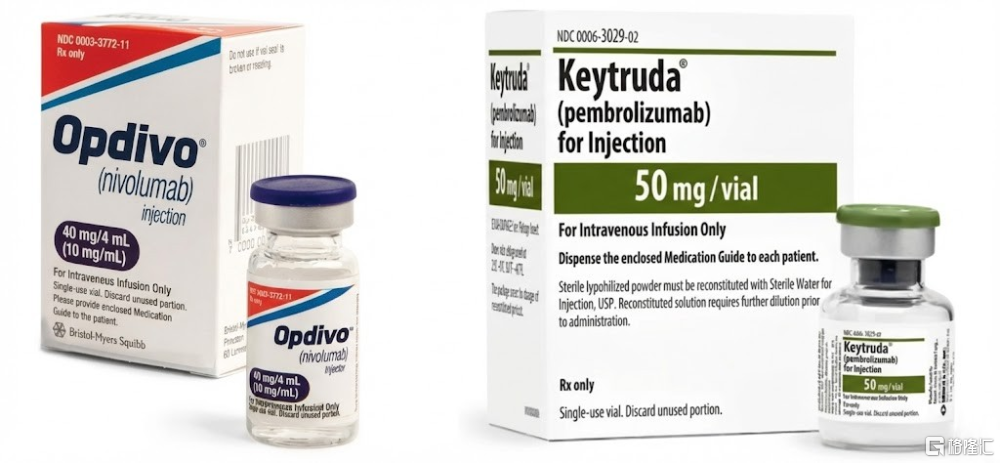
Core Insights - The introduction of PD-1 inhibitors in 2014 marked a significant turning point in the fight against cancer, with Bristol-Myers Squibb's Opdivo and Merck's Keytruda leading the charge in immunotherapy [1][3] - The competition between Opdivo and Keytruda has evolved over the years, with Keytruda ultimately becoming the top-selling drug globally by 2024 [21][22] Historical Context - The history of cancer immunotherapy began with William Coley's discovery in the late 19th century, which was followed by a long period of stagnation until the late 20th century when key immune cells were identified [4] - The discoveries of James Allison and Tasuku Honjo regarding CTLA-4 and PD-1, respectively, laid the groundwork for the development of PD-1 inhibitors [5][10] Drug Development - Opdivo was developed with strong backing from Bristol-Myers Squibb after acquiring Medarex in 2009, leading to its approval in Japan in 2014 [12] - Keytruda's development faced initial setbacks but was revitalized by Merck's strategic decision to conduct an unprecedented "super I phase" trial, leading to its approval shortly after Opdivo [14][15][16] Market Dynamics - In 2016, a critical competition occurred between Opdivo and Keytruda in the non-small cell lung cancer (NSCLC) market, which is the largest segment in oncology [17] - BMS's failure in the CheckMate-026 trial led to a significant drop in Opdivo's market position, while Merck's more selective approach in the KEYNOTE-024 trial resulted in Keytruda's success [18][19][20] Sales Performance - By 2024, Keytruda's sales reached $29.5 billion, marking an 18% increase and solidifying its position as the top-selling drug globally [21] - Opdivo, while still a major player, saw its sales decline but remained above the $10 billion mark, maintaining its status as a heavyweight in the market [22][23] Competitive Landscape - The global PD-1 inhibitor market is highly competitive, with 527 candidates in development as of early 2025, including 20 approved drugs [26][29] - In China, the market is characterized by intense competition among local manufacturers, with significant price reductions due to national healthcare negotiations [30][31] Future Outlook - Keytruda's core patent is expected to expire in 2028, potentially leading to a significant drop in sales as biosimilars enter the market [32] - A new challenger, Ivonescimab, has shown superior efficacy compared to Keytruda in clinical trials, indicating a shift towards dual-target therapies in cancer treatment [33][35]


恒瑞医药(600276) - H股公告-翌日披露报表
2026-02-26 09:15
FF305 翌日披露報表 (股份發行人 ── 已發行股份或庫存股份變動、股份購回及/或在場内出售庫存股份) 表格類別: 股票 狀態: 新提交 公司名稱: 江蘇恒瑞醫藥股份有限公司 確認 根據《主板上市規則》第13.25C條 / 《GEM上市規則》第17.27C條,我們在此確認,據我們所知所信,第一章節所述的每項股份發行或庫存股份出售或轉讓已獲發行人董事會正式授權批准,並遵 照所有適用上市規則、法律及其他監管規定進行,並在適用的情況下: (註7) (i) 上市發行人已收取其在是次股份發行或庫存股份出售或轉讓應得的全部款項; (viii) 有關債券、借貸股份、票據或公司債券的信託契約/平邊契據經已製備及簽署,有關詳情已送呈公司註冊處處長存檔(如法律如此規定)。 呈交日期: 2026年2月26日 如上市發行人的已發行股份或庫存股份出現變動而須根據《香港聯合交易所有限公司(「香港聯交所」)證券上市規則》(「《主板上市規則》」)第13.25A條 / 《香港聯合交易所有限公司GEM證券 上市規則》(「《GEM上市規則》」)第17.27A條作出披露,必須填妥第一章節 。 | 第一章節 | | | | | | | | --- ...
恒瑞医药(01276.HK)2月26日耗资1563.03万元回购27.6万股A股
Ge Long Hui· 2026-02-26 08:33
Group 1 - The company, Heng Rui Medicine (01276.HK), announced a share buyback on February 26, 2026, spending RMB 15.6303 million to repurchase 276,000 A-shares [1] - The buyback price ranged from RMB 56.61 to RMB 56.69 per share [1]
恒瑞医药2月26日斥资1563.03万元回购27.6万股A股
Zhi Tong Cai Jing· 2026-02-26 08:29
Group 1 - The company Heng Rui Medicine (600276) announced a share buyback plan on February 26, 2026, with an investment of 15.6303 million yuan to repurchase 276,000 A-shares [1]
恒瑞医药(01276)2月26日斥资1563.03万元回购27.6万股A股
智通财经网· 2026-02-26 08:26
Group 1 - The company, Heng Rui Medicine (stock code: 01276), announced a share buyback plan [1] - The company will spend 15.6303 million yuan to repurchase 276,000 A-shares [1] - The buyback is scheduled to take place on February 26, 2026 [1]