JAC(600418)

Search documents
21.76亿元主力资金今日撤离汽车板块
Zheng Quan Shi Bao Wang· 2025-10-27 09:15
Market Overview - The Shanghai Composite Index rose by 1.18% on October 27, with 28 out of 31 sectors experiencing gains, led by the communication and electronics sectors, which increased by 3.22% and 2.96% respectively [1] - The automotive sector saw a modest increase of 0.66%, while the media, food and beverage, and real estate sectors faced declines of 0.95%, 0.20%, and 0.11% respectively [1] Capital Flow Analysis - The overall net outflow of capital from the two markets was 136 million yuan, with 12 sectors experiencing net inflows [1] - The electronics sector had the highest net inflow of capital, totaling 6.112 billion yuan, followed by the non-ferrous metals sector with a net inflow of 2.529 billion yuan [1] Automotive Sector Performance - Within the automotive sector, 280 stocks were tracked, with 170 stocks rising and 103 stocks declining; 4 stocks hit the daily limit up [2] - The top three stocks with the highest net inflow were Jianghuai Automobile (2.08 billion yuan), Jinlong Automobile (1.90 billion yuan), and Xinquan Co. (1.20 billion yuan) [2] - The sector experienced a net outflow of 2.176 billion yuan, with nine stocks seeing outflows exceeding 100 million yuan, led by Seres (4.81 billion yuan), Top Group (3.33 billion yuan), and BYD (2.63 billion yuan) [2][3] Automotive Sector Capital Inflow and Outflow - The top gainers in the automotive sector included Jianghuai Automobile (5.01%), Jinlong Automobile (10.01%), and Xinquan Co. (2.12%) [2] - The stocks with the highest capital outflow included Seres (-0.61%), Top Group (-0.85%), and BYD (0.24%) [3]




安徽国企改革板块10月27日涨1.73%,皖能电力领涨,主力资金净流入1.56亿元



Sou Hu Cai Jing· 2025-10-27 08:40
Market Performance - The Anhui state-owned enterprise reform sector rose by 1.73% compared to the previous trading day, with Waneng Electric Power leading the gains [1] - The Shanghai Composite Index closed at 3996.94, up 1.18%, while the Shenzhen Component Index closed at 13489.4, up 1.51% [1] Key Stocks in Anhui State-Owned Enterprise Reform Sector - Waneng Electric Power (000543) closed at 8.65, up 10.05%, with a trading volume of 1.0268 million shares and a transaction value of 870 million [1] - Anhui Heli (600761) closed at 21.76, up 6.41%, with a trading volume of 295,300 shares and a transaction value of 634 million [1] - Tongguan Copper Foil (301217) closed at 32.10, up 6.05%, with a trading volume of 510,300 shares and a transaction value of 1.626 billion [1] - Jianghuai Automobile (600418) closed at 52.79, up 5.01%, with a trading volume of 721,100 shares and a transaction value of 3.777 billion [1] - Tongling Nonferrous Metals (000630) closed at 5.86, up 2.81%, with a trading volume of 3.9126 million shares and a transaction value of 2.299 billion [1] Capital Flow Analysis - The Anhui state-owned enterprise reform sector saw a net inflow of 156 million from main funds, while speculative funds experienced a net outflow of 231 million [2] - Retail investors contributed a net inflow of 74.36 million [2] Individual Stock Capital Flow - Jinghe Integrated (688249) had a main fund net inflow of 242 million, but a speculative fund net outflow of 42.99 million [3] - Jianghuai Automobile (600418) saw a main fund net inflow of 160 million, with a speculative fund net outflow of 166 million [3] - Waneng Electric Power (000543) experienced a main fund net inflow of 64.71 million, while speculative funds had a net outflow of 57.96 million [3]

江淮汽车股价涨5.01%,天弘基金旗下1只基金重仓,持有1.4万股浮盈赚取3.53万元
Xin Lang Cai Jing· 2025-10-27 02:32
Group 1 - Jianghuai Automobile's stock increased by 5.01%, reaching 52.79 yuan per share, with a trading volume of 1.672 billion yuan and a turnover rate of 1.47%, resulting in a total market capitalization of 115.294 billion yuan [1] - The company, Anhui Jianghuai Automobile Group Co., Ltd., was established on September 30, 1999, and went public on August 24, 2001. Its main business includes the research, production, sales, and service of commercial vehicles, passenger vehicles, automotive chassis, and core automotive components [1] - The revenue composition of Jianghuai Automobile is as follows: commercial vehicles 54.97%, passenger vehicles 25.10%, others 11.82%, buses 7.67%, and chassis 0.44% [1] Group 2 - Tianhong Fund has one fund heavily invested in Jianghuai Automobile, specifically the Tianhong CSI Engineering Machinery Theme Index Fund A (022069), which reduced its holdings by 3,000 shares in the second quarter, now holding 14,000 shares, accounting for 2.59% of the fund's net value, ranking as the eighth largest holding [2] - The Tianhong CSI Engineering Machinery Theme Index Fund A was established on October 29, 2024, with a latest scale of 6.9249 million. Year-to-date returns are 29.36%, ranking 1749 out of 4218 in its category, while since inception returns are 23.94% [2] Group 3 - The fund manager of Tianhong CSI Engineering Machinery Theme Index Fund A is He Yuxuan, who has been in the position for 4 years and 120 days. The total asset size of the fund is 6.882 billion yuan, with the best fund return during the tenure being 101.32% and the worst being -58.88% [3]
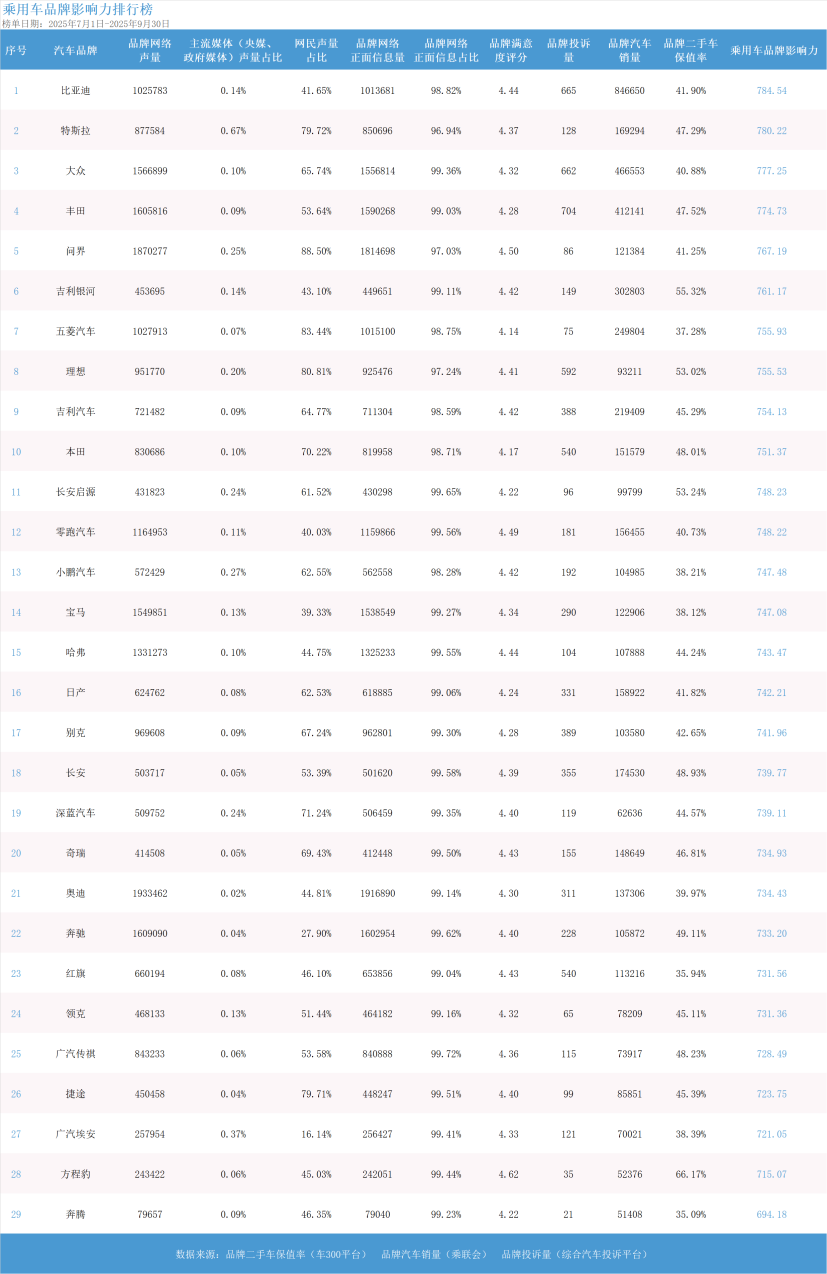
中欧协会智能网联汽车分会联合清博指数发布2025年三季度中国汽车品牌影响力指数报告
Xin Hua Wang· 2025-10-27 02:21
Core Insights - The report indicates a significant evolution in the automotive brand landscape in China, characterized by intense competition in the passenger car market and a stable consolidation in the commercial vehicle market [1][9]. Passenger Car Market - Domestic brands dominate the top ten influential brands, with BYD leading at 784.54 points, followed by Tesla at 780.22 points, showcasing strong sales and positive user reputation [2][3]. - The rise of new entrants is notable, with the AITO brand (问界) achieving fifth place with 767.19 points, driven by the successful launch of the new M7 model [3][9]. - The second tier includes Geely Galaxy at sixth with 761.17 points and Wuling at seventh with 755.93 points, both demonstrating strong market positioning and user engagement [3][9]. Commercial Vehicle Market - The commercial vehicle sector shows a clearer competitive structure, with China FAW leading the heavy truck market at 728.99 points, followed closely by China National Heavy Duty Truck Group and Dongfeng [4][9]. - The light truck market is led by Changan with 718.38 points, followed by JAC and Beiqi Foton, indicating a diversified competitive landscape [7][9]. Brand Influence Metrics - The assessment integrates authoritative production and sales data from the China Association of Automobile Manufacturers and the China Passenger Car Association, along with social media sentiment analysis and vehicle depreciation data [1][9]. - The report emphasizes the importance of brand influence being increasingly reliant on communication volume and user reputation, highlighting a shift from scale competition to lifecycle value competition in the automotive industry [9].


2025年全国汽车以旧换新补贴申请量突破1000万份,欣旺达推出新一代固态电池 | 投研报告
Zhong Guo Neng Yuan Wang· 2025-10-27 01:27
Group 1 - The automotive sector underperformed the broader market this week, with the CSI 300 index rising by 3.24% while the automotive sector increased by 2.92%, ranking 10th among A-share Shenwan first-level industries [2] - The SW passenger vehicle index rose by 0.63%, with Jianghuai Automobile and BAIC Blue Valley leading the gains [2] - The SW commercial vehicle index increased by 3.00%, with King Long Automobile and Dongfeng Motor leading the gains [2] - The SW automotive parts index saw a rise of 4.04%, with Biaobang Co. and Aolian Electronics leading the gains [2] Group 2 - Key industry news includes: 1. The number of applications for the national vehicle trade-in subsidy exceeded 10 million by 2025 [2] 2. In September, the monthly delivery volume of functional unmanned vehicles in Shenzhen surpassed 1 million [2] 3. Xinwangda launched a new generation solid-state battery with an energy density of 400 Wh/kg [2] 4. New Stone Technology completed over $600 million in Series D financing [2] 5. The "Energy-saving and New Energy Vehicle Technology Roadmap 3.0" was released [2] 6. SAIC Volkswagen and Neura Robotics are developing cognitive robotic systems for automotive manufacturing [2] 7. CATL plans to establish over 2,500 chocolate battery swap stations by 2026 [2] 8. Qijing's first model is scheduled for launch in mid-next year [2] 9. Meituan's unmanned vehicles have achieved large-scale deployment in Shenzhen [2] 10. Pony.ai and Stellantis are collaborating to develop L4 autonomous vehicles for promotion in Europe next year [2] 11. Leju Robotics completed nearly 1.5 billion yuan in Pre-IPO financing [2] Group 3 - Recommendations for vehicle manufacturers include: BYD, Great Wall Motors, Leap Motor, Seres, BAIC Blue Valley, Jianghuai Automobile, Li Auto-W, Xpeng Motors-W, Geely, GAC Group, and Changan Automobile [3] - For commercial vehicles, recommended companies include China National Heavy Duty Truck Group, FAW Jiefang, Weichai Power, Tianrun Industrial, and Foton Motor [3] - In the automotive parts sector, recommended companies include Songyuan Safety, Senqilin, Aikedi, Junsheng Electronics, Zhejiang Xiantong, Fuyao Glass, Bertley, Weichai Power, Wuxi Zhenhua, China Automotive Research, Desay SV, Huguang Co., Shuanghuan Transmission, Songyuan Co., Top Group, Best, Sanhua Intelligent Control, Debang Lighting, Changshu Automotive Trim, New Spring Co., Baolong Technology, Jingzhu Technology, Kabeiyi, Jifeng Co., Shanghai Yanpu, Tenglong Co., Mingxin Xuteng, and Longsheng Technology [3]



重磅|刚刚,汽车零部件行业发生一件大事
汽车商业评论· 2025-10-26 23:07
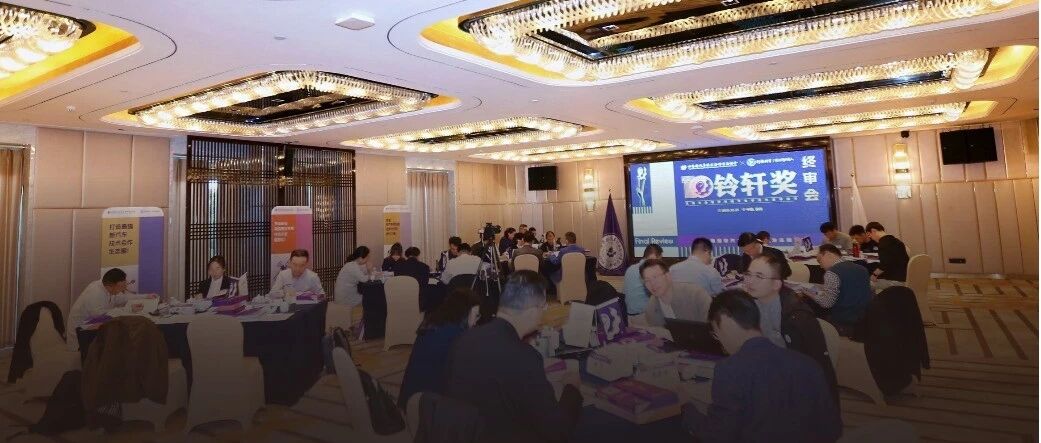
Core Viewpoint - The article discusses the significance of the Lingxuan Award in recognizing innovation in the Chinese automotive parts industry, highlighting its evolution over the past decade and its role in shaping the supply chain amidst the trends of electrification and intelligence in the automotive sector [10][12][50]. Group 1: Overview of the Lingxuan Award - The Lingxuan Award is an annual recognition for contributions in the automotive parts sector, evaluated by procurement and R&D leaders from major automotive companies in China [12][20]. - The award has evolved from filling a gap in the industry to becoming a core reference for supply chain choices among major automotive manufacturers [17][50]. - The award aims to discover cost-effective supply chains, enhance local industry security, and promote the transition to "new automobiles" in the era of electrification and intelligence [17][49]. Group 2: Evaluation Process - The evaluation process for the Lingxuan Award has shifted to a more immersive workshop format, allowing for in-depth discussions among judges from procurement and R&D backgrounds [25][30]. - The final evaluation involved 127 cases, with judges discussing and voting on the most innovative and applicable technologies across various categories [10][38]. - The award ceremony will take place during the WNAT-CES 2025 event in December, showcasing the winners and their contributions [10][20]. Group 3: Industry Trends and Insights - The evaluation revealed that 58% of the cases focused on intelligent cockpits, intelligent driving, automotive software, and chips, indicating a shift towards "software-defined vehicles" [38][41]. - Key trends identified include the emergence of new enterprises as vital players in the supply chain, the need for systematic upgrades in cost, safety, and international adaptability, and the growing importance of "emotional value" in user experience [39][41][48]. - The judges emphasized that cost control is paramount in product evaluation, with a focus on integrated architecture to balance cost reduction and intelligent features [44][45]. Group 4: Future Directions - The Lingxuan Award serves as a platform for self-reflection and collaborative evolution within the automotive supply chain, fostering connections between parts manufacturers and automotive companies [50]. - The participation of new enterprises, which accounted for over 20% of the cases, highlights the infusion of fresh energy and innovative technologies into the local supply chain [49][50]. - The award's ongoing mission aligns with the industry's pressing needs, ensuring that it remains relevant and impactful in the face of rapid technological advancements [49][50].



第三季度汽车品牌影响力指数发布:乘用车格局生变 商用车头部稳固
Zheng Quan Ri Bao Wang· 2025-10-26 10:56
Core Insights - The report indicates a significant shift in the automotive brand landscape, highlighting intense evolution in the passenger car market and stable consolidation in the commercial vehicle market [1][5] Passenger Car Market - Domestic brands occupy seven out of the top ten positions in brand influence, with BYD leading at 784.54 points, followed by Tesla at 780.22 points, showcasing strong local brand performance [2][5] - The new player, AITO, made a remarkable entry into the top five with a score of 767.19, reflecting explosive growth in online presence [2] - Traditional joint venture brands are facing challenges as they maintain sales but experience high complaint volumes, indicating a decline in user satisfaction compared to local brands [2][5] Commercial Vehicle Market - The commercial vehicle sector shows a clearer competitive landscape, with China FAW leading the heavy truck market at 728.99 points, followed closely by China National Heavy Duty Truck and Dongfeng [3] - In the pickup segment, Great Wall maintains a strong lead with 699.74 points, while Changan and SAIC Maxus follow [3] - The light truck market is highly competitive, with Changan leading at 718.38 points, and JAC and Beiqi Foton closely trailing [3] Brand Influence and User Engagement - The report emphasizes the importance of synergy between media presence and user reputation in enhancing brand influence, particularly in the passenger car sector [4] - AITO's rise exemplifies the effective combination of technology, ecosystem, and user satisfaction, supported by a low complaint volume [4] - In the commercial vehicle sector, brand influence is built on reliability and long-term professional credibility, with China FAW showcasing a unique advantage in policy-driven markets [4] Industry Evolution - The third-quarter index indicates a transition in the Chinese automotive industry from scale competition to lifecycle value competition, driven by electrification and intelligence [5] - The focus on brand building has shifted from mere volume growth to a comprehensive competitive strength that includes communication breadth, user reputation, technical capability, and market performance [5]
解放破万,福田前三,徐工/奇瑞领涨,牵引车9月实销超5万辆大增124%! | 头条
第一商用车网· 2025-10-25 14:00
Core Viewpoint - In September 2025, domestic tractor truck sales experienced a significant year-on-year increase of 124%, marking a "six consecutive months of growth" trend. Cumulative sales for the year increased by 36% compared to the same period last year, with a net increase of over 84,500 units [1][4][29]. Sales Performance - In September 2025, the actual sales of tractor trucks reached 50,700 units, representing a month-on-month increase of 28% and a year-on-year increase of 124%. This growth rate is 32 percentage points higher than the overall heavy truck market growth rate of 92% [4][11]. - The sales of tractor trucks accounted for approximately 60.75% of the total heavy truck market in September, an increase from 59.30% in the previous month and significantly higher than the 53.10% share in 2024 [6][15]. - The cumulative sales from January to September 2025 reached 317,400 units, with a year-on-year growth of 36%, an increase of 9 percentage points compared to the growth rate after August [18][21]. Market Share and Competition - The top ten companies in the tractor truck market accounted for 96.30% of the total market share in September, with the leading company, FAW Jiefang, holding over 20% of the market share at 23.30% [15][21]. - In September, FAW Jiefang sold 11,800 units, followed by China National Heavy Duty Truck Group with 9,175 units and Foton Motor with 7,252 units, all of which achieved year-on-year growth [9][12]. New Energy Vehicles - The proportion of new energy vehicles in the tractor truck market reached nearly one-third in the first nine months of 2025, with significant growth in pure electric tractor trucks, which saw a year-on-year increase of 266% [25][27]. - The market share of gas-powered tractor trucks decreased by nearly 18 percentage points compared to the same period last year, while the share of pure electric tractor trucks increased significantly [23][25]. Future Outlook - The tractor truck market has shown a continuous upward trend since April 2025, with a cumulative year-on-year growth of 36% expected to continue into the last quarter of the year. The performance of new energy and gas-powered tractor trucks will remain crucial for market dynamics [29].

崔东树:中国新能源车出口表现好于预期 插混和混动替代纯电动成新增长点
智通财经网· 2025-10-24 11:51
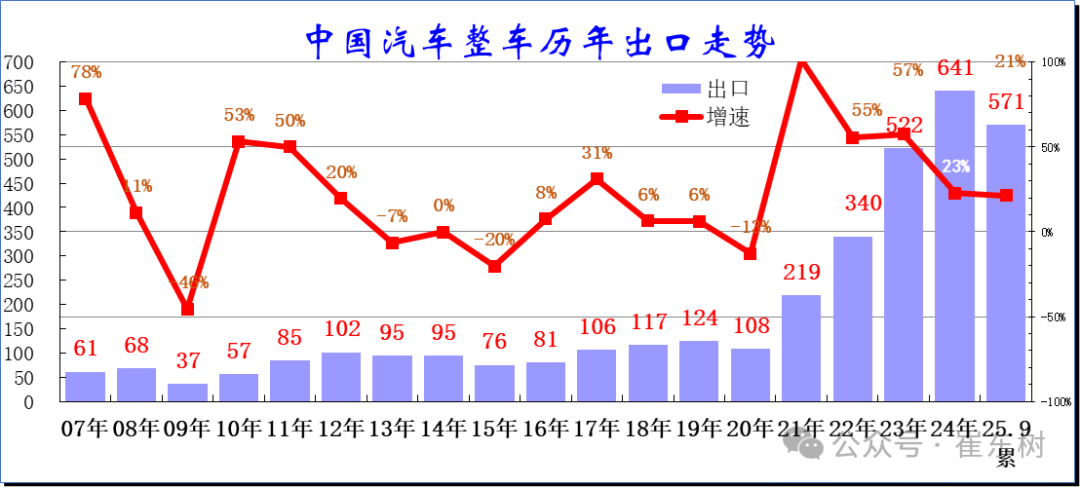
Core Insights - In the first nine months of 2025, China's new energy vehicle (NEV) exports exceeded expectations, with plug-in hybrid and hybrid vehicles becoming new growth points, particularly in the pickup truck segment [1][5] - The total export volume of Chinese automobiles reached 5.71 million units from January to September 2025, marking a 21% increase year-on-year, with September alone seeing exports of 763,000 units, up 26% year-on-year [1][6] - The export of Chinese NEVs in the same period reached 2.32 million units, a 52% increase compared to the same period in 2024, significantly higher than the 22% growth rate in 2024 [1][5] Export Performance - The top ten countries for Chinese automobile exports in September 2025 included Russia (69,126 units), Mexico (48,636 units), and the UAE (47,700 units), with notable increases in exports to the UAE and Mexico [2] - In the first nine months of 2025, the cumulative export volume to the top ten countries included Mexico (410,739 units), the UAE (367,796 units), and Russia (357,708 units) [2] NEV Export Trends - The top ten countries for NEV exports in September 2025 were Belgium (20,869 units), the UAE (20,859 units), and the UK (19,521 units), with significant growth in exports to the UAE and the UK [3] - From January to September 2025, the top ten countries for NEV exports included Belgium (223,532 units), the Philippines (153,386 units), and the UK (153,265 units), with the Philippines showing the highest growth in exports [3] Historical Context - China's automobile exports have shown a consistent upward trend since breaking the million-unit mark in 2021, with a growth rate of over 50% in 2022 and 2023, and a projected growth rate of around 20% for 2024-2025 [5][6] - The export structure has shifted, with passenger vehicles increasingly dominating the export market, reaching 85% by 2023, while the share of commercial vehicles has declined [11][16] Vehicle Type Performance - In 2025, the export of light trucks and passenger cars showed strong growth, particularly in the context of a sluggish domestic fuel truck market [12][14] - The export of gasoline vehicles has seen a decline, while the export of hybrid and plug-in hybrid vehicles has surged, indicating a shift in consumer preferences [15][16]


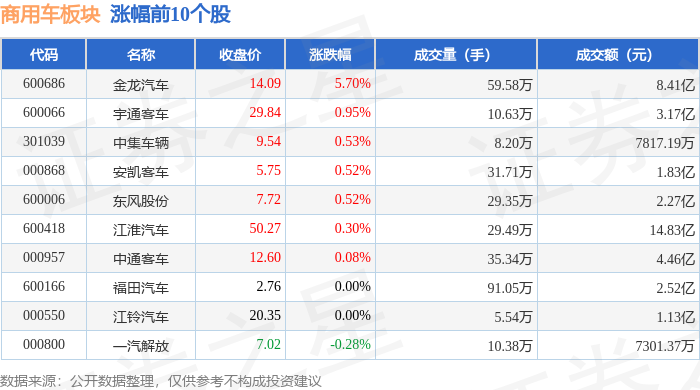
商用车板块10月24日涨0.37%,金龙汽车领涨,主力资金净流入3874.72万元
Zheng Xing Xing Ye Ri Bao· 2025-10-24 08:21
Market Overview - The commercial vehicle sector increased by 0.37% on October 24, with Jinlong Automobile leading the gains [1] - The Shanghai Composite Index closed at 3950.31, up 0.71%, while the Shenzhen Component Index closed at 13289.18, up 2.02% [1] Stock Performance - Jinlong Automobile (600686) closed at 14.09, up 5.70% with a trading volume of 595,800 shares and a transaction value of 841 million [1] - Yutong Bus (600066) closed at 29.84, up 0.95% with a trading volume of 106,300 shares and a transaction value of 317 million [1] - Other notable performances include: - Zhongshun Vehicles (301039) at 9.54, up 0.53% - Ankai Bus (000868) at 5.75, up 0.52% - Dongfeng Motor (600006) at 7.72, up 0.52% [1] Fund Flow Analysis - The commercial vehicle sector saw a net inflow of 38.75 million from institutional investors, while retail investors contributed a net inflow of 29.26 million [2] - Notably, the sector experienced a net outflow of 68.01 million from speculative funds [2] Individual Stock Fund Flow - Jianghuai Automobile (600418) had a net outflow of 44.38 million from institutional investors, while retail investors contributed a net inflow of 859,990 [3] - Yutong Bus (600066) saw a net inflow of 13.55 million from institutional investors but a net outflow of 2.01 million from retail investors [3] - Jinlong Automobile (600686) had a net inflow of 12.77 million from institutional investors and a net outflow of 2.71 million from speculative funds [3]