
HAIER SMART HOME(600690)

Search documents
“围剿”中国工厂
3 6 Ke· 2026-02-05 05:27
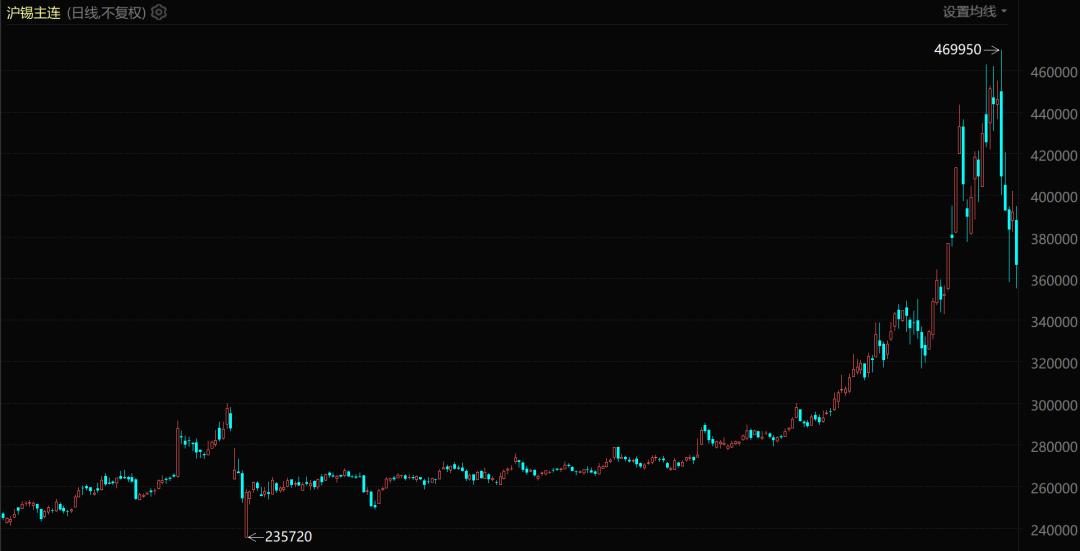
Core Viewpoint - The surge in metal prices, particularly copper, is significantly impacting downstream manufacturing industries in China, leading to squeezed profit margins for manufacturers while upstream companies benefit from rising raw material prices [3][5][9]. Group 1: Price Surge in Raw Materials - In 2025, copper prices increased by 34.34%, and the upward trend continued into 2026 [2]. - The price of lithium carbonate, essential for electric vehicle batteries, skyrocketed from 75,700 yuan per ton in January 2025 to 175,250 yuan per ton by January 23, 2026, marking a 131.4% increase [7]. - Tungsten concentrate prices surged to 520,000 yuan per ton, while tungsten carbide prices rose from approximately 300,000 yuan per ton to 1,200,000 yuan per ton [7]. Group 2: Impact on Manufacturing Industries - The home appliance industry is heavily affected by rising copper prices, with copper accounting for over 20% of the total cost of air conditioners. The copper price reached 105,020 yuan per ton in February 2026, up 42.25% from early 2025, leading to an 8.45% increase in air conditioner costs [10]. - The electric vehicle industry faces significant cost inflation, with UBS reporting that the cost increase for pure electric vehicles (BEVs) due to metal prices alone is approximately 5,600 yuan per vehicle, primarily driven by lithium price increases [12]. - The automotive industry's single vehicle gross profit was only 13,000 yuan in 2025, making it challenging for manufacturers to pass on rising costs to consumers amid fierce competition [13]. Group 3: Upstream vs. Downstream Dynamics - Upstream mining companies are experiencing explosive profit growth due to rising raw material prices, with Zijin Mining forecasting a net profit of 51 to 52 billion yuan for 2025, a year-on-year increase of 59% to 62% [8]. - In contrast, manufacturing companies are facing unprecedented cost pressures, leading to a decline in profit margins. The manufacturing sector's profit margin was only 4.7% in 2025, compared to 15.9% for the mining sector [21][19]. - The overall revenue of China's industrial enterprises has been increasing, but profit margins have been declining, indicating a challenging environment for manufacturers [19][21]. Group 4: Strategies for Survival and Growth - Many Chinese manufacturing companies are exploring ways to extend their business scope internationally, moving beyond low-end products to high-value items like electric vehicles and industrial robots [24]. - Some companies are actively integrating vertically by acquiring upstream resources, such as copper mines, to mitigate the impact of rising raw material prices [24]. - Technological advancements are also being pursued, with companies investing in alternatives to reduce dependency on expensive raw materials, such as the development of sodium-ion batteries [26].






AI空调卷疯了:格力、美的、海尔集体押注,核心价值是「省钱省电」?
3 6 Ke· 2026-02-05 04:13
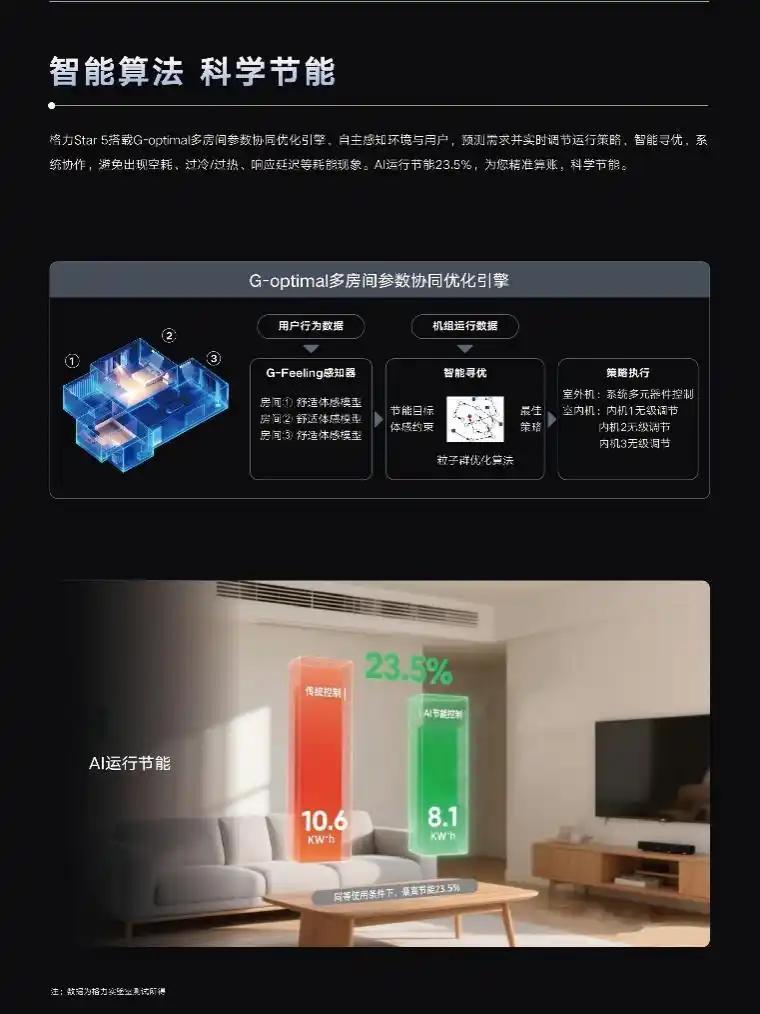
Core Viewpoint - The air conditioning industry is rapidly evolving with the integration of AI technology, moving from traditional cooling and heating systems to more intelligent solutions that focus on user comfort and energy efficiency [1][3][12]. Group 1: AI Integration in Air Conditioning - AI air conditioners, such as Gree's Star 5 AI, aim to enhance user experience by maintaining optimal comfort levels rather than just achieving set temperatures [3][4]. - Traditional air conditioning systems often waste energy and respond slowly to changes in user needs, while AI systems optimize energy use and adjust dynamically based on real-time conditions [4][6]. - Gree's Star 5 AI claims to achieve energy savings of up to 23.5% under ideal conditions, although actual performance may vary based on individual household factors [6][12]. Group 2: Competitive Landscape - Major appliance manufacturers, including Gree, Midea, and Haier, are heavily investing in AI technology, indicating a shift in the market towards algorithm-driven air conditioning solutions [12][15]. - The introduction of AI in air conditioning is expected to create a competitive divide, favoring companies with established data and technology capabilities, while smaller firms may struggle to keep up [16]. - As the market for household air conditioning approaches saturation, consumers are likely to prioritize smart features over cost when upgrading their systems [16].
PPI上行周期,中高端卡位机会显现
Orient Securities· 2026-02-05 02:41
Investment Rating - The report maintains a "Positive" outlook for the home appliance industry, indicating a strong performance relative to market benchmarks [5]. Core Insights - The PPI (Producer Price Index) upcycle presents opportunities for mid-to-high-end positioning, with leading companies demonstrating stronger pricing power and higher profit certainty [2][3]. - The report identifies two main investment themes: 1. Leading companies exhibit higher operational efficiency and stability during cost upcycles, making them preferred choices for stable allocations. Recommended stocks include Haier Smart Home (600690, not rated) and Hisense Visual (600060, increase holding) [3]. 2. International expansion remains a long-term theme, with potential valuation shifts expected by 2026. Recommended stocks include Stone Technology (688169, buy) and Lek Electric (603355, buy) [3]. Summary by Sections - **PPI Upcycle and Pricing Dynamics**: The report notes that from July 1, 2025, to January 30, 2026, LME copper prices increased by 32%, prompting home appliance brands to raise prices. For instance, Hisense announced a price increase of 5%-10% for its air conditioning products starting February 11, 2026, while Midea announced a cumulative price increase exceeding 6% [7]. - **Sales Impact and Market Concentration**: Price increases have not significantly affected overall sales volumes but have contributed to market concentration. Historical data shows that after previous raw material price hikes, leading companies have successfully increased their market share, particularly in the air conditioning and refrigerator segments [7]. - **Mid-to-High-End Market Opportunities**: The report emphasizes that the PPI upcycle is a positive signal for industrial enterprises and economic stabilization. It highlights opportunities in mid-to-high-end segments, where consumer price sensitivity is lower, allowing for better price transmission during commodity upcycles [7].



海尔智家2月3日耗资约10.27万欧元回购5万股
Zhi Tong Cai Jing· 2026-02-04 10:42
海尔智家(600690)(06690)公布,2026年2月3日耗资约10.27万欧元回购5万股股份。 ...
海尔智家(06690)2月3日耗资约10.27万欧元回购5万股
智通财经网· 2026-02-04 10:40
智通财经APP讯,海尔智家(06690)公布,2026年2月3日耗资约10.27万欧元回购5万股股份。 ...
海尔智家(06690.HK)2月3日耗资10.3万殴元回购股份
Ge Long Hui· 2026-02-04 10:39
格隆汇2月4日丨海尔智家(06690.HK)公告,2月3日耗资10.3万殴元回购5万股D股,回购价格每股2.05- 2.0615欧元。 ...
海尔智家(06690) - 翌日披露报表
2026-02-04 10:30
FF305 第 1 頁 共 7 頁 v 1.3.0 | 1). | 購回股份 (擬註銷但尚未註銷) | | 44,000 | 0.01624 % | EUR | 2.0929 | | --- | --- | --- | --- | --- | --- | --- | | | 變動日期 | 2026年1月21日 | | | | | | 2). | 購回股份 (擬註銷但尚未註銷) | | 49,000 | 0.01808 % | EUR | 2.0982 | | | 變動日期 | 2026年1月22日 | | | | | | 3). | 購回股份 (擬註銷但尚未註銷) | | 53,000 | 0.01956 % | EUR | 2.095 | | | 變動日期 | 2026年1月23日 | | | | | | 4). | 購回股份 (擬註銷但尚未註銷) | | 50,000 | 0.01845 % | EUR | 2.0981 | | | 變動日期 | 2026年1月26日 | | | | | | 5). | 購回股份 (擬註銷但尚未註銷) | | 54,000 | 0.01993 % | EUR | 2.09 ...
恒生指数收涨0.05%,煤炭、内房股走高,科网股低迷
Jin Rong Jie· 2026-02-04 09:58
作者:观察君 2月4日,港股收盘,恒生指数收涨0.05%,报26847.32点;恒生科技指数收跌1.84%,报5366.44点。 板块方面,煤炭股涨幅居前,兖矿能源涨超10%,中国神华涨超5%;芯片股走势疲软,上海复旦跌超 5%,华虹半导体跌近5%;科网股整体表现低迷,腾讯控股跌近4%,哔哩哔哩跌超3%;内房股集体走 高,世茂集团涨超14%,融创中国涨超8%。恒生指数成分股中,信义玻璃、中国神华、华润置地涨幅 靠前;携程集团-S、腾讯控股、网易-S跌幅居前。恒生科技指数成分股中,理想汽车-W、零跑汽车、 海尔智家涨幅靠前;金蝶国际、携程集团-S、同程旅行跌幅居前。 声明:市场有风险,投资需谨慎。本文为AI基于第三方数据生成,仅供参考,不构成个人投资建议。 本文源自:市场资讯 ...

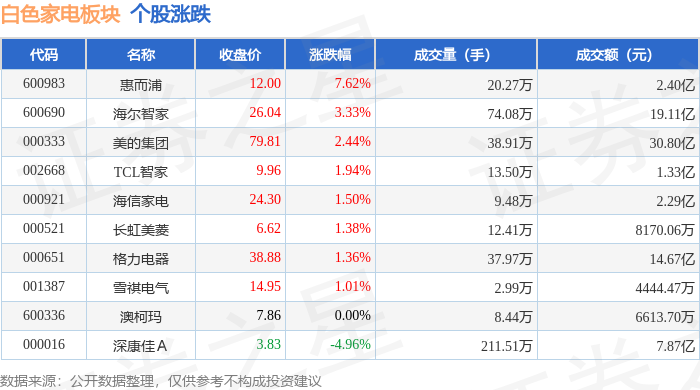
白色家电板块2月4日涨2.29%,惠而浦领涨,主力资金净流入6.29亿元
Zheng Xing Xing Ye Ri Bao· 2026-02-04 08:49
Group 1 - The white goods sector increased by 2.29% on February 4, with Whirlpool leading the gains [1] - The Shanghai Composite Index closed at 4102.2, up 0.85%, while the Shenzhen Component Index closed at 14156.27, up 0.21% [1] - Key stocks in the white goods sector showed varied performance, with Whirlpool rising by 7.62% to a closing price of 12.00 [1] Group 2 - The net inflow of main funds in the white goods sector was 629 million yuan, while retail funds saw a net outflow of 378 million yuan [1] - Midea Group had a main fund net inflow of 296 million yuan, but also experienced a retail net outflow of 205 million yuan [2] - Gree Electric experienced a main fund net inflow of 168 million yuan, with a retail net outflow of 118 million yuan [2]



海尔智家宣布进入南非市场
Xin Hua Cai Jing· 2026-02-04 07:27
Group 1 - The core viewpoint of the article highlights that Chinese investments are significantly driving the industrialization and manufacturing transformation in South Africa [1] - Haier Group's subsidiary, Haier Smart Home, officially entered the South African market, marking one of the most important industrial investment projects in Gauteng province in recent years [1] - South Africa exports industrial raw materials like coal to China while importing advanced industrial products such as machinery, electronics, and home appliances from China, which modernizes South Africa's manufacturing, logistics, and consumer sectors [1]