Bank Of Jiangsu(600919)

Search documents
本周又有银行将派发“红包雨”,银行ETF天弘(515290)跟踪指数盘中涨超1%,机构:银行基本面筑底改善
Sou Hu Cai Jing· 2026-01-13 06:15
Group 1 - The A-share banking sector remains active, with the China Securities Banking Index rising over 1% during the afternoon session on January 13, 2023, driven by significant gains in stocks such as Agricultural Bank of China, Hangzhou Bank, Chongqing Rural Commercial Bank, CITIC Bank, and Nanjing Bank [1] - The Tianhong Bank ETF (515290) has seen a trading volume exceeding 38 million yuan, indicating premium trading activity, and it encompasses 42 listed banks in A-shares, covering the entire spectrum of state-owned banks, joint-stock banks, and city commercial banks [1] - The People's Bank of China emphasized key priorities for 2026, including strict governance, effective implementation of moderately loose monetary policy, financial reform, and risk prevention [1] Group 2 - Following the recent dividend distributions, including Postal Savings Bank on January 12, Jiangsu Bank and China Merchants Bank are set to distribute dividends on January 14 and January 16, respectively, with Jiangsu Bank offering 0.3309 yuan per share (totaling 6.072 billion yuan) and China Merchants Bank offering 1.013 yuan per share (totaling approximately 20.897 billion yuan) [2] - Over half of the 42 listed banks in A-shares have implemented mid-term dividends for 2025, signaling robust profitability in the banking sector [2] - Analysts from Zheshang Securities anticipate a return to positive growth in net interest income for banks, while Longjiang Securities projects stable earnings growth for mainstream banks in 2026, highlighting the increased attractiveness of the PB-ROE valuation post-recent adjustments [2]




这两家银行即将派发红包!过半A股上市银行已实施中期分红
Nan Fang Du Shi Bao· 2026-01-13 05:31
Core Viewpoint - Several banks are distributing cash dividends, indicating a stable profitability in the banking sector and providing tangible returns to shareholders [2][3][4]. Group 1: Dividend Distribution - Postal Savings Bank distributed a cash dividend of 0.1230 yuan per share, totaling 12.33 billion yuan [3]. - Jiangsu Bank plans to distribute a cash dividend of 0.3309 yuan per share, amounting to 6.07 billion yuan [2][3]. - China Merchants Bank intends to distribute a cash dividend of 1.013 yuan per share, totaling approximately 20.90 billion yuan [2][3]. Group 2: Overall Banking Sector Performance - As of January 13, over half of the 42 listed A-share banks have implemented mid-term dividends for 2025, with 31 banks announcing such distributions, an increase of 7 banks compared to 2024 [4][5]. - The total proposed dividend amount for these banks is 276.49 billion yuan, reflecting a growth of 7.05% compared to 2024 [4]. Group 3: Dividend Yields - The dividend yields for the banks are as follows: Postal Savings Bank at 2.30%, Jiangsu Bank at 3.15%, and China Merchants Bank at 2.46% based on their respective closing prices [3]. Group 4: Future Dividend Plans - Huaxia Bank has announced a profit distribution plan with a cash dividend of 1.00 yuan per 10 shares, totaling 1.59 billion yuan, pending a shareholder meeting [7]. - Industrial Bank plans to hold a shareholder meeting on January 20 to review its mid-term profit distribution proposal, which includes a cash dividend of 5.65 yuan per 10 shares, totaling 11.96 billion yuan [7].

银行业 2026 年经营展望:资产负债篇:到期存款流向是资负格局的关键
Guoxin Securities Hongkong· 2026-01-13 05:12
Investment Rating - The report maintains an "Outperform" rating for the banking sector [6] Core Insights - The expected M2 growth rate for 2026 is approximately 7.5%, with credit growth around 6.0% and social financing growth at about 8.0%. This aligns with the goal of stabilizing economic growth and ensuring reasonable price recovery [2][18][19] - The banking sector is expected to see a structural differentiation in retail credit, with corporate lending remaining the primary contributor to new loans, accounting for approximately 80% to 85% of new loans [33][37] - The report highlights the importance of deposit flows, particularly the trend of deposits moving from large banks to smaller banks, which will influence the asset-liability gap for large banks in 2026 [3][41] Summary by Sections M2 and Credit Growth - The M2 increment for 2026 is estimated at about 25.4 trillion yuan, with fiscal net injection contributing approximately 12.0 trillion yuan and bank credit (including write-offs and ABS) contributing around 16.8 trillion yuan [2][29][24] - The anticipated new social financing for 2026 is about 35.3 trillion yuan, reflecting a growth rate of approximately 8.0% [30][32] Credit Allocation - Corporate lending is expected to remain strong, while retail lending will show structural improvements, contributing about 10% to 15% of new loans [33][37] - The report notes that retail credit is likely to experience a slight positive growth, particularly in quality consumption scenarios and personal operating loans [33][37] Asset-Liability Dynamics - The asset-liability gap for large banks is projected to continue, with marginal changes primarily driven by the liability side, influenced by deposit flows [3][41] - The report estimates that the maturity of fixed-term deposits for the six major banks in 2026 will be around 57 trillion yuan, with 2-year and longer-term deposits accounting for 27 to 32 trillion yuan [49][52] Investment Recommendations - The report recommends focusing on high-quality stocks with improving fundamentals, specifically highlighting Ningbo Bank and Changshu Bank, while also suggesting attention to Changsha Bank and Chongqing Rural Commercial Bank for potential excess returns [4] - Additionally, it emphasizes the value of stable, high-dividend stocks, recommending China Merchants Bank, Industrial and Commercial Bank of China, and Jiangsu Bank [4]


银行业周报(20260105-20260111):银行理财收益率走低,打通入市卡点可提升吸引力-20260112
Huachuang Securities· 2026-01-12 14:52
Investment Rating - The report maintains a "Recommended" rating for the banking sector, indicating an expectation that the sector will outperform the benchmark index by more than 5% in the next 3-6 months [25]. Core Insights - The average yield of bank wealth management products has been on a downward trend, with the average yield falling below the average personal deposit rate of listed banks for the first time since 2012. This trend is attributed to regulatory changes and market conditions [7][8]. - There is a potential for increasing the allocation of equity assets in wealth management products, which could enhance overall returns and attract more investors. Currently, equity products account for only 0.08% of the total wealth management product market, which has a total size of 31.63 trillion yuan [2][8]. - The banking sector is expected to see a systematic recovery in valuations in 2026, driven by a combination of improved fundamentals and capital inflows. The investment logic is shifting from pure defensive strategies to a dual focus on dividends and growth [8]. Summary by Sections Wealth Management Products - As of December 2025, the total market size of wealth management products reached 31.63 trillion yuan, with fixed income products making up 76.60%, cash management products 20.87%, mixed products 2.37%, and equity products only 0.08% [2]. - Regulatory bodies are exploring ways to facilitate greater equity market participation by wealth management funds, which could lead to an increase in the proportion of equity investments [2][8]. Company Earnings Forecasts and Valuations - Key companies in the banking sector have been rated as "Recommended" with projected earnings per share (EPS) and price-to-earnings (PE) ratios indicating potential for growth. For example, Ningbo Bank is projected to have an EPS of 4.33 yuan in 2025 with a PE ratio of 6.48 [3]. - The report highlights several banks, including China Merchants Bank and Jiangsu Bank, as having strong growth potential and favorable valuations, suggesting they are well-positioned for investment [3][8]. Market Performance - The report notes that the banking index underperformed the broader market indices, with a weekly decline of 1.90% compared to a 2.79% increase in the CSI 300 index [7]. - The report emphasizes the importance of monitoring market trends and the performance of individual banks to identify investment opportunities [5][8].
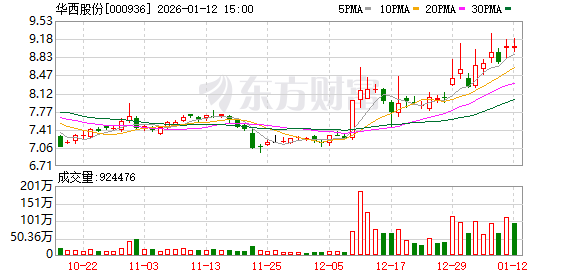
华西股份:公司未持有江苏银行股份有限公司股票

Zheng Quan Ri Bao· 2026-01-12 13:11
Group 1 - The company, Huaxi Co., stated that it currently does not hold any shares of Jiangsu Bank Co., Ltd. in response to investor inquiries on an interactive platform [2]
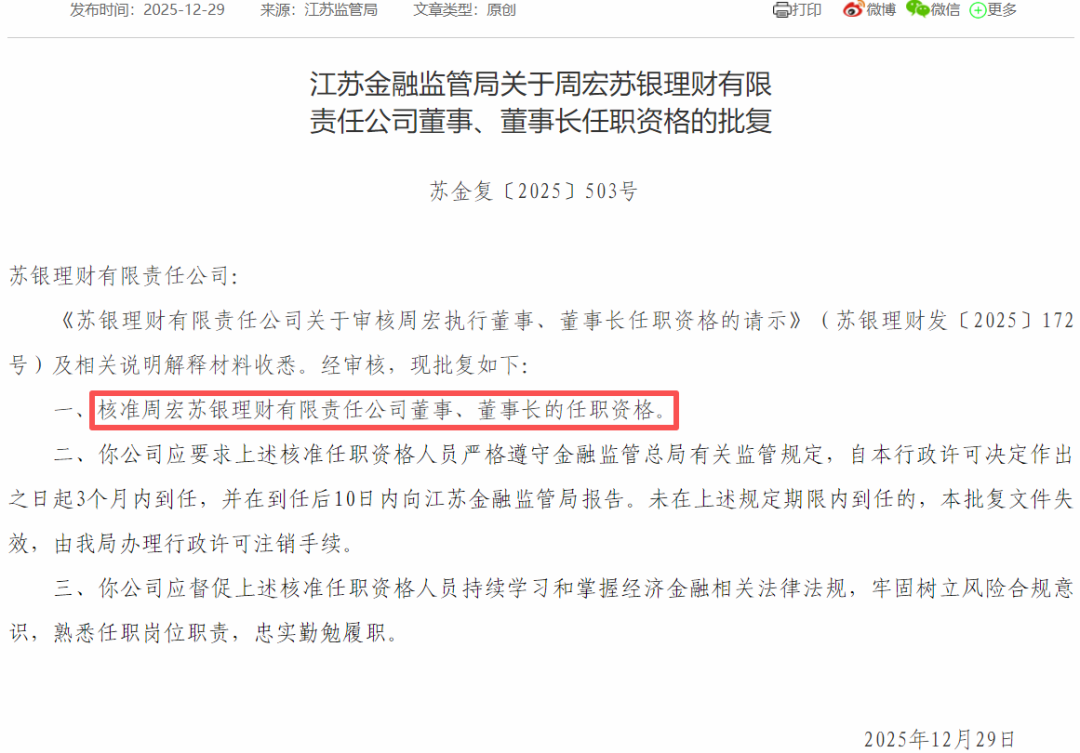
周宏正式出任苏银理财董事长
Xin Lang Cai Jing· 2026-01-12 12:28
Core Viewpoint - The Jiangsu Regulatory Bureau of the National Financial Supervision Administration has approved the appointment of Zhou Hong as the director and chairman of Su Yin Wealth Management Co., Ltd. [1][2] Group 1: Appointment Details - Zhou Hong is set to succeed Ke Zhenlin, who will resign as chairman in November 2025 [1][2] - Zhou Hong has held various positions at Jiangsu Bank, including General Manager of the Financial Interbank Department [1][2] - The approval date for Zhou Hong's appointment is December 29, 2025 [1][2] Group 2: Company Background - Su Yin Wealth Management is a wholly-owned subsidiary of Jiangsu Bank, established on August 20, 2020, with a registered capital of 2 billion yuan [1][2] - The company's business scope includes issuing public and private wealth management products, as well as providing wealth advisory and consulting services [1][2]
城商行板块1月12日涨0.25%,厦门银行领涨,主力资金净流出6140.56万元
Zheng Xing Xing Ye Ri Bao· 2026-01-12 09:10
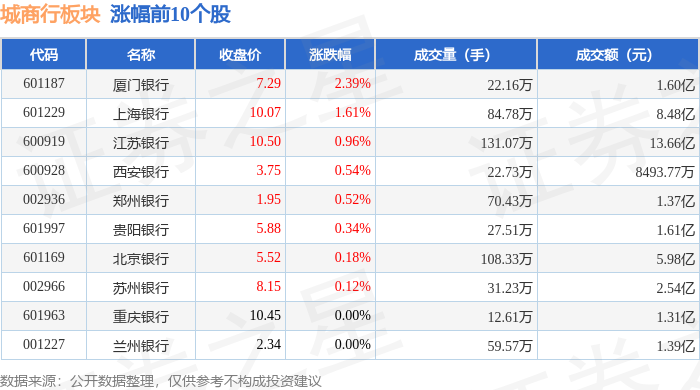
Market Performance - The city commercial bank sector increased by 0.25% compared to the previous trading day, with Xiamen Bank leading the gains [1] - The Shanghai Composite Index closed at 4165.29, up 1.09%, while the Shenzhen Component Index closed at 14366.91, up 1.75% [1] Individual Bank Performance - Xiamen Bank (601187) closed at 7.29, up 2.39% with a trading volume of 221,600 shares and a transaction value of 160 million yuan [1] - Shanghai Bank (601229) closed at 10.07, up 1.61% with a trading volume of 847,800 shares and a transaction value of 848 million yuan [1] - Jiangsu Bank (616009) closed at 10.50, up 0.96% with a trading volume of 1,310,700 shares and a transaction value of 1.366 billion yuan [1] - Other banks such as Xi'an Bank, Zhengzhou Bank, and Beijing Bank also showed minor increases in their stock prices [1] Capital Flow Analysis - The city commercial bank sector experienced a net outflow of 61.41 million yuan from institutional investors, while retail investors saw a net inflow of 66.54 million yuan [2] - The individual capital flow for Jiangsu Bank showed a net inflow of 47.88 million yuan from institutional investors, while retail investors had a net outflow of 51.39 million yuan [3] - Xiamen Bank had a net inflow of 17.18 million yuan from institutional investors, but retail investors experienced a net outflow of 8.30 million yuan [3]

深圳高速公路股份:使用部分闲置募集资金进行现金管理
Zhi Tong Cai Jing· 2026-01-12 09:00
Core Viewpoint - Shenzhen Expressway Company Limited (00548) aims to enhance the efficiency of fund utilization while ensuring the safety of raised funds and compliance with investment plans through cash management of temporarily idle raised funds [1] Group 1 - The company has subscribed to a structured deposit product worth RMB 1 billion in a dedicated cash management account at Jiangsu Bank Co., Ltd. Shenzhen Technology Branch [1]
深圳高速公路股份(00548) - 联合公告 – 自愿性公告 – 深高速认购两项结构性存款產品
2026-01-12 08:49
香港交易及結算所有限公司及香港聯合交易所有限公司對本聯合公告的內容概不負責,對其準 確性或完整性亦不發表任何聲明,並明確表示,概不對因本聯合公告全部或任何部份內容而產 生或因倚賴該等內容而引致的任何損失承擔任何責任。 ( 於百慕達註冊成立之有限公司 ) (股份代號:00152) 須予披露的交易 ( 於中華人民共和國註冊成立的股份有限公司 ) (股份代號:00548) 自願性公告 聯合公告 深高速認購兩項結構性存款產品 認購兩項結構性存款產品 深 圳 國 際 及 深 高 速 (深圳國際擁有約 47.30%權 益 的 附 屬 公 司 )各自的 董事會宣佈,深高速於 2026 年 1 月 9 日認購了本金為人民幣 5 億元 的結構性存款產品(第一期),並於 2026 年 1 月 12 日進一步認購了本 金為人民幣 5 億元的結構性存款產品(第二期)。 上市規則涵義 由 於 深 高 速 認 購 的 兩 項 結 構 性 存 款 產 品 均 由 同 一 家 銀 行 發 行 且 於 12 個月內完成,故此,根據上市規則第 14.22 條及 14.23(1)條,認購兩 項結構性存款產品的交易須合併計算。 對於深高速而言,認購 ...
银行业周度追踪2026年第1周:如何理解银行股开年调整?-20260112
Changjiang Securities· 2026-01-12 04:41
Investment Rating - The investment rating for the banking sector is "Positive" and is maintained [12]. Core Insights - In the first week of 2026, the banking sector continued to adjust, with a cumulative decline of 1.9% in the banking index, significantly underperforming the CSI 300 and ChiNext indices by -4.7% and -5.8% respectively. Despite this, the fundamental expectations for the sector remain unchanged, and the market's risk appetite has notably increased [2][6][19]. - The main banks are expected to maintain stable growth in performance throughout 2026. Following recent adjustments, the PB-ROE valuation attractiveness of bank stocks has further increased, suggesting a favorable timing for allocation [2][6][19]. Summary by Sections Market Performance - The banking sector's performance in the first week of 2026 showed a cumulative decline of 1.9%, with significant negative excess returns compared to the CSI 300 and ChiNext indices [6][19]. - Individual stocks such as Chongqing Rural Commercial Bank saw price recovery after management uncertainties were resolved, while stable performers like Hangzhou Bank led the city commercial bank sector [2][6][19]. Fundamental Analysis - The banking sector's performance has been influenced by structural concerns, particularly regarding real estate and retail asset quality. Despite these concerns, overall performance remains stable with steady growth [8][37]. - The LTV (Loan-to-Value) ratios for major banks are stable at 40%-50%, providing a safety margin despite rising asset quality pressures in mortgage loans [8][37]. Trading Dynamics - The increase in market risk appetite has continued to suppress bank stock valuations. Historically, January has seen excess returns for bank stocks, but this year, the rapid recovery in market sentiment has led to underperformance [9][38]. - The report recommends focusing on high-quality city commercial banks such as Hangzhou Bank, Nanjing Bank, and Jiangsu Bank, as well as dividend-oriented assets like Bank of Communications and China Merchants Bank [9][38]. Convertible Bonds - The prices of convertible bonds linked to bank stocks have generally followed the sector's adjustment, with the distance to mandatory conversion prices widening. The report highlights potential trading opportunities in convertible bonds for banks like Changshu Bank and Shanghai Bank, which have stable fundamental performance expectations [7][32].