
SAILUN GROUP(601058)

Search documents
“新厂打造高端品牌,还要树立智能示范”
Liao Ning Ri Bao· 2026-02-26 01:01
开栏的话 马年春节一过,辽宁在首个工作日召开了"新春第一会"。这场会既是"十五五"开局之年的部署,更是谋振兴、抓落实的宣言。"发令枪"已打 响,会议提出的要求正转化为各地开局起步的行动。 重大项目是"十五五"实现良好开局的重要支撑。重大项目如何推进?"十五五"如何开局?今起,《辽宁日报》推出"开工看开局"专栏,记者奔赴全省各 地,深入项目工地,采访一线建设者,报道来自项目建设现场的零距离见闻。我们要呈现的,不仅仅是机器的轰鸣、火热的现场,还有那股不服输敢争先的 锐气、那份直面问题破题解局的勇气。请跟随记者的脚步,透过鲜活的文字与生动的画面,在一个个项目现场感受辽宁拔节向上的振兴脉动。 "不打扰,不打扰,走吧,跟我看看我们的智能工厂!"2月25日下午,在位于沈阳经济技术开发区沈西六东路53号的赛轮新和平工厂,见到突然到访的 记者,赛轮新和平(沈阳)轮胎有限公司总经理助理李建磊笑着迎上来,简单打过招呼就直奔车间。 中国轮胎行业领军企业之一赛轮集团,是中国首家A股上市的民营轮胎企业,总部位于山东省青岛市。去年7月,赛轮沈阳以2.6亿元完成工厂收购,后 续分两期投入建设:一期投资6亿元用于产线升级改造,二期追加投资1 ...


化工周报:春晚机器人大放异彩,美国关税下调利好出口链,化工春旺行情将至-20260224
Shenwan Hongyuan Securities· 2026-02-24 02:49
Investment Rating - The report maintains a "Positive" rating for the chemical industry [4][3]. Core Insights - The macroeconomic outlook for the chemical industry indicates a stable increase in oil demand due to global economic recovery and tariff adjustments, with Brent crude oil expected to remain in the range of $60-75 per barrel [4][5]. - The report highlights a potential spring boom in the chemical sector, driven by the success of domestic robotics showcased during the Spring Festival and favorable export conditions following tariff reductions [4][3]. - Investment opportunities are identified in various chains, including textiles, agricultural chemicals, and overseas real estate, with specific companies recommended for investment [4][3]. Industry Dynamics - Oil supply is tightening due to OPEC+ production delays and peak shale oil output, while demand is stabilizing with improved global economic conditions [5]. - The chemical industry is at a cyclical turning point, with downstream operations gradually resuming post-holiday, indicating a positive demand outlook for the year [4][3]. - The report notes that the Producer Price Index (PPI) for industrial products decreased by 1.4% year-on-year in January, while the manufacturing PMI recorded 49.3, indicating some volatility in manufacturing activity [7][4]. Investment Analysis - The report suggests a diversified investment strategy focusing on four key areas: textiles, agricultural chemicals, export chains, and beneficiaries of "anti-involution" policies [4][3]. - Specific companies to watch include those in the textile chain like Lu Xi Chemical and Tongkun Co., and in the agricultural chain like Hualu Hengsheng and Baofeng Energy [4][3]. - The report emphasizes the importance of self-sufficiency in key materials, particularly in semiconductor and panel materials, recommending companies such as Yake Technology and Ruilian New Materials [4][3].


赛轮轮胎股价疲软,短期业绩承压与海外扩张资金压力成主因
Jing Ji Guan Cha Wang· 2026-02-14 02:38
Company Fundamentals - The company's net profit attributable to shareholders for Q3 2025 was 1.041 billion yuan, a year-on-year decline of 4.71%, with a cumulative net profit for the first three quarters down 11.47% [1] - Despite an 8.30% year-on-year decrease in raw material costs, the overall gross margin slightly improved to 25%, but the speed of profit recovery was below market expectations [1] Investment Activities - The investment amount for the Indonesian base increased to 299.7 million USD (approximately 2.148 billion yuan), with semi-steel tire production capacity doubling to 6 million units [2] - However, the net cash outflow from investment activities for the first three quarters of 2025 was 3.558 billion yuan, a year-on-year increase of 42.60% [2] Stock Price and Market Performance - As of February 13, the stock price was below the 20-day moving average (16.12 yuan), with a MACD histogram value of -0.079 and a KDJ J value of 1.096, indicating an oversold condition without strong rebound signals [3] - On the same day, there was a net inflow of 74.94 million yuan in main funds, but the cumulative decline over the past five days reached 5.80%, reflecting market concerns about the short-term fundamentals [3] Industry and Risk Analysis - The EU's tightening of anti-dumping policies on Chinese tires poses challenges, although the company is attempting to fulfill orders through its Southeast Asian factories [4] - The Indonesian project faces local policy and exchange rate risks, while domestic tire companies are intensively expanding production, leading to increased price competition that may suppress overall gross margins [4] - Overall, the expansion in Indonesia is a critical step in the company's globalization strategy, but short-term performance pressures, capital investments, and bearish technical indicators are contributing to the weak stock price [4]
天然橡胶产区系列报告(六):柬埔寨:产能演进、需求重构与地缘冲突复盘
Guo Tai Jun An Qi Huo· 2026-02-13 14:05
1. Report's Industry Investment Rating - Not provided in the content 2. Core Viewpoints of the Report - Cambodia's rubber supply is expected to increase slightly, and the reconstruction of its downstream processing industry chain does not affect global rubber demand, so it is bearish for rubber prices [2][94][95] - Attention can be paid to the fluctuation opportunities of periodic conflicts between Thailand and Cambodia, but it is necessary to grasp the trading main line and take timely profit - taking for long positions [2][93][95] 3. Summary According to the Directory 3.1 Cambodia Rubber Producing Area Supply - Demand Status and Future Development Trends 3.1.1 Producing Area Basic Overview: Resource Endowment and Industry Positioning - Agriculture is one of the pillar industries of Cambodia's economy, and natural rubber is regarded as an important strategic crop. The Cambodian government hopes that the rubber industry will bring sustainable benefits to all stakeholders [4] - Cambodia is located in the southern part of the Indochina Peninsula in Asia, with a tropical monsoon climate suitable for rubber growth. The top four rubber - producing provinces in 2023 accounted for 67.89% of the planting area [5] - The earliest rubber planting in Cambodia dates back to 1910. After independence, the rubber planting industry reached its peak in 1967. After being damaged by the civil war, it gradually recovered. Currently, Cambodia is the seventh - largest rubber - producing country [11][12][13] 3.1.2 Supply - Demand Pattern Analysis - **Supply**: The rubber production in Cambodia grew rapidly from 2010 - 2020, with an average compound growth rate of 23.52%, and the growth rate decreased after 2021, with a rate of only 3.43% from 2021 - 2024. The single - yield has been steadily increasing since 2019 and reached the median level of Southeast Asian producing countries in 2024 [20][21] - **Demand**: Currently, Cambodia's rubber export accounts for a large proportion, mainly exporting raw materials to Vietnam. With the production of Chinese - funded tire enterprises in Cambodia, the local rubber is expected to be in short supply, the direct rubber export volume will decline, and the tire export will increase rapidly. The tire export is mainly to the United States [33][42][45] 3.1.3 Development Bottlenecks and Future Trends - **Development Bottlenecks**: The rubber industry in Cambodia faces problems such as labor shortage, farmers' conversion to other crops, insufficient infrastructure construction, and unstable power supply, which may limit the growth of local tire production capacity [48][51] - **Future Outlook**: From 2026 - 2030, the planting area is expected to continue to grow with the upward shift of rubber prices, the growth rate of the harvested area may slow down, and the single - yield will steadily increase, with a slight increase in production. The government plans to increase the harvested area to about 331,000 hectares, the single - yield to about 1400 kg/ha, and the production to about 463,000 tons by 2030 [53][54][55] 3.2 Review and Comments on Thailand - Cambodia Border Conflict Incidents 3.2.1 Thailand - Cambodia Border Conflict Timeline and Market Response - **2008 - 2011 Thailand - Cambodia Conflict**: Rooted in historical territorial disputes, especially over the Preah Vihear Temple. There were several small - scale conflicts during this period, and the impact on the market was limited by macro - factors [60][61][62] - **2025 Thailand - Cambodia Conflict**: There were multiple rounds of conflicts, including sporadic and large - scale ones. The market showed different reactions each time, but the impact on the market was generally short - lived. The market gradually became more rational in evaluating the impact of the conflicts [70][74][83] 3.2.2 Impact of Thailand - Cambodia Border Conflict on Rubber Producing Area Tapping Operations - The conflict mainly affects rubber production in terms of the scope of influence, impact time, and foreign labor. The conflict in December 2025, which lasted for a long time and occurred during the production season, had a greater impact on production. The conflict also led to the continuous loss of foreign labor in Thailand's 7 border provinces and Cambodian - origin foreign labor across Thailand [86][87][90] 3.3 Supply Expected to Increase Slightly, Pay Attention to Geopolitical Fluctuation Opportunities in the Short Term - Cambodia's rubber supply is expected to increase slightly. The reconstruction of the downstream processing industry chain does not affect global rubber demand, so it is bearish for rubber prices. The periodic conflicts between Thailand and Cambodia may bring market fluctuation opportunities [93][94][95]


1月行业价差改善或助力盈利景气回暖
HTSC· 2026-02-09 11:56
Investment Rating - The report maintains an "Overweight" rating for the oil and gas sector and the basic chemicals sector [5]. Core Insights - The overall price spread in the industry improved in January, indicating a potential recovery in profitability for 2026, with the CCPI-raw material price spread reaching 2631, up from 2500 at the end of 2025 [1][9]. - The demand for chemical products is shifting from real estate to consumer goods, infrastructure, and emerging technologies, with significant growth potential driven by global economic trends [2][11]. - The capital expenditure growth in the chemical industry has been declining since June 2025, suggesting a supply-side adjustment is approaching, which may lead to improved profitability in the sector [2][16]. Summary by Sections Price Trends - In January, oil prices rose due to geopolitical tensions and strong global crude oil replenishment demand, leading to a slight improvement in the price spread of most chemical products [9][21]. - Major price increases were observed in products like lithium carbonate and butadiene, while some products like methyltrichlorosilane saw price declines due to supply adjustments [3][33]. Supply and Demand Dynamics - The January PMI was reported at 49.3, indicating a continued bottoming out in the real estate sector, while consumer goods and major infrastructure showed positive growth [2][11]. - The chemical industry is expected to see a recovery in demand, supported by the exit of high-energy-consuming facilities in Europe and North America, and economic growth in Asia, Africa, and Latin America [2][11][14]. Investment Strategy - The report suggests focusing on sectors with potential recovery, such as oil and gas, basic chemicals, and companies leveraging synthetic biology for cost reduction [32]. - Specific stock recommendations include China Petroleum & Chemical Corporation, Baofeng Energy, and Yun Tianhua, among others, highlighting their potential for growth and profitability [7][32]. Monthly Performance Review - In January, the basic chemical index rose by 12.72%, with significant gains in sub-sectors like dye chemicals and petrochemical raw materials [34][36]. - The report notes that the chemical industry is experiencing a recovery phase, with various sub-sectors showing positive price movements and improved market conditions [34][36].



赛轮“新地标”启幕!袁仲雪、刘燕华共同见证
Xin Lang Cai Jing· 2026-02-09 10:10
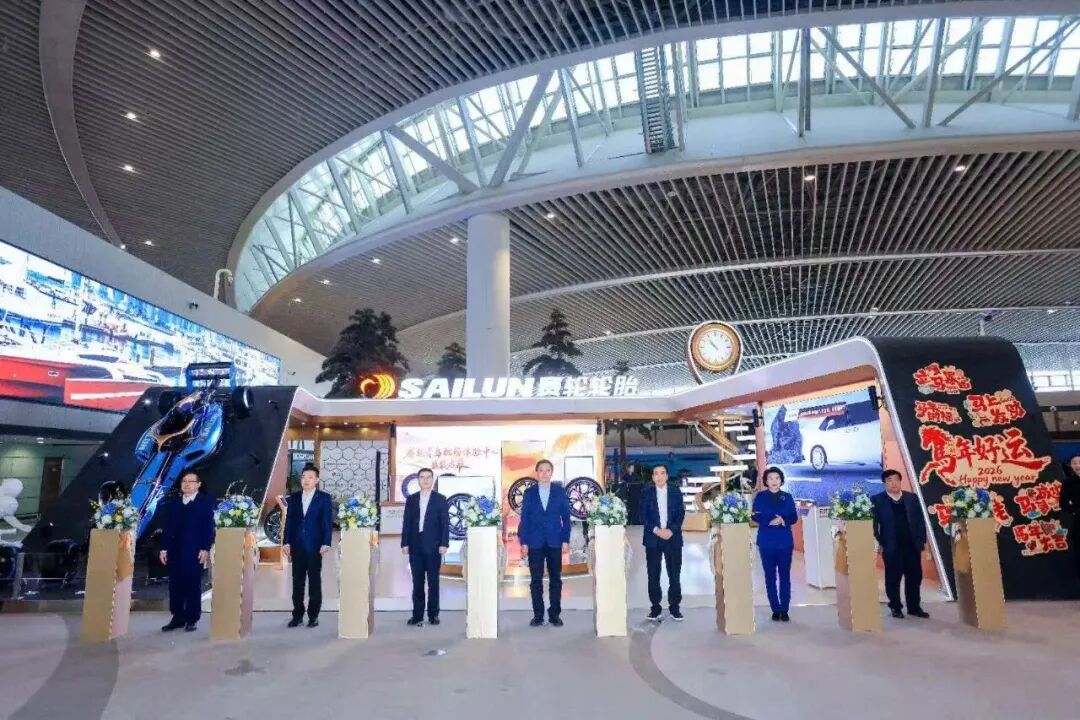
Core Insights - The opening of the Sailun Qingdao Airport Experience Center marks a significant step in the company's international branding strategy, showcasing the innovative strength of Chinese tire brands to global travelers [1][10] - The center features a striking visual design that includes a racetrack motif and a dynamic scene of F4 racing, aimed at igniting the passion for sports among travelers [2][12] - The Experience Center serves as a platform for Sailun's flagship product, the Liquid Gold Fashion Series tires, which blend technological quality with aesthetic appeal, redefining industry standards [5][14] Group 1: Experience Center Features - The Experience Center emphasizes an open, interactive, and scenario-based approach, moving beyond traditional static displays of tire products [6][15] - Visitors can closely observe high-quality Liquid Gold tires, as well as tires designed for various terrains, including racing and off-road conditions, showcasing Sailun's technological advancements [6][15] - The center includes features like car color customization experiences and interactive tire games, enhancing user engagement and providing professional tire selection advice [6][15] Group 2: Strategic Importance - The Qingdao Jiaodong International Airport serves as a natural international platform for Sailun's branding efforts, linking global resources and promoting the company's high-end positioning [8][18] - Sailun's chairman highlighted the company's 20 years of commitment to technological innovation, aiming to create a unique brand experience at the airport [8][18] - The collaboration with the airport enriches the commercial landscape and allows global travelers to appreciate the strength of the Qingdao rubber industry [10][20]
豪迈领跑、赛轮破局,轮胎业四企上榜500强
Xin Lang Cai Jing· 2026-02-09 10:09
Core Insights - The 2025 Hurun China 500 list highlights the impressive performance of leading companies in the tire industry, with four firms making the list, reflecting the rising competitiveness of China's tire industry in the global value chain [1][12]. Company Summaries - **Haomai Technology**: Ranked 288th with a value of 54 billion yuan, it leads among tire-related companies. The company, known as an "invisible champion" in tire mold manufacturing, achieved over 26% growth in both revenue and net profit in 2025, showcasing the core value and profitability of high-end equipment manufacturing in the tire industry [3][14]. - **Sailun Tire**: Ranked 295th with a value of 52.5 billion yuan, Sailun has made significant strides in brand internationalization, becoming the first Chinese tire brand to enter the global top ten with a brand value of 905 million USD. This marks a shift from price competition to brand premium in the global market [5][6][16]. - **Zhongce Rubber**: Ranked 304th with a value of 51 billion yuan, Zhongce is the oldest tire manufacturer in China and had the largest IPO in 2025. The company reported nearly 40 billion yuan in revenue and 3.8 billion yuan in net profit for 2024, with nearly half of its income coming from overseas. Its global competitiveness is enhanced by new production bases in Thailand, Indonesia, and Mexico [8][17]. - **Wanda Holdings**: Ranked 453rd with a value of 36.5 billion yuan, Wanda's inclusion adds diversity to the list and demonstrates the collaborative development of the tire industry's upstream and downstream sectors [10][18]. Industry Overview - The total value of the 2025 Hurun China 500 companies reached 77 trillion yuan, a 38% increase, with the entry threshold rising to 34 billion yuan. The automotive industry, including major players like CATL, BYD, and Xiaomi, holds significant positions in the top rankings. The collective entry of these four tire companies is seen as a reflection of the booming automotive sector, benefiting from the new energy vehicle wave [11][19].


基础化工行业周报:看好全球反内卷+AI新需求大周期——重点关注化工旺季到来,价格上涨行情启动-20260209
Guohai Securities· 2026-02-09 07:38
Investment Rating - The report maintains a "Recommended" rating for the chemical industry [1] Core Views - The report highlights a positive outlook for the global chemical industry driven by the new demand cycle from anti-involution and AI, with a focus on the upcoming peak season in the chemical sector leading to price increases [1][2] - Chinese chemical companies are expected to benefit from solid cost and efficiency advantages, entering a long-term upward performance cycle [2] - The report emphasizes the potential for increased dividend yields as supply-side constraints and demand recovery enhance industry profitability [2] Summary by Sections Investment Suggestions - The report suggests focusing on sectors with supply constraints and recovering demand, which are likely to see sustained improvements in industry conditions [2] - Key sectors to watch include: 1. Coal Chemical: Hualu Chemical, Luxi Chemical, Baofeng Energy 2. Oil Refining: Hengli Petrochemical, Satellite Chemical, Sinopec, PetroChina, CNOOC 3. Polyurethane: Wanhua Chemical, Huafeng Chemical 4. Phosphate Fertilizer: Yuntianhua, Yuntu Holdings, Xinyangfeng, Batian Shares 5. Pesticides: Yangnong Chemical, Lier Chemical, Xingfa Group, Limin Shares, Jiangshan Shares, Xin'an Shares, Runfeng Shares 6. Potash Fertilizer: Salt Lake Shares, Yara International, Oriental Iron Tower [2] Supply Drivers - The report notes that domestic anti-involution measures and the exit of European production capacity are expected to support the chemical industry's recovery [3] Demand Drivers - The report identifies several demand-driven opportunities, including: 1. Gas turbines and SOFC upstream: Zhenhua Shares, Yingliu Shares, Longda Shares, Wanze Shares, Sanhuan Group 2. Refrigerants and fluorinated liquids: Juhua Shares, New Zhoubang, Runhe Materials 3. Energy storage industry chain: Chuanheng Shares, Xingfa Group, Yuntianhua, Batian Shares, Yuntu Holdings 4. Robotics materials industry chain: PEEK - Kingfa Technology, Zhongyan Shares, Guoen Shares, Huitong Shares 5. Semiconductor materials industry chain: Photoresists: Yanggu Huatai, Wanhua Shares, Dinglong Shares, Tongcheng New Materials, Jingrui Electric Materials, Jiuri New Materials, Yake Technology [7][10] Recent Performance - The chemical industry has shown strong relative performance, with a 1-month increase of 5.7%, a 3-month increase of 15.4%, and a 12-month increase of 47.2% compared to the CSI 300 index [5] Key Company Tracking and Earnings Forecast - The report provides a detailed earnings forecast for key companies, indicating a positive outlook for many, with several companies rated as "Buy" [29]




2025年中国橡胶轮胎外胎产量为120736.6万条 累计增长0.9%
Chan Ye Xin Xi Wang· 2026-02-07 05:17
Core Insights - The Chinese rubber tire industry is projected to experience modest growth in production, with a year-on-year increase of 0.3% in December 2025 and a cumulative growth of 0.9% for the entire year [1]. Industry Overview - The total production of rubber tire outer tires in China reached 10,656 million units in December 2025 [1]. - The cumulative production for the year 2025 was 120,736.6 million units [1]. Market Research - The report titled "2026-2032 China Rubber Tire Industry Market Supply and Demand Situation and Development Prospects" was published by Zhiyan Consulting, a leading industry consulting firm in China [1][2]. - Zhiyan Consulting has been dedicated to industry research for over a decade, providing comprehensive industry solutions and insights for investment decisions [2].


赛轮轮胎20260203
2026-02-04 02:27
Summary of Conference Call on Sailun Tire Industry Overview - The tire industry is expected to experience a "Davis Double-Click" opportunity in 2026, driven by performance and valuation improvements [1] - The overall sector is projected to achieve approximately 30% average elasticity in 2026, influenced by the performance of leading domestic companies [1] - Key drivers of performance include volume growth and profit margin increases [2] Volume Growth - The primary trend in the tire industry is the expansion into overseas markets, with significant growth potential [2] - Current overseas market penetration is less than 20%, with semi-steel tires holding about 15% market share in Europe and North America, while full-steel tires have around 30% [2] Profit Margin Increases - Profit margins are expected to improve due to favorable conditions in Europe and price increases in the U.S. [3] - European dealers are seeking high-quality production capacity from leading Chinese tire manufacturers, which allows for price hikes due to high capacity utilization [3] - The U.S. market has seen a tax increase on semi-steel tires, leading to a gradual price increase throughout 2026 [3] Company Overview: Sailun Tire - Sailun specializes in semi-steel, full-steel, and off-road tires, demonstrating strong risk resilience [6] - The off-road tire segment, particularly in the rubber tire category, has a gross margin exceeding 50%, while overall gross margins for off-road tires are around 40% [6] - Sailun's overseas revenue accounts for approximately 80% of total income, positioning it as a leading exporter since 2012 [7] Financial Performance - Sailun has maintained a stable ROE of over 20%, attributed to strong overseas profit margins, particularly in semi-steel tires [7] - The company has consistently achieved high CAGR in its performance since its listing [8] Future Growth Prospects - Sailun is expected to continue expanding its overseas production capacity, with new factories in Indonesia and Mexico projected to contribute significantly to performance in 2026 [9] - The company has a strong track record of rapid factory construction and production ramp-up, typically achieving operational status within 1 to 1.5 years [10] Valuation and Market Position - Current valuation is low, around 11-12 times earnings, suggesting potential for upward adjustment [11] - Sailun's ability to maintain profitability through various economic cycles has been validated over the years, including during trade tensions and the pandemic [12] Brand Development - Sailun is focusing on enhancing its brand strength, particularly in the high-end tire market [13] - The company is increasing its domestic market presence and is expected to significantly boost its supply volume in the coming years [13] - Recent collaborations with high-end brands, including Xiaomi and Porsche, are expected to enhance brand recognition and market share [14] Conclusion - Sailun is positioned as a leading player in the tire industry with a robust overseas strategy and strong financial performance [15] - The company is recommended for long-term investment due to its stable growth prospects and potential for valuation increases in the industry [15]