
CSC(601066)

Search documents
中信建投给予MiniMax买入评级,认可其多模型能力构筑竞争壁垒
Ge Long Hui· 2026-01-13 04:25
Core Insights - MiniMax is positioned as a leading AI company in the Hong Kong stock market, transitioning from a "computing power competition" to an "intellectual competition" with a unique strategic vision and technological depth [1] - CITIC Securities has initiated coverage with a "buy" rating, highlighting the company's potential for commercialization as model intelligence improves [1] Group 1: Strategic Positioning - MiniMax has abandoned the "traffic is king" mindset of the mobile internet era, focusing instead on the competitive advantage of model intelligence in the AI era [1] - The company plans to reduce inefficient ToB sales teams and lower C-end customer acquisition costs starting in 2025, reallocating resources towards architectural innovation and optimization [1] Group 2: Team and Technology - The founder, Yan Junjie, possesses a strong research background and practical commercialization experience, having led a team to create the industry’s leading facial recognition algorithm, generating over 2 billion yuan in smart city business revenue [2] - MiniMax has developed a unique ecosystem in the multi-modal field, combining high-sensory interaction and productivity tools, with products like Talkie and Xingye accumulating vast amounts of RLHF data for model optimization [2] Group 3: Financial Performance and Growth Forecast - In the first three quarters of 2025, MiniMax's total revenue surged by 175% year-on-year to 53.44 million USD, driven by a diversified revenue structure from Talkie/Xingye, Hailuo AI, and the open platform [3] - CITIC Securities forecasts an average annual revenue growth rate exceeding 120% from 2025 to 2027, with Non-GAAP gross margins expected to rise from 25% to 55% [3] - The company aims to capture a larger share of the global labor market, projected at 13 trillion USD, as new multi-modal models are implemented [3]

中信建投研报:多模型能力筑壁垒 MiniMax开启 AI 价值变现新周期
Zhi Tong Cai Jing· 2026-01-13 04:24
Core Viewpoint - MiniMax is positioned as a leading player in the AI industry, leveraging a "counter-consensus" strategy focused on model intelligence breakthroughs, which allows it to stand out amid intense competition in the generative AI wave [1] Group 1: Company Strategy and Development - MiniMax has gained recognition as one of the first companies in Shanghai to obtain large model registration, showcasing its strong development potential through deep technical expertise and commercial foresight [1] - The company founder, Yan Junjie, possesses top-tier research capabilities and ToB commercialization experience, having previously led a team to create a leading facial recognition algorithm that generated over 2 billion yuan in smart city business revenue [1] - The strategic focus will shift to "technology iteration" by 2025, with plans to streamline inefficient teams and reduce marketing expenses, concentrating efforts on core areas such as multimodal interaction [1] Group 2: Financial Performance and Growth Potential - In the first three quarters of 2025, MiniMax achieved total revenue of $53.44 million, a year-on-year increase of 175%, with a diversified revenue structure driven by three main business segments [2] - The ToB business boasts a gross margin of 69.4%, while C-end products have also achieved a positive gross margin of 4.7%, indicating a significant recovery in profitability [2] - Projections indicate that from 2025 to 2027, the company's revenue will maintain over 90% high-speed growth, with Non-GAAP gross margins expected to rise to 55% and net loss rates continuing to narrow [2]
中信建投:看好26年高端消费复苏投资机会 中前期刚需性强品类率先复苏
智通财经网· 2026-01-13 03:13
Core Viewpoint - The report from CITIC Securities indicates a gradual recovery in high-end consumption in China since Q3 2025, driven by the wealth effect from rising stock markets, with positive signs from international luxury brands and high-end retail properties [1] Group 1: Recovery Indicators - International luxury brands have shown signs of recovery since Q2 2025, with revenue growth returning in the Asia-Pacific region by Q3 2025 [2] - High-end retail properties in China began to recover at the end of 2024 and early 2025, with improved occupancy rates and sales, particularly in top luxury malls [2] - The global luxury market also entered a recovery phase starting Q3 2025 [2] Group 2: Investment Opportunities in High-End Consumption - The recovery of high-end consumption is influenced by factors such as the proportion of VIC (Very Important Customer) groups, the sequence of consumption based on wealth increase, the elasticity of supply, and consumption trends [3] - Categories with strong initial demand, driven by social status and identity needs, are expected to recover first, while categories with a high proportion of VIC customers and good supply conditions will show more sustained growth [3] - The fastest-growing segments in the luxury market from 2019 to 2025 include luxury cruises, private jets, high-end dining, personal luxury goods, luxury hotels, and high-end home goods [3] Group 3: Recommended Investment Targets - The report recommends focusing on luxury jewelry and leather goods, high-end domestic beauty products, and high-end outdoor sports [4] - Specific companies to watch include gold and jewelry brands like Lao Pu Gold and Chow Tai Fook, beauty brands like Mao Ge Ping, and sportswear brands like Anta Sports [4] - Other areas of interest include high-end commercial real estate, high-end residential real estate, gaming, private aviation, high-end tourism and dining, and premium liquor [4]



中信建投:高端消费复苏,买什么?
Xin Lang Cai Jing· 2026-01-13 01:42
Core Viewpoint - The high-end consumption sector in China is gradually recovering since Q3 2025, driven by the wealth effect from the stock market, with significant investment opportunities anticipated in 2026 [3][4][6]. Group 1: Recovery of High-End Consumption - The recovery of high-end consumption is validated by three key points: international luxury brands in the Asia-Pacific region have shown revenue growth since Q2 2025, high-end retail properties in China are entering a recovery phase, and the global luxury market has also begun to recover since Q3 2025 [4][16][19]. - The stock market's wealth effect has significantly contributed to the recovery of high-end consumption, with the total market capitalization of A-shares and Hong Kong stocks reaching 123 trillion yuan and 48 trillion HKD respectively by the end of 2025, an increase of 24.5 trillion yuan and 12.7 trillion HKD [12][14]. Group 2: Investment Opportunities in High-End Consumption - The recovery timing and intensity of different high-end consumption categories are influenced by four dimensions: the proportion of VIC (Very Important Customer) groups, the order of consumption following wealth increase, the elasticity of supply, and consumption trends [3][5][35]. - High-net-worth individuals are a primary source supporting high-end consumption, with approximately 300 million global high-end luxury consumers in 2024, where 2%-3% of core VIC users contribute over 40% of sales, a proportion that is continuously increasing [9][24]. - The luxury goods market is expected to see the fastest growth in categories such as luxury cruises, private jets, high-end dining, and personal luxury goods, with jewelry projected to perform best in 2025, growing by 4%-6% [5][28][29]. Group 3: Market Trends and Consumer Behavior - The luxury experience segment is expected to increase its share to 20% by 2025, with a compound annual growth rate of 4%, continuing to outperform the overall market [33]. - The recovery of high-end consumption is characterized by a shift from essential needs to optional purchases, with categories that have strong social and status-related demands recovering first, while those with high VIC customer proportions and favorable supply conditions are expected to sustain longer [39].

持续看好战略金属投资机遇 | 券商晨会
Sou Hu Cai Jing· 2026-01-13 00:47
Group 1 - The core viewpoint of the reports indicates that the market may exhibit characteristics of a bottom lift and active main lines in the first quarter and beyond, with China's economy expected to enter a recovery phase by 2026 under a policy framework of "stabilizing growth" and "strengthening technology" [1] - The transition from old to new driving forces is showing initial effectiveness, with a number of high-tech listed companies moving from "policy-driven" to "performance verification," providing necessary conditions for medium to long-term capital participation and continuous pricing [1] - The technology sector is anticipated to become a long-term focus for capital markets, driven by increasing market confidence and capital inflow, with long-term funds supporting the market and maintaining active trading under policy promotion [1] Group 2 - The "14th Five-Year Plan" period will see China's economy enter a transformation phase dominated by new productive forces, with investment focusing on four main lines: technology self-reliance, green transition, silver economy driven by aging population, and strategic resource layout under development and security [2] - A dual-peak asset allocation strategy is recommended, with defensive investments in high-dividend assets (such as hydropower, telecom operators, and state-owned banks) for stable cash flow, and offensive investments in hard technology growth assets (like semiconductor equipment, industrial software, and humanoid robots) to capture excess returns from domestic substitution and industrial upgrades [2] Group 3 - There is a sustained optimism regarding investment opportunities in strategic metals characterized by resource scarcity and rigid supply, which often leads to a natural "bullish option" due to high geographical concentration of resources [3] - The demand for strategic metals is expected to benefit from significant changes in industries and national strategic reserves, as they are essential for developing new productive forces, with a new cycle of demand driven by new energy, new materials, and artificial intelligence [3] - Global resource supply security is under threat, prompting countries to increase acceptable inventory levels to mitigate potential supply disruption risks, particularly for metals used in the military industry [3]

持续看好战略金属投资机遇
Mei Ri Jing Ji Xin Wen· 2026-01-13 00:44
Group 1 - The core viewpoint of the reports indicates that the market may exhibit characteristics of a bottom lift and active main lines in the first quarter and beyond, with China's economy expected to enter a recovery phase by 2026 [1] - The macro environment is supported by policies focusing on "stabilizing growth" and "strengthening technology," which will favor technology-related sectors through sustained institutional support and fiscal resources [1] - The transition from old to new driving forces is showing initial effectiveness, with several high-tech listed companies moving from "policy-driven" to "performance verification," providing necessary conditions for medium to long-term capital participation [1] Group 2 - The asset allocation strategy suggested by the company is a dual-peak strategy, focusing on defensive high-dividend assets for stable cash flow and offensive hard technology growth assets to capture excess returns from domestic substitution and industrial upgrades [2] - The report emphasizes that during the "14th Five-Year Plan" period, China's economy will enter a transformation phase led by new productive forces, with investment focusing on technology self-reliance, green transition, silver economy due to aging population, and strategic resource layout [2] Group 3 - The company maintains a positive outlook on strategic metal investment opportunities characterized by resource scarcity and supply rigidity, which can create a "bullish option" due to their inherent supply vulnerabilities [3] - Strategic metals are essential for developing new productive forces and are expected to see increased demand due to significant changes in demand structure driven by global technological revolutions [3] - The report highlights that global resource supply security is under threat, prompting countries to increase strategic reserves, particularly for metals used in the military industry [3]
中信建投证券遭易方达基金减持127.15万股 每股作价13.8462港元
Xin Lang Cai Jing· 2026-01-13 00:31
香港联交所最新资料显示,1月6日,易方达基金管理有限公司减持中信建投证券(06066)127.15万 股,每股作价13.8462港元,总金额约为1760.54万港元。减持后最新持股数目约为1.13亿股,最新持股 比例为8.96%。 责任编辑:卢昱君 热点栏目 自选股 数据中心 行情中心 资金流向 模拟交易 客户端 香港联交所最新资料显示,1月6日,易方达基金管理有限公司减持中信建投证券(06066)127.15万 股,每股作价13.8462港元,总金额约为1760.54万港元。减持后最新持股数目约为1.13亿股,最新持股 比例为8.96%。 责任编辑:卢昱君 热点栏目 自选股 数据中心 行情中心 资金流向 模拟交易 客户端 ...
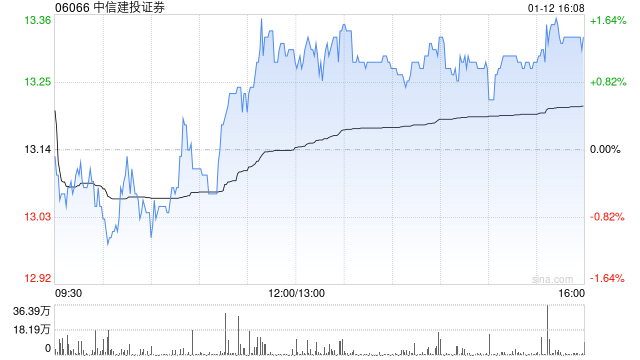
中信建投:高端消费复苏 买什么?
智通财经网· 2026-01-13 00:01
Group 1 - The core viewpoint is that the wealth effect from the stock market is significantly contributing to the recovery of high-end consumption in China, with a gradual revival observed since Q3 2025 [1][2] - High net worth individuals are a major source supporting high-end consumption, with the stock market's wealth effect being more pronounced than the real estate market in recent years [2] - The total market capitalization of A-shares and Hong Kong stocks is projected to reach 123 trillion yuan and 48 trillion HKD by the end of 2025, reflecting a net increase of 24.5 trillion yuan and 12.7 trillion HKD from the end of 2024 [2] Group 2 - Three validation points for the ongoing recovery of high-end consumption include: 1) International luxury brands showing recovery in Q2 2025, with positive revenue growth in the Asia-Pacific region by Q3 2025 [2] 2) High-end retail properties in China beginning to recover from late 2024 into 2025, with improved occupancy rates and sales [2] 3) The global luxury market entering a recovery phase starting Q3 2025 [2] - The fastest-growing segments in the luxury market from 2019 to 2025E include luxury cruises, private jets, high-end dining, personal luxury goods, luxury hotels, and high-end home goods, with jewelry expected to perform best in 2025 [3] - The recovery timing and strength of different high-end consumption categories are influenced by factors such as the proportion of VIC customers, the order of consumption based on wealth increase, supply elasticity, and consumption trends [3]
中信建投:看好2026年高端消费复苏的投资机会
Zheng Quan Shi Bao Wang· 2026-01-13 00:00
Core Viewpoint - The report from CITIC Securities indicates a gradual recovery in high-end consumption in China since Q3 2025, driven by the wealth effect from rising stock markets, as evidenced by the performance of international luxury brands and the recovery of high-end shopping malls [1] Group 1: High-End Consumption Recovery - High-end consumption is expected to recover in 2026, with the timing and intensity of recovery varying by category, influenced by factors such as the proportion of VIC (Very Important Customer) clientele, the order of consumption based on wealth increase, the degree of necessity, and supply elasticity [1] - Categories with strong initial demand driven by social status and identity needs are likely to recover first, while those with a higher proportion of VIC clientele and good supply dynamics will show more sustained recovery [1] Group 2: Investment Opportunities - The report suggests that categories with strong social demand and high elasticity will benefit from the ongoing wealth effect, with those featuring more discretionary attributes expected to exhibit greater elasticity [1]
中信建投:资产配置建议采用双峰型策略
Zheng Quan Shi Bao Wang· 2026-01-12 23:57
Core Viewpoint - During the "14th Five-Year Plan" period, China's economy is expected to enter a transformation phase dominated by new quality productivity, with a downward shift in growth center and intensified external geopolitical competition [1] Group 1: Investment Focus Areas - Industry investment will concentrate on four main lines: technology self-reliance driven by new quality productivity, green transformation during the carbon peak battle, the silver economy driven by an aging population, and strategic resource allocation under the coordination of development and security [1] - Non-ferrous metals are expected to maintain strong performance, with gold being a core safe-haven asset under the "de-dollarization" pricing logic, while copper and aluminum will benefit from energy transition and supply constraints [1] Group 2: Asset Allocation Strategy - The asset allocation strategy suggests a dual-peak approach: defensive allocation in high-dividend assets (such as hydropower, telecommunications operators, and state-owned banks) to secure stable cash flow returns [1] - Offensive allocation should focus on hard technology growth assets (including semiconductor equipment, industrial software, and humanoid robots) to capture excess returns from domestic substitution and industrial upgrading [1]