
Changshu Bank(601128)

Search documents
净利增超10%!4家银行,业绩预喜!
证券时报· 2025-07-28 04:16
Core Viewpoint - The first batch of listed banks' mid-year reports reflects positive operational data, with significant growth in both revenue and net profit for the first half of 2025, indicating a bullish trend in the banking sector [1][2]. Group 1: Performance of Listed Banks - Four listed banks, including Qilu Bank, Hangzhou Bank, Changshu Bank, and Ningbo Bank, reported growth in both operating income and net profit for the first half of 2025, with Qilu Bank, Hangzhou Bank, and Changshu Bank achieving over 10% year-on-year growth in net profit [1][3]. - Qilu Bank's operating income reached 6.782 billion yuan, a 5.76% increase year-on-year, with a net profit of 2.734 billion yuan, up 16.48% [3]. - Ningbo Bank reported operating income of 37.16 billion yuan, a 7.91% increase, and a net profit of 14.772 billion yuan, up 8.23% [3]. - Hangzhou Bank's operating income was 20.093 billion yuan, a 3.89% increase, with a net profit of 11.662 billion yuan, up 16.67% [3]. - Changshu Bank achieved operating income of 6.062 billion yuan, a 10.10% increase, and a net profit of 1.969 billion yuan, up 13.55% [3]. Group 2: Asset Quality and Loan Growth - All four banks maintained positive loan growth, with Ningbo Bank's loans increasing by 13.36% year-to-date, Qilu Bank's by 10.16%, Hangzhou Bank's by 7.67%, and Changshu Bank's by 4.40% [4]. - The asset quality of these banks showed stability or improvement, with Qilu Bank's non-performing loan (NPL) ratio decreasing to 1.09%, down 0.10 percentage points from the beginning of the year [4]. - The provision coverage ratios for these banks were significantly above the industry average, with Hangzhou Bank at 520.89%, Changshu Bank at 489.53%, Ningbo Bank at 374.16%, and Qilu Bank at 343.24% [4]. Group 3: Market Trends and Fund Allocation - The banking sector has seen a bullish trend since 2025, with 11 A-share listed banks having a cumulative increase of over 20% year-to-date as of July 25 [1][11]. - In the H-share market, 15 listed banks have seen increases of over 30%, with some like Qingdao Bank and Huishang Bank rising over 50% [11]. - Public funds have increased their allocation to bank stocks, with the proportion of active public funds in bank stocks reaching a new high since June 2021, indicating a shift towards quality regional banks and undervalued banks [12].




净利增超10%!4家银行,业绩预喜!
券商中国· 2025-07-28 01:30
Core Viewpoint - The first batch of listed banks' mid-year reports shows positive operational data, with significant growth in both revenue and net profit, indicating a bullish trend in the banking sector since 2025 [1][2][3]. Group 1: Performance of Listed Banks - Four listed banks, including Qilu Bank, Hangzhou Bank, Ningbo Bank, and Changshu Bank, reported revenue and net profit growth in the first half of 2025, with Qilu Bank, Hangzhou Bank, and Changshu Bank achieving over 10% year-on-year growth in net profit [1][2][3]. - Qilu Bank's revenue reached 6.782 billion yuan, up 5.76%, with a net profit of 2.734 billion yuan, up 16.48% [2]. - Ningbo Bank reported revenue of 37.16 billion yuan, a 7.91% increase, and a net profit of 14.772 billion yuan, an 8.23% increase [2]. - Hangzhou Bank's revenue was 20.093 billion yuan, up 3.89%, with a net profit of 11.662 billion yuan, up 16.67% [2]. - Changshu Bank achieved revenue of 6.062 billion yuan, a 10.10% increase, and a net profit of 1.969 billion yuan, up 13.55% [3]. Group 2: Asset Quality and Loan Growth - All four banks maintained positive loan growth, with Ningbo Bank's loans increasing by 13.36% and Qilu Bank's by 10.16% compared to the beginning of the year [3]. - Qilu Bank reported a net interest income growth of 13.57% and a stable net interest margin [3]. - The non-performing loan (NPL) ratios for these banks showed stability or improvement, with Qilu Bank's NPL ratio decreasing to 1.09%, down 0.10 percentage points from the beginning of the year [3][4]. Group 3: Market Trends and Fund Allocation - The banking sector has seen a significant increase in stock prices, with 11 A-share listed banks rising over 20% year-to-date as of July 25, 2025 [1][9]. - H-share listed banks performed even better, with 15 banks rising over 30% [9]. - Public funds have increased their allocation to bank stocks, with the proportion of active public funds in bank stocks reaching a new high since June 2021, at 4.9%, up 1.1 percentage points [10].

常熟银行2025年吸并7家村镇银行 推进版图扩张异地利润占比超80%
Chang Jiang Shang Bao· 2025-07-27 23:48
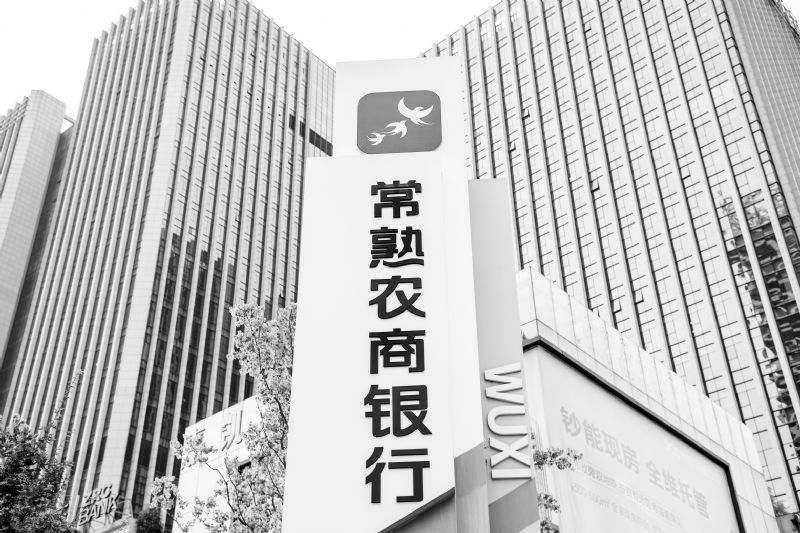
Core Viewpoint - Changshu Bank is expanding its presence in county markets through the absorption and merger of village banks, aiming to enhance its financial service capabilities and optimize its branch network [2][7]. Group 1: Strategic Expansion - Changshu Bank plans to absorb and merge three village banks, including Yancheng Binhai Xingfu Village Bank, Zhenjiang Runzhou Changjiang Village Bank, and Changzhou Zhonglou Changjiang Village Bank, and establish new branches [4][6]. - This marks the third plan for "village to branch" transformation in 2025, with a total of seven village banks set to be absorbed and merged [6][7]. Group 2: Financial Performance - In the first half of 2025, Changshu Bank achieved an operating income of 6.062 billion yuan, a year-on-year increase of 10.10%, and a net profit attributable to ordinary shareholders of 1.969 billion yuan, up 13.55% [3][9]. - As of June 2025, the total assets of Changshu Bank reached 401.251 billion yuan, reflecting a growth of 9.46% since the beginning of the year [9]. Group 3: Market Position and Growth - By 2024, 73.52% of Changshu Bank's operating income and 80.48% of its pre-provision profit came from areas outside Changshu, indicating a strong regional expansion [3][8]. - The bank's strategy includes enhancing the quality of village banks and optimizing resource allocation to support rural economic development and small and micro enterprises [7][8].
散装的江苏和“最强”城农商行军团
3 6 Ke· 2025-07-27 23:34
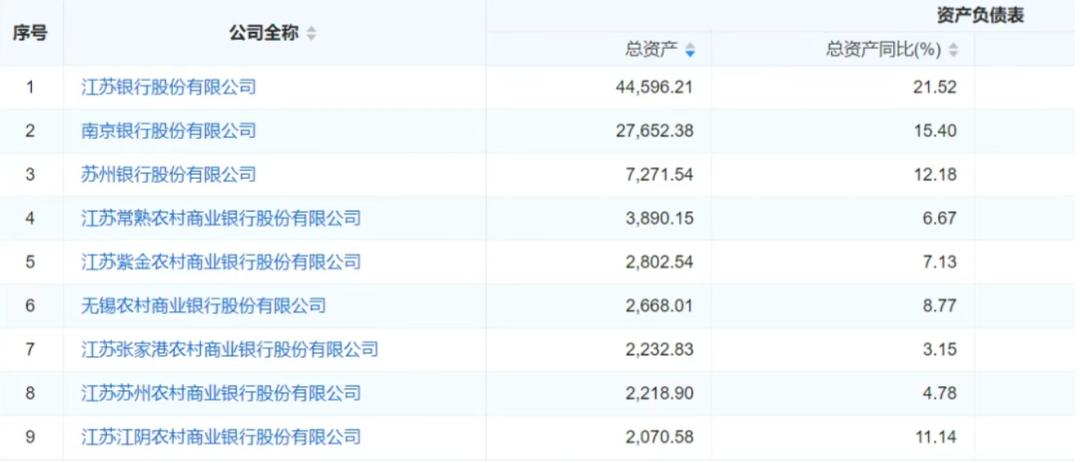
Core Insights - The financial sector in Jiangsu is experiencing intense competition, highlighted by the success of local banks during the "Soo Super" league, which has garnered significant public interest and engagement [1] - Jiangsu has the highest number of banks listed on A-shares in China, with nine banks demonstrating strong operational performance [1][4] Group 1: Performance of Jiangsu Banks - Among the 64 city and rural commercial banks in Jiangsu, 13 made it to the 2025 World Bank's top 1000 list, the highest in the country [1] - The three leading city commercial banks—Jiangsu Bank, Nanjing Bank, and Suzhou Bank—are all publicly listed and show strong growth metrics [2] - In 2024, Jiangsu Bank achieved a net profit of 31.843 billion, leading the profit rankings, while Nanjing Bank and Suzhou Bank reported net profits of 20.177 billion and 5.068 billion, respectively [7][18] Group 2: Financial Metrics - Jiangsu Bank's total assets reached 3952.042 billion, with a year-on-year growth of 16.12%, while Nanjing Bank and Suzhou Bank reported total assets of 2591.4 billion and 693.714 billion, respectively [9][21] - The revenue growth rates for 2024 were 8.78% for Jiangsu Bank, 11.32% for Nanjing Bank, and 3.01% for Suzhou Bank, indicating a competitive landscape [17][20] - The net profit growth rates for these banks were 10.76% for Jiangsu Bank, 9.05% for Nanjing Bank, and 10.16% for Suzhou Bank, all surpassing Jiangsu's GDP growth rate of 5.8% [7][9] Group 3: Market Position and Strategy - Jiangsu's banking sector benefits from a robust regional economy, with a GDP of 13.7 trillion and a diverse industrial base, fostering a strong demand for financial services [22][24] - The establishment of the Jiangsu Rural Commercial Bank aims to enhance the efficiency of the rural financial system and support the growth of small and medium-sized banks [14][16] - Local banks are focusing on differentiated strategies, with city banks emphasizing comprehensive services and rural banks targeting small and micro enterprises [23][24]


常熟银行大动作!今年三起“村改支”计划
券商中国· 2025-07-27 23:22
Core Viewpoint - Changshu Bank is actively pursuing a strategy of merging and restructuring village banks into branch institutions, with a focus on enhancing its market presence and operational efficiency in the Jiangsu region [1][2][10]. Group 1: Merging and Restructuring Plans - Changshu Bank plans to absorb and merge three village banks and establish branch institutions, pending approval at the upcoming shareholders' meeting on August 11 [1]. - This marks the third "village-to-branch" initiative by Changshu Bank this year, following the establishment of three branches from merged village banks in June [1][4]. - The bank's previous actions include the absorption of Jiangsu Ruzhou Rongxing Village Bank and the establishment of new branches [1][5]. Group 2: Background and Rationale - The bank's strategy began at the end of last year, focusing on merging "external" village banks, including those initiated by Wuhan Rural Commercial Bank [2][6]. - The rationale for direct absorption rather than acquisition is attributed to the challenges of managing non-affiliated village banks and the advantages of integrating existing customer bases and operational networks [7]. - The "village-to-branch" model is seen as more efficient than establishing new branches, as it leverages existing resources and reduces operational costs [7]. Group 3: Financial Performance and Impact - As of the end of 2024, loans outside Changshu accounted for 55.36% of the total loan and advance balance, with revenue from these areas contributing 73.52% [8][9]. - The bank's annual report indicates that profits before provisions from these regions reached 80.48%, highlighting the significance of its expansion strategy [8]. - The restructuring of village banks is part of a broader trend in the financial sector aimed at mitigating risks and enhancing operational stability [10][12].

4家上市银行率先披露上半年业绩快报 营收净利实现双增长
Zheng Quan Ri Bao· 2025-07-27 15:46
Core Insights - Several A-share listed banks have reported their half-year performance, showing positive growth in revenue and net profit [1][2] - The banks' net profit growth outpaced revenue growth, indicating improved profitability [1] - Key performance indicators such as return on equity (ROE) and asset quality have shown positive trends [2][3] Group 1: Financial Performance - Ningbo Bank, Hangzhou Bank, Qilu Bank, and Changshu Bank all reported year-on-year revenue growth, with figures of 371.60 billion, 200.93 billion, 67.81 billion, and 60.62 billion respectively, reflecting growth rates of 7.91%, 3.89%, 5.76%, and 10.10% [1] - The net profit attributable to shareholders for these banks also increased, with Hangzhou Bank, Qilu Bank, and Changshu Bank showing growth rates exceeding 10% [1] - Qilu Bank reported a net interest income of 49.98 billion, up 13.57%, and net fee and commission income of 8.17 billion, up 13.64% [1] Group 2: Asset Quality and Growth - The weighted average ROE for Qilu Bank and Changshu Bank increased, reaching 12.80% and 13.33% respectively [2] - Total assets for the four banks expanded, with Ningbo Bank's total assets growing by 11.04% to 3.47 trillion, and Changshu and Qilu Banks surpassing 400 billion and 700 billion in total assets [2] - Non-performing loan ratios remained stable for Ningbo and Hangzhou Banks, while Qilu and Changshu Banks saw slight decreases [2] Group 3: Market Outlook - Analysts suggest that the banking sector's performance reflects a marginal improvement in fundamentals, driven by easing credit supply-demand dynamics and a stabilization of net interest margins [3] - The decline in funding costs and a favorable interest rate environment are expected to support banks' profitability, with a positive outlook for profit growth [3] - Overall asset quality remains stable, with sufficient provisions to support profit generation [3]
银行业周度追踪2025年第29周:如何展望银行股调整空间和节奏?-20250727
Changjiang Securities· 2025-07-27 09:46
Investment Rating - The investment rating for the banking sector is "Positive" and maintained [11] Core Insights - The recent adjustment in bank stocks reflects a combination of overheated trading sentiment since June and a shift in market risk appetite, leading to active funds flowing out of the banking sector [2][6] - The core investment logic for bank stocks remains solid, with expectations for stabilization supported by mid-term performance reports and dividend distributions [6][7] Summary by Sections Market Performance - The Yangtze Bank Index fell by 2.9% this week, underperforming the CSI 300 by 4.6% and the ChiNext Index by 5.7% [2][8] - Most bank stocks experienced declines, with notable exceptions like Ningbo Bank, which rose by 7% due to better-than-expected performance [8][20] Dividend Value Perspective - Jiangsu Bank, a leading city commercial bank, has shown a consistent adjustment pattern of around 10% since 2024, with the current expected dividend yield rising to 4.9%, the highest among A-share listed banks [6][40] - The adjustment from the peak in late June has reached 8%, indicating that the adjustment space is likely complete, enhancing the attractiveness of further investments if prices decline [6][36] Time Rhythm Perspective - Mid-term performance reports from banks like Hangzhou Bank and Qilu Bank show stable and better-than-expected core performance indicators, which are crucial for the revaluation of bank stocks [7][37] - The mid-term dividend distribution is expected to start soon, with August and September identified as key periods for investment positioning [7][37] Convertible Bonds - Qilu Bank is currently managing the pressure from its convertible bonds, with the balance reduced to 1.7 billion yuan, and is expected to accelerate the conversion process following positive mid-term performance [27][29] - The adjustment in the banking sector has also affected other banks nearing convertible bond redemption, expanding the distance to redemption prices [27][29] Trading Activity - The turnover rate and transaction volume for various bank stocks have decreased, indicating a significant recovery in market risk appetite, while trading heat for previously high-performing bank stocks has notably declined [29][32] - The core investment logic for bank stocks remains intact, with expectations for continued upward adjustments in institutional allocations [29][32]
复盘:牛市氛围渐浓,顺周期优质个股迎较好布局时机
Guoxin Securities· 2025-07-27 07:31
Core Insights - The report indicates that the banking sector is entering a favorable period for investment as the bull market atmosphere strengthens, suggesting a good opportunity for high-quality cyclical stocks [1][5][33] - Historical analysis shows that in previous bull markets, the banking sector typically experiences three phases: initial phase with moderate gains, mid-phase where growth sectors outperform, and a late phase where banks present the best investment opportunities with both absolute and excess returns [4][9][28] Market Performance Analysis - Since 2010, the banking sector has shown varying performance across three bull market cycles, with only the 2016-2018 cycle yielding excess returns for banks [6][9] - In the 2014-2015 bull market, the banking index rose by 96.8%, while the Shanghai Composite Index increased by 152.2% [6][10] - The 2016-2018 bull market saw the banking index increase by 44.8%, compared to a 32.3% rise in the Shanghai Composite Index [6][10] - The 2019-2021 cycle had the banking index rising by 37.1%, while the Shanghai Composite Index rose by 50.0% [6][10] Sector Rotation and Stock Selection - The report highlights that during the 2014-2015 bull market, city commercial banks and joint-stock banks performed well, with Nanjing Bank, Everbright Bank, and Ningbo Bank leading with gains of 181.6%, 171.3%, and 154.6% respectively [12][15] - In the 2016-2018 period, leading banks included China Merchants Bank and Ningbo Bank, with respective gains of 144.6% and 126.5% [15][25] - The 2019 cycle saw Ping An Bank and Ningbo Bank leading with gains of 79.1% and 77.9%, indicating significant stock differentiation [18][21] Investment Recommendations - The report suggests focusing on high-quality stocks with a significant retail component, as they are expected to have improved win rates and high payout ratios [5][36] - Specific banks recommended for investment include Ningbo Bank, Changshu Bank, Changsha Bank, China Merchants Bank, and Chongqing Rural Commercial Bank, as they are positioned well in the current market environment [5][36]

本周聚焦:银行理财2025H1半年报:存续规模达30.67万亿,母行代销占比降至65%左右
GOLDEN SUN SECURITIES· 2025-07-27 06:56
Investment Rating - The report does not explicitly provide an investment rating for the banking sector Core Insights - The banking wealth management market showed stable growth in the first half of 2025, with a total scale of 30.67 trillion yuan, a year-on-year increase of 7.53% [1] - Cash management products continued to decline, with a scale of 6.4 trillion yuan, down 14.55% year-on-year, attributed to lower deposit rates and regulatory policies [1] - The market share of wealth management companies increased, with 32 companies holding 89.61% of the market by the end of Q2 2025, up 1.8 percentage points from the end of the previous year [2] - The asset allocation in wealth management products shifted, with a decrease in credit bond allocation and a notable increase in public fund allocation, which rose to 4.2% [3] - The average annualized yield of wealth management products was 2.12%, a decrease of 53 basis points compared to 2024, indicating a low-interest-rate environment [4] - The proportion of sales through parent banks has decreased to around 65%, as companies expand their distribution channels [5][8] Summary by Sections 1. Wealth Management Market Overview - As of the end of Q2 2025, the total scale of wealth management products reached 30.67 trillion yuan, with a year-on-year growth of 7.53% [1] - Cash management products saw a significant decline, with a scale of 6.4 trillion yuan, down 14.55% year-on-year [1] 2. Market Structure - The market share of wealth management companies increased to 89.61%, reflecting a concentration of market power among leading firms [2] 3. Asset Allocation - The allocation to credit bonds decreased, while public funds saw a significant increase, indicating a shift in investment strategy [3] 4. Yield Trends - The average annualized yield of wealth management products fell to 2.12%, continuing a downward trend since 2023 [4] 5. Distribution Channels - The share of sales through parent banks has decreased to approximately 65%, as firms diversify their distribution strategies [5][8] 6. Sector Outlook - The banking sector is expected to benefit from policy catalysts, with specific banks like Ningbo Bank, Postal Savings Bank, and others highlighted as potential investment opportunities [9]



首批中期快报出炉!上半年银行业绩增长显韧性
Guo Ji Jin Rong Bao· 2025-07-25 16:19
Core Viewpoint - The early disclosure of semi-annual performance reports by Ningbo Bank, Changshu Bank, and Hangzhou Bank indicates positive growth in revenue and net profit, setting a favorable tone for the upcoming earnings season for listed banks [1][3][4]. Group 1: Performance Highlights - Ningbo Bank reported a revenue of 37.16 billion yuan, a year-on-year increase of 7.91%, and a net profit of 14.77 billion yuan, up 8.23% year-on-year [3]. - Changshu Bank achieved a revenue of 6.06 billion yuan and a net profit of 1.97 billion yuan, with year-on-year growth rates of 10.10% and 13.55% respectively [4]. - Hangzhou Bank's revenue reached 20.09 billion yuan, reflecting a 3.89% increase, while its net profit surged by 16.67% to 11.66 billion yuan [5]. Group 2: Asset Quality - All three banks maintained a stable asset quality, with non-performing loan (NPL) ratios decreasing and remaining at low levels compared to the end of 2024 [6][7]. - Ningbo Bank's NPL ratio stood at 0.76%, with a provision coverage ratio of 374.16% and a capital adequacy ratio of 15.21% [7]. - Hangzhou Bank also reported an NPL ratio of 0.76%, with a provision coverage ratio of 520.89% and a capital adequacy ratio of 14.64% [7]. - Changshu Bank's NPL ratio decreased to 0.76%, with a provision coverage ratio of 489.53% [8]. Group 3: Market Outlook - Analysts expect that the mid-year reports for listed banks in 2025 will show a slight upward trend in revenue and profit growth, alongside stable asset quality [9]. - The overall loan NPL ratio is anticipated to remain stable, with a gradual improvement trend expected in the industry [9].