
INDUSTRIAL BANK(601166)

Search documents
上半年银行新增15万高净值客户,“科学家”正在成为新宠?
第一财经· 2025-09-05 05:18
Core Viewpoint - The high-net-worth client segment is a key focus for retail banking, with significant potential for value extraction. The private banking business is seen as a cornerstone for wealth management transformation, showcasing structural differentiation among banks [2][8]. Group 1: Private Banking Growth and Client Statistics - As of June 2025, 15 banks reported private banking data, with a total client base exceeding 1.63 million, an increase of nearly 150,000 clients, representing a growth rate of over 10% [2]. - The four major state-owned banks have crossed the 3 trillion yuan mark in Assets Under Management (AUM), with Agricultural Bank of China leading at 3.5 trillion yuan, followed by China Bank at 3.4 trillion yuan, and Construction Bank at 3.18 trillion yuan, which saw a 14.39% growth [4][5]. - Postal Savings Bank reported a client growth of over 21%, adding 7,200 clients to reach 41,400, marking the highest growth rate among state-owned banks [4]. Group 2: Performance of Joint-Stock Banks - Joint-stock banks displayed a mixed performance, with China Merchants Bank leading in client numbers at 182,700, an increase of 13,600 clients, representing an 8% growth [5]. - Ping An Bank was the only bank to report a decline in AUM, with a slight decrease of 0.5% to 1.97 trillion yuan, although it added 3,100 clients [5][9]. - CITIC Bank and Industrial Bank maintained steady growth, with AUMs of 1.28 trillion yuan and 1.05 trillion yuan, respectively, showing growth rates of 9.33% and 9.59% [6]. Group 3: Regional Banks and Competitive Landscape - Regional banks like Ningbo Bank and Beijing Bank exhibited strong growth, with AUM growth rates of 17.62% and 17.06%, respectively [7]. - The competitive landscape is characterized by a concentration of top-tier banks and differentiated competition, with smaller banks focusing on niche markets or specific industries [7][10]. Group 4: Changing Client Demographics and Service Models - The profile of private banking clients is shifting, with a growing emphasis on new wealth groups such as scientists and entrepreneurs, diverging from the traditional client base of business owners [9][10]. - Banks are redefining their private banking client categories based on their strengths, with a focus on family wealth transfer, pension finance, and enhanced offline services [10][11]. Group 5: Strategic Importance of Private Banking - Private banking is becoming a critical component of retail banking transformation, providing stability in asset scale and high value-added services, essential for optimizing client structures and stabilizing short-term performance [10][11].





兴业银行股份有限公司 关于董事任职的公告
Zhong Guo Zheng Quan Bao - Zhong Zheng Wang· 2025-09-05 04:51
Group 1 - The core point of the announcement is the approval of Mr. Zhang Wei's appointment as a director of Industrial Bank Co., Ltd. by the National Financial Regulatory Administration [1] - Mr. Zhang Wei will officially assume the position of director starting from September 2, 2025 [1] - The announcement confirms that the board of directors guarantees the truthfulness, accuracy, and completeness of the content [1][2] Group 2 - The announcement includes a reference to Mr. Zhang Wei's resume, which can be found on the Shanghai Stock Exchange website [1] - The announcement is issued by the board of directors of Industrial Bank Co., Ltd. on September 4, 2025 [3]

兴业银行(601166):利润增速转正 零售资产质量改善
Xin Lang Cai Jing· 2025-09-05 00:36
Core Viewpoint - The bank reported a slight decline in revenue but a modest increase in net profit for the first half of 2025, indicating a stabilization in performance despite ongoing challenges in the market [1][6]. Financial Performance - The bank achieved a revenue of 110.46 billion yuan in 1H25, down 2.3% year-on-year, with the decline narrowing by 1.3 percentage points compared to 1Q25 [1]. - The net profit attributable to shareholders was 43.14 billion yuan, reflecting a year-on-year increase of 0.2%, with an improvement of 2.4 percentage points from 1Q25 [1]. - The net interest margin stood at 1.75%, a decrease of 11 basis points year-on-year [1][5]. Asset Quality and Loan Performance - The non-performing loan (NPL) ratio was 1.08% at the end of 1H25, remaining stable compared to the previous quarter [2][5]. - The total loan balance reached 5.9034 trillion yuan, up 4.1% year-on-year, with corporate loans showing a net increase of 227.1 billion yuan, accounting for 136.1% of the total loan growth [4]. - Retail loans decreased by 27.9 billion yuan, primarily due to adjustments in lending strategies amid asset quality fluctuations [4]. Non-Interest Income and Provisioning - Other non-interest income showed improvement, with a decline of 7.0% year-on-year to 23.63 billion yuan, but the decline rate improved by 14.5 percentage points from 1Q25 [3]. - The bank made provisions for impairment losses totaling 30.12 billion yuan, down 12.2% year-on-year, contributing 6.4 percentage points to profit growth [3]. Interest Income and Margin Pressure - Net interest income was 73.76 billion yuan, down 1.5% year-on-year, with the growth rate declining from 1.3% in 1Q25 to negative territory [3][5]. - The bank's asset yield faced pressure, with a decrease of 56 basis points to 3.37% due to various market factors [5]. Investment Outlook - The bank's performance is expected to maintain steady growth, supported by improvements in non-interest income and provisioning, with projected net profits of 78.63 billion, 80.84 billion, and 84.49 billion yuan for 2025-2027, reflecting year-on-year growth rates of 1.8%, 2.8%, and 4.5% respectively [6].
上市股份银行半年净利2781亿增0.3% 总资产73.38万亿平均不良率1.3%
Chang Jiang Shang Bao· 2025-09-04 23:40
Core Insights - The overall performance of listed commercial banks remained stable in a complex external environment during the first half of 2025, with total operating income of 777.42 billion yuan, a year-on-year decrease of approximately 2%, and net profit of 278.125 billion yuan, a slight increase of 0.3% [1][2] Financial Performance - Among the 10 listed banks, only Shanghai Pudong Development Bank and Bohai Bank achieved both revenue and profit growth, indicating a polarized performance trend [2] - The highest operating income was recorded by China Merchants Bank at 169.969 billion yuan, with a net profit of 74.93 billion yuan, followed by Industrial Bank and CITIC Bank with net profits of 43.141 billion yuan and 36.478 billion yuan respectively [2] - Seven banks experienced a decline in operating income, while three banks, including Shanghai Pudong Development Bank, achieved positive growth rates of 2.62%, 7.83%, and 8.14% respectively [2] Interest Income and Fee-Based Income - In the context of declining market interest rates and intensified competition, seven banks reported a year-on-year decrease in net interest income, with only China Merchants Bank, Shanghai Pudong Development Bank, and Minsheng Bank showing growth [3] - The net interest margin for listed banks ranged from 1.32% to 1.88%, with Minsheng Bank being the only bank to see an increase in net interest margin, reaching 1.39% [3] - Four banks, including Industrial Bank and CITIC Bank, reported growth in fee and commission income, while Bohai Bank and Zhejiang Commercial Bank saw significant declines [3] Investment Income - Despite challenges in traditional business revenue growth, investment income showed a positive trend, with eight banks reporting increases, particularly Everbright Bank with a 33.41% year-on-year growth [4] Asset Quality - As of June 30, 2025, the total assets of the 10 listed banks reached 73.38 trillion yuan, with most banks achieving steady asset expansion [5] - The average non-performing loan (NPL) ratio for the listed banks was approximately 1.3%, with four banks showing a decrease compared to the end of 2024 [6] - The NPL ratios for major banks like China Merchants Bank and Ping An Bank improved slightly, while others like Minsheng Bank and Bohai Bank saw slight increases [6] Provision Coverage - Only China Merchants Bank had a provision coverage ratio exceeding 400%, at 410.93%, while several other banks maintained coverage ratios above 200% [7] - Plans for mid-year dividends have been announced by several banks, including China Merchants Bank and Minsheng Bank, with specific cash dividend amounts and payout ratios detailed [7]




揭秘银行薪酬:24家银行上半年人均月薪超3万,高管降薪成趋势
Di Yi Cai Jing· 2025-09-04 22:49
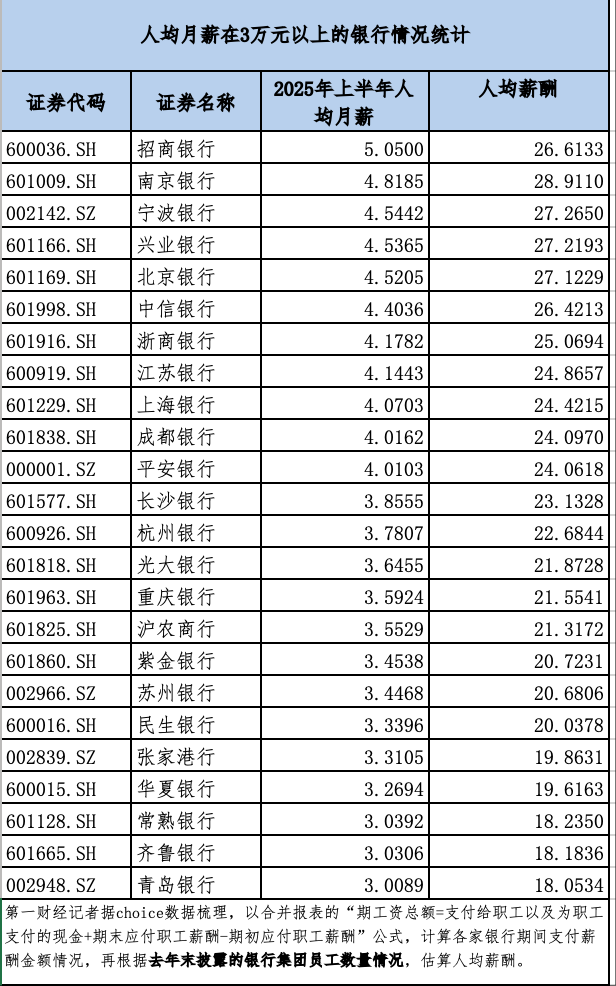
Core Viewpoint - The banking sector in A-shares has regained its position as the largest sector with a market value of 11.31 trillion yuan, surpassing the electronics sector, while the salary situation of banking employees has also drawn attention [1] Salary Overview - The average monthly salary in the banking industry for the first half of 2025 is 30,200 yuan, a slight increase of 1,300 yuan year-on-year, reversing a trend of a 5,300 yuan decrease in the same period last year [2][4] - The top tier of banks, including joint-stock banks and strong city commercial banks in eastern regions, have an average monthly salary exceeding 45,000 yuan, with specific banks like China Merchants Bank and Nanjing Bank reporting 50,500 yuan and 48,185 yuan respectively [2][3] Salary Distribution - The second tier consists of state-owned banks with average monthly salaries ranging from 25,000 to 30,000 yuan, with Bank of China at 28,200 yuan and China Construction Bank at 26,200 yuan [3] - The third tier includes some rural and city commercial banks in remote areas, with average salaries below 25,000 yuan, such as Zhengzhou Bank and Xi'an Bank at 24,700 yuan and 22,800 yuan respectively [4] Management Salary Trends - A significant trend in the banking industry is the reduction of executive salaries, with 33 out of 42 A-share listed banks reporting a decrease in management compensation, with the highest drop reaching 82.4% [5][6] - For instance, Zhengzhou Bank's key management compensation fell from 103.88 million yuan to 59.57 million yuan year-on-year [5] Salary Reform and Mechanisms - Many banks are emphasizing salary structure reforms, focusing on value creation and incentivizing younger employees to work in grassroots positions [6][7] - The implementation of a reverse salary mechanism is becoming more common, allowing banks to reclaim performance-related pay in cases of misconduct or excessive risk exposure [7] Industry Context - It is important to note that the salary levels of listed banks do not represent the overall banking industry, as many smaller banks and rural credit cooperatives have significantly lower average salaries due to various factors affecting their profitability [8]



黄金大涨背后,银行布局加快了
Sou Hu Cai Jing· 2025-09-04 22:06
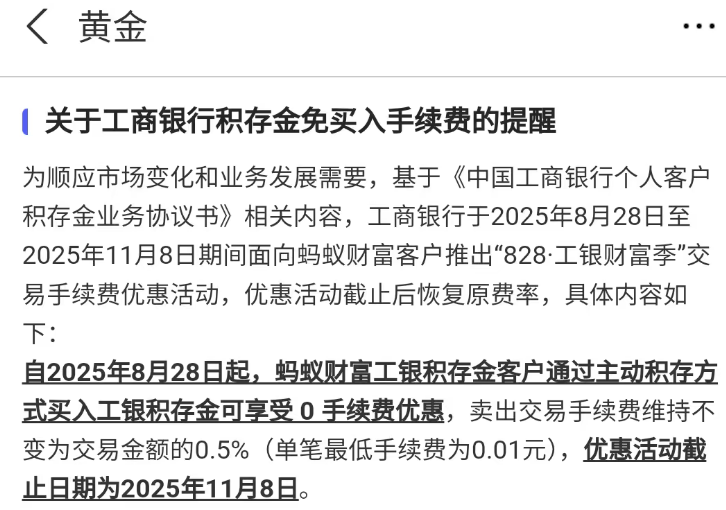
Core Viewpoint - The international gold price has reached a new high, surpassing $3600 per ounce, driven by increased market risk aversion and a significant year-to-date increase of over 36% in gold prices [1][10]. Retail Gold Business Expansion - Banks are actively expanding their retail gold business in response to rising consumer demand, with products like investment gold bars and accumulation gold being promoted to capture market share [1][3]. - Industrial and Commercial Bank of China launched a marketing campaign during the Qixi Festival, offering zero-fee accumulation gold purchases through platforms like Alipay and Tencent Finance [1]. - The retail gold business is seen as enhancing customer loyalty and service capabilities, with products like accumulation gold meeting asset allocation and preservation needs, thereby increasing transaction frequency and cross-selling opportunities in wealth management and insurance [3]. Performance Metrics - Postal Savings Bank reported a significant increase in gold accumulation trading amounting to 5.569 billion yuan, a year-on-year growth of 238.78%, and gold sales of 1.424 billion yuan, up 69.16% [4]. - The appeal of retail gold among younger consumers is growing, with nearly 100 million views on social media platforms discussing bank gold bars [4]. Gold Repurchase Services - Banks are enhancing their gold repurchase systems, with Industrial and Commercial Bank establishing 133 new gold repurchase service outlets to improve service coverage and volume [5]. Institutional Gold Business - The institutional gold business is also crucial, offering services such as gold leasing, price hedging, and the sale of precious metal products to corporate clients [6]. - The Shanghai Gold Exchange has approved 13 market makers for interbank gold inquiry trading, with Postal Savings Bank becoming a trial market maker [6]. Insurance Capital Involvement - The entry of insurance capital into the gold market is expected to drive banks' intermediary income through services like transaction execution and asset custody [9][10]. - China Bank reported a 37% increase in precious metal income in the first half of the year, while Industrial Bank led in interbank gold trading volume with over 3 trillion yuan [9][10].

兴业银行1H25业绩点评:利润增速转正,零售资产质量改善
Xin Lang Cai Jing· 2025-09-04 21:08
Core Viewpoint - Industrial Bank reported a slight decline in revenue but a modest increase in net profit for the first half of 2025, indicating a stabilization in performance despite ongoing challenges in the banking sector [1] Financial Performance - Revenue for 1H25 reached 110.46 billion yuan, a year-on-year decrease of 2.3%, with the decline narrowing by 1.3 percentage points compared to Q1 2025 [1] - Net profit attributable to shareholders was 43.14 billion yuan, reflecting a year-on-year increase of 0.2%, with growth accelerating by 2.4 percentage points from Q1 2025 [1] Non-Interest Income - Net other non-interest income decreased by 7.0% to 23.63 billion yuan, but the decline was less severe than in Q1 2025, improving by 14.5 percentage points [1] Loan Growth and Structure - As of the end of 1H25, total loan balance was 5.9034 trillion yuan, up 4.1% year-on-year, slightly down from 5.0% at the end of 2024 [1] - Corporate loans saw a net increase of 227.1 billion yuan, with stable growth focused on key industries [1] Asset Quality and Interest Margin - The net interest margin for 1H25 was 1.75%, down 11 basis points year-on-year, consistent with 2024 [1] - The non-performing loan (NPL) ratio stood at 1.08%, unchanged from Q1 2025 and up 1 basis point from the end of the previous year [1] - NPL ratios in specific sectors such as manufacturing and real estate increased by 40 basis points and 36 basis points respectively since the beginning of the year [1] Investment Recommendation - The improvement in non-interest income and provisions has led to a positive growth outlook for Industrial Bank, with strong loan growth in technology and green sectors, and continued improvement in retail asset quality [1] - The bank is expected to maintain steady growth, with a "recommended" rating for investment [1]
7家上市银行私行管理资产余额均超万亿元
Zheng Quan Ri Bao· 2025-09-04 16:18
Core Insights - The private banking sector is identified as a key area for value extraction within retail banking, reflecting the strength of banks' wealth management capabilities [1] - As of mid-2023, most banks reported growth in both the number of private banking clients and assets under management (AUM), indicating a continuous expansion of the high-net-worth wealth management market [1][2] Client Growth - Among the 13 listed banks that disclosed private banking client data, Agricultural Bank, China Bank, and Construction Bank lead with over 200,000 clients each, with respective figures of 279,000, 265,500, and 216,900 [2] - Construction Bank saw a 14.69% increase in private banking clients compared to the end of 2022, while China Bank surpassed the 200,000 client mark [2] - Among national joint-stock banks, China Merchants Bank leads with 182,700 clients, followed by Ping An Bank and CITIC Bank, both exceeding 90,000 clients [2] AUM Performance - Of the 13 banks analyzed, 11 disclosed AUM data, with Agricultural Bank, China Bank, and Construction Bank each exceeding 3 trillion yuan in AUM, at 3.5 trillion, 3.4 trillion, and 3.18 trillion yuan respectively [3] - Traffic Bank's AUM reached 1.39 trillion yuan, reflecting a 7.20% growth since the end of 2022 [3] - Among national joint-stock banks, Ping An Bank, CITIC Bank, and Industrial Bank are part of the "trillion yuan club," with AUM figures of 1.97 trillion, 1.28 trillion, and 1.05 trillion yuan respectively [3] Service Optimization - Private banking has become a significant profit growth point for banks, especially as traditional retail banking growth slows [4] - The sector is evolving from a single financial advisory model to a comprehensive service ecosystem, incorporating diverse products such as family trusts and cross-border asset allocation [4] - Major banks are enhancing their private banking services through product optimization and resource integration, aiming to build a robust service ecosystem [4] Future Directions - The future of private banking is expected to focus on three main areas: deepening digitalization, creating service ecosystems, and expanding global investment options [6] - Digital transformation will leverage technologies like AI and blockchain to enhance client service processes and risk management [6] - The integration of external resources such as legal and tax services will be crucial in developing a comprehensive service framework, particularly for family office and legacy planning services [6]

兴业银行: 兴业银行关于董事任职的公告
Zheng Quan Zhi Xing· 2025-09-04 16:06
Core Viewpoint - The announcement confirms the appointment of Mr. Zhang as a director of Industrial Bank, effective September 2, 2025, following approval from the National Financial Regulatory Administration [1]. Company Summary - Industrial Bank received official approval for Mr. Zhang's directorship from the National Financial Regulatory Administration [1]. - Mr. Zhang's qualifications and background can be found in a previous announcement published on May 31, 2024, on the Shanghai Stock Exchange website [1].
“把脉”A股42家上市银行中期资产质量:对公贷款不良率持续向好,零售贷款仍处风险暴露期
Mei Ri Jing Ji Xin Wen· 2025-09-04 14:35
Group 1: Overall Asset Quality - As of August 31, 2023, the asset quality of 42 listed banks in A-shares shows a stable improvement, with some banks experiencing a slight increase in non-performing loan (NPL) ratios compared to the end of the previous year [1] - The overall NPL ratio for commercial banks was 1.49% at the end of Q2 2023, improving by 0.02 percentage points from the end of Q1 [3] - The provision coverage ratio for state-owned banks and rural commercial banks increased to 249.16% and 161.87%, respectively, while the ratios for joint-stock banks and city commercial banks decreased [4] Group 2: Non-Performing Loan Trends - The NPL ratio for corporate loans is improving, while the NPL ratio for retail loans is on the rise, indicating a structural change in asset quality [5][6] - For example, Industrial and Commercial Bank of China (ICBC) reported a decrease in corporate loan NPL ratio from 1.58% to 1.47%, while the personal loan NPL ratio increased from 1.15% to 1.35% [5] - The rise in retail loan NPLs is attributed to factors such as market conditions, increased flexible employment, and changes in industry environments affecting borrower income [6] Group 3: Real Estate Loan Performance - The real estate sector remains a significant source of NPLs, with some banks reporting an increase in real estate loan NPL ratios, while others have seen improvements [7][8] - For instance, Qingnong Commercial Bank's real estate NPL ratio rose to 21.32%, an increase of 14.15 percentage points from the end of the previous year [7] - The overall decline in real estate sales and the high leverage of real estate companies are fundamental reasons for the rising NPL ratios in this sector [8]

