
INDUSTRIAL BANK(601166)

Search documents
兴业银行:关于董事任职的公告
Zheng Quan Ri Bao Zhi Sheng· 2025-09-04 13:21
Core Viewpoint - Industrial Bank has received approval from the National Financial Regulatory Administration for Mr. Zhang Wei to serve as a director, effective September 2, 2025 [1] Summary by Relevant Sections - Appointment Details - Mr. Zhang Wei has been approved to take on the role of director at Industrial Bank [1] - The approval was granted under document number Jin Fu [2025] 526 [1]
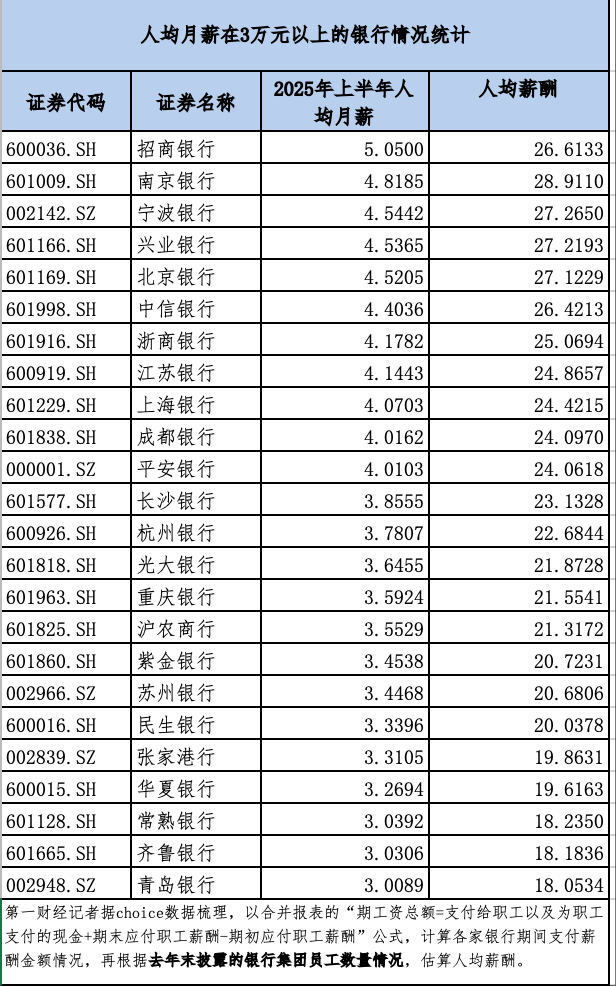
揭秘银行薪酬:24家银行上半年人均月薪超3万元,高管降薪成趋势
Di Yi Cai Jing· 2025-09-04 13:04
Core Insights - The banking sector's compensation reform has shifted from "controlling high" to a dual focus on "lowering" and "risk constraints" [1] - The average monthly salary for bank employees in the first half of 2025 was 30,200 yuan, a slight increase of 1,300 yuan year-on-year [2][5] - A total of 42 banks reported a decline in management salaries, with the highest drop reaching 82.4% [6][8] Salary Structure - The banking industry has formed a salary tier system, with leading joint-stock banks and strong city commercial banks in the first tier, averaging over 45,000 yuan per month [2][4] - Major state-owned banks fall into the second tier, with average monthly salaries ranging from 25,000 to 30,000 yuan [4][5] - Some rural and city commercial banks in remote areas are in the third tier, with average salaries below 25,000 yuan [5] Management Salary Trends - Key management salaries have seen significant reductions, with 33 out of 42 listed banks reporting a decrease in total management compensation [6][8] - For example, Zhengzhou Bank's management compensation dropped from 10,388 million yuan to 5,957 million yuan year-on-year [6] - The trend of management salary cuts is becoming a new norm in the industry, with banks emphasizing value creation and risk management in their compensation structures [7][8] Compensation Reform Mechanisms - Many banks are implementing reverse salary recovery mechanisms to enhance performance accountability [8] - For instance, Zhengzhou Bank has established a mechanism for deferred payment and performance salary recovery to mitigate operational risks [8] - The overall direction of salary distribution is shifting towards grassroots employees, reducing the previous "averaging" phenomenon [8][9] Industry Context - The salary levels of listed banks do not represent the overall banking industry's compensation situation, as many smaller banks have significantly lower average salaries [9] - The banking sector consists of over 4,000 financial institutions, with listed banks being a small fraction of the total [9]





辉隆股份:关于控股股东部分股份解除质押的公告

Zheng Quan Ri Bao· 2025-09-04 12:23
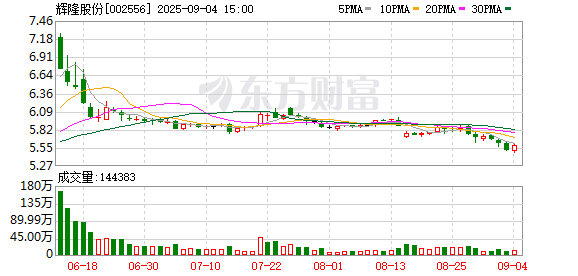
Core Viewpoint - The announcement from Huillong Co., Ltd. indicates that its controlling shareholder, Anhui Huillong Investment Group Co., Ltd., has completed the procedure for the release of stock pledges, which may reflect a positive liquidity position for the company [2] Summary by Relevant Sections - **Stock Pledge Release**: The controlling shareholder released a total of 6 million shares, with 2.8 million shares accounting for 7.84% of its holdings and 3.2 million shares accounting for 8.96% of its holdings [2] - **Impact on Total Share Capital**: The released shares represent 2.96% and 3.38% of the company's total share capital, respectively [2]
“浙科联合贷”落地杭州科创金融改革试验区
Zhong Guo Jin Rong Xin Xi Wang· 2025-09-04 10:06
Core Viewpoint - The "Zhe Ke United Loan" service model has been officially launched in the Hangzhou Science and Technology Financial Reform Pilot Zone, aiming to provide comprehensive financing support for technology-based enterprises through collaboration among multiple banks [1][3]. Group 1: Service Model Overview - The "Zhe Ke United Loan" service model focuses on information sharing, risk sharing, resource complementarity, and policy integration to address the financing needs of technology-based enterprises throughout their lifecycle [1][3]. - A tiered support mechanism has been established, with specific products designed for different growth stages of technology enterprises: "Zhe Ke Puhui United Loan" for startups, "Zhe Ke Growth United Loan" for growth-stage companies, and "Zhe Ke Leading United Loan" for mature enterprises [1][2][3]. Group 2: Financing for Startups - The "Zhe Ke Puhui United Loan" targets the initial financing challenges faced by startups, with banks like Hangzhou Bank and Industrial and Commercial Bank of China focusing on high-growth technology SMEs [2]. - Over 1 billion yuan in financing has been provided to initial-stage enterprises outside the traditional technology company list, with flexible loan amounts, favorable interest rates, and rapid approval processes [2]. Group 3: Financing for Growth-Stage Companies - The "Zhe Ke Growth United Loan" addresses the financing bottlenecks of growth-stage companies, exemplified by a medical startup that received a customized credit plan of 12 million yuan, with interest rates 26 basis points lower than the average [2][3]. - Collaborative research on financing needs and joint due diligence among banks have facilitated tailored financial solutions for these enterprises [2]. Group 4: Financing for Mature Enterprises - The "Zhe Ke Leading United Loan" is designed for mature enterprises, providing a loan of 20 million yuan with interest rates 74 basis points lower than the average [3]. - This product features high loan amounts, long terms, and risk-sharing mechanisms, supported by a dual-track evaluation system involving both banks and industry experts [3]. Group 5: Future Outlook - The implementation of the "Zhe Ke United Loan" policy is expected to inject "financial vitality" into technology-based enterprises in the Hangzhou pilot zone and provide a model for innovation in technology finance nationwide [3]. - Future efforts will focus on enhancing the government-bank-enterprise linkage mechanism, integrating resources, and optimizing business processes to support the high-quality development of technology enterprises [3].



兴业银行天津分行成功承销天津首单 民营科技型企业科技创新债券
Sou Hu Cai Jing· 2025-09-04 09:54
Group 1 - The issuance of the 2025 first phase technology innovation bond by Tianjin Jiuan Medical Electronics Co., Ltd. marks a significant milestone as it is the first technology innovation bond for private technology enterprises in Tianjin, with a total issuance scale of 1.05 billion yuan [1] - The bond issuance is a key initiative by Industrial Bank Tianjin Branch to support the development of private technology enterprises, aligning with the central financial work conference's spirit and promoting financial resources towards "early, small, long-term, and hard technology" sectors [1][3] - The funds raised from the bond will be primarily allocated to upgrading smart medical devices and building a digital platform for chronic disease management, enhancing the company's technological leadership in the industry [2] Group 2 - Jiuan Medical has established a strong foundation for the bond issuance through its commitment to technological innovation, with a dedicated R&D team and significant investment in research, resulting in multiple national patents and industry awards [2] - The company's iHealth series of smart medical devices integrates mobile internet technology with precise detection functions, covering various health monitoring scenarios and achieving a market presence in over 100 countries [2] - The company has developed an innovative "O+O" model for diabetes management, providing comprehensive services from screening to long-term health management, having served over 500,000 chronic disease patients [2]

兴业银行(601166) - 兴业银行关于董事任职的公告
2025-09-04 09:30
A股代码:601166 A股简称:兴业银行 可转债代码:113052 可转债简称:兴业转债 兴业银行股份有限公司 关于董事任职的公告 公告编号:临2025-050 特此公告。 兴业银行股份有限公司董事会 2025年9月4日 兴业银行股份有限公司(以下简称本公司)今日收到《国家金融监督管理总局 关于张为兴业银行董事任职资格的批复》(金复〔2025〕526号),国家金融监督管 理总局已核准张为先生担任本公司董事的任职资格。根据相关规定,张为先生自2025 年9月2日起就任本公司董事。张为先生简历详见2024年5月31日刊载于上海证券交易 所网站(www.sse.com.cn)的《兴业银行股份有限公司第十届董事会第二十四次会议 决议公告》。 本公司董事会及全体董事保证本公告内容不存在任何虚假记载、误导性陈述或 者重大遗漏,并对其内容的真实性、准确性和完整性承担法律责任。 ...
工行稳居上半年投资收益冠军 中行、交行、兴业等下降
2 1 Shi Ji Jing Ji Bao Dao· 2025-09-04 09:27
Core Viewpoint - In the first half of 2025, A-share listed banks reported significant investment income growth, with non-interest income becoming a crucial revenue pillar amid weak credit demand [2][3]. Investment Income Performance - 42 listed banks achieved substantial investment income, with 13 banks exceeding 10 billion yuan in investment income [2]. - The Industrial and Commercial Bank of China (ICBC), China Construction Bank (CCB), Agricultural Bank of China (ABC), and China Merchants Bank (CMB) each reported over 20 billion yuan in investment income [2][3]. - CCB led with a remarkable 217.29% year-on-year increase in investment income, reaching 27.912 billion yuan [3][9]. Growth Rates - Several banks exhibited impressive growth rates, with CCB at 217.29%, followed by Changsha Bank at 118.82%, and Zhengzhou Bank at 111.10% [3]. - Other banks with notable growth include Qingdao Bank (93.93%) and Zijin Bank (95.41%) [3]. Contribution to Revenue - Investment income's contribution to total revenue varies significantly, with large state-owned banks focusing more on lending, while smaller banks rely heavily on investment income [6]. - For instance, investment income accounted for 39.14% of Shanghai Bank's revenue, while state-owned banks like ICBC and CCB had lower ratios below 10% [6]. Market Conditions and Strategies - The investment income surge is partly attributed to favorable conditions in the bond market last year, with banks capitalizing on market opportunities [4][10]. - Despite the current challenges in the bond market, banks like CCB have increased their holdings in government bonds and green bonds, reflecting a strategic shift [5][10]. Future Outlook - The sustainability of high investment income growth is under scrutiny, as banks may face challenges in maintaining high yields amid a potential "asset shortage" [7]. - Industry experts suggest that while the bond market may present opportunities, the overall investment landscape is becoming increasingly difficult [11].


兴业银行申请预重整棒杰股份控股公司 3.9亿贷款逾期
Zhong Guo Jing Ji Wang· 2025-09-04 09:24
Core Viewpoint - The company, Bangjie Co., Ltd., is facing significant financial distress due to its subsidiary, Yangzhou Bangjie New Energy Technology Co., Ltd., being applied for pre-restructuring bankruptcy by a creditor, Industrial Bank Co., Ltd. [1] Financial Situation - As of the announcement date, the company and its solar panel subsidiary have overdue or prematurely due borrowings totaling approximately 986.41 million yuan, which accounts for 328.97% of the company's audited net assets for 2024 [2] - The company reported a net loss of 149.98 million yuan for the first half of 2025, with a possibility of negative net assets by the end of 2025 if the financial situation does not improve [2] Legal Proceedings - Yangzhou Bangjie has received a lawsuit from Industrial Bank Co., Ltd. for a financial loan contract dispute, with the total amount involved in the case being approximately 390.21 million yuan [3][4] - The company had previously signed a maximum guarantee contract with the bank to secure a project loan of 500 million yuan, but has since defaulted on the repayment [3][4] Restructuring Efforts - The company is currently cooperating with the court to assess the feasibility of restructuring Yangzhou Bangjie and aims to balance the protection of all parties' legal rights while seeking solutions to the debt issues [1]

机构看好板块价值重估,银行ETF指数(512730)上涨近1%,上市银行上半年营收及利润增速双双转正
Xin Lang Cai Jing· 2025-09-04 07:18
Group 1 - The core viewpoint is that the banking sector is experiencing a recovery in revenue and profit growth, with overall operating income and net profit growth rates for listed banks turning positive [1][2] - The banking sector is expected to benefit from a stable low interest rate environment, leading investors to prefer lower-risk and more predictable return assets [1][2] - The banking sector's price-to-book (PB) ratio is considered undervalued, especially given the systemic risk concerns have been alleviated [1][2] Group 2 - Recent market conditions have led to increased long-term investments in banks by institutional investors, such as insurance funds and asset management companies [2] - The banking sector's asset quality is stable, and the pressure on interest margins is manageable, with expectations for interest margins to stabilize in the coming quarters [2] - The banking sector is anticipated to enter a new phase of stable return on equity (ROE), supported by fiscal stability and risk management from the central bank [2] Group 3 - The CSI Bank Index closely tracks the performance of the banking sector, with the top ten weighted stocks accounting for 65% of the index [3] - The top ten stocks in the CSI Bank Index include major banks such as China Merchants Bank, Industrial and Commercial Bank of China, and Agricultural Bank of China [3]



银行研究框架及25H1业绩综述:营收及利润增速双双转正
GOLDEN SUN SECURITIES· 2025-09-04 06:14
Investment Rating - The report indicates a positive outlook for the banking industry, with overall revenue and net profit growth rates turning positive in the first half of 2025, at 1.0% and 0.8% respectively, showing improvements from the previous quarter [4]. Core Insights - The banking sector's net interest margin for the first half of 2025 is reported at 1.42%, a decrease of 10 basis points compared to the previous year, but the decline is narrowing due to improved cost management on the liability side [5]. - Non-interest income, particularly from fees and commissions, has increased by 3.1% year-on-year, driven by a recovery in wealth management and a more active market environment [5]. - The asset quality remains stable, with a non-performing loan ratio of 1.23% and a provision coverage ratio of 239%, indicating a solid credit environment [5]. Summary by Sections Financial Performance Overview - The overall revenue and net profit growth for listed banks in the first half of 2025 were 1.0% and 0.8%, respectively, with both metrics showing improvement from the first quarter [4][22]. - The total assets of listed banks reached 321.3 trillion yuan, growing by 6.35% year-to-date, with loans and advances totaling 179.4 trillion yuan, accounting for 55.84% of total assets [21][24]. Income Sources - Net interest income decreased by 1.3% year-on-year, but the decline rate has slowed, reflecting better management of funding costs [5]. - Fee and commission income grew by 3.1% year-on-year, benefiting from a recovering market and the gradual impact of regulatory changes [5]. - Other non-interest income saw a significant increase of 10.7%, primarily due to favorable market conditions in the bond market [5]. Asset Quality and Management - The non-performing loan ratio remained stable at 1.23%, with a provision coverage ratio of 239%, indicating a robust asset quality [5]. - The credit cost for the first half of 2025 was 0.81%, a decrease of 5 basis points year-on-year, suggesting manageable credit risks [5]. Loan Growth and Composition - Loan growth was primarily driven by corporate lending, with significant contributions from infrastructure and manufacturing sectors [20]. - Personal loan growth was weaker, with a year-on-year increase of only 3.6%, reflecting a cautious approach to consumer lending amid rising risks [20]. Investment and Market Conditions - The investment asset proportion decreased to 34% as banks adjusted their strategies in response to market volatility [20]. - The overall yield on bonds fluctuated significantly, prompting banks to engage in tactical trading to enhance returns [20].
