AGRICULTURAL BANK OF CHINA(601288)

Search documents
多方联动激活资金流数据价值
Jin Rong Shi Bao· 2025-11-18 06:35
Core Insights - The implementation of the fund flow information platform has significantly improved access to credit for small and micro enterprises in Hubei, enabling them to secure loans quickly and at lower interest rates [1][2][3] Group 1: Fund Flow Information Platform - The fund flow information platform allows banks to assess the creditworthiness of small enterprises that lack traditional credit histories, thus addressing the "white household" issue in credit evaluation [3][4] - The platform has facilitated the issuance of loans totaling 483.8 billion yuan to 7,878 enterprises, with 352.4 billion yuan disbursed as of September 2025 [5] - The platform captures multi-bank account settlement data, providing a comprehensive view of a company's cash flow and transaction stability, which aids in credit approval [4] Group 2: Collaborative Efforts - The People's Bank of China Hubei Branch has collaborated with local departments to promote the fund flow information platform as a key initiative, enhancing financial supply [2] - A series of training sessions have been conducted for financial institutions, with 1,638 participants trained on platform functionalities and risk management [3] - The bank has implemented a dynamic tracking system to monitor the progress of financial institutions in adopting the platform, ensuring accountability and timely implementation [2][4] Group 3: Case Studies and Success Stories - A cultural media company successfully secured a 1.5 million yuan loan within a day due to the platform's efficient credit assessment process, which lowered their interest rate by 1 percentage point compared to traditional loans [1] - An environmental technology company, classified as a credit "white household," received a 3 million yuan loan by utilizing the fund flow report to fill its credit gap [3] - A technology-focused enterprise in the herbal medicine sector was granted a 5 million yuan loan, demonstrating the platform's effectiveness in supporting local industries [5]


行业深度报告:2025Q4上市银行AC潜在兑现及回补债券评估
KAIYUAN SECURITIES· 2025-11-18 05:10
Investment Rating - The industry investment rating is optimistic (maintained) [1] Core Insights - The report highlights that listed banks have sold approximately 2 trillion yuan in bonds to realize floating profits from their available-for-sale (AC) accounts in the first three quarters of 2025 [13] - It is estimated that in Q4 2025, listed banks will need to sell about 900 billion yuan in bonds to support non-interest income [10] - The cumulative floating profit of listed banks' AC accounts is approximately 3.3 trillion yuan as of the end of H1 2025, accounting for 58.3% of the total revenue for the year 2024 [30] Summary by Sections Investment Growth - Since 2024, the investment growth rate of listed banks' AC accounts has consistently lagged behind the growth rate of financial investments, with a year-on-year growth of 11.5% in Q3 2025, which is 4.28 percentage points lower than that of financial investments [13][15] - The growth rates for different types of banks from Q2 2023 to Q2 2025 are as follows: state-owned banks 14.7%, joint-stock banks 2.8%, city commercial banks 9.7%, and rural commercial banks -3.8% [13] Bond Selling and Profit Realization - The report estimates that the floating profit realization ratio for listed banks' AC accounts in the first three quarters of 2025 is about 3.06%, with a bond selling scale of approximately 2.04 trillion yuan [36] - The selling proportions for different bank types are: state-owned banks 2.26%, joint-stock banks 5.29%, city commercial banks 5.57%, and rural commercial banks 9.65%, with rural commercial banks showing the highest selling intensity [36] Financial Performance - The floating profit from the sale of bonds in the first three quarters of 2025 is estimated to be 1,078 billion yuan, which represents 2.50% of the total revenue, an increase of 1.59 percentage points compared to 2024 [22][25] - The breakdown of floating profit realization ratios by bank type is as follows: state-owned banks 2.24%, joint-stock banks 2.44%, city commercial banks 3.79%, and rural commercial banks 5.52% [22] Investment Recommendations - The report suggests a bottom-line allocation to large state-owned banks, with beneficiaries including Agricultural Bank of China and Industrial and Commercial Bank of China [6] - Core allocations should focus on leading comprehensive banks such as China Merchants Bank, CITIC Bank, and Industrial Bank [6] - Flexible allocations can be made to banks like Jiangsu Bank, Chongqing Bank, and Chongqing Rural Commercial Bank [6]





戈壁滩上好风光
Jin Rong Shi Bao· 2025-11-18 05:05
昌吉州作为新疆十大风区、五大光区之一,凭借丰富的风能和太阳能资源成为新疆新能源发展的沃土。 从昌吉市区出发行驶约70公里,在广袤无垠的戈壁滩上,一排排成片陈列的光伏板如同"蓝色海洋",整 齐划一地铺展至远方,一幅宏大的新能源产业图景正徐徐展开。 针对中电呼图壁新能源有限公司呼图壁县电力源网荷储一体化项目建设期的资金缺口问题,农行呼图壁 县支行迅速组建营销服务团队,为企业量身定制融资方案,创新运用"电费收费权质押"贷款,为项目提 供1.35亿元信贷资金,助力企业将充沛的太阳能转化为光伏"蓝海"。据项目技术负责人杨光强介绍,项 目总投资11.8亿元,占地面积约11000亩,在农行贷款的支持下,今年6月顺利完成,年发电量约为5.18 亿千瓦时。 该行紧紧围绕美丽中国建设,持续扩大金融供给,创新金融产品和服务,推进绿色金融业务扩面增量, 推动生态优势持续转化为发展优势,使生态"含绿量"变经济发展增量,为绿色项目及实体经济发展提供 更有力的金融支持。截至2025年7月末,农行昌吉分行绿色贷款余额110多亿元,其中风力贷款余额53.1 亿元、光伏贷款余额32.7亿元;今年累计投放绿色贷款28亿元,绿色贷款余额占各项贷款余 ...
险资持续加仓红利资产!标普红利ETF(562060)连续吸金超1.2亿元
Xin Lang Ji Jin· 2025-11-18 03:31
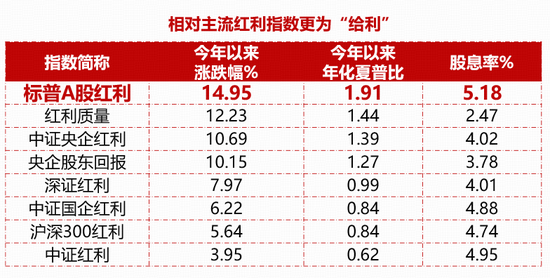
Group 1 - Insurance capital has significantly increased its holdings in the stock market, with a total of 732 listed companies held, amounting to approximately 1,011.3 million shares, an increase of 120.25 million shares from the previous quarter [1] - The preference for high dividend and low valuation stocks is particularly notable, with significant increases in holdings for companies like Agricultural Bank of China, Postal Savings Bank, Industrial and Commercial Bank of China, and Hualing Steel [1] - Insurance capital has expanded its investments in sectors such as banking, steel, real estate, media, and automotive, showing a sustained interest in dividend-paying assets [1] Group 2 - The "slow bull" market in A-shares is positively influencing the investment ecosystem of insurance capital, with a focus on high dividend assets reflecting a pursuit of stable returns and long-term investment value recognition [2] - The S&P China A-Share Dividend Opportunities Index, which tracks 100 high dividend companies, has a current dividend yield of 5.18%, with a yield spread of 3.37 percentage points over the latest 10-year government bond yield [2] - The S&P A-Share Dividend Index has outperformed similar dividend indices this year, with a return of nearly 15% and an annualized Sharpe ratio of 1.91, indicating significant advantages [2][3] Group 3 - The S&P Dividend ETF (562060) has been included as a financing and securities lending target, enhancing trading strategies and liquidity, with an average trading volume of 49.38 million yuan over the last three trading days [4] - Recent market volatility has led to increased capital inflow into the S&P Dividend ETF, with a net inflow of 7.565 million yuan over five days and a total of over 120 million yuan in the last ten days [4] Group 4 - In the context of increasing macroeconomic uncertainty and pressure on fixed-income asset yields, dividend assets are becoming a crucial "defensive shield" and a "ballast" for returns [5] - As the domestic economy transitions to a high-quality development phase, the market's pricing focus is shifting from growth expectations to dividend returns, aligning with trends in mature markets [5] - The long-term allocation of capital and policy support for dividends are establishing a solid foundation for the sustainability of dividend strategies [5] Group 5 - The S&P A-Share Dividend Total Return Index has achieved a cumulative return of 2,596.59% from 2005 to September 2025, with an annualized return of 17.64% [7] - The market may be entering a consolidation phase after the overheated trading in the computing power sector, making the S&P Dividend ETF a valuable asset for a balanced investment strategy [7]



农业银行11月17日获融资买入1.87亿元,融资余额11.37亿元
Xin Lang Cai Jing· 2025-11-18 01:24
Core Insights - Agricultural Bank of China experienced a decline of 2.12% in stock price on November 17, with a trading volume of 2.682 billion yuan [1] - The bank's financing activities showed a net buy of 12 million yuan, with total financing and securities balance reaching 1.216 billion yuan [1] Financing Summary - On November 17, Agricultural Bank had a financing buy of 187 million yuan, with a current financing balance of 1.137 billion yuan, representing 0.04% of the market capitalization, which is below the 10% percentile level over the past year [1] - In terms of securities lending, the bank repaid 544,000 shares and sold 217,400 shares, with a selling amount of approximately 1.8088 million yuan, while the remaining securities lending balance was 79.1706 million yuan, exceeding the 90% percentile level over the past year [1] Company Overview - Agricultural Bank of China, established on December 18, 1986, and listed on July 15, 2010, is headquartered in Beijing and operates various financial services including deposit acceptance, loan issuance, and foreign exchange trading [2] - The bank's revenue composition includes 51.41% from personal banking, 37.27% from corporate banking, 7.94% from fund operations, and 3.38% from other services [2] - As of September 30, 2025, the bank reported a net profit of 220.859 billion yuan, reflecting a year-on-year growth of 3.03% [2] Dividend and Shareholding Information - Since its A-share listing, Agricultural Bank has distributed a total of 899.903 billion yuan in dividends, with 243.238 billion yuan distributed over the past three years [3] - As of September 30, 2025, the top ten circulating shareholders include China Securities Finance Corporation with 1.843 billion shares, while Hong Kong Central Clearing Limited reduced its holdings by 1.623 billion shares [3]
红利银行时代系列十八:银行股配置盘的三条核心思路
Changjiang Securities· 2025-11-17 23:30
Investment Rating - The industry investment rating is "Positive" and maintained [12]. Core Insights - The report identifies three core strategies for bank stock allocation: 1) Long-term strategic allocation to large banks using bond and non-standard asset replacement thinking, with recent mid-term dividend acceleration driving market performance; 2) Gradually increasing positions in high-quality city commercial banks in the Yangtze River Delta region to provide dividend yield flexibility; 3) Small and medium-sized insurance companies seeking long-term equity investment opportunities in small and medium-sized banks [2][6][9]. Summary by Sections Market Trends - Since the third quarter, bank stocks have experienced significant adjustments due to market style factors, but the direction of revaluation remains unchanged. The state-owned bank index has recently reached new highs, indicating sustained allocation power [6][7]. Large Banks - Large banks are becoming strategic allocation targets, with a focus on long-term debt cost advantages. The static PB valuation of Agricultural Bank A shares is below 3%, while most mainstream banks maintain dividend yields between 4% and 5.5%. The report recommends focusing on China Merchants Bank, low-valuation Bank of Communications, and state-owned H-shares [7][8]. City Commercial Banks - City commercial banks in the Yangtze River Delta have seen significant price adjustments, with public fund holdings decreasing by 1.4 percentage points to 0.83%. The report highlights the stable growth potential of these banks, with a focus on dividend yields and credit growth rates exceeding national averages [8][9]. Small and Medium-sized Insurance Companies - Small and medium-sized insurance companies are expected to actively seek long-term equity investment opportunities in small banks. Regulatory limits on single-stock investments will drive these companies to target mid-sized banks with market capitalizations in the hundreds of millions [9].

上市银行集体撒钱 上百亿“现金红包”在路上
Mei Ri Shang Bao· 2025-11-17 23:04
Core Viewpoint - A number of listed banks in China are set to distribute substantial cash dividends to shareholders, with a total of approximately 2,637 billion yuan in cash dividends announced for the 2025 interim period, reflecting a trend of increasing shareholder returns in the banking sector [1][4]. Group 1: Dividend Announcements - Several banks, including Suzhou Bank, Hangzhou Bank, Nanjing Bank, and CITIC Bank, have announced their interim dividend distributions for 2025, with total cash dividends amounting to about 179.4 billion yuan for the week of November 17-21 [1][2]. - Suzhou Bank plans to distribute 9.39 billion yuan, Hangzhou Bank 27.55 billion yuan (up 24.10% year-on-year), Nanjing Bank 37.86 billion yuan, and CITIC Bank 104.61 billion yuan [2][3]. Group 2: Overall Dividend Trends - A total of 24 A-share listed banks have disclosed their 2025 interim dividend plans, with cumulative cash dividends reaching 2,637.90 billion yuan [4]. - Among the nine joint-stock banks, seven have either implemented or will implement interim cash distributions, with three banks, including CITIC Bank, distributing over 100 billion yuan each [3][4]. Group 3: Future Dividend Prospects - More banks are expected to announce or advance their interim dividend plans, with Jiangyin Bank and Zhejiang Commercial Bank already indicating their intentions [5]. - The trend of stable and continuous dividends is seen as a reflection of banks' operational strength and a signal to attract long-term stable capital [6]. Group 4: Market Implications - The high dividend payouts are expected to boost market confidence and enhance the defensive value of bank stocks in a low-interest-rate environment, making them attractive for medium to long-term investments [1][6]. - The stability of bank dividends and the relatively low valuations in the sector suggest a continued trend of long-term capital allocation towards bank stocks [6].


学习贯彻四中全会精神 金融助力首都乡村全面振兴
Bei Jing Ri Bao Ke Hu Duan· 2025-11-17 22:44
Core Viewpoint - Rural revitalization is a key support for Chinese-style modernization and a necessary path to achieve common prosperity, with finance playing a crucial role in resource allocation and development [1] Group 1: Financial Support for Rural Revitalization - Agricultural Bank of China (ABC) Beijing Branch has focused on enhancing financial services for rural revitalization, investing over 49 billion yuan in loans for agricultural enterprises during the 14th Five-Year Plan, with agricultural loan balances increasing by nearly 15 billion yuan since the end of 2020 [2] - The bank has developed a "Three Rural" financial service system, implementing 20 measures to support the "Hundred Thousand Project" in areas such as ecological livability and rural governance, and has created various innovative financial products [2][3] - ABC has launched a series of specialized loans totaling over 2.8 billion yuan to meet the diverse needs of agricultural clients, including products like "Peach Loan" and "Smart Animal Husbandry Loan" [3] Group 2: Enhancing Financial Services in Key Areas - The bank aims to ensure food security by creating a comprehensive financial service model that supports the entire agricultural supply chain, collaborating with major agricultural enterprises to enhance financial supply capabilities [4] - ABC is actively involved in rural infrastructure projects, providing efficient financial services for public infrastructure needs, and has facilitated significant compensation payments to farmers [4] Group 3: Recommendations for National Financial Support - It is recommended to strengthen the top-level design of rural financial development strategies, emphasizing the importance of addressing "three rural issues" and promoting urban-rural integration [6] - A multi-layered, sustainable investment system for rural revitalization should be established, including a national rural revitalization guiding fund to support key areas like agricultural technology innovation and rural tourism [9] Group 4: Focus on Technological Empowerment - The emphasis is on supporting the development of new agricultural productivity through technology, advocating for a diversified investment framework that includes policy, commercial, and cooperative finance [8] - Encouraging the transformation of scientific research achievements into practical applications in agriculture, and promoting the integration of technology and industry [8] Group 5: Supporting Agricultural Industry Quality Improvement - The focus is on enhancing the quality of rural industries by promoting the integration of agriculture with tourism and other sectors, and developing a modern agricultural system in Beijing [11] - Initiatives to build strong agricultural brands and support the development of geographical indication products are highlighted [12] Group 6: Improving Services for Farmers - Financial services should aim to benefit farmers directly, with a focus on improving public services and infrastructure in rural areas [13] - Strategies to help farmers increase income through the development of local specialty industries and the transformation of rural assets into tradable capital are proposed [13]
8.75亿元资金今日流出银行股
Zheng Quan Shi Bao Wang· 2025-11-17 14:30
Market Overview - The Shanghai Composite Index fell by 0.46% on November 17, with 17 industries experiencing gains, led by the computer and defense industries, which rose by 1.67% and 1.59% respectively [1] - The pharmaceutical and banking sectors had the largest declines, with drops of 1.73% and 1.31% respectively [1] Capital Flow - The net outflow of capital from the two markets was 31.953 billion yuan, with six industries seeing net inflows [1] - The computer industry had the highest net inflow of capital at 7.211 billion yuan, followed by the defense industry with 2.892 billion yuan [1] - A total of 25 industries experienced net capital outflows, with the pharmaceutical industry leading at 8.789 billion yuan, followed by the power equipment sector with 7.644 billion yuan [1] Banking Sector Performance - The banking sector declined by 1.31% with a net outflow of 875 million yuan, out of 42 listed banks, only 2 saw gains while 40 experienced losses [2] - Among the banks, Minsheng Bank had the highest net inflow of 141 million yuan, followed by China Merchants Bank and Qilu Bank with inflows of 99.896 million yuan and 73.512 million yuan respectively [2] - The banks with the largest net outflows included Agricultural Bank of China, Postal Savings Bank, and Shanghai Pudong Development Bank, with outflows of 428 million yuan, 279 million yuan, and 134 million yuan respectively [2] Individual Bank Performance - The table of bank performance shows various banks' daily changes, turnover rates, and main capital flows, highlighting significant outflows from major banks [3] - Agricultural Bank of China saw a decline of 2.12% with a net outflow of 427.5 million yuan, while Minsheng Bank was the only bank to gain, increasing by 0.99% with a net inflow of 1.414 billion yuan [3]


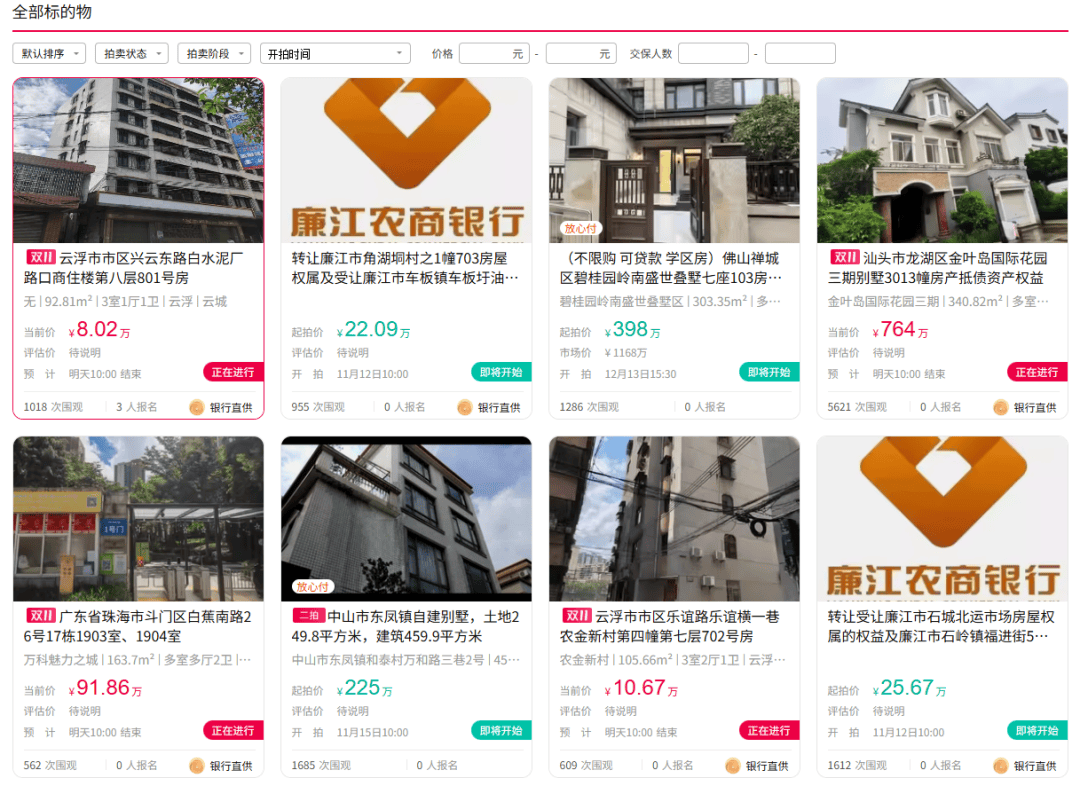
“银行直供房”卷席市场,低于市价!释放了什么信号?
Sou Hu Cai Jing· 2025-11-17 14:12
Core Viewpoint - A wave of property asset disposals led by banks is emerging, with "bank direct supply housing" being sold through online platforms like Alibaba and JD.com, indicating a shift in asset management strategies within the banking sector [1][3]. Group 1: Market Dynamics - Banks are accelerating property disposals primarily to enhance debt recovery rates during the real estate market adjustment period, with direct sales becoming a new choice for quickly revitalizing assets [3][4]. - "Bank direct supply housing" offers significant price advantages, often priced below market rates compared to regular second-hand and auctioned properties [4][5]. - As of November 10, 2023, JD.com’s asset trading platform lists 414 residential and 957 commercial properties for auction, significantly exceeding the same period last year [5]. Group 2: Pricing and Sales Strategy - For example, a 125 square meter property auctioned by Lanzhou Rural Commercial Bank sold for 1.51 million yuan, while similar properties in the area were listed between 1.8 million and 2.2 million yuan [4]. - The auction platforms are promoting these properties with slogans like "bank direct supply, sold at no cost," highlighting the aggressive pricing strategy [4][5]. Group 3: Bank Participation and Trends - City commercial banks and rural credit cooperatives are the main players in this direct sale trend, with significant numbers of properties listed for sale, such as over 2,000 by Jilin Bank and nearly 1,300 by Tianjin Bank [9]. - Large state-owned and joint-stock banks are also increasing their direct sales, with Agricultural Bank of China listing 3,436 properties and China Construction Bank 1,571 properties [9][10]. Group 4: Operational Efficiency and Cost Reduction - The direct sale process allows banks to recover funds faster, reducing the time from six months in judicial auctions to about three months [14]. - By bypassing traditional auction costs, banks can retain more revenue from sales, creating a beneficial cycle of "discounting to sell quickly" [15]. Group 5: Strategic Insights and Future Directions - This direct sale trend serves as a market research tool for banks to understand pricing dynamics and property values, which can inform future lending policies [15][16]. - Banks are also exploring partnerships with asset management companies to bundle these properties into real estate investment trusts, transitioning from a "heavy asset" to a "light asset" model [16]. Group 6: Risk Assessment and Market Impact - There are differing opinions on the impact of these direct sales on the real estate market, with some analysts suggesting potential pressure on prices in certain cities, while others believe the scale is too small to significantly affect overall market prices [18][19]. - The risk associated with bank-held properties is considered manageable, particularly in first and second-tier cities, where property values are more stable [18].