
AGRICULTURAL BANK OF CHINA(601288)

Search documents
泰国财政部:泰国农业银行本月将回购债务。
Xin Lang Cai Jing· 2025-11-06 02:25
Core Points - The Thai Ministry of Finance announced that the Agricultural Bank of Thailand will repurchase debt this month [1] Company Summary - The Agricultural Bank of Thailand is taking proactive measures to manage its debt obligations by initiating a debt repurchase [1]

六大行探索支持新质生产力新路径
Jin Rong Shi Bao· 2025-11-06 02:12
Core Insights - The key to China's modernization lies in technological modernization, which is supported by financial resources, as evidenced by the recent performance reports from major banks [1] - The six major state-owned banks have shown significant growth in loans to technology enterprises and the number of clients, indicating a positive trend in technology finance [2][3] Group 1: Performance of Major Banks - As of the end of September, Industrial and Commercial Bank of China (ICBC) had a strategic emerging industry loan balance exceeding 4.2 trillion yuan, with technology enterprise loans surpassing 2.7 trillion yuan [2] - Agricultural Bank of China reported a technology loan balance exceeding 4.7 trillion yuan, while China Bank's technology loan balance was approximately 4.7 trillion yuan, supporting over 160,000 clients [2] - Postal Savings Bank's technology loan balance exceeded 940 billion yuan, and the total number of technology enterprises supported by various banks has seen notable increases [2][3] Group 2: Financial Product Innovation - The banks are increasingly adopting a comprehensive approach to technology finance, focusing on "equity, loans, bonds, and insurance" to support technology enterprises [2][3] - ICBC has initiated a pilot program for equity investment in 18 regions, establishing 38 funds with a total subscription amount exceeding 45 billion yuan [2] - China Construction Bank has registered 21 pilot funds in 15 cities and has seen a more than fourfold increase in the investment volume of technology innovation bonds [3] Group 3: Addressing Financing Challenges - The introduction of a "technology flow" evaluation system is helping to address the financing difficulties faced by technology SMEs, moving away from traditional asset-based lending [4][6] - Postal Savings Bank has successfully implemented this new evaluation model, transforming the "technology credit" of enterprises into "financing credit," which has led to significant improvements in operational efficiency for supported companies [6][7] - The focus on innovative financial products aims to alleviate the challenges of financing for light-asset technology enterprises, with banks exploring various models to meet the unique needs of these companies [8]





个人消费贷款贴息政策显效 银行多维度布局零售市场
Jin Rong Shi Bao· 2025-11-06 02:07
Core Insights - The upcoming "Double Eleven" shopping season is expected to boost consumer demand, with banks reporting positive signals in their Q3 financial results, particularly in personal consumption loans driven by government subsidy policies [1][2] - Banks are focusing on risk management while increasing personal consumption loan offerings, indicating a commitment to stable retail business growth [1][5] Personal Consumption Loan Growth - The personal consumption loan subsidy policy is a key initiative by the government to stimulate domestic demand and improve living standards, implemented in August [2] - Major banks like ICBC and Agricultural Bank of China have reported significant increases in personal consumption loans, with ICBC's debit card transactions reaching 13.8 trillion yuan and credit card transactions at 1.4 trillion yuan [2] - Agricultural Bank of China saw a growth of 21.9 billion yuan in personal consumption loans since the subsidy policy's implementation, with a total loan issuance of 88.1 billion yuan [2] Bank-Specific Performance - China Bank reported a 26.11% increase in personal consumption loan balance by the end of September, with debit card transactions exceeding 6 trillion yuan [3] - Construction Bank's personal consumption loan balance reached 645.8 billion yuan, with a year-to-date increase of 117.7 billion yuan [4] - Postal Savings Bank has initiated actions to support consumption, leading to a quarter-on-quarter increase in non-housing consumption loans [4] Risk Management in Retail Loans - Risk management remains a priority for banks as they expand retail loan offerings, with a focus on maintaining asset quality [5] - Construction Bank has implemented measures to enhance risk management and ensure stable asset quality in retail loans [6] - Agricultural Bank reported a non-performing loan ratio of 1.27%, a slight decrease from the beginning of the year, indicating effective risk management practices [6] Future Growth Potential - Banks anticipate continued growth in the personal loan market, driven by supportive government policies and rising consumer spending capacity [7] - Agricultural Bank plans to increase loan issuance while ensuring compliance and effective policy implementation [7] - China Merchants Bank aims to maintain its market share in retail loans despite a decrease in demand, emphasizing the importance of retail assets [7] - Minsheng Bank is prioritizing retail finance as a long-term strategic focus, reporting a 5.38% increase in retail customers [8]
前三季度上市银行稳健运行
Jin Rong Shi Bao· 2025-11-06 02:06
Group 1: Overall Performance of the Banking Sector - The A-share listed banks have reported a steady performance in their operations for the first three quarters of the year, showcasing resilience and emerging highlights in the banking industry [1] Group 2: Support for Urban-Rural Integration and Regional Development - The banking sector is actively supporting the national strategy for urban-rural integration and regional coordinated development, with financial resources being allocated to key areas [2] - Industrial and Commercial Bank of China (ICBC) has reported a loan balance of nearly 3.5 trillion yuan in the new urbanization sector and over 5 trillion yuan in agricultural loans, with significant investments in poverty alleviation counties [2] - Agricultural Bank of China has increased its loan balance in key rural revitalization counties to 481.2 billion yuan, reflecting a growth rate of 10.21%, and in poverty-stricken counties to 2.52 trillion yuan, with a growth rate of 10.66% [3] Group 3: High-Level Opening Up - The banking sector is contributing to high-level opening up, which is a strategic choice to enhance national security and respond to external uncertainties [4] - Bank of China has been actively involved in the Belt and Road Initiative, maintaining a leading position in the issuance of panda bonds and offshore RMB bonds, with a global custody scale of 4.8 trillion yuan [5] - Construction Bank has enhanced its international competitiveness and supported high-level opening up, with cross-border e-commerce settlement exceeding 400 billion yuan [5] Group 4: Digital Transformation - The banking industry is undergoing a significant digital transformation, which is essential for current financial institutions [6] - Bank of Communications is focusing on strengthening digital infrastructure and enhancing service quality through technology, achieving a monthly active user count of over 53 million for its mobile banking app [7] - Postal Savings Bank is leveraging digital technology to improve operational efficiency and customer experience, enhancing its resource integration and smart-driven capabilities [8]
六大行日赚39亿,农行利润增速领跑,中行营收增长第一
3 6 Ke· 2025-11-05 23:51
Core Insights - The six major state-owned banks in China reported a total operating income of 27,205.35 billion yuan for the first three quarters of 2025, representing a year-on-year growth of 1.87% [1] - The total net profit attributable to shareholders reached 10,723.43 billion yuan, with a year-on-year increase of 1.22%, equivalent to an average daily profit of 39.14 billion yuan [1] - Agricultural Bank led in net profit growth at 3.03%, while China Bank had the highest revenue growth at 2.69% [1][4] Financial Performance - The total asset size of the six banks reached 217.97 trillion yuan by the end of Q3 2025, marking a 9.16% increase from the previous year [2][9] - Total loans amounted to 127.14 trillion yuan, up 8.54%, while total deposits were 149.76 trillion yuan, reflecting a 6.92% growth [2][12] - The net interest margin for the banks faced pressure, with a decline noted across the board, although non-interest income showed growth, with five banks achieving double-digit increases [1][7] Revenue and Profit Breakdown - In terms of revenue, the banks achieved the following figures: Industrial Bank (6,400.28 billion yuan), Construction Bank (5,737.02 billion yuan), and Agricultural Bank (5,508.76 billion yuan) [4][5] - Non-interest income for the banks was as follows: Industrial Bank (1,666.12 billion yuan), Construction Bank (1,460.96 billion yuan), and Agricultural Bank (1,235.68 billion yuan), with Agricultural Bank showing the highest growth rate at 20.65% [7] - Investment income also saw significant growth, with Construction Bank leading at 150.55% year-on-year [8] Asset Quality and Capital Adequacy - The overall asset quality remained stable, with five banks reporting a decrease in non-performing loan ratios compared to the end of the previous year [15] - The highest non-performing loan ratio was recorded by Postal Savings Bank at 0.94%, while Agricultural Bank had the highest provision coverage ratio at 295.08% [16][17] - Core Tier 1 capital adequacy ratios were robust, with Construction Bank at 14.36%, the highest among the six banks [18] Dividend and Shareholder Returns - The rolling dividend yield for the banks was above 2.5%, significantly higher than the 5-year fixed deposit rates, with the highest yield from the Transportation Bank at 4.10% [1][18]

外资A股最新持仓曝光,行业龙头仍是“聪明钱”的最爱
Di Yi Cai Jing· 2025-11-05 23:49
Group 1 - The A-share market has significantly rebounded since the third quarter, with active trading and foreign capital continuing to buy aggressively [1][2] - Leading companies such as Kweichow Moutai, Ping An Insurance, and Wuliangye have attracted over 80 foreign institutional investors each, indicating strong foreign interest in industry leaders [1][2] - As of the end of September, the top three foreign-held A-shares by market value are CATL, Kweichow Moutai, and Midea Group, with values of 265.66 billion, 88.14 billion, and 71.65 billion respectively [1][2] Group 2 - Foreign investment is particularly focused on industry leaders, "Chinese state-owned enterprises," and bank stocks, with major banks holding significant foreign shares [2][3] - As of September 30, 2023, 32 foreign investors collectively held 2.36 billion shares of Nanjing Bank, while 42 foreign investors held 1.60 billion shares of Ningbo Bank [2] - A total of 42 A-shares have foreign holdings exceeding 10 billion, including Zijin Mining, Hengrui Medicine, BYD, and Fuyao Glass [2] Group 3 - The number of foreign investors in China Shipbuilding has increased by over 40% from the end of June, reaching 68 by the end of September [3] - Other companies such as Kweichow Moutai, BYD, and Yangtze Power have also seen an increase in foreign holdings compared to the end of June [3] Group 4 - Foreign investors have shown a preference for specific stocks, with UBS significantly increasing its stake in RuiNeng Technology, becoming the third-largest shareholder by the end of September [4][5] - UBS held 1.15 million shares of RuiNeng Technology, a 130.2% increase from the previous quarter, while Goldman Sachs, JPMorgan, and Merrill Lynch entered the top ten shareholders [5] Group 5 - RuiNeng Technology's stock has seen a significant rise, reaching a peak of 24.43 yuan, with a cumulative increase of over 40% since mid-October [7] - Despite a 12.95% year-on-year revenue growth, RuiNeng Technology's net profit decreased by 32.73% to 40.75 million [7] Group 6 - Foreign investors are optimistic about the long-term performance of the A-share market, with UBS forecasting a 6% year-on-year growth in total A-share earnings by 2025 [8] - UBS noted that 60% of industries recorded year-on-year profit growth in the third quarter, with sectors like non-ferrous metals and non-bank financials achieving over 30% growth [8] Group 7 - Goldman Sachs predicts a sustained upward trend in the Chinese stock market, expecting major indices to rise by about 30% by the end of 2027 [9] - Factors supporting this bullish outlook include favorable policy developments, accelerating earnings growth, and strong capital inflows [9] Group 8 - As the bull market unfolds, Goldman Sachs advises investors to shift their strategy from "selling on highs" to "buying on lows" [10]




五家银行跻身绿色信贷“万亿俱乐部” 绿色债券存量规模近2万亿
2 1 Shi Ji Jing Ji Bao Dao· 2025-11-05 23:42
Core Insights - Green finance has transitioned from an optional choice to a mandatory requirement for the banking industry, serving as a new engine for strategic transformation and a blue ocean market for future growth [1] - The balance of green financing at Industrial Bank has reached nearly 2.5 trillion yuan, with green loans exceeding 1 trillion yuan and a non-performing loan rate of only 0.57% [1] - The People's Bank of China and other departments have issued a unified policy framework for green finance, effective from October 1, 2025, to standardize various financial products [2] Group 1: Green Credit Growth - As of the end of 2024, the total balance of green credit among 42 A-share listed banks exceeded 27 trillion yuan, reflecting a year-on-year growth of approximately 20% [3] - State-owned banks dominate the green credit market, with the six major state-owned banks accounting for over 21 trillion yuan, representing 77.6% of the total [3] - Industrial Bank's green loan balance has risen to 1.08 trillion yuan, joining the "trillion club" [3] Group 2: Performance and Sector Focus - The average growth rate of green credit for A-share listed banks in 2024 was 20.6%, a slowdown from approximately 28% in 2023, yet leading institutions maintained strong growth [4] - The focus of green credit issuance is concentrated in four key areas: clean energy, green transportation, energy conservation and environmental protection, and green buildings [4] - The Yangtze River Delta, Guangdong-Hong Kong-Macau Greater Bay Area, and Chengdu-Chongqing Economic Circle are identified as core regions for green credit [4] Group 3: Product Innovation - A-share listed banks are deepening innovation in green financial products, creating a multi-dimensional product system that includes loans, bonds, asset securitization, insurance, and carbon finance [5] - Sustainable Development Linked Loans (SLL), carbon emission rights pledge financing, and environmental rights collateral loans are gaining traction [5] - Industrial Bank has launched the first green loan with biodiversity protection insurance, while Bohai Bank introduced a green loan linked to data center energy efficiency [6] Group 4: Broader Financial Tools - The issuance of green bonds has expanded, with the cumulative issuance of labeled green bonds in 2024 surpassing 4 trillion yuan [6] - Banks are actively participating in green wealth management and fund products, enhancing investor engagement through innovative offerings [6] - Carbon finance tools are transitioning from pilot programs to broader applications, with various banks introducing carbon emission rights pledge financing products [6] Group 5: Future Directions - The banking industry is expected to continue innovating green financial products to support sustainable economic development, moving beyond traditional green credit [7] - The development of ESG-linked loans and financing models using carbon emission rights as collateral will be explored [7] - These innovations will not only assist in achieving national carbon reduction goals but also cultivate new growth momentum for banks [7]



险资三季度加码银行股 国有大行成布局重点
Zhong Guo Zheng Quan Bao· 2025-11-05 20:08
Core Viewpoint - Insurance capital is increasingly investing in the banking sector, particularly in state-owned banks, due to the high dividend yields that align with their investment needs [1][2][3] Group 1: Insurance Capital Increases in State-Owned Banks - Insurance capital has significantly increased its holdings in major state-owned banks, with Postal Savings Bank and China Construction Bank being the primary targets for investment [1] - Ping An Life has increased its stake in Postal Savings Bank by 2.189 billion shares, making it the second-largest shareholder [1] - New China Life Insurance has also increased its holdings in China Construction Bank by 8.8 million shares, becoming its fifth-largest shareholder [1] Group 2: Entry of Insurance Capital in Other Major Banks - For the first time, insurance capital appears in the top ten shareholders of Industrial and Commercial Bank of China and Agricultural Bank of China, with China Life Insurance and Ping An Life becoming significant shareholders [2] - Insurance capital has also been active in the Hong Kong market, frequently increasing stakes in H-shares of state-owned banks [2] Group 3: Attractive Features of Banking Stocks - The six major banks have shown stable profit growth, with a total net profit of 1.07 trillion yuan in the first three quarters, alongside improved asset quality [2] - The low valuation and high dividend yield of banking stocks align well with the asset allocation needs of insurance capital, making them a core investment area [3] Group 4: Future Outlook for Insurance Capital Investment - Industry experts predict that insurance capital will increase its market presence and allocation in banking stocks due to favorable policy environments [3] - The implementation of new accounting standards in early 2026 will likely enhance the demand for stable, low-volatility stocks, further solidifying the preference for banking stocks among insurance capital [4]
银行行业2026年度投资策略:“稳健锚”与“增长帆”,从红利重估到能力定价
KAIYUAN SECURITIES· 2025-11-05 15:17
Core Views - The report emphasizes the importance of stable high-dividend assets in a low-interest-rate environment, highlighting the scarcity of such assets as a key investment opportunity [4][12] - It discusses the regulatory cycle and the reduction of potential credit risks through local debt resolution, reinforcing the concept of a "stable anchor" for banks [4][15] - The economic transformation from land credit to technology and consumption-driven growth is seen as providing a "growth sail" for banks, particularly in corporate deepening and wealth management [4][18] Policy Background and Investment Context - The low interest rate environment and asset scarcity highlight the attractiveness of stable high-dividend assets, with bank stocks favored for their strong performance stability and high dividend yields [4][12] - The ongoing resolution of local government debt is expected to reduce systemic credit risks, thereby solidifying banks' "stable anchor" [4][15] - The shift towards technology and consumption is anticipated to enhance banks' growth potential, particularly in wealth management and corporate services [4][18] Deep Revaluation of "Stable Anchor" - Bottom Line of Value - The report identifies the stability of earnings, attractiveness of dividends, and sustainability of payouts as key components of dividend value [5] - It notes that the expansion of bank balance sheets and the potential recovery of net interest margins are crucial for long-term value [5] - Enhanced investment capabilities in financial markets and asset circulation are highlighted as factors contributing to banks' stability [5] "Growth Sail" Capability Breakthrough - Elasticity of Value - The report emphasizes the importance of stable and high risk-adjusted return on capital (RAROC) for banks, which reflects their efficiency in capital usage [6] - It points out the advantages of wealth attributes and customer base, as well as strong non-performing asset management capabilities [6] - The ability to adjust and manage financial market investments effectively is seen as a significant strength for banks [6] Medium to Long-term Incremental Capital Drivers - Good Wind with Favorable Conditions - The report suggests a potential trend shift in insurance capital allocation towards bank equities, with a target dividend yield of 3.5%-4% seen as a reasonable baseline [7] - It notes that actively managed equity funds are currently underweight in bank stocks, while asset management companies (AMCs) are accelerating their investments in this sector [7] Investment Recommendations: Hold "Stable Anchor" and Raise "Growth Sail" - The report recommends a foundational allocation in large state-owned banks, with H-shares offering better value than A-shares, particularly for Agricultural Bank and Industrial and Commercial Bank [8] - Core allocations should focus on banks that combine stability with strong wealth management capabilities, such as China Merchants Bank and CITIC Bank [8] - For flexible allocations, it suggests high-quality regional banks with unique characteristics in specific areas or business lines, such as Jiangsu Bank and Chongqing Bank [8] Dividend Value Analysis - The report indicates that the operating income of listed banks grew by 0.91% year-on-year in the first three quarters of 2025, with net profit growth of 1.48% [28] - It highlights the significant performance differentiation among banks, with state-owned banks showing stable revenue growth while smaller banks face challenges [28][30] - The report notes that the dividend sustainability of banks is influenced by profitability, dividend policies, and capital considerations, with larger banks maintaining a more stable dividend distribution [41][43]


年末资金回流银行股?瑞银报告:不排除这种可能性!对防御性板块维持正面看法
Zhi Tong Cai Jing· 2025-11-05 13:20
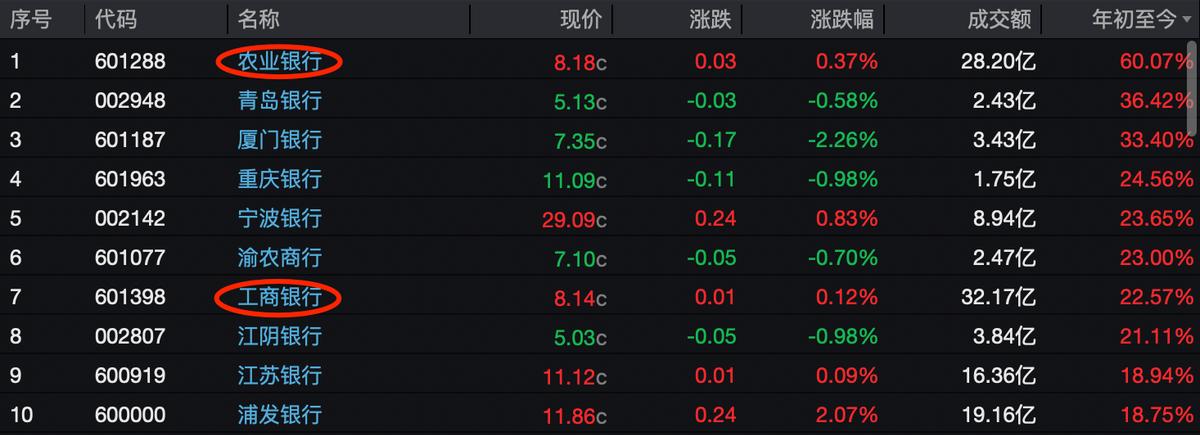
Core Viewpoint - UBS maintains a positive outlook on defensive stocks due to the ongoing weak macroeconomic environment in China, expecting a continued recovery in revenue and net profit growth for state-owned banks, as well as regional banks outperforming their peers [1][2] Group 1: Banking Sector Outlook - The banking sector's fundamental outlook is improving, with signs of stabilization in net interest margins and overall asset quality remaining stable despite pressures on manufacturing and retail loan books [2] - Large state-owned and joint-stock banks are experiencing a sustained recovery in net profit growth, with UBS predicting this positive trend will continue into Q4 2025 [2] Group 2: Fund Flows and Market Dynamics - Fund flows are a key driver for bank stocks, with potential rotation towards defensive stocks as investors react to market conditions [3][4] - In early 2025, H-shares of Chinese banks listed in Hong Kong performed strongly, driven by increased allocations from insurance funds [3] - A significant outflow from bank stocks occurred in Q3 2025, with prices declining by 10%-15% due to a rapid rise in high-beta sectors, but a rebound was noted in October amid rising trade uncertainties [3] Group 3: Investor Sentiment and Key Stocks - Investors anticipate factors that could drive funds into the banking sector, including profit-taking from high-beta sectors and increased allocations from insurance funds around the "New Year" sales period in January 2026 [4] - Among large state-owned banks, Agricultural Bank of China is the most closely watched stock, with a year-to-date total return of 55.5% for A-shares and 41.1% for H-shares, significantly outperforming the MSCI China Banking Index [6] - Agricultural Bank's strong performance is attributed to increased holdings by Ping An Group, continuous buying by quantitative funds, and better-than-peer financial results [6] - Investors are also focused on China Merchants Bank, although expectations for short-term profit growth or dividend increases are low, while Ningbo Bank is viewed as having upside potential due to improving fundamentals and reasonable valuations [6] Group 4: Concerns in the Market - There is growing concern over declining real estate prices, particularly in first-tier cities, which could lead to potential defaults affecting mortgage and SME loans [5] - Current mortgage loan-to-value ratios are reported at around 50% for most national banks, with some joint-stock banks exceeding 70% [5] - The demand for consumer loans has not shown signs of recovery, and asset quality continues to weaken, raising investor concerns [5]