PING AN OF CHINA(601318)

Search documents
沪指开年放量冲破4000点 公募超百只新品打响春季攻势
Xin Lang Cai Jing· 2026-01-05 11:16
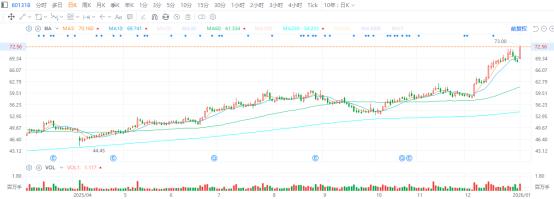
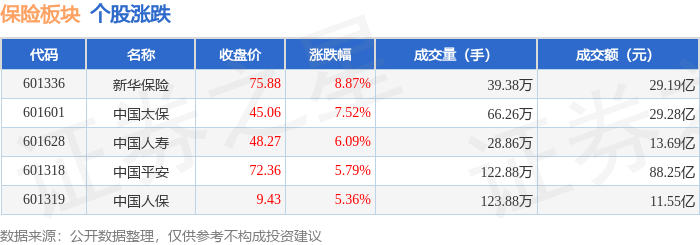
1月5日,A股开启了2026年的新征程。Choice数据显示,首个交易日,保险板块(申万二级行业分类) 延续去年的抢眼表现,持续走高,最终以6.17%的涨幅位居A股申万二级行业分类所有板块首位。 五家 A股保险上市公司在1月5日均收获超过5%的涨幅。其中,新华保险、中国太保全天涨幅分别为8.87%及 7.52%,收盘价分别为75.88元/股及45.06元/股,均再次打破去年12月创下的股价历史新高。另外,中国 平安当日以72.36元/股收盘,亦再创2021年3月以来的最高价。(第一财经) ...



新年开市保险板块涨超6%,2026年估值将进一步提升
Di Yi Cai Jing· 2026-01-05 10:59
五家A股保险上市公司在1月5日均收获超过5%的涨幅。其中,新华保险(601336.SH;01336.HK)、中 国太保(601601.SH;02601.HK)全天涨幅分别为8.87%及7.52%,收盘价分别为75.88元/股及45.06元/ 股,均再次打破去年12月创下的股价历史新高。另外,中国平安(601318.SH;02318.HK)当日以72.36 元/股收盘,亦再创2021年3月以来的最高价。 【#新年开市保险板块涨超6%#,2026年估值将进一步提升】1月5日,A股开启了2026年的新征程。 Choice数据显示,首个交易日,保险板块(申万二级行业分类)延续去年的抢眼表现,持续走高,最终 以6.17%的涨幅位居A股申万二级行业分类所有板块首位。 ...
12连阳,沪指创33年最长连阳纪录!机构资金和各路游资纷纷出手,A股春季躁动行情渐入高潮,高盛高呼高配中国股票
Jin Rong Jie· 2026-01-05 10:47
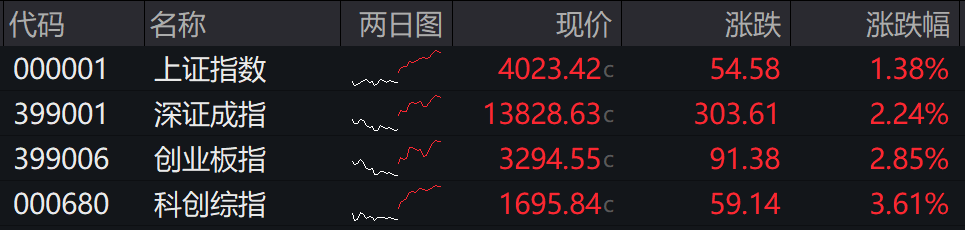
整体看,A股交投气氛十分活跃,机构资金和各路游资纷纷出手,各有斩获。 数据显示,多家机构席位出现在了蓝色光标、盐湖股份、海格通信、西测测试的龙虎榜中,此外A股实 力游资章建平也出现在蓝色光标龙虎榜中,单日买入了6482.08万元,卖出了2.59亿元。 12连阳,沪指创33年最长连阳纪录,A股春季躁动行情渐入高潮! 1月5日,A股迎来2026年首个交易日,三大指数全天高开高走,截至收盘,沪指涨1.38%,报4023.42 点,深成指涨2.24%,报13828.63点,创业板指涨2.85%,报3294.55点,科创50指数涨4.4%,报1403.41 点。与此同时,资金纷纷疯狂涌入A股,今日沪深两市合计成交额25463.47亿元,较上一个交易日放量 5011亿。 值得注意的是,沪指在2025年末已经走出11连阳的强势走势。在今日A股实现开门红之后,沪指从2025 年12月17日至2026年1月5日的12个交易日中,成功实现12连阳,创下A股1993年以来最长连阳纪录。最 近33年间A股最长连阳纪录为11天,分别在2006年以及2017-2018年出现过。A股最长连阳纪录为99天, 但彼时A股才处于起步阶段,市场体 ...


新年开市,保险股涨超6%再居首,2026年估值将进一步提升
Di Yi Cai Jing· 2026-01-05 10:25
Core Viewpoint - The insurance sector in A-shares has shown strong performance at the beginning of 2026, with a notable increase in stock prices driven by favorable policies and improved asset-liability management [1][3]. Group 1: Market Performance - On January 5, 2026, the insurance sector recorded a 6.17% increase, leading all A-share sectors [1]. - Five A-share insurance companies saw stock price increases of over 5%, with New China Life Insurance and China Pacific Insurance rising by 8.87% and 7.52%, respectively [1]. - China Ping An also reached its highest price since March 2021, closing at 72.36 yuan per share [1]. Group 2: Policy and Market Drivers - The stock price increase is attributed to a series of supportive policies in 2025, which have enhanced the asset-liability dynamics within the insurance sector [3]. - In December 2025, regulatory changes optimized risk factors for long-term stock holdings by insurance companies, signaling a positive outlook for further market entry [3]. - The insurance industry is currently in the "New Year" period, which is crucial for life insurance liabilities, with over 20% of annual premium income typically generated in January [3]. Group 3: Valuation Insights - Analysts indicate that the P/EV (Price to Embedded Value) ratios for major A-share insurance companies remain low, ranging from 0.68 to 0.99 as of December 31 [4]. - There is an expectation for the valuation of insurance stocks to gradually recover towards 1.0 P/EV in 2026 [4].

盘点2025 | 万亿健康险转型深水区:政策破局、生态重构
Xin Lang Cai Jing· 2026-01-05 10:10
Core Insights - The establishment of the Ping An Health Management Company marks a significant step in the transformation of the health insurance sector, reflecting a shift towards a "managed care" model and the reconstruction of a new ecosystem in health insurance [1][16] - As of November 2025, the cumulative premium for commercial health insurance reached 943.9 billion yuan, with a year-on-year growth of 2.3%, indicating a stable market but falling short of the 2 trillion yuan target set for 2025 [1][16] - The Chinese commercial health insurance market is at a crossroads, focusing on high-quality development driven by regulatory guidance and innovation in health management and product offerings [1][16] Market Structure - The commercial health insurance market is maintaining stability amid slowing growth, with a shift in focus from scale expansion to quality improvement [3][18] - In the first 11 months of 2025, life insurance companies accounted for 76.8% of health insurance premiums, totaling 725.2 billion yuan, but their growth rate has stagnated, while property insurance companies saw a 10.2% increase in premiums [3][18] - The market's stability is evidenced by a monthly premium of 49.6 billion yuan in November 2025, with life insurance companies contributing 40.2 billion yuan and property insurance companies 9.4 billion yuan [3][18] Policy Support - Regulatory measures have been pivotal in driving the transformation of the health insurance industry, with multiple initiatives launched to enhance product standards and payment reforms [4][19] - The "Guiding Opinions on Promoting the High-Quality Development of Health Insurance" issued on September 30, 2025, outlines a vision for the role of health insurance in the national health security system by 2030 [4][19] - The policy emphasizes the integration of health insurance with health management, aiming to create a new health service guarantee system that combines prevention, management, and protection [4][19] Product Innovation - The health insurance sector is entering a phase of deep product innovation, with a focus on dual attributes of "protection + returns" in dividend insurance products [7][22] - Personal account-based long-term medical insurance is highlighted as a key area supported by policy, addressing the industry's challenges with traditional short-term medical insurance [7][22] - The mid-to-high-end medical insurance market is expanding, with major players enhancing their offerings to include comprehensive solutions beyond mere reimbursement [8][23] Ecosystem Reconstruction - The competition in the health insurance industry is shifting towards building an ecosystem, with a consensus on the "insurance + health management" model [10][26] - Major insurance companies are establishing health management firms to create a comprehensive health service system, moving from post-claim reimbursement to full-cycle health management [10][26] - The establishment of health management companies by leading insurers is seen as a localized innovation of the mature "managed care" model from developed markets, aiming to enhance service quality and sustainability [12][27] Technological Empowerment - The application of new technologies such as AI, big data, and blockchain is deepening in the health insurance sector, enhancing efficiency across product design, underwriting, and customer service [13][28] - Ping An has integrated AI into its health strategy, creating a comprehensive service system that covers various health service scenarios [13][28] - The focus on digitalization and the development of personalized health management platforms are expected to improve user experience and support dynamic pricing and risk control [13][28]

全线大涨!亚太股市爆发
证券时报· 2026-01-05 09:48
值得注意的是,今日A股市场近20股成交额超过100亿元,其中中国卫星、三花智控分别成交194.5亿元、192.1亿元,分别位居成交额第一 和第二位,且两股盘中均创出新高。 今日(1月5日),亚太主要股指全线大涨,日经225指数收盘上涨2.97%报51832.8点,韩国综合指数上涨3.43%报4457.52点,续创历 史新高。 A股市场迎来"开门红",主要股指放量大涨,沪指12连阳,涨超1%重返4000点上方;科创50指数大涨超4%。 具体来看,两市股指高开高走,创业板指涨近3%,科创50指数大涨超4%。截至收盘,沪指涨1.38%报4023.42点,深证成指涨2.24%,创 业板指涨2.85%,科创50指数涨4.4%,沪深北三市合计成交25674亿元。 保险板块强势 全A近4200股飘红,保险板块强势,新华保险大涨近9%,中国太保涨超7%,双双创出新高;人脑工程概念爆发,倍益康、三博脑科、翔宇 医疗、伟思医疗等逾10股涨停;创新药概念强势,乐普医疗、冠昊生物等涨停,百济神州涨超10%;存储芯片概念活跃,恒烁股份、普冉 股份等涨停;AI应用概念崛起,当虹科技、蓝色光标等涨停。此外,锋龙股份连续7日涨停,雷科防务、 ...

保险板块1月5日涨6.24%,新华保险领涨,主力资金净流入15.19亿元
Zheng Xing Xing Ye Ri Bao· 2026-01-05 09:09
从资金流向上来看,当日保险板块主力资金净流入15.19亿元,游资资金净流出3.75亿元,散户资金净流 出11.44亿元。保险板块个股资金流向见下表: 证券之星消息,1月5日保险板块较上一交易日上涨6.24%,新华保险领涨。当日上证指数报收于 4023.42,上涨1.38%。深证成指报收于13828.63,上涨2.24%。保险板块个股涨跌见下表: | 代码 | 名称 | 收盘价 | 涨跌幅 | 成交量(手) | 成交额(元) | | | --- | --- | --- | --- | --- | --- | --- | | 601336 | 新华保险 | 75.88 | 8.87% | 39.38万 | | 29.19 Z | | 601601 | 中国太保 | 45.06 | 7.52% | 66.26万 | | 29.28 乙 | | 601628 | 中国人寿 | 48.27 | 6.09% | 28.86万 | | 13.69亿 | | 601318 | 中国平安 | 72.36 | 5.79% | 122.88万 | | 88.25 Z | | 601319 | 中国人保 | 9.43 | 5.36% ...
保险25年显著跑赢大盘,险资举牌仅十年新高:保险行业周报(20251229-20251231)-20260105
Huachuang Securities· 2026-01-05 08:44
Investment Rating - The industry investment rating is "Recommended," indicating an expected increase in the industry index by more than 5% over the next 3-6 months compared to the benchmark index [19]. Core Insights - The insurance sector has significantly outperformed the market over the past 25 years, with insurance capital's stake acquisitions reaching a ten-year high [1]. - In 2025, there were a total of 31 stake acquisitions by insurance capital, marking a resurgence in activity, second only to 2015, and surpassing the 28 acquisitions in 2020 [3]. - The preference for H-shares among insurance capital is evident, with 26 out of 31 acquisitions targeting H-shares, likely due to favorable dividend yields [3]. - The main sectors attracting insurance capital include banking (7 acquisitions) and public utilities (6 acquisitions), reflecting a preference for dividend-yielding assets [3]. - The report anticipates that the trend of stake acquisitions will continue into 2026, driven by two main motivations: seeking stable dividend cash flows and targeting mature, monopolistic enterprises with solid ROE [3]. Summary by Sections Weekly Updates - China Pacific Insurance appointed Liu Long as the Chief Investment Officer [2]. - Great Wall Life successfully issued its first perpetual bond with a scale of 1 billion yuan and a rating of AAA [2]. - Great Wall Life increased its holdings in New Tian Green Energy and Datang New Energy, raising its shareholding percentages to 11.04% and 17.39%, respectively [2]. Stake Acquisition Overview - In 2025, insurance capital's stake acquisitions totaled 31 times, with a minimum of 38 times when accounting for repeated acquisitions [3]. - The report highlights a shift in acquisition activity towards larger insurance companies, with Ping An leading with 7 acquisitions, followed by Great Wall Life (5) and others [3]. Investment Recommendations - The insurance sector saw a general increase in December, driven by expectations of rising long-term interest rates and favorable sales performance [3]. - Despite anticipated pressure from high investment baselines, the report suggests that the sector's valuation may continue to recover due to stabilizing interest rates and declining liability costs [3]. - Companies recommended for investment include China Ping An and China Pacific Insurance, which are expected to manage liability costs effectively [3]. Valuation Metrics - The report provides PEV valuations for major life insurance companies, with China Life at 0.87x, Ping An at 0.82x, and China Pacific at 0.68x for A-shares [4]. - For H-shares, Ping An is valued at 0.75x, while China Life is at 0.51x [4]. - The report recommends a ranking of investment opportunities: China Ping An, China Pacific Insurance, China Life H, and China Property Insurance [4].
A股开门红!沪指重回4000点
Sou Hu Cai Jing· 2026-01-05 07:45
保险板块走强,新华保险、中国太保均涨超7%,股价齐创历史新高。 | 代码 名称 | 涨幅� 现价 | | --- | --- | | 601336 新华保险 | +8.87% 75.88 | | 601601 中国太保 | +7.52% 45.06 | | 601628 中国人寿 | +6.09% 48.27 | | 601318 中国平安 | +5.79% 72.36 | | 601319 中国人保 | +5.36% 9.43 | 沪深两市成交额高达2.55万亿,较上一个交易日放量5011亿。市场近4200股上涨,其中127只个股涨停。 | | | 第口财经 ---- 两市近5日成交额 (单位:亿元) 25462 21601 21393 21423 20451 12月30日 12月26日 12月29日 12月31日 1月5日 1月5日,A股主要指数集体高开后震荡走强,沪指时隔34个交易日重回4000点。截至收盘,沪指涨1.38%,深成指涨2.24%,创业板指涨 2.85%。科创综指涨3.61%。 | 代码 | 名称 | 两日图 | 现价 | 涨跌 | 涨跌幅 | | --- | --- | --- | -- ...
中国平安(601318.SH/2318.HK)迎“开门红”,新年首日大涨超6%,价值重估序幕已拉开
Ge Long Hui· 2026-01-05 07:05
Core Viewpoint - The recent strong performance of Ping An's A-shares and H-shares, with cumulative gains exceeding 20% since early December, indicates a potential value reassessment in the insurance sector, with Ping An positioned as a high-dividend stock that can adapt to market conditions [1][2][4]. Group 1: Business Elements Perspective - Ping An's value foundation is supported by three key business elements: life insurance, ecological integration, and technological empowerment, which enhance each other and create a unique growth model [5][6]. - The life insurance business is the primary source of value, with new business value (NBV) reaching 35.724 billion yuan in the first three quarters of 2025, a significant increase of 46.2% year-on-year, driven by channel optimization and structural changes [6]. - The asset-liability management aspect shows Ping An's strength, with an investment portfolio exceeding 6.41 trillion yuan and a non-annualized comprehensive investment return rate of 5.4% as of September 30, 2025, demonstrating robust performance in a complex market [8][10]. Group 2: Ecological Value Reassessment - The HMO (Health Maintenance Organization) model, centered around Ping An Good Doctor, represents a strategic transformation that integrates health management with insurance, creating a closed-loop ecosystem that enhances customer stickiness and lifetime value [14][15]. - The HMO model opens new revenue streams through corporate health management and membership services, which are less cyclical and have higher profit margins, potentially leading to a higher valuation premium for the company [15][16]. - The unique data assets generated from the HMO model, covering nearly 250 million customers, provide significant independent commercial value and enhance service precision and risk control [16][17]. Group 3: Future Outlook - The successful implementation of the HMO model is expected to create stable cash flows and a strong competitive moat, leading to a systematic increase in Ping An's valuation midpoint, especially in the context of China's aging population and rising health demands [18]. - Investors are likely to recognize that Ping An's value is rooted not only in its deep business accumulation and strategic evolution but also in its sustainable cash flow generation and shareholder returns, with cumulative cash dividends nearing 400 billion yuan since its A-share listing in 2007 [20].