PING AN OF CHINA(601318)

Search documents
中国平安迎“开门红”,新年首日大涨超6%,价值重估序幕已拉开
Ge Long Hui· 2026-01-05 07:03
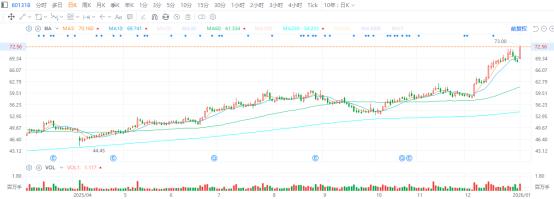
Core Viewpoint - The recent strong performance of Ping An's A-shares and H-shares, with cumulative gains exceeding 20% since early December, indicates a potential revaluation of the insurance sector, with Ping An positioned as a high-dividend stock that can adapt to market changes [1][3][4]. Group 1: Financial Performance and Market Recognition - Ping An's new business value (NBV) for life and health insurance reached 35.724 billion yuan in the first three quarters of 2025, reflecting a significant year-on-year growth of 46.2%, driven by channel optimization and structural changes [6][7]. - The company has been recognized with the "Annual Investment Value Award" in the "Golden Award" annual selection, highlighting its consistent performance as a value stock in both A-share and H-share markets [3][4]. Group 2: Business Model and Ecosystem - Ping An's value foundation is built on three key business elements: life insurance, ecosystem integration, and technological empowerment, which collectively enhance its growth model [6][8]. - The company has developed a unique "comprehensive finance" and "medical and elderly care" ecosystem, creating significant synergistic value through a vast customer base of nearly 250 million [8][11]. Group 3: Technological Empowerment and Innovation - Technology has become a fundamental enabler across all business elements, transforming vast amounts of data into strategic assets that enhance operational efficiency and profitability [11][12]. - The implementation of the Chinese version of the Health Maintenance Organization (HMO) model, centered around Ping An Good Doctor, represents a strategic shift that could redefine the company's valuation logic [12][13]. Group 4: Future Growth and Market Potential - The HMO model opens up multiple trillion-yuan markets beyond traditional insurance, allowing Ping An to transition into the healthcare sector, which presents greater growth opportunities [15][16]. - As the HMO model matures, it is expected to generate stable cash flows and create a robust competitive advantage, leading to a systematic increase in the company's valuation [16].


国泰海通策略2026年1月金股组合:1月金股策略:决胜开门红
GUOTAI HAITONG SECURITIES· 2026-01-05 06:12
Group 1 - The report highlights a positive outlook for the A-share market, anticipating a "spring opening red" driven by policy expectations, liquidity, and fundamental improvements, particularly in technology, non-bank financials, and consumer sectors [1][9] - The report identifies a new trend of price increases in certain sectors, indicating a recovery in demand alongside supply constraints, particularly in chemicals and new energy materials [10][11] - The report emphasizes the importance of AI and emerging technologies in driving growth, with recommendations for investments in sectors such as technology, non-bank financials, and cyclical stocks [11][12] Group 2 - Tencent Holdings is noted for solid revenue and profit growth, with an emphasis on AI ecosystem collaboration, projecting significant increases in revenue and net profit for the coming years [17][18] - Alibaba Group is recognized for its strong AI cloud business and a clear path to reducing losses in its instant retail segment, with adjusted revenue forecasts showing growth [21][22] - Cambricon Technologies is highlighted as a leading AI chip company, with substantial revenue growth and a positive outlook for future performance, supported by increasing demand for AI chips [29][30] Group 3 - The report discusses the electronic sector, particularly Longsys Technology's IPO, which is expected to enhance the competitiveness of domestic DRAM products and support the semiconductor supply chain [24][25] - The communication sector is benefiting from AI infrastructure investments, with strong performance expected from key players in light of increased capital expenditures [34][36] - The report notes the potential for new investment opportunities in satellite internet and quantum communication as these technologies mature [38]





非银金融行业周报(2025/12/29-2025/12/31):公募费率改革收官,非银板块向上突破动能充盈-20260105
Shenwan Hongyuan Securities· 2026-01-05 06:06
Investment Rating - The report maintains a positive outlook on the brokerage sector, suggesting it has good upward momentum for 2026, while the insurance sector is viewed as having systemic value reassessment opportunities [4][30]. Core Insights - The brokerage sector is expected to benefit from improved chip structure, reduced turnover rates, and a limited downside in current valuations. The sector is also positioned for increased public fund allocations due to its relative performance and high index weight [4]. - The insurance sector is projected to experience a decline in premium income growth due to the impact of policy changes and market conditions, but new business growth is anticipated to drive net profit value (NBV) growth, particularly for leading companies [4][30]. Market Review - The Shanghai Composite Index closed at 4,629.94 with a decline of 0.59%, while the non-bank index fell by 1.84% to 2,054.14. The brokerage, insurance, and diversified financial sectors reported declines of 1.37%, 3.33%, and 1.37% respectively [8][10]. - As of December 31, 2025, the average daily trading volume in the stock market was 21,283.52 billion yuan, reflecting an increase of 8.29% compared to the previous period [19]. Key Data - As of December 31, 2025, the total assets of the insurance industry reached 40.64 trillion yuan, with life insurance companies holding 35.75 trillion yuan and property insurance companies holding 3.15 trillion yuan [30]. - The financing balance in the brokerage sector was reported at 25,552.84 billion yuan, marking a 37% increase from the end of 2024 [19]. Sector News - The China Securities Regulatory Commission (CSRC) has implemented new rules for commercial real estate REITs, allowing various types of commercial properties to be financed through public REITs [20]. - The CSRC has also finalized the regulations for public fund sales fees, which are expected to reduce the overall fee levels by approximately 20%, saving investors around 51 billion yuan annually [21].




快手旗下可灵“连环升级”!自带哑铃策略的——香港大盘30ETF(520560)盘中拉升2.7%,近20日狂揽1.2亿元!
Xin Lang Cai Jing· 2026-01-05 06:02
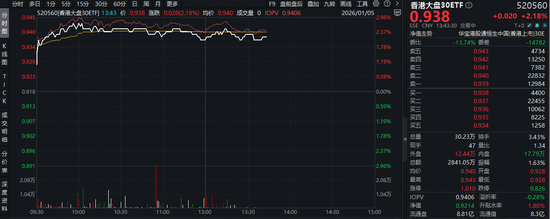
Core Viewpoint - The Hong Kong Large Cap 30 ETF (520560) is experiencing significant activity, reflecting investor confidence in the Hong Kong stock market's future performance, with a recent inflow of 122 million yuan over the past 20 days [1][7]. Group 1: ETF Performance - The Hong Kong Large Cap 30 ETF reached a peak increase of 2.72% and is currently up 2.18%, recovering above the 20-day moving average [1][7]. - The ETF has attracted a total of 122 million yuan in investments over the last 20 days, indicating strong market sentiment towards Hong Kong stocks [1][7]. Group 2: Key Holdings - Major stocks contributing to the ETF's performance include Kuaishou, which rose over 10%, and other notable gains from companies like BeiGene (nearly 6%), China Resources Land (over 5%), and significant contributions from China Ping An, Pop Mart, Alibaba, China Life, SMIC, Meituan, and Tencent [1][7]. Group 3: Market Sentiment and Strategy - Huatai Securities suggests that the Hong Kong stock market is likely to see a positive start in 2026, driven by technology catalysts, with improved market sentiment and liquidity conditions compared to November [3][10]. - The ETF employs a "technology + dividend" strategy, combining high-growth tech stocks like Alibaba and Tencent with stable dividend-paying stocks such as China Construction Bank and China Ping An, making it an ideal long-term investment tool for the Hong Kong market [3][10]. Group 4: Industry Developments - Kuaishou's subsidiary, Keling, has undergone significant upgrades, while Alibaba's Gaode is developing a world model with plans for a new product application [3][9]. - The National Integrated Circuit Industry Investment Fund has increased its stake in SMIC's H-shares from 4.79% to 9.25%, indicating strong institutional support for the semiconductor sector [3][9].




港股保险股午后冲高,阳光保险、中国太平、新华保险涨超6%
Mei Ri Jing Ji Xin Wen· 2026-01-05 05:36
Group 1 - Hong Kong insurance stocks experienced a significant afternoon rally, with Sunshine Insurance, China Pacific Insurance, and New China Life Insurance rising over 6% [1] - China Ping An and China Taiping both saw increases of over 5%, while China Life Insurance rose more than 3% [1]



新华保险、中国太保创新高,保险证券ETF(515630)涨超2.7%
Xin Lang Cai Jing· 2026-01-05 05:36
Core Viewpoint - The insurance sector is experiencing a strong upward trend, with significant increases in stock prices and premium income, indicating robust market performance and potential growth opportunities for investors [1][2]. Group 1: Market Performance - The CSI 800 Securities Insurance Index rose by 2.77%, with key stocks such as New China Life Insurance increasing by 7.73%, China Pacific Insurance by 6.92%, and Ping An Insurance by 5.98% [1]. - The insurance sector ETF also saw a rise of 2.76%, closing at 1.49 yuan [1]. - The total premium income for the insurance industry reached 57,629 billion yuan, marking a year-on-year growth of 7.6% for the first eleven months of 2025 [1]. Group 2: Product Trends - Traditional, dividend, and universal insurance rates have decreased to 2.0%, 1.75%, and 1.0% respectively, with the spread between dividend and traditional insurance rates narrowing from 50 basis points to 25 basis points [2]. - Dividend insurance is expected to become a dominant product in the market due to its floating return potential and the high growth in total investment income for listed insurance companies [2]. - The January sales of new policies are anticipated to show strong growth, benefiting from a lower base and the increased number of working days compared to the previous year [2]. Group 3: Index Composition - As of December 31, 2025, the top ten weighted stocks in the CSI 800 Securities Insurance Index accounted for 64.71% of the index, including major players like Ping An Insurance, China Pacific Insurance, and New China Life Insurance [3].

港股保险股午后冲高,阳光保险(06963.HK)、中国太平(00966.HK)、新华保险(01336.HK)涨超6%,中国平安(02318.HK)、中国...
Jin Rong Jie· 2026-01-05 05:35
Group 1 - Hong Kong insurance stocks experienced a significant afternoon rally, with Sunshine Insurance (06963.HK), China Pacific Insurance (00966.HK), and New China Life Insurance (01336.HK) rising over 6% [1] - China Ping An (02318.HK) and China Taiping Insurance (02601.HK) saw increases of more than 5%, while China Life Insurance (02628.HK) rose over 3% [1]
刚刚,A股罕见一幕!
天天基金网· 2026-01-05 05:24
Core Viewpoint - The A-share market experienced a strong start in 2026, with the Shanghai Composite Index surpassing 4000 points and a notable increase in various sectors, particularly insurance, pharmaceuticals, and technology [2][6]. Group 1: Insurance Sector - The insurance sector saw significant gains, with major companies like New China Life and China Pacific Insurance reaching historical highs [4]. - Since Q3 2025, the insurance sector has been a stabilizing force in the market, benefiting from favorable policies such as the guidance on health insurance development and adjustments to risk factors for insurance companies [6]. - Looking ahead to 2026, the insurance sector is expected to maintain a competitive edge due to attractive returns on dividend insurance products and improvements in distribution channels, which may lead to positive growth in new business value (NBV) [7]. Group 2: Pharmaceutical Sector - The pharmaceutical sector experienced a broad rally, with significant increases in stocks of leading companies such as BeiGene and WuXi AppTec [9]. - In 2025, the number of approved innovative drugs reached 76, a 58.3% increase from 48 in 2024, marking a historical high [11]. - The outlook for 2026 is optimistic, with expectations that the innovative drug sector will dominate the pharmaceutical industry, supported by the integration of medical insurance and commercial insurance, which will enhance payment capabilities [13][14].


利好来袭,涨停潮
Zhong Guo Ji Jin Bao· 2026-01-05 05:09
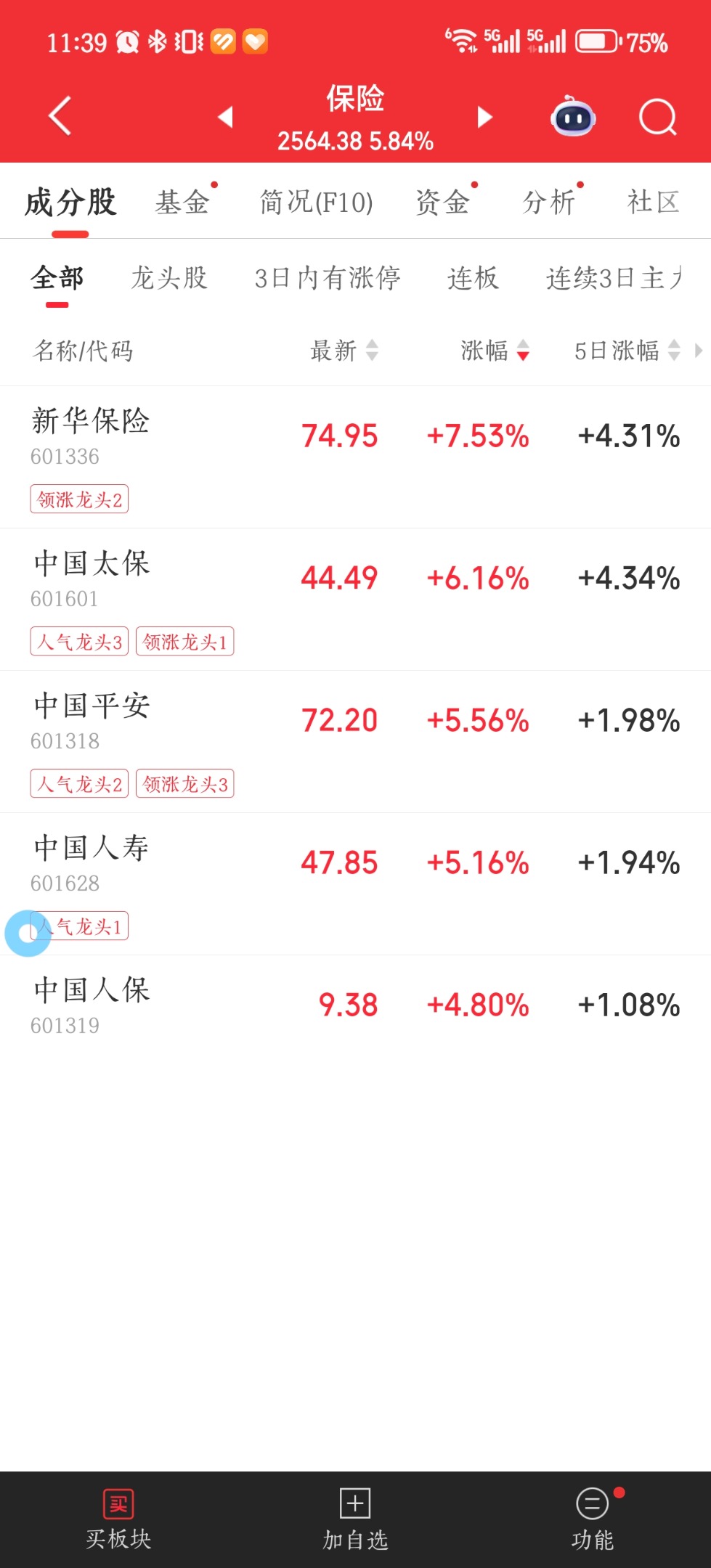
Market Overview - The A-share market saw a strong opening on January 5, with the Shanghai Composite Index returning to 4000 points, closing at 4011.45, up 1.07% [1] - The Shenzhen Component Index rose by 1.87%, and the ChiNext Index increased by 2.15% [1] Trading Volume - The total trading volume in the Shanghai and Shenzhen markets reached 1.64 trillion yuan, an increase of 323.8 billion yuan compared to the previous trading day [3] Stock Performance - A total of 4064 stocks rose, with 99 stocks hitting the daily limit, while 1236 stocks declined [3] - The sectors that performed well included insurance, medical devices, semiconductors, and gaming, with brain-computer interface concept stocks experiencing significant gains [3] Sector Highlights Brain-Computer Interface - Brain-computer interface stocks surged, with several companies hitting the daily limit [6] - Notable performers included Xiangyu Medical, Guanhao Biological, Meihua Medical, Aipeng Medical, and Lepu Medical, all recording a 20% increase [6][7] - Elon Musk's Neuralink announced plans for large-scale production of brain-computer interface devices by December 31, 2026, which is expected to revolutionize the field by reducing invasiveness [9] Semiconductor Sector - The semiconductor sector also showed strength, with multiple stocks reaching their daily limit [10] - Key performers included Dongwei Semiconductor and *ST Tianlong, both achieving a 20% increase [11] - TSMC announced it received U.S. government approval to import chip manufacturing equipment to its Nanjing facility in 2026, which is a positive development for the sector [12] Insurance Sector - The insurance sector experienced a rally, with significant gains from major companies [13] - Xinhua Insurance rose by 7.53%, China Pacific Insurance by 6.16%, and China Life Insurance by over 5% [13][14] - The insurance industry reported a total premium income of 57.629 billion yuan for the first 11 months of 2025, a year-on-year increase of 7.6% [14]




开门红,突破4000点!这个板块异动!
Zheng Quan Ri Bao· 2026-01-05 04:41
Core Viewpoint - The insurance sector has shown strong performance, with significant stock price increases, particularly for New China Life Insurance, which reached a historical high, indicating a robust market outlook for 2025 and beyond [2][3]. Group 1: Stock Performance - The insurance sector rose by 5.84%, with New China Life Insurance (601336) leading with a 7.53% increase, marking a historical high [2]. - Other major players such as China Ping An (601318), China Pacific Insurance (601601), China Life Insurance (601628), and China Reinsurance (601319) also saw increases exceeding 4% [2]. - Year-to-date performance for 2025 shows New China Life Insurance up by 40.24%, China Ping An by 29.91%, China Pacific Insurance by 22.98%, China Reinsurance by 17.45%, and China Life Insurance by 8.54% [3]. Group 2: Premium Income and Market Dynamics - In the first 11 months of the year, the insurance industry achieved a total premium income of 57,629 billion yuan, reflecting a year-on-year growth of 7.6% [3]. - Life insurance companies contributed 41,472 billion yuan with a growth of 9.1%, while property insurance companies reported 16,157 billion yuan, growing by 3.9% [3]. Group 3: Investment and Regulatory Environment - Analysts highlight that regulatory support is encouraging insurance companies to increase equity allocations, with various financial authorities guiding insurance capital into the market [3]. - The demand for equity assets is rising due to low interest rates and asset scarcity, leading to increased pressure on insurance companies to enhance their equity investment capabilities [3]. - It is projected that approximately 600 billion yuan of new insurance funds will enter the market by 2026 [3]. Group 4: Future Outlook - Analysts expect the insurance sector to maintain strong performance due to improving conditions on both the asset and liability sides, with a focus on optimizing liability costs and enhancing investment returns [4]. - The market demand remains robust, and adjustments in interest rates and product offerings are anticipated to alleviate pressure on profit margins [4]. - Current valuations of insurance stocks are considered low, suggesting significant upside potential as the market continues to recover [4].