
PING AN OF CHINA(601318)

Search documents
中国平安向全球招聘超4500岗位,科研和医养占比近三成
Nan Fang Du Shi Bao· 2026-03-19 15:47
Group 1 - The core focus of the news is China Ping An's launch of its 2026 spring campus recruitment, offering over 3,000 job positions and 1,500 internship opportunities across various sectors including finance, technology, healthcare, and more [2] - The recruitment initiative targets global universities and spans over 300 cities in China, aiming to facilitate local employment for graduates [2] - Approximately 30% of the job openings will be in technology, healthcare, and elderly care, with an emphasis on roles in artificial intelligence, big data, algorithm engineering, basic medicine, clinical medicine, and health management [2] Group 2 - Ping An is integrating AI technology throughout the recruitment process to enhance efficiency and provide fair opportunities for all candidates [3] - The AI applications include intelligent job matching, AI-assisted interviews, and a job-seeking AI agent to answer candidates' questions about the recruitment process and interview techniques [3] - The implementation of AI aims to reduce the time taken for candidate screening and improve the overall experience for applicants by automating various stages of the recruitment process [3]

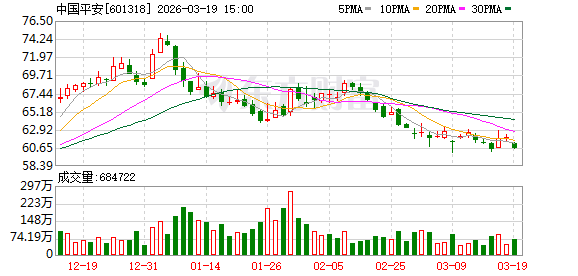
中国平安:关于召开2025年度业绩发布会的公告
Zheng Quan Ri Bao· 2026-03-19 12:39
Group 1 - The company, China Ping An, announced that it will hold its 2025 annual performance briefing on March 27, 2026 [1]
中国平安2026春招启动:面向全球招聘超4500岗位,聚焦科技、医疗、养老人才
Xin Lang Cai Jing· 2026-03-19 12:18
Group 1 - China Ping An officially launched its 2026 Spring Global Campus Recruitment on March 18 [1][2] - The recruitment will involve over 3,000 positions and 1,500 internship roles across more than 10 subsidiaries, including life insurance, property insurance, banking, health insurance, securities, technology, and medical services [1][2] - The recruitment process will utilize AI technology throughout to enhance the application experience and efficiency for students [1][2] Group 2 - The recruitment will be conducted through a series of online live broadcasts and offline campus events [1][2] - A significant number of positions will be available outside of the financial sector, including roles in technology, healthcare, and elderly care [1][2]
中国平安(601318) - 中国平安关于召开2025年度业绩发布会的公告
2026-03-19 11:00
证券代码:601318 证券简称:中国平安 公告编号:临 2026-002 中国平安保险(集团)股份有限公司 关于召开 2025 年度业绩发布会的公告 中国平安保险(集团)股份有限公司(以下简称"本公司")董事会及全体董事 保证本公告内容不存在任何虚假记载、误导性陈述或者重大遗漏,并对其内容的 真实性、准确性和完整性承担法律责任。 重要内容提示: 投资者可于 2026 年 3 月 23 日(星期一)23:59 前将相关问题通过电子邮件 的形式发送至本公司投资者关系邮箱:IR@pingan.com.cn。本公司将会于 2025 年度业绩发布会(以下简称"业绩发布会")上对投资者普遍关注的问题进行回 答。 一、业绩发布会类型 本公司拟于 2026 年 3 月 27 日在上海证券交易所网站(www.sse.com.cn)披 露本公司 2025 年年度报告。为了便于广大投资者更全面深入地了解本公司 2025 年年度业绩和经营情况,本公司拟于 2026 年 3 月 27 日中午 11:45-12:45 召开业 绩发布会,并对投资者普遍关注的问题进行回答。 二、业绩发布会召开的时间、地点 (一)会议召开时间:2026 年 ...
中国平安(02318) - 自愿性公告 召开2025年度业绩发佈会
2026-03-19 09:08
香港交易及結算所有限公司及香港聯合交易所有限公司對本公告的內容概不負責,對其準確 性或完整性亦不發表任何聲明,並明確表示,概不對因本公告全部或任何部份內容而產生或 因倚賴該等內容而引致的任何損失承擔任何責任。 自願性公告 召開2025年度業績發佈會 於本公告日期,本公司的執行董事為馬明哲、謝永林、郭曉濤、付欣及蔡方方;非執行董事為謝吉 人、楊小平、何建鋒及蔡潯;獨立非執行董事為吳港平、金李、王廣謙、洪小源、宋獻中及陳曉峰。 中國平安保險(集團)股份有限公司(「本公司」)擬於2026年3月26日在香港聯合交易所 有限公司網站(www.hkexnews.hk)公佈本公司2025年年度業績。為了便於廣大投資者更深 入、全面地瞭解本公司2025年年度業績和經營情況,本公司擬於2026年3月27日中午11:45- 12:45通過網路直播方式召開2025年度業績發佈會(「業績發佈會」)。本公司董事長馬明 哲、總經理兼聯席首席執行官謝永林、聯席首席執行官郭曉濤、副總經理兼首席財務官(財 務負責人)付欣、公司秘書盛瑞生以及獨立非執行董事等將出席業績發佈會。投資者屆時可 登陸全景網(www.p5w.net)和上證路演中心(ht ...
中国平安20260317
2026-03-19 02:39
Summary of China Ping An Conference Call Company Overview - **Company**: China Ping An - **Industry**: Comprehensive Financial Services including insurance, banking, asset management, and healthcare Key Points Business Model and Strategy - China Ping An is building a "comprehensive finance + healthcare and elderly care" ecosystem, with life insurance as the core business, expected to contribute 71% to net profit by mid-2025 [2][6] - The company has seen a significant recovery in new business value (NBV) and margin, with NBV reaching 35.72 billion yuan and margin rebounding to 40% by Q3 2025 [2][8] - The transformation towards dividend insurance is leading, with over 90% of new business in 2026 expected to come from this segment, effectively reducing liability costs [2][8] Financial Performance - The company anticipates net profit growth rates of 13%, 12.3%, and 6.6% for 2025, 2026, and 2027 respectively, with a current P/EV valuation of approximately 0.7 times, indicating a potential upside of nearly 40% if valued at 0.9 times [3][22] - The dividend per share (DPS) has shown steady growth, increasing from 0.2 yuan in 2008 to 2.54 yuan in 2024, supported by a dividend policy linked to operating profit [6] Channel Strategy - Significant improvements in distribution channels have been noted, with individual agents achieving industry-leading NBV per capita [2][9] - The new bancassurance strategy has deepened collaboration with banks, achieving a bancassurance margin of 28.6% by mid-2025 [2][9] Asset Management and Investment Strategy - The company employs a "barbell" asset allocation strategy, with 37.3% of equity assets in OCI stocks, focusing on high-dividend bank stocks to secure cash flow and mitigate volatility [2][16] - Real estate risk exposure has been reduced to below 4%, with sufficient impairment provisions in place [2][17] AI Integration - AI technology is deeply integrated across all processes, with AI-assisted sales exceeding 66 billion yuan, enhancing efficiency and customer engagement [2][15] - The "AI in all" strategy leverages comprehensive customer data to create competitive advantages in the aging population context [2][15] Risk Management - The company has proactively managed real estate risks, with a significant reduction in exposure and a robust credit impairment provision of 42.56 billion yuan by Q3 2025 [2][17][18] Market Position and Future Outlook - As a major blue-chip stock, China Ping An has significant potential for capital inflow, with a weight of 2.89% in the CSI 300 index [19] - The company is expected to maintain strong growth in premium income and new business value, with projected growth rates of 3.9%, 7.6%, and 7.5% from 2025 to 2027 [20][21] Valuation and Investment Potential - Current valuation levels indicate a discount compared to peers, with a conservative estimate suggesting a potential upside in valuation due to strong fundamentals and market positioning [22] Additional Insights - The company’s governance structure supports efficient decision-making, with a diverse shareholder base ensuring management autonomy [5] - The long-term value of the insurance industry is tied to cost efficiency, customer barriers, and ecosystem value, which Ping An is well-positioned to leverage [4]
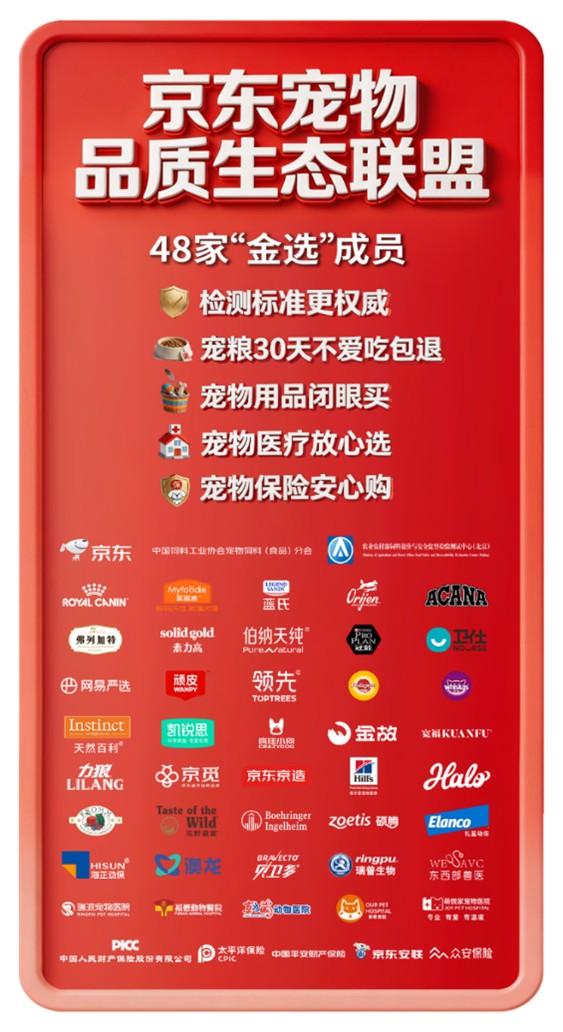
京东、中国平安、金故、澳龙、喜多萌和暖动物医院等联合致信宠物行业从业者,48家成员组建品质生态联盟
Zhong Jin Zai Xian· 2026-03-19 01:16
Core Insights - The pet economy in China has grown significantly, with the market size exceeding 310 billion yuan, but issues such as product fraud, poor quality materials, and lack of transparency in veterinary services are prevalent [1] Group 1: Industry Challenges - The pet industry faces multiple challenges, including product ingredient fraud, substandard materials, and unclear medical fees, leading to difficulties for pet owners in choosing food, accessing veterinary care, and purchasing pets [1] - A letter from various companies, including JD.com and China Ping An, highlights the need for industry reform to address these issues and improve consumer trust [8] Group 2: Initiatives for Improvement - JD.com and its partners have launched six major initiatives to tackle the challenges in the pet industry, focusing on food safety, live animal transactions, health services, insurance, and overall service quality [6] - The establishment of the JD Pet Quality Ecological Alliance aims to create the largest quality alliance in the domestic pet industry, linking all aspects from production to sales to enhance quality and trust [1][8] Group 3: Specific Measures - JD.com has introduced the "JD Pet Gold Selection" standard, which offers a 100-fold compensation guarantee for consumers if purchased pet food is found to have false ingredient labels or does not meet national standards [3][4] - The company is implementing a comprehensive quality assurance system across over 80% of its core product categories, investing over 100 million yuan annually in quality control [5] - In the pet health service sector, JD Health is providing a one-stop service system that includes online consultations, home testing, and a refund policy for ineffective pet medications [7]

Is Ping An Insurance Co. of China (PNGAY) a Great Value Stock Right Now?
ZACKS· 2026-03-18 14:41
Core Insights - The article emphasizes the importance of value investing as a preferred strategy for identifying strong stocks in various market conditions [2] - It highlights the use of Zacks Rank and Style Scores system to identify high-quality value stocks, particularly those with high Zacks Ranks and "A" grades for Value [3] Company Analysis - Ping An Insurance Co. of China (PNGAY) is identified as a notable value investment opportunity, currently holding a Zacks Rank 2 (Buy) and a Value grade of A [4] - PNGAY's P/E ratio is reported at 6.33, significantly lower than the industry average of 8.34, indicating potential undervaluation [4] - The stock's Forward P/E has fluctuated between 4.52 and 7.81 over the past year, with a median of 5.81, further supporting its undervalued status [4] - The P/S ratio for PNGAY is 0.91, compared to the industry's average P/S of 1, reinforcing the notion that the company is undervalued [5] - Overall, the data suggests that PNGAY stands out as one of the strongest value stocks in the market, particularly when considering its earnings outlook [6]

行业深度报告:供需双端驱动,“优势产品”分红险正当时
KAIYUAN SECURITIES· 2026-03-18 08:13
Investment Rating - The industry investment rating is "Positive" (maintained) [1] Core Viewpoints - The dual return mechanism of "guaranteed + floating" in participating insurance is regaining market share, with participating insurance expected to be a key product for the 2026 sales season [4][12] - Participating insurance products are primarily driven by the company's investment capabilities, with guaranteed returns generally lower than traditional insurance, while floating returns depend on market conditions and the insurer's performance [12][26] - Regulatory policies are continuously guiding the reduction of demonstration returns and actual settlement rates for participating insurance, impacting the overall market dynamics [29][33] Summary by Sections 1. "Guaranteed + Floating" Dual Returns of Participating Insurance - Participating insurance originated from sharing surplus and mitigating interest spread losses, allowing policyholders to receive a portion of the insurer's surplus based on actual performance [12] - The attractiveness of participating insurance is enhanced by its dual return structure, which combines guaranteed and floating returns, with the latter being influenced by the insurer's investment performance [12][26] - In 2026, many listed insurance companies are focusing on participating insurance products, with most products having a predetermined interest rate of 1.75% and demonstration rates between 3.3% and 3.9% [4][5] 2. Value Rate of Participating Insurance - Participating insurance typically has a lower value rate compared to traditional insurance under similar assumptions, as 70% of the investment returns exceeding the guaranteed return are distributed to policyholders [5][12] - The use of the Variable Fee Approach (VFA) for measuring participating insurance reduces financial statement volatility, leading to more stable net profits and net assets [5][6] - The increase in the proportion of participating insurance generally results in reduced fluctuations in net profit and net assets, especially during market volatility [5][6] 3. Supply and Demand Driving Participating Insurance Growth - Participating insurance shows comparative advantages during stock market fluctuations and low-interest periods, with regulatory policies also playing a significant role in its sales growth [6][12] - The demand for participating insurance is bolstered by its attractive features in a low-interest environment, making it a key product for capturing deposits migrating from traditional savings [6][12] - The concentration of leading insurers in the participating insurance market has been increasing, with companies like China Ping An, China Pacific Insurance, and China Life being recommended for their growth potential in this segment [6][12]



中国平安AH股齐涨超3%,政策东风频吹
Ge Long Hui A P P· 2026-03-17 02:37
Group 1 - Insurance stocks experienced a strong rally, with China Ping An's A-shares rising by 3.6% to 62.66 yuan and H-shares increasing by 3.45% to 64.4 HKD [1] - The Financial Regulatory Bureau emphasized enhancing financial services for the real economy and developing a catastrophe insurance system, along with promoting commercial health insurance and long-term care insurance [1] - The 2026 government work report outlines several insurance development goals, including measures to promote agricultural insurance, policies for flexible employment insurance participation, and the development of health insurance products that meet diverse medical needs [1] Group 2 - JPMorgan's recent report highlights that China Ping An's management confidence in the 2026 life insurance sales outlook and core profit growth will be key catalysts, supported by attractive valuations [2] - Risk management measures are crucial for maintaining solvency capital and profit resilience, ensuring the company remains robust amid cyclical fluctuations [2] - JPMorgan maintains its forecast for China Ping An's after-tax operating profit at 130 billion yuan, with an expected dividend of 2.73 yuan, and sets a target price of 100 HKD for the stock, rating it as "overweight" [2]