PING AN OF CHINA(601318)

Search documents
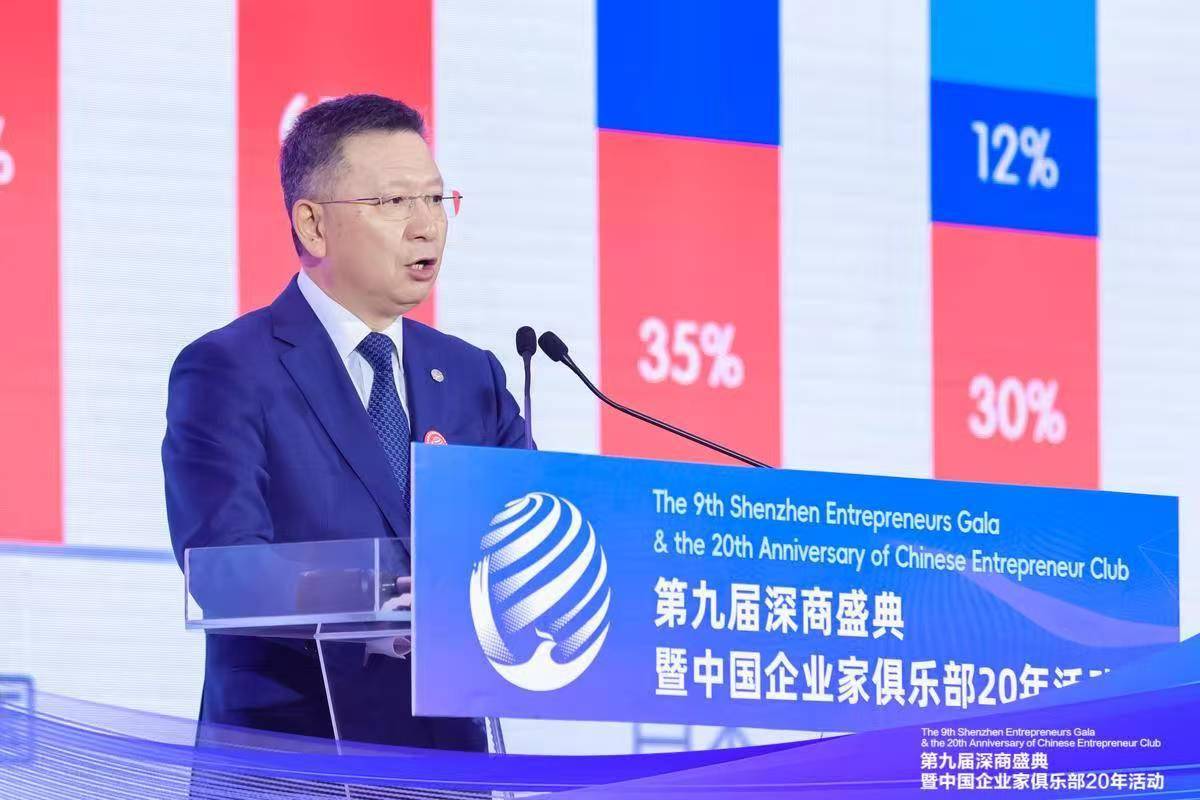
谢永林:平安集团将承继蛇口基因,扎根深圳、反哺深圳
Sou Hu Cai Jing· 2026-01-12 11:04
ST TH ulayan 平安集团总经理兼联席 1月12日,在第九届深商盛典暨中国企业家俱乐部20年系列活动主题论坛上,平安集团党委副书记、平安集团总经理兼联席首席执行官谢永林现场分享了新 形势之下平安集团的战略考量。 财富管理市场成为重要蓝海。谢永林认为,中国金融方面财富管理市场有巨大的潜力和结构性变化,到2030年中国家庭资产规模达到440万亿,但是由于房 地产市场调整、低利率周期到来,房地产这类传统配置品种面临保值增值的压力,保险股票资金逐渐走进配置组合,我国多元化配置需求未来有很大的增长 潜力。 医疗服务也是重要战略维度。他分析,2030年医疗服务市场规模将达到30万亿。其中一个数字值得留意,2024年我国居民个人自费医疗支出占医疗总费用的 比例约为27%,个人自费医疗支出的负担仍然比较重,而商业保险占比只有4%,远远低于发达国家的水平。未来保险将逐步成为医疗健康的重要支付方 式,既是保险公司的重要责任,也是巨大发展机遇。 养老服务方面,谢永林认为,银发经济需求端快速增长,供给端却严重不足,涉及养老服务、养老金融、健康管理、财富传承等领域新蓝海,需要提供系统 化的解决方案。因此,基于对财富、医疗、养老 ...


南向资金 | 快手-W获净买入22.45亿港元



Di Yi Cai Jing· 2026-01-12 10:12
Group 1 - Southbound funds recorded a net purchase of 7.306 billion HKD today [1] - Kuaishou-W, Tencent Holdings, and Southern Hang Seng Technology were the top three net purchases, with net buys of 2.245 billion HKD, 2.012 billion HKD, and 858 million HKD respectively [1] - On the sell side, China Mobile, Meituan-W, and Ping An of China experienced net sales of 1.03 billion HKD, 482 million HKD, and 342 million HKD respectively [1]
77股特大单净流入资金超2亿元
Zheng Quan Shi Bao Wang· 2026-01-12 10:12
Market Overview - The two markets experienced a net outflow of 426 million yuan, with 2,234 stocks seeing net inflows and 2,818 stocks experiencing net outflows [1] - The Shanghai Composite Index closed up by 1.09% [1] Industry Performance - Among the 12 industries with net inflows, the computer sector led with a net inflow of 17.54 billion yuan and an index increase of 7.26%, followed by the media sector with a net inflow of 6.23 billion yuan and a rise of 7.80% [1] - A total of 19 industries saw net outflows, with the electronics sector experiencing the highest outflow of 8.88 billion yuan, followed closely by the power equipment sector with an outflow of 8.80 billion yuan [1] Individual Stock Performance - 77 stocks had net inflows exceeding 2 billion yuan, with Dongfang Caifu leading at 2.071 billion yuan, followed by China Satellite at 1.852 billion yuan [2] - Stocks with significant net outflows included China Ping An with a net outflow of 2.552 billion yuan, and Sunshine Power and Goldwind Technology with outflows of 1.926 billion yuan and 1.763 billion yuan, respectively [2][4] Stock Price Movements - Stocks with net inflows over 2 billion yuan saw an average increase of 10.91%, outperforming the Shanghai Composite Index [2] - Notable stocks that closed at their daily limit include Tuorisi and Hand Information [2] Sector Concentration - The stocks with the highest net inflows were concentrated in the computer, media, and communication sectors, with 21, 10, and 8 stocks respectively [2]


「数据看盘」多只中证A500相关ETF上周份额大减 机构和游资激烈博弈AI应用概念股
Sou Hu Cai Jing· 2026-01-12 10:08
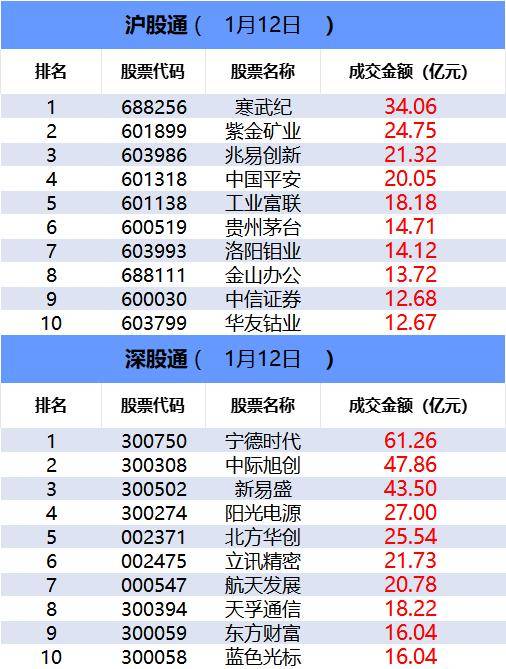
Group 1: Market Overview - The total trading amount for the Shanghai Stock Connect today was 1728.58 billion, while the Shenzhen Stock Connect totaled 2261.22 billion [2] - The top traded stocks in the Shanghai Stock Connect included Qihua Technology with 34.06 billion, followed by Qingshou Technology at 24.75 billion, and Lightway Innovation at 21.32 billion [3] - In the Shenzhen Stock Connect, the leading stock was Ningde Times with 61.26 billion, followed by Zhongji Xuchuang at 47.86 billion, and Xinyi Sheng at 43.50 billion [3] Group 2: Sector Performance - AI applications and commercial aerospace sectors showed significant gains, while insurance, oil and gas, and real estate sectors experienced declines [4] - The computer sector led with a net inflow of 155.26 billion, followed by cultural media at 46.05 billion, and securities at 43.45 billion [5] - The electric new industry sector had the highest net outflow at -136.83 billion, followed by electronics at -105.83 billion, and basic chemicals at -63.92 billion [6] Group 3: Individual Stock Activity - Dongfang Caifu had the highest net inflow among individual stocks at 17.42 billion, followed by Lingyi Zhi Zao at 16.51 billion, and Yanshan Technology at 14.36 billion [7] - China Ping An experienced the largest net outflow at -23.03 billion, followed by Sunshine Power at -20.71 billion, and Goldwind Technology at -19.51 billion [8] Group 4: ETF Trading - The top ten ETFs by trading amount included the Hong Kong Securities ETF with 145.29 billion, and the CSI A500 ETF at 82.10 billion [9] - The ETF with the highest growth in trading amount compared to the previous trading day was the Media ETF, which increased by 299.03% [10] Group 5: Futures Market - In the futures market, the main contracts for IH, IF, and IM saw both long and short positions increase, with a notable increase in short positions for IF and IM contracts [12] Group 6: Institutional and Retail Activity - Institutional activity was high, with notable purchases including Shanzi Gaoke at 4.84 billion and Leike Defense at 2.35 billion [14] - Retail investors showed significant activity, with Kunlun Wanwei receiving a purchase of 3.8 billion from a prominent retail investor, while BlueFocus received 2.25 billion [16]



中国平安入选“2025中国企业ESG百强”榜单
Xin Lang Cai Jing· 2026-01-12 10:04
新浪财经ESG评级中心提供包括资讯、报告、培训、咨询等在内的14项ESG服务,助力上市公司传播ESG理念,提升ESG可持续发展表现。点 击查看【 ESG评级中心服务手册】 在全球可持续发展浪潮席卷而来的当下,ESG(环境、社会、公司治理)已成为衡量企业高质量发展的核心标尺,更是连接企业价值与社会价值的关键纽 带。随着国内ESG生态体系的加速完善,政策监管持续收紧、资本市场对ESG表现的关注度不断飙升,企业的可持续发展能力愈发成为其核心竞争力的重 要组成部分。 在此行业背景下,新浪财经重磅发布"2025中国企业ESG百强"榜单。该榜单依托新浪财经专业的ESG评级体系,以5000余家A股上市公司及在港上市内地 企业为评价对象,创新性搭建18套行业ESG评价模型,纳入150余项ESG指标,通过量化模型综合演算,对企业ESG表现进行全面、客观的综合评价,最 终筛选出中国ESG实践的标杆企业。榜单不仅为行业树立了发展典范,更为投资者提供了极具参考价值的决策依据。 中国平安在环境、社会、公司治理领域开展了大量工作,积累了丰富的创新实践与扎实的落地成果。凭借在ESG各领域的卓越表现,中国平安成功入选本 次新浪财经"2025 ...

数据看盘多只中证A500相关ETF上周份额大减 机构和游资激烈博弈AI应用概念股
Sou Hu Cai Jing· 2026-01-12 09:53
Summary of Key Points Core Viewpoint - The trading volume of the Shanghai and Shenzhen Stock Connect reached a total of 398.98 billion, with Cambricon and CATL leading in individual stock trading volume on the Shanghai and Shenzhen exchanges respectively [1][2]. Trading Volume - The total trading amount for the Shanghai Stock Connect was 172.86 billion, while the Shenzhen Stock Connect totaled 226.12 billion [2]. Top Individual Stocks - In the Shanghai Stock Connect, Cambricon (688256) had a trading volume of 3.406 billion, followed by Zhaoyi Innovation (603986) at 2.132 billion [3]. - In the Shenzhen Stock Connect, CATL (300750) led with a trading volume of 6.126 billion, followed by Zhongji Xuchuang (300308) at 4.786 billion [3]. Sector Performance - The AI application and commercial aerospace sectors showed the highest gains, while insurance, oil and gas, and real estate sectors experienced the largest declines [4]. - The new energy sector saw the highest net outflow of funds [5]. Major Fund Inflows and Outflows - The top ten stocks with net inflows included Dongfang Caifu with 1.742 billion and Lingyi Technology with 1.651 billion [6]. - The top ten stocks with net outflows included China Ping An with -2.303 billion and Sunshine Power with -2.071 billion [6]. ETF Trading - The top ETF by trading volume was the Hong Kong Securities ETF (513090) with 14.5289 billion, followed by the CSI A500 ETF (159338) at 8.2104 billion [8]. - The CSI A500 ETF saw a decrease of 3.72% compared to the previous trading day [8]. ETF Share Changes - The top ten ETFs with the largest share increases included the Medical Device ETF (159883) with an increase of 2.768 billion shares, and the Securities Insurance ETF (512070) with an increase of 2.695 billion shares [10]. - The top ten ETFs with the largest share decreases included the Wine ETF (512690) with a decrease of 2.3994 billion shares, and the A500 ETF Leader (563800) with a decrease of 2.301 billion shares [11]. Market Activity - The four major index futures contracts saw both long and short positions increase, with the IF and IM contracts seeing a larger increase in short positions [12]. - The market saw significant activity from institutions, with notable purchases in stocks like Shanzi Technology and LeiKe Defense [14]. Retail and Quantitative Trading - Retail investors showed high activity, with significant purchases in stocks like Kunlun Wanwei and BlueFocus [16]. - Quantitative funds were also active, with notable purchases in stocks like Dazhi Technology and significant sell-offs in others [17].

17.12亿元主力资金今日抢筹非银金融板块
Zheng Quan Shi Bao Wang· 2026-01-12 09:25
Market Overview - The Shanghai Composite Index rose by 1.09% on January 12, with 28 out of the 31 sectors experiencing gains, led by the Media and Computer sectors, which increased by 7.80% and 7.26% respectively [1] - The Non-Bank Financial sector saw a modest increase of 0.53% [1] - The sectors that faced declines included Oil & Petrochemicals, Coal, and Real Estate, with decreases of 1.00%, 0.47%, and 0.29% respectively [1] Capital Flow Analysis - The main capital flow showed a net outflow of 27.468 billion yuan across the two markets, with 11 sectors experiencing net inflows [1] - The Computer sector led the net inflow with 15.774 billion yuan, while the Media sector followed with a net inflow of 5.391 billion yuan [1] - The sectors with the highest net outflows included Electric Equipment, which saw a net outflow of 14.093 billion yuan, and the Electronics sector with an outflow of 11.193 billion yuan [1] Non-Bank Financial Sector Performance - The Non-Bank Financial sector had a net inflow of 1.712 billion yuan, with 72 out of 82 stocks in the sector rising [2] - Notable stocks with significant net inflows included Dongfang Caifu, which attracted 1.803 billion yuan, followed by Pacific Securities and GF Securities with inflows of 1.315 billion yuan and 296 million yuan respectively [2] - The sector also had 12 stocks with net outflows exceeding 50 million yuan, with China Ping An, Huatai Securities, and China Pacific Insurance leading the outflows at 2.326 billion yuan, 175 million yuan, and 112 million yuan respectively [2] Key Stocks in Non-Bank Financial Sector - Top performers in the Non-Bank Financial sector included: - Dongfang Caifu: +3.81%, turnover rate 5.24%, net inflow 1.802 billion yuan - Pacific Securities: +7.84%, turnover rate 15.36%, net inflow 1.315 billion yuan - GF Securities: +1.79%, turnover rate 1.66%, net inflow 296 million yuan [2] - Other notable stocks with positive performance included Tianfeng Securities, Zhongjin Company, and CITIC Securities, with respective increases of 3.96%, 1.31%, and 0.74% [2]


解密主力资金出逃股 连续5日净流出427股
Zheng Quan Shi Bao Wang· 2026-01-12 09:25
Core Viewpoint - As of January 12, a total of 427 stocks in the Shanghai and Shenzhen markets have experienced net outflows of main funds for five consecutive days or more, indicating a significant trend of capital withdrawal from these stocks [1]. Group 1: Stocks with Longest Net Outflow - Anqi Yeast has the longest net outflow duration at 19 days, followed by Spring Airlines with 17 days [1]. - The largest total net outflow amount is from China Ping An, with a cumulative outflow of 7.961 billion yuan over five days [1]. - Industrial Fulian follows with a net outflow of 4.782 billion yuan over the same period [1]. Group 2: Stocks with Significant Net Outflow - The top stocks by net outflow amount include: - China Ping An: 7.961 billion yuan, 14.10% of trading volume, with a cumulative decline of 6.65% [1]. - Industrial Fulian: 4.782 billion yuan, 8.66% of trading volume, with a cumulative decline of 4.30% [1]. - Huadian Co.: 3.729 billion yuan, 15.05% of trading volume, with a cumulative decline of 8.99% [1]. Group 3: Stocks with Notable Price Changes - ST Tongmai has the highest percentage of net outflow relative to trading volume at 17.72% over the past 10 days [1]. - Other notable stocks with significant price changes include: - Anqi Yeast: 19 days of net outflow, with a cumulative increase of 7.92% [2]. - Spring Airlines: 17 days of net outflow, with a cumulative increase of 9.49% [3].



两市主力资金净流出274.68亿元,电力设备行业净流出居首
Zheng Quan Shi Bao Wang· 2026-01-12 09:17
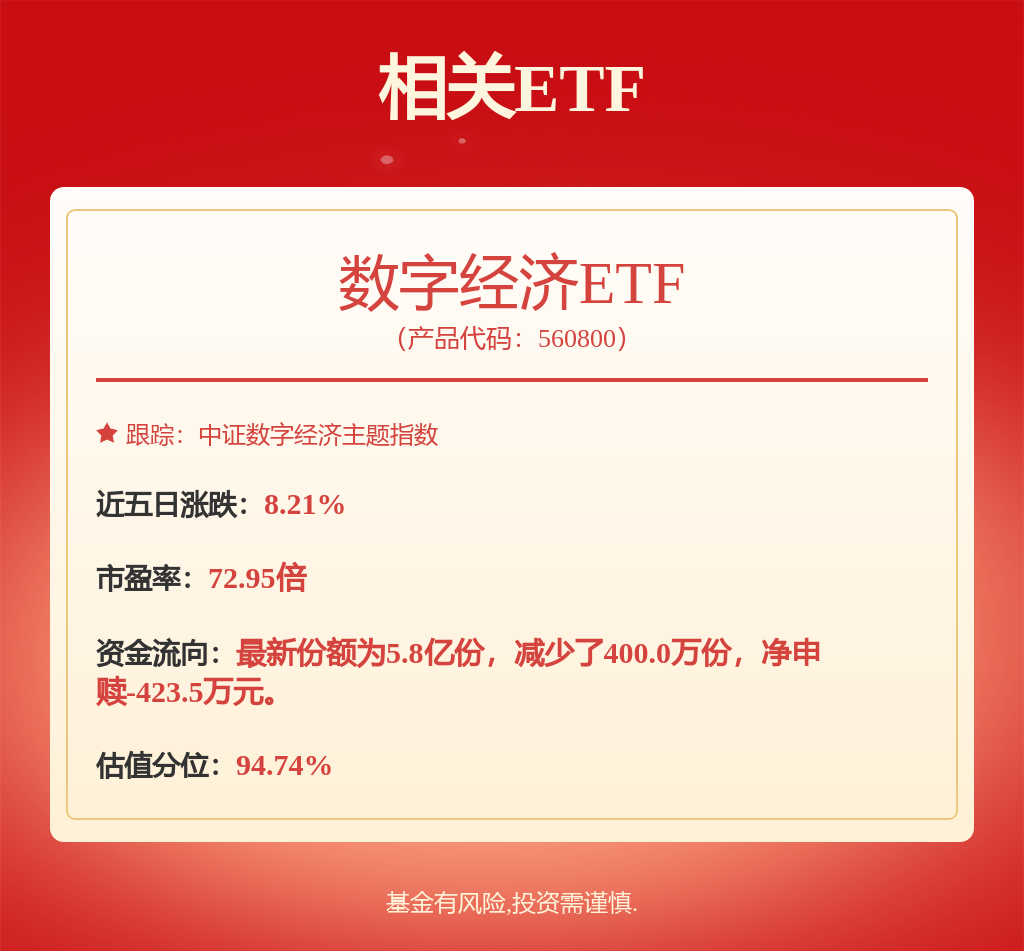
分行业来看,申万所属的一级行业中,今日上涨的有28个,涨幅居前的行业为传媒、计算机,涨幅为7.80%、7.26%。跌幅居前的行业为石油石 化、煤炭、房地产,跌幅为1.00%、0.47%、0.29%。 (原标题:两市主力资金净流出274.68亿元,电力设备行业净流出居首) 1月12日,沪指上涨1.09%,深成指上涨1.75%,创业板指上涨1.82%,沪深300指数上涨0.65%。可交易A股中,上涨的有4144只,占比75.91%,下 跌的1182只。 资金面上,今日主力资金全天净流出274.68亿元,已连续5个交易日资金呈净流出状态。其中,创业板主力资金净流出10.48亿元;科创板主力资金 净流出69.33亿元;沪深300成份股主力资金净流出126.47亿元。 数字经济ETF (产品代码: 560800) ★ 跟踪:中证数字经济主题指数 近五日涨跌:8.21% 行业资金流向方面,今日有11个行业主力资金净流入,计算机行业主力资金净流入规模居首,该行业今日上涨7.26%,全天净流入资金157.74亿 元,其次是传媒行业,日涨幅为7.80%,净流入资金为53.91亿元。 主力资金净流出的行业有20个,电力设备行业主 ...



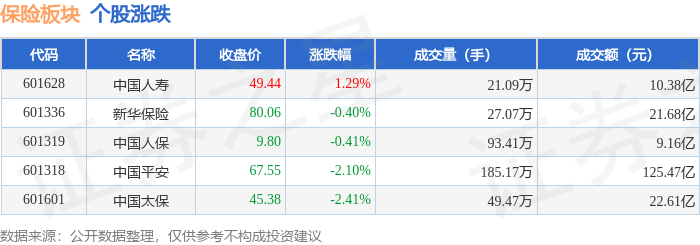
保险板块1月12日跌0.47%,中国太保领跌,主力资金净流出26.61亿元
Zheng Xing Xing Ye Ri Bao· 2026-01-12 09:04
Group 1 - The insurance sector experienced a decline of 0.47% on January 12, with China Pacific Insurance leading the drop [1] - The Shanghai Composite Index closed at 4165.29, up 1.09%, while the Shenzhen Component Index closed at 14366.91, up 1.75% [1] - Key individual stock performances included China Life Insurance up 1.29% to 49.44, while China Pacific Insurance fell 2.41% to 45.38 [1] Group 2 - The insurance sector saw a net outflow of 2.661 billion yuan from institutional investors, while retail investors had a net inflow of 1.387 billion yuan [1] - Specific stock fund flows indicated that China Life Insurance had a net outflow of 89.416 million yuan from institutional investors [2] - China Pacific Insurance experienced a net outflow of 114 million yuan from institutional investors, with a retail net inflow of 107 million yuan [2]