
NCI(601336)

Search documents
金融行业双周报(2025、7、25-2025、8、7)-20250808
Dongguan Securities· 2025-08-08 08:04
Investment Ratings - Banking: Overweight (Maintain) [1] - Securities: Market Weight (Maintain) [1] - Insurance: Overweight (Maintain) [3] Core Insights - The banking sector is experiencing a recovery in activity, with several banks reporting positive growth in net profit for the first half of 2025, driven by favorable policies and a stable interest margin [7][46] - The securities sector is benefiting from explosive growth in mid-year earnings forecasts from listed brokers, with all 32 brokers reporting increased or turned profitable earnings [4][48] - The insurance industry is seeing a favorable shift in its liability side, with a reduction in the guaranteed interest rate for traditional life insurance, prompting a potential shift in product offerings [5][49] Summary by Sections Market Review - As of August 7, 2025, the banking index increased by 1.66%, while the securities index decreased by 1.98%, and the insurance index rose by 0.35% [15] - Agricultural Bank, Western Securities, and New China Life Insurance showed the best performance among sub-sectors with increases of 8.23%, 6.04%, and 4.45% respectively [15] Valuation Situation - As of August 7, 2025, the banking sector's price-to-book (PB) ratio is 0.77, with state-owned banks at 0.80, joint-stock banks at 0.68, city commercial banks at 0.76, and rural commercial banks at 0.66 [24] - The securities sector's PB ratio is 1.55, indicating potential for valuation recovery [27] Recent Market Indicators - The average daily trading volume in the A-share market was 16,120.08 billion, with a week-on-week decrease of 9.79% [35] - The margin trading balance reached 2 trillion, marking a significant milestone since July 2015 [35] Industry News - The government is implementing consumer loan interest subsidies to stimulate consumption and enhance market vitality [41] - The insurance sector is expanding its private equity investment funds, indicating a long-term influx of capital into the market [42] Company Announcements - Qingdao Bank reported a 7.50% increase in revenue for the first half of 2025, with net profit growing by 16.05% [44] - Agricultural Bank and other banks are expected to benefit from favorable policies and a stable dividend environment [46] Weekly Perspectives - The banking sector is expected to see continued demand for high-dividend, low-valuation stocks, driven by a low-interest-rate environment and a shift in capital towards safer investments [46][47] - The securities sector is advised to focus on companies with strong mid-year earnings forecasts and those benefiting from regulatory changes [48] - The insurance sector is encouraged to optimize product structures in response to changes in guaranteed interest rates, with a focus on flexible income products [49]






保险业应更好地为银发经济服务
Jin Rong Shi Bao· 2025-08-08 08:01
Core Viewpoint - The silver economy is recognized as a stable and significant industry, essential for constructing a new economic development framework, driven by the growing elderly population and their evolving consumption needs [1][2]. Policy and Market Development - In January 2024, the State Council issued the first policy document specifically addressing the silver economy, outlining 26 measures to enhance the welfare of the elderly [2]. - The silver economy in China is projected to reach 7 trillion yuan (approximately 1 trillion USD) in 2024, accounting for 6% of GDP [2]. - As of 2023, there are 74,000 elderly service enterprises in China, indicating rapid growth in the sector [2]. Challenges in the Industry - The elderly care industry is still in its early development stage, facing challenges such as insufficient supply of products and services, and a lack of market segmentation to meet diverse needs [3]. - The demand for personalized elderly care services is high, but the industry struggles with standardization, particularly in home care services, which are highly individualized [3]. Innovation and Solutions - Innovation in service delivery is crucial for addressing the challenges in the elderly care system, with a focus on problem-oriented approaches and service-driven supply [4]. - The development of elderly financial services is seen as a key area for promoting high-quality growth in both finance and elderly care sectors [4]. - The number of pilot cities for long-term care insurance has expanded from 15 to 49, with over 180 million participants, highlighting the growing importance of this insurance model [4]. Industry Trends and Future Directions - The insurance industry is increasingly investing in elderly care, with major companies accelerating their involvement in elderly communities and home care services [5]. - The integration of AI and technology in elderly care is anticipated to enhance service delivery and address the needs of the aging population [5].


多元活动绘就保险画卷 爱与责任守护美好生活
Jin Rong Shi Bao· 2025-08-08 08:01
Core Viewpoint - The 13th "7·8 National Insurance Publicity Day" emphasizes the theme "Love and Responsibility: Insurance Makes Life Better," showcasing the insurance industry's commitment to public service and community engagement [1] Group 1: Innovative Promotion Methods - Insurance institutions are adopting new media and cross-industry collaborations to create immersive promotional experiences, enhancing public engagement with insurance concepts [2] - The China Insurance Industry Association launched a series of thematic posters to visually represent the industry's trustworthy and warm image [2] - Various companies, such as China Life and PICC, are conducting diverse consumer rights protection activities and community outreach programs to foster a strong promotional atmosphere [2][3] Group 2: Community Engagement and Service - The "Five Entering" initiative (entering communities, rural areas, schools, enterprises, and business circles) is being actively implemented by insurance companies to provide tailored services to the public [4] - Companies like China Taiping and Ping An are setting up consultation points and volunteer teams to offer financial knowledge and risk reduction services directly to the community [4][5] Group 3: Knowledge Dissemination - A key focus of the publicity day is to simplify insurance knowledge for the public, making it more accessible and relatable [6] - PICC's live broadcasts have attracted over 430,000 likes, highlighting the effectiveness of using digital platforms for knowledge dissemination [6] - Various companies are conducting financial knowledge lectures and community activities to enhance public understanding of insurance [6] Group 4: Risk Reduction Initiatives - Insurance companies are actively engaging in risk reduction services, integrating them into daily operations to demonstrate their social responsibility [7] - For instance, during severe weather events, companies like PICC have mobilized resources for risk assessment and public safety, showcasing their proactive approach [7] - The "7·8 National Insurance Publicity Day" serves as a platform for the insurance industry to illustrate its role in safeguarding lives and promoting community well-being [7]




两家上市险企披露上半年保费收入
Jin Rong Shi Bao· 2025-08-08 08:01
Group 1 - The core viewpoint of the articles highlights the growth in premium income for listed insurance companies in A-shares, specifically China Pacific Insurance and New China Life Insurance, both reporting year-on-year increases in premium income [1][2] - China Pacific Insurance reported a premium income of 282 billion yuan for the first half of the year, representing a 9% year-on-year growth, while New China Life Insurance reported 121.26 billion yuan, marking a 23% increase [1] - In terms of business lines, China Pacific's life insurance segment generated 168 billion yuan in premium income, up 9.7%, while its property insurance segment saw a premium income of 113.99 billion yuan, growing by 0.9% [1] Group 2 - New China Life Insurance emphasized its customer-centric strategy, enhancing branch performance, and improving its product system to drive business and income structure transformation [1] - A report from CITIC Securities noted that New China Life's individual insurance channel showed significant improvement, with monthly performance metrics and premium income per capita both achieving double-digit growth year-on-year [1] - The bancassurance channel for China Pacific Insurance experienced rapid growth, with premium income reaching 37.05 billion yuan, a 74.6% increase, while the agent channel saw a decline of 2.5% in premium income [2] Group 3 - The increase in demand for insurance products, particularly dividend insurance, is attributed to rising household savings and declining bank deposit rates [2] - The implementation of "reporting and operation integration" and the opening of "one-to-many" sales models have contributed to the rapid growth of the bancassurance channel, with a notable reduction in commission rates and enhanced value [2] - In the property insurance sector, China Pacific's motor vehicle insurance premium income was 53.61 billion yuan, up 2.8%, while non-motor vehicle insurance saw a slight decline of 0.8% in premium income [2]
分红险红利实现率扭转颓势
Jin Rong Shi Bao· 2025-08-08 08:01
Core Insights - The overall dividend realization rate of participating insurance products has significantly improved in 2024 compared to the low performance in 2023, with many products from leading companies exceeding 100% realization rates [1][2] Summary by Sections Dividend Realization Rate Improvement - The dividend realization rate, which measures the actual dividends paid against projected dividends, has shown a positive trend, with over 200 products from more than 30 insurance companies achieving rates of 100% or higher [2][4] - Leading companies like Xinhua Insurance reported that 56 out of 59 participating products had a realization rate of 100%, with an average of 152%, while 11 out of 12 new products from Ping An Life also reached 100% [2][3] Factors Driving Improvement - Strong investment returns and optimized regulatory policies are the main drivers behind the improved dividend realization rates in 2024 [4][5] - The comprehensive investment return rate for life insurance companies reached 7.45% in 2024, an increase of 4.08 percentage points year-on-year, with Xinhua Insurance achieving 8.5% [4] - Regulatory adjustments have provided larger space for leading companies, with caps on floating income product liabilities set at 3.2% for small and medium-sized insurers and 3.0% for large insurers [4][5] Regulatory Environment and Market Dynamics - Recent regulatory changes aim to prevent unhealthy competition in the industry and ensure that companies do not inflate projected dividend levels unsustainably [5][6] - The emphasis on maintaining a high dividend realization rate (≥100%) reflects the prudence of actuarial assumptions and investment management capabilities, enhancing consumer trust [7][8] - The insurance industry is shifting from a marketing-driven approach to a value-driven one, focusing on asset-liability management and long-term investment capabilities [8]
险资年内举牌10家上市公司 偏爱银行H股
Zheng Quan Ri Bao· 2025-08-08 07:27
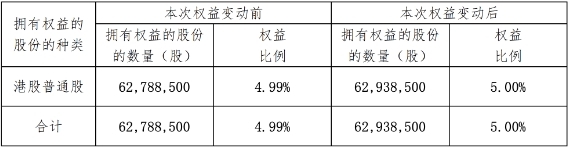
据《证券日报》记者统计,今年已有长城人寿保险股份有限公司、阳光人寿保险股份有限公司、新华人 寿保险股份有限公司(以下简称"新华保险")等6家保险公司合计举牌上市公司数量达10家。 本报记者 冷翠华 见习记者 杨笑寒 港交所最新信息显示,近日,瑞众人寿保险有限责任公司(以下简称"瑞众人寿")增持中信银行股份有 限公司(以下简称"中信银行")300万股,增持后,瑞众人寿所持中信银行股份约为7.44亿股,占其已 发行有投票权股份的5%,触及举牌线。 同时,通过举牌上市银行,险资也可以与被举牌上市银行形成协同效应,促进银保业务发展。例如,新 华保险在举牌杭州银行股份有限公司(以下简称"杭州银行")后表示,本次权益变动完成后,新华保险 将通过股权纽带加强与杭州银行的深度合作,促进和杭州银行双方的银保业务发展,提升双方的价值。 今年以来,险资举牌上市公司"热情"不减,举牌标的中银行股居多。受访专家表示,险资举牌高股息大 盘股频次增加的原因,一是应对利率中枢下行带来的冲击;二是,在新会计准则实施的背景下平滑报表 波动。展望未来,预计险资举牌时将持续关注现金流稳定、估值合理、处于成长性行业的上市公司。 展望未来,杨帆认为,险 ...


新华保险黔东南中心支公司因未按规定使用经批准或者备案的保险条款、保险费率等被罚48.6万元
Zhong Guo Neng Yuan Wang· 2025-08-08 07:27
同时,危登华(时任新华人寿保险黔东南中心支公司副总经理)因未按规定使用经批准或者备案的保险 条款、保险费率,对业务人员管理不规范,支付协议规定之外的利益,被警告并罚款8.6万元;许琴 (时为新华人寿保险黔东南中心支公司营销部人员管理岗员工)因对保险代理人执业证管理不规范,被 警告并罚款0.7万元;李俊[时任新华人寿保险黔东南中心支公司副总经理(主持工作)]因未按规定使用 经批准或者备案的保险费率,被警告并罚款3万元。 3月20日消息,据国家金融监督管理总局黔东南监管分局行政处罚信息公开表显示,新华人寿保险黔东 南中心支公司因对保险代理人执业证管理不规范,未按规定使用经批准或者备案的保险条款、保险费 率,对业务人员管理不规范,支付协议规定之外的利益被警告并罚款48.6万元。 (责任编辑:何潇) ...
险资持续加大不动产投资力度
Zheng Quan Ri Bao· 2025-08-08 07:27
Core Viewpoint - Insurance capital institutions are increasingly diversifying their real estate investments, focusing on long-term returns and various investment methods, including debt investment plans and private equity funds [1][2][4]. Investment Trends - Insurance capital institutions are shifting from primarily investing in real estate stocks to a more diversified approach, emphasizing long-term investment returns [1][4]. - The establishment of various investment vehicles, such as debt investment plans and private equity funds, is becoming a significant asset allocation strategy for insurance capital [1][2]. Specific Investment Examples - Kunhua (Tianjin) Equity Investment Partnership has invested in 14 projects, all related to acquiring shares in Wanda Group's commercial real estate companies, with a 100% stake in 12 of them [1][2]. - New China Life Insurance holds a 99.9% stake in Kunhua Tianjin, indicating a strong commitment to real estate investments [2]. Focus on Rental Properties - There is a notable increase in investments in rental properties, including commercial complexes, long-term rental apartments, and healthcare real estate, reflecting a trend towards becoming "landlords" [4][5]. - The rental income from these properties is becoming a crucial path for insurance capital to achieve stable long-term investment returns [4][5]. Market Impact - The involvement of insurance capital in the real estate market is expected to stabilize market expectations and support the healthy development of the real estate sector [6]. - As the real estate market gradually recovers, insurance capital's investment scale is anticipated to maintain steady growth, optimizing overall asset allocation and reducing investment risks [5][6].

年内二度出手,新华保险举牌北京控股,高股息红利资产仍是“心头好”
Zhong Guo Jing Ji Wang· 2025-08-08 07:26
Core Viewpoint - Insurance companies are actively increasing their stakes in high-dividend stocks, with New China Life Insurance's recent acquisition of Beijing Enterprises Holdings being a notable example of this trend [1][5][6]. Group 1: New China Life Insurance's Actions - On March 26, New China Life Insurance increased its holdings in Beijing Enterprises Holdings by 150,000 shares, raising its stake from approximately 4.99% to 5% of the total shares [2][4]. - This marks the second time in 2023 that New China Life Insurance has made a significant acquisition, having previously acquired over 329 million shares of Hangzhou Bank, representing 5.87% of its total shares [4]. Group 2: Industry Trends - A total of six insurance companies have increased their stakes in 13 listed companies this year, surpassing the total number of acquisitions made in 2021, 2022, and 2023 combined [6]. - High-dividend assets, particularly in the banking and public utility sectors, are favored by insurance companies due to their stable cash flow and attractive returns [5][8]. Group 3: Financial Metrics - As of March 26, New China Life Insurance's equity assets amounted to 317.47 billion yuan, representing 21.13% of its total assets [4]. - The book value of New China Life Insurance's holdings in Beijing Enterprises is approximately 1.6 billion yuan, accounting for 0.11% of its total assets as of the end of 2024 [4]. - Beijing Enterprises Holdings has a total market capitalization of 38.81 billion yuan, with a dividend yield of 5.25% based on its recent stock price of 30.85 yuan per share [8].

财经深一度丨险资入市、利差损风险、人工智能——上市险企年报热点透视
Xin Hua She· 2025-08-08 07:26
"保险资金的投资时间跨度长,连续性、稳定性强,与长期资本、耐心资本天然匹配。"中国人寿副总裁 刘晖说,近年来中国人寿的权益配置规模一直在增长,同时配合长期投资特点,强化投研能力,建立长 周期考核机制,提升投资稳定性。 今年1月,《关于推动中长期资金入市工作的实施方案》发布,为中长期资金入市明确了诸多务实举 措。 新华保险副总裁秦泓波将保险资金入市的投资策略归纳为"做长、做宽、做深"三个要点——做长是要坚 定支持长期投资、价值投资的理念;做宽是进一步抓住市场新机会,投资品种丰富化、策略多元化,特 别要关注符合国家战略、具有新经济特征的投资项目,捕捉新质生产力带来的高质量投资机会;做深是 增强投研能力。 多家上市保险公司近日发布了2024年年报。在业绩发布会上,多家公司围绕保险资金入市策略、利差损 风险评估与应对、人工智能应用与展望等热点话题进行了回应与分析,进一步明晰了头部险企的发展路 径与方向。 险资入市:发挥耐心资本作用 年报数据显示,2024年,中国人保集团、中国人寿、中国平安、中国太保、新华保险五家A股上市险企 的归母净利润分别同比增长88.2%、108.9%、47.8%、64.9%、201.1%。利润 ...