
NCI(601336)

Search documents
险企年末密集“补血” 永续债为何成新主力?
Guo Ji Jin Rong Bao· 2025-12-19 15:44
Core Viewpoint - The issuance of perpetual bonds by insurance companies is increasing as they seek to strengthen their capital base and meet regulatory requirements, particularly in light of the upcoming end of the transition period for the new solvency regulations. Group 1: Bond Issuance Details - On December 18, Great Wall Life successfully issued 1 billion yuan of perpetual bonds with a coupon rate of 2.70% [1] - In December, several insurance companies, including Ping An Life and Dongwu Life, have issued perpetual bonds or capital supplement bonds, totaling 23.5 billion yuan [1] - The issuance of bonds is primarily aimed at enhancing the solvency levels of these companies and supporting their ongoing business development [3] Group 2: Regulatory and Market Context - The acceleration in bond issuance is attributed to the approaching end of the transition period for the "Solvency II" regulations, which has led to a concentrated release of previously accumulated capital needs [4] - The new accounting standards have increased the volatility of solvency ratios, prompting companies to issue bonds to quickly replenish capital and stabilize regulatory metrics [4] Group 3: Strategic Importance of Capital - The issuance of bonds is seen as a way to prepare for the next year's business operations and to reserve capital for long-term growth needs [4] - As the industry shifts towards protection-oriented and long-term savings products, sufficient capital is necessary to support business expansion and strategic investments [5] Group 4: Trends in Perpetual Bonds - Perpetual bonds have emerged as a key tool for insurance companies to supplement their capital, with a total issuance of 514.7 billion yuan by 12 companies since 2025 [6] - The supply of perpetual bonds is concentrated among large and medium-sized insurance institutions, as they meet the higher issuance criteria compared to smaller firms [7] Group 5: Long-term Capital Strategies - While bond issuance provides short-term capital relief, the long-term solution lies in enhancing the internal capital generation capabilities of insurance companies [8] - Companies are encouraged to focus on high-quality development, optimize their business structures, and improve operational efficiency to achieve sustainable growth [8][9]


险企年末密集“补血”,永续债为何成新主力?
Guo Ji Jin Rong Bao· 2025-12-19 15:40
Core Viewpoint - The issuance of perpetual bonds by insurance companies is accelerating as they seek to strengthen their capital base in response to regulatory requirements and market conditions [1][2][4]. Group 1: Recent Bond Issuances - On December 18, Great Wall Life successfully issued 1 billion yuan of perpetual bonds with a coupon rate of 2.70% [1]. - In December, several insurance companies, including Ping An Life and Dongwu Life, issued perpetual bonds or capital supplement bonds, totaling 23.5 billion yuan [1][3]. - The issuance of bonds is primarily aimed at enhancing the solvency levels of these companies and supporting sustainable business development [3][4]. Group 2: Factors Driving Bond Issuance - The acceleration in bond issuance is attributed to multiple factors, including the end of the transition period for the "Solvency II" regulations, which has increased the urgency for capital replenishment [2][4]. - New accounting standards have intensified the volatility of solvency ratios, prompting companies to issue bonds to stabilize regulatory metrics [4]. - The need to reserve capital for business development and to support growth in the following year is also a significant internal demand [4][5]. Group 3: The Role of Perpetual Bonds - Perpetual bonds have emerged as a key financing tool for insurance companies, with a total issuance of 35.77 billion yuan in 2023 [6]. - The issuance of perpetual bonds is concentrated among large and medium-sized insurance firms, as they meet the higher issuance criteria compared to smaller companies [7]. - Insurance companies must meet specific conditions to issue perpetual bonds, including maintaining a solvency ratio of at least 100% and ensuring that the balance of perpetual bonds does not exceed 30% of core capital [7]. Group 4: Long-term Capital Strategies - While bond issuance provides short-term capital relief, the insurance industry must focus on enhancing its internal capital generation capabilities for sustainable growth [8]. - Companies are encouraged to optimize their business structures, improve operational efficiency, and manage assets and liabilities effectively to achieve long-term stability [8][9]. - Emphasizing high-value protection and long-term savings products, along with prudent investment strategies, is essential for improving core profitability and ensuring a solid foundation for future growth [8][9].
新华人寿焦作中心支公司被罚款25万元 因业务数据不真实等2项违规
Feng Huang Wang Cai Jing· 2025-12-19 10:53
时任新华人寿焦作中心支公司营销部业务发展岗刘京旗,对业务数据不真实,给予投、被保险人保险合 同约定以外利益负有责任,受到警告并被罚款2万元。时任新华人寿焦作中心支公司银行业务部经理甄 智,对给予投、被保险人保险合同约定以外利益负有责任,受到警告,并被罚款1万元。 凤凰网财经讯12月19日,据国家金融监督管理总局官网消息,新华人寿焦作中心支公司因业务数据不真 实,给予投、被保险人保险合同约定以外利益2项违规被罚款25万元。 ...


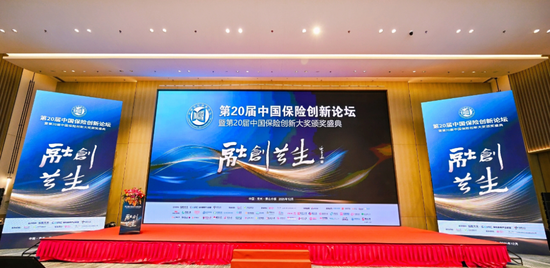
第20届中国保险创新论坛暨第20届中国保险创新大奖颁奖盛典在常州隆重举行
Xin Lang Cai Jing· 2025-12-19 09:03
Core Viewpoint - The 20th China Insurance Innovation Forum, themed "Co-creation and Symbiosis," aims to address challenges and innovations in the insurance industry amidst an aging society, new regulatory policies, and the explosion of AI technology [1][3][41]. Group 1: Forum Overview - The China Insurance Innovation Forum, initiated in 2006, has evolved into an annual event that combines various forums focused on insurance product innovation, culture, and health care [3][43]. - The forum serves as a platform for discussing the insurance industry's challenges and innovations at a critical juncture, particularly as the 14th Five-Year Plan concludes and the 15th begins [3][43]. Group 2: Key Speakers and Insights - Notable speakers included former Vice Chairman of the China Insurance Regulatory Commission Wei Yingning, who emphasized the need for deeper integration, more vibrant innovation, and improved ecological systems within the industry [5][46]. - Liu Canfang, Chairman of Jiangsu Jiuzhou Investment Group, expressed a desire for collaboration in the integration of insurance and health care industries to contribute to high-quality development [8][48]. - Zhang Yingbin, the forum chairman, highlighted that future winners in the insurance sector will be those who understand customers, manage risks effectively, and integrate ecosystems [10][50]. Group 3: Research and Reports - He Zhiguang, Executive Chairman of the Insurance Health and Care Industry Alliance, released the "2025 Annual Research Report on China's Insurance Health and Care Industry," noting that insurance is becoming an effective tool for national development strategies [14][54]. - Chen Pojian, Chairman of Ruihua Health Insurance, discussed the opportunities and challenges posed by an aging society and called for more precise regulatory guidance for specialized health insurance companies [16][56]. Group 4: Industry Trends and Innovations - The forum addressed the digital transformation of life insurance marketing, emphasizing the need for a customer-centric service system and the integration of technology for precise marketing and efficient operations [27][67]. - Discussions included the impact of new accounting standards on insurance companies' revenue and profit measurement, necessitating timely adjustments in business strategies [22][62]. Group 5: Awards and Recognition - The 20th China Insurance Innovation Awards ceremony recognized outstanding contributions in brand building and product development within the insurance sector [40][80]. - The awards serve as a review of the industry's progress and commitment to high-quality transformation over the past year [40][80].


新华保险涨2.02%,成交额5.90亿元,主力资金净流入3150.04万元
Xin Lang Cai Jing· 2025-12-19 02:43
Core Viewpoint - Xinhua Insurance has shown significant stock performance with a year-to-date increase of 52.74%, reflecting strong market interest and financial growth [1][2]. Financial Performance - For the period from January to September 2025, Xinhua Insurance achieved a revenue of 137.25 billion yuan, representing a year-on-year growth of 28.33% [2]. - The net profit attributable to shareholders for the same period was 32.86 billion yuan, marking a substantial increase of 58.88% year-on-year [2]. Stock Market Activity - As of December 19, Xinhua Insurance's stock price was 71.85 yuan per share, with a market capitalization of 224.14 billion yuan [1]. - The stock has seen a recent trading volume of 5.90 billion yuan, with a turnover rate of 0.40% [1]. - The stock has experienced a 6.73% increase over the last five trading days and an 11.00% increase over the last 20 days [1]. Shareholder Information - As of September 30, 2025, the number of shareholders for Xinhua Insurance was 81,900, an increase of 34.15% from the previous period [2]. - The average number of circulating shares per shareholder was 25,555, which decreased by 25.55% compared to the previous period [2]. Dividend Distribution - Since its A-share listing, Xinhua Insurance has distributed a total of 38.03 billion yuan in dividends, with 16.00 billion yuan distributed over the last three years [3]. Institutional Holdings - As of September 30, 2025, Hong Kong Central Clearing Limited was the seventh-largest circulating shareholder, holding 36.45 million shares, a decrease of 24.06 million shares from the previous period [3]. - Huatai-PB CSI 300 ETF ranked as the tenth-largest circulating shareholder with 14.31 million shares, down by 589,300 shares from the previous period [3].
保险股价值重估 资产负债两端持续优化
Zhong Guo Zheng Quan Bao· 2025-12-19 01:44
Core Viewpoint - The insurance sector is experiencing a valuation recovery, driven by policy support and increasing consumer demand for health and wealth protection, with major companies like China Pacific Insurance, New China Life, and China Life seeing significant stock price increases, and China Ping An reaching a four-year high [1][2]. Policy Support - The strong rebound in the insurance sector is initiated by policy support, specifically the recent adjustment of risk factors for insurance companies' investment in stocks, which reduces capital occupation and enhances solvency ratios [2]. - The policy encourages insurance funds to invest in a stable and long-term manner, with a focus on holding positions for over three years, which is seen as a timely boost for the market [2]. - If insurance capital reallocates to equity assets, it could potentially unlock 550 billion to 600 billion yuan in long-term funds by 2026 [2]. Consumer Demand Shift - A report by Accenture indicates a structural shift in consumer focus towards health and wealth, with health concern rising from 78% in 2021 to 87% in 2025, and wealth concern increasing from 47% to 61% [4]. - This shift translates into a rigid demand for insurance products, with a notable preference for protection-oriented products such as dividend insurance, health insurance, and million medical insurance [4]. - Companies like China Ping An and China Pacific Insurance are adapting to these changes, with significant growth in their health insurance segments and overall profitability [4][5]. Valuation Recovery Logic - The insurance sector is expected to enter a golden development period, with investment logic shifting from "valuation repair of existing business" to "growth capability valuation premium," highlighting the advantages of leading companies [7]. - By 2026, the total assets of the insurance industry are projected to exceed 45 trillion yuan, with equity investment scale reaching 6 trillion yuan, making it a significant source of long-term capital in the A-share market [7]. - China Ping An is anticipated to lead the market due to its comprehensive industry chain layout, product innovation, and technological empowerment, with target prices being raised by multiple institutions [7].

保险板块12月18日涨0.58%,新华保险领涨,主力资金净流入6.04亿元
Zheng Xing Xing Ye Ri Bao· 2025-12-18 09:09
以上内容为证券之星据公开信息整理,由AI算法生成(网信算备310104345710301240019号),不构成投资建议。 证券之星消息,12月18日保险板块较上一交易日上涨0.58%,新华保险领涨。当日上证指数报收于 3876.37,上涨0.16%。深证成指报收于13053.98,下跌1.29%。保险板块个股涨跌见下表: 从资金流向上来看,当日保险板块主力资金净流入6.04亿元,游资资金净流出1.72亿元,散户资金净流 出4.31亿元。保险板块个股资金流向见下表: ...

保险行业2026年度投资策略:慢牛新周期,保险如何估值?
Changjiang Securities· 2025-12-18 08:28
Investment Rating - The report maintains a "Positive" investment rating for the insurance sector [11]. Core Insights - In the short term, investment yield is the dominant factor for valuation, while asset allocation ratio is the decisive factor for investment yield. In the medium to long term, the spread between the asset and liability sides of insurance is expected to improve due to policy and market changes, with sufficient long-term space in the industry leading to continuous improvement in ROE [3][9]. - Recommended stocks include China Life, New China Life, Ping An, and China Pacific Insurance as quality targets [3][9]. Summary by Sections 2025 Review - The insurance sector's performance was generally flat compared to the market, with the CSI 300 index rising by 15% and the Yangtze Insurance Index increasing by 14.5%, underperforming the market by 0.6 percentage points. Individual stocks like Ping An, New China Life, and China Pacific outperformed the market [6][23]. - The liability side is undergoing a transformation towards dividends, with new policy growth slightly slowing but value rates improving, driving new business value growth. The asset side performed well due to strong equity market performance, contributing to good total investment returns [6][23]. Investment Yield Analysis - The primary determinant of insurance companies' investment yield is asset allocation. As of Q3 2025, listed insurance companies had total investment assets exceeding 20 trillion yuan, indicating that investment yield is mainly influenced by asset allocation rather than significant and sustained alpha generation [6][39]. - Even in an extremely low-interest-rate environment, yields can remain above 2%, demonstrating that the risk of spread loss for listed insurance companies is minimal [6][39]. Pricing of the Insurance Sector - Over the past decade, expected investment yield has been the anchor for insurance industry valuation. The short-term valuation is primarily influenced by yield expectations, as the liability cost rate fluctuates less in the short term [7][71]. - The report emphasizes that the asset side, particularly equity assets, has a stronger influence on investment yield than the liability side, which has limited impact due to its long-term nature [7][71]. Future Demand and Market Dynamics - The report anticipates that insurance demand will remain high in 2026, driven by a significant amount of fixed deposits and wealth management products maturing. The comparative advantage of insurance products in terms of yield is expected to attract funds from fixed deposits without requiring an increase in risk appetite [8][84]. - The industry landscape is expected to continue improving, with leading listed insurance companies benefiting more from this trend [8][84].

湖州监管分局同意新华保险德清县新市镇营销服务部变更营业场所
Jin Tou Wang· 2025-12-18 03:46
一、同意新华人寿保险股份有限公司德清县新市镇营销服务部的营业场所变更为:浙江省湖州市德清县 新市镇富兴路124、126、128、130、132、134、136号。 二、新华人寿保险股份有限公司应按照有关规定及时办理变更及许可证换领事宜。 2025年12月15日,国家金融监督管理总局湖州监管分局发布批复称,《关于变更新华人寿保险股份有限 公司德清县新市镇营销服务部营业场所的请示》(新保浙字〔2025〕69号)收悉。经审核,现批复如下: ...