PSBC(601658)

Search documents
上市银行“十四五回望”之资负结构与息差变迁
CMS· 2025-09-28 15:09
Investment Rating - The report maintains a recommendation for the banking industry [3] Core Insights - The report provides a comprehensive analysis of the asset-liability structure and interest margin changes of 42 A-share listed banks during the "14th Five-Year Plan" period, highlighting a shift towards corporate loans on the asset side and a stronger retail focus on the liability side [12][14] - The asset-liability structure indicates a significant increase in the proportion of corporate loans, rising from 57.02% to 63.22% from the end of 2020 to mid-2025, while the proportion of demand deposits decreased from 41.94% to 30% [12][14] - The report notes a decline in both asset yield and interest margin, with the yield on interest-earning assets dropping from 4.43% to 3.32% and the net interest margin decreasing from 2.23% to 1.53% during the same period [14][15] Summary by Sections Overall Asset-Liability Structure and Interest Margin Changes - The asset-liability structure shows an increase in loan-to-earning asset ratio from 54.19% to 56.49%, with corporate loans making up a larger share of total loans [14][15] - The average yield on interest-earning assets decreased significantly, with the loan yield falling from 5.34% to 3.82% [15] - The net interest margin for listed banks remains higher than that of commercial banks, despite a decline [14][15] Changes in Each Banking Sector's Asset-Liability Structure and Interest Margin - City commercial banks experienced a more significant increase in the proportion of corporate loans, with their interest margin narrowing less compared to other banks [18] - The report highlights that the proportion of deposits in interest-bearing liabilities for state-owned banks decreased, while it increased for rural commercial banks [18] - The decline in interest-bearing liabilities' cost rate was most pronounced in city commercial banks, leading to a smaller reduction in their interest margin [18]






邮惠万家结束独立运营 邮储银行吸收合并求协同效应
2 1 Shi Ji Jing Ji Bao Dao· 2025-09-28 12:01
Core Viewpoint - China Postal Savings Bank (Postal Bank) announced the absorption and merger of its wholly-owned subsidiary, Postal Huinong Bank, which will lead to the cancellation of the latter's independent legal status and the transfer of all its business, assets, and obligations to Postal Bank [2][8] Group 1: Merger Details - The merger will not affect the rights and obligations of Postal Huinong Bank's customers, and all existing contracts will remain valid [2][8] - Postal Huinong Bank's financial statements have been fully consolidated into Postal Bank's reports, indicating no substantial impact on Postal Bank's financial status or operational results [2][8][9] Group 2: Strategic Rationale - The merger aims to integrate Postal Huinong Bank's online operational experience into Postal Bank's broader development strategy, enhancing its online business capabilities [5][13] - The consolidation is expected to optimize resource allocation, inject new momentum into Postal Bank's development, and reduce management costs [13] Group 3: Industry Context - The merger reflects a broader trend in the banking industry towards digital transformation and the integration of direct banks into larger banking operations, as many banks have begun to merge or close their direct banking services [10][11] - The independent value of direct banks has diminished due to challenges such as product homogeneity and high customer acquisition costs, leading to a shift towards integrated banking services [11][12] Group 4: Performance Metrics - Since its establishment, Postal Huinong Bank has achieved significant growth, with total assets reaching 12 billion yuan and deposits growing at an annual rate of 120% [8]


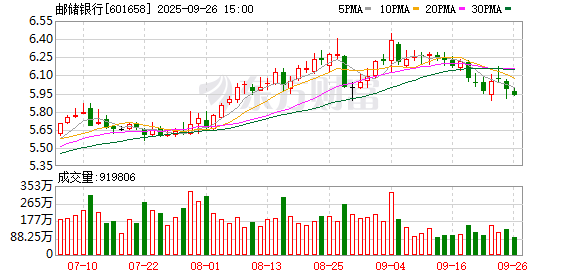
金融服务“不断档” 邮储银行迅速启动甘肃陇西抗震救灾工作
Xin Hua Wang· 2025-09-28 09:43
Core Viewpoint - Postal Savings Bank of China (PSBC) has swiftly activated its emergency response mechanism following a 5.6 magnitude earthquake in Longxi County, Dingxi City, Gansu Province, to ensure financial services and support for disaster relief efforts [1][2]. Group 1: Emergency Response - PSBC promptly organized a special task force to manage disaster relief efforts, coordinating with its Dingxi City branch and Longxi County sub-branch [1]. - The Dingxi City branch held an emergency meeting to assess the disaster situation and ensure financial emergency services were in place [1]. - The Longxi County sub-branch opened "green" windows and channels to guarantee uninterrupted financial services, facilitating cash withdrawals, transfers, and other urgent financial needs [1]. Group 2: Community Support - The Longxi County sub-branch's customer managers conducted assessments of credit clients' disaster situations, providing immediate financial assistance based on their needs [2]. - PSBC's staff actively engaged in community outreach, collaborating with local government and rescue teams to understand the extent of damage and provide necessary support to affected residents [2]. - The bank plans to continue its financial service support in the disaster area, coordinating efforts across provincial, municipal, and county levels to assist clients in resuming normal operations and support post-disaster reconstruction [2].
工行、农行、中行、建行、交行、邮储银行同日公告
Jing Ji Wang· 2025-09-28 09:19
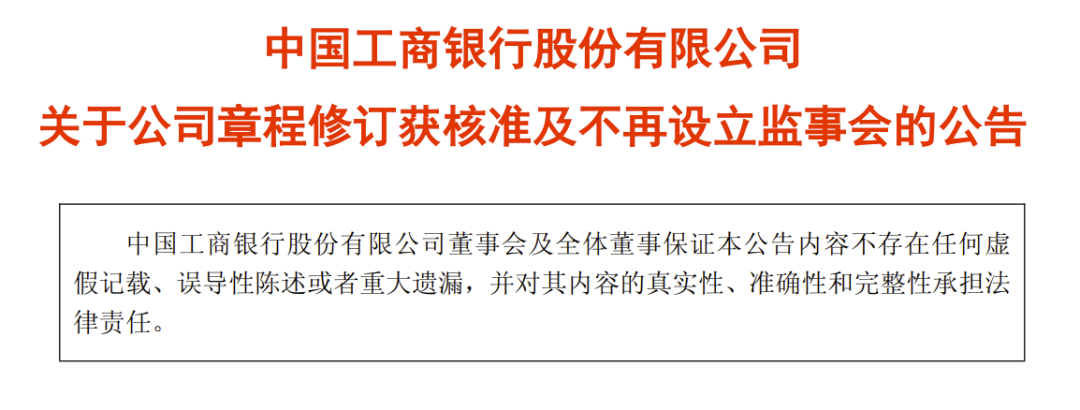
Core Viewpoint - Major banks in China have decided to abolish their supervisory boards, transferring their functions to the audit committee of the board of directors, which is seen as a move to optimize corporate governance and reduce costs [7][8][9] Group 1: Decision and Implementation - The five major banks have announced that they will no longer establish supervisory boards, a decision approved at the 2024 annual general meeting held on June 27, 2025, and recently sanctioned by the National Financial Regulatory Administration [7] - Postal Savings Bank has also proposed to abolish its supervisory board and related committees, with the audit committee of the board taking over these responsibilities, pending shareholder approval [8] Group 2: Rationale and Expert Opinions - Industry experts suggest that the functions of supervisory boards overlap with those of the audit committee, particularly the independent directors, making the abolition a strategic choice to enhance governance flexibility and efficiency [8] - The decision to eliminate supervisory boards is viewed as a way to maintain effective corporate governance while lowering governance costs, according to a leading expert from the Shanghai Financial and Development Laboratory [8] Group 3: Regulatory Framework - The revised Company Law allows companies to establish audit committees within the board of directors to perform the functions of supervisory boards, a change that has been recognized by the National Financial Regulatory Administration [9] - Besides the six major banks, several other national joint-stock banks and local commercial banks have also announced the abolition of their supervisory boards [9]

邮储银行黑龙江省分行首笔财政贴息个人消费贷款成功落地
Jing Ji Guan Cha Wang· 2025-09-28 09:12
Group 1 - Postal Savings Bank of China in Heilongjiang Province actively responds to and implements the national personal consumption loan interest subsidy policy, conducting thorough pre-policy coordination and post-implementation efforts [1] - The bank has organized various marketing activities such as "Tuo Hai Action," "Respecting Teachers and Benefiting Teachers," and "Rural Postal Vehicle Purchase Season" to promote the interest subsidy policy and facilitate loan processing [1] - As of September 25, the bank has issued 409 personal consumption loans under the interest subsidy policy, totaling 67.2617 million yuan, including 122 comprehensive loans amounting to 9.287 million yuan and 287 auto loans amounting to 57.9747 million yuan [1] Group 2 - The first personal consumption loan under the interest subsidy policy was successfully issued on September 1, with a notable case being a 220,000 yuan auto loan for a resident in Harbin, who expressed satisfaction with the financial support [1] - The customer manager at the bank provided comprehensive service, including policy explanation, loan processing, and post-loan support, which received high praise from the customer [2]
打通金融服务“最后一公里”:邮储银行巴中市丽阳广场支行上门为特殊客户激活社保卡
Xin Lang Cai Jing· 2025-09-28 04:07
Group 1 - Postal Savings Bank of China (PSBC) provided home service to activate a social security card for a client with mobility issues, demonstrating their commitment to customer-centric service [1][3] - The initiative was prompted by a family member's request for assistance, highlighting the bank's responsiveness to unique customer needs [1][3] - The service team faced logistical challenges, including difficult terrain, to ensure the client received necessary financial services [1][3] Group 2 - The successful activation of the social security card not only resolved a financial issue but also showcased the bank's deep concern for the needs of special groups [3] - The bank's actions reflect its commitment to making financial services accessible, transcending geographical barriers to provide warmth and support to clients [3]

多方合力筑牢金融安全防线 精准宣传守护群众“钱袋子”
Xin Lang Cai Jing· 2025-09-28 04:00
Core Viewpoint - The article highlights the efforts of the Postal Savings Bank of China in Liangshan Prefecture to enhance public awareness and prevention capabilities against counterfeit currency and fraud through grassroots promotional activities since September 2025 [1][5]. Group 1: Anti-Counterfeit Currency Campaign - The People's Bank of China, along with the Postal Savings Bank of Liangshan, has organized anti-counterfeit currency themed promotions in various locations, including Xichang City and Nantan Market, using methods such as distributing brochures and live demonstrations to educate the public on identifying counterfeit bills [1][5]. - The campaign emphasizes the importance of recognizing counterfeit currency through techniques such as "turning, touching, and light penetration," and stresses the legal implications of refusing to accept RMB [1][5]. Group 2: Anti-Fraud Initiatives - The Postal Savings Bank's branch in Dechang has collaborated with the local tobacco monopoly to conduct targeted anti-fraud campaigns aimed at farmers, focusing on prevalent scams like telecom fraud and illegal fundraising [5][7]. - Over 200 anti-fraud materials were distributed during these sessions, and farmers were guided on installing and using the "National Anti-Fraud Center APP," reinforcing the message of skepticism and verification before financial transactions [5][7]. Group 3: Community Engagement and Future Plans - The collaboration between financial institutions and local government showcases a strong commitment to safeguarding the financial security of various community groups, including merchants and farmers [3][7]. - The Postal Savings Bank plans to continue its partnership with various stakeholders to provide customized educational programs for key demographics, ensuring that anti-fraud knowledge is accessible and practical for everyday use [7].

揭阳金融监管分局核准张雁翔邮政储蓄银行揭阳市分行副行长任职资格
Jin Tou Wang· 2025-09-28 03:33
Core Viewpoint - The approval of Zhang Yanxiang's appointment as the Vice President of the Jiejang Branch of China Postal Savings Bank has been officially granted by the Jiejang Financial Regulatory Bureau, emphasizing the importance of compliance with financial regulations and ongoing education in economic and financial laws [1] Group 1 - The Jiejang Financial Regulatory Bureau has approved Zhang Yanxiang's qualification for the position of Vice President at the Jiejang Branch of China Postal Savings Bank [1] - The approved personnel must adhere to the regulations set by the Financial Regulatory Bureau and are required to assume their position within three months from the date of the approval [1] - The bank is responsible for ensuring that the approved personnel continuously learn and understand relevant economic and financial laws, maintain a strong risk compliance awareness, and fulfill their job responsibilities diligently [1]
深度|“债市投资难度加大”!多家银行策略生变:重波段,增对冲
券商中国· 2025-09-28 02:21
Core Viewpoint - The bond market is experiencing intense fluctuations, contrasting with the anticipated bull market in 2024, leading to increased investment difficulties for banks in 2023 [1][5]. Group 1: Market Conditions - The bond market is currently in a wide-ranging oscillation phase, with the ten-year government bond yield fluctuating within a range close to 40 basis points [1]. - After the implementation of the new tax regulations on government bond interest, the trading volume of existing bonds has seen a decline [3]. - In August, the total trading volume of bonds by major banks decreased to approximately 14.8 trillion yuan, down from 16.49 trillion yuan in July [4]. Group 2: Bank Performance and Strategies - In the first half of 2023, over 80% of A-share listed banks reported positive growth in investment income, with an average increase exceeding 45% [2][8]. - The investment income of listed banks in the first quarter and the first half of 2023 grew by 26.1% and 23.6% year-on-year, respectively [7]. - Major banks, including Construction Bank and Postal Savings Bank, saw significant increases in their investment income, with Construction Bank achieving a 200% year-on-year growth [10]. Group 3: Challenges and Adjustments - The investment difficulties have led to a negative growth in non-interest income for many banks, attributed to the divergence in market interest rates [6]. - The limited floating profit space and the need for strategic adjustments in bond trading have become apparent, with banks shifting focus to more flexible and diversified asset-liability strategies [13][14]. - The second quarter showed signs of reduced "debt selling" efforts, indicating a tightening of floating profit inventory among banks [11].


服务“提速”更“升温”
Bei Jing Ri Bao Ke Hu Duan· 2025-09-28 00:51
Core Viewpoint - Postal Savings Bank of China Beijing Branch integrates its development into the overall economic and social development of the capital, focusing on providing modern financial services that meet diverse citizen needs and contribute to high-quality economic growth [1][18]. Group 1: Financial Service Efficiency - The bank enhances financial service efficiency through technology empowerment and process innovation, ensuring that financial resources reach the demand side more accurately and quickly [4][5]. - A closed-loop model of "online application + on-site service" has been introduced for small loans, allowing customers to apply via mobile banking and receive tailored solutions from dedicated loan officers [4][5]. - The bank collaborates with government departments and industry associations to address financing challenges faced by small and micro enterprises, optimizing product services and improving efficiency [4][5]. Group 2: Elderly Financial Services - The bank focuses on elderly financial services, addressing the needs of an aging population by providing stable asset allocation solutions and enhancing service quality [6][7]. - A diverse range of pension financial products is offered, including wealth management and insurance products, to meet the core demands of elderly clients for stability and safety [7]. - The bank has established an "age-friendly" service system, ensuring that elderly clients can access financial services without barriers, including physical accommodations and user-friendly technology [8][9]. Group 3: Community Engagement and Support - The bank has initiated the "Golden Sunshine Station" project to create a community space for elderly clients, offering health lectures and social activities to foster community engagement [9][10]. - The "Golden Sunshine Club" organizes events to promote health and social interaction among elderly clients, enhancing their quality of life [10]. - The bank prioritizes the financial safety of elderly clients by providing education on fraud prevention and ensuring secure banking practices [10][13]. Group 4: Social Responsibility and Emergency Response - In response to extreme weather events, the bank has implemented measures to support affected businesses and residents, including loan extensions and simplified approval processes [15][16]. - The bank has launched initiatives to assist residents in rebuilding after disasters, offering favorable loan terms and material subsidies to ease financial burdens [17]. - The bank's commitment to social responsibility is evident in its proactive approach to community support during crises, reinforcing its role as a reliable financial partner [15][16].