
波段交易

Search documents
债市日报:1月7日
Xin Hua Cai Jing· 2026-01-07 07:45
Core Viewpoint - The bond market is under pressure with a weak trend due to limited expectations for monetary easing at the beginning of the year and concerns over supply pressure [1] Market Performance - Government bond futures closed lower across the board, with the 30-year main contract down 0.44% at 110.47, the 10-year main contract down 0.08% at 107.61, the 5-year main contract down 0.06% at 105.5, and the 2-year main contract down 0.03% at 102.332 [2] - The interbank major interest rate bond yields briefly fell before rising again, with the 10-year policy bank bond yield up 1.15 basis points to 1.99%, and the 10-year government bond yield up 0.75 basis points to 1.891% [2] Monetary Policy and Market Outlook - The People's Bank of China emphasized maintaining a moderately loose monetary policy, enhancing financial services for high-quality economic development, and ensuring a stable financial environment [7][8] - Institutions expect the bond market to remain volatile, with a preference for carry trades and small positions in adjusted wave trading strategies [9] Funding Conditions - The central bank conducted a 286 billion yuan 7-day reverse repurchase operation at a rate of 1.40%, resulting in a net withdrawal of 500.2 billion yuan for the day [6] - Shibor rates showed mixed performance, with the overnight rate rising by 0.3 basis points to 1.266% and the 7-day rate rising by 2.8 basis points to 1.45% [6] Institutional Insights - Western fixed income analysts believe that new public fund sales regulations will positively impact the bond market, potentially improving institutional sentiment [9] - Expectations for monetary policy in 2026 include possible rate cuts and reserve requirement ratio reductions, with a focus on maintaining liquidity and supporting economic growth [9]
五大私募,研判2026债市
3 6 Ke· 2025-12-29 04:22
Core Viewpoint - The bond market in 2026 is expected to experience low volatility and maintain a low interest rate environment, with a focus on short to medium-term bonds and convertible bonds as key investment opportunities [2][12][16]. Group 1: 2026 Bond Market Outlook - The bond market is anticipated to face challenges with long-term interest rates experiencing wide fluctuations and potential upward pressure due to supply and inflation expectations [2][12]. - The monetary policy is expected to remain moderately accommodative, supporting short-term assets and maintaining a stable performance in the bond market [2][12][16]. - The overall sentiment towards the bond market is optimistic, with expectations of a recovery in market conditions and structural opportunities arising from a low interest rate environment [3][15]. Group 2: Investment Opportunities - Key investment opportunities identified for 2026 include high-grade short to medium-term credit bonds, structural opportunities in the convertible bond market, and Chinese dim sum bonds [2][16][20]. - Convertible bonds are highlighted as particularly attractive due to expected supply shortages and their dual nature of providing both bond-like security and equity-like upside [17][20]. - The focus on "fixed income plus" products is emphasized as a cost-effective strategy, leveraging ETFs to enhance returns while managing volatility [20][21]. Group 3: 2025 Market Review - The bond market in 2025 deviated from initial expectations, with higher volatility and a more pronounced differentiation in credit bonds than anticipated [7][8]. - Factors such as central bank policies, trade tensions, and unexpected regulatory changes contributed to the market's performance, leading to a reassessment of risk and return dynamics [4][8][12]. - The overall trajectory of the bond market in 2025 was characterized by a "slow bull" pattern, with fluctuations driven by external economic conditions and policy responses [7][12].


2026年橡胶期货年度行情展望:全球进入去库周期,全年关注波段机会
Guo Tai Jun An Qi Huo· 2025-12-18 12:59
1. Report Industry Investment Rating No relevant content provided. 2. Core Viewpoints of the Report - From an annual perspective, the center of rubber prices is expected to rise slightly, but both upward and downward spaces are limited. Throughout the year, the supply - demand rhythm is mismatched, making it difficult to form a trend - based market. Instead, attention can be paid to volatility opportunities [2][3]. - In the destocking cycle with decreasing supply and increasing demand, the market has a consistent long - term bullish sentiment. Buying at low prices has a relatively high cost - performance ratio. The annual high can refer to seasonal highs, such as around September when weather disturbances are frequent and at the end of the year when automobile sales peak [4]. 3. Summary According to the Table of Contents 3.1 2025 Tianjiao (Natural Rubber) Trend Review 3.1.1 Review of Futures and Spot Price Trends - From the beginning of the year to March 3, rubber prices fluctuated. RU weighted closing price fell 0.23%, while NR rose 3.08%. The initial decline was due to increased supply expectations and weak downstream demand, and the subsequent rebound was caused by weather disturbances and increased tire enterprise stocking [5]. - From March 3 to May 30, rubber experienced three rounds of decline. RU fell 23.91%, and NR fell 23.98%. The decline was mainly due to factors such as increased supply, high tire inventory, trade conflicts, and anti - dumping investigations [6]. - From May 30 to September 8, rubber prices generally rose. RU rose 19.63%, and NR rose 11.48%. The rise was due to delayed supply increase, improved downstream demand, and macro - level positive factors [7]. - From September 8 to November 21, rubber prices fluctuated downward. RU fell 5.71%, and NR fell 5.80%. The decline was caused by increased negative factors on the demand side and expected supply increase [8]. 3.1.2 Review of Volatility Performance - By November 21, 2025, rubber experienced four high - volatility periods. The first was from January to mid - February, mainly due to supply - demand tightness and market sentiment. The second was in early April, caused by the US's unexpected tariff increase. The third was from late May to mid - June, affected by a series of events. The fourth was from late July to mid - August, dominated by macro factors [13][14][15]. 3.2 2026 Tianjiao Operation Logic: Finding Low - Buying Opportunities in the Destocking Cycle, with Annual Highs Possibly Referring to Seasonal Patterns 3.2.1 Supply Side - Thai rubber inventory is expected to remain low at the beginning of 2026. Due to weather factors and delayed order fulfillment, the low - inventory situation may persist until the second quarter of 2026. Three major Thai rubber processing companies plan to expand their production capacity by 620,000 tons in 2026, with a capacity growth rate of about 13.35% [19][20]. - Yunnan's concentrated latex processing plants are expanding, and the diversion of concentrated latex is becoming more common. In 2025 - 2026, Yunnan's Xishuangbanna plans to add 50,000 tons of concentrated latex processing capacity [21]. - In 2025, there was rainfall interference in major rubber - producing areas, but most areas saw an increase in production due to factors such as increased tapping willingness. Currently, raw material supply has certain elasticity, but in the context of aging rubber trees in Southeast Asia, prices need to remain high to maintain production [24][37][38]. 3.2.2 Demand Side - The peak of China's tire industry's overseas capacity expansion is over. The first - round overseas layout was mainly in Southeast Asian rubber - producing countries, the second - round was closer to the core consumer markets in Europe and the United States, and the third - round may target emerging markets in Africa and South America. After 2026, the planned tire production is expected to decrease, and the impact on domestic tire exports is expected to weaken [43][45][51]. - The EU's anti - dumping and counter -vailing investigations on Chinese tires are the biggest risk for exports. If the anti - dumping measures are implemented, it will have a negative impact on China's tire exports in 2026, especially on passenger car tires. However, Chinese tire companies have experience in dealing with such situations and may take measures such as diversifying exports and re - exporting [55][63][64]. - Domestic tire demand is highly dependent on policies. In 2025, policies such as trade - in subsidies significantly boosted automobile sales, but the decline in subsidies may lead to a slowdown in demand. Although there are factors such as demand pre - release, the overall policy direction of boosting consumption remains unchanged, and domestic demand is expected to gradually stabilize [73][80][82]. 3.2.3 Futures - Spot Price Difference - The absolute valuation of RU is at a relatively low position in the historical range, which may attract long - term downstream buyers [84]. - The spread between light - colored and dark - colored rubber has been narrowing, but this trend may slow down in 2026. Dark - colored rubber may be affected by factors such as African tariff adjustments, potential inclusion in alternative delivery products, and EUDR delays. Light - colored rubber may be supported by factors such as reduced raw material imports from Laos and local concentrated latex expansion in Yunnan [88][89]. 3.3 Conclusion and Investment Outlook - In 2026, the upward and downward spaces of rubber prices are limited. The supply - demand rhythm is mismatched throughout the year, making it difficult to form a trend - based market. Instead, attention can be paid to volatility opportunities [94][96]. - In the first half of the year, raw material prices are difficult to decline, but demand is under pressure. In the second half of the year, supply will increase, and there will be more positive factors on the demand side [96]. - The investment outlook is to focus on band trading. At the beginning of the year, beware of the risk of EU anti - dumping measures and hold positions cautiously. Buying at low prices has a relatively high cost - performance ratio, and the annual high can refer to seasonal highs [4][97].
12.9:周二午后,A股还有上行
Sou Hu Cai Jing· 2025-12-09 05:07
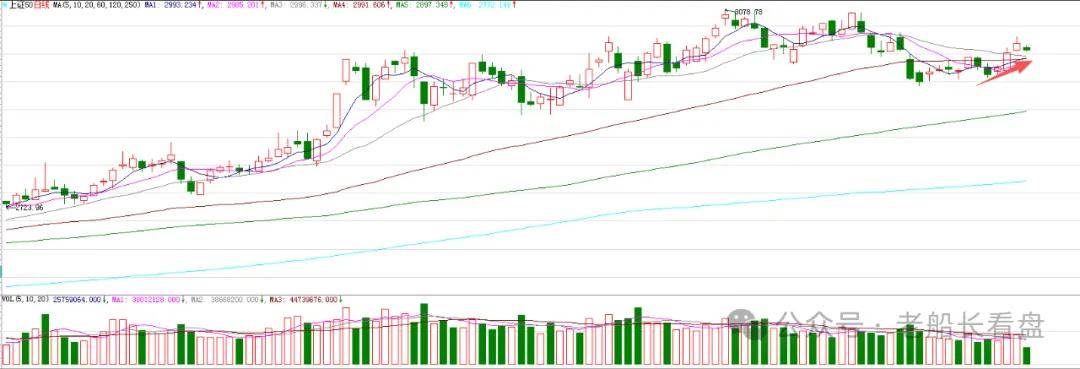
Market Index Analysis - The A-share market showed mixed performance with major indices fluctuating, and most stocks declining, indicating low market sentiment [1] - The Shanghai Composite Index and the ChiNext Index are highlighted for analysis, with a focus on their performance and potential trends [2] Shanghai Composite Index - The Shanghai Composite Index has risen for two consecutive trading days, currently positioned above four long-term moving averages, suggesting it is at a critical point [5] - The index's recent performance indicates potential for further upward movement, but confirmation of the end of the mid-term adjustment requires continued upward momentum [5] - The hourly chart shows that the index has reached the ninth effective cycle, indicating a potential turning point, with signs of stabilization observed [5] ChiNext Index - The ChiNext Index experienced an increase, opening higher with expanded trading volume, although the upward momentum was insufficient [8] - A significant bullish candlestick has positioned the index above four short-term moving averages, signaling a positive outlook [8] - Continued upward movement and increased trading volume today could confirm the beginning of a wave of upward trends [8] Summary - The current A-share market environment suggests that as long as there is no significant decline in the major indices, structural opportunities for individual stocks will continue to emerge [8] - Successful trend trading is essential for achieving stable wave profits, with a focus on analyzing candlesticks, patterns, and central structures to accurately gauge price fluctuations [8] - Breakouts followed by pullbacks present opportunities for phased entry into positions, emphasizing the importance of careful trading strategies in the A-share market [8]
超长债承接不足如何缓解?
Western Securities· 2025-12-07 13:08
1. Report Industry Investment Rating No relevant content provided. 2. Core Viewpoints of the Report - Year - end allocation of ultra - long bonds is weak. The problem of insufficient ultra - long bond underwriting has intensified this week, driving up the 30Y Treasury bond rate. Although some institutions have increased their allocation, funds still have weak buying power due to redemption pressure [1][10]. - Banks' willingness to allocate ultra - long bonds in the secondary market has decreased due to primary underwriting and IRRBB assessment pressure. Insurance funds continue the trend of stock - bond rebalancing and focus on local bonds and long - term credit bonds [1]. - There are feasible paths to solve the ultra - long bond underwriting problem, such as controlling the duration of new government bonds, central bank's purchase of ultra - long Treasury bonds, guiding non - bank funds to participate in subscriptions, and reducing the pressure on banks' book interest rate risk indicators [2]. - The central bank maintains a supportive attitude. The carry trade strategy is dominant, and investors can moderately participate in band trading after adjustments [2]. 3. Summary by Relevant Catalogs 3.1 Review Summary and Bond Market Outlook - This week, the bond market sentiment was weak, with the 10Y and 30Y Treasury bond rates rising by 1bp and 7bp respectively. The market showed different trends on different days due to factors such as PMI data, stock market performance, and policy expectations [9]. - The allocation of ultra - long bonds at the year - end is weak. Banks' willingness to allocate ultra - long bonds in the secondary market has decreased, and insurance funds focus on local bonds and long - term credit bonds [1][10]. - There are feasible paths to solve the ultra - long bond underwriting problem, and the central bank's supportive attitude remains unchanged. The carry trade strategy is dominant, and investors can moderately participate in band trading [2][24]. 3.2 Bond Market Review 3.2.1 Funding Situation - The central bank conducted a net withdrawal, and funding rates declined. From December 1st to 5th, the central bank's net withdrawal was 8480 billion yuan. R007 and DR007 decreased by 3bp compared to November 28th [28][29]. 3.2.2 Secondary Market Trends - Yields first rose and then fell this week. Except for the 1Y and 3Y Treasury bonds, the rates of other key - term Treasury bonds increased. The 10Y and 30Y Treasury bond yields rose by 1bp and 7bp respectively compared to November 28th [37]. 3.2.3 Bond Market Sentiment - The 30Y - 10Y Treasury bond term spread widened significantly, and the duration of bond funds decreased. The 30Y Treasury bond weekly turnover rate continued to rise to 35%, and the inter - bank leverage ratio rose to 107.3% [43]. 3.2.4 Bond Supply - This week, the net financing of interest - rate bonds decreased compared to last week. The net financing of Treasury bonds increased, while that of local government bonds and policy - bank bonds decreased. The net financing of inter - bank certificates of deposit turned positive, and the average issuance rate increased [57][63]. 3.3 Economic Data - Since December, movie consumption has been significantly stronger than seasonal trends, and the freight rate index has weakened. Real estate, consumption, export, and industrial production show different trends [69]. - Infrastructure and price high - frequency data show that the mill operation rate has rebounded, inventory indicators have continued to decline marginally, and most price indicators have increased [72]. 3.4 Overseas Bond Market - US consumer confidence slightly increased in December, and the expectation of the Fed's interest rate cut has risen. US bonds, Japanese and Korean bond markets declined. The 10Y - 2Y US Treasury bond spread widened, and the Sino - US 10Y Treasury bond spread widened [77][78][81]. 3.5 Major Asset Classes - The Shanghai - Shenzhen 300 index rebounded this week. Shanghai copper rose significantly, and the Nanhua live - hog index weakened. The performance of major asset classes is: Shanghai copper > rebar > Shanghai - Shenzhen 300 > Shanghai gold > CSI 1000 > Chinese - funded US dollar bonds > crude oil > Chinese bonds > convertible bonds > US dollar > live hogs [82]. 3.6 Policy Review - On December 5th, relevant policies such as the adjustment of insurance company risk factors, the management method of financial leasing company business, and articles on capital market development were released. On December 4th, an article on the construction of the monetary policy system was published. On December 1st, the list of infrastructure REITs project industries was released [86][90][91].
锚定基本面 聚焦波段交易
Qi Huo Ri Bao Wang· 2025-11-25 05:55
Core Insights - The article highlights the trading strategies and market analysis approach of Kuang Bolin, who emphasizes fundamental analysis in commodity trading, particularly in the context of the 2025 national futures trading competition [1][2]. Group 1: Trading Philosophy - Kuang Bolin's core trading philosophy is that commodity prices are ultimately determined by supply and demand [2]. - He believes that successful swing trading requires a deep understanding of the commodity's fundamentals, which serves as the basis for trading decisions [2]. Group 2: Market Analysis - In 2025, commodity prices were significantly influenced by policy expectations and market sentiment, especially in the black series commodities, which faced downward pressure due to high production capacity and weak downstream demand from real estate and infrastructure [1]. - Kuang Bolin noted that sectors with high industry concentration and existing losses, such as soda ash and glass, were particularly sensitive to policy expectations, leading to multiple instances of price rebounds despite an overall downward trend [1]. Group 3: Specific Commodity Insights - During the competition, Kuang Bolin profited mainly from trading egg futures, soda ash, and the shipping index [2]. - For egg futures, he analyzed key fundamental factors such as chicken stock levels, feed prices, and the behavior of farmers regarding restocking and culling [2]. - In 2025, the chicken stock levels remained historically high, and with relatively low feed prices, the supply-demand balance for eggs was skewed towards oversupply, leading him to short the egg futures contracts [2]. Group 4: Risk Management - Kuang Bolin maintains a cautious approach to position management, prioritizing capital safety and avoiding heavy single-sided trades [3]. - He adjusts his position size based on market conditions and risk tolerance, reducing exposure in uncertain markets and increasing it when clear trading opportunities arise, but without over-leveraging [3]. - His stop-loss strategy is triggered by significant changes in fundamentals, alterations in trading logic, chaotic market movements, or sudden emotional market shifts [3]. Group 5: Integration of Analysis - Kuang Bolin believes that combining the rational logic of fundamentals with the market heat of sentiment is essential for accurately capturing market dynamics and making informed trading decisions [3].
“债市投资难度加大”,多家银行策略生变:重波段,增对冲
Zheng Quan Shi Bao· 2025-09-28 07:09
Group 1: Market Overview - The bond market is currently experiencing intense long-short battles, contrasting with the anticipated one-sided bull market in 2024, as the market has been in a wide fluctuation pattern this year [1][2] - The ten-year government bond yield has fluctuated within a range close to 40 basis points, indicating increased difficulty in bond investments for banks [1][5] - The introduction of a new tax on bond interest income has led to a decrease in the attractiveness of certain bonds, prompting a potential reallocation of assets towards equities and other assets [2][5] Group 2: Trading Volume and Performance - In August, the total trading volume of bonds by major banks decreased to approximately 14.8 trillion yuan, down from 16.49 trillion yuan in July and 15.51 trillion yuan in June [3] - The trading volume for city commercial banks and rural commercial banks also saw a decline, totaling about 15.288 trillion yuan in August, compared to 17.24 trillion yuan in July [3] Group 3: Investment Returns and Contributions - Investment returns have been a significant support for bank revenues in the first half of the year, with 35 out of 42 A-share listed banks reporting positive year-on-year growth in investment income, averaging over 45% [7][8] - Notably, the China Construction Bank achieved an investment income of 279.12 billion yuan in the first half of the year, marking a year-on-year increase of over 200% [7] - The Postal Savings Bank was the only major bank with investment income exceeding 10% of its total revenue, achieving a growth of 64.64% [8] Group 4: Strategic Adjustments - Banks are adjusting their investment strategies in response to the current volatile market, focusing on flexible asset-liability management and increasing the use of derivatives for hedging [12][13] - The strategy includes maintaining a reasonable proportion of bond investments while actively capturing market fluctuations to enhance revenue [13] - Some banks have reported a shift towards wave trading and increased use of fixed-income-like assets to navigate the challenging market conditions [12][13]

深度|“债市投资难度加大”!多家银行策略生变:重波段,增对冲
券商中国· 2025-09-28 02:21
Core Viewpoint - The bond market is experiencing intense fluctuations, contrasting with the anticipated bull market in 2024, leading to increased investment difficulties for banks in 2023 [1][5]. Group 1: Market Conditions - The bond market is currently in a wide-ranging oscillation phase, with the ten-year government bond yield fluctuating within a range close to 40 basis points [1]. - After the implementation of the new tax regulations on government bond interest, the trading volume of existing bonds has seen a decline [3]. - In August, the total trading volume of bonds by major banks decreased to approximately 14.8 trillion yuan, down from 16.49 trillion yuan in July [4]. Group 2: Bank Performance and Strategies - In the first half of 2023, over 80% of A-share listed banks reported positive growth in investment income, with an average increase exceeding 45% [2][8]. - The investment income of listed banks in the first quarter and the first half of 2023 grew by 26.1% and 23.6% year-on-year, respectively [7]. - Major banks, including Construction Bank and Postal Savings Bank, saw significant increases in their investment income, with Construction Bank achieving a 200% year-on-year growth [10]. Group 3: Challenges and Adjustments - The investment difficulties have led to a negative growth in non-interest income for many banks, attributed to the divergence in market interest rates [6]. - The limited floating profit space and the need for strategic adjustments in bond trading have become apparent, with banks shifting focus to more flexible and diversified asset-liability strategies [13][14]. - The second quarter showed signs of reduced "debt selling" efforts, indicating a tightening of floating profit inventory among banks [11].




汇百川基金倪伟:债市投资以寻找超跌反弹机会为主
Zhong Zheng Wang· 2025-09-16 13:36
Group 1 - The core viewpoint is that the bond market is currently focused on finding opportunities for rebound in oversold conditions, with a recommendation to engage in medium to long-term interest rate bonds for trading [1] - The recent bond market has experienced a noticeable upward fluctuation in yields, with a steepening yield curve, primarily due to stronger stock market performance and rising inflation or economic recovery expectations [1][1] - The investment strategy for credit bonds suggests focusing on high-grade, medium to short-term credit bonds to achieve stable interest income, as the yield fluctuations have been relatively small [1] Group 2 - The bond market is expected to remain in a weak oscillating pattern in the future, with upward pressure on bond prices due to sustained stock market performance and higher market risk appetite [1]
十年国债ETF(511260)盘中飘红,短端利率低位支撑配置窗口
Sou Hu Cai Jing· 2025-08-19 02:26
Core Viewpoint - The probability of a significant decline in the bond market is low, supported by the political bureau meeting's emphasis on maintaining ample liquidity, indicating the central bank's intention to stabilize short-term liquidity [1] Group 1: Market Analysis - The 10-year government bond yield is expected to fluctuate between 1.65% and 1.75% in the short term, with a recommendation to gradually increase allocation above 1.72%, prioritizing credit bonds over interest rate bonds and convertible bonds [1] - Historical experience suggests that bond market yield turning points typically precede stock market peaks, indicating that the current bullish sentiment in the stock market may not signal a sustained decline in the bond market [1] Group 2: ETF Performance - The 10-year government bond ETF (511260) has consistently achieved new net asset value highs since its inception, with a one-year return of 5.88%, a three-year return of 16.13%, a five-year return of 22.41%, and a cumulative return of 36.68% since establishment [1] - The ETF has maintained positive returns every year since its inception, making it a potential asset allocation tool that can navigate through market cycles [1] Group 3: Unique Advantages of the ETF - The ETF offers T+0 trading convenience, allowing investors to buy and sell on the same day, which is beneficial in a high-volatility environment [2] - The ETF has low trading fees, enhancing capital efficiency for investors [2] - The ETF provides transparency in holdings, with daily publication of the PCF list [3] - Investors can use the ETF for pledge repurchase, allowing them to access funds for other investment opportunities while retaining the ability to redeem the ETF later [3]