CSCEC(601668)

Search documents
【行业深度】洞察2025:中国建筑节能行业竞争格局及市场份额(附竞争梯队、企业竞争力分析等)
Qian Zhan Wang· 2025-07-17 07:15
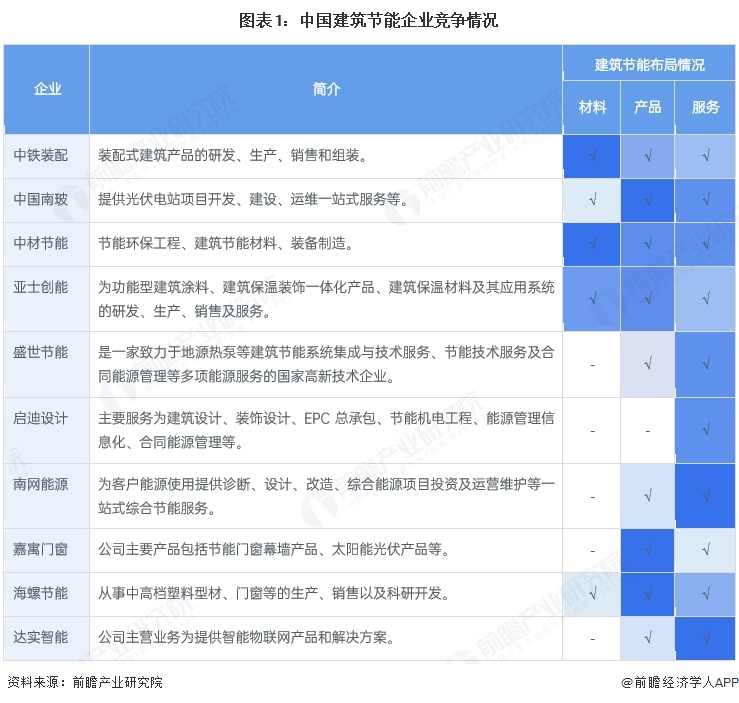
Core Insights - The article discusses the competitive landscape and strategic positioning of companies in China's building energy efficiency market, highlighting key players and their market strategies [1][4][7]. Company Layout - Major companies in the building energy efficiency sector include China National Materials Group (中材节能), Beixin Building Materials (北新建材), Qidi Design (启迪设计), and others, with a focus on providing comprehensive energy-saving solutions [1]. - Companies like Nanwang Energy (南网能源) and Dashi Intelligent (达实智能) are particularly focused on offering integrated energy-saving services to the construction industry [1]. Regional Distribution - The building energy efficiency companies are primarily concentrated in Eastern and Southeastern coastal regions of China, with Jiangsu and Guangdong having the highest representation [3]. Competitive Hierarchy - The industry is divided into three tiers: - The first tier includes leaders like Beixin Building Materials, Nan Glass Group (南玻集团), and Huajian Group (华建集团), which have strong market influence and comprehensive capabilities [4]. - The second tier consists of companies like Nanwang Energy and Qidi Design, which focus on niche areas but have notable professional advantages [4]. - The third tier includes smaller firms like China National Materials Group and Hengshang Energy, which are still in the process of market expansion and technology accumulation [4]. Strategic Cluster Analysis - The competitive landscape is analyzed through a four-quadrant model based on revenue and gross margin, identifying Beixin Building Materials as a leader due to its innovative technologies and sustainable practices [7]. - Other notable companies in the prominent category include Nan Glass Group and Huajian Group, which maintain their leadership through resource management and energy efficiency measures [7]. Market Segmentation - In specific segments, companies like China Nanbo (中国南玻) and Fuyao Glass (福耀玻璃) lead in low-energy glass, while the window industry remains fragmented with no clear leader [11]. Competitive Dynamics - The analysis using Porter's Five Forces model indicates that supplier bargaining power is moderate, while buyer power is slightly weaker due to cost sensitivity and regulatory requirements [13]. - The threat of new entrants is low due to high technical barriers and regulatory requirements, although some cross-industry players are entering through partnerships [13]. - The intensity of rivalry is high, driven by technological advancements and price competition, alongside a surge of capital into the sector [13].






中央城市工作会议召开,重视建筑行业投资新机遇
Changjiang Securities· 2025-07-16 09:14
Investment Rating - The report maintains a "Positive" investment rating for the construction and engineering industry [10]. Core Insights - The Central Urban Work Conference held on July 14-15 emphasized the transition of urbanization in China from a rapid growth phase to a stable development phase, focusing on quality urban renewal rather than large-scale expansion [8][13]. - The conference outlined key tasks for urban development, including optimizing modern urban systems, building innovative cities, and enhancing livability and sustainability [13]. - The report highlights the historical significance of this conference, marking a shift towards high-quality urban development, contrasting with previous meetings that focused on rapid expansion and basic infrastructure [13]. - Future funding for urban renewal is expected to come from various sources, including special central budget investments and local government bonds, indicating potential for increased capital inflow into the sector [13]. - The report suggests that the construction sector should focus on leading companies and the entire design-construction-operation chain, particularly in urban renewal projects [13]. Summary by Sections Event Description - The Central Urban Work Conference took place in Beijing, with significant speeches from top leaders, indicating a strategic shift in urbanization policy [8][9]. Market Performance - The report includes a market performance comparison over the past 12 months, showing a relative performance of the construction and engineering sector against the CSI 300 index [11]. Related Research - The report references several related studies that discuss urban renewal and the construction industry's response to current challenges [12].




存量更新时代,转型更加聚焦
HTSC· 2025-07-16 06:36
Investment Rating - The report maintains an "Overweight" rating for the construction and engineering sector [6] - The report maintains an "Overweight" rating for the building materials sector [6] Core Insights - The transition from rapid urbanization to stable development in China indicates a shift from large-scale expansion to stock quality improvement, impacting the construction and building materials industry [1][2] - Urban renewal is identified as a key focus area, with significant investment opportunities in infrastructure upgrades, consumer-oriented building materials, and smart urban operations [2][5] - The integration of urban planning and design is emphasized, requiring higher capabilities from architectural firms to enhance urban living experiences [3] - Infrastructure investment is expected to concentrate on modern urban systems and urban renewal, with a focus on key projects that align with national priorities [4] Summary by Sections Urban Renewal and Infrastructure - Urban renewal is highlighted as a critical strategy, with an estimated investment demand of approximately 4 trillion yuan for the renovation of nearly 600,000 kilometers of urban pipelines over the next five years [2] - The demand for consumer-oriented infrastructure and renovation of existing properties is projected to increase the market share of building materials like coatings [2] Architectural Design and Planning - The report notes a shift towards integrated urban planning that enhances the capacity to support population and economic growth, which will elevate the requirements for architectural design firms [3] Infrastructure Investment Focus - The report outlines a strategic focus on infrastructure that supports modern urban systems, including transportation, energy, and water management, which are expected to maintain a favorable investment climate [4] Investment Recommendations - The report recommends focusing on companies that are well-positioned to benefit from urban renewal and infrastructure projects, including leading firms in construction design and smart urban operations [5] - Specific companies highlighted for investment include China State Construction, Tunnel Corporation, and Three Trees, with target prices and buy ratings provided [8][9]


中国建筑二局申请一种模块化预应力折线形屋架制造方法及折线型屋架专利,模块化设计
Jin Rong Jie· 2025-07-16 06:30
Group 1 - The core viewpoint of the news is that China State Construction Engineering Corporation Second Engineering Bureau has applied for a patent for a modular prestressed folded beam manufacturing method, indicating innovation in construction technology [1] - The patent application was published under CN120307460A, with the application date being May 2025 [1] - The manufacturing method includes several steps such as prefabricating components, connecting them, and applying prestress using high-strength steel strands, showcasing a modular design and reliable connection nodes [1] Group 2 - China State Construction Engineering Corporation Second Engineering Bureau was established in 1980 and is primarily engaged in civil engineering and construction [2] - The company has a registered capital of 1 billion RMB and has invested in 146 enterprises, participated in 5000 bidding projects, and holds 5000 patent records [2] - Additionally, the company possesses 3539 administrative licenses, reflecting its extensive operational scope and regulatory compliance [2]
6月基建延续托底,下半年财政发力或将推动基建投资高增
Tianfeng Securities· 2025-07-16 02:48
Investment Rating - Industry rating is maintained at "Outperform the Market" [5] Core Viewpoints - Infrastructure investment continues to support economic stability, with expectations for increased fiscal efforts in the second half of the year to drive high growth in infrastructure investment [1] - Real estate development investment has shown a decline of 11.2% year-on-year for the first half of 2025, while narrow and broad infrastructure investments have increased by 4.6% and 8.9% respectively [1] - Cement demand is stabilizing, with a production decline of 4.3% year-on-year in the first half of 2025, but a potential price rebound is anticipated due to local price increases in certain regions [3] - Flat glass production has decreased by 4.3% year-on-year in the first half of 2025, with market demand remaining stable despite seasonal impacts [4] Summary by Sections Infrastructure Investment - In June, infrastructure investment growth slowed, attributed to reduced fiscal spending and weather disruptions, but remains crucial for economic stability [1] - The issuance of long-term special government bonds is expected to further support infrastructure investment [1] Real Estate Market - Real estate sales area decreased by 3.5% year-on-year in the first half of 2025, with new construction area down by 20% [2] - Construction area saw a decline of 9.1% year-on-year, while completion area dropped by 14.8% [2] Cement Industry - Cement production in the first half of 2025 was 815 million tons, down 4.3% year-on-year, with a slight recovery in shipment rates observed in July [3] - The average cement price as of July 11 was 352 RMB per ton, down 43 RMB year-on-year [3] Glass Industry - Flat glass production in the first half of 2025 was 48.497 million weight cases, a decrease of 4.3% year-on-year, with inventory levels remaining high [4] - The price of 5mm float glass was 63.2 RMB per weight case as of July 10, showing a slight increase [4]


2025年中国碳纤维布行业制造工艺、产业链、发展现状、代表品牌及未来前景:下游应用领域持续扩展,碳纤维布市场规模超70亿元[图]
Chan Ye Xin Xi Wang· 2025-07-16 01:12
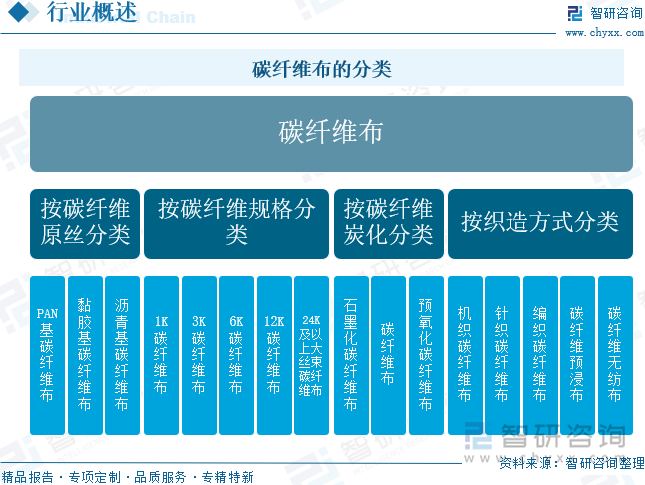
Core Insights - The carbon fiber cloth industry in China is experiencing rapid growth, with a projected market size of approximately 7.713 billion yuan by 2024, driven by its applications in various sectors such as construction, aerospace, automotive, and high-end sports equipment [1][13]. Industry Overview - Carbon fiber cloth, known for its high strength, lightweight, and excellent corrosion resistance, is a key material for industry transformation, particularly in building reinforcement [1][4]. - The manufacturing of carbon fiber cloth involves processes such as weaving and molding, with machine weaving allowing for mass production [6]. - The industry supply chain includes raw materials (carbon fiber, resin, etc.), manufacturing, and downstream applications across multiple sectors [8][10]. Market Dynamics - The demand for high-performance carbon fiber is increasing, with the carbon fiber market in China expected to grow from 4.76 billion yuan in 2018 to 17.14 billion yuan by 2024, reflecting a compound annual growth rate (CAGR) of 23.8% [10]. - The aerospace sector is a significant downstream market for carbon fiber cloth, with applications in aircraft and spacecraft manufacturing, enhancing performance and fuel efficiency [11]. Competitive Landscape - The Chinese carbon fiber cloth industry features both international giants (e.g., TORAY, Hexcel) and domestic leaders (e.g., Guangwei Composite Materials, Hengshen) competing in the market [16][17]. - Companies are focusing on technological innovation and quality management to maintain competitive advantages in a rapidly evolving market [16]. Key Companies - Guangwei Composite Materials is a leading player with a comprehensive product range and a projected revenue of 1.452 billion yuan in 2024 [18]. - Zhongfu Shenying specializes in high-performance carbon fiber and is expected to generate 1.543 billion yuan in revenue in 2024 [20]. Industry Trends - The industry is moving towards lightweight materials to meet the demands of sectors like automotive and aerospace, with innovations in weaving techniques and ultra-thin carbon fiber cloth [22]. - Future developments include high-performance products exceeding T1000 grade, enhanced by nanomaterial modifications for improved durability [23]. - Multi-functional carbon fiber cloths are being developed, integrating features like conductivity and fire resistance, expanding market opportunities [25]. - Cost reduction strategies are being implemented through production process optimizations and recycling technologies, facilitating broader applications in civilian sectors [26].





中证锐联基本面50指数下跌0.52%,前十大权重包含工商银行等
Jin Rong Jie· 2025-07-15 11:54
金融界7月15日消息,A股三大指数收盘涨跌不一,中证锐联基本面50指数 (基本面50,000925)下跌 0.52%,报4757.34点,成交额767.34亿元。 从中证锐联基本面50指数持仓的市场板块来看,上海证券交易所占比84.76%、深圳证券交易所占比 15.24%。 从中证锐联基本面50指数持仓样本的行业来看,金融占比48.44%、工业占比20.04%、可选消费占比 7.91%、能源占比6.01%、主要消费占比4.41%、房地产占比3.60%、信息技术占比2.79%、通信服务占比 2.70%、原材料占比2.41%、公用事业占比1.70%。 资料显示,指数样本每年调整一次,样本调整实施时间为每年6月的第二个星期五的下一交易日。权重 因子随样本定期调整而调整,调整时间与指数样本定期调整实施时间相同。在下一个定期调整日前,权 重因子一般固定不变。特殊情况下将对指数进行临时调整。当样本退市时,将其从指数样本中剔除。样 本公司发生收购、合并、分拆等情形的处理,参照计算与维护细则处理。 跟踪基本面50的公募基金包括:嘉实基本面50指数(LOF)A、嘉实基本面50指数(LOF)C、嘉实中证锐联 基本面50ETF。 ...


2025年中国建筑节能行业应用现状 公共建筑主导节能市场【组图】
Qian Zhan Wang· 2025-07-14 04:12
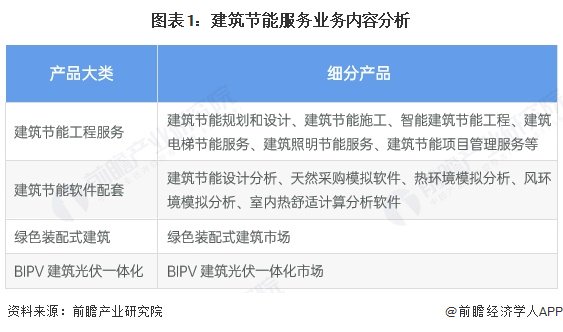
Core Insights - The article discusses the growth and trends in the building energy efficiency sector in China, highlighting the increasing energy-efficient building area and the investment trends in public, residential, and industrial buildings [1][4]. Group 1: Building Energy Efficiency Services - Building energy efficiency services include engineering services, software support, green prefabricated buildings, and BIPV (Building Integrated Photovoltaics) [1][2]. - Different building types require tailored energy-saving solutions, with public buildings focusing on systemic energy savings and residential buildings emphasizing comfort and cost balance [1]. Group 2: Energy-Efficient Building Area - As of 2020, China's energy-efficient building area reached 238.0 billion square meters, growing to 303.0 billion square meters by 2022, and further expanding to 326.8 billion square meters by 2023 [4]. - Projections indicate that by 2024, the energy-efficient building area could reach 360 billion square meters [4]. Group 3: Public Building Energy Consumption - Public buildings account for over 20% of national energy consumption, with hospitals, schools, and office buildings making up 38% of total building energy consumption [5]. - Investment in office buildings and commercial properties has been declining since 2018, with a projected investment of 416 billion yuan in 2024, reflecting a 9% year-on-year decrease [5]. Group 4: Residential Building Energy Efficiency - Residential energy efficiency focuses on insulation, natural lighting, renewable energy integration, and smart control technologies [8]. - The investment in residential buildings peaked and then declined, with 2023 investment dropping to 838.2 billion yuan and a further decrease to 760.4 billion yuan projected for 2024, a 10.5% decline [8]. Group 5: Industrial Building Energy Efficiency - Distributed photovoltaics are a significant application in industrial building energy efficiency, with cumulative installed capacity exceeding 100 million kilowatts by 2023 and projected to surpass 200 million kilowatts by 2024 [10][12].
当前为何要重视“类银行”建筑央企投资机会?
GOLDEN SUN SECURITIES· 2025-07-13 15:09
Investment Rating - The report maintains a "Buy" rating for major construction enterprises, indicating a significant demand for rebound in the construction sector compared to the banking sector [8][31]. Core Insights - The domestic construction industry has evolved into a model with financial attributes similar to banks, where construction companies provide financing to clients, thus resembling "shadow banks" [1][14]. - The construction sector has lagged behind the banking sector in terms of stock performance, with a 76.1% increase in the banking sector since December 20, 2023, compared to only 13.5% in the construction sector, indicating a clear need for catch-up [2][15]. - The dividend yield of leading construction state-owned enterprises (SOEs) is attractive, with several companies offering yields above 3% in A-shares and over 5% in H-shares, making them appealing for long-term investors [3][22]. Summary by Sections Section 1: Industry Overview - The construction industry operates with a business model that has financial characteristics, requiring companies to provide upfront financing to secure projects, which has led to a high-leverage, asset-heavy structure [1][14]. - Major assets of construction firms include cash and receivables, which are akin to financial assets, while liabilities are primarily operational debts, similar to bank deposits [1][14]. Section 2: Market Performance - The construction sector's performance has been hindered by concerns over slow repayments from government and real estate developers, but these pessimistic expectations are now largely priced in, suggesting a potential for valuation recovery [2][15]. - The report highlights that the construction sector's valuation has been stabilizing, indicating a potential for upward movement as market conditions improve [2][15]. Section 3: Dividend Appeal - A-shares of leading construction SOEs show a competitive dividend yield, with companies like China Railway, China Railway Construction, and China Communications Construction yielding over 3% [3][22]. - In H-shares, the average dividend yield for construction SOEs matches that of leading banks, reflecting strong investment attractiveness [3][22]. Section 4: Policy Impact - Upcoming policies are expected to accelerate infrastructure project implementation, which, combined with a low base effect, may lead to improved revenue and performance for construction SOEs in the latter half of the year [4][26]. - The report anticipates that fiscal policies will be enhanced, with an increase in the issuance of special bonds and other financing tools to support infrastructure development [4][26]. Section 5: Competitive Landscape - The construction industry is witnessing a push against "involution" or excessive competition, with major players advocating for a focus on sustainable growth and innovation rather than aggressive expansion [7][30]. - This initiative aims to improve project profitability and stabilize the competitive environment within the industry [7][30]. Section 6: Investment Recommendations - The report recommends investing in undervalued construction SOEs, highlighting companies such as China Energy Engineering, China State Construction, and China Communications Construction as key targets for investment [8][31]. - The expected recovery in earnings and the attractive dividend yields position these companies favorably for long-term investment [8][31].




【中国建筑(601668.SH)】中国建筑表观股息率相较银行已有竞争力——动态跟踪报告(孙伟风/吴钰洁)
光大证券研究· 2025-07-13 13:47
Core Viewpoint - The article emphasizes the continued appeal of high dividend strategies in a low interest rate environment, particularly highlighting the construction sector's leading companies as attractive investment opportunities due to their favorable dividend yields and valuation metrics [3]. Group 1: High Dividend Strategy - In a low interest rate environment projected to continue into 2025, high dividend strategies remain effective, especially within the banking sector, where dividend yields have decreased as stock prices rise [3]. - As of July 11, 2025, the average dividend yield of the six major banks fell below 4%, with an average yield of 3.88%, down 69 basis points from the end of 2024 [3]. - China State Construction's dividend yield is approximately 4.47%, surpassing the average yield of the six major banks, indicating a strong value proposition [3]. Group 2: Construction Payment Priority - The priority of construction payment claims over mortgage rights and other debts has been reinforced, with regulations ensuring that contractors can demand payment from clients within a reasonable timeframe [4]. - The Ministry of Finance has committed to issuing 800 billion yuan in new special bonds annually for five consecutive years to support debt resolution efforts, with ongoing initiatives in 2025 to enhance payment clearance [4][5]. - Local governments, such as Hunan and Yunnan, have increased their budgets to address outstanding payments to enterprises, indicating a proactive approach to resolving payment issues [4][5]. Group 3: China State Construction's Dividend Policy - China State Construction has maintained a stable dividend policy, with an average payout ratio of 20.3% and a cumulative payout ratio of 20.1%, leading among the eight major state-owned construction enterprises [6]. - The company plans to keep its dividend per share stable in 2025, providing predictable returns for shareholders [6]. - The company's major shareholder, China State Construction Group, holds a 57.7% stake, benefiting from the stable cash flow generated by the company's dividends to support its strategic initiatives and debt obligations [6].