
CHINA TELECOM(601728)

Search documents
常熟“智”启新程:一座江南小城的AI雄心与算力突围
Yang Zi Wan Bao Wang· 2025-11-21 06:31
Core Insights - The city of Changshu is undergoing a "computing power revolution," transitioning from traditional manufacturing to becoming a hub for artificial intelligence (AI) [1] - A strategic cooperation agreement was signed between the Changshu Municipal Government and China Telecom Jiangsu to establish the first county-level "AI+" innovation application demonstration zone in the Yangtze River Delta [1] Group 1: Computing Power as a Driver - The launch of the "Xiangran" computing power scheduling platform in Changshu will unify local computing resources and connect to the national "East Data West Computing" project, enabling efficient cross-regional collaboration [2] - Changshu has a solid industrial foundation with 33 industrial categories and an industrial output value of 490 billion yuan, providing a fertile ground for AI applications [2] - The city has over 200 AI-related companies generating more than 40 billion yuan in revenue, with 33 large models and 71 typical application scenarios developed [2] Group 2: AI Empowering Various Industries - AI is deeply integrated into the manufacturing chain in Changshu, enhancing efficiency and reducing costs across various sectors, including cross-border e-commerce and intelligent logistics [3] - AI applications are also being utilized in urban governance, such as agricultural subsidy calculators and intelligent water network risk warnings, improving public services [3] - China Telecom's "Xingchen" large model will support industry-specific model training and applications, fostering new AI-driven business models in Changshu [3] Group 3: Collaborative Ecosystem Development - The establishment of three key platforms, including the "Six Degrees Space" AI cluster and joint laboratories, aims to create a collaborative environment for AI enterprises [4] - The "Zhiyun STORE" initiative will allow businesses to select AI capability modules, facilitating rapid development of intelligent systems [4] - The focus is on building a self-evolving and diverse AI industrial ecosystem, avoiding isolated projects and promoting integrated development [5] Group 4: Changshu's Unique Advantages - Changshu's success in establishing a city-level AI brand is attributed to its robust manufacturing base, proactive government initiatives, and strong collaboration with central enterprises [6] - The city is actively inviting major tech companies to invest, with China Telecom providing a stable digital foundation for this transformation [6] - Changshu aims to become a model for intelligent transformation in county-level economies, showcasing its ambition and future potential [6]

通信行业专题研究:2025Q3财报总结:业绩持续增长,看好算力景气度持续及端侧AI放量
East Money Securities· 2025-11-21 05:58
Investment Rating - The report maintains a "Strong Buy" rating for the communication industry, indicating a positive outlook for investment opportunities [3]. Core Insights - The communication industry has shown continuous growth in performance, with a revenue increase of 3.3% year-on-year for the first three quarters of 2025, reaching a total of 19,549 billion yuan, while net profit grew by 9.0% to 1,943 billion yuan [9][24]. - The North American AI sector has led the growth, with a staggering revenue increase of 265% since the beginning of 2025, highlighting significant investment potential in this area [15][23]. - The report suggests focusing on specific segments such as optical modules, copper interconnects, switches, temperature control and power supply equipment, IDC rooms, edge AI, and robotics for potential investment opportunities [2]. Summary by Sections 1. Industry Performance - The communication industry index has increased by 58.8% since the beginning of 2025, outperforming major indices like the Shanghai Composite [15][21]. - The North American AI sector has shown exceptional growth, with revenue and net profit increasing by 71.5% and 129.5% respectively in Q3 2025 [45]. 2. Overall Performance - The overall revenue growth has slowed, but profit growth remains strong, with Q3 2025 showing a 3.7% increase in revenue and a 12.1% increase in net profit [24][29]. - The communication sector's overall gross margin and net margin have shown slight improvements, indicating better profitability management [29][32]. 3. Key Segment Analysis 3.1. Operators - The operators' segment has shown stable growth, with a revenue increase of 0.6% and a net profit increase of 4.3% in the first three quarters of 2025 [39][40]. 3.2. 5G - The 5G segment has maintained low growth rates, but there was a marginal improvement in Q3 2025, with revenue growth of 3.6% [41]. 3.3. North American AI - The North American AI segment has experienced rapid growth, with significant increases in both revenue and net profit, driven by high demand and product optimization [45][47]. 3.4. Domestic Computing Power - The domestic computing power segment has shown overall positive performance, with a revenue increase of 22.0% and net profit growth of 38.8% in the first three quarters of 2025 [48].


打造产业创新“策源地” 搭建国际合作“交汇场”
Nan Jing Ri Bao· 2025-11-21 02:20
Core Insights - The 2025 World Intelligent Manufacturing Conference will be held in Nanjing from November 27 to 29, marking its tenth anniversary since its inception in 2016, with a theme of "Digital Intelligence Drives New Quality Leadership" [1][2] - The conference aims to create a high-end, international platform for global intelligent manufacturing exchange and cooperation, showcasing the latest achievements in the field and discussing the integration of technological breakthroughs with industrial transformation [1][2] Group 1: Event Highlights - The conference will feature a main conference, a market-oriented exhibition, and 12 specialized activities, with participation from major companies like Dassault and JD.com, as well as 16 industry ecosystem activities [1][2] - Approximately 2000 attendees are expected, including nearly 200 important guests from domestic and international institutions, such as academicians and industry leaders [2][3] Group 2: Specialized Activities - The main conference will include the appointment ceremony for the new National Intelligent Manufacturing Committee, the release of the 2025 Intelligent Manufacturing Blue Book, and the announcement of the top ten technological advancements in intelligent manufacturing for the year [3][4] - A market-oriented exhibition will cover 55,000 square meters, featuring 452 companies from 18 countries and regions, with a focus on robotics, smart factories, industrial software, and intelligent equipment [4][5] Group 3: International Collaboration - The exhibition will introduce an international invited exhibition area for the first time, showcasing leading intelligent manufacturing technologies and solutions from global companies [5] - A series of specialized activities, including financial roadshows and technology exchanges, will be held to facilitate cooperation and win-win outcomes across the industry chain [5]


筑牢安全底座 承接万卡算力 中国电信内蒙古分公司实现两大技术突破
Zhong Guo Chan Ye Jing Ji Xin Xi Wang· 2025-11-21 00:07
Core Insights - China Telecom Inner Mongolia Branch has made significant breakthroughs in quantum secure transmission and computing power capacity, aligning with the national strategy of "East Data West Computing" [1][2] Group 1: Quantum Secure Transmission - The first nationwide 400G quantum secure OTN line has been successfully launched, connecting data centers in Anhui and Inner Mongolia, marking a key step in the industrial application of quantum communication [2] - The line integrates OTN optical transmission technology with quantum encryption, achieving a product that combines high bandwidth transmission with quantum-level security [2] - The technology features include a super-converged architecture, full-stack domestic production, and cross-domain scheduling capabilities, providing a scalable solution for high-security industries [2] Group 2: Power System Upgrade - China Telecom's Inner Mongolia Information Park has upgraded its power supply capacity to 32MW to meet the urgent demands of national-level computing tasks [3] - The introduction of the integrated power module 3.0 solution has saved 40% of distribution space and reduced installation time to two weeks, significantly enhancing deployment efficiency [3] - The system operates with a link efficiency of 97.8% under the S-ECO model, demonstrating a dual enhancement of power supply capacity and energy efficiency [3] Group 3: Future Outlook - The company plans to continue driving technological innovation and enhancing its layout in core nodes of the "East Data West Computing" strategy, contributing to the construction of a digital Inner Mongolia and the national integrated computing network [4]
中国电信董事长柯瑞文:量子密话密信用户超过600万
Zhong Zheng Wang· 2025-11-20 13:13
Group 1 - China Telecom has integrated quantum technology into its strategic framework, achieving significant breakthroughs such as the world's largest quantum metropolitan network and over 6 million users of quantum secure communication [1] - The company has developed a distributed encryption system that combines Quantum Key Distribution (QKD) and Post-Quantum Cryptography (PQC) [1] - Under national laboratory guidance, China Telecom has established the "Tianyan-287" superconducting quantum computer, which is the most powerful in the country [1] Group 2 - The establishment of the "Central Enterprise Quantum Talent Innovation Space" is a major strategic initiative aimed at promoting quantum technology and industrial development [2] - The initiative focuses on collaborative innovation among state-owned enterprises, aiming to share research tasks, resources, and innovation outcomes [2] - The company plans to accelerate the transformation of research results into practical applications, creating a globally competitive open ecosystem for quantum technology [2] - A new talent mechanism will be implemented to enhance collaboration and establish a high-level quantum talent research zone [2]
2025量子科技和产业大会开幕 国家高新区量子产业协同创新网络正式启动
Zhong Zheng Wang· 2025-11-20 11:48
Group 1 - The 2025 Quantum Technology and Industry Conference opened on November 20 in Hefei, showcasing significant achievements in the field [1] - A national high-tech zone quantum industry collaborative innovation network was officially launched, involving nine high-tech zones to enhance the integration of industry, academia, and research in quantum technology [1] - Quantum communication is a focal point in the global quantum technology competition, with the establishment of a quantum password infrastructure standardization technology alliance to create a controllable standard system [1] Group 2 - Financial support is crucial for the thriving development of the quantum technology industry, with Anhui province actively promoting financial initiatives [2] - The conference featured signing ceremonies for quantum technology financial support projects, including the establishment of the first central enterprise quantum industry venture capital fund by China Telecom [2] - The conference theme was "A Century of Quantum: Intelligence to Ignite the Future," with a record number of 117 participating companies and an unprecedented scale of personnel and exhibitions [2]

科技赋能,护航精彩!惠州电信硬核保障十五运会赛事通信
Nan Fang Du Shi Bao· 2025-11-20 08:25
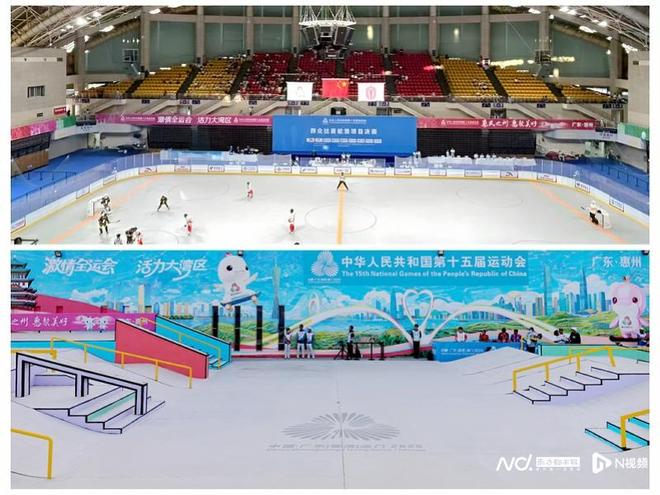
Core Viewpoint - The article highlights the comprehensive communication support provided by China Telecom Huizhou for the 15th National Games, ensuring stable and efficient network services for various sporting events, particularly the skateboarding competition. Group 1: Event Overview - The 15th National Games opened on November 9, with skateboarding competitions held on November 10-11 in Huizhou [1] - Huizhou is a key city in the Guangdong-Hong Kong-Macao Greater Bay Area, hosting multiple events including taekwondo and roller skating [3] Group 2: Communication Infrastructure - China Telecom Huizhou established a professional support team to enhance 5G network coverage and ensure reliable communication for media and event operations [1][3] - Significant investments were made in infrastructure, including the expansion of 5G networks and the installation of new equipment to improve network security and performance [4][6] Group 3: Technological Innovations - The implementation of an all-optical high-speed base achieved ultra-low latency connectivity, ensuring stable data transmission during peak traffic [6] - A dedicated event-specific network was created to physically isolate event data from public internet traffic, enhancing security [6] - Upgraded network management platforms allowed for real-time monitoring and quick recovery from issues, ensuring a seamless communication experience [6] Group 4: On-Site Support and Services - The communication support team was present at key locations, conducting regular inspections and optimizations to maintain network performance [7] - China Telecom Huizhou provided high-speed broadband services at ticket sales points to facilitate easier access for the public, particularly for the elderly [8] Group 5: Community Engagement and Social Responsibility - The company collaborated with local volunteer organizations to offer services such as fraud prevention and broadband testing during the event [10] - Efforts were made to extend support beyond the event, contributing to community welfare and enhancing public engagement [10] Group 6: Future Implications - The experiences and infrastructure developed during the National Games will contribute to the ongoing construction of a smart Huizhou, enhancing digital connectivity for residents [11] - The innovations tested during the event are expected to set a benchmark for future digital applications and urban management [11]


超导量子计算机“天衍-287”建成
Ke Ji Ri Bao· 2025-11-20 01:21
Core Insights - China Telecom Quantum Research Institute announced the completion of the "Tianyan-287" superconducting quantum computer, which features 105 data qubits and 182 coupling qubits, developed in collaboration with Keda Guandun Quantum Technology Co., Ltd [1][2] - The quantum computing system demonstrates "quantum computing superiority," processing specific problems 450 million times faster than the fastest supercomputer currently available, and will be integrated into the "Tianyan" quantum computing cloud platform for global application services [1][2] Group 1 - The construction of "Tianyan-287" showcases breakthroughs in three areas: "national production," "AI empowerment," and "super fusion" technology [2] - The hardware and components used in "Tianyan-287" are entirely domestically produced, with key parts like large-capacity dilution refrigerators and low-temperature components developed by local manufacturers [2] - The team developed an AI-enabled automatic calibration system for superconducting chip parameters, achieving efficient and high-precision calibration and maintenance of the quantum computing system [2] Group 2 - The integration of the superconducting quantum computer with the "Tianyi Cloud" supercomputing platform allows for high-bandwidth super fusion, enabling low-latency interaction between quantum computing and supercomputing resources [2] - The "Tianyan" quantum computing cloud platform was officially launched in November 2023, merging Tianyi Cloud supercomputing capabilities with 176 qubit superconducting quantum computing capabilities [2] - The platform has seen over 37 million visits, serving users across more than 60 countries and regions, with over 2.7 million experimental tasks completed [2] Group 3 - The company aims to provide computational support for more industry users and research institutions, expanding the application boundaries of quantum computing and enhancing China's core competitiveness and influence in the field [3]

空中物流、旅游直播、资源保护......5G-A如何赋能农文旅?
Guan Cha Zhe Wang· 2025-11-19 15:13
Core Insights - Anhui Huangshan Scenic Area has initiated a comprehensive digital transformation, achieving full 5G-A network coverage across core attractions, enhancing network speed by 3 to 5 times, with peak download rates reaching up to 3 Gbps [2] Group 1: Low-altitude Economy - The scenic area has transitioned from a traditional "cableway + manpower" logistics model to a drone-based delivery system, addressing the challenges posed by an aging workforce and insufficient transport capacity [4] - A fixed 3.2 km drone route was established for regular transport, allowing drones to complete round trips in just 17 minutes, effectively transporting 2,268.77 tons of various goods from May 2023 to October 2025 [4] - The drone operations are independent of tourist pathways, ensuring safety and minimizing ecological disruption, thus creating a green transport system [4] Group 2: Tourism Live Streaming - Since launching its first official live streaming channel in 2020, Huangshan Scenic Area has developed a unique tourism IP through "tour guide live streaming," with hundreds of guides broadcasting daily [6] - The 5G-A network enables a stable, high-speed communication system that overcomes signal attenuation issues, providing an immersive and personalized online experience for visitors [6] Group 3: Resource Protection - The scenic area employs a smart fire prevention system powered by the 5G-A network, utilizing AI for real-time monitoring and early warning of forest fires, maintaining a 46-year record without forest fires [7] - This integration of technology and ecological protection exemplifies a successful model for safeguarding the area's authenticity and integrity [7] Group 4: Broader Applications - Beyond Huangshan, the 5G-A network is enhancing other cultural tourism sites, such as Hongcun, where a smart management platform has been established to oversee security, traffic, and visitor flow [9] - In Lingshan Village, digital infrastructure is driving local entrepreneurship, with traditional industries experiencing rapid growth, showcasing the potential of digital technology in rural revitalization [9] - The collaboration between China Telecom Anhui and Huawei highlights the transformative role of 5G-A technology in activating low-altitude economies, reshaping tourism experiences, and protecting natural resources [9]

通信行业 2025 年三季报综述:算力底座全面放量,AI 应用纵深延展
Changjiang Securities· 2025-11-19 11:05
Investment Rating - The report maintains a "Positive" investment rating for the communication industry [12] Core Insights - The communication sector continues to experience high growth in Q3 2025, driven by AI, with a significant expansion in computing power infrastructure and deepening applications [2][10] - The overall revenue for the communication industry (excluding the three major operators) reached CNY 659.77 billion in the first three quarters of 2025, a year-on-year increase of 16.10%, with a net profit of CNY 51.44 billion, up 19.20% [20][24] - In Q3 2025, the sector achieved revenue of CNY 225.41 billion, a 16.41% increase year-on-year, and a net profit of CNY 17.89 billion, reflecting a 26.42% growth [20][24] Summary by Sections Industry Overview - The communication industry shows sustained performance with a continued high level of sector prosperity, driven by strong demand for AI and optical communication [20][29] - The revenue growth for various sub-sectors includes optical devices, which saw a significant increase, and IDC and related equipment, which also experienced substantial growth [29] Computing Power Industry Chain - Operators are seeing a slight recovery in revenue growth, with capital expenditures increasingly directed towards intelligent computing centers [8] - The demand for high-speed interconnects is surging, leading to significant revenue and profit growth in optical modules, while supply constraints are pushing up profit margins [8][29] Big Connectivity Industry Chain - The Internet of Things (IoT) continues to grow, driven by 5G penetration and demand for smart terminals, with stable revenue and profit growth across the industry [9] - The satellite communication sector is also witnessing upward trends in revenue and profit, with accelerated civilian applications of satellite technology [9] Investment Recommendations - The report recommends focusing on key players in various segments, including operators like China Mobile, China Telecom, and China Unicom, as well as companies in optical modules, IDC, and AI applications [10][31]


