PETROCHINA(601857)

Search documents
中国石油自主创新破解开发难题
Jing Ji Ri Bao· 2026-01-26 06:33
Core Viewpoint - China National Petroleum Corporation (CNPC) has achieved a significant milestone with shale oil production exceeding 7 million tons annually, marking a new phase in the large-scale development of continental shale oil, which is crucial for national energy security [1] Group 1: Unconventional Oil and Gas Development - Unconventional oil and gas, including shale oil, tight oil, and coalbed methane, require new technologies for economic extraction, as traditional methods are insufficient [2] - China ranks third globally in shale oil recoverable reserves and has substantial shale gas resources, with the potential for significant contributions to energy security as conventional oil fields mature [2][3] - Since the 14th Five-Year Plan, CNPC has intensified exploration and development of unconventional oil and gas, achieving remarkable production growth and reshaping the energy security landscape [2] Group 2: Production Achievements - In the Ordos Basin, the Changqing Oilfield has reached a cumulative shale oil production of over 20 million tons, becoming the first continental shale oil field to achieve large-scale development [3] - The Jimsar National Shale Oil Demonstration Zone in the Junggar Basin has produced over 1.7 million tons of shale oil annually, addressing major challenges in resource identification and development [3] - The Sichuan Basin's shale gas production has surpassed 16 billion cubic meters annually, accounting for 60% of China's total shale gas output, with cumulative production exceeding 100 billion cubic meters [4] Group 3: Technological Innovations - CNPC has developed a unique theoretical framework for coalbed methane and implemented innovative technologies that enhance production efficiency, overcoming challenges posed by geological conditions [5][6] - The Changqing Oilfield has shifted from traditional North American extraction methods to a self-developed multi-stage fracturing technique that aligns better with local geological conditions, resulting in increased production [5][6] Group 4: Green Development Initiatives - CNPC has reached a "clean replacement" phase in its renewable energy business, integrating green low-carbon principles into unconventional oil and gas development [9] - The company has implemented land-saving and clean production practices, significantly reducing water usage and carbon emissions through advanced drilling technologies [9][10] - The establishment of solar power systems across oilfields has contributed to substantial reductions in carbon emissions, supporting the transition to a low-carbon energy structure [10][11] Group 5: Future Goals and Strategies - CNPC aims to enhance its management and operational efficiency through innovation and digital transformation, focusing on the sustainable development of unconventional resources [11] - The company is committed to achieving significant production capabilities in coalbed methane by 2035, which is expected to play a vital role in ensuring national energy security [4][11]

吃碳吐油 变“废”为宝 探访我国首个实现年注碳百万吨的油田
Zhong Yang Ji Wei Guo Jia Jian Wei Wang Zhan· 2026-01-26 06:13
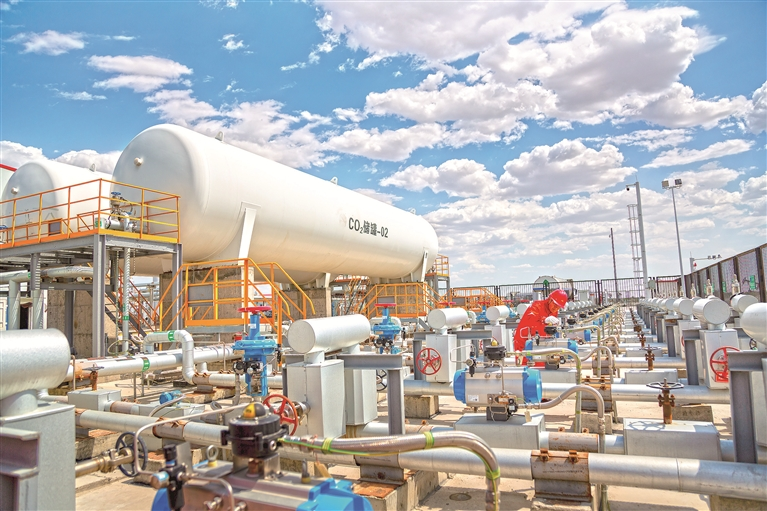
Core Viewpoint - The Xinjiang Oilfield has achieved a significant milestone by becoming the first oilfield in China to inject over 1 million tons of carbon dioxide annually by 2025, playing a crucial role in the country's dual carbon goals and the transformation of traditional industries through green low-carbon technologies [4][12]. Group 1: CO2 Injection Technology - The CO2 injection method enhances oil recovery by increasing pressure and reducing viscosity, allowing for the extraction of oil trapped in rock formations [5][7]. - CO2 injection can improve oil recovery rates by 10% to 20% compared to water injection, potentially raising total recovery rates to between 40% and 60% [7]. - The Xinjiang Oilfield has been exploring CO2 capture, utilization, and storage (CCUS) technologies for over 20 years, with successful pilot projects demonstrating significant increases in oil production [8][10]. Group 2: Environmental Impact and Carbon Management - The CO2 used for oil extraction is sourced from industrial emissions in the surrounding areas, ensuring a high purity level of over 99% after processing [11][12]. - Approximately 80% of the injected CO2 is permanently stored underground, while the remaining 20% is recycled back into the system, contributing to a circular economy [12]. - The current daily CO2 injection rate has reached over 4,800 tons, with a cumulative injection surpassing 200,000 tons, equating to the carbon absorption of 18 million mature trees annually [12]. Group 3: Challenges and Future Directions - The application of CCUS technology is still in its early stages, facing challenges such as carbon source supply and complex geological structures that hinder accurate modeling [10]. - The Xinjiang Oilfield is committed to overcoming these challenges by enhancing collaboration with carbon source providers and improving geological research to better understand underground reservoirs [10][12]. - The ongoing advancements in CCUS technology are expected to facilitate the large-scale application of carbon management strategies across various oilfield types in Xinjiang [10].

油气股午后持续走高 中曼石油涨停
2 1 Shi Ji Jing Ji Bao Dao· 2026-01-26 06:04
南方财经1月26日电,午后油气股持续走高,中曼石油涨停,通源石油涨超10%,中国海油、中国石 油、中国石化、潜能恒信均涨超5%。 ...





中国石油独山子石化国产POE适应性改造项目取得重大进展
Zhong Guo Xin Wen Wang· 2026-01-26 05:46
Core Viewpoint - The domestic POE (polyolefin elastomer) adaptation project by China National Petroleum Corporation's Dushanzi Petrochemical Company has made significant progress, with plans to produce 58,000 tons of POE products by 2025, marking the industrialization and large-scale supply of POE gas-phase polymerization technology in China, which will reduce reliance on imports for strategic emerging industries like photovoltaics and new energy vehicles [1][2] Group 1 - The POE is a high-performance polyolefin elastomer known for its processability and high elasticity, widely used in photovoltaic components, lightweight automotive parts, and high-end packaging [1] - The production technology for POE has historically been reliant on imports, with an import dependency rate of approximately 95% expected to remain until the third quarter of 2025, highlighting the urgency for domestic production [1] - The Dushanzi Petrochemical Company is the first in China to adopt a self-developed gas-phase process, filling a technological gap in the field [2] Group 2 - The core indicator of the main product, UL0588, has achieved international advanced levels in light transmittance, with stability ranking among the top in domestic POE [2] - The gas-phase process is more environmentally friendly, with energy consumption at about 60% of that of the solution method, and it produces no solvent emissions, aligning with green low-carbon requirements [2] - Since 2015, the company has focused on high-end polyolefin research and has achieved industrialization in related high-end materials, laying a solid foundation for POE industrialization [2]
002155,一字涨停!
中国基金报· 2026-01-26 05:09
Market Overview - The A-share market opened higher but experienced a "W" shaped fluctuation, with the Shanghai Composite Index closing at 4141.01 points, a slight increase of 0.12% [1] - The Shenzhen Component Index fell by 0.74%, and the ChiNext Index dropped by 0.86% [1] Individual Stock Performance - A total of 3756 stocks declined, while 1606 stocks rose, with 50 stocks hitting the daily limit up [2] - The total trading volume in the Shanghai and Shenzhen markets reached 2.24 trillion yuan, an increase of 347.8 billion yuan compared to the previous trading day [2] Sector Performance Precious Metals - The precious metals sector saw significant gains, with individual stocks like Hunan Gold and Jin Hui shares hitting the daily limit up [5] - Gold prices reached a new high, with spot gold surpassing $5000 per ounce, and Goldman Sachs raised its 2026 gold price forecast to $5400 per ounce from $4900 [8] Oil and Gas - The oil and gas sector experienced a rally, with major companies like China National Petroleum, China National Offshore Oil, and Sinopec all seeing gains of over 4% [10] - The rise in oil prices was attributed to geopolitical tensions, with WTI and ICE Brent crude both increasing by over 3% [10] Financial Sector - The financial sector showed upward movement, with securities stocks rising significantly; for instance, Caitong Securities and Industrial Securities increased by over 4% [14] - Insurance stocks also performed well, with New China Life and China Pacific Insurance rising by over 3% [16] Alcoholic Beverages - The liquor sector faced a downturn, dropping over 1%, with stocks like Yanghe and Kweichow Moutai experiencing notable declines [20] - Yanghe's forecast indicated a potential net profit drop of 62.18% to 68.30% for the fiscal year 2025, leading to a projected loss of 1.451 billion to 1.859 billion yuan in Q4 2025 [21]



兰州石化榆林公司一重点工业试验项目顺利通过中国石油集团公司现场核查
Xin Lang Cai Jing· 2026-01-26 04:33
Core Viewpoint - The successful completion of the industrial application test for the "1-butene/1-hexene flexible switching technology" by the Yulin Company of China Petroleum Group marks a significant technological breakthrough in the field of high-end new materials production [1]. Group 1 - The expert group conducted a thorough review of technical documents, including the "Industrial Test Summary Report," "Startup Plan," "Calibration Report," and full-process operation records during the on-site verification [1]. - Since the successful startup of the butene operation in September 2021, the Yulin Company has effectively planned and implemented strategies, achieving a smooth transition to hexene operation by August 2022 [1]. - The facility is now capable of consistently producing high-quality 1-butene and 1-hexene products, having completed the "72-hour continuous calibration" tasks under both butene and hexene operations in June 2022 and July 2025, respectively [1]. Group 2 - The expert group unanimously agreed that the project team adhered to the requirements of the project task book, with sufficient physical workload and reliable original data, meeting all technical and economic assessment indicators [1]. - The expert group highly recognized the efforts made by the Yulin Company in the technology development process [1]. - The successful verification not only validates the Yulin Company's capabilities in flexible production technology for high-end new materials but also lays a solid foundation for further extending the industrial chain and enhancing product market competitiveness [1].
锚定能源核心资产,富国基金旗下油气ETF富国1月19日重磅发行
Quan Jing Wang· 2026-01-26 04:18
Core Viewpoint - The oil and gas sector is positioned as a core asset with strategic value and investment potential, expected to perform steadily through market fluctuations from 2021 to 2025, serving as a "safe haven" for investors due to its high dividends and stable growth [1]. Group 1: Market Dynamics - Oil and gas remain essential as a primary energy source, accounting for over 60% of global consumption, with domestic production expected to grow under energy independence strategies [2]. - China's oil import dependency is projected to reach 71.9% by 2024, highlighting significant supply pressure [2]. - The top three constituents of the National Oil and Gas Index—China National Petroleum Corporation, Sinopec, and CNOOC—collectively account for over 90% of domestic production, reinforcing their role as key supply providers [2]. Group 2: Natural Gas Demand - Natural gas is increasingly recognized as a transitional energy source amid global energy transformation, with a compound annual growth rate (CAGR) of 8.35% in China's natural gas consumption from 2015 to 2024 [5]. - The peak consumption of natural gas is expected around 2040, reaching approximately 6000-7000 billion cubic meters [6]. Group 3: Policy and Market Environment - The implementation of the Energy Law and other reforms is expected to enhance industry efficiency and reduce extreme volatility risks, while state-owned enterprises are anticipated to increase dividend payouts [8]. - The National Oil and Gas Index has shown a consistent positive return over five years, with annual returns of 33.93%, 0.05%, 7.01%, 10.90%, and 10.13% from 2021 to 2025 [9][10]. Group 4: Index Characteristics - The National Oil and Gas Index is heavily weighted towards the "Big Three" oil companies, which together account for over 40% of the index, ensuring significant exposure to leading firms [12]. - The index includes a balanced distribution across the oil and gas sectors, with 61.5% in oil and petrochemicals and 15.8% in utilities, providing stable cash flow through gas companies [14]. - The index's current dynamic price-to-earnings ratio is 13.42, indicating reasonable valuation, with a dividend yield of 3.92%, making it attractive in a low-interest-rate environment [16]. Group 5: Current Investment Timing - International oil prices are stabilizing, with a price range of $50-60 per barrel, which is close to the main extraction cost line, limiting downside potential and supporting profit improvement [18]. - The index's return on equity (ROE) reached 9.8% in Q3 2025, significantly exceeding the overall A-share market average of 7.9%, indicating a shift towards high-quality development in the sector [22].

地缘风险升温,资源品超级周期爆发!中国海油罕见飙涨6%创新高,油气ETF汇添富(159309)涨超3%,盘中强势吸金超1000万元!
Sou Hu Cai Jing· 2026-01-26 03:11
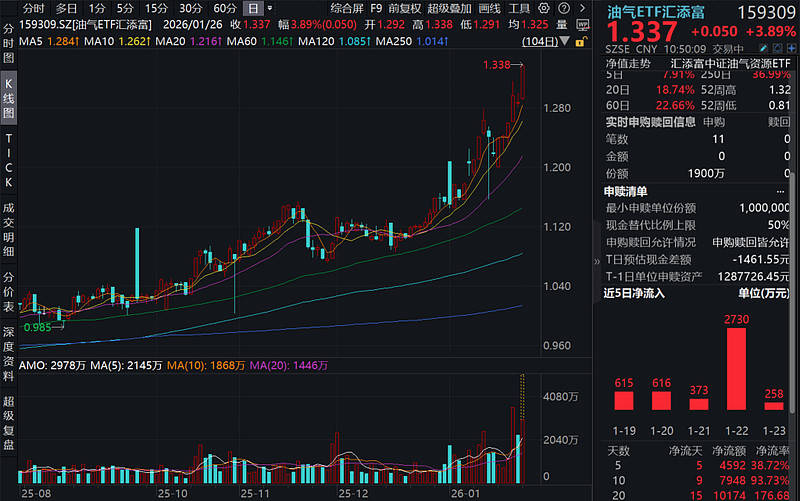
Group 1 - The resource sector is leading the market surge, with the oil and gas sector experiencing fluctuations, as evidenced by the oil and gas ETF Huatai (159309) rising over 3.8% and reaching a historical high, attracting over 25 million yuan in funds during the day [1] - The oil and gas ETF Huatai has seen continuous inflows, accumulating over 1 billion yuan in the past 10 days [1] - Major stocks in the oil and gas sector, such as China National Offshore Oil Corporation (CNOOC) and Sinopec, have shown significant price increases, with CNOOC rising 6.34% and Sinopec increasing 4.07% [2][5] Group 2 - Geopolitical tensions, particularly between the US and Iran, may threaten Middle Eastern oil exports, increasing regional risks [3] - Supply disruptions in Kazakhstan due to power distribution issues at major oil fields are expected to reduce oil exports through the Caspian Pipeline Consortium (CPC), which may support oil prices [4] - The current cold weather in the US is causing significant fluctuations in natural gas prices, with potential implications for other energy prices if the cold spell persists [4] Group 3 - The oil and gas sector is highlighted as a focus area due to the ongoing commodity supercycle, with energy prices expected to rise following other commodities [4] - The oil and gas ETF Huatai is designed to focus on the oil and gas industry chain, including exploration, equipment, refining, and transportation, emphasizing companies with quality reserves and low-cost advantages [9] - The index of the oil and gas ETF Huatai has shown strong performance over the past six months, one year, and three years, leading among similar indices [10]
地缘政治成焦点之际,原油库存增加-Bernstein Energy_ Oil inventories build while geopolitics take centre stage
2026-01-26 02:49
Summary of the Conference Call on Oil & Gas Industry Industry Overview - The conference call focused on the **Asia-Pacific Oil & Gas** industry, particularly discussing oil inventories and geopolitical factors affecting the market [1][7]. Key Points and Arguments 1. **OECD Inventories**: - OECD commercial inventories increased by **7 million barrels (MMbls)** in November, reaching **2,838 MMbls**, which provides a **60 days demand cover** [2][37]. - A net draw of **23 MMbls** was observed in 4Q, contrasting with IEA's estimates of a **2.7 MMbls/d** oversupply [2]. 2. **Global Inventory Trends**: - Global inventories rose by **66 MMbls month-over-month**, totaling **6,449 MMbls** in November, with non-OECD inventories contributing significantly [3]. - China’s inventories increased by **3 MMbls** in November, indicating ongoing stockpiling [3]. 3. **Supply and Demand Forecast**: - Global oil demand is projected to grow by nearly **1.0 MMbls/d** to **105 MMbls/d**, with non-OECD Asia being the largest contributor [4]. - Non-OPEC supply growth is expected to outpace demand growth, leading to continued inventory builds through **2026** [4][7]. 4. **OPEC Production Dynamics**: - Despite increased OPEC supply, the call on OPEC crude is anticipated to decline to **25.8 MMbls** in 2026, suggesting a need for production cuts rather than increases [5]. - The unwinding of OPEC production cuts is expected to exacerbate market oversupply, particularly in the first half of the year [5]. 5. **Investment Implications**: - The IEA report indicates an oversupplied oil market, with non-OPEC supply growth outpacing demand, leading to significant inventory gains [7]. - The risk-reward scenario for investors is shifting favorably as oil prices are currently below the marginal cost of **$70/bbl**, suggesting potential for price recovery [7]. 6. **Valuation Comparisons**: - A comparison of major oil companies shows varying P/E ratios, with PetroChina at **8.8**, Sinopec at **11.4**, and CNOOC at **7.2** for 2026 metrics [8]. Additional Important Insights - **Geopolitical Risks**: The potential for geopolitical disruptions, particularly involving Venezuela, Iran, and Russia, could impact supply dynamics unexpectedly [7]. - **Long-term Price Outlook**: Oil prices are expected to average just below **$65/bbl** in 2026 based on inventory forecasts, indicating a challenging environment for producers [25]. This summary encapsulates the critical insights from the conference call, highlighting the current state and future outlook of the oil and gas industry, particularly in the Asia-Pacific region.

沪指震荡上涨,金银板块狂飙,商业航天集体调整,恒科指跌超1%,老铺黄金暴涨10%,沪银飙涨13%
Hua Er Jie Jian Wen· 2026-01-26 02:37
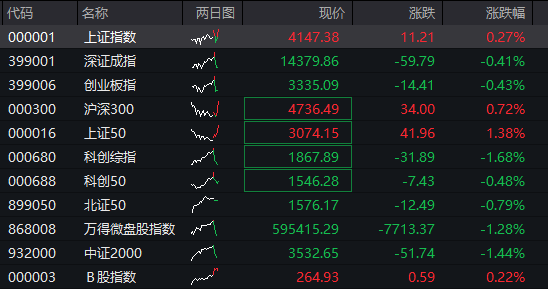
Core Viewpoint - The international gold and silver prices continue to surge, with gold surpassing $5000 and silver reaching $108, leading to significant gains in the precious metals sector in both A-shares and Hong Kong stocks [1][6]. A-shares Market Summary - The A-share market experienced fluctuations, with the Shanghai Composite Index rising by 0.27% to 4147.38, while the Shenzhen Component and ChiNext Index fell by 0.41% and 0.43%, respectively [1]. - Gold stocks saw a notable increase, with companies like Laopu Gold rising over 12% [1][14]. - The overall performance of the A-share market was mixed, with the Shanghai 300 Index up by 0.72% and the STAR Market Index down by 1.68% [1]. Hong Kong Market Summary - The Hong Kong market opened higher but faced declines, with the Hang Seng Index up by 0.23% to 26810.62, while the Hang Seng Tech Index fell by 1.36% [2][3]. - Precious metals stocks led the gains, with significant increases in companies like Laopu Gold and others [1][6]. Commodity Market Summary - Domestic commodity futures saw widespread increases, with silver futures rising over 13%, and other metals like platinum and palladium also experiencing significant gains of 9% and 7%, respectively [1][22]. - The overall commodity market showed strong performance, with various metals and energy products seeing price increases [1][22]. Gold and Silver Market Highlights - The price of gold reached a historic high of over $5000 per ounce, driven by geopolitical tensions and a flight to safety in the market [6]. - Silver prices also surged, with significant gains in the silver futures market, reflecting strong investor interest in precious metals [1][5]. Company Performance Highlights - Notable companies in the precious metals sector, such as Zhaojin Gold and Sichuan Gold, have seen their stock prices rise significantly, with some reaching daily limits [6][7]. - The overall sentiment in the gold and silver market remains bullish, with many companies in the sector benefiting from the rising prices [6][7].