CCB(601939)

Search documents
多方联动激活资金流数据价值
Jin Rong Shi Bao· 2025-11-18 06:35
Core Insights - The implementation of the fund flow information platform has significantly improved access to credit for small and micro enterprises in Hubei, enabling them to secure loans quickly and at lower interest rates [1][2][3] Group 1: Fund Flow Information Platform - The fund flow information platform allows banks to assess the creditworthiness of small enterprises that lack traditional credit histories, thus addressing the "white household" issue in credit evaluation [3][4] - The platform has facilitated the issuance of loans totaling 483.8 billion yuan to 7,878 enterprises, with 352.4 billion yuan disbursed as of September 2025 [5] - The platform captures multi-bank account settlement data, providing a comprehensive view of a company's cash flow and transaction stability, which aids in credit approval [4] Group 2: Collaborative Efforts - The People's Bank of China Hubei Branch has collaborated with local departments to promote the fund flow information platform as a key initiative, enhancing financial supply [2] - A series of training sessions have been conducted for financial institutions, with 1,638 participants trained on platform functionalities and risk management [3] - The bank has implemented a dynamic tracking system to monitor the progress of financial institutions in adopting the platform, ensuring accountability and timely implementation [2][4] Group 3: Case Studies and Success Stories - A cultural media company successfully secured a 1.5 million yuan loan within a day due to the platform's efficient credit assessment process, which lowered their interest rate by 1 percentage point compared to traditional loans [1] - An environmental technology company, classified as a credit "white household," received a 3 million yuan loan by utilizing the fund flow report to fill its credit gap [3] - A technology-focused enterprise in the herbal medicine sector was granted a 5 million yuan loan, demonstrating the platform's effectiveness in supporting local industries [5]


从单点突破到客群深耕,建行广东省分行“链”了
Nan Fang Du Shi Bao· 2025-11-18 04:41
湛江水产市场15家冷链小微企业批量获得超1.84亿元的贷款,当地水产业前行步伐提速;广州市一德路 海味批发市场多家商户通过粤兴贷、经营信用快贷等破解了资金周转难题,老商圈升腾起绵长的烟火 气。 这些鲜活案例,共同勾勒出建行广东省分行以"圈链群"模式深耕普惠金融的生动图景。通过"一客群一 方案"的精准服务,该行将普惠金融注入产业链的每个环节,化作商户指尖的一泓清泉、市场升级的一 渠活水,成为激活整个产业链集群发展的关键动能。 聚焦水产客群融资难题 用数字化手段打破壁垒 "每到快过年时,水产品的需求量激增,就想着提前准备更多货物,迎接'肥年'的到来,可无奈之前卖 出去的货物回款慢,手头资金紧张就打消了这个念头。" 当建行湛江市分行客户经理小李走进湛江一水产品贸易公司时,老板陈先生正在为资金紧张发愁。据陈 先生介绍,他的生意还不错,业务量也比较可观,但扩大生产需要一定的资金支持。"我们生产的全是 冻品,不满足银行抵押贷款的条件,贷款对我们来说真的很难。"陈先生苦恼地说道。 原来,由于冷链水产货物对储存条件要求苛刻,且行业管理模式传统,银行难以对水产货物进行有效监 管和精准估值,使得陈老板的贷款申请一次又一次地碰壁。 ...


建设银行青岛市分行:创造服务价值激活高质量发展新动能
Xin Lang Cai Jing· 2025-11-18 02:23
Core Viewpoint - The financial industry is tasked with a new historical mission to support high-quality development, focusing on enhancing financing accessibility and improving financial product services by 2027 [1] Group 1: Financial Industry Development - The State Council has issued guidelines for the financial sector to achieve significant results in five key areas by 2027, including improving financing accessibility and enhancing the inclusiveness of financial services [1] - Financial institutions are increasingly adopting a "value creation" approach to support high-quality development, integrating their growth with national strategic goals [2] Group 2: Inclusive Finance - The Qingdao branch of the Construction Bank emphasizes serving small and micro enterprises as a core aspect of inclusive finance, utilizing digital technology to enhance credit services [3] - The "Jianhang Huidongni" platform has been developed to provide a comprehensive digital inclusive finance model, streamlining the loan process and addressing the "first loan difficulty" for small businesses [3] - As of August this year, the inclusive finance loan balance at the Qingdao branch reached 35 billion yuan, with an increase of 3.05 billion yuan since the beginning of the year [4] Group 3: Pension Finance - The Qingdao branch is actively implementing national pension finance strategies, focusing on building a comprehensive pension service system to support the aging population [5] - The bank has introduced the "Anxiang" series of financial products designed for the elderly, emphasizing stability and low volatility to alleviate economic burdens [5][6] Group 4: Consumer Finance - The bank is responding to the trend of consumption upgrades by offering diverse and personalized consumer credit products to stimulate market potential [7] - In August, a new fiscal subsidy policy for personal consumer loans was launched, aimed at reducing financing costs for residents and enhancing consumption [8] - The bank has implemented a new online service for personal loans, providing 24/7 access and streamlining the application process for various consumer credit products [8] Group 5: Future Outlook - The Qingdao branch plans to continue its focus on inclusive finance, pension finance, and consumer finance, aiming to enhance service quality and contribute to the development of a modern socialist metropolis [9]
让金融活水精准润泽“千企万户”——建设银行青岛市分行:精耕细作普惠金融“金字招牌”
Xin Lang Cai Jing· 2025-11-18 02:23
Core Insights - The article highlights the efforts of China Construction Bank's Qingdao branch in providing tailored financial services to support small and micro technology enterprises, particularly through the "Shan Ke Loan" product, which aims to address financing challenges faced by these companies [1][2][3] Group 1: Financial Products and Services - The "Shan Ke Loan" product was specifically designed to meet the financing needs of technology enterprises, allowing for rapid credit approval within one working day, with a loan amount of 1.129 million yuan and an annual interest rate as low as 3.05% [2] - As of April 2025, the Qingdao branch has issued over 14 billion yuan in loans to small and micro enterprises, demonstrating a commitment to inclusive financial services [1][2] - The bank has developed a comprehensive suite of over 30 financial products, including "Xiao Wei Kuai Dai" and "Xiao Wei Shan Dai," to cater to diverse client needs [2] Group 2: Support for Technology Enterprises - The Qingdao branch provides full lifecycle financial services, supporting technology enterprises from their inception to growth stages, thereby fostering a healthy "technology-industry-finance" cycle [3][4] - The bank has successfully assisted companies like Qingdao Jinnuo Technology Co., which upgraded its production line and increased its waste battery processing capacity by 20% with the help of the loan [2][4] - The bank's support extends to supply chain financing solutions, such as the "e Xin Tong" product, which addresses cash flow issues for companies facing slow payment cycles [4] Group 3: Collaboration and Ecosystem Development - The Qingdao branch has established a collaborative model involving government, enterprises, and financial institutions to create a technology finance ecosystem [6][7] - The bank has engaged with over 60 technology enterprises in the Chengyang District, resulting in strategic cooperation agreements to enhance support for high-quality development [6] - By utilizing a dual evaluation system that assesses both technological and investment strengths, the bank has transformed the "soft power" of enterprises into "hard credit," facilitating precise credit granting [6][7]
银行取现被“卡”,反诈“误伤”困局待解
2 1 Shi Ji Jing Ji Bao Dao· 2025-11-18 01:20
Core Viewpoint - The issue of "false positives" in anti-fraud measures is becoming a significant challenge for the banking industry, necessitating the breaking down of "information silos" between banks to achieve precise prevention [1][9]. Group 1: Incident Overview - A lawyer faced difficulties withdrawing cash at a bank due to anti-fraud measures, highlighting the growing public concern over the impact of these measures on ordinary citizens [2]. - The lawyer's experience reflects a broader trend where individuals face increased scrutiny for transactions, with many reporting similar issues affecting their daily financial activities [2][3]. Group 2: Anti-Fraud Measures and Their Impact - Anti-fraud measures are evolving from targeting large transactions to affecting smaller, routine transactions, increasing the likelihood of "false positives" [3][7]. - The banking sector is under pressure to balance effective fraud prevention with customer convenience, as stricter measures can lead to user dissatisfaction [7][8]. Group 3: Current Fraud Landscape - The landscape of telecom fraud is increasingly severe, with a notable rise in cases involving "two cards" (bank cards and phone cards), indicating a persistent high level of criminal activity [4][5]. - The characteristics of individuals involved in fraud cases show a trend of younger, less educated, and lower-income participants, with technology playing a significant role in the evolution of fraud tactics [5][6]. Group 4: Technological Solutions and Industry Response - Financial institutions are exploring partnerships with technology firms to enhance their fraud detection capabilities through advanced AI models, aiming to reduce the incidence of "false positives" while maintaining effective risk management [9][10]. - The need for improved data sharing and technological integration among banks is emphasized as a critical step toward resolving the challenges posed by anti-fraud measures [9][10].
上市银行集体撒钱 上百亿“现金红包”在路上
Mei Ri Shang Bao· 2025-11-17 23:04
Core Viewpoint - A number of listed banks in China are set to distribute substantial cash dividends to shareholders, with a total of approximately 2,637 billion yuan in cash dividends announced for the 2025 interim period, reflecting a trend of increasing shareholder returns in the banking sector [1][4]. Group 1: Dividend Announcements - Several banks, including Suzhou Bank, Hangzhou Bank, Nanjing Bank, and CITIC Bank, have announced their interim dividend distributions for 2025, with total cash dividends amounting to about 179.4 billion yuan for the week of November 17-21 [1][2]. - Suzhou Bank plans to distribute 9.39 billion yuan, Hangzhou Bank 27.55 billion yuan (up 24.10% year-on-year), Nanjing Bank 37.86 billion yuan, and CITIC Bank 104.61 billion yuan [2][3]. Group 2: Overall Dividend Trends - A total of 24 A-share listed banks have disclosed their 2025 interim dividend plans, with cumulative cash dividends reaching 2,637.90 billion yuan [4]. - Among the nine joint-stock banks, seven have either implemented or will implement interim cash distributions, with three banks, including CITIC Bank, distributing over 100 billion yuan each [3][4]. Group 3: Future Dividend Prospects - More banks are expected to announce or advance their interim dividend plans, with Jiangyin Bank and Zhejiang Commercial Bank already indicating their intentions [5]. - The trend of stable and continuous dividends is seen as a reflection of banks' operational strength and a signal to attract long-term stable capital [6]. Group 4: Market Implications - The high dividend payouts are expected to boost market confidence and enhance the defensive value of bank stocks in a low-interest-rate environment, making them attractive for medium to long-term investments [1][6]. - The stability of bank dividends and the relatively low valuations in the sector suggest a continued trend of long-term capital allocation towards bank stocks [6].




“银行直供房”卷席市场,低于市价!释放了什么信号?
Sou Hu Cai Jing· 2025-11-17 14:12
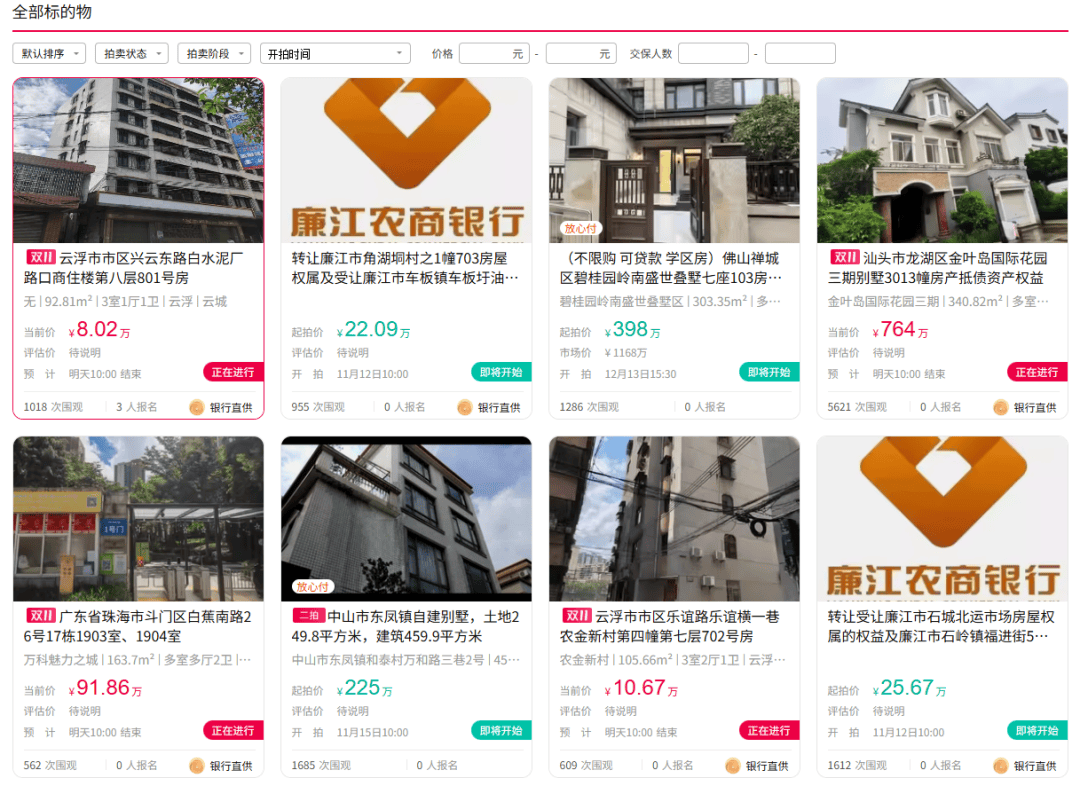
Core Viewpoint - A wave of property asset disposals led by banks is emerging, with "bank direct supply housing" being sold through online platforms like Alibaba and JD.com, indicating a shift in asset management strategies within the banking sector [1][3]. Group 1: Market Dynamics - Banks are accelerating property disposals primarily to enhance debt recovery rates during the real estate market adjustment period, with direct sales becoming a new choice for quickly revitalizing assets [3][4]. - "Bank direct supply housing" offers significant price advantages, often priced below market rates compared to regular second-hand and auctioned properties [4][5]. - As of November 10, 2023, JD.com’s asset trading platform lists 414 residential and 957 commercial properties for auction, significantly exceeding the same period last year [5]. Group 2: Pricing and Sales Strategy - For example, a 125 square meter property auctioned by Lanzhou Rural Commercial Bank sold for 1.51 million yuan, while similar properties in the area were listed between 1.8 million and 2.2 million yuan [4]. - The auction platforms are promoting these properties with slogans like "bank direct supply, sold at no cost," highlighting the aggressive pricing strategy [4][5]. Group 3: Bank Participation and Trends - City commercial banks and rural credit cooperatives are the main players in this direct sale trend, with significant numbers of properties listed for sale, such as over 2,000 by Jilin Bank and nearly 1,300 by Tianjin Bank [9]. - Large state-owned and joint-stock banks are also increasing their direct sales, with Agricultural Bank of China listing 3,436 properties and China Construction Bank 1,571 properties [9][10]. Group 4: Operational Efficiency and Cost Reduction - The direct sale process allows banks to recover funds faster, reducing the time from six months in judicial auctions to about three months [14]. - By bypassing traditional auction costs, banks can retain more revenue from sales, creating a beneficial cycle of "discounting to sell quickly" [15]. Group 5: Strategic Insights and Future Directions - This direct sale trend serves as a market research tool for banks to understand pricing dynamics and property values, which can inform future lending policies [15][16]. - Banks are also exploring partnerships with asset management companies to bundle these properties into real estate investment trusts, transitioning from a "heavy asset" to a "light asset" model [16]. Group 6: Risk Assessment and Market Impact - There are differing opinions on the impact of these direct sales on the real estate market, with some analysts suggesting potential pressure on prices in certain cities, while others believe the scale is too small to significantly affect overall market prices [18][19]. - The risk associated with bank-held properties is considered manageable, particularly in first and second-tier cities, where property values are more stable [18].

迈向“十五五”:金融机构如何精准赋能实体经济与雄安未来之城
Xin Hua Cai Jing· 2025-11-17 13:29
Core Insights - The article discusses the need for financial institutions to enhance their services to support the high-quality development of the real economy during the "14th Five-Year Plan" and the beginning of the "15th Five-Year Plan" [1] Group 1: Financial Institutions' Role - Financial institutions are urged to improve the precision, adaptability, and accessibility of their services, focusing on key areas and weak links in the real economy [2] - Regional banks should adjust their credit and customer strategies towards intelligent, green, and integrated directions, accelerating digital transformation to create competitive advantages [2] - The futures and securities industries are presented with development opportunities, with the futures sector encouraged to implement scenario-based services to enhance price discovery and risk management [2] Group 2: Risk Management - Financial institutions must maintain a risk baseline while serving the real economy, employing early identification and warning systems for risk management [3] - City commercial banks should respect risks but not fear development, balancing risk and return through technology empowerment and compliance culture [3] - The futures industry should establish integrated risk warning mechanisms to preemptively address systemic risks [3] Group 3: Innovative Financial Products and Services - The "five major articles" of financial work emphasize technology finance, green finance, inclusive finance, pension finance, and digital finance as core strategies for financial institutions [4] - Construction Bank has developed a comprehensive technology finance service system, including products that cater to different growth stages of enterprises [4] - Regional banks are launching tailored products to address local needs, such as order financing and pollution rights pledge loans, to support small and micro enterprises [4][5] Group 4: Industry Empowerment - Financial institutions are transitioning from traditional credit providers to industry enablers, particularly in the context of the Xiong'an New Area's development [4] - Supply chain financial products are being utilized to extend services to upstream and downstream SMEs, integrating various financial services [5] - Futures and securities firms are playing a crucial role in managing risks within the industrial chain, responding to the increasing demand for risk management from enterprises [6]

百万级项目频现!银行业密集启动科技招标,数字化转型驶入深水区
Xin Lang Cai Jing· 2025-11-17 12:24
Core Insights - Recent trends show multiple banks accelerating their technology procurement efforts, with significant budgets allocated for projects in areas such as large model development, computing infrastructure, and intelligent risk control [1][3][6] - The banking industry's IT investment is projected to reach 169.315 billion yuan in 2024, marking a 3.6% increase from 2023, and is expected to exceed 266.227 billion yuan by 2028 [7] Group 1: Technology Procurement Trends - Major banks are shifting from fragmented IT equipment purchases to systematic and ecological strategic layouts, with policy banks leading through large-scale tenders and framework agreements [3][4] - State-owned banks and national joint-stock banks dominate the technology procurement market, focusing on high-budget, long-cycle projects [3][4] - Smaller banks are adopting a more targeted approach, focusing on regional needs and core requirements with flexible budget scales [4] Group 2: Drivers of Technology Investment - The narrowing net interest margin and pressure on traditional lending businesses are pushing banks to leverage technology for competitive differentiation and cost control [6] - Regulatory policies are also driving technology projects, with over 30 "one-table" related projects initiated or completed across the industry since October [6][9] - External competition from fintech companies and internet platforms is compelling banks to accelerate their transformation efforts [6][9] Group 3: Challenges and Risks - The rapid pace of technology procurement presents challenges such as unclear risk responsibilities in outsourcing partnerships and compliance with regulatory requirements [9][10] - A notable case involving Guizhou Bank highlights issues with contract clarity and risk assessment in technology procurement [9] - The fast iteration of technology poses adaptation risks, as banks may face additional costs for upgrades if algorithms become outdated [10] Group 4: Future Considerations - The banking industry needs to establish a more systematic technology governance framework, including lifecycle management of suppliers and risk assessment mechanisms [10] - Balancing technological innovation with risk management will be crucial for banks to transform technology investments into core competitive advantages [10]


银行三季度净息差环比持平,股份行回升1BP!三类银行机构利润下滑
Xin Lang Cai Jing· 2025-11-17 12:24
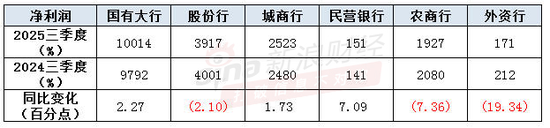
Core Insights - The banking sector in China reported a slight decline in net profit for the first three quarters of 2025, with a total of 1.87 trillion yuan, representing a year-on-year decrease of 0.02%, although the decline has narrowed compared to the first half of the year [1][6] Profitability - State-owned banks, city commercial banks, and private banks saw an increase in net profit, with private banks leading at a growth rate of 7.09% [1][3] - The net profit for state-owned banks was 1.00 trillion yuan, while city commercial banks and private banks reported 252.3 billion yuan and 15.1 billion yuan, respectively [3] - In contrast, joint-stock banks, rural commercial banks, and foreign banks experienced declines in net profit, with decreases of 2.1%, 7.36%, and 19.34%, respectively [1][3] Net Interest Margin - The net interest margin (NIM) for commercial banks remained stable at 1.42% in Q3, with private banks having the highest NIM at 3.83% [1][8] - State-owned banks had the lowest NIM at 1.31%, while joint-stock banks saw a slight increase of 0.01 percentage points to 1.56% [8][9] - Year-on-year, all types of banks experienced a decline in NIM, with state-owned and rural commercial banks both down by 0.14 percentage points [9][10] Asset Quality - As of the end of Q3 2025, the non-performing loan (NPL) balance for commercial banks was 3.5 trillion yuan, with an NPL ratio of 1.52%, reflecting a slight increase of 0.03 percentage points from the previous quarter [13][14] - Foreign banks had the lowest NPL ratio at 1.06%, while rural commercial banks had the highest at 2.82% [14] - Only state-owned banks saw a decrease in NPL ratios compared to the end of the previous year, while other types of banks experienced varying degrees of increase [14] Provision Coverage - The loan loss provision balance for commercial banks was 7.3 trillion yuan, with a provision coverage ratio of 207.15%, both showing a decrease from the previous quarter [16]