
CCB(601939)

Search documents
国有六大行交出稳健发展成绩单
Jin Rong Shi Bao· 2025-11-04 02:09
Core Insights - The six major state-owned banks in China have reported stable and improving operational performance for the first three quarters of 2023, effectively supporting key areas of the real economy [1] Financial Performance - All six major banks achieved growth in both operating income and net profit for the first three quarters of 2023, with total assets also showing steady growth [2] - Industrial and Commercial Bank of China (ICBC) reported operating income of 640.03 billion yuan, a year-on-year increase of 2.17%, and net profit of 269.91 billion yuan, up 0.33% [2] - Agricultural Bank of China (ABC) achieved operating income of 550.88 billion yuan, a 1.97% increase, and net profit of 220.86 billion yuan, up 3.03% [2] - Bank of China (BOC) reported operating income of 491.20 billion yuan, a 2.69% increase, and net profit of 177.66 billion yuan, up 1.08% [2] - China Construction Bank (CCB) had operating income of 573.70 billion yuan, a 0.82% increase, and net profit of 257.36 billion yuan, up 0.62% [2] - Bank of Communications (BCOM) reported operating income of 199.65 billion yuan, a 1.80% increase, and net profit of 69.99 billion yuan, up 1.90% [3] - Postal Savings Bank of China (PSBC) achieved operating income of 265.08 billion yuan, a 1.82% increase, and net profit of 76.56 billion yuan, up 0.98% [3] - BOC had the highest year-on-year growth in operating income, while ABC had the highest growth in net profit [3] Asset Quality - The non-performing loan (NPL) ratios of the six major banks showed overall improvement, with five banks reporting a decrease compared to the end of the previous year [4] - PSBC's NPL ratio slightly increased but remained the lowest among the six banks [4] - The provision coverage ratio showed a mixed trend, with ICBC, CCB, and BCOM seeing increases, while ABC, BOC, and PSBC experienced declines [4][5] Support for the Real Economy - The six major banks demonstrated steady credit growth and further optimized their loan structures, enhancing support for major projects and key sectors [6] - ICBC's loan and bond investments exceeded 400 billion yuan, setting a new record for the year [7] - ABC's county-level loans exceeded 1 trillion yuan, with a growth rate of 10.57%, surpassing the bank's average [7] - BOC actively supported consumer spending, with personal consumption loans growing by 26.11% year-to-date [7] - CCB reported significant growth in inclusive finance services, with small and micro enterprise loans increasing by 397.69 billion yuan [8] - BCOM focused on enhancing its financial capabilities in Shanghai, collaborating on major projects [8] - PSBC continued to improve its green finance services, with green loan balances growing by 16.32% [8]






重点领域贷款增量创新高 服务实体经济“挑大梁”
Jin Rong Shi Bao· 2025-11-04 02:06
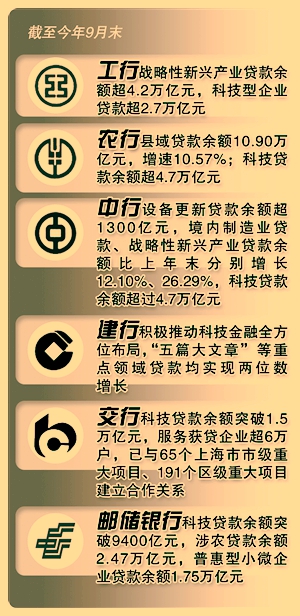
Core Insights - The six major state-owned banks in China reported stable loan growth and effective support for key sectors of the economy in their Q3 reports, demonstrating leadership in addressing weak links in the economy [1][2]. Loan Growth and Focus Areas - The total loan volume of the six major banks has shown steady growth, with targeted lending in key areas such as manufacturing, strategic emerging industries, and agriculture [4][5]. - Industrial and Commercial Bank of China (ICBC) reported a significant increase in loans, with RMB loans from domestic branches rising by 2.04 trillion yuan [4]. - Agricultural Bank of China (ABC) prioritized county-level resource allocation, with a loan balance of 10.90 trillion yuan and a growth rate of 10.57%, which is 2.21 percentage points higher than the bank's average [4]. - China Bank's loans for manufacturing and strategic emerging industries grew by 12.10% and 26.29%, respectively [4]. Support for Agriculture and Small Enterprises - Postal Savings Bank of China focused on agricultural finance, with an agricultural loan balance of 2.47 trillion yuan and inclusive finance loans exceeding 1 trillion yuan [5]. - ABC's loans for rural industries and construction reached 2.74 trillion yuan and 2.47 trillion yuan, with growth rates of 22.8% and 9.7% respectively [4]. Technology Loan Growth - The six banks have significantly increased their loan scales in the technology sector, with ICBC's loans for strategic emerging industries exceeding 4.2 trillion yuan and technology enterprise loans surpassing 2.7 trillion yuan [6]. - Agricultural Bank and China Bank also reported technology loan balances exceeding 4.7 trillion yuan [6]. AIC Equity Investment Development - Several banks have initiated AIC equity investment pilot projects, with ICBC covering 18 pilot regions and establishing 38 funds with a subscribed scale exceeding 45 billion yuan [7]. - China Bank has set up 16 equity investment funds focusing on key emerging industries, with a total subscribed scale of 11.76 billion yuan [7]. Risk Management and Control - The six banks have enhanced their risk management frameworks, particularly in agricultural loans, to ensure asset quality remains stable [8]. - ABC has integrated risk control measures throughout the loan process, utilizing financial technology to improve risk identification and management [8]. - Construction Bank has implemented monitoring measures for loan usage to prevent misuse of funds, ensuring compliance with policies [10].

普惠、绿色、科创三大领域信贷增量显著
Jin Rong Shi Bao· 2025-11-04 02:01
Core Viewpoint - The major state-owned banks in China have reported stable performance in Q3, with a focus on supporting high-quality development of the real economy through optimized credit allocation and increased lending in key sectors [1][2]. Group 1: Credit Allocation and Key Sectors - The overall trend in credit issuance for the year has been characterized by "total growth + structural optimization," with significant support directed towards inclusive small and micro enterprises, green development, and technological innovation [1][2]. - As of the end of Q3, the Agricultural Bank of China reported a balance of inclusive loans at 4.33 trillion yuan, with an increase of 731.1 billion yuan, while the balance of green loans reached 5.8 trillion yuan [2]. - The China Construction Bank's green loan balance stood at 5.89 trillion yuan, reflecting an 18.38% increase from the beginning of the year [2]. Group 2: Consumer Loans and Spending - There has been a notable increase in consumer loans, with the Industrial and Commercial Bank of China reporting a debit card transaction volume of 13.8 trillion yuan and credit card spending of 1.4 trillion yuan in the first three quarters [4]. - The China Bank's personal consumption loan balance grew by 26.11% year-on-year, reaching a significant increase in consumer spending [4][5]. - The Postal Savings Bank has implemented measures to boost consumption, resulting in a more than 10% year-on-year increase in loans for non-housing consumption [5]. Group 3: Digital Transformation and Future Outlook - Experts anticipate that the credit structure will continue to optimize, with a dual focus on consumption and inclusive finance, supporting stable growth in public enterprises and promoting domestic demand [6]. - The integration of digitalization in credit services is expected to enhance efficiency and precision in loan approvals, with the application of AI and big data technologies further reducing credit risks [7]. - Future credit allocations are likely to prioritize green, low-carbon, and digital economy sectors, aligning with national policy directions [6].
工行:恢复受理如意金积存业务申请!
新华网财经· 2025-11-04 01:09
Group 1 - The core viewpoint of the article is that major banks in China, including Industrial and Commercial Bank of China (ICBC) and China Construction Bank (CCB), are adjusting their gold investment services in response to new macroeconomic policies and tax regulations [1][3][4]. Group 2 - ICBC announced the resumption of its "Ruyi Gold Accumulation" business after previously suspending it due to macro policy impacts, effective from November 3, 2025 [1][3]. - CCB has also suspended its "Easy Gold" business, including real-time purchases and physical gold exchanges, starting from November 3, 2025, while existing plans for current customers remain unaffected [4]. - The new tax policy regarding gold transactions, effective from November 1, 2025, exempts value-added tax (VAT) for certain transactions involving standard gold, which may influence the gold investment landscape [4].

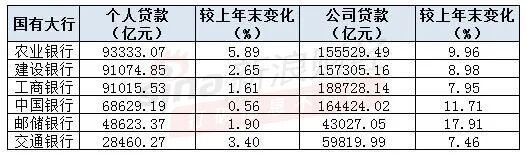
零售贷款增速显著跑输对公,民生兴业平安个贷增速为负!哪家对公强?
Xin Lang Cai Jing· 2025-11-04 01:00
Core Viewpoint - The report highlights that corporate loans continue to drive the growth of bank credit, significantly outpacing retail loans in the first three quarters of 2025, with state-owned banks showing a notable increase in corporate lending compared to retail lending [1][5][11]. Group 1: State-Owned Banks Performance - Among state-owned banks, Agricultural Bank of China leads in personal loan size at 93,333.07 million yuan, with a growth of 5.89% compared to the end of the previous year [3][5]. - Postal Savings Bank shows a remarkable increase in corporate loans, with a growth rate of 17.91%, while its personal loans grew by only 1.90% [5][7]. - The overall trend indicates that personal loan growth is lagging behind corporate loan growth, with only Agricultural Bank exceeding a 5% increase in personal loans among the major banks [5][11]. Group 2: Joint-Stock Banks Performance - Several joint-stock banks, including Minsheng Bank, Industrial Bank, and Ping An Bank, reported negative growth in retail loans, while their corporate loans continued to grow positively [1][11]. - For instance, Ping An Bank's personal loans decreased by 2.10% to 17,291.92 million yuan, while its corporate loans saw a decline in bad debt rates [11][12]. - In contrast, China Merchants Bank reported a retail loan balance of 36,966.19 million yuan, with a modest growth of 1.43%, but its corporate loans grew significantly [9][13]. Group 3: Retail Asset Under Management (AUM) - Despite the challenges in retail loan growth, several banks reported strong growth in retail AUM. For example, China Merchants Bank's retail AUM reached 16.6 trillion yuan, growing by 11.19% [1][15]. - Shanghai Pudong Development Bank also reported a significant increase in personal financial assets, with a growth of 19.07% to 4.62 trillion yuan [15]. - Management teams from various banks emphasized their commitment to enhancing retail market share, indicating a long-term strategic focus on retail banking despite current market conditions [15][16].



顺应市场形势变化,多家银行出手调整积存金业务
Zhong Guo Zheng Quan Bao· 2025-11-04 00:34
Core Viewpoint - Major state-owned banks, including Industrial and Commercial Bank of China (ICBC) and China Construction Bank (CCB), have suspended certain gold accumulation services due to macroeconomic policy changes and fluctuations in gold prices, indicating a need for risk management adjustments in the banking sector [1][2][3]. Group 1: Business Adjustments - ICBC announced the suspension of its "Ruyi Gold Accumulation" services, including real-time purchases and physical gold exchanges, but later restored these services on the same day [1][2]. - CCB also suspended its "Easy Storage Gold" services for real-time purchases and physical gold exchanges, while existing customers' plans remain unaffected [2][3]. - Banks are raising investment thresholds for gold accumulation services; for instance, ICBC increased the minimum investment from 850 yuan to 1000 yuan, while Industrial Bank raised its threshold from 1000 yuan to 1200 yuan [3]. Group 2: Market Conditions - The adjustments in banking services are attributed to recent announcements from the Ministry of Finance and the State Administration of Taxation regarding gold tax policies, necessitating banks to adapt their systems and operations [3]. - Global economic conditions have led to significant fluctuations in international gold prices, increasing market risks and uncertainties [3][4]. Group 3: Investor Guidance - Banks have issued warnings to investors about the heightened volatility in gold prices, advising them to manage their investment positions carefully and consider their financial situations and risk tolerance [4]. - Investment experts suggest that while short-term gold prices may face downward pressure, there is potential for a rebound in the medium to long term [5].
黄金税收新政落地,国有大银行暂停积存金实物提取
3 6 Ke· 2025-11-04 00:12
Core Viewpoint - The new tax policy on gold transactions aims to classify the circulation of gold, distinguishing between its use as a regular commodity and as a financial investment, thereby allowing for more precise market management [1][4]. Tax Policy Changes - Effective from November 1, 2025, the new tax policy will apply until December 31, 2027, with the timing based on the physical delivery of gold [1]. - The policy introduces differentiated tax burdens for gold purchased for investment versus non-investment purposes, impacting both member units and clients [3][4]. Impact on Investment Behavior - The new tax burden on physical gold is expected to shift investor demand towards financial investment products rather than physical gold [2][3]. - Major banks, including Industrial and Commercial Bank of China and China Construction Bank, have suspended certain gold accumulation services, indicating a direct response to the new tax policy [6][7]. Market Reactions - Analysts suggest that the new policy may lead to an increase in on-exchange trading as the tax burden for such transactions is reduced [6]. - The policy is anticipated to have complex effects on the market, with differing opinions on its impact on gold prices [9][10]. Future Outlook - The changes may result in a decline in demand for products that allow for the physical extraction of gold, potentially making them niche offerings [8]. - The immediate market response saw a slight increase in gold futures prices, indicating initial investor reactions to the new tax implications [10].
“突然发现,暂时不能提金条了!”部分银行暂停积存金业务,工行:现已恢复
Zhong Guo Zheng Quan Bao - Zhong Zheng Wang· 2025-11-03 23:22
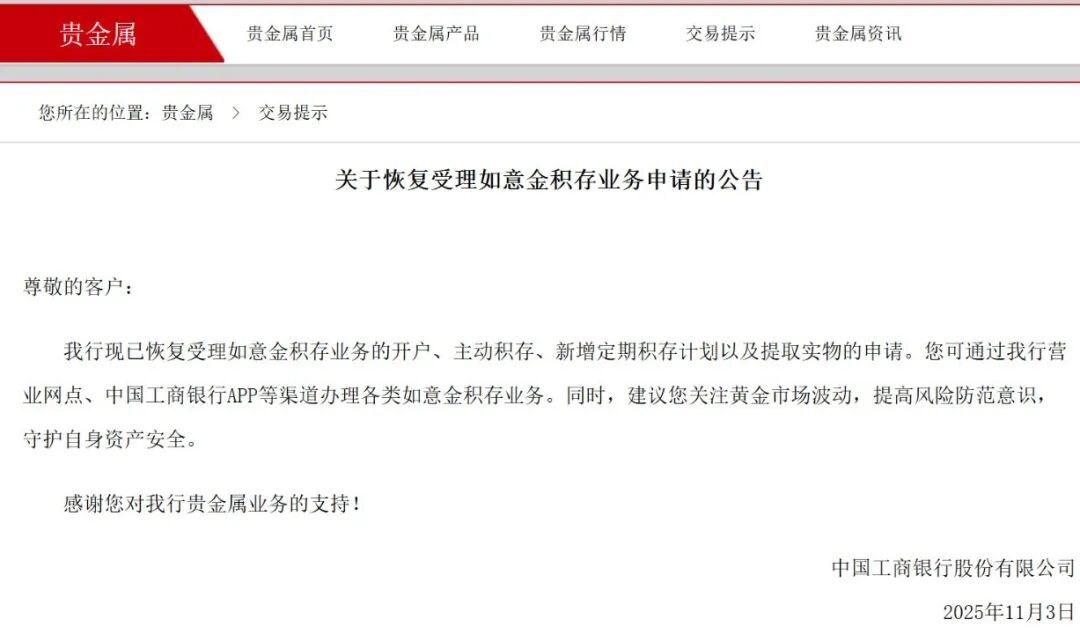
Core Viewpoint - Major Chinese banks, including Industrial and Commercial Bank of China (ICBC) and China Construction Bank (CCB), have temporarily suspended certain gold accumulation services due to macroeconomic policy impacts and system upgrades aimed at improving service quality and compliance with new tax regulations [1][4][6]. Group 1: Service Suspension Details - On November 3, ICBC announced the suspension of its "Ruyi Gold Accumulation" services, including account openings, proactive accumulation, new fixed accumulation plans, and physical gold withdrawals, effective immediately [4]. - CCB also announced a suspension of its "Easy Storage Gold" services, including real-time purchases, new investment plans, and physical gold exchanges, while existing plans and redemptions remain unaffected [5][6]. Group 2: Reasons for Adjustments - The adjustments are attributed to recent changes in gold sales tax regulations issued by the Ministry of Finance and the State Administration of Taxation, necessitating system updates to align with these new policies [6]. - Additionally, fluctuations in international gold prices due to global political and economic conditions have increased market risks and uncertainties, prompting banks to take precautionary measures [6][8]. Group 3: Market Reactions and Future Outlook - Following the initial suspension, ICBC quickly restored its "Ruyi Gold Accumulation" services later that same day, indicating a rapid response to market conditions [2][5]. - Industry experts suggest that the temporary suspension of services serves as a reminder for investors to enhance their risk awareness and manage their investment positions carefully, especially in light of recent volatility in gold prices [7][9].

“突然发现暂时不能提金条了?”部分银行暂停积存金业务,工行现已恢复
Zhong Guo Zheng Quan Bao· 2025-11-03 23:05
Core Viewpoint - Major Chinese banks, including Industrial and Commercial Bank of China (ICBC) and China Construction Bank (CCB), have temporarily suspended certain gold accumulation services due to macroeconomic policy impacts and system upgrades aimed at improving service quality and adapting to recent changes in gold tax regulations [1][3][7]. Group 1: Service Suspension Details - On November 3, ICBC announced the suspension of its "Ruyi Gold Accumulation" services, including account openings, active accumulation, new periodic accumulation plans, and physical gold withdrawals [4][6]. - CCB also suspended its "Easy Storage Gold" services, including real-time purchases, new investment plans, and physical gold exchanges, while existing customers' plans remain unaffected [6][8]. - Both banks indicated that the service suspensions are linked to adjustments in response to new tax regulations and increased market volatility in gold prices [7][8]. Group 2: Market Context and Implications - The recent fluctuations in international gold prices have been significant, with a "roller coaster" trend observed since October, prompting banks to issue risk warnings to investors [8]. - ICBC raised the minimum investment amount for its gold accumulation services from 850 yuan to 1000 yuan, reflecting the heightened market risks [8]. - Analysts suggest that the service suspensions are a precautionary measure to enhance investor awareness of risks associated with gold investments, especially in light of the current market uncertainties [7][8].
多家黄金品牌首饰涨超5%
Bei Jing Ri Bao Ke Hu Duan· 2025-11-03 21:46
Core Viewpoint - The recent announcement by the Ministry of Finance and the State Taxation Administration regarding gold tax policies has led to a significant increase in gold prices among various brands, with some banks halting personal gold accumulation and exchange services [1][2]. Price Changes - Multiple gold jewelry brands have raised their prices by 5% to 6%, with specific examples including: - Cai Bai Jewelry's 999 gold price rising from 1168 CNY to 1238 CNY per gram, an increase of 70 CNY, or approximately 6% [1]. - Chow Tai Fook's gold price increasing from 1198 CNY to 1259 CNY per gram, a rise of 5.09% [1]. - Other brands like Chow Sang Sang, Liu Fu Jewelry, and Lao Feng Xiang also saw price increases ranging from 4.84% to 5.2% [1]. Tax Policy Impact - The new tax policy stipulates that transactions of standard gold through the Shanghai Gold Exchange and Shanghai Futures Exchange will be exempt from value-added tax (VAT) if there is no physical delivery. For transactions involving physical delivery, VAT will be refunded for investment purposes and exempted for non-investment purposes [2]. - This policy change has prompted some banks, including Industrial and Commercial Bank of China and China Construction Bank, to suspend personal gold accumulation and exchange services starting November 3, 2025, while existing plans for current customers will remain unaffected [2].

