
CCB(601939)

Search documents
未来三年分红规划,这些公司已提前布局(名单)
Zheng Quan Shi Bao Wang· 2025-12-15 01:39
Core Viewpoint - The article highlights the increasing trend of cash dividends among listed companies in China, with a focus on their commitment to return profits to shareholders through substantial cash distributions over the next three years. Group 1: Cash Dividend Trends - Listed companies in China have shown a significant increase in cash dividend intentions, with the total cash dividends exceeding 2.47 trillion yuan this year, surpassing the total for the entire previous year [2][4] - Major companies like BYD, Hikvision, and Zijin Mining have reported cash dividends exceeding 10 billion yuan for the first time this year, with many traditional "dividend giants" increasing their payouts [4][5] Group 2: Future Dividend Plans - Nearly 40 companies have established shareholder return plans for the next three years (2026-2028), with most committing to distribute at least 10% of their annual distributable profits in cash [7] - Specific companies have set higher targets, such as Qibin Group, which plans to distribute over 50% of its annual distributable profits in cash, and China Merchants Shekou, which aims for a minimum of 40% [7][9] Group 3: Market Performance and Institutional Interest - Companies that announced shareholder return plans have seen an average stock price increase of over 4.5%, outperforming the average increase of the CSI 300 index [10] - Notably, companies like Wangzi New Materials and Aibison have experienced stock price increases exceeding 50% since their announcements [10][12] Group 4: Institutional Research Activity - Among the 37 companies with announced return plans, 17 have received significant institutional interest, with some receiving over 350 institutional research inquiries [11][12] - Companies like Baiwei Storage and Shiji Information have also reported substantial stock price increases alongside their active engagement with institutional investors [12][13]






最低持有期榜单出炉!固收增强产品成“最靓的仔”
2 1 Shi Ji Jing Ji Bao Dao· 2025-12-15 01:17
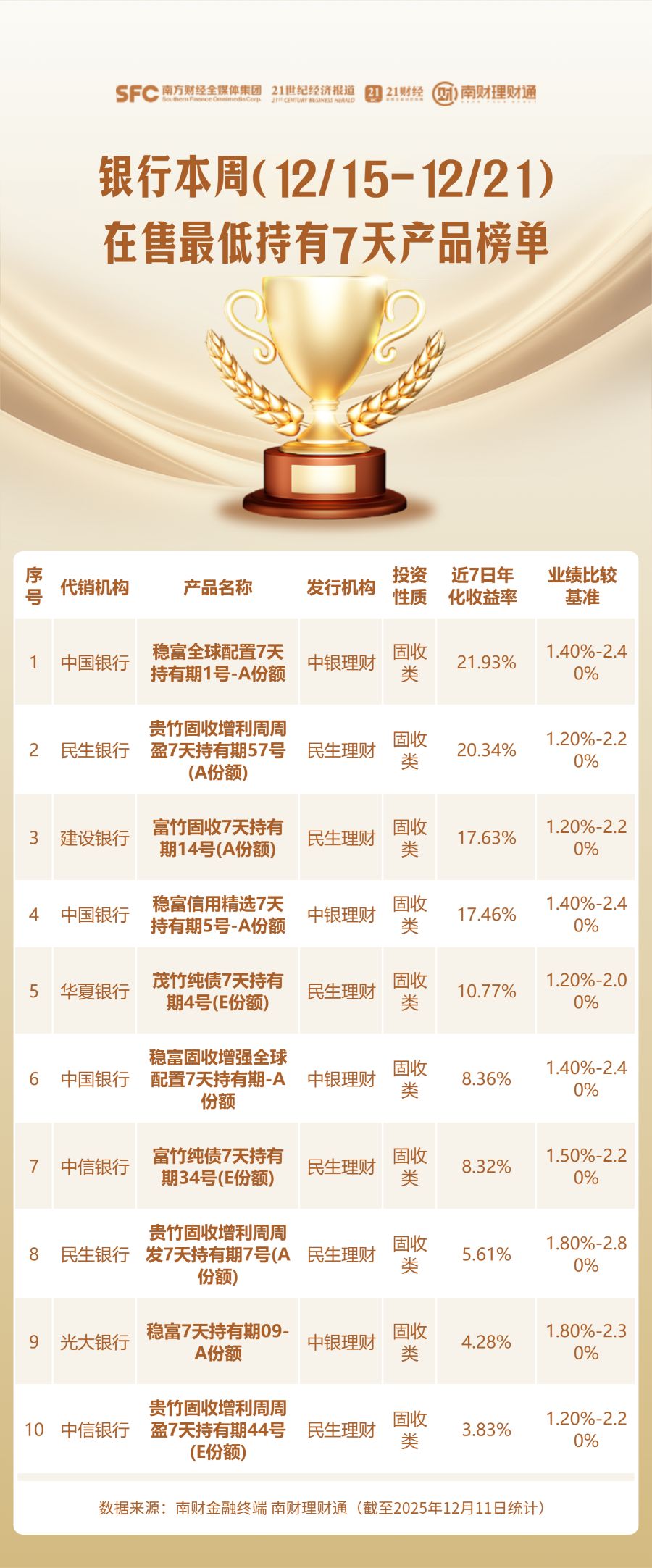
本期,南财理财通重点关注最低持有期人民币公募产品的业绩表现,按照7天、14天、30天、60天持有期限分类对产品业绩进行 排名,业绩指标计算指标为年化收益率,计算区间与持有期限相同,如90天持有期产品的业绩计算区间为近三月年化收益率, 同机构同系列同投资周期产品保留一只参与排名。 统计代销机构(28家):工商银行、中国银行、农业银行、邮储银行、建设银行、交通银行、招商银行、中信银行、光大银 行、民生银行、兴业银行、浦发银行、广发银行、浙商银行、华夏银行、平安银行、恒丰银行、渤海银行、北京银行、宁波银 行、江苏银行、上海银行、南京银行、杭州银行、徽商银行、微众银行、网商银行、百信银行。 需要特别提醒的是:本榜单对理财产品"在售"状态的判断基于其投资周期推算。但实际情况中,部分产品可能因额度售罄,或 银行针对不同客户展示的产品清单存在差异而无法购买。因此,建议投资者以代销银行APP的实际展示为准。 此外,南财理财通虽力求客观公正,但不对本评价榜信息的真实性、完整性和准确性作任何保证,排名信息仅供参考。 | | | (A(分割) | | K | | | | --- | --- | --- | --- | --- | ...



今年超9600家银行网点“关门”,农村金融机构成退场主力
Xin Lang Cai Jing· 2025-12-15 00:44
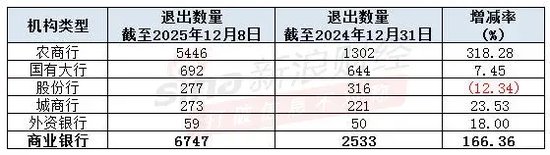
当前,商业银行线下网点"瘦身"已趋于常态化。 农商行占比达八成 据金监总局官网"金融许可证信息"栏目,截至12月8日,共计6747家商业银行线下网点正式 退出,与去年退出的2533家相比大幅增加。 其中,当前最新退出的机构是广东清新农村商业银行股份有限公司浸潭中心分理处,批准日 期为2018年7月31日,发证日期为2021年12月22日,发证机关是清远分局,退出日期为今年 12月5日。 与此同时,今年第一家获批退出的是中原银行股份有限公司三门峡文博城支行,批准日期为 2014年12月23日,发证日期在2021年10月8日,发证机关为三门峡分局,退出日期为今年1月 2日。 | 机构类型 | 退出数量 | 退出数量 | 增减率 | | --- | --- | --- | --- | | | 截至2025年12月8日 | 截至2024年12月31日 | (%) | | 农商行 | 5446 | 1302 | 318. 28 | | 国有大行 | 692 | 644 | 7.45 | | 股份行 | 277 | 316 | (12. 34) | | 城商行 | 273 | 221 | 23. 53 | | 外资银行 ...



2026年怎么干?一线银行人这样说……
Jin Rong Shi Bao· 2025-12-14 23:04
"我将以更加饱满的热情、更务实的作风投身于金融惠民的征程中" 会议提出的"必须充分挖掘经济潜能,必须坚持政策支持和改革创新并举"等重要认识,以及持续扩大内 需、发展新质生产力、防范化解重点领域风险等重点任务,在银行系统基层工作人员中引发广泛热议。 广大基层金融从业者纷纷表示,将深入学习贯彻会议精神,立足本职岗位,把思想和行动统一到党中央 决策部署上来,以务实举措服务实体经济高质量发展,为实现"十五五"良好开局贡献金融力量。 "学习中央经济工作会议精神,让我对当前经济形势有了更深刻的认识,也进一步明确了后续工作努力 方向。"工商银行北京分行海淀支行员工、北京市劳动模范杨爱军表示,将以会议精神为指引,更好地 发挥专业能力,持续推动金融科技成果转化,提高服务小微、科技企业的效率。 围绕会议部署的八大重点任务,银行基层工作人员也结合岗位实际,在服务实体经济、科技创新、绿色 发展等关键领域找准发力点,将会议精神转化为具体工作举措。 本次中央经济工作会议将"坚持内需主导,建设强大国内市场"排在各项重点工作首位,扩大内需被赋予 了越发重要的角色,这为银行业"以旧换新"相关金融产品的拓展提供了更为广阔的市场空间,也为银行 业 ...

平安基金管理有限公司关于新增中国建设银行股份有限公司为旗下基金销售机构的公告
Shang Hai Zheng Quan Bao· 2025-12-14 20:48
一、自2025年12月15日起,投资者可通过建设银行办理以下基金的开户、申购、赎回、定投、转换等业 务。 ■ 二、重要提示 1、定投业务是基金申购业务的一种方式。投资者可以通过销售机构提交申请,约定每期扣款时间、扣 款金额及扣款方式,由销售机构于每期约定扣款日在投资者指定资金账户内自动完成扣款及基金申购业 务。上述列表开通定投业务的基金每期最低扣款金额以基金公告为准,销售机构可根据需要设置等于或 高于基金公告要求的最低扣款金额,具体最低扣款金额以销售机构的规定为准。 2、基金转换是指基金份额持有人按照《基金合同》和基金管理人届时有效公告规定的条件,申请将其 持有基金管理人管理的、某一基金的基金份额转为基金管理人管理的、且由同一注册登记机构办理注册 登记的其他基金的基金份额的行为。基金转换业务规则与转换业务的收费计算公式参见本公司网站的 《平安基金管理有限公司关于旗下开放式基金转换业务规则说明的公告》。 三、费率优惠 为更好地满足广大投资者的理财需求,根据平安基金管理有限公司(以下简称"本公司")与中国建设银 行股份有限公司(以下简称"建设银行")签署的销售补充协议,从2025年12月15日起,建设银行新增销 ...
银行绿色金融债呈现“三升”:规模翻倍、主体多元、成本优化
Zhong Guo Zheng Quan Bao· 2025-12-14 20:19
Core Insights - The issuance of green financial bonds in the banking sector has significantly increased in 2023, with a total issuance exceeding 530 billion yuan, marking a year-on-year increase of over 186% [1][5][6] Group 1: Issuance Scale and Growth - As of December 14, 2023, the banking industry has issued 68 green financial bonds, with a total scale surpassing 530 billion yuan, which is an increase of 333.6 billion yuan compared to the previous year [1] - The issuance from state-owned banks has been substantial, with the six major state-owned banks collectively issuing 206 billion yuan in green financial bonds, approximately three times the total issuance of the previous year [3][4] Group 2: Participation of Different Banking Institutions - Regional small and medium-sized banks have accelerated their participation, with the number of green financial bonds issued increasing from 22 to 30 compared to the same period last year [1][2] - Notably, since November, eight regional banks have issued a total of 172 billion yuan in green financial bonds, indicating a rapid increase in issuance activity [2] Group 3: Policy and Market Drivers - The rapid development of green financial bonds is closely linked to the deepening of ESG practices in the banking sector, supported by policy guidance and market demand [5][6] - Recent policies have emphasized the importance of increasing green credit and developing green financial products, which has facilitated the growth of green bond issuance [5][6] Group 4: Cost and Efficiency Improvements - The average issuance interest rate for green financial bonds has decreased from 1.96% in 2024 to 1.75% in 2023, enhancing the cost-effectiveness of financing for green projects [4] - The introduction of floating rate green bonds has allowed banks to better adapt to market interest rate fluctuations, improving the resilience of the bond market [4]
多家银行传达学习中央经济工作会议精神
Zheng Quan Ri Bao· 2025-12-14 15:49
本报记者 杨洁 多家国有大行在会议中表示,中央经济工作会议为做好2026年经济金融工作提供了根本遵循,结合自身实际,下一步工作 将重点围绕在全面做好金融"五篇大文章"、加力支持扩大内需、支持"两新"政策与"两重"项目实施、统筹高质量发展与高水平 安全、全面服务好高水平对外开放等多个维度。 近日,政策性银行、国有大行党委纷纷召开会议,传达学习中央经济工作会议精神,按照全国金融系统工作会议的要求, 研究部署贯彻落实举措,有力有序有效做好2026年经营管理工作。 与此同时,各家大行均强调突出主责主业。工商银行会议提出要发挥主力军作用,持续发力促高质量发展。围绕服务"四 稳",突出主责主业,提供全面金融解决方案;农业银行会议强调要坚守服务"三农"主责主业,进一步加大县域乡村融资投 放,推动县域经济高质量发展,持续巩固拓展脱贫攻坚成果;中国银行会议要求加快提升全球布局能力和国际竞争力,积极服 务高质量共建"一带一路"、自贸区(港)建设、贸易投资一体化发展,加快推进人民币国际使用,助力深化改革扩大开放;建 设银行会议强调持续优化扩大内需、科技创新、协调发展、中小微企业、民生保障等重点领域金融供给,推动金融资源向经济 社会 ...
2025年度北京金融业十大品牌揭晓
Bei Jing Shang Bao· 2025-12-14 15:39
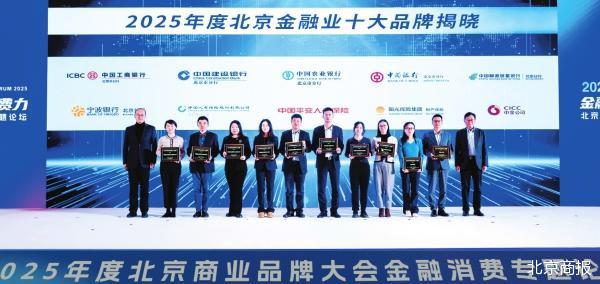
Group 1 - The top ten financial brands in Beijing for the year 2025 have been announced [1] - The list includes major banks such as ICBC, China Construction Bank, and Agricultural Bank of China [2] - Other notable companies on the list are China Life Insurance and Ping An Life Insurance [2]
探寻利率方向(5):为何市场不谈论“资产荒”了?
GF SECURITIES· 2025-12-14 14:29
Investment Rating - The report assigns a "Buy" rating for the banking sector, indicating an expected performance that will exceed the market by more than 10% over the next 12 months [41]. Core Insights - The report discusses the concept of "asset scarcity," which is explained through two perspectives: the mismatch between supply and demand for funds, and the insufficient supply of quality assets that meet investors' risk and return preferences. It argues that the traditional supply-demand imbalance does not adequately explain the phenomenon of asset scarcity [5][13]. - The report identifies three dimensions of asset scarcity: macro, meso, and micro. It emphasizes that the bond market is primarily concerned with the micro-level aspects of asset scarcity [5][16]. - To alleviate macro-level asset scarcity, the report suggests increasing credit issuance and fiscal efforts, enhancing liquidity management by the central bank, and guiding non-bank funds back to banks to lower residents' yield expectations on non-bank assets [20][23]. - At the meso level, the report highlights the importance of fiscal and monetary growth rates, suggesting that credit and fiscal efforts should be strengthened while avoiding capital idling [23][24]. - The micro-level analysis focuses on the expectations of institutions regarding asset-liability expansion and actual expansion, noting that there is often a mismatch between liabilities and suitable assets [25][29]. Summary by Sections Section 1: Asset Scarcity Exploration - The report explores why the market has shifted its focus away from "asset scarcity," attributing this to a lack of significant asset-liability gaps in the real economy and the nature of interest rates as contractual [5][13]. - It discusses the macroeconomic factors influencing asset scarcity, including the expected decline in bond market yields and economic forecasts [16][18]. Section 2: Financial Institutions' Asset-Liability Management - The report provides a detailed analysis of financial institutions' liabilities, emphasizing the need for a balance between asset expansion and government debt supply [25][29]. - It projects that by 2026, the demand for government bonds will increase by 1.5 trillion yuan compared to 2025, indicating a growing need for asset allocation in the banking sector [25][29]. Section 3: Insurance Sector Analysis - The report estimates that the insurance sector will face a net increase in asset-liability mismatch of 1.28 trillion yuan by 2026, driven by the expiration of high-yield non-standard investments and continuous growth in premium income [30][29]. Section 4: Expected Returns and Market Dynamics - The report highlights the compression of asset-liability yield spreads due to rigid liabilities and flexible asset yields, which contributes to the practical aspect of asset scarcity for enterprises and theoretical scarcity for residents [35][29]. - It suggests that banks should lower the rigid costs of liabilities and guide non-bank entities to adjust their yield expectations [35][29].
2025年11月金融数据点评:信贷仍弱反映稳内需必要性,M1延续回落
Shenwan Hongyuan Securities· 2025-12-14 14:29
Investment Rating - The report maintains an "Overweight" rating for the banking industry, indicating a positive outlook compared to the overall market performance [4][25]. Core Insights - The report highlights a slowdown in credit growth, with November's new social financing at 2.5 trillion yuan, a year-on-year decrease of 159.7 billion yuan, and new loans of 390 billion yuan, down 190 billion yuan year-on-year. The M1 money supply grew by 4.9%, while M2 increased by 8.0%, both showing a decline in growth rates compared to the previous month [1][4]. - The report anticipates that while credit growth may not accelerate significantly, the central bank's commitment to a "moderately loose monetary policy" and support for banks' net interest margins will likely lead to improved revenue for the banking sector in 2026 [4][2]. - Retail demand remains under pressure, with a net decrease in household credit of nearly 206 billion yuan in November, reflecting ongoing deleveraging among consumers. The report suggests that a recovery in retail demand will depend on improvements in household income [4][2]. Summary by Sections Credit and Financing - In November, new loans totaled 390 billion yuan, a year-on-year decrease of 190 billion yuan, with total new loans from January to November at 15.4 trillion yuan, down 1.7 trillion yuan year-on-year. The growth rate of RMB loans remained stable at 6.3% [4][1]. - The report notes that corporate loans saw a slight increase, with 270 billion yuan in new loans, while the issuance of corporate bonds and off-balance-sheet financing provided support against government debt and credit drag [4][7]. Monetary Supply - The M1 money supply grew by 4.9% year-on-year, down from 7.1% in the previous year, while M2 increased by 8.0%, showing a slight decline in growth rates [4][8]. - The report indicates that the decrease in deposits reflects a shift in non-bank deposits, which is closely related to the activity in the equity market [4][8]. Future Outlook - The report expresses optimism for 2026, expecting that the focus on corporate lending will continue, and improvements in the Producer Price Index (PPI) may enhance corporate profitability, positively impacting bank earnings [4][2]. - The report emphasizes the importance of monitoring the effectiveness of stimulus policies aimed at boosting domestic demand, which could lead to a more favorable environment for banks [4][2].

