
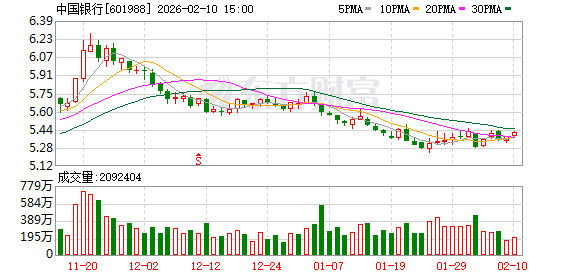
BANK OF CHINA(601988)

Search documents
证监会批了:同意!国有大行增资迎来重要进展
Zhong Guo Ji Jin Bao· 2026-02-11 06:33
具体来看,中国银行拟募集资金规模不超过1650亿元,发行对象为财政部;建设银行拟募集资金规模不 超过1050亿元,发行对象为财政部;交通银行拟募集资金规模不超过1200亿元,发行对象为财政部、中 国烟草和双维投资;邮储银行拟募集资金规模不超过1300亿元,发行对象为财政部、中国移动集团和中 国船舶集团。 (原标题:证监会批了:同意!国有大行增资迎来重要进展) 国有大行增资迎来重要进展! 5月23日晚间,中国银行、交通银行、邮储银行相继发布公告称,向特定对象发行A股股票申请已获得 中国证监会同意注册批复。 今年政府工作报告明确提出,拟发行特别国债5000亿元,支持国有大型商业银行补充资本。 3月30日,中国银行、建设银行、交通银行、邮储银行相继发布公告称,董事会已通过了向特定对象发 行A股股票的议案。四家银行合计募集金额不超过5200亿元。 募资用途上,四大行均表示,在扣除相关发行费用后将全部用于补充核心一级资本。 截至2024年末,六家国有大型银行的核心一级资本充足率均高于监管最低要求。其中,中国银行、建设 银行、交通银行、邮储银行的核心一级资本充足率分别为12.2%、14.48%、10.24%、9.56%, ...



最新!中国银行发布重要公告
Mei Ri Jing Ji Xin Wen· 2026-02-10 22:25
Core Viewpoint - Bank of China announced adjustments to its personal agency business for the Shanghai Gold Exchange during the 2026 Spring Festival, including changes to margin ratios, price fluctuation limits, and trading hours [2]. Group 1: Trading Adjustments - The trading holiday will commence from February 14, 2026, and will last until February 23, 2026, with normal trading resuming on February 24, 2026. There will be no night trading on February 13, 2026 [2]. - Starting from the close on February 11, 2026, the margin ratio for gold futures contracts on the Shanghai Gold Exchange will increase from 18% to 21%, while Bank of China's margin ratio for gold contracts will rise from 47.52% to 55.44%. The price fluctuation limit will change from 17% to 20% [2]. - For silver futures contracts, the margin ratio will increase from 24% to 27% on the Shanghai Gold Exchange, and Bank of China's margin ratio will rise from 68.88% to 77.49%. The price fluctuation limit will change from 23% to 26% starting February 11, 2026 [2]. Group 2: Market Context and Implications - Recent volatility in domestic and international precious metal prices has heightened market uncertainty, prompting major banks to adjust their gold-related business practices [5]. - The adjustments are partly in response to compliance pressures following the introduction of new gold tax regulations in November 2025, which increased operational complexity and costs for banks in the physical gold business [5]. - Analysts suggest that despite current challenges, there remains significant growth potential in the banking sector's precious metals business, with opportunities to promote lower-risk investment products such as gold accumulation plans and physical gold sales [5].

广发基金管理有限公司关于以通讯方式召开广发国证粮食产业交易型开放式指数证券投资基金基金份额持有人大会的第二次提示性公告
Xin Lang Cai Jing· 2026-02-10 19:01
Group 1 - The announcement is regarding the convening of a communication-based meeting for the holders of the Guangfa National Grain Industry Exchange-Traded Fund (ETF) [1][2] - The fund was approved for registration on January 12, 2024, and officially commenced operations on August 8, 2024 [2] - The meeting aims to discuss the proposal for the continuous operation of the fund [4][31] Group 2 - The voting period for the meeting is set from February 11, 2026, to March 10, 2026, at 15:00 [2][5] - Holders must submit their votes and required documents to the designated recipient during the voting period [3][9] - The meeting will be conducted via communication methods, allowing for both paper and telephone voting [6][10] Group 3 - The rights registration date for participants in the meeting is February 10, 2026 [5] - Each fund share represents one vote in the meeting [23] - The proposal requires approval from holders representing at least half of the total fund shares to be valid [26] Group 4 - If the meeting does not meet the required quorum, a second meeting may be convened [27][28] - The fund management company is responsible for the organization and execution of the meeting [29] - The announcement includes details about the voting process and the necessary documentation for participation [20][21]
平安基金管理有限公司关于新增北京创金启富基金销售有限公司为旗下基金销售机构的公告
Shang Hai Zheng Quan Bao· 2026-02-10 18:28
Group 1 - The company announced that starting from February 11, 2026, investors can open accounts, subscribe, redeem, and perform regular investment and conversion operations for certain funds through Chuangjin Qifu [1] - The company has signed a supplementary sales agreement with Beijing Chuangjin Qifu Fund Sales Co., Ltd. to enhance service offerings to investors [1] - Investors can enjoy fee discounts when subscribing or performing regular investment and conversion operations through Chuangjin Qifu, with the specifics determined by Chuangjin Qifu [2] Group 2 - The company will suspend subscription, conversion, and regular investment operations for the Ping An Jin Guanjia Money Market Fund from February 12 to February 23, 2026, while redemption and conversion out operations will continue [4][6] - The Ping An Zhongzheng Interbank Certificate of Deposit AAA Index 7-Day Holding Period Securities Investment Fund will also suspend similar operations during the same period [8][10] - The company will resume these operations on February 24, 2026, and will not issue further announcements regarding this resumption [4][8] Group 3 - The company has appointed Fangzheng Securities Co., Ltd. as a liquidity service provider for the Ping An Hang Seng Hong Kong Stock Connect Technology Theme ETF, effective February 11, 2026 [12] - The company has announced the establishment of the Ping An New Sharp Quantitative Stock Selection Mixed Fund, with the fund contract becoming effective on February 11, 2026 [21][22] - The company will handle subscription and redemption operations for the new fund within three months of the fund contract's effectiveness [22]




管控成本、做活App,银行免费动账短信加速“退场”
第一财经· 2026-02-10 14:46
Core Viewpoint - The article discusses the increasing threshold for free transaction SMS notifications by banks, indicating a shift from universal service to tiered offerings due to cost pressures and a push towards digital channels [3][4][10]. Group 1: Changes in SMS Notification Services - Since 2025, multiple banks have raised the minimum amount for free transaction SMS notifications, with China Merchants Bank increasing the threshold to 5000 yuan [3][4]. - Other banks, including China Bank and Minsheng Bank, have also adjusted their thresholds, generally ranging from 100 to 500 yuan for free SMS notifications [5][6]. - Smaller banks, such as Guangxi Pingguo Rural Bank, have set their thresholds at 200 yuan, aligning with the trend towards financial technology [5][6]. Group 2: Cost Implications of SMS Services - The cost of providing free SMS services is significant, with banks incurring substantial expenses due to high customer volumes and frequent usage [6][8]. - For instance, a bank with 100 million customers sending one free SMS per month could face operational costs exceeding 36 million yuan annually [8]. - Banks are now charging fees for SMS notifications, typically around 2 to 3 yuan per month per card, which helps cover the costs of SMS procurement [8][10]. Group 3: Digital Transformation and Customer Engagement - The increase in SMS notification thresholds is not solely driven by cost but also reflects banks' digital transformation strategies [10]. - Banks are encouraging customers to use digital channels like apps and WeChat for notifications, which have lower marginal costs compared to SMS [10][11]. - The shift aims to enhance service efficiency and customer engagement, with a potential future model of "large transactions free, small transactions paid" emerging in the industry [10][11].


中国银行迎来新高管 中央汇金黄学玲履新
2 1 Shi Ji Jing Ji Bao Dao· 2026-02-10 14:08
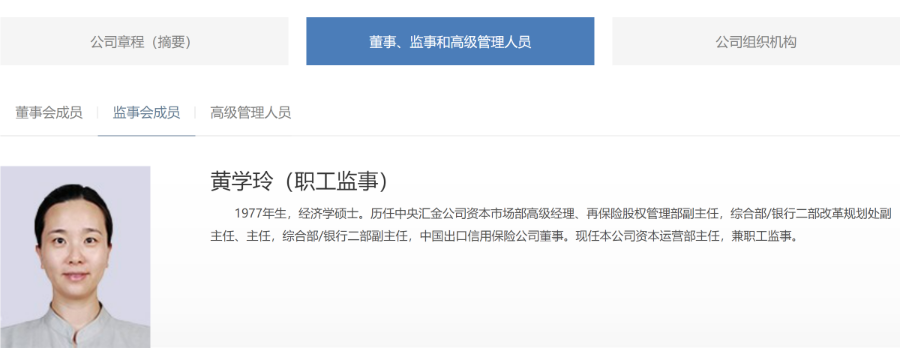
2月10日,21世纪经济报道记者获悉,中央汇金投资有限责任公司(下称"汇金公司")资本运营部主任兼职工监事黄学玲目前已到任中行,在走完相关程序 后,有望出任该行副行长。 公开资料显示,黄学玲出生于1977年,拥有经济学硕士学位。其职业经历长期集中于汇金公司体系内,曾历任汇金公司资本市场部高级经理、再保险股权管 理部副主任,综合部/银行二部改革规划处副主任、主任,综合部/银行二部副主任等职,中国出口信用保险公司董事。 据了解,黄学玲与中国银行此前已有工作交集。2023年11月,她曾以中央汇金资本运营部主任的身份,出席中汇人寿与中国银行全面战略合作协议签约仪 式。 | 统一社会信用代码:91110101MA001QTAX2 | 电话:010-84096666 窗 同电话企业 5 更多 3 | | --- | --- | | 法定代表人:黄学玲 | 邮箱:huijinpr@huijin-inv.cn | | 注册资本:500,000万人民币 | 网址: - | | 成立日期:2015-11-06 | 地址:北京市东城区东直门外斜街9号院3号楼1 | 目前,中国银行董事会中已有一名来自汇金公司的非执行董事楼小惠,她于 ...
中国银行迎来新高管,中央汇金黄学玲履新
2 1 Shi Ji Jing Ji Bao Dao· 2026-02-10 14:04
21世纪经济报道记者冯紫彤 唐婧 股权信息显示,汇金公司是中国银行第一大股东,截至2025年三季度末,持股比例为58.59%;其全资子公司中央汇金资产管理有限责任公司(下称"汇金资 管")亦持有中国银行0.56%股份。 而据天眼查,黄学玲自2022年6年起任汇金资管法人代表。该公司在2015年股市异常波动期间成立,通过受让中国证券金融股份有限公司部分上市公司股票 并进行专项管理,创新股票资产管理模式,旨在维护证券市场稳定。 2月10日,21世纪经济报道记者获悉,中央汇金投资有限责任公司(下称"汇金公司")资本运营部主任兼职工监事黄学玲目前已到任中行,在走完相关程序 后,有望出任该行副行长。 | 公司章程(摘要) 董事、监事和高级管理人员 公司组织机构 | | --- | | 董事会成员 监事会成员 高级管理人员 | | 黄学玲(职工监事) 1977年生,经济学硕士。历任中央汇金公司资本市场部高级经理、再保险股权管理部副主任,综合部/银行二部改革规划处副 | | 主任、主任,综合部/银行二部副主任,中国出口信用保险公司董事。现任本公司资本运营部主任,兼职工监事, | 公开资料显示,黄学玲出生于1977年,拥有经 ...
中行信贷护航“年货备供” 精准支持地方特色产业
Zhong Guo Jin Rong Xin Xi Wang· 2026-02-10 13:06
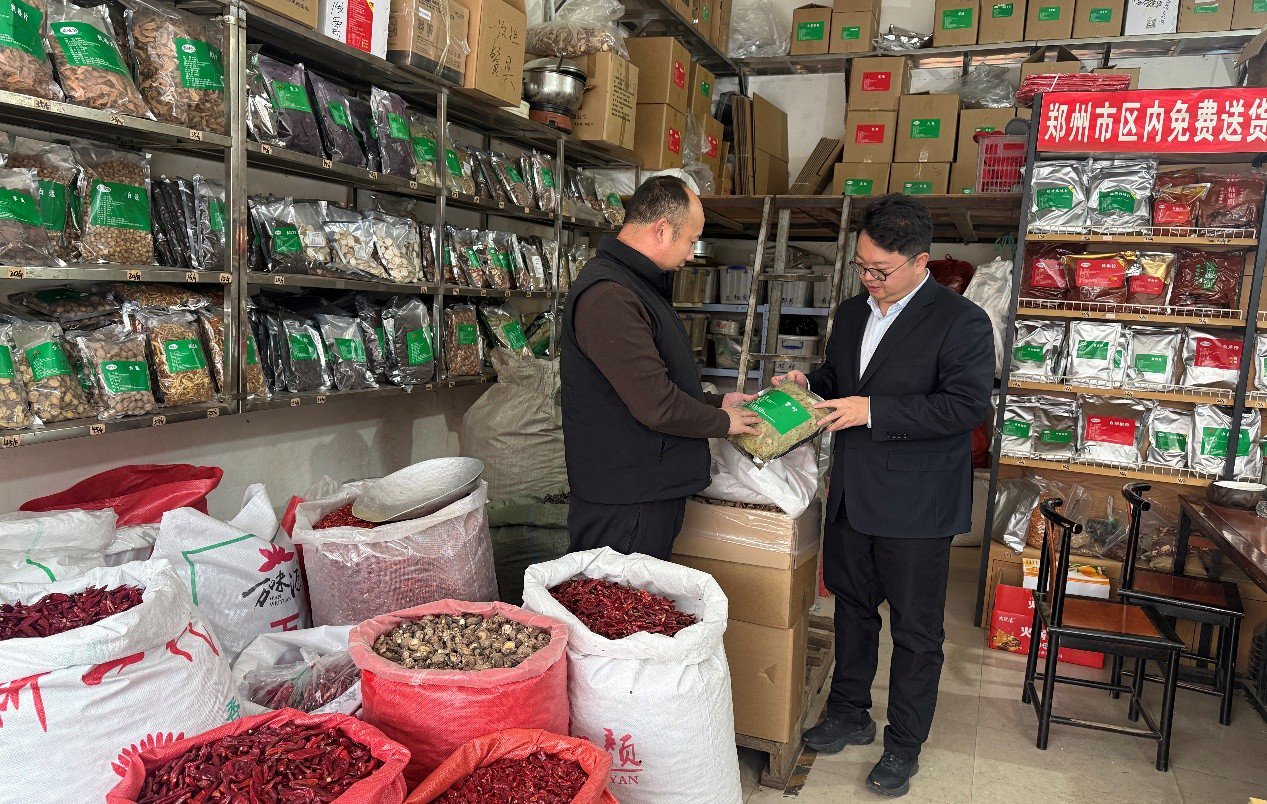
Core Viewpoint - The Bank of China Henan Branch is focusing on supporting local specialty industries through targeted financial services to meet the demand for traditional food products as the Spring Festival approaches [1] Group 1: Financial Support Initiatives - The Bank of China Henan Branch has launched the "Wangbang Scene Loan" to address the funding difficulties faced by small and micro businesses in the Wanbang International Agricultural Products Logistics City, providing over 1.1 billion yuan in credit support to nearly 1,000 merchants [3] - The "Three Powder Scene Loan" has been introduced to support the traditional "three powders" industry in Yuzhou, Henan Province, with nearly 20 million yuan in credit support provided to the entire production and processing chain [5]
中国银行发布关于2026年春节期间代理个人上金所业务相关调整的公告
Xin Hua Cai Jing· 2026-02-10 11:11
Core Viewpoint - The announcement from the Bank of China regarding adjustments to margin requirements and trading limits for gold and silver futures contracts in response to market conditions ahead of the 2026 Spring Festival [1] Group 1: Trading Adjustments - The trading market will be closed from February 14, 2026, to February 23, 2026, with normal trading resuming on February 24, 2026, and no night trading on February 13, 2026 [1] - The margin requirement for gold futures contracts on the Shanghai Gold Exchange will increase from 18% to 21%, while the Bank of China's margin requirement for gold contracts will rise from 47.52% to 55.44% [1] - The price fluctuation limit for gold futures will be adjusted from 17% to 20% starting February 11, 2026 [1] Group 2: Silver Futures Adjustments - The margin requirement for silver futures contracts on the Shanghai Gold Exchange will increase from 24% to 27%, and the Bank of China's margin requirement for silver contracts will rise from 68.88% to 77.49% [1] - The price fluctuation limit for silver futures will be adjusted from 23% to 26% starting February 11, 2026 [1]
中国银行:我行黄金延期合约客户保证金比例由47.52%调整为55.44%
Ge Long Hui· 2026-02-10 09:56
Summary of Key Points Core Viewpoint - The announcement indicates an increase in margin requirements for gold and silver deferred contracts on the Shanghai Gold Exchange, which may impact trading dynamics and investor behavior in the precious metals market [1] Group 1: Gold Contract Adjustments - The margin ratio for gold deferred contracts on the Shanghai Gold Exchange will increase from 18% to 21% starting from the close of trading on February 11, 2026 [1] - The margin ratio for the bank's gold deferred contract customers will rise from 47.52% to 55.44% [1] - The price fluctuation limit for gold contracts will be adjusted from 17% to 20% on the next trading day following the margin change [1] Group 2: Silver Contract Adjustments - The margin ratio for silver deferred contracts on the Shanghai Gold Exchange will increase from 24% to 27% effective February 11, 2026 [1] - The margin ratio for the bank's silver deferred contract customers will increase from 68.88% to 77.49% [1] - The price fluctuation limit for silver contracts will be adjusted from 23% to 26% on the next trading day following the margin change [1]