YINGJIA DISTILLERY(603198)

Search documents
A股白酒股快速拉升,水井坊涨停
Ge Long Hui A P P· 2025-12-25 05:43
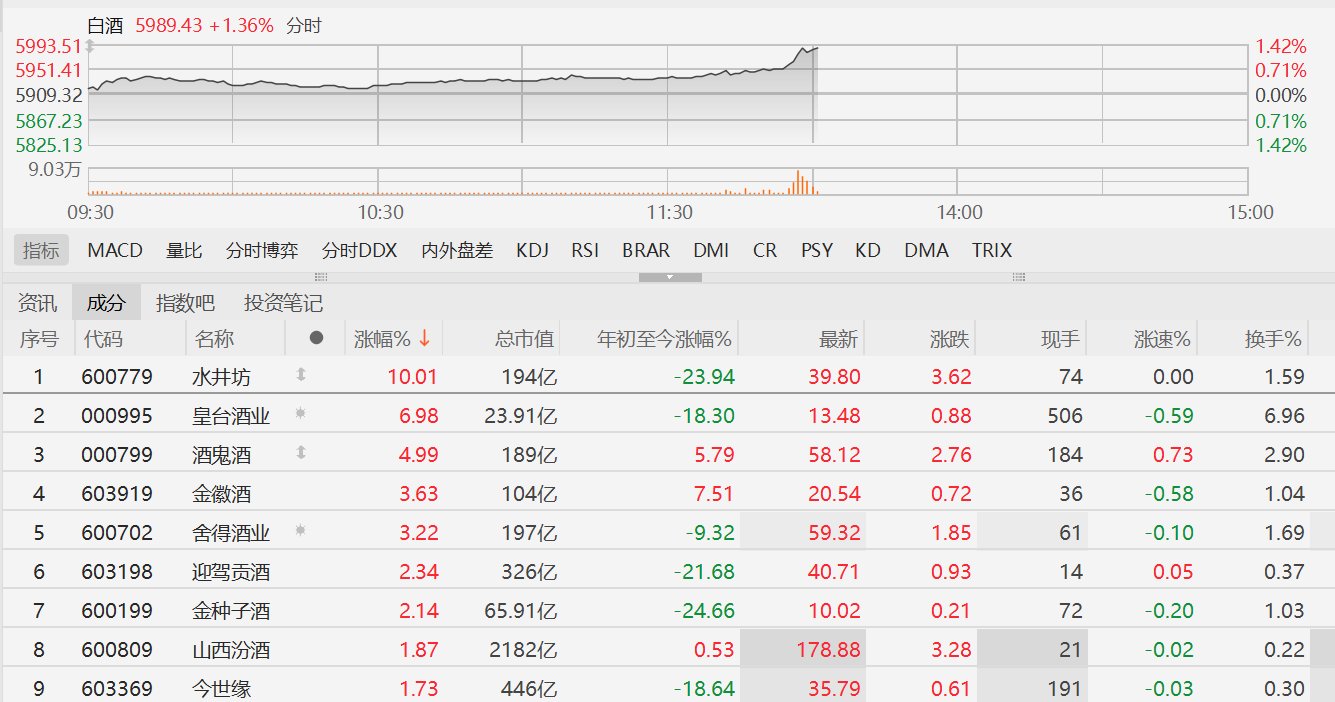
Group 1 - The A-share market saw a rapid increase in liquor stocks, with Shui Jing Fang hitting the daily limit, Huangtai Liquor rising over 6%, and Jiu Gui Jiu increasing nearly 5% [1] - Other notable performers included Jin Hui Jiu and She De Jiu Ye, both rising over 3% [1] Group 2 - The liquor index showed a gain of 1.36%, reaching 5989.43 points [2] - Shui Jing Fang had a significant increase of 10.01%, with a total market value of 194 billion [2] - Huangtai Liquor rose by 6.98%, with a market value of 23.91 billion [2] - Jiu Gui Jiu increased by 4.99%, with a market value of 189 million [2] - Jin Hui Jiu and She De Jiu Ye saw increases of 3.63% and 3.22%, respectively, with market values of 104 billion and 197 billion [2]


徽酒三国杀,决战社区“最后一公里”
阿尔法工场研究院· 2025-12-22 00:03
Core Viewpoint - The Anhui liquor industry is collectively shifting towards community-focused sales models, with companies like Kuozi Jiao, Gujing Gongjiu, and Yingjia Gongjiu opening local liquor shops to directly engage with consumers [1][10]. Group 1: Market Dynamics - The traditional sales model relied heavily on distributors, but the new "liquor shop" approach requires companies to engage directly with consumers, shifting from brand-centric to retail-centric thinking [1][2]. - The competitive landscape has changed significantly, with Kuozi Jiao's market position declining, Gujing Gongjiu leading in scale and growth, and Yingjia Gongjiu surpassing Kuozi Jiao to become the second-largest player [5][6]. Group 2: Financial Performance - In the first three quarters of 2025, Kuozi Jiao reported a revenue of 3.174 billion yuan and a net profit of 742 million yuan, reflecting year-on-year declines of 27.24% and 43.39% respectively, with a 92.55% drop in net profit for Q3 [8][12]. - Gujing Gongjiu's revenue was 16.425 billion yuan and net profit 3.96 billion yuan, down 13.87% and 16.57% year-on-year [8]. - Yingjia Gongjiu's revenue reached 4.516 billion yuan with a net profit of 1.511 billion yuan, showing declines of 18.09% and 24.67% respectively [9]. Group 3: Consumer Behavior and Market Trends - The demand for liquor has slowed, with a notable decrease in corporate group purchases and business banquets, leading to a reassessment of consumption structures towards community retail and personal consumption [16][17]. - The competition among Anhui liquor brands is shifting from scale expansion to intense competition at the retail level [18]. - The traditional year-end negotiations between liquor companies and distributors are changing, with companies adopting a more cautious approach in setting sales targets [19]. Group 4: Strategic Implications - Kuozi Jiao's move to open community liquor shops symbolizes a strategic shift to regain direct consumer engagement amid market pressures [14][20]. - The industry faces a critical challenge in transitioning from a reliance on wholesale distribution to a focus on direct sales and consumer engagement [21][22].


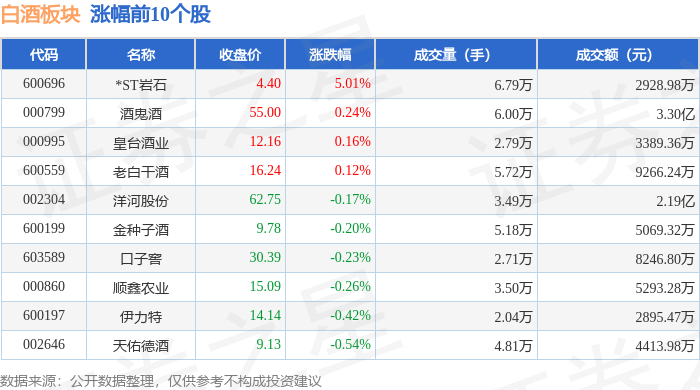
白酒板块12月19日跌0.66%,*ST岩石领跌,主力资金净流出5.64亿元
Zheng Xing Xing Ye Ri Bao· 2025-12-19 09:03
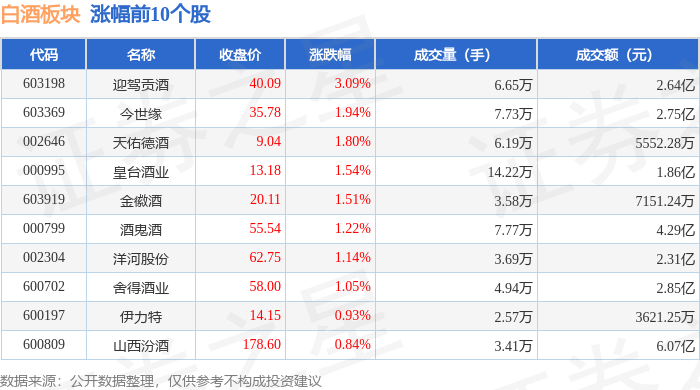
Group 1 - The liquor sector experienced a decline of 0.66% on December 19, with *ST Rock leading the drop [1] - The Shanghai Composite Index closed at 3890.45, up 0.36%, while the Shenzhen Component Index closed at 13140.22, up 0.66% [1] - Key stocks in the liquor sector showed varied performance, with Yingjia Gongjiu rising by 3.09% to a closing price of 40.09, and *ST Rock falling by 4.91% to 3.29 [2] Group 2 - The liquor sector saw a net outflow of 564 million yuan from institutional investors, while retail investors contributed a net inflow of 264 million yuan [2] - Major stocks like Wuliangye and Moutai had minimal price changes, with Wuliangye at 110.53 (up 0.09%) and Moutai at 1410.00 (up 0.21%) [2] - The liquidity dynamics showed that retail investors were more active, with significant inflows into stocks like Yingjia Gongjiu and Yanghe Co., despite overall institutional outflows [3]


迎驾贡酒涨2.08%,成交额9744.70万元,主力资金净流入634.49万元
Xin Lang Zheng Quan· 2025-12-19 03:05
Core Viewpoint - The stock of Yingjia Gongjiu has experienced a decline of 24.29% this year, with recent fluctuations indicating a slight recovery in the short term, while the company's financial performance shows a significant decrease in revenue and net profit compared to the previous year [1][2]. Group 1: Stock Performance - On December 19, Yingjia Gongjiu's stock rose by 2.08%, reaching 39.70 yuan per share, with a trading volume of 97.447 million yuan and a turnover rate of 0.31%, resulting in a total market capitalization of 31.76 billion yuan [1]. - The stock has seen a net inflow of main funds amounting to 6.3449 million yuan, with large orders contributing to a buy of 15.3847 million yuan and a sell of 14.2778 million yuan [1]. - Over the past five trading days, the stock has increased by 1.53%, but it has decreased by 4.64% over the last 20 days and 7.72% over the last 60 days [1]. Group 2: Financial Performance - As of September 30, Yingjia Gongjiu reported a revenue of 4.516 billion yuan for the first nine months of 2025, reflecting a year-on-year decrease of 18.09%, while the net profit attributable to shareholders was 1.511 billion yuan, down 24.67% year-on-year [2]. - The company has distributed a total of 7.28 billion yuan in dividends since its A-share listing, with 3.12 billion yuan distributed over the past three years [2]. Group 3: Shareholder Information - The number of shareholders for Yingjia Gongjiu decreased by 14.56% to 57,100 as of September 30, with an average of 14,015 shares held per shareholder, which is an increase of 17.05% [2]. - Among the top ten circulating shareholders, the China Securities White Wine Index A (161725) is the second-largest shareholder with 24.4568 million shares, an increase of 4.1366 million shares from the previous period [2].
73岁倪永培 “换储”:儿媳张丹丹接掌300亿迎驾贡酒,寒冬中百亿目标悬了?
3 6 Ke· 2025-12-18 11:10
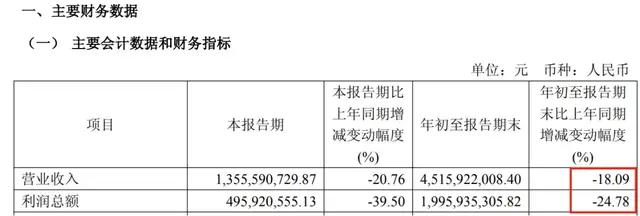
Core Viewpoint - Yingjia Gongjiu, one of the "Four Flowers of Huijiu," is facing a significant challenge regarding its future succession and management stability as it transitions from a "father-to-son" inheritance model to a "daughter-in-law taking over" scenario [2][4][16]. Management Transition - The 73-year-old controlling shareholder and chairman, Ni Yongpei, appointed his 43-year-old daughter-in-law, Zhang Dandan, as vice chairman after his son, Ni Qingshen, exited the core management team eight years ago, signaling a clear succession plan [2][6]. - Zhang Dandan's rise to a key position is seen as a necessary choice for family succession amid industry challenges, with the company currently valued at 31.5 billion yuan [2][4]. Financial Performance - Yingjia Gongjiu reported a revenue of approximately 1.36 billion yuan for the current reporting period, reflecting a year-on-year decline of 20.76%, and a total profit of about 496 million yuan, down 39.50% [3][10]. - For the first three quarters of 2025, the company’s revenue and net profit both fell by over 18%, making the ambitious 10 billion yuan sales target seem unattainable [3][10]. Challenges Ahead - The transition to Zhang Dandan as a leader comes with significant challenges, including the need for governance reform and business transformation in a declining industry [11][12]. - The current management structure, dominated by long-serving employees from before the 1997 restructuring, may lead to conservative decision-making, which could hinder adaptability to industry changes [7][11]. Strategic Focus - To overcome growth bottlenecks, Yingjia Gongjiu must focus on two main strategies: enhancing high-end product offerings and expanding into provincial markets while optimizing the dealer network [18]. - The company aims to deepen its high-end branding, particularly with its Dongcang series, to reduce reliance on mid-to-low-end products [18]. Market Position - Yingjia Gongjiu has reclaimed the second position in the Huijiu market with over 80% of its revenue coming from mid-to-high-end products, but faces intense competition and market pressures [8][12]. - The company lacks the brand strength of top competitors like Moutai and Wuliangye, which may lead to market share erosion if it cannot establish a core competitive advantage [15].
迎驾贡酒谁来接班?儿子离任后七旬董事长提拔儿媳
Tai Mei Ti A P P· 2025-12-17 01:14
Core Viewpoint - The leadership transition at Yingjia Gongjiu is underway as the founder's son steps down, and the daughter-in-law is promoted, raising questions about the company's future direction and performance amidst a challenging market environment [1][3]. Company Leadership Transition - Ni Yongpei, the 73-year-old chairman and founder of Yingjia Gongjiu, has not disclosed any retirement plans, leading to speculation about succession [2][3]. - Ni Qing Shen, the chairman's son, left the core management team in 2017 and has not held any executive positions since, prompting the promotion of his wife, Zhang Dandan, to a key leadership role [3][4]. - Zhang Dandan, now the vice chairman of Yingjia Gongjiu, has a significant stake in the company, holding 8.76% of shares, and has been involved in various managerial roles within the group [4]. Company Performance and Market Position - Yingjia Gongjiu has been recognized as the "second best" in Anhui's liquor industry, competing closely with other major brands like Gujing Gongjiu and Kuozi Jiao [2][5]. - The company has shifted its focus to mid-to-high-end products, with revenue from these segments reaching 5.713 billion yuan, accounting for over 80% of total revenue [5]. - Despite achieving a strong market position, Yingjia Gongjiu's revenue for the first three quarters of the year was 4.516 billion yuan, a decline of 18.09% year-on-year, with net profit dropping by 24.67% [5][6]. Competitive Landscape - The white liquor market is becoming increasingly competitive, with major brands like Moutai and Wuliangye penetrating the Anhui market, challenging Yingjia Gongjiu's traditional stronghold [6]. - The company's performance has been affected by intensified competition, with both in-province and out-of-province revenues declining significantly [6]. - Yingjia Gongjiu's stock price has also suffered, dropping 24.17% over the year, making it the worst performer among the "Four Flowers of Anhui" liquor companies [6]. Strategic Initiatives - To counteract declining sales, Yingjia Gongjiu has intensified its efforts in product distribution, focusing on the sales of bulk and unbranded liquor, which have shown better performance compared to lower-end packaged products [7]. - The company has set ambitious sales targets, aiming for 7.6 billion yuan in revenue by 2025, but faces challenges in achieving these goals amid a downturn in the white liquor market [6][7].
徽酒三巨头扎堆布局散酒生意 能否破解增长焦虑
Zhong Guo Jing Ying Bao· 2025-12-17 01:14
Core Viewpoint - The leading Anhui liquor companies are embracing the scattered liquor business amid a deep adjustment in the liquor industry, focusing on interactive and experiential marketing to address growth anxiety [2][8]. Group 1: Industry Trends - The liquor industry is shifting towards stock competition, with traditional deep distribution models losing effectiveness, leading to increased growth pressure on Anhui liquor companies [2][8]. - The scattered liquor market is projected to exceed 800 billion yuan in 2024 and 1 trillion yuan in 2025, with a compound annual growth rate of over 15% [5]. Group 2: Company Strategies - Gujing Gongjiu has opened its first direct "liquor shop" in Anhui, focusing on fresh sales and a variety of liquor types, including local specialties [3]. - Kuozi Jiu has launched its first "Kuozi Liquor Workshop," with plans for further expansion, while Yingjia Gongjiu has developed a dedicated scattered liquor division with multiple cooperation models [3][4]. - The product offerings from these companies include a wide range of prices, from 188 yuan per jin to as low as 20 yuan per jin, indicating a diverse product structure [3][4]. Group 3: Market Challenges - Major Anhui liquor companies have reported significant revenue declines in the first three quarters, with Gujing Gongjiu, Yingjia Gongjiu, and Kuozi Jiu experiencing year-on-year revenue drops of 13.87%, 18.09%, and 27.24%, respectively [7]. - The third quarter saw even steeper declines, with revenue falling by 51.65% for Gujing Gongjiu and 92.55% for Kuozi Jiu in net profit [7]. Group 4: Future Outlook - Industry experts suggest that the transition to scattered liquor sales is not a panacea but a necessary adaptation to leverage existing networks and brand recognition in a changing market [9]. - The success of scattered liquor business models may lead to the integration of digital tools and instant retail functions, enhancing the role of scattered liquor shops in the distribution strategy [9].
白酒行业2026年度投资策略:底部更加积极
CMS· 2025-12-13 08:08
Group 1 - The report analyzes the investment strategy for the liquor industry in 2026, indicating that the sector is currently in a clearing process, with leading liquor companies' real profits corresponding to a valuation of around 20 times, suggesting limited upward space but a stable dividend yield providing a safety margin [1][6] - The liquor industry has entered a mid-stage of corporate endurance, with stock prices at a bottom range, as evidenced by a significant decline in revenue, net profit, and cash returns in Q3 2025, marking the largest quarterly revenue drop since 2012 [5][11] - The industry is experiencing a shift from entropy increase to decrease, with rising concentration and reduced leverage, as the number of large liquor enterprises has decreased significantly, and the proportion of loss-making companies reached a record high of 36.1% in H1 2025 [16][19] Group 2 - The report predicts that the impact of demographic changes on liquor consumption will be minimal over the next 5-10 years, with the decline in the eligible drinking population being offset by the expansion of younger and female consumer groups [27][32] - Price support for the Flying Fairy liquor is expected in 2026 due to a projected supply growth rate of only 1% over the next five years, alongside a historical high purchasing power among consumers [27][28] - Current valuations are deemed reasonable, with the liquor index corresponding to a PE ratio of 18.85, close to historical lows, and institutional holdings at a record low, indicating strong earnings authenticity post-adjustment [5][7][19] Group 3 - The report emphasizes the importance of focusing on leading companies in the sector, such as Guizhou Moutai and Shanxi Fenjiu, while also recommending companies like Wuliangye and Luzhou Laojiao that are actively clearing historical burdens [6][7] - The investment strategy suggests that the market will experience a shift in style, with key buying points identified around the Spring Festival, price index recovery, and improvements in seasonal sales [6][19] - The report highlights the ongoing challenges faced by distributors, with a significant reduction in their numbers and profitability, necessitating a transformation in their business models to adapt to the current market conditions [19][23]




白酒板块12月8日跌1%,泸州老窖领跌,主力资金净流出17.88亿元
Zheng Xing Xing Ye Ri Bao· 2025-12-08 09:04
Core Insights - The liquor sector experienced a decline of 1.0% on December 8, with Luzhou Laojiao leading the drop [1][2] - The Shanghai Composite Index closed at 3924.08, up 0.54%, while the Shenzhen Component Index closed at 13329.99, up 1.39% [1] Liquor Sector Performance - Luzhou Laojiao's stock price fell by 2.31% to 125.38, with a trading volume of 117,400 shares and a transaction value of 1.482 billion yuan [2] - Wuliangye and Gujing Gongjiu also saw declines of 1.47% and 1.35%, respectively, with transaction values of 3.157 billion yuan and 279 million yuan [2] - The overall net outflow of main funds from the liquor sector was 1.788 billion yuan, while retail investors saw a net inflow of 926 million yuan [2][3] Fund Flow Analysis - Main funds showed a negative net inflow for several companies, including ST Yanshi and Jinhui Liquor, with net outflows of 1.29 million yuan and 3.21 million yuan, respectively [3] - Retail investors contributed positively to the net inflow for companies like Yilite and Tianyoude Liquor, with net inflows of 3.97 million yuan and 3.42 million yuan, respectively [3] - The overall trend indicates a shift in investor sentiment, with retail investors more active in the market compared to institutional investors [2][3]

周观点:年底关注渠道反馈,餐供龙头率先复苏-20251207
GOLDEN SUN SECURITIES· 2025-12-07 08:24
Investment Rating - The report maintains an "Increase" rating for the food and beverage industry, indicating a positive outlook for selected stocks and sectors within the industry [4]. Core Insights - The white liquor sector is showing signs of recovery, with Shanxi Fenjiu focusing on national expansion, youth engagement, and internationalization strategies for 2026. The company is optimizing inventory and enhancing market capacity, which is expected to support growth [2]. - In the beverage sector, companies like Nongfu Spring are planning to strengthen their water and tea product lines while introducing new products. The beer segment is diversifying with new flavors to cater to changing consumer preferences [3]. - The report highlights the potential for growth in consumer staples, with companies like Three Squirrels expanding into a full-category strategy and Mengniu Dairy leading in deep processing innovations [7]. Summary by Sections White Liquor - Shanxi Fenjiu's 2026 marketing strategy focuses on nationalization, youth engagement, and precise consumer service. The company is targeting key markets and optimizing inventory to enhance growth potential [2]. - The white liquor industry is characterized by bottoming out in sales, clearing financial reports, and low expectations, suggesting a favorable environment for quality asset allocation [2]. Beer and Beverage - The beer sector is witnessing the launch of new products like Jin Xing Beer’s winter flavor, reflecting a shift in consumption patterns towards home and outdoor settings [3]. - Nongfu Spring's strategy for 2026 includes strengthening its core water products and expanding its tea offerings, indicating a focus on product diversification and market penetration [3]. Consumer Staples - Three Squirrels is advancing its full-category strategy with the opening of flagship stores, emphasizing community engagement and a wide range of products [7]. - Mengniu Dairy is enhancing its product line with deep processing innovations, which are expected to drive demand and improve the utilization of raw milk [7]. - The frozen food sector is recovering, with companies like Anjuke benefiting from new product launches and channel optimizations, indicating a positive market response [7].