Piotech (688072)

Search documents
半导体设备股震荡拉升 拓荆科技涨超10%创历史新高
Mei Ri Jing Ji Xin Wen· 2025-10-27 06:36
Group 1 - Semiconductor equipment stocks experienced a significant rally in the afternoon of October 27, with notable gains observed [1] - Tuojing Technology surged over 10%, reaching a historical high, indicating strong market performance [1] - Other companies such as Jingzhida, Jinhaitong, Fuchuang Precision, Weidao Nano, and Saiteng Co. also saw increases, reflecting a broader positive trend in the sector [1]

半导体设备股震荡拉升 拓荆科技创历史新高
2 1 Shi Ji Jing Ji Bao Dao· 2025-10-27 06:35
Group 1 - The core viewpoint of the article highlights a significant increase in semiconductor equipment stocks, with notable gains from companies such as Tuojing Technology, which rose over 10% to reach a historical high [1] - The Semiconductor Equipment and Materials International (SEMI) reported that the global semiconductor equipment shipment value is projected to reach $33.07 billion in the second quarter of 2025, representing a year-on-year growth of 24% [1] Group 2 - Several companies in the semiconductor equipment sector, including Jingzhida, Jinhaitong, Fuchuang Precision, and Saiteng Co., also experienced stock price increases following the positive market outlook [1]
晶瑞电材强势封板!光刻胶概念大幅拉升、半导体设备ETF(561980)盘中涨超3%,机构:科技主线有望持续占优
2 1 Shi Ji Jing Ji Bao Dao· 2025-10-27 03:05
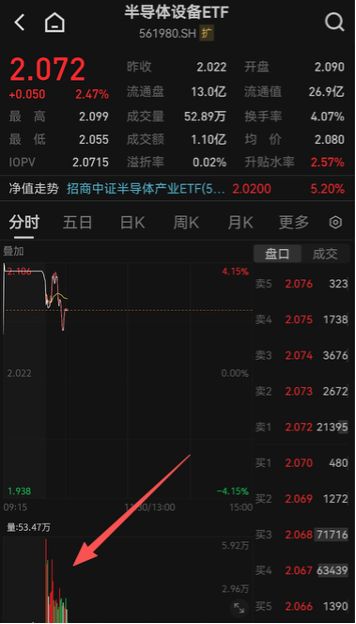
Core Viewpoint - The semiconductor sector is experiencing a significant boost due to breakthroughs in photoresist technology, leading to strong stock performance among related companies and ETFs [1][4]. Group 1: Stock Performance - Jingrui Electric Materials opened strongly and hit the upper limit, while Nanda Optoelectronics and Aisen Co. saw gains exceeding 12% [1]. - The semiconductor equipment ETF (561980) rose by 2.47%, with a peak increase of over 3%, and recorded a trading volume of 110 million yuan [1]. - Over the past ten trading days, the ETF has seen a cumulative net inflow of 294 million yuan, bringing its latest scale to 2.626 billion yuan, with a year-to-date index increase of 61.31% [1]. Group 2: Company Developments - The research team led by Professor Peng Hailin from Peking University has made advancements in understanding the micro-3D structure of photoresist molecules, which could significantly reduce lithography defects [4]. - Domestic GPU manufacturer Muxi Co. has received approval for its IPO on the Sci-Tech Innovation Board, indicating a positive trend for domestic computing power companies [4]. - Muxi is negotiating customer orders estimated at 2.004 billion yuan, with over 1.7 billion yuan in AI computing projects, while Muxi has an order backlog of 1.43 billion yuan [5]. Group 3: ETF Performance and Holdings - The semiconductor equipment ETF (561980) reported a net asset growth rate of 89.26% over the past year, with a 61.46% increase over the last six months [7]. - The ETF tracks the CSI Semiconductor Index, with top holdings including Zhongwei Company (15.01%), Beifang Huachuang (12.70%), and Cambrian (10.56%), collectively accounting for over 78% of the portfolio [9][10]. - The index is heavily weighted towards semiconductor equipment, materials, and digital chip design, which are expected to benefit from the push for self-sufficiency in the semiconductor industry [9]. Group 4: Financial Performance of Component Stocks - Companies like Haiguang Information and Cambrian reported significant year-on-year growth in both revenue and net profit for the first three quarters [11]. - Jingrui Electric Materials achieved a staggering 192-fold increase in net profit year-on-year, highlighting the strong performance of semiconductor-related firms [12]. - Other component stocks such as Jianghua Micro and Aisen Co. also reported positive revenue and net profit growth, indicating a robust sector performance [12]. Group 5: Market Outlook - Analysts from Huaxi Securities and Galaxy Securities express optimism about the continued growth of the technology sector, driven by advancements in AI and high-performance computing chip demand [6][13]. - The stability of key chip and material supplies is critical, making the establishment of a self-sufficient semiconductor supply chain a necessity rather than an option [13].






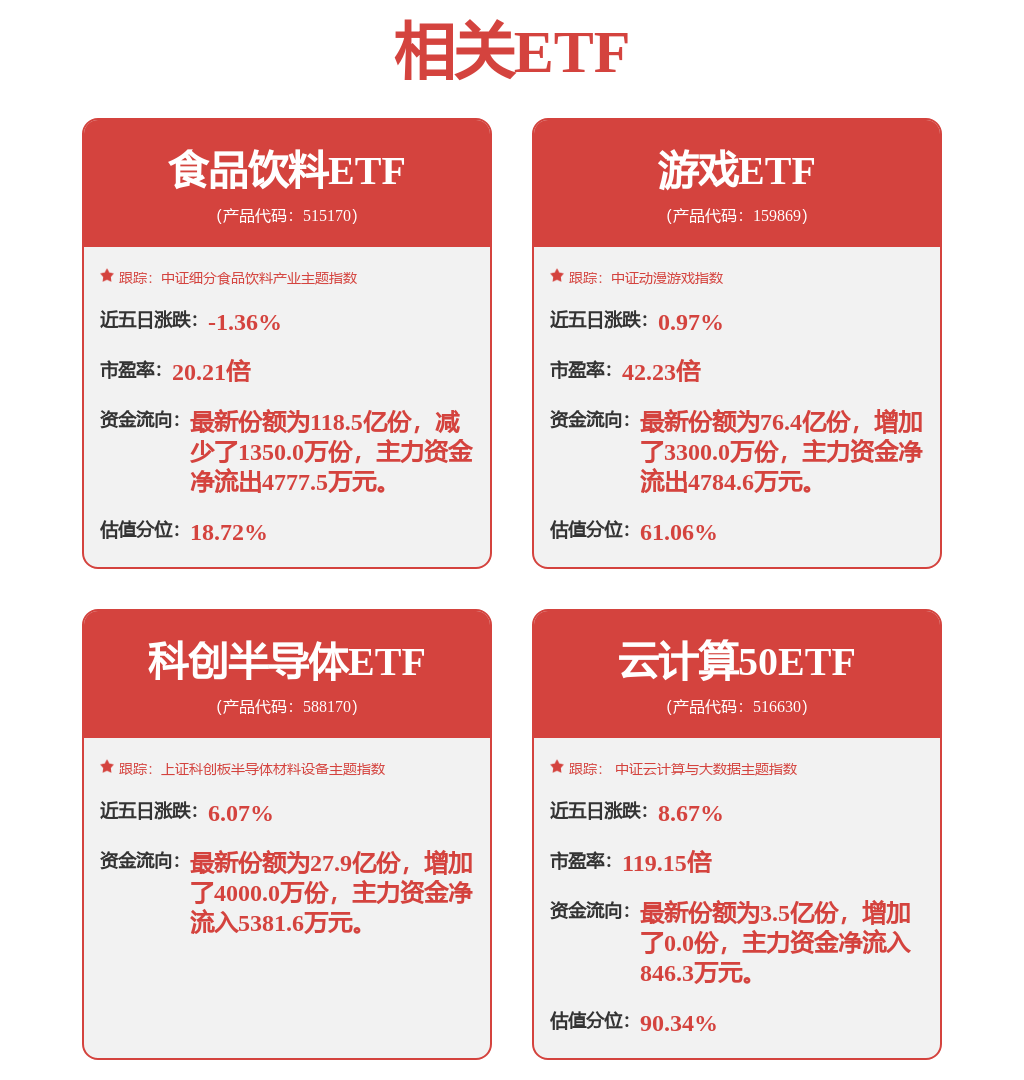
光刻机重大突破,三大关键点!科创芯片50ETF(588750)一度涨超2%,融资余额创新高!涨价逻辑+需求端AI驱动,机构:存储芯片或迎超级周期
Sou Hu Cai Jing· 2025-10-27 02:46
Market Overview - On October 27, the A-share market opened high, with the technology sector leading the gains. The Sci-Tech Chip 50 ETF (588750) rose over 2% at one point and was up over 1% by 9:44 AM, aiming for a second consecutive increase. The latest financing balance for the ETF exceeded 110 million yuan, marking a new high since its listing [1]. Semiconductor Industry Insights - The semiconductor industry is experiencing a price increase in storage components, with Flash Wafer prices rising across the board. DDR4 prices have increased to $13.00, $5.20, $5.50, $2.70, and $1.10, while DDR5 prices have also seen upward movement. Shanghai Securities suggests that the combination of price hikes and AI-driven demand may lead to a super cycle in the storage industry [2]. - A research team from Peking University has utilized cryo-electron tomography to analyze the micro-3D structure and entanglement behavior of photoresist molecules in liquid environments, which could significantly reduce lithography defects [3]. Lithography Equipment Market - Lithography machines are identified as the most complex and valuable segment of semiconductor equipment, with a market share of approximately 24% in 2024. The domestic market for lithography machines is crucial, as China currently relies heavily on imports for high-end models [4]. Performance of Sci-Tech Chip 50 ETF - The component stocks of the Sci-Tech Chip 50 ETF showed mixed performance, with companies like Zhongwei Company rising over 4% and Hu Silicon Industry increasing over 3%, benefiting from the price hikes in storage chips. Other companies such as Laiqi Technology and Cambrian also saw gains, while some stocks like Haiguang Information and Chip Origin experienced pullbacks [5]. Domestic Chip Production and Policy Support - China is projected to become the largest market for lithography machine procurement in 2024, with ongoing efforts to enhance domestic production capabilities. The "02 Special Project" aims to accelerate the development of key components such as optical systems and immersion systems, with companies like Shanghai Micro Electronics and Huazhu Precision making breakthroughs in certain ArF models [6]. - The domestic chip self-sufficiency rate is expected to rise from 16.6% in 2020 to 23.3% in 2023, with a focus on increasing production in mature process technologies, which currently account for over 70% of global chip capacity [7]. Growth Potential of Sci-Tech Chip Index - The Sci-Tech Chip Index is noted for its higher growth potential, with projected net profit growth rates of 71% for the first half of 2025 and 100% for the entire year, significantly outpacing peers. The index focuses on high-tech segments of the semiconductor industry, indicating strong elasticity and growth prospects [14].


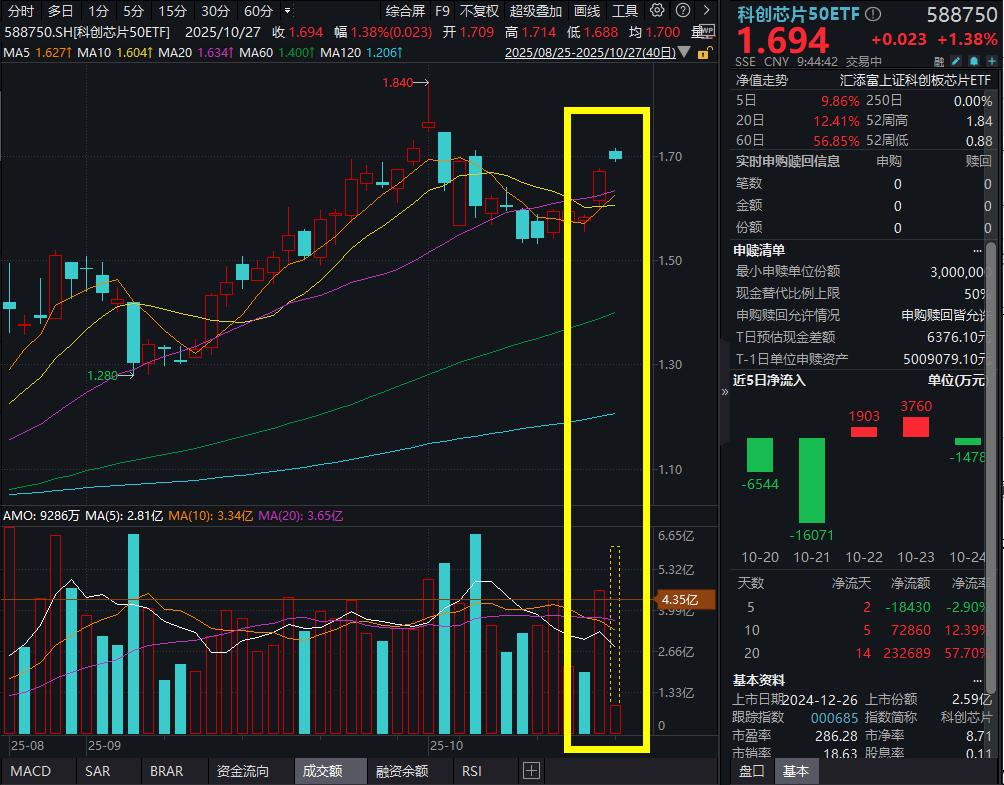
硬核突破!北大光刻胶技术获进展,芯片ETF天弘(159310)、计算机ETF(159998)高开上涨
2 1 Shi Ji Jing Ji Bao Dao· 2025-10-27 01:59
Group 1 - Major stock indices opened higher, with significant gains in sectors such as photoresists, storage chips, and computing hardware. The CSI Chip Industry Index rose by 1.9%, with notable increases in stocks like Nanda Optoelectronics (over 11%) and Tuojing Technology (over 7%) [1] - The Chip ETF Tianhong (159310) opened with a gain of 2.12%, with a current circulation of 628 million shares and a market size of 1.367 billion [1] - The Computer ETF (159998) opened up by 1.12%, with a net inflow of 19.0664 million on the previous trading day, and a total circulation of 2.701 billion shares, amounting to 2.884 billion in market size [1] Group 2 - The "super cycle" for storage chips continues, with major suppliers like Samsung and SK Hynix expected to raise prices by up to 30% for DRAM and NAND products in Q4 [2] - The Computer ETF (159998) is aligned with the hard technology sector, covering various sub-sectors such as software, hardware, and cloud computing, with a total size exceeding 2.8 billion, making it the largest in its category [2] - AI demand is driving growth in storage needs, with expectations of continued price increases in the storage sector through Q4 2025 due to supply constraints, despite some skepticism regarding actual demand levels [2] Group 3 - External disturbances have eased, and the third-quarter earnings reports are expected to validate the growth consensus in the technology sector, making it a crucial window for assessing new momentum [3] - The market's "rebalancing" phase is gradually addressing the cost-performance issues of growth advantages, which may refocus attention on the core strengths of the technology sector [3]



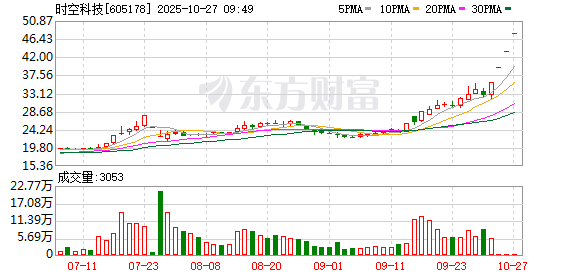
存储芯片板块集体高开,时空科技、大为股份、盈新发展涨停
Mei Ri Jing Ji Xin Wen· 2025-10-27 01:48
Core Viewpoint - The storage chip sector experienced a collective surge in stock prices, indicating strong market interest and potential growth opportunities in this industry [2] Group 1: Stock Performance - The stocks of companies such as Shikong Technology, Dwei Co., and Yingxin Development reached their daily limit increase [2] - Companies like Purun Co. and Weicet Technology saw their stock prices rise by over 10% [2] - Other companies including Nanda Optoelectronics, Tuojing Technology, and Demingli also experienced upward movement in their stock prices [2]


存储景气上行,两存上市在即,弹性扩产设备推荐:拓荆、中微
2025-10-27 00:30
Summary of Conference Call on Storage Industry and Key Companies Industry Overview - The storage industry is experiencing a significant upward trend in capital expenditure driven by product iterations, particularly the transition from over 200-layer to over 300-layer NAND products, with a capital expenditure slope of approximately 20%-30% per 10,000 wafers [1][2] - DRAM technology innovations, such as the increase in DDR5 market share, the implementation of 3D DRAM projects, and the industrialization of domestic HBM, are expected to further drive capital expenditure growth in the coming year [1][2] Impact on Equipment Companies - The cyclical changes in the storage industry significantly affect the revenue of upstream equipment companies. Since 2019, overseas equipment companies have seen a compound annual growth rate (CAGR) of 25%-30% in storage chain revenue [1][3] - Domestic companies like Zhongwei and Tuojing Technology benefit from the high localization rate of long-term storage equipment, with revenue exposure from the storage sector reaching 60%-70% [4][5] Key Companies Recommended - **Tuojing Technology and Zhongwei Company** are recommended due to their expected growth in orders from long-term storage expansion, with Zhongwei anticipating a 30%-40% increase in orders next year [1][5] - Tuojing Technology is expected to see rapid improvement in profitability driven by accelerated order delivery, a gross margin recovery to over 40%, and a reduction in expense ratios to 20%-25% [1][5][6] Factors Driving Profitability for Tuojing Technology - Key factors for Tuojing Technology's future profitability include: - Accelerated order delivery leading to significant revenue growth - Recovery of gross margins to over 40% - Expense reductions, including stable employee compensation and decreased stock incentive costs, allowing profit margins to potentially rise to 20%-25% [6] - New layouts in the hybrid bonding sector are expected to create additional market demand, particularly with the rollout of 3D DRAM projects and HBM 5 industrialization [6] Importance of Hybrid Bonding Technology - Hybrid bonding technology is crucial for Tuojing Technology's development, meeting current demands and extending into future markets [7] - By 2026, successful validation from downstream customers and expanded demand in sectors such as SOIC, GPO, and smart glasses will enhance the company's growth potential [7] Additional Equipment Companies to Watch - Besides the core recommendations, smaller equipment companies like Jiao Cheng Ultrasonic and Jing Zhi Da are also worth monitoring. These companies may experience favorable order elasticity and exposure as HBM 0-1 enters industrialization in 2026 [8]
A股五张图:指数就跟那“收费站”似的!
Xuan Gu Bao· 2025-10-24 10:32
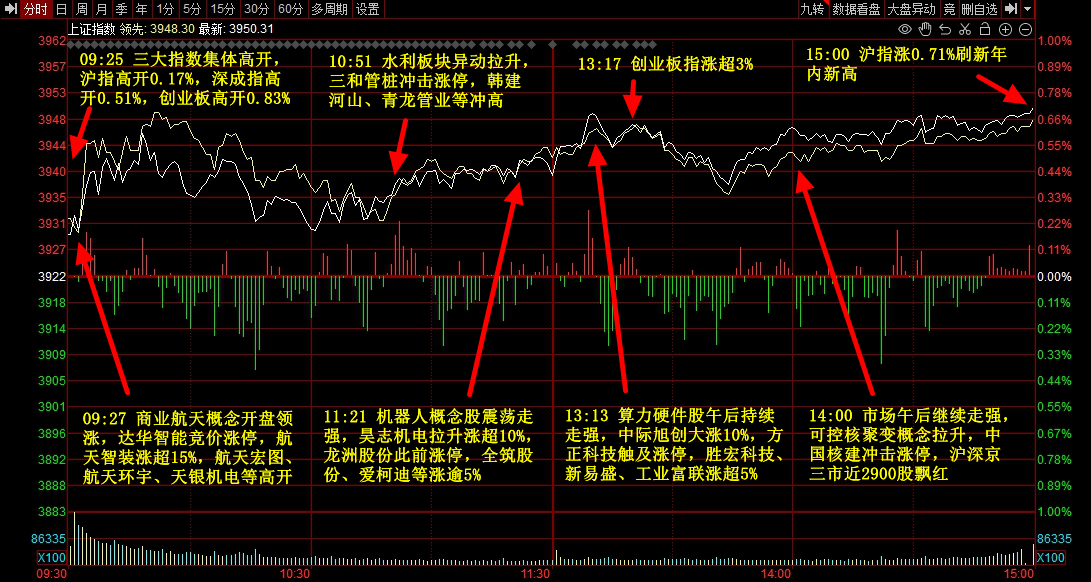
Market Overview - The market indices experienced significant gains, with the Shanghai Composite Index, Shenzhen Component Index, and ChiNext Index rising by 0.71%, 2.02%, and 3.57% respectively, and over 3,000 stocks rising while more than 2,200 stocks fell [4] - The trading volume approached 2 trillion yuan, indicating increased market activity [4] - The Shanghai Composite Index reached a new high for the year, while the ChiNext Index also returned to near its yearly high [5] Storage Sector - The storage sector opened strongly, with several stocks hitting the daily limit, including Xianggang Technology, Dwei Co., and Purun Co., among others [8] - The flash memory and DRAM sectors saw increases of 8.25% and 7.92% respectively, driven by price hikes from major companies like Samsung and SK Hynix, which raised prices by up to 30% [8] - The surge in the storage sector was also influenced by a significant rise in U.S. storage stocks, particularly SanDisk, which increased by over 13.6% [8] Financial Sector - The financial sector initially lagged behind the market, with no mentions in the recent five-year plan, leading to a perception of underperformance [12] - However, after a statement from a senior financial official emphasizing the importance of high-quality financial development, the sector saw a rebound, with brokerage stocks gaining 0.85% by the end of the day [12] Technology and Robotics - Jinfutech experienced a sharp rise after announcing a collaboration with Shanghai Hanzhi Information Technology and receiving a manufacturing order for humanoid robots [16] - This marked a significant advancement in the company's involvement in the robotics sector, moving beyond mere partnerships to actual manufacturing contracts [16]


53.42亿主力资金净流入 国家大基金持股概念涨4.88%
Zheng Quan Shi Bao Wang· 2025-10-24 10:06
Core Insights - The National Big Fund holding concept rose by 4.88%, ranking second among concept sectors, with 48 stocks increasing in value, including Shenzhen Circuit which hit the daily limit, and Jiangbolong, Huahong Company, and Baiwei Storage showing significant gains of 16.73%, 15.02%, and 10.70% respectively [1][2] Market Performance - The top-performing concept sectors today included: - Storage Chips: +5.66% - National Big Fund Holdings: +4.88% - Tonghuashun Fruit Index: +4.60% - Co-packaged Optics (CPO): +4.25% - AI PC: +3.99% - AI Mobile: +3.88% [2] Capital Inflow - The National Big Fund holding concept saw a net inflow of 5.342 billion yuan, with 39 stocks receiving net inflows, and 15 stocks exceeding 100 million yuan in net inflow. The leading stock for net inflow was SMIC with 784 million yuan, followed by Tuojing Technology, Changchuan Technology, and Huahong Company with net inflows of 565 million yuan, 461 million yuan, and 432 million yuan respectively [2][3] Stock Performance - Key stocks within the National Big Fund holding concept included: - SMIC: +4.49%, turnover rate 5.12%, net inflow 784 million yuan, net inflow ratio 5.79% - Tuojing Technology: +10.55%, turnover rate 4.80%, net inflow 565 million yuan, net inflow ratio 15.17% - Changchuan Technology: +6.22%, turnover rate 13.34%, net inflow 461 million yuan, net inflow ratio 8.20% - Huahong Company: +15.02%, turnover rate 12.70%, net inflow 432 million yuan, net inflow ratio 6.83% [3][4]


先进封装概念涨3.65%,主力资金净流入91股
Zheng Quan Shi Bao Wang· 2025-10-24 09:58
Core Viewpoint - The advanced packaging concept sector has shown a significant increase of 3.65% as of the market close on October 24, ranking 8th among concept sectors, with 134 stocks rising, indicating strong investor interest and potential growth in this area [1][2]. Group 1: Sector Performance - The advanced packaging concept sector saw a net inflow of 3.73 billion yuan, with 91 stocks receiving net inflows, and 17 stocks exceeding 100 million yuan in net inflows [2][3]. - Key performers within the advanced packaging sector included Kexiang Co., which hit a 20% limit up, and other notable stocks such as Jiangbolong, Inno Laser, and Yongxi Electronics, which rose by 16.73%, 11.89%, and 11.17% respectively [1][2]. Group 2: Stock Performance - The top stocks by net inflow in the advanced packaging sector were TuoJing Technology with a net inflow of 565 million yuan, followed by Tongfu Microelectronics and Shenzhen South Circuit with net inflows of 415 million yuan and 387 million yuan respectively [2][3]. - The net inflow ratios for leading stocks included Kexiang Co. at 16.64%, TuoJing Technology at 15.17%, and Shenzhen South Circuit at 15.08% [3]. Group 3: Comparative Sector Analysis - Other concept sectors with notable performance included storage chips with a rise of 5.66%, while sectors like state-owned enterprise reform and coal concepts experienced declines of 3.74% and 1.91% respectively [2].