
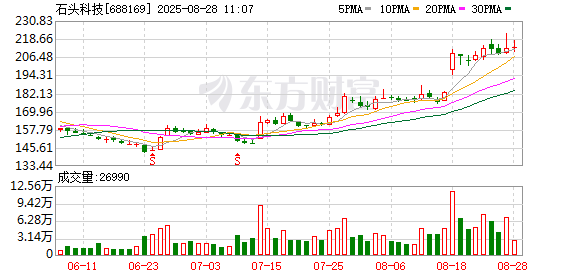
Roborock(688169)

Search documents
东海证券:8月新品发布或拉动扫地机器人需求 关注石头科技(688169.SH)等
智通财经网· 2025-08-28 03:57
Core Insights - The Chinese robotic vacuum cleaner market is experiencing strong growth, with retail sales increasing by 41.1% year-on-year in the first half of 2025, and sales volume rising by 40.7% [1][2] - Leading companies are enhancing product competitiveness through technological innovations such as bionic robotic arms and AI interaction, which are expected to attract consumers despite potential challenges in Q4 due to high base effects [1][2] Group 1: Market Performance - The domestic retail sales of robotic vacuum cleaners reached a significant growth rate of 41.1% year-on-year in H1 2025, with sales volume increasing by 40.7% [1] - The average online retail price of robotic vacuum cleaners showed fluctuations, with a decrease of 4.9% and 5.0% in May and June, respectively, followed by a slight increase of 4.3% in July [3] Group 2: Product Innovation and Brand Strategy - Major brands are focusing on product innovation to enhance user experience and reduce market homogenization, incorporating advanced technologies like self-cleaning and AI interaction [1] - In August, several leading brands, including DJI and Roborock, launched new products, indicating a competitive landscape and potential for attracting consumer interest [2] Group 3: Global Market Trends - The global smart robotic vacuum cleaner market is projected to ship 20.6 million units in 2024, with a year-on-year growth of 11.2%, and an expected sales revenue of $9.31 billion, reflecting a 19.7% increase [4] - Chinese brands dominate the global market, with the top four brands in Q1 2025 being Chinese, led by Roborock, which achieved significant market share in various international channels [5]


洗地机市占率狂飙近1000%!石头科技以无菌技术撬动宠物经济万亿市场
Guo Ji Jin Rong Bao· 2025-08-28 03:06
Industry Overview - The pet economy in China is experiencing a compound annual growth rate (CAGR) of 25.4%, with market size increasing from 97.8 billion yuan in 2015 to an expected 300 billion yuan by 2024, and projected to exceed 811.4 billion yuan by 2025 and reach 1 trillion yuan by 2030 [2] - The global pet market is also expanding, with the European pet market expected to reach 150 billion USD by 2025 [2] Market Dynamics - Nearly one-third of pet-owning families in China face daily cleaning challenges due to pet hair, stains, and bacteria, indicating a significant demand for cleaning solutions [2] - The role of pets is shifting from functional companions to emotional partners, particularly among single individuals and the elderly, leading to increased spending on pet-related products and services [4] Product Demand and Innovation - The rise in pet ownership has led to higher cleaning demands, with floor cleaning machines, particularly those with features like high-temperature disinfection and anti-tangle technology, becoming increasingly popular among pet owners [2][4] - Stone Technology's floor cleaning machines have seen significant market share growth, achieving a 23.17% market share in the second quarter, with retail sales growth nearing 1000% year-on-year [8][10] Sales and Marketing Strategies - Stone Technology has increased its marketing expenditures significantly, with a sales expense ratio of 26.2% in the third quarter of 2024, contributing to its rapid market share growth [10] - The company employs a multi-channel marketing strategy, utilizing e-commerce platforms and social media to influence consumer purchasing decisions, particularly among younger pet owners [11] Future Opportunities - The market for floor cleaning machines is expected to continue growing, with sales projected to increase from 1 billion yuan in 2019 to 14.1 billion yuan by 2024, reflecting a CAGR of approximately 192% [11] - Future innovations may include integrating health monitoring features into cleaning devices, potentially transforming them into tools for pet health management [12][13]

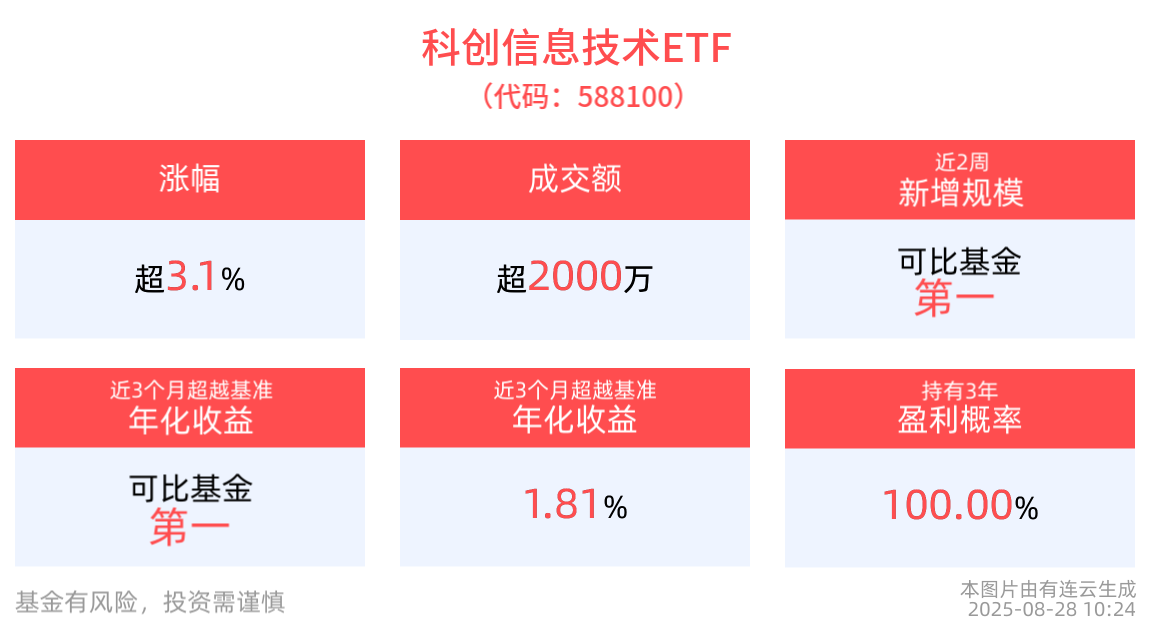
政策对AI赋能经济发展重视程度日益提升,科创信息技术ETF(588100)盘中涨超3%
Xin Lang Cai Jing· 2025-08-28 02:48
Group 1 - The core viewpoint highlights the significant growth and performance of the Sci-Tech Information Technology ETF, which has seen a 110.55% increase in net value over the past year, ranking in the top 4.15% among comparable index funds [3] - The ETF has experienced a notable increase in trading volume, with a daily average transaction of 42.96 million yuan over the past week, ranking first among comparable funds [3] - The ETF's scale has grown by 37.91 million yuan in the past two weeks, also leading among comparable funds [3] Group 2 - The research team indicates that the Chinese government's emphasis on AI's role in economic development is increasing, as evidenced by the recent policy document outlining key actions in six areas, including technology and global cooperation [4] - The document sets ambitious targets for AI penetration rates of 70% by 2027 and 90% by 2030, suggesting significant growth potential in various traditional industries [4] - The top ten weighted stocks in the new generation information technology index include major companies like SMIC and Cambricon, collectively accounting for 55.76% of the index [4] Group 3 - The Sci-Tech Information Technology Index consists of stocks from the Sci-Tech Innovation Board, focusing on sectors such as chips, software, cloud computing, big data, and artificial intelligence, providing comprehensive coverage from hardware to application layers [6] - The index is positioned to benefit from trends in AI computing power, chips, computers, and communications, making it a diversified investment option in the AI sector [6]




石头科技“贪大”,昌敬“不务正业”
Sou Hu Cai Jing· 2025-08-27 12:06
Core Viewpoint - The article discusses the decline of Stone Technology, once a leading player in the robotic vacuum market, highlighting the challenges faced by the company due to its founder's shift in focus towards electric vehicle development and the resulting impact on its financial performance and investor confidence [1][4][22]. Financial Performance - In the first half of the year, Stone Technology reported a revenue increase of 78.96% year-on-year, reaching approximately 7.9 billion yuan, but the net profit excluding non-recurring gains fell by 41.96% [15][16]. - From 2022 to 2024, Stone Technology's revenue grew from 66.1 billion yuan to 119.18 billion yuan, while net profit decreased from 11.84 billion yuan to 19.77 billion yuan, indicating a troubling trend of increasing revenue but declining profitability [11][14]. - The company's net profit for Q3 2024 dropped by 43.4% year-on-year, marking the largest single-quarter decline since its IPO [11][14]. Market Position and Competition - Stone Technology maintains a leading market share in the robotic vacuum sector but faces increasing competition from established rivals like Ecovacs and new entrants such as DJI [4][22]. - Despite achieving a global market share of 19.3% in Q1 2025, the company is experiencing challenges in its high-end market strategy, particularly in overseas markets where gross margins have declined [22][23]. Leadership and Strategic Direction - Founder Chang Jing's focus has shifted towards his new venture, Extreme Stone Automotive, leading to concerns about his commitment to Stone Technology [4][8][20]. - Chang's significant stock sell-off, totaling nearly 9 billion yuan, has raised questions about his priorities and the financial health of Stone Technology [20][23]. - The company is preparing for a secondary listing on the Hong Kong Stock Exchange, which is seen as a critical step for expanding its global market presence [21][23]. Investor Sentiment - Investor confidence has waned, with some expressing frustration over Chang's perceived lack of focus on Stone Technology amid his automotive ambitions [4][18][23]. - The company's stock price has significantly declined, with a market capitalization drop of approximately 46% from its peak [16][22].
小家电板块8月27日跌0.36%,利仁科技领跌,主力资金净流入4844.65万元
Zheng Xing Xing Ye Ri Bao· 2025-08-27 08:39
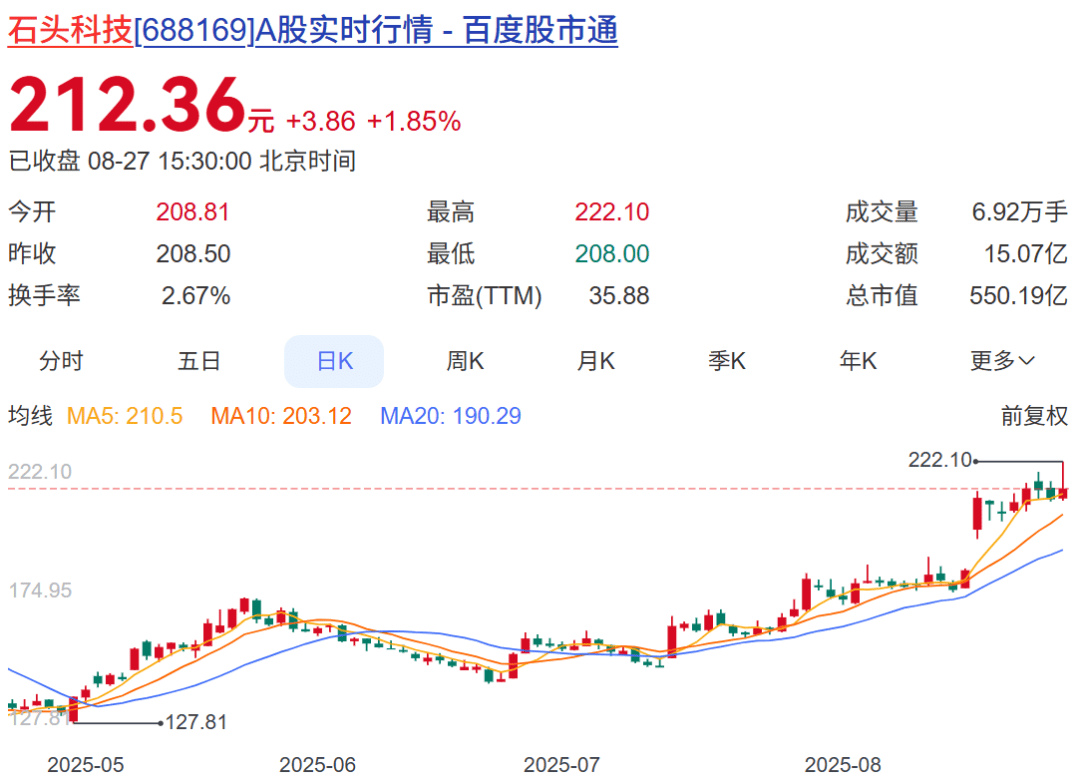
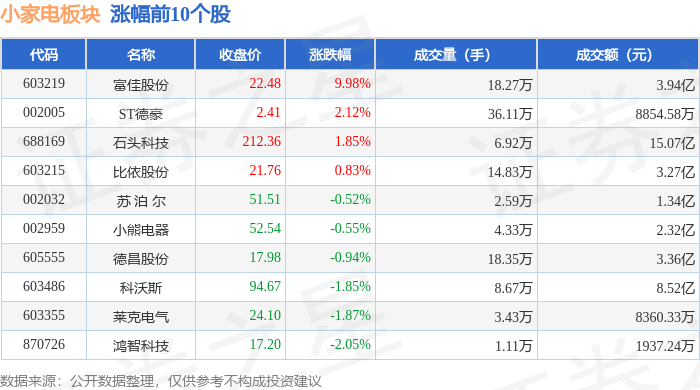
Market Overview - On August 27, the small home appliance sector declined by 0.36% compared to the previous trading day, with Liren Technology leading the decline [1] - The Shanghai Composite Index closed at 3800.35, down 1.76%, while the Shenzhen Component Index closed at 12295.07, down 1.43% [1] Stock Performance - Notable gainers included: - Fujia Co., Ltd. (603219) with a closing price of 22.48, up 9.98% and a trading volume of 182,700 shares, totaling 394 million yuan [1] - ST Dehao (002005) closed at 2.41, up 2.12% with a trading volume of 361,100 shares, totaling 88.54 million yuan [1] - Stone Technology (688169) closed at 212.36, up 1.85% with a trading volume of 69,200 shares, totaling 1.507 billion yuan [1] - Notable decliners included: - Liren Technology (001259) closed at 26.14, down 4.95% with a trading volume of 18,400 shares, totaling 49.2716 million yuan [2] - Kaineng Health (300272) closed at 6.71, down 4.28% with a trading volume of 298,200 shares, totaling 206 million yuan [2] - Delmar (301332) closed at 10.81, down 3.74% with a trading volume of 71,400 shares, totaling 79.0705 million yuan [2] Capital Flow - The small home appliance sector saw a net inflow of 48.4465 million yuan from institutional investors, while retail investors experienced a net outflow of 57.8814 million yuan [2] - Key stocks with significant capital flow included: - Fujia Co., Ltd. had a net inflow of 39.696 million yuan from institutional investors, while retail investors had a net outflow of 19.5988 million yuan [3] - Stone Technology saw a net inflow of 30.3429 million yuan from institutional investors, with a net outflow of 6.1693 million yuan from retail investors [3] - Liren Technology had a net inflow of 5.2453 million yuan from institutional investors, but a significant net outflow of 5.5186 million yuan from retail investors [3]


搭乘AI东风,A股近八成消费电子公司上半年营收飘红,哪些陷利润下滑窘境?
Hua Xia Shi Bao· 2025-08-27 08:29
Core Insights - The consumer electronics industry is showing signs of recovery, with 80 out of 101 companies reporting revenue growth year-on-year, and 35 companies achieving over 20% growth [1] - Industrial Fulian leads the sector with significant revenue and profit growth, achieving 360.76 billion yuan in revenue and 12.11 billion yuan in net profit for the first half of 2025, marking a year-on-year increase of 35.58% and 38.61% respectively [2] - The emergence of "dark horse" companies is notable, with several firms reporting revenue growth exceeding 50%, particularly those focused on AI applications [4] Industry Performance - The consumer electronics sector has 22 companies with revenues exceeding 10 billion yuan, with notable performances from companies like Luxshare Precision and Hikvision, which reported revenues of 124.50 billion yuan and 41.82 billion yuan respectively [3] - A total of 14 companies reported net profit growth exceeding 100%, with Qianfang Technology and Silan Micro achieving remarkable increases of 1287.12% and 1162.42% in net profit [5] AI Impact - AI technology is driving new growth points in the consumer electronics industry, with products like AI smartphones and smart home devices gaining traction [6] - The short-term effects of AI-related investments are evident, particularly for companies that have early adopted AI technologies [6] Market Disparities - Despite the overall recovery, there is a clear divergence within the industry, with 16 companies reporting a decline in net profit exceeding 30% [7] - Companies like AOC Technology and OFILM have reported losses, with AOC's net profit dropping to -0.49 billion yuan from a profit of 0.05 billion yuan in the previous year [7] Competitive Landscape - The competitive environment is intense, with leading companies capturing a significant market share, making it challenging for smaller firms to compete effectively [8]




AI与机器人产业发展政策加码,机器人ETF嘉实(159526)盘中上涨3.56%
Xin Lang Cai Jing· 2025-08-27 05:38
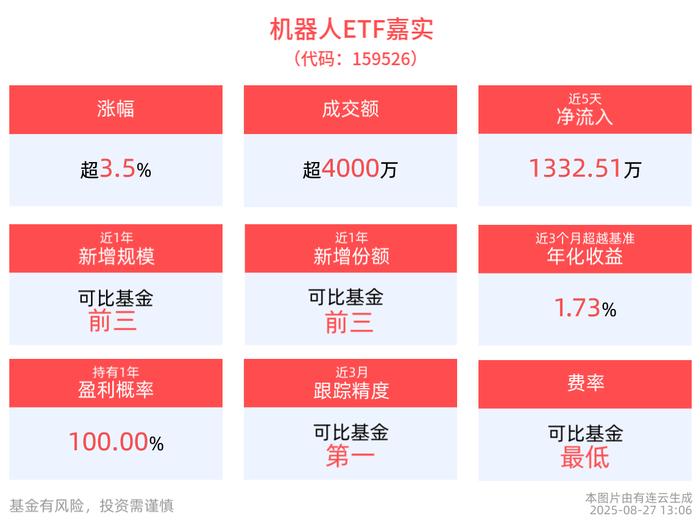
Core Viewpoint - The robotics sector is experiencing significant growth driven by advancements in artificial intelligence and supportive government policies, leading to increased investment opportunities and market performance. Group 1: Market Performance - As of August 27, 2025, the CSI Robotics Index rose by 3.41%, with key stocks like Keda Intelligent hitting the daily limit up, and Yuntian Lifeng and Dongjie Intelligent increasing by 18.22% and 10.25% respectively [1] - The Robotics ETF managed by Harvest (159526) saw an increase of 3.56% [1] - The average daily trading volume of the Robotics ETF over the past week was 53.45 million yuan, with a total turnover of 40.34 million yuan on the day [3] Group 2: Fund Performance - The Robotics ETF has experienced a significant growth in scale, increasing by 554 million yuan over the past year, and its shares have grown by 35.9 million [3] - The net inflow of funds into the Robotics ETF was 6.71 million yuan recently, with a total of 13.33 million yuan net inflow over the last five trading days [3] - The net value of the Robotics ETF increased by 83.05% over the past year, ranking in the top 14.54% among 2,977 index equity funds [3] Group 3: Key Stocks - The top ten weighted stocks in the CSI Robotics Index account for 48.86% of the index, with notable performers including Keda Xunfei, Huichuan Technology, and Stone Technology [3] - Specific stock performances include Huichuan Technology up by 4.40%, Keda Xunfei up by 5.28%, and Stone Technology up by 5.99% [5] Group 4: Industry Trends - The robotics sector is being catalyzed by events such as the World Artificial Intelligence Conference and the World Robot Conference, indicating a shift from virtual to real-world applications [6] - Government policies are increasingly supportive of the AI and robotics industry, with Guangdong province offering financial support for key projects, with individual project funding up to 50 million yuan [6] - Major cities like Beijing and Shanghai are hosting industry events to stimulate growth in the robotics sector [6]


机器人50ETF(159559)盘中涨超2%,“人工智能+”行动确定6大重点
Xin Lang Cai Jing· 2025-08-27 04:06
Group 1 - The National Robot Industry Index (980022) has seen a strong increase of 2.77%, with component stocks such as Keda Intelligent (300222) hitting the daily limit up, Jiangsu Beiren (688218) rising by 8.39%, and Stone Technology (688169) increasing by 5.70% [1] - The index reflects the price changes of listed companies in the robot industry on the Shanghai and Shenzhen stock exchanges, consisting of 50 component stocks, with a high focus on humanoid robots and leading companies in high growth, where the top ten weighted stocks account for about 40% [1] - The State Council has issued an opinion on the implementation of the "Artificial Intelligence +" initiative, emphasizing six key actions to promote the deep integration of artificial intelligence with various sectors of the economy and society [1][2] Group 2 - The report from CITIC Securities highlights that the "Artificial Intelligence +" initiative aims for a penetration rate of over 90% for new generation intelligent terminals and intelligent agents by 2030, indicating significant support for embodied intelligent robots as a new generation of intelligent terminal products [2] - The initiative is expected to facilitate the development of technology, supporting infrastructure, and regulatory frameworks, propelling the industry into a phase of high-quality development [2]



“人工智能+”新政落地!机器人ETF(159213)放量涨超3%,连续13日“吸金”超1.4亿元!AI应用下一站,人形机器人万亿空间可期?
Sou Hu Cai Jing· 2025-08-27 03:30
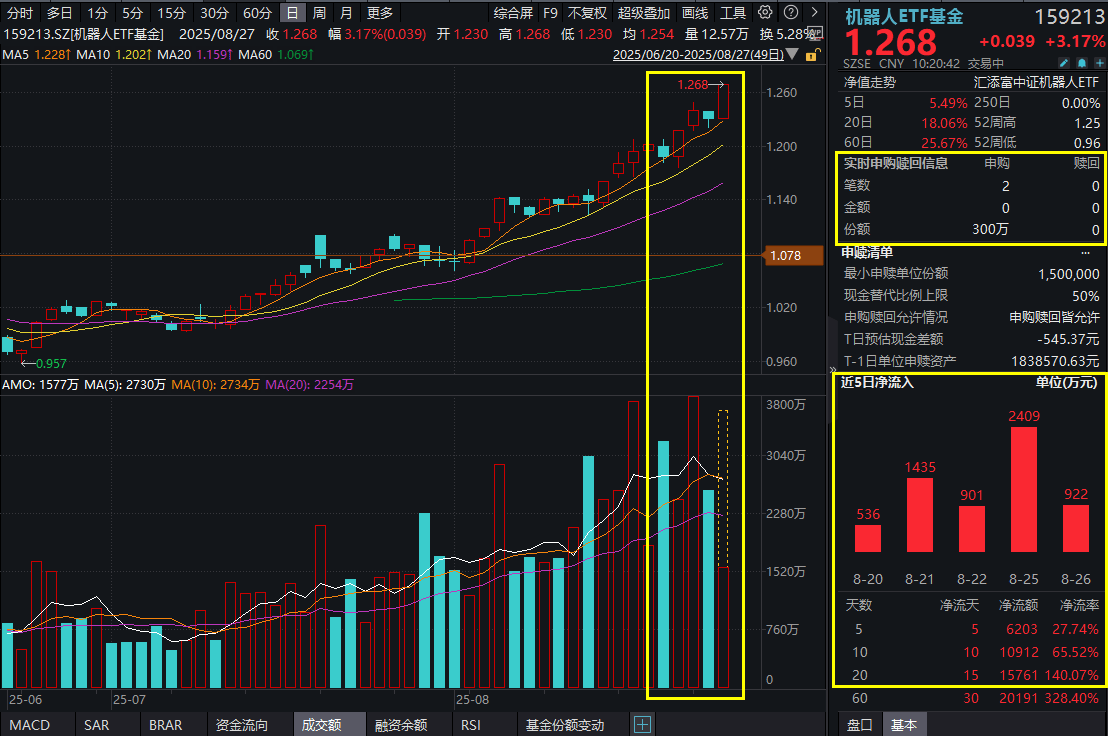
Core Viewpoint - The AI wave is driving significant growth in the robotics sector, with the Robotics ETF (159213) experiencing substantial inflows and notable performance from key stocks in the industry [1][3][6]. Group 1: Market Performance - As of 10:25 on August 27, the Robotics ETF (159213) saw a net inflow of 17 million yuan, marking a total net inflow of over 140 million yuan over the past 13 days [1]. - Key stocks within the Robotics ETF include Yuntian Lifei, which rose over 13%, and Keda Xunfei, which increased by over 6% [3][4]. Group 2: Policy and Industry Outlook - The "Artificial Intelligence +" action plan was released on August 26, 2025, aiming to promote AI integration across six dimensions, with goals set for 2027, 2030, and 2035 [6][7]. - The plan emphasizes enhancing foundational model capabilities and fostering an open-source ecosystem, which is expected to benefit the development of embodied intelligence in robotics [7]. Group 3: Investment Opportunities - The robotics industry is entering a recovery phase after a three-year adjustment period, with increasing production and growth rates [9]. - The human-shaped robot market is projected to have a potential market space exceeding one trillion yuan, driven by advancements in technology and increasing applications [7][9]. - Key investment opportunities include leading companies in the robotics sector such as Estun and core component suppliers like Lide Xiebo and Boke Co., as well as components like rolling ball screws and six-dimensional torque sensors [9].


科创信息技术ETF(588100)开盘涨0.75%,重仓股中芯国际涨1.26%,海光信息涨1.49%
Xin Lang Cai Jing· 2025-08-27 01:37
Group 1 - The core viewpoint of the article highlights the performance of the Kexin Information Technology ETF (588100), which opened with a gain of 0.75% at 1.753 yuan [1] - The ETF's major holdings include companies such as SMIC, which rose by 1.26%, and Cambrian, which increased by 3.75%, while companies like Langqi Technology and Zhongwei Company saw declines of 0.39% and 1.86% respectively [1] - The ETF's performance benchmark is the Shanghai Stock Exchange Science and Technology Innovation Board New Generation Information Technology Index, managed by Harvest Fund Management, with a return of 74.24% since its inception on May 18, 2022, and a return of 24.37% over the past month [1]


