
Junshi Biosciences(688180)

Search documents
君实生物: 开启免疫治疗2.0时代
Bei Jing Shang Bao· 2025-08-05 10:36
Core Insights - The article highlights the significant impact of domestic PD-1 inhibitors on reducing cancer treatment costs, leading to a release of previously constrained consumer demand [1] - It emphasizes the evolution of Chinese innovative pharmaceutical companies from imitation to original innovation, particularly in the field of cancer treatment [1][2] Company Development - Junshi Biosciences, as a representative of the thriving domestic innovative pharmaceutical sector, has made notable strides since its establishment in 2012, culminating in the launch of its PD-1 monoclonal antibody, Tuoyi, in 2018 [2][3] - Tuoyi has received approval for 12 indications, with 10 included in the national medical insurance catalog, significantly alleviating patient financial burdens [7] Market Dynamics - The competitive landscape has evolved with the emergence of "PD-1 Four Dragons," including Junshi Biosciences, Innovent Biologics, Hengrui Medicine, and BeiGene, marking PD-1 as a hot innovation track [3][4] - The industry is actively pursuing the development of next-generation immunotherapy drugs to address unmet clinical needs, with Junshi Biosciences allocating a significant portion of its recent financing for this purpose [4][5] Pricing and Accessibility - Junshi's Tuoyi was initially priced at less than one-third of similar imported products, making it one of the lowest-priced PD-1 drugs globally [6] - The company is focused on balancing accessibility and commercialization, as the Chinese innovative drug payment environment undergoes systemic reforms [7][8] International Expansion - Junshi Biosciences is exploring various international market entry strategies, including licensing, joint ventures, and independent commercialization, with a global network covering over 80 countries [10][11] - The company is actively pursuing partnerships to enhance its drug pipeline and expedite the approval process for its products in international markets [10][11] Future Outlook - The innovative drug industry is transitioning from a focus on "life-saving necessities" to "long-term health management services," driven by an aging population and increased health awareness [13] - Junshi Biosciences aims to contribute to the establishment of a globally competitive biopharmaceutical innovation system, emphasizing the importance of clinical efficacy, affordability, and user convenience in redefining the consumption value of innovative drugs [12][13][16]
创新消费力| 君实生物: 开启免疫治疗2.0时代
Bei Jing Shang Bao· 2025-08-05 10:16
Core Viewpoint - The article highlights the significant advancements and competitive landscape of China's innovative drug industry, particularly focusing on the development and commercialization of PD-1 inhibitors, with Junshi Biosciences as a key player in this transformation [3][4][5]. Group 1: Industry Development - The Chinese innovative drug sector is experiencing a pivotal decade, with local companies transitioning from imitation to original innovation, particularly in the field of cancer treatment [3]. - The approval of the first domestic PD-1 monoclonal antibody, Tuoyi (Tremelimumab), marked a significant milestone, leading to the emergence of a competitive landscape known as the "PD-1 Four Dragons" [7][8]. - As of now, Tuoyi has received approval for 12 indications, with 10 included in the national medical insurance catalog, significantly reducing treatment costs for patients [7][11]. Group 2: R&D and Innovation - Junshi Biosciences is focusing on the development of next-generation immunotherapy drugs to address unmet clinical needs, including PD-1/VEGF dual antibodies and other innovative targets [9][10]. - The company has raised over 1 billion HKD through equity financing, with a significant portion allocated to R&D for innovative drugs [9]. - The competitive landscape is becoming increasingly crowded, necessitating a focus on original innovation and differentiated product development strategies [10]. Group 3: Market Accessibility and Policy - Junshi's pricing strategy for Tuoyi was significantly lower than imported counterparts, making it one of the most affordable PD-1 drugs globally, which has been crucial for patient access [11]. - The Chinese government is reforming the medical insurance system to balance commercial viability with the need to reflect the value of innovation, aiming for a sustainable ecosystem for innovative drugs [11][12]. - Recent policy changes, including a dual-track payment system for innovative drugs, are expected to enhance market flexibility and accessibility [12]. Group 4: Global Expansion - The global market is becoming a new battleground for innovative drugs, with Junshi exploring various international strategies, including licensing and joint ventures [14][15]. - The company has established a global commercialization network covering over 80 countries and regions, actively pursuing international clinical trials for its pipeline products [16]. - The trend of licensing out has become a primary funding source for unprofitable innovative drug companies, with significant growth in transaction volumes reported [17]. Group 5: Future Outlook - The innovative drug industry is transitioning from a focus on urgent medical needs to long-term health management services, driven by an aging population and increased health awareness [19]. - Junshi aims to redefine the consumer value of innovative drugs by enhancing clinical efficacy, affordability, and patient adherence [19]. - The industry is expected to see increased interest from multinational pharmaceutical companies, providing opportunities for domestic firms to secure funding and expand internationally [21].

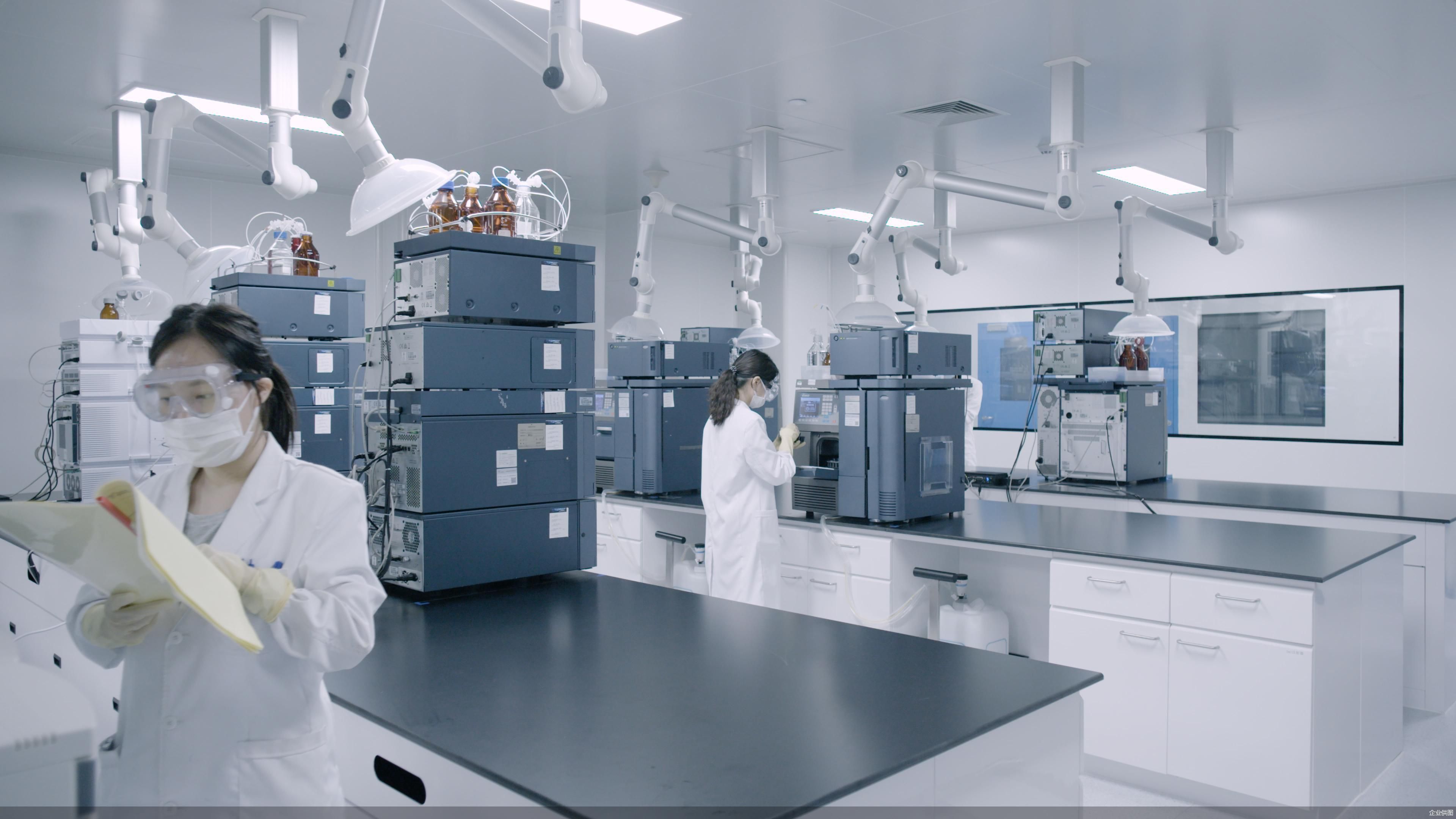
君实生物尾盘飙升近35% 公司此前筹资超10亿用于PD-1/VEGF双抗等研发
Zhi Tong Cai Jing· 2025-08-05 09:37
Group 1 - The global enthusiasm for dual antibodies development is rising, creating an innovation achievement window for the domestic antibody industry [1] - Junshi Bioscience has extensive experience in monoclonal antibody development, with its PD-1 monoclonal antibody, Toripalimab, being one of the first domestically launched PD-1 inhibitors [1] - Toripalimab is currently approved for multiple indications in China and is expanding its global commercialization network, with approvals expected in the US and EU in 2023 and 2024 [1] Group 2 - Junshi Bioscience has developed a series of innovative dual antibodies (JS207, JS201, JS203, JS205) and dual antibody ADC (JS212) based on its monoclonal antibody foundation [1] - On June 20, Junshi Bioscience completed a placement of 41 million new shares, raising approximately HKD 1.026 billion [1] - The company plans to allocate 70% of the net proceeds from the placement for innovative drug research and development, including PD-1/VEGF dual antibodies and other pipeline projects [1]
君实生物A股涨4.78% 港股涨33.75%
Zhong Guo Jing Ji Wang· 2025-08-05 09:17
中国经济网北京8月5日讯 君实生物(688180.SH,01877.HK)今日A股收报39.46元,涨幅4.78%;港 股收报32.18港元,涨幅33.75%。 ...
港股收评:三大指数齐涨,科技股分化,生物医药股强势!君实生物大涨34%,晨鸣纸业涨15%,腾讯涨1.64%,快手涨3%
Ge Long Hui· 2025-08-05 08:48
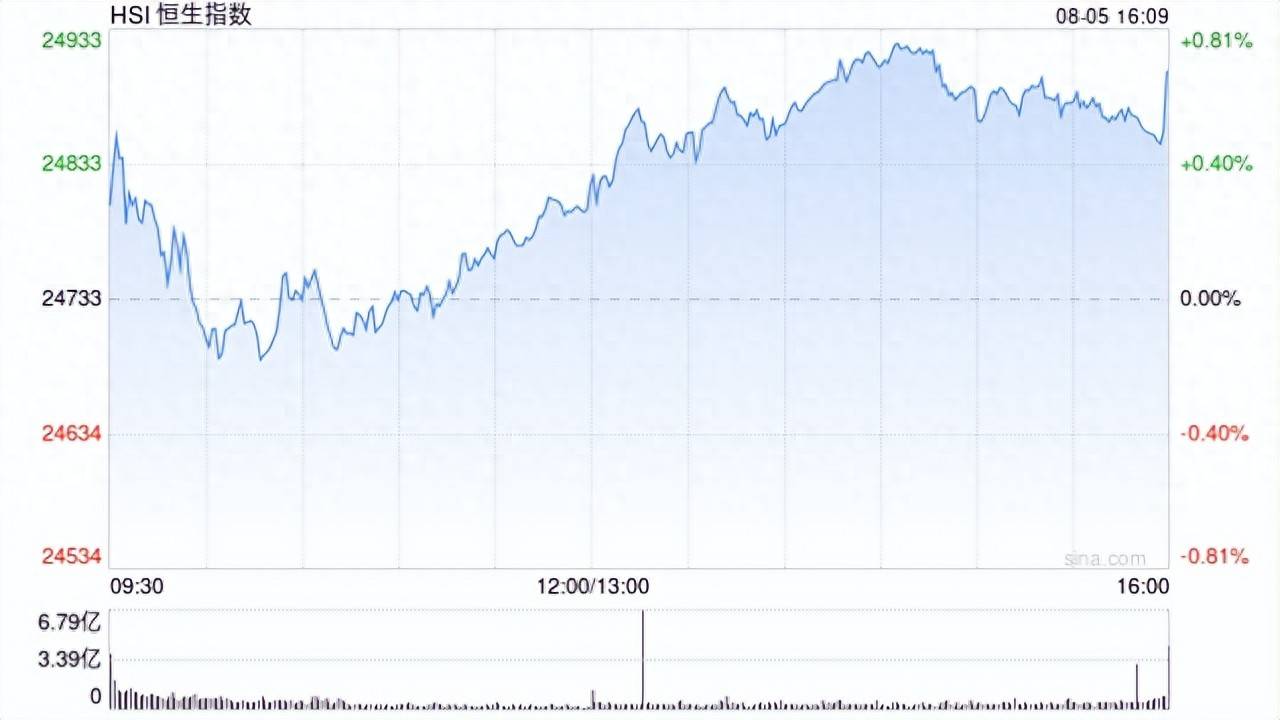
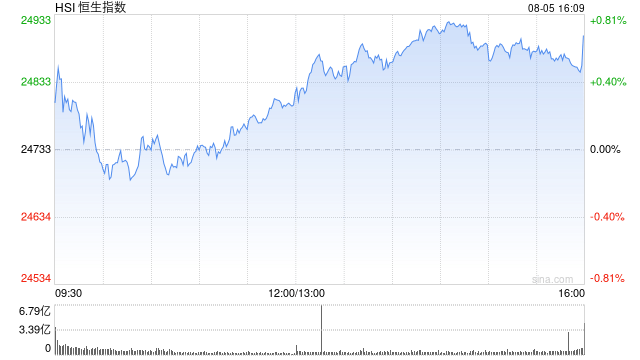
Core Viewpoint - The Hong Kong stock market continued its rebound, with significant net inflows from mainland investors exceeding HKD 22 billion, leading to gains in major indices [1] Group 1: Market Performance - The Hang Seng Index rose by 0.68%, the Hang Seng China Enterprises Index increased by 0.65%, and the Hang Seng Tech Index gained 0.73% [1] - Large technology stocks showed mixed performance, with Kuaishou up nearly 3%, Tencent rising by 1.64%, and Netease increasing by 1.55%, while Xiaomi, Alibaba, Baidu, and Meituan remained in the red [1] Group 2: Sector Highlights - Biopharmaceutical stocks experienced a significant surge, with Junshi Biosciences soaring nearly 34% at the close, and other companies like CanSino Biologics, Innovent Biologics, and WuXi AppTec also showing strong performance [1] - Leading paper companies initiated a new round of price increases, resulting in a notable rise in paper stocks, with Chenming Paper up nearly 15% reaching a new high [1] - The brain-computer interface concept stocks generally rose, with Nanjing Panda Electronics hitting an intraday high of 8% [1] Group 3: Other Sector Movements - The automotive sector showed mixed results following the release of July's new energy vehicle sales data, with NIO, Leapmotor, and BYD underperforming [1] - Semiconductor stocks declined in the afternoon, with SMIC falling nearly 1%, while lithium battery stocks, education stocks, and oil stocks saw slight declines [1]
港股收评:恒指涨0.68%科指涨0.73%!联想集团涨5%,君实生物涨33%,比亚迪电子涨7%,蔚来跌6%,小米跌0.46%
Sou Hu Cai Jing· 2025-08-05 08:47
Market Overview - The Hong Kong stock market indices collectively rose, with the Hang Seng Index increasing by 0.68% to 24,902.53 points, the Hang Seng Tech Index up by 0.73%, and the State-Owned Enterprises Index rising by 0.65% [2] Biopharmaceutical Sector - The biopharmaceutical sector showed strong performance, with Junshi Biosciences rising over 33% following a report from CCTV on July 31, stating that the National Healthcare Security Administration supports the clinical application and pricing of new technologies like brain-computer interfaces [4] - Junshi Biosciences' stock price reached 32.180, reflecting a 33.75% increase [5] Steel Industry - The steel sector saw significant gains, with Maanshan Iron & Steel Co. rising over 15%. Despite challenges such as supply-demand imbalances, the industry is expected to maintain stable demand due to supportive policies and ongoing infrastructure investments [4] - Maanshan Iron & Steel Co.'s stock price was reported at 2.530, marking a 15.53% increase [6] Apple-Related Stocks - Apple-related stocks experienced an uptick, with BYD Electronics rising over 7%. Apple's third-quarter revenue growth was reported at 9.6%, reaching $94 billion, which is the fastest growth in nearly three years, exceeding Wall Street expectations [6] - BYD Electronics' stock price was noted at 35.420, with a 7.73% increase [7] Automotive Sector - The automotive sector faced a pullback, with NIO's stock declining over 6%. Recent sales data revealed that Leap Motor achieved over 50,000 monthly sales, while NIO delivered only 21,000 vehicles, placing it near the bottom of the sales rankings [8] - NIO's stock price was recorded at 35.700, reflecting a decrease of 6.54% [8]

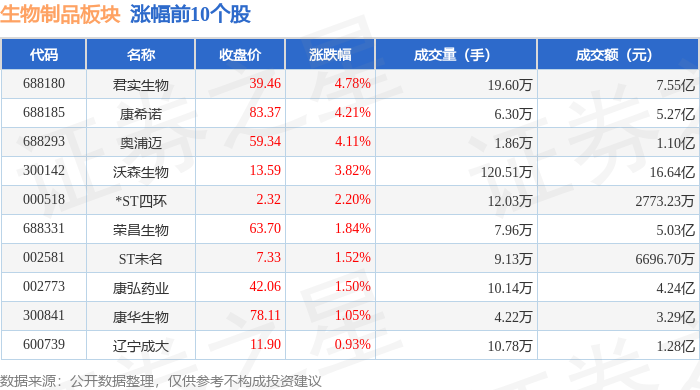
生物制品板块8月5日涨0.25%,君实生物领涨,主力资金净流出9.5亿元
Zheng Xing Xing Ye Ri Bao· 2025-08-05 08:37
| 代码 | 名称 | 收盘价 | 涨跌幅 | 成交量(手) | 成交额(元) | | --- | --- | --- | --- | --- | --- | | 688180 | 君实生物 | 39.46 | 4.78% | 19.60万 | 7.55 Z | | 688185 | 康希诺 | 83.37 | 4.21% | 6.30万 | 5.27亿 | | 688293 | 奥浦迈 | 59.34 | 4.11% | ● 1.86万 | 1.10亿 | | 300142 | 沃森生物 | 13.59 | 3.82% | 120.51万 | 16.64亿 | | 000518 | *ST四环 | 2.32 | 2.20% | 12.03万 | 2773.23万 | | 688331 | 荣昌生物 | 63.70 | 1.84% | 7.96万 | 5.03亿 | | 002581 | ST未名 | 7.33 | 1.52% | 9.13万 | 6696.70万 | | 002773 | 康弘药业 | 42.06 | 1.50% | 10.14万 | 4.24亿 | | 300841 | 康华生物 | 78 ...


港股收评:恒指涨0.68%科指涨0.73%!联想集团涨5%,君实生物涨33%,比亚迪电子涨7%,蔚来跌超6%,小米跌0.46%
Sou Hu Cai Jing· 2025-08-05 08:35
Market Overview - The three major indices in Hong Kong collectively rose, with the Hang Seng Index increasing by 0.68% to 24,902.53 points, the Hang Seng Tech Index rising by 0.73%, and the State-Owned Enterprises Index up by 0.65% [3]. Biopharmaceutical Sector - Biopharmaceutical stocks showed strong performance, with Junshi Biosciences surging over 33% [2][4]. The National Healthcare Security Administration announced support for new technologies like brain-computer interfaces to enter clinical use and be charged, establishing a pricing mechanism for newly listed drugs [2]. Steel Industry - The steel sector saw significant gains, with Maanshan Iron & Steel Co. rising over 15% [5][6]. Despite challenges such as supply-demand imbalances, the industry is expected to maintain stable demand due to ongoing "stability growth" policies, real estate stabilization, and increased infrastructure investment [5]. Apple-Related Stocks - Apple-related stocks experienced an uptick, with BYD Electronics rising over 7% [7][8]. Apple's third fiscal quarter revenue growth was reported at 9.6%, the fastest in nearly three years, reaching $94 billion, exceeding analysts' expectations [7]. Automotive Sector - The automotive sector faced a pullback, with NIO declining over 6% [9][10]. New energy vehicle sales showed a shift, with Leap Motor achieving over 50,000 monthly sales for the first time, while NIO delivered only 21,000 vehicles [9].
港股收评:三大指数齐涨 科技股分化 生物医药股强势 君实生物大涨近34%
Ge Long Hui· 2025-08-05 08:26
港股三大指数延续昨日反弹行情,南下资金净买入港股超220亿港元!截止收盘,恒生指数涨0.68%, 国企指数涨0.65%,恒生科技指数涨0.73%。盘面上,大型科技股走势分化,其中,快手涨近3%,腾讯 涨1.64%,网易涨1.55%,小米、阿里巴巴、百度、美团仍旧飘绿;生物医药股再度迎来大涨行情,君 实生物尾盘快速拉升大幅上涨近34%表现十分抢眼,康诺亚、复宏汉霖、诺诚健华、药明康德皆走强; 纸企龙头发起新一轮涨价潮,纸业股拉升明显,晨鸣纸业大涨近15%刷新阶段新高;近期行业利好袭 来,脑机接口概念股普遍上涨,南京熊猫电子盘中涨至8%,钢铁股、苹果概念股、濠赌股、核电股、 重型机械股、航空股、保险股、内银股、煤炭股多数表现活跃。另一方面,7月新能源车销量成绩单发 布,汽车股涨跌不一,蔚来汽车、零跑汽车、比亚迪股份全天表现低迷,半导体股午后走低,中芯国际 转跌近1%,锂电池股、教育股、石油股少部分走低。(格隆汇) ...
港股收评:恒生指数涨0.68%,君实生物涨超33%,南向资金净买入超234亿港元
Jin Rong Jie· 2025-08-05 08:24
华泰证券发布港股策略研报称,近期港股回调主因内外预期修正,但中期流动性宽松逻辑不改。配置上 建议寻找景气改善+低估值板块,尤其强调对科技板块的配置;短期交易围绕中报业绩展开,建议关 注:估值有性价比且景气改善的游戏和互联网电商龙头;前向12个月估值分位数略高但盈利兑现度高, 如港股创新药及非银金融。 平安证券(香港)研究也指出,当前港股市场仍具有较低估值以及"赚钱效应"下的交易渐趋活跃等优势, 中长期走势仍可保持乐观展望。建议继续关注人工智能、机器人、半导体、工业软件等新质生产力等科 技板块,及政策加力支持的创新医药板块以及具有消费属性的中医药和医疗板块。 金融界8月5日消息 截至收盘,港股恒生指数涨0.68%,报24902.53点,恒生科技指数涨0.73%,报 5521.07点,国企指数涨0.65%,报8951.07点,红筹指数涨0.53%,报4228.54点,南向资金净买入超234 亿港元,君实生物涨超33%,东方甄选涨超16%,山东墨龙涨超14%,比亚迪电子涨超7%,大型科技股 中,阿里巴巴-W跌0.17%,腾讯控股涨1.64%,京东集团-SW平收,小米集团-W跌0.46%,网易-S涨 1.55%,美团 ...