Jinko Solar(688223)

Search documents
马斯克团队密访中国多家光伏企业,晶科能源回应
2 1 Shi Ji Jing Ji Bao Dao· 2026-02-04 08:03
此前的 1 月 23 日,A 股光伏板块掀起涨停潮,共计 24 只光伏股涨停,涉及光伏设备、辅材、主材等多 个环节。据上海证券报,当地时间 1 月 22 日,特斯拉 CEO 埃隆・马斯克在瑞士达沃斯世界经济论坛年 会期间,在与贝莱德 CEO 拉里・芬克的对话中,明确力挺太空光伏,并披露关键产能规划。马斯克表 示,SpaceX 与特斯拉正同步推进太阳能产能提升,目标在未来三年内实现每年 100GW 的太阳能制造 能力。 消息面上,市场有传闻称,马斯克团队近期秘密走访了中国多家光伏企业,考察项目涉及设备、硅片、 电池组件等环节,其中重点考察了有异质结、钙钛矿技术路线的光伏企业。针对该传闻,21 快讯记者 以投资者身份致电光伏组件龙头晶科能源核实,接线工作人员回应称,公司近期确实与马斯克团队相关 考察团有过接触,考察团对公司的技术储备、生产设备等进行了了解,但合作意向及具体考察细节不便 透露。该工作人员同时透露:"国内主流光伏企业也均有考察。" 2 月 4 日,A 股太空光伏板块迎来强势爆发。截至午盘,太空光伏指数(8841929)大涨 2.73%,其 中,中来股份直线拉升,20CM 涨停,拓日新能涨停,晶科能源、 ...


曝马斯克团队密访中国多家光伏企业,光伏股集体涨停
Shen Zhen Shang Bao· 2026-02-04 07:50
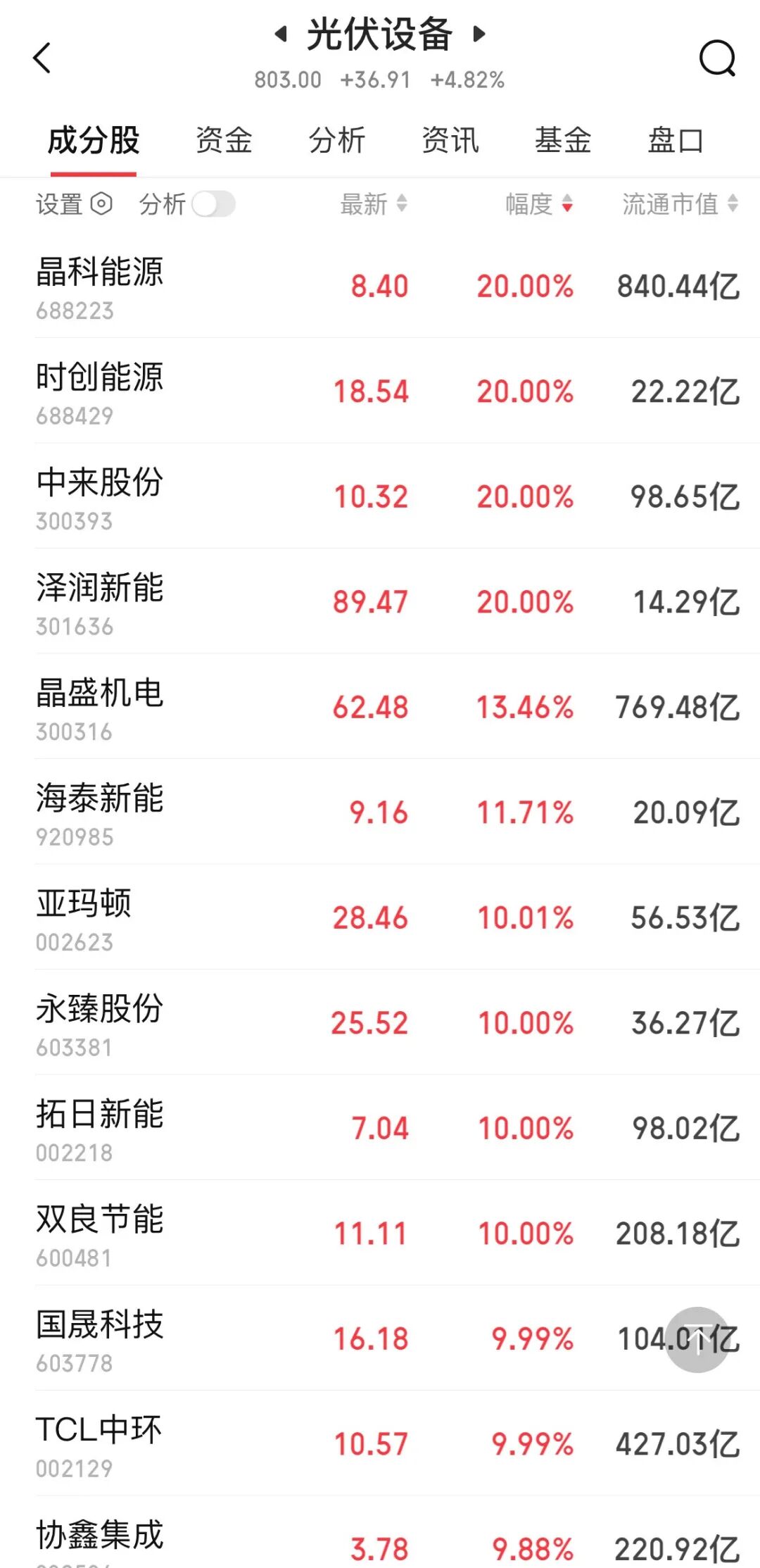
| ◀ 光伏设备 ▶ | | | | | --- | --- | --- | --- | | 803.00 +36.91 +4.82% | | | | | 资金 成分股 | 资讯 分析 | 基金 | 盘口 | | 设置 ◎ 分析 ○ | 最新 ◆ | 幅度 ◆ | 流通市值 ◆ | | 晶科能源 | 8.40 | 20.00% 840.44亿 | | | 688223 | | | | | 时创能源 | 18.54 | 20.00% | 22.22亿 | | 688429 | | | | | 中来股份 | 10.32 | 20.00% | 98.65亿 | | 300393 | | | | | 泽润新能 | 89.47 | 20.00% | 14.29亿 | | 301636 | | | | | 晶盛机电 | 62.48 | 13.46% | 769.48亿 | | 300316 | | | | | 海泰新能 | 9.16 | 11.71% | 20.09亿 | | 920985 | | | | | ーーーーーーー | 28.46 | 10.01% | 56.5516 | | --- | --- | --- | ...

猝不及防!6000亿算力龙头,股价突然跳水大跌!基金第一重仓股的魔咒再度生效?
雪球· 2026-02-04 07:47
Market Overview - The Shanghai Composite Index returned to 4100 points, closing up 0.85%, while the Shenzhen Component Index rose 0.21%, and the ChiNext Index fell 0.4% [3] - The total trading volume in the Shanghai and Shenzhen markets was 2.48 trillion yuan, a decrease of 63.3 billion yuan from the previous trading day, with over 3200 stocks rising [4] Sector Performance - The coal sector experienced a surge, with over ten stocks hitting the daily limit, driven by news of Indonesia's significant coal production cuts [4][16] - The photovoltaic sector also saw strong performance, with stocks like JinkoSolar and Zhonglai Co. hitting the daily limit of 20% [20][24] AI Hardware Sector - Major players in the optical module sector, including Zhongji Xuchuang and Xinyi Sheng, saw significant declines, with Zhongji Xuchuang down 5% and Xinyi Sheng down nearly 7% [7][10] - The decline in these stocks negatively impacted the AI hardware sector, leading to drops in companies like Shenghong Technology and Industrial Fulian [10] Market Sentiment and Influences - Concerns about the impact of CPO (Co-Packaged Optics) deployment timelines on the optical module industry contributed to market anxiety [11] - Historical trends indicate that stocks becoming the top holdings in funds often experience subsequent declines, as seen with Zhongji Xuchuang recently becoming a top holding [12] - Negative sentiment was also influenced by declines in U.S. stocks like Nvidia and Broadcom, affecting the mood around A-share AI hardware stocks [13] Coal Sector Dynamics - Indonesia's decision to cut coal production by 40% to 70% has tightened global supply, potentially increasing international coal prices [19] - China, as the largest importer of Indonesian coal, may face a 5.3% reduction in its coal supply due to these cuts [19] Photovoltaic Sector Developments - Recent visits by Elon Musk's team to Chinese photovoltaic companies have sparked interest, particularly in companies with advanced technologies [23] - The growth of the space photovoltaic sector is seen as a key area for future development, with potential for significant technological advancements and market opportunities [24]

【A股收评】沪指站上4100点,马斯克点燃光伏板块
Sou Hu Cai Jing· 2026-02-04 07:41
2月4日,三大指数涨跌不一,截至收盘,上证指数涨0.85%,深证成指涨0.21%,创业板指跌0.4%,科创50跌1.2%。两市超过3100只股票飘红,两市成交额 约2.48万亿元。 消息面上,上海市启动首批收购二手住房用于保障性租赁住房项目试点,聚焦浦东新区、静安区、徐汇区的小户型二手房源。机构认为,上海二手房收储试 点是积极举措,有助于缓解供给压力。此外,二手房市场率先回暖显示"小阳春"行情提前显现,核心城市韧性凸显,可能推动房企去库存和业绩改善。 机场航运概念走强,中国东航(600115.SH)、华夏航空(002928.SZ)涨停10%,南方航空(600029.SH)、中国国航(601111.SH)涨幅居前。 消息面上,近日全国春运电视电话会议预计,2026年春运跨区域人员流动量将达95亿人次,同比增长约5.3%,或将再创历史新高。 跌幅榜上,黄金、商业航天等概念走弱,臻镭科技(688270.SH)跌9.79%,四川黄金(001337.SZ)跌近9%,航天动力(600343.SH)跌4.81%。 AI应用、AI算力等人气板块亦走弱,壹网壹创(300792.SZ)跌8.57%,新易盛(300502.SZ)跌 ...

晶泰科技与晶科能源合作模式获马斯克团队青睐,AI+太空光伏或成"AI for Science, Science for AI"典范应用
Ge Long Hui· 2026-02-04 07:33
据业内消息,上周,马斯克团队对中国光伏产业链进行了调研,对象包括TCL中环、晶科能源、晶盛机 电等企业。 其中,晶泰科技与晶科能源的合作模式展现出显著的产业前瞻性,获得团队的高度认可,1月8号双方董 事长均出席了针对俩家公司合作的分析师电话会议,足见对合作的重视。 据1月8号参会分析师透露,上次会议深入探讨了双方合作的新体系。业内专家指出,钙钛矿技术在太空 光伏领域具备独特潜力,其在地面环境中面临的稳定性等关键问题,在太空特殊环境下可能得到解决。 更值得关注的是,晶泰科技构建了一套创新性的AI驱动智能自主化闭环系统:将材料、配方、工艺乃 至钙钛矿/Topcon叠层器件的制备与表征(包括加速老化测试)全方位数据化(Tokenize),接入AI推理模 型,并链接机器人实现自动化的自主迭代。这不仅能够生产当前产品,更构建了一个可无限迭代优化的 系统,其迭代效率或可比传统方式提升数十至上百倍,开创了一种"无限进化"的产品研发新模式。 马斯克旗下SpaceX收购xAI的举措,充分体现了其对人工智能的战略布局。业界认为,SpaceX的AI模型 未来有望赋能太空光伏材料与器件的持续优化迭代。晶泰与晶科的合作,正是"AI f ...
A股收评 | 连续两日尾盘回升 沪指收涨0.85%站上4100点 光伏概念全线爆发
智通财经网· 2026-02-04 07:20
Market Overview - The three major indices showed mixed performance, with the Shanghai Composite Index rising by 0.85% to surpass 4100 points, while the Shenzhen Component Index increased by 0.21%, and the ChiNext Index fell by 0.40% [1] - The total trading volume in the Shanghai and Shenzhen markets was 2.48 trillion yuan, a decrease of 63.3 billion yuan compared to the previous trading day [1] Key Sectors Coal Sector - The coal sector experienced a surge, with over ten stocks hitting the daily limit, including Shaanxi Black Cat and Yanzhou Coal Mining [3] - The increase in energy demand for heating due to severe weather conditions and government efforts to ensure stable energy supply contributed to this surge [3] Photovoltaic Sector - The photovoltaic sector saw a significant rally, with stocks like JinkoSolar and Zhonglai Co. hitting the daily limit [4] - Reports indicated that Elon Musk's team visited several Chinese photovoltaic companies, which sparked interest in the sector [4] AI Industry - The AI industry faced a downturn, with hardware and application stocks declining, including companies like Yili Media and Tiandi Online [5] - The release of an AI legal plugin by Anthropic led to a sell-off in software companies, raising concerns about AI potentially replacing core software business models [5] Real Estate Sector - The real estate sector showed active performance, with stocks such as Rong'an Real Estate and Caixin Development hitting the daily limit [6] - Research indicated that the focus for 2026 should be on policies related to land supply and housing inventory [6] Institutional Insights Consumption and Economic Outlook - Zheshang Securities emphasized that consumption will be the most important counter-cyclical variable in 2026, suggesting a need for a positive fiscal policy stance [7] - The report highlighted that the market should focus on risk appetite rather than interest rates for the stock market outlook [7] Geopolitical Concerns - Ray Dalio from Bridgewater Associates warned that the world is nearing a critical point of "capital war" due to escalating geopolitical tensions, asserting that gold remains the safest asset [8] - Despite recent volatility in precious metals, Dalio maintained that gold's status as a safe haven would not change over time [8] Commercial Aerospace Development - CITIC Securities noted that the global commercial aerospace sector is entering a new phase focused on large-scale deployment and ecosystem building, with significant competition between the U.S. and China [8] - The report highlighted the shift from single technology breakthroughs to comprehensive competition in reusable rocket engineering and satellite manufacturing [8]




A股光伏板块爆发,马斯克下单了?
Xin Lang Cai Jing· 2026-02-04 07:10
炒股就看金麒麟分析师研报,权威,专业,及时,全面,助您挖掘潜力主题机会! 来源:华尔街见闻 2月4日,A股光伏板块强势爆发,太空光伏概念领涨。晶科能源直线拉升20CM涨停,泽润新能、中来 股份、亚玛顿等多股涨停,海泰新能涨超9%。这一轮行情的催化剂,来自马斯克团队近期秘密走访中 国多家光伏企业的消息。 据21财经报道,晶科能源工作人员证实,公司近期确实与马斯克团队相关考察团有过接触,考察团对公 司的技术储备、生产设备等进行了了解,但合作意向及具体考察细节不便透露。该工作人员同时透露, 国内主流光伏企业也均有考察。据悉马斯克此次考察聚焦于先进技术路线,异质结和钙钛矿电池成为重 点关注对象,有报道称已有异质结设备厂签单。 据新浪财经援引消息人士透露,马斯克团队近期秘密走访了中国多家光伏企业,考察项目涉及设备、硅 片、电池组件等环节,其中重点考察了有异质结、钙钛矿技术路线的光伏企业。有光伏企业证实此行 程,称"与马斯克团队确实接触过,考察内容需要保密"。 市场观点认为,无论最终生产地如何选择,马斯克要推动其太空能源蓝图的规模化与商业化落地,都难 以绕开对中国光伏核心制造能力与成本优势的深度依赖。中国光伏制造业贡献了 ...
马斯克突发!刚刚,20cm直线涨停,1.6亿封单!
Xin Lang Cai Jing· 2026-02-04 06:53
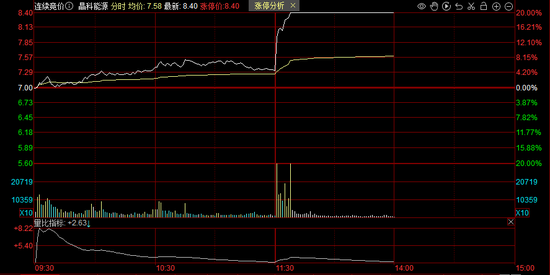
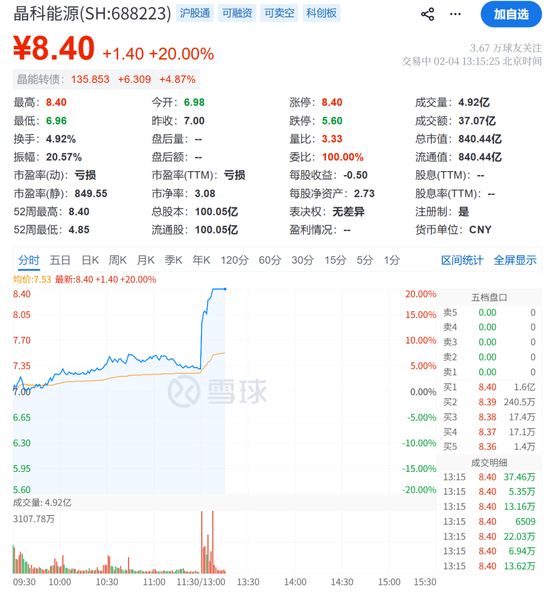
炒股就看金麒麟分析师研报,权威,专业,及时,全面,助您挖掘潜力主题机会! 来源:中国基金报 【导读】光伏板块午后大涨,晶科能源20cm涨停 中国基金报记者 晨曦 东方日升午后同步冲高,涨超15%。 刚刚,光伏"涨停潮"来了! 2月4日午后,光伏板块继续冲高。晶科能源迅速拉出20cm涨停,报8.4元/股,总市值达840亿元;截至 发稿,买一超1.6亿手。 有网友表示,"这封单是我见过最离谱的了""理解不够"。 此外,泽润新能、中来股份20cm涨停,亚玛顿、双良节能、拓日新能等多股延续涨停状态。 | 序号 代码 | | 名称 | 现价 | 涨跌 | 涨跌幅 ~ | | --- | --- | --- | --- | --- | --- | | 1 | 688223 | 晶科能源 | 8.40 | 1.40 | 20.00% | | 2 | 300393 | 中来股份 | 10.32 | 1.72 | 20.00% | | 3 | 301636 | 泽润新能 | 89.47 | 14.91 | 20.00% | | 4 | 300316 | 晶盛机电 | 62.23 | 7.16 | 13.00% | | 5 | ...
马斯克团队到访传闻引爆股价!晶科能源:不方便回应
Bei Jing Shang Bao· 2026-02-04 06:49
(文章来源:北京商报) 北京商报讯2月4日,一则关于马斯克团队近期走访了中国多家光伏企业的传闻引发市场关注,当日午后 开盘,光伏股拉升,其中晶科能源(688223)涨停。针对该市场传闻,北京商报记者以投资者身份致电 公司,公司相关负责人表示,不方便透露。 此前晶科能源在回应媒体时表示,公司近期确实与马斯克团队相关考察团有过接触,考察团对公司的技 术储备、生产设备等进行了了解,但合作意向及具体考察细节不便透露。 ...
马斯克团队密访中国多家光伏企业,晶科能源直线涨停,光伏股集体拉升
2 1 Shi Ji Jing Ji Bao Dao· 2026-02-04 06:49
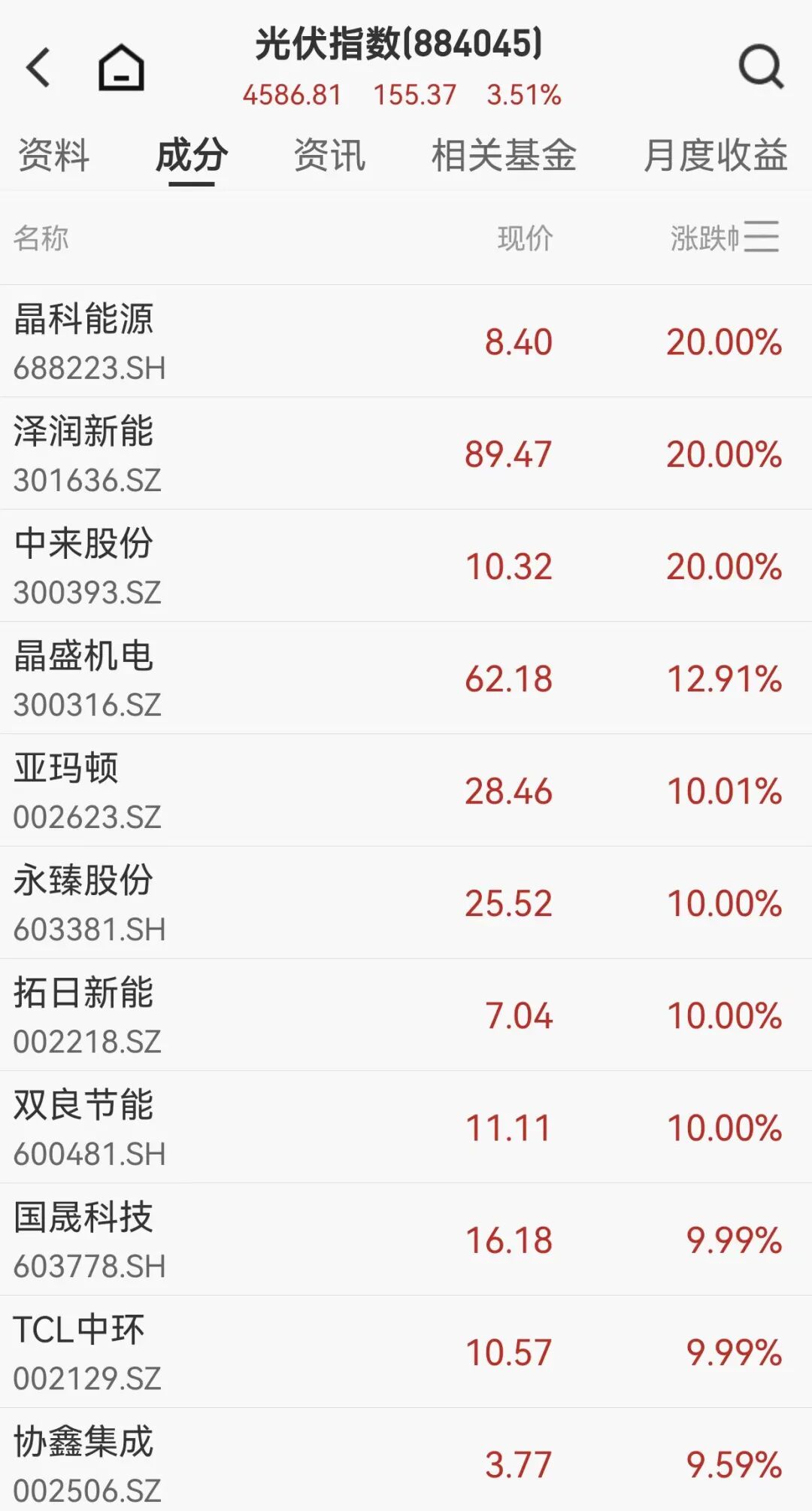
针对该传闻,21快讯记者以投资者身份致电光伏组件龙头晶科能源核实,接线工作人员回应称,公司近期确实与马斯克团队相关考察团有过接触,考察团 对公司的技术储备、生产设备等进行了了解,但合作意向及具体考察细节不便透露。该工作人员同时透露:"国内主流光伏企业也均有考察"。 马斯克团队走访中国多家光伏企业,引爆A股光伏板块! 2月4日午后,光伏股集体拉升,晶科能源20cm直线涨停,带动光伏ETF(159857)标的指数午后涨3%,两日涨8.7% ,科创新能源ETF(588830)上涨 2.67%,最新价报1.73元。 | < コ | 光伏指数(884045) | | | --- | --- | --- | | | 4586.81 155.37 3.51% | | | 资料 | 资讯 相关基金 | 月度收益 | | 名称 | 现价 | 涨跌巾一 | | 晶科能源 | 8.40 | 20.00% | | 688223.SH | | | | 泽润新能 | 89.47 | 20.00% | | 301636.SZ | | | | 中来股份 | 10.32 | 20.00% | | 300393.SZ | | | | 晶盛机电 ...