BeiGene(688235)

Search documents
2025年创新药医保谈判或带来催化!恒生创新药ETF(520500)持续放量,半日成交额超11亿元
Xin Lang Ji Jin· 2025-11-03 06:39
Core Viewpoint - The innovative drug sector has rebounded strongly since September, driven by the upcoming 2025 National Negotiation, with significant trading activity observed in the Hang Seng Innovative Drug ETF (520500) on the first trading day of November [1]. Group 1: Market Activity - The Hang Seng Innovative Drug ETF (520500) recorded a half-day trading volume of 1.105 billion yuan on November 1, 2025, indicating active market participation [1]. - The ETF's trading volume has increased significantly, with total trading amounts of 604 million yuan and 1.654 billion yuan on October 30 and 31, respectively, compared to an average daily trading volume of 584 million yuan since October [1]. Group 2: Policy Developments - The 2025 National Medical Insurance Directory negotiations commenced on October 30, 2025, introducing a commercial health insurance innovative drug directory, marking a shift from a "basic insurance only" model to a "medical insurance + commercial insurance" collaborative payment approach [1]. - A total of 535 drug generic names were approved for the basic drug directory, while 121 were approved for the commercial insurance innovative drug directory, with 79 names submitted for both directories [1]. Group 3: Industry Outlook - The establishment of the commercial insurance innovative drug directory is expected to diversify payment methods, particularly benefiting high-value innovative drugs and multinational pharmaceutical products, potentially opening up new growth opportunities for the industry [1]. - The Hang Seng Innovative Drug ETF (520500) is designed to track companies involved in innovative drug research, development, and production, focusing on firms with strong R&D capabilities [1]. - As of October 31, 2025, the top five constituents of the index include BeiGene, China Biologic Products, Innovent Biologics, Kelun-Biotech, and CanSino Biologics, reflecting the index's focus on high-potential companies in the innovative drug sector [1].


港股通创新药ETF南方(159297)涨超3%,最新规模、份额均创新高!政策红利释放+机构持仓提升,创新药行业增长弹性凸显
Sou Hu Cai Jing· 2025-11-03 05:37
Core Viewpoint - The Hong Kong Stock Connect Innovative Drug ETF (Southern, 159297) has shown significant market activity, with a recent increase of 3.38% and a trading volume of 170 million yuan, indicating strong investor interest in the innovative drug sector [1] Group 1: Market Performance - The Hong Kong Stock Connect Innovative Drug ETF (Southern, 159297) reached a new high in both scale and shares since its inception as of October 31 [1] - The ETF has experienced net inflows for 4 out of the last 5 trading days, totaling 18.9 million yuan [1] - The index it tracks, the National Certificate Hong Kong Stock Connect Innovative Drug Index, rose by 3.67%, with notable increases in component stocks such as Senhwa Biosciences (up 10.11%) and Kanglongda (up 8.80%) [1] Group 2: Policy and Industry Insights - The ongoing negotiations for the National Medical Insurance drug list are complemented by a new commercial health insurance innovative drug directory, aimed at providing new payment channels for high-value innovative drugs [1] - The CAR-T cell drug, Rukiyou Lunsai injection from WuXi AppTec, is making progress in negotiations to be included in the commercial health insurance innovative drug directory, with a listed price of 1.29 million yuan per injection [1] - Open Source Securities notes that the current innovative drugs included in both medical insurance and commercial insurance are in the early stages of volume growth, with potential for rapid revenue increases as policies continue to support innovative drugs [2] Group 3: Institutional Investment Trends - According to Guotou Securities, the proportion of all funds heavily invested in Biotech innovative drug companies has increased to 27.53%, reflecting a 2.61 percentage point rise, indicating growing institutional interest in the innovative drug sector [2] - The increasing allocation of funds to the innovative drug sector suggests a strong market recognition of its long-term development potential [2]
创新药行情可能再次启动,当下处于高胜率区间
Xin Lang Ji Jin· 2025-11-03 02:18
Group 1 - The core viewpoint is that the innovative drug market may soon restart due to reduced geopolitical risks between China and the US, positive earnings reports from companies like Innovent Biologics and Hengrui Medicine, and supportive policies for innovative drugs [1][2] - Recent quarterly reports from the pharmaceutical sector have confirmed the performance of innovative drug companies, indicating a potential recovery in the market [1][2] - The innovative drug sector has experienced a correction since August 2025, which is considered sufficient in duration, with leading stocks entering an absolute return zone [1][2] Group 2 - In the medical device sector, leading companies are showing signs of performance turning points, and attention should be paid to their issuance in the Hong Kong stock market [2] - The current environment is viewed as a high-probability zone for medium to long-term investments in the biopharmaceutical sector, with recommendations for balanced allocations across different market segments [2] - The Hong Kong Stock Connect Innovative Drug ETF (520880) and its associated funds track the Hang Seng Hong Kong Stock Connect Innovative Drug Select Index, which includes leading innovative drug companies [2][3] Group 3 - The first drug ETF (562050) launched this year focuses on leading companies in the pharmaceutical sector, including chemical drugs, biological drugs, and traditional Chinese medicine [3] - The Medical ETF (512170) is the largest in its category, focusing on medical devices and services, with significant holdings in companies like Mindray Medical and Aier Eye Hospital [3] - These ETFs are becoming effective tools for investors to capture opportunities in the pharmaceutical and medical sectors, each with its specific focus [3]

创新药目录谈判进行中 多家企业关心如何落地
经济观察报· 2025-11-02 14:57
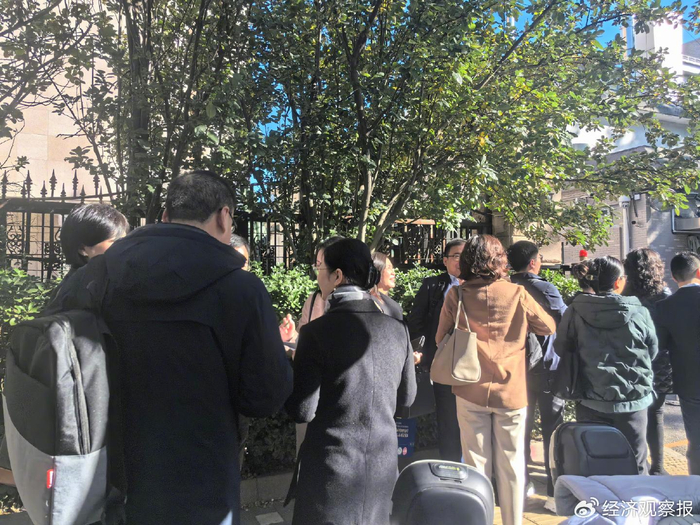
Core Viewpoint - The article discusses the ongoing price negotiation process for innovative drugs under the 2025 National Medical Insurance (NMI) negotiations, highlighting the participation of various pharmaceutical companies and the significance of the commercial insurance innovative drug directory [2][12]. Group 1: Price Negotiation Process - On November 2, 2025, a total of 10 companies participated in the price negotiation for 11 drug products, including 2 products from BeiGene [2][4]. - The negotiation process is divided into two groups, with each group negotiating separately with representatives from the National Medical Insurance Administration and commercial insurance companies [4][6]. - The first company completed its negotiation in 45 minutes, indicating a generally positive atmosphere among participants [6][7]. Group 2: CAR-T Drugs - CAR-T drugs, known for their high prices, are receiving attention in the commercial insurance innovative drug directory, with one product priced at 999,000 yuan per dose, making it the lowest-priced CAR-T drug in China [7][11]. - Multiple CAR-T drugs received unanimous approval during the expert review phase prior to the negotiations, indicating strong interest from the commercial insurance sector [11]. Group 3: Expectations and Concerns - Companies are primarily focused on the potential patient access to drugs rather than just price reductions, expressing uncertainty about how the innovative drug directory will facilitate market access [12][13]. - A representative mentioned that the National Medical Insurance Administration suggested a price reduction expectation of 15% during pre-negotiation discussions [12]. - There is a notable interest in the innovative drug directory as it allows companies to recover substantial R&D costs without necessitating significant price cuts [13].



创新药目录谈判进行中 多家企业关心如何落地
Jing Ji Guan Cha Bao· 2025-11-02 14:53
Core Insights - The 2025 National Medical Insurance Negotiation has entered its fourth day, focusing on the price negotiation for innovative drugs, with 121 drugs passing the initial review and 24 entering the price negotiation phase [1][2] Group 1: Price Negotiation Process - A total of 10 companies participated in the price negotiation for 11 drugs, including major players like BeiGene and Huyuan Bio [1] - The negotiation process is divided into two groups, with each group negotiating separately with representatives from the National Medical Insurance Administration and insurance companies [3] Group 2: CAR-T Drug Negotiations - CAR-T drugs, known for their high prices, are receiving attention in the innovative drug directory negotiations, with several companies reporting positive experiences during negotiations [4][5] - The price of Huyuan Bio's CAR-T drug, previously set at 999,000 yuan per dose, is expected to be a focal point in the negotiations [5][6] Group 3: Expectations and Concerns - Companies are primarily concerned about the potential patient access to drugs through the innovative drug directory, rather than just price reductions [8][9] - There is uncertainty regarding the implementation and market access of the innovative drug directory, as companies are still exploring the commercial insurance payment mechanisms [8][9]
公募基金医药持仓占比环比回落,后市有望震荡向上:医药生物行业跨市场周报(20251102)-20251102
EBSCN· 2025-11-02 08:48
Investment Rating - The report maintains a "Buy" rating for the pharmaceutical and biotechnology sector [4][5]. Core Viewpoints - The proportion of public fund holdings in the pharmaceutical sector has decreased quarter-on-quarter, but the market is expected to experience a rebound [2][23]. - The investment focus should increasingly emphasize the clinical value of pharmaceuticals, driven by domestic and international policy changes [3][34]. - The report highlights the potential for continuous valuation recovery and upward movement in the pharmaceutical sector due to the opening of the US interest rate cut cycle and advancements in domestic innovative drugs [2][35]. Summary by Sections Market Review - Last week, the pharmaceutical and biotechnology index rose by 1.31%, outperforming the CSI 300 index by 1.74 percentage points [1][17]. - The Hong Kong Hang Seng Medical Health Index fell by 0.11%, but still outperformed the Hang Seng Index by 1.97 percentage points [1][17]. Company Updates - Notable clinical application approvals include Shanghai Lai Shi's SR604 injection and YKYY013 injection from Yuekang Pharmaceutical [39]. - Ongoing clinical trials include HRS-8080 from Heng Rui Pharmaceutical and ICP-332 from Nuo Cheng Jian Hua, both in Phase III [39]. Investment Strategy - The report emphasizes a three-stage clinical value investment strategy: "0 to 1" for technological breakthroughs, "1 to 10" for clinical validation, and "10 to 100" for efficiency in the Chinese market [34][35]. - Key recommended companies include Innovent Biologics (H), Eifang Biologics-U, Tian Shi Li, WuXi AppTec (A+H), and Mindray Medical [36]. Fund Holdings - As of Q3 2025, the market value of public funds heavily invested in pharmaceuticals is 11.93%, down by 0.32 percentage points from the previous quarter [2][24]. - The top 20 stocks by market value show significant upward movement for companies like Rongchang Biologics and BeiGene (H) [2][30]. Financial Performance - The pharmaceutical manufacturing industry reported a revenue decline of 2.0% year-on-year for the first nine months of 2025, totaling 182.11 billion yuan [59]. - The report indicates a positive trend in the valuation of the pharmaceutical sector, with a steady recovery in PE ratios since Q1 2025 [34].


科技承压下的资金新选择,创新药开启上涨新周期?
Ge Long Hui· 2025-11-01 09:54
Core Viewpoint - The technology sector experienced significant declines, prompting a structural shift in market funds towards the innovative drug sector, which saw notable gains on the same day [1][3]. Group 1: Market Performance - The innovative drug sector rose by 3.91% amidst a downturn in the technology sector, successfully breaking through the 20-day moving average with increased trading volume, signaling positive market sentiment [3]. - The innovative drug sector had been in a downward trend since August but began to stabilize and form a bottom pattern in October [3]. Group 2: Multiple Sclerosis (MS) Market - The global market for MS drugs is projected to reach approximately $18.5 billion in 2024, with a significant portion of sales coming from third-generation products, particularly CD20 monoclonal antibodies [6]. - CD20 monoclonal antibodies are expected to account for over 60% of the MS drug sales in 2024, with the drug Ocrelizumab projected to generate sales of 7.64 billion yuan, reflecting a year-on-year growth of 7.4% [6]. Group 3: Chemical Pharmaceutical Industry - The global chemical pharmaceutical market grew from $1,038 billion in 2019 to $1,128 billion in 2023, with expectations to reach $1,156 billion in 2024 [10]. - In China, the chemical pharmaceutical market size was 883.9 billion yuan in 2022, with a year-on-year growth of 4.4%, projected to increase to 945 billion yuan by 2024 [10]. Group 4: Innovative Drug Sector Performance - In the first half of 2025, 21 A-share innovative drug companies reported revenues of 28.69 billion yuan, a year-on-year increase of 42%, while net losses narrowed significantly [11]. - The second quarter of 2025 saw these companies achieve revenues of 15.34 billion yuan, a 39% increase year-on-year, with net losses reduced by 97% [11][12]. Group 5: Future Outlook - Continued policy support for innovative drugs is expected to enhance performance, with an increase in product launches anticipated to drive revenue growth [15]. - The active business development (BD) transactions in the innovative drug sector in the first half of 2025 are expected to bolster the apparent performance of related companies [15].

【财闻联播】理想召回11411辆汽车!因赛集团:终止重大资产重组事项
券商中国· 2025-10-31 11:03
Macro Dynamics - In September, the bond market issued a total of 81,027.8 billion yuan in various bonds, including 14,904.9 billion yuan in government bonds, 8,519.1 billion yuan in local government bonds, 11,741.0 billion yuan in financial bonds, 13,407.3 billion yuan in corporate credit bonds, 365.7 billion yuan in credit asset-backed securities, and 31,627.8 billion yuan in interbank certificates of deposit [2] - In September, China's foreign exchange market had a total transaction volume of 26.87 trillion yuan (approximately 3.78 trillion USD), with the interbank market accounting for 22.44 trillion yuan (approximately 3.16 trillion USD) [3] - In the first three quarters, the revenue of large-scale internet and related service enterprises in China reached 14,420 billion yuan, showing a year-on-year growth of 2.8% [4][5] Financial Institutions - China Taiping announced the sale of minority stakes in four companies for a total consideration of 6.5 billion yuan [8] - Hangzhou Bank received approval to issue capital instruments not exceeding 40 billion yuan [9] Market Data - On October 31, A-shares saw a collective decline, with the Shanghai Composite Index down 0.81%, the Shenzhen Component down 1.14%, and the ChiNext Index down 2.31% [11] - The financing balance in the two markets decreased by 7.392 billion yuan, with the Shanghai Stock Exchange reporting a balance of 12,535.78 billion yuan and the Shenzhen Stock Exchange reporting 12,196.92 billion yuan [12] Company Dynamics - China National Petroleum Corporation announced the resignation of Zhou Song as the chairman of the supervisory board [14] - InSai Group decided to terminate a major asset restructuring plan due to changes in the external environment [15] - Tianqi Co., Ltd. signed a strategic cooperation framework agreement with Foxconn Automotive to deploy at least 2,000 embodied intelligent robots over the next five years [17] - Li Auto announced a recall of 11,411 units of the MEGA 2024 electric vehicle due to potential safety hazards [18] - Qingyue Technology is under investigation by the China Securities Regulatory Commission for suspected false financial reporting [19]




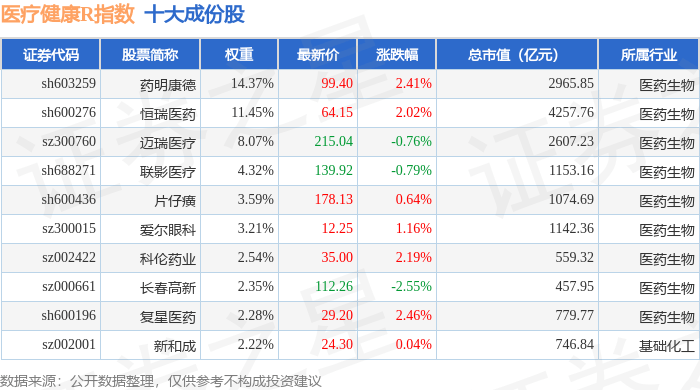
10月31日医疗健康R(480016)指数涨1.68%,成份股泽璟制药(688266)领涨
Sou Hu Cai Jing· 2025-10-31 10:51
Core Points - The Medical Health R Index (480016) closed at 7755.61 points, up 1.68%, with a total transaction volume of 40.103 billion yuan and a turnover rate of 1.25% [1] - Among the index constituents, 43 stocks rose, with Zai Jian Pharmaceutical leading with a 16.14% increase, while 6 stocks fell, with Kailai Ying leading the decline at 4.33% [1] Index Constituents Summary - The top ten constituents of the Medical Health R Index include: - WuXi AppTec (603259) with a weight of 14.37%, latest price at 99.40 yuan, and a 2.41% increase, total market value of 296.585 billion yuan [1] - Hengrui Medicine (600276) with a weight of 11.45%, latest price at 64.15 yuan, and a 2.02% increase, total market value of 425.776 billion yuan [1] - Mindray Medical (300760) with a weight of 8.07%, latest price at 215.04 yuan, and a 0.76% decrease, total market value of 260.723 billion yuan [1] - United Imaging Healthcare (688271) with a weight of 4.32%, latest price at 139.92 yuan, and a 0.79% decrease, total market value of 115.316 billion yuan [1] - Pianzai Shou (600436) with a weight of 3.59%, latest price at 178.13 yuan, and a 0.64% increase, total market value of 107.469 billion yuan [1] - Aier Eye Hospital (300015) with a weight of 3.21%, latest price at 12.25 yuan, and a 1.16% increase, total market value of 114.236 billion yuan [1] - Kelun Pharmaceutical (002422) with a weight of 2.54%, latest price at 35.00 yuan, and a 2.19% increase, total market value of 55.932 billion yuan [1] - Changchun High-tech (000661) with a weight of 2.35%, latest price at 112.26 yuan, and a 2.55% decrease, total market value of 45.795 billion yuan [1] - Fosun Pharma (600196) with a weight of 2.28%, latest price at 29.20 yuan, and a 2.46% increase, total market value of 77.977 billion yuan [1] - New Hope Liuhe (002001) with a weight of 2.22%, latest price at 24.30 yuan, and a 0.04% increase, total market value of 74.684 billion yuan [1] Capital Flow Summary - The net inflow of main funds into the Medical Health R Index constituents totaled 406 million yuan, while speculative funds saw a net outflow of 644 million yuan, and retail investors had a net inflow of 237 million yuan [1] - Specific capital flow details for key stocks include: - Mindray Medical (300760) with a main fund net inflow of 262 million yuan and a speculative fund net outflow of 127 million yuan [2] - BeiGene (688235) with a main fund net inflow of 233 million yuan and a speculative fund net outflow of 225 million yuan [2] - Haizhi Pharmaceutical (002653) with a main fund net inflow of 92.778 million yuan and a retail net outflow of 95.916 million yuan [2] - New Hope Liuhe (002001) with a main fund net inflow of 90.378 million yuan and a speculative fund net outflow of 43.538 million yuan [2] - Renfu Pharmaceutical (600079) with a main fund net inflow of 71.683 million yuan and a speculative fund net outflow of 41.302 million yuan [2]


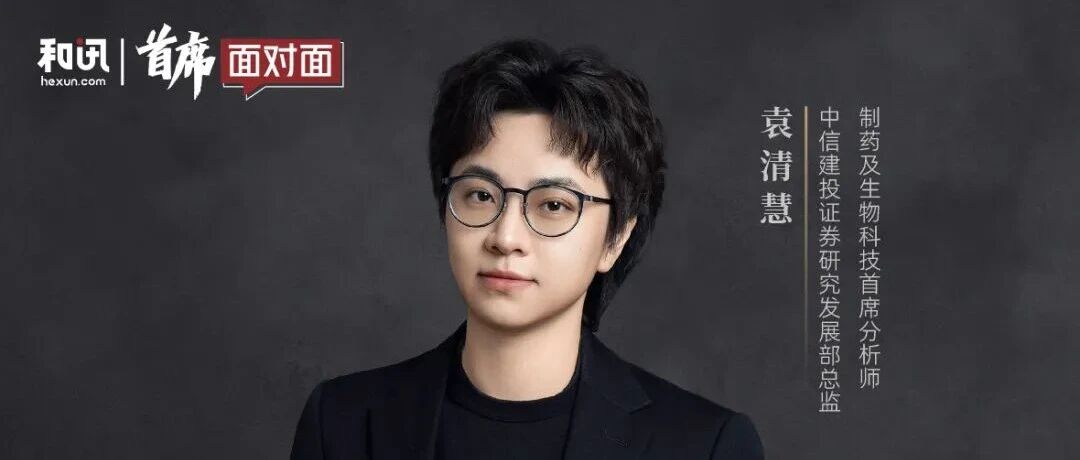
9个月干了过去3年IPO总和,这个领域何以爆发?
和讯· 2025-10-31 09:38
Core Insights - The article discusses the significant growth and potential of China's innovative pharmaceutical sector, highlighting key trends and market dynamics that suggest a promising future for the industry [6][7][30]. Group 1: Market Performance - The overseas licensing transaction amount reached $84.5 billion, accounting for 33% of global transaction volume [2]. - The Hang Seng Healthcare Index has seen a year-to-date increase of 100.7%, while the Hang Seng Hong Kong Stock Connect Innovative Drug Index has risen nearly 115.9% [3]. - The Hong Kong healthcare sector has raised more capital through IPOs this year than in the past three years combined [4]. Group 2: IPO Activity - Since September, over 12 pharmaceutical companies have submitted IPO applications to the Hong Kong Stock Exchange [5]. - As of October 23, 2025, the Hong Kong Stock Exchange is processing approximately 300 listing applications, with half from new economy sectors such as artificial intelligence and biotechnology [5]. Group 3: Innovative Drug Development - In the first three quarters of 2025, China's innovative drug company Legend Biotech's CAR-T therapy Carvykti achieved sales of $1.332 billion in the U.S., marking it as the first domestic innovative drug to surpass $1 billion in sales [6]. - The first half of 2025 saw the National Medical Products Administration approve 40 innovative drugs, nearing the total for the entire year of 2024 [6]. Group 4: Future Outlook - The innovative drug sector is expected to continue its growth trajectory into 2026, driven by favorable policies and improving market conditions [7][30]. - The differentiation within the pharmaceutical sector is anticipated to persist, with innovative drugs likely to outperform traditional sectors [31][32]. Group 5: Investment Strategies - Investors are advised to focus on the trends of "innovation, overseas expansion, and demand improvement" as key areas for potential growth [7]. - The article emphasizes the importance of understanding the dynamics of the innovative drug market, including the potential for high returns despite inherent risks [27][30]. Group 6: Challenges and Risks - Concerns remain regarding whether Chinese innovative drug companies can successfully commercialize their products overseas, which is seen as a significant risk factor [23][24]. - The article notes that the current phase of overseas expansion is characterized by a reliance on licensing agreements rather than joint development or independent market entry [15][18]. Group 7: Competitive Landscape - The article highlights the competitive nature of the innovative drug sector, with a significant number of companies vying for leadership in key therapeutic areas [25][26]. - The emergence of a "2.0" phase in overseas expansion indicates a shift towards more collaborative and independent development strategies among Chinese pharmaceutical companies [15][16]. Group 8: Future Opportunities - The article identifies several promising areas for growth, including innovative drugs, medical devices, and sectors benefiting from demand recovery [30][33]. - The potential for Chinese companies to establish themselves in global supply chains, particularly in emerging markets, is also noted as a significant opportunity [29].