
HUA HONG SEMI(688347)

Search documents
港股午评:恒指跌1.27%、科指跌1.16%再创阶段新低,科网股、贵金属概念股下挫,新消费概念、光伏股逆势走高
Jin Rong Jie· 2026-02-05 04:15
Market Overview - AMD's overnight drop of 17% triggered a significant decline in chip stocks, leading to a 1.95% drop in the Chinese concept index, which negatively impacted the Hong Kong stock market [1] - The Hang Seng Index fell by 340.88 points, or 1.27%, to 26,506.44 points, while the Hang Seng Tech Index decreased by 62.30 points, or 1.16%, to 5,304.14 points [1] - Major tech stocks like Tencent and Alibaba saw declines of nearly 3% and 2.5%, respectively, with Tencent's market value dropping below 500 billion [1] Company Performance - Xinda Biopharmaceuticals (01801.HK) projected total product revenue of approximately RMB 11.9 billion for 2025, reflecting a year-on-year growth of about 45% [2] - Lee & Man Paper Manufacturing (02314.HK) expects profits for 2025 to be between HKD 1.88 billion and HKD 2.00 billion, indicating a year-on-year increase of 38% to 47% [2] - ZTO Express (02057.HK) anticipates total revenue of RMB 48.5 billion to RMB 50 billion for 2025, representing a year-on-year growth of approximately 9.5% to 12.9% [2] - China Resources Cement (01313.HK) forecasts a year-on-year profit increase of about 115% to 135% for 2025, driven by reduced costs and impairment losses [2] Corporate Actions - Goldin Properties (00535.HK) reported a January contract sales total of approximately RMB 239 million, a year-on-year decrease of 61.82% [3] - Fosun International (00656.HK) plans to subscribe for additional registered capital of RMB 105 million in Shangmeng Technology, acquiring a 51.0879% stake post-increase [3] - Shanghai Pharmaceuticals (02607.HK) intends to publicly transfer its 30% stake in Bristol-Myers Squibb, with a minimum listing price of approximately RMB 1.023 billion [3] - China Coalbed Methane (08270.HK) completed the sale of 100% equity in Shanxi Qingshui Shuntai Energy Development [4] Investment Trends - The active repurchase of shares continues, with Kingsoft (03888.HK) repurchasing 1.0886 million shares for approximately HKD 29.99 million [9] - Xiaomi Group (01810.HK) repurchased 4.3 million shares for a total of HKD 146 million [10] - Kingdee International (00268.HK) repurchased 1 million shares for approximately HKD 11.1 million [11] Market Outlook - Guoyuan International's report suggests that the Hong Kong stock market may experience short-term volatility due to external factors, but maintains a positive long-term outlook [12] - CITIC Securities highlights the potential for new investment opportunities in emerging markets, despite risks from rising oil prices and long-term bond yields [12] - Galaxy Securities recommends focusing on technology, energy, precious metals, and consumer sectors for potential rebounds [13]

港股异动丨受AMD大跌影响,港股半导体股集体下跌,华虹半导体跌超6%
Jin Rong Jie· 2026-02-05 03:35
Core Viewpoint - The semiconductor sector experienced a decline following a significant drop in AMD's stock price, which fell over 16%, marking its largest decline since 2018 due to disappointing earnings and concerns about AI's impact on software and data companies [1] Group 1: Market Reaction - Hong Kong stocks in the semiconductor sector fell, with notable declines including Hua Hong Semiconductor down over 6%, Shanghai Fudan down 4%, and Zhaoyi Innovation down 3.88% [1] - Other companies such as SMIC and Jingmen Semiconductor also saw declines exceeding 3%, indicating a broader market reaction to AMD's performance [1] Group 2: Investor Concerns - Investors are increasingly worried that advancements in artificial intelligence may undermine the profitability of companies focused on coding, databases, and IT services [1] - Recent developments, such as the launch of new tools by Anthropic, have intensified these concerns among investors [1]

港股科网股,再度集体下跌
Di Yi Cai Jing Zi Xun· 2026-02-05 01:44
2月5日,恒生指数低开0.82%,恒生科技指数跌1.31%。 百度逆势涨超2%,董事会授权一项总金额不超过50亿美元的股票回购计划。 编辑|钉钉 | 名称 | 现价 | 涨跌 | 涨跌幅 | | --- | --- | --- | --- | | 恒生指数 | 26627.95 | -219.37 | -0.82% | | 恒生科技 | 5295.89 | -70.55 | -1.31% | | 恒生生物科技 | 14995.29 | -160.91 | -1.06% | | 恒生中国企业指数 | 8978.46 | -69.92 | -0.77% | | 恒生综合指数 | 4073.68 | -33.61 | -0.82% | 科网股延续跌势,哔哩哔哩跌逾4%,腾讯音乐、华虹半导体跌逾3%,阿里巴巴、快手、中芯国际、美 团等跌逾2%。 | 名称 | 现价 | 涨跌 | 涨跌幅 - | | --- | --- | --- | --- | | 哔哩哔哩-W | 233.600 | -10.000 | -4.11% | | 腾讯音乐-SW | 62.200 | -2.300 | -3.57% | | 金蝶国际 | ...





恒生指数收涨0.05%,煤炭、内房股走高,科网股低迷
Jin Rong Jie· 2026-02-04 09:58
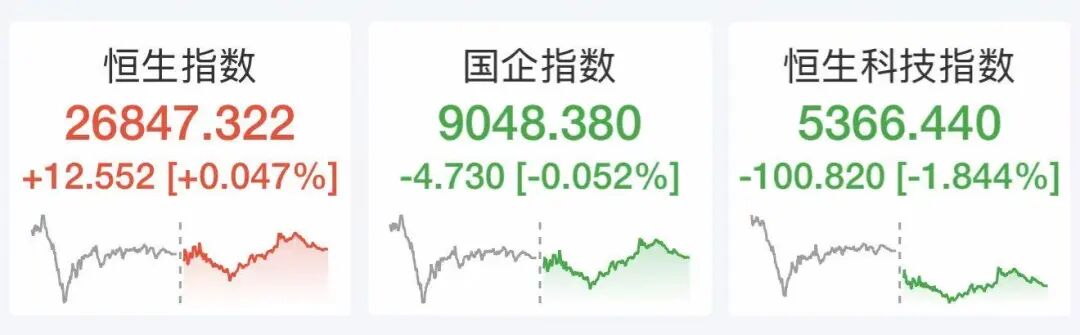
作者:观察君 2月4日,港股收盘,恒生指数收涨0.05%,报26847.32点;恒生科技指数收跌1.84%,报5366.44点。 板块方面,煤炭股涨幅居前,兖矿能源涨超10%,中国神华涨超5%;芯片股走势疲软,上海复旦跌超 5%,华虹半导体跌近5%;科网股整体表现低迷,腾讯控股跌近4%,哔哩哔哩跌超3%;内房股集体走 高,世茂集团涨超14%,融创中国涨超8%。恒生指数成分股中,信义玻璃、中国神华、华润置地涨幅 靠前;携程集团-S、腾讯控股、网易-S跌幅居前。恒生科技指数成分股中,理想汽车-W、零跑汽车、 海尔智家涨幅靠前;金蝶国际、携程集团-S、同程旅行跌幅居前。 声明:市场有风险,投资需谨慎。本文为AI基于第三方数据生成,仅供参考,不构成个人投资建议。 本文源自:市场资讯 ...

內房股大涨,融创中国涨超8%,万科涨超6%!恒生科技跳水,大型科技股齐跌 | 港股收盘
Mei Ri Jing Ji Xin Wen· 2026-02-04 08:44
Group 1 - The Hong Kong stock market experienced fluctuations, with the Hang Seng Index closing at 26,847.322, a slight increase of 0.047% [1] - Real estate stocks saw significant gains, with Shimao Group rising over 14%, Sunac China up over 8%, Vanke Enterprises increasing over 6%, and Yuexiu Property up over 6% [1] - Coal stocks also performed well, with Yanzhou Coal Mining rising over 10% and China Shenhua Energy increasing over 5% [1] Group 2 - The Hang Seng Tech Index dropped by 1.844%, with major tech companies showing poor performance [3] - Tencent Holdings fell nearly 4%, Baidu Group declined nearly 3%, Xiaomi Group dropped over 1.8%, JD Group decreased over 1.6%, and Alibaba fell nearly 1% [3][4] - Semiconductor stocks were sluggish, with Fudan Shanghai falling over 5%, Hua Hong Semiconductor down nearly 5%, GigaDevice down over 3%, and SMIC down over 2% [5]


华虹公司股价跌5.04%,华宝基金旗下1只基金重仓,持有16.71万股浮亏损失117.8万元
Xin Lang Cai Jing· 2026-02-04 03:24
华宝上证科创板芯片指数发起A(021224)成立日期2024年8月27日,最新规模1.86亿。今年以来收益 12.63%,同类排名442/5562;近一年收益85.39%,同类排名180/4285;成立以来收益182.83%。 2月4日,华虹公司跌5.04%,截至发稿,报132.91元/股,成交11.61亿元,换手率2.11%,总市值2309.46 亿元。 资料显示,华虹半导体有限公司位于上海张江高科技园区哈雷路288号,香港中环夏悫道12号美国银行中 心2212室,成立日期2005年1月21日,上市日期2023年8月7日,公司主营业务涉及华虹半导体有限公司 是一家主要从事特色工艺晶圆代工的中国投资控股公司。该公司提供包括嵌入式/独立式非易失性存储 器、功率器件、模拟与电源管理、逻辑与射频等多元化特色工艺平台的晶圆代工及配套服务。该公司还 从事提供包括知识产权(IP)设计、测试等配套服务。该公司主要在国内市场从事其业务。主营业务收 入构成为:集成电路晶圆代工94.60%,其他4.78%,租赁收入0.62%。 从基金十大重仓股角度 数据显示,华宝基金旗下1只基金重仓华虹公司。华宝上证科创板芯片指数发起A(021 ...
国内外AI年报分析展望



2026-02-04 02:27
Summary of the Conference Call on AI Annual Report Analysis Industry Overview - The conference focused on the analysis and outlook of AI annual reports, particularly in the TMT (Technology, Media, and Telecommunications) sector, with a specific emphasis on domestic and international AI companies [1][2][4]. Key Points and Arguments General Market Sentiment - The period from October 31 to March is characterized as a performance vacuum, where the focus is on thematic investments rather than immediate earnings results [2][3]. - The spring market is expected to see a resurgence, with significant activity anticipated around March [3][4]. North American Companies - North American companies, particularly those involved in AI and cloud computing, have reported earnings that exceeded expectations, indicating strong capital expenditure in AI [4][6]. - Companies like Microsoft and Meta have shown robust spending on AI infrastructure, reflecting a positive outlook for the sector [4][6]. - Despite some domestic companies underperforming, their stock prices have rebounded, suggesting that market sentiment is more focused on thematic trends rather than immediate earnings [5][6]. Domestic AI Companies - Domestic AI companies are experiencing a supply-demand imbalance, with strong demand for AI-related products and services, despite some companies reporting earnings below expectations [6][7]. - The industry is characterized by a shortage of materials and components, which is driving prices up and creating a favorable environment for growth [6][7][10]. Future Growth Projections - There is a consensus that the growth trajectory for AI companies will continue to be strong, with expectations for significant growth in 2026 and beyond [8][9]. - Many companies are currently undervalued, trading at price-to-earnings (P/E) ratios between 15x to 20x, which presents a potential investment opportunity [8][9]. Specific Company Insights - Companies like Wan, Tianfu Communication, and others are highlighted for their potential despite recent earnings misses, as the overall industry outlook remains positive [4][6][7]. - The demand for GPUs and AI chips is expected to remain high, with domestic companies like Cambrian facing challenges but still showing potential for recovery [9][10]. Application and Innovation - The conference emphasized the importance of AI applications, particularly in gaming and media, with companies like Tencent and ByteDance leading the charge [14][15]. - The emergence of AI-driven applications is seen as a significant growth area, with expectations for increased investment and innovation in this space [14][15]. Regulatory and Market Concerns - There are concerns regarding potential regulatory impacts on the gaming industry, but these are largely viewed as unfounded and not likely to affect the overall market significantly [15][16]. - The market is currently experiencing volatility, but analysts suggest that this presents buying opportunities for fundamentally strong companies [21][22]. Additional Important Insights - The conference highlighted the importance of monitoring capital expenditure trends among major tech companies, as this will influence the demand for AI infrastructure and services [36][37]. - The potential for new technologies, such as diamond-based cooling materials for semiconductors, was discussed as a future growth area [24][25]. - Analysts recommend focusing on companies with strong fundamentals and growth potential, particularly in the AI and semiconductor sectors, as the market continues to evolve [22][23][39].
A股低开,贵金属板块走强
第一财经· 2026-02-04 01:48
Market Overview - The A-share market opened lower with the Shanghai Composite Index down 0.08%, the Shenzhen Component down 0.39%, and the ChiNext Index down 0.80% [3][4] - The Hong Kong market also opened lower, with the Hang Seng Index down 0.14% and the Hang Seng Tech Index down 0.87% [5][6] Sector Performance - The storage chip sector experienced significant declines, with companies like Deep Kangjia A hitting the daily limit down, and others such as Puran, Lanke Technology, Baiwei Storage, and Shannon Chip also opening lower [2] - The AI computing power industry chain saw a downturn, particularly in the storage and CPO sectors, while semiconductor and consumer electronics themes were among the hardest hit [4] - Conversely, gold, basic metals, and oil and gas sectors showed signs of rebound [4]



韩国股市上涨6.8%!DRAM暴涨95%,三星收缩产能,存储芯片涨价潮最强确定性逻辑还要持续多久?
Xin Lang Cai Jing· 2026-02-03 12:52
Group 1 - Northern Huachuang is a leading domestic semiconductor equipment manufacturer, covering core process equipment such as etching machines, thin film deposition equipment, and cleaning machines, which are essential for memory chip manufacturing [1] - The company is expected to benefit from the growth in equipment orders driven by the expansion and technological upgrades of domestic memory manufacturers during the memory chip price increase cycle [1] - Northern Huachuang has made breakthroughs in advanced process equipment for 3D NAND and HBM, establishing a core competitive advantage in the global memory equipment market [1] Group 2 - Hua Hong Semiconductor is a leading domestic specialty process manufacturer with mature memory chip foundry capabilities, focusing on NOR Flash, eMMC, and SPI NAND [2] - The company is expected to benefit from the rising demand for memory chip foundry services as domestic memory manufacturers expand production [2] - Hua Hong's layout in automotive-grade memory chip foundry will further enhance its resilience against economic cycles [2] Group 3 - Zhongwei Company is a core supplier of etching equipment, with its 5nm etching machine already integrated into the supply chain of memory manufacturers [3] - The demand for high-end equipment is expected to grow due to the trend of upgrading memory chips to advanced processes like 3D NAND and HBM [3] - Zhongwei's layout in thin film deposition equipment enhances its service capabilities for memory manufacturers [3] Group 4 - Lanke Technology is a global leader in memory interface chips, with its products widely used in servers and PCs, holding a leading share in the DDR5 interface chip market [4] - The demand for DDR5 interface chips is expected to surge due to the explosion in AI server and high-end PC demand during the memory chip price increase cycle [4] - Lanke's breakthroughs in HBM interface chips will further open up growth opportunities [4] Group 5 - GigaDevice is a leading domestic memory chip design company, focusing on NOR Flash while also expanding into NAND Flash and DRAM [5] - The company is expected to benefit from the price increase of NOR Flash products driven by the recovery of consumer electronics and AI terminal demand [5] - GigaDevice's layout in automotive-grade memory chips will further expand its downstream application space [5] Group 6 - Shengyi Technology is a leading domestic copper-clad laminate manufacturer, with its products being core raw materials for memory chip packaging [6][7] - The growth in demand for copper-clad laminates is expected to be driven by the expansion of memory manufacturers and the increase in packaging needs during the memory chip price increase cycle [6][7] - Shengyi's breakthroughs in high-frequency and high-speed copper-clad laminates will adapt to the upgrade demands of memory chips [6][7] Group 7 - Shenzhen South Circuit is a leading domestic PCB manufacturer, with its high-end PCB products being core carriers for storage servers and modules [8] - The demand for high-end PCBs is expected to grow due to the explosion in AI server demand and the expansion of memory manufacturers during the memory chip price increase cycle [8] - Shenzhen South Circuit's layout in storage packaging substrates further enhances its position in the memory industry chain [8] Group 8 - Jiangbolong is a leading domestic storage module manufacturer, focusing on the development and manufacturing of storage modules for various applications [9] - The company is expected to benefit from the recovery in consumer electronics and the explosion of AI terminal demand during the memory chip price increase cycle [9] - Jiangbolong's layout in automotive-grade storage modules will further open up downstream application spaces [9] Group 9 - Xi'an Yicai is a core enterprise in semiconductor materials, focusing on silicon-based materials essential for memory chip manufacturing [10] - The demand for silicon-based materials is expected to grow due to the expansion and technological upgrades of memory manufacturers during the memory chip price increase cycle [10] - Xi'an Yicai's breakthroughs in 300mm large silicon wafers will adapt to the advanced process needs of domestic storage [10] Group 10 - Tuojing Technology is a leading domestic thin film deposition equipment manufacturer, with its PECVD and ALD equipment being core process equipment for memory chip manufacturing [11] - The demand for equipment orders is expected to grow due to the expansion of memory manufacturers and the upgrade of 3D NAND technology during the memory chip price increase cycle [11] - Tuojing's layout in HBM-related equipment will further adapt to the upgrade demands driven by AI [11] Group 11 - Maiwei Co. is a core domestic semiconductor equipment enterprise, with its equipment already integrated into the supply chain of leading domestic memory manufacturers [12] - The growth in equipment orders is expected to be driven by the expansion of memory manufacturers and the increase in advanced packaging demand during the memory chip price increase cycle [12] - Maiwei's breakthroughs in HBM packaging equipment will adapt to the upgrade demands driven by AI [12] Group 12 - Shengmei Shanghai is a leading domestic semiconductor cleaning equipment manufacturer, with its single-wafer cleaning equipment integrated into the supply chain of leading memory manufacturers [13] - The demand for cleaning equipment is expected to grow due to the expansion of memory manufacturers and the upgrade of advanced processes during the memory chip price increase cycle [13] - Shengmei's breakthroughs in 3D NAND cleaning technology will adapt to the technical iteration needs of memory chips [13] Group 13 - Changdian Technology is a leading domestic packaging and testing enterprise, covering the packaging and testing of various memory chip types [14] - The growth in packaging orders is expected to be driven by the price increase of memory chips during the memory chip price increase cycle [14] - Changdian's breakthroughs in advanced packaging will adapt to the needs of high-end memory chips [14] Group 14 - Changchuan Technology is a leading domestic semiconductor testing equipment manufacturer, with its testing equipment covering memory and logic chips [15] - The demand for testing equipment is expected to grow due to the expansion of memory manufacturers and the upgrade of advanced processes during the memory chip price increase cycle [15] - Changchuan's breakthroughs in DDR5 and HBM testing technologies will adapt to the upgrade demands driven by AI [15] Group 15 - Baiwei Storage is a leading domestic storage chip design and module manufacturer, focusing on various storage modules for different applications [16] - The company is expected to benefit from the recovery in consumer electronics and the explosion of AI terminal demand during the memory chip price increase cycle [16] - Baiwei's layout in automotive-grade storage will further open up downstream application spaces [16] Group 16 - China Resources Microelectronics is a leading domestic power semiconductor and storage chip manufacturer, focusing on NOR Flash and eMMC [17] - The company is expected to benefit from the recovery in consumer electronics and industrial control demand during the memory chip price increase cycle [17] - China Resources' layout in automotive-grade storage chips will enhance its resilience against economic cycles [17] Group 17 - Tongfu Microelectronics is a core domestic packaging enterprise, covering the packaging of various memory chip types [18] - The growth in packaging orders is expected to be driven by the price increase of memory chips during the memory chip price increase cycle [18] - Tongfu's breakthroughs in advanced packaging will adapt to the needs of high-end memory chips [18] Group 18 - Yitang Co. is a core domestic semiconductor equipment enterprise, focusing on thin film deposition and rapid thermal processing equipment [19] - The demand for equipment orders is expected to grow due to the expansion of memory manufacturers and the upgrade of advanced processes during the memory chip price increase cycle [19] - Yitang's breakthroughs in 3D NAND-related equipment will adapt to the technical iteration needs of memory chips [19] Group 19 - Jingsheng Mechanical and Electrical is a leading domestic semiconductor silicon wafer equipment manufacturer, with its equipment integrated into the supply chain of leading memory manufacturers [20] - The demand for equipment orders is expected to grow due to the expansion of memory manufacturers and the increase in silicon wafer demand during the memory chip price increase cycle [20] - Jingsheng's breakthroughs in 300mm large silicon wafer equipment will adapt to the advanced process needs of domestic storage [20] Group 20 - Xichuang Data is a leading domestic storage module and smart terminal manufacturer, focusing on various storage modules for different applications [21] - The company is expected to benefit from the recovery in consumer electronics and the explosion of AI terminal demand during the memory chip price increase cycle [21] - Xichuang's layout in automotive-grade storage will further open up downstream application spaces [21] Group 21 - Shannon Chip is a leading domestic storage chip distribution and solution provider, focusing on distribution and technical services for storage chips [22] - The growth in distribution revenue is expected to be driven by the price increase of memory chips during the memory chip price increase cycle [22] - Shannon's layout in storage module solutions will enhance customer stickiness [22] Group 22 - Hushi Silicon Industry is a leading domestic semiconductor silicon wafer manufacturer, covering various specifications essential for memory chip manufacturing [23] - The demand for silicon wafers is expected to grow due to the expansion and technological upgrades of memory manufacturers during the memory chip price increase cycle [23] - Hushi's breakthroughs in 300mm large silicon wafers will adapt to the advanced process needs of domestic storage [23] Group 23 - Unisoc is a leading domestic security chip and storage chip manufacturer, focusing on eMMC and UFS [24] - The company is expected to benefit from the recovery in consumer electronics and the growth in security storage demand during the memory chip price increase cycle [24] - Unisoc's layout in automotive-grade storage chips will enhance its resilience against economic cycles [24] Group 24 - Fudan Microelectronics is a leading domestic FPGA and storage chip manufacturer, covering various storage chip types [25] - The growth in demand for storage products is expected to be driven by the increase in industrial control demand and the acceleration of domestic substitution during the memory chip price increase cycle [25] - Fudan's layout in automotive-grade storage chips will further open up downstream application spaces [25] Group 25 - Zhongke Feicai is a leading domestic semiconductor testing equipment manufacturer, covering testing equipment for memory and logic chips [26] - The demand for testing equipment is expected to grow due to the expansion of memory manufacturers and the upgrade of advanced processes during the memory chip price increase cycle [26] - Zhongke's breakthroughs in 3D NAND testing technology will adapt to the technical iteration needs of memory chips [26] Group 26 - Huahai Qingke is a leading domestic chemical mechanical polishing (CMP) equipment manufacturer, with its CMP equipment integrated into the supply chain of leading memory manufacturers [27] - The demand for CMP equipment is expected to grow due to the expansion of memory manufacturers and the upgrade of advanced processes during the memory chip price increase cycle [27] - Huahai's breakthroughs in 3D NAND polishing technology will adapt to the technical iteration needs of memory chips [27]




华虹半导体取得金属硅化物形成方法专利
Jin Rong Jie· 2026-02-03 11:55
国家知识产权局信息显示,华虹半导体(无锡)有限公司取得一项名为"金属硅化物的形成方法"的专 利,授权公告号CN115527846B,申请日期为2022年10月。 天眼查资料显示,华虹半导体(无锡)有限公司,成立于2017年,位于无锡市,是一家以从事计算机、 通信和其他电子设备制造业为主的企业。企业注册资本253685.180069万美元。通过天眼查大数据分 析,华虹半导体(无锡)有限公司共对外投资了1家企业,参与招投标项目2944次,专利信息1986条, 此外企业还拥有行政许可117个。 声明:市场有风险,投资需谨慎。本文为AI基于第三方数据生成,仅供参考,不构成个人投资建议。 本文源自:市场资讯 作者:情报员 ...