
TRINA(688599)

Search documents
77家公司透露订单饱满 电力设备行业数量最多
Zheng Quan Shi Bao· 2025-12-15 18:27
Core Viewpoint - The article highlights the strong order backlog and growth potential of several companies in the manufacturing and energy sectors, indicating a positive outlook for their revenue and profit growth through 2027 and beyond [1][4]. Group 1: Company Order Backlogs - CIMC Group has a marine engineering order backlog of approximately $5.55 billion, with production scheduled until 2027/2028 [1]. - China Shipbuilding has reported a full order book extending to the end of 2028, with some orders reaching into 2029 [2]. - Sumec has 85 shipbuilding orders scheduled until the end of 2024, with production extending to 2028 [3]. - Longking Environmental Protection has a full order for energy storage cells, with production scheduled until June 2026 [4]. - Trina Solar has signed overseas orders exceeding 10 GWh, expected to be delivered mainly in 2025-2026, with a target of over 50% year-on-year growth in 2026 [4]. Group 2: Industry Trends and Growth Drivers - A total of 77 companies have reported full or sufficient orders, benefiting from high industry demand, particularly in sectors like lithium batteries, energy storage, and semiconductor-related businesses [5][6]. - The electric power equipment sector has over 20 companies reporting strong orders, driven by increased downstream demand [6]. - The machinery equipment sector has more than 15 companies with robust order books, with companies like Oke Yi and Kede CNC reporting significant order growth due to recovering demand and operational efficiency improvements [6]. Group 3: Profit Growth Projections - Companies such as China Shipbuilding, Trina Solar, and China Power are projected to have a compound annual growth rate (CAGR) of over 40% in net profit from 2025 to 2027 [4]. - CIMC Group's net profit CAGR is expected to exceed 15%, with a projected net profit of over 4.5 billion yuan by 2027, despite a previous three-year CAGR of -23.6% [4]. - Among the 77 companies, 19 are expected to have a net profit CAGR exceeding their past three-year performance, indicating a strong recovery and growth potential [7].






霸王茶姬创始人迎娶天合光能联席董事长,两家公司市值超572亿
2 1 Shi Ji Jing Ji Bao Dao· 2025-12-15 12:33
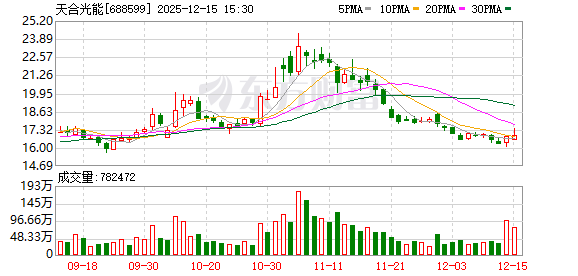
Group 1 - The wedding of Zhang Junjie, founder of Bawang Tea Ji, and Gao Haichun, co-chairman of Trina Solar, took place on December 15, with Bawang Tea Ji milk tea served to guests [2] - Zhang Junjie responded to rumors regarding his personal life, stating he has never been married before meeting his wife and has taken legal action against those spreading false information [2] - As of December 12, Bawang Tea Ji (CHA) closed at $13.65, with a market capitalization of $2.505 billion (approximately ¥17.657 billion) [2] Group 2 - As of December 15, Trina Solar (688599.SH) closed at ¥16.9, with a market capitalization of ¥39.589 billion [2] - The combined market capitalization of Bawang Tea Ji and Trina Solar is approximately ¥57.246 billion [2]
霸王茶姬今日联姻天合光能,“新贵+老钱”强强联合
3 6 Ke· 2025-12-15 12:22
12月15日,江苏常州中吴宾馆高朋满座。一场备受瞩目的婚礼正在这里举行。 新郎是张俊杰,新中式茶饮品牌"霸王茶姬"的创始人兼CEO;新娘是高海纯,全球光伏巨头"天合光 能"的联席董事长。此前,尽管双方公司都默契地表示这"属于个人事务,不涉及商业合作",但资本市 场早已嗅到了不一样的气息。 一位是带领奶茶大军南征北战、将东方文化织入杯盏的青年才俊;一位是继承父辈衣钵、在周期低谷中 执掌光伏航母的实业公主。他们的结合,被外界解读为新消费与新能源的跨界融合,甚至是一场"心照 不宣"的品牌营销。 这场联姻的象征意义,远远超出了两个年轻企业家的个人范畴。它折射出中国商业版图上两条截然不 同、却又开始交汇的路径:一条是轻资产、高增长、流量驱动的消费"新贵"之路;另一条是重资产、强 周期、技术驱动的制造"老钱"之路。 当狂飙突进的"新贵"遇上正在艰难转型的"老钱",当代表着未来的消费模式与代表着国之基石的制造业 家族结合。 一个深刻的问题摆在了所有众多中国企业家面前:在新旧动能转换的时代,企业该如何在实控人家族的 纵横捭阖和起伏变动之间,从组织层面实现稳定发展乃至做大做强。诸如一批霸王茶姬和天合光能样的 家族联合,或许是一 ...
霸王茶姬创始人举办婚礼,现场展台摆满奶茶
第一财经· 2025-12-15 11:27
2025.12. 15 本文字数:1158,阅读时长大约2分钟 封图| 左 张俊杰,右 高海纯 据中国蓝新闻,12月15日, 霸王茶姬创始人张俊杰与光伏龙头天合光能创始人高纪凡之女高海纯举 办婚礼。 婚礼现场部分视频及图片流出, 给宾客准备的饮品是大量霸王茶姬奶茶。 . 据红星资本局11月20日消息,天合光能创始人高纪凡和吴春艳发出婚礼邀请,邀请嘉宾参加新郎张 俊杰、新娘高海纯的婚礼。有知情人士确认,该请柬为真,霸王茶姬创始人张俊杰与天合光能的高海 纯结婚,还有网友透露婚礼酒店为天合光能所在的常州本地的一家宾馆。当天,记者从该宾馆确认了 此事。 此前,霸王茶姬创始人张俊杰婚礼一事,一度成为舆论焦点。 第一财经记者获悉,11月21日,张俊杰本人通过朋友圈证实了这一婚讯,并透露已于今年6月登记 领证。在感谢公众祝福的同时,张俊杰也表示:此前围绕他婚姻和创业的诸多谣言,让其本人及家人 受到了很大伤害,"有必要站出来说话"。 "我郑重声明:在我遇见我妻子(高海纯)前,从未有过婚姻,也从未发生'茶叶富商残疾女儿'的任 何故事。"张俊杰在他的朋友圈表示。 拟江廻九批0)安丁之門,八个月已相烟, 也从未发生过"茶叶富商残疾 ...

天合光能“千金”婚礼人手一杯霸王茶姬,两家公司市值超572亿
3 6 Ke· 2025-12-15 10:50
Core Insights - The wedding of Zhang Junjie, founder of Bawang Chaji, and Gao Haichun, co-chairman of Trina Solar, has become a significant event, showcasing Bawang Chaji's brand through the wedding's extensive use of its milk tea products [1][4][12] - Zhang Junjie has transformed from a street child in Yunnan to the leader of a publicly listed company, while Gao Haichun, daughter of Trina Solar's founder, has a strong educational and professional background in the solar energy sector [4][6][13][14] Company Performance - As of December 12, 2023, Bawang Chaji's stock closed at $13.65, with a market capitalization of approximately $2.505 billion (about ¥17.657 billion) [4] - Trina Solar's stock closed at ¥16.9 on December 15, 2023, with a market capitalization of approximately ¥39.589 billion, bringing the combined market capitalization of both companies to about ¥57.246 billion [4][6] Background of Key Individuals - Gao Haichun, born in 1993, graduated from Brown University and has held various leadership roles at Trina Solar, including her recent appointment as co-chairman [6][7] - Zhang Junjie, born in 1993, faced significant hardships in his early life but eventually founded Bawang Chaji, which has rapidly expanded to over 6,440 stores globally by the end of 2024 [16][17] Business Growth - Bawang Chaji's sales reached a gross merchandise volume (GMV) of ¥10.8 billion in 2023, with projections for 2024 to exceed ¥20 billion, indicating a doubling of revenue [16] - The company has seen rapid expansion, growing from just over 1,000 stores at the end of 2022 to over 4,500 stores within a year and a half [16] Industry Context - The wedding has sparked interest in the potential collaboration between the tea and solar industries, although there are currently no formal business ties between Bawang Chaji and Trina Solar [9][12]

联姻茶饮大佬的高海纯能否带天合光能突围光伏“寒冬”?
Xin Lang Cai Jing· 2025-12-15 09:21
Core Viewpoint - The wedding of Gao Haichun, daughter of Trina Solar's founder, and Zhang Junjie, founder of Bawang Tea, has attracted significant attention due to their prominent family backgrounds and the companies they represent. Both companies are publicly listed, but there are currently no business collaborations between them [1][3]. Company Overview - Trina Solar, founded in 1997, is a leading player in the global photovoltaic (PV) industry, having once been the largest PV module supplier globally. However, its ranking has declined in recent years [9][11]. - The company went public on the New York Stock Exchange in 2006 but was privatized in 2017 and later re-listed on the STAR Market in China [10]. Leadership and Management - Gao Haichun, born in 1993 and a graduate of Brown University, has been involved in Trina Solar since 2017, holding various positions including Vice General Manager of Strategic Investment and Chairman of Trina Solar's subsidiary [4][5]. - In January 2023, she was appointed Co-Chairman of Trina Solar, indicating a significant step in her succession plan within the family business [4]. Financial Performance - Trina Solar's net profits during the peak years of 2021-2023 were 1.804 billion, 3.681 billion, and 5.527 billion yuan respectively [13]. - However, starting in 2024, the company is projected to incur losses of 3.443 billion yuan, with a loss of 4.201 billion yuan reported in the first three quarters of the year [15]. Market Position and Challenges - Trina Solar's stock price has dropped by 80%, leading to a market capitalization loss of over 140 billion yuan [16]. - The company has faced challenges in the distributed PV market, where its subsidiary Trina Bifacial was once ranked among the top two globally, holding nearly 20% market share in the domestic household market [18]. Strategic Shifts - In response to market conditions, Trina Solar is seeking to transform its business model from a PV product manufacturer to a provider of energy storage and smart energy solutions [22]. - The company has set ambitious targets for its energy storage segment, aiming for a shipment goal of 15-16 GWh in 2024, with recent orders significantly exceeding previous years' performance [27][28]. Industry Context - The PV industry is currently facing price competition and supply-demand imbalances, which pose significant challenges for leading companies like Trina Solar [29]. - The introduction of policies such as the "Document 136" has added uncertainty to the profitability of distributed PV projects, complicating the business landscape further [20].
霸王茶姬“高娶”天合光能
虎嗅APP· 2025-12-14 23:54
Core Viewpoint - The marriage between Zhang Junjie, CEO of Bawang Chaji, and Gao Haichun, co-chairman of Trina Solar, symbolizes a convergence of two distinct business models and generational paths in Chinese enterprises, reflecting both opportunity and strategic asset restructuring in their respective industries [6][10]. Group 1: Bawang Chaji - Bawang Chaji's revenue has grown significantly from 1.9 billion RMB to 30 billion RMB in 2024, with over 6,200 stores globally [4][14]. - The company has maintained profitability for 11 consecutive quarters, with a net profit of 1.06 million USD and a net profit margin of 11.22% in the first half of 2025 [13][14]. - Bawang Chaji's asset-liability ratio stands at 25.95%, indicating a strong financial position compared to the manufacturing sector [13]. - The company is facing challenges in growth due to a saturated market and increased competition, leading to a decline in net profit growth by 38.47% in 2025 [32][33]. - Bawang Chaji is exploring international markets for growth, with 208 overseas stores as of mid-2025, but the overall scale remains small [34]. Group 2: Trina Solar - Trina Solar is experiencing significant financial difficulties, with a net profit margin of -8.28% and a revenue decline of 20.87% year-on-year in the first three quarters of 2025 [19][20]. - The company faces high operational pressure, with an asset-liability ratio nearing 78%, indicating substantial financial leverage and short-term repayment challenges [20]. - Despite current losses, Trina Solar has survived in a competitive market where many peers have failed, attributed to its cautious strategic approach and avoidance of high-leverage contracts [21][24]. - The solar industry is expected to stabilize as overcapacity issues are addressed, with new initiatives to consolidate silicon material production, potentially benefiting Trina Solar in the long run [36][39]. Group 3: Strategic Implications - The marriage between Bawang Chaji and Trina Solar may facilitate strategic asset restructuring, allowing for complementary strengths in cash flow management and operational stability [10][41]. - Bawang Chaji's cash flow and profitability can provide a buffer against the cyclical volatility faced by Trina Solar, creating a balanced operational dynamic [41]. - The partnership may lead to innovative synergies, leveraging Bawang Chaji's consumer-facing business model alongside Trina Solar's established industry presence [41].

中国储能年度十大青年领袖(2025)|独家
24潮· 2025-12-14 23:06
Core Insights - The energy storage industry is transitioning from simple scale and price competition to a multi-dimensional competition focusing on technological innovation, globalization, integrated layout, and capital strength [2] - A new generation of young leaders is emerging in the energy storage sector, driving the integration of industry, capital, and technological innovation [2] - The "Top Ten Young Leaders in China's Lithium Battery Industry" initiative aims to identify outstanding young leaders under 40 who are forward-thinking and innovative [2] Company Achievements - DeYe股份 (605117.SH) has shifted its focus to the photovoltaic and energy storage sectors, achieving a global market share of over 50% in user-side energy storage inverters [6][7] - In 2025, DeYe股份 reported a revenue of 88.46 billion RMB and a profit of 23.47 billion RMB, with a year-on-year growth of 10.36% and 4.79% respectively [6] - The company is pivoting towards the commercial energy storage sector, with a projected annual sales revenue of approximately 48.76 billion RMB from its new production line [7] Market Strategy - DeYe股份 has successfully targeted emerging markets such as South Africa and Brazil, with a 2023 inverter export value of 1.26 billion RMB to South Africa [7] - The company announced a strategic adjustment to focus on commercial energy storage, reallocating 6.51 billion RMB of unused funds towards this initiative [7][8] Global Expansion - DeYe股份 is planning to issue H-shares and list on the Hong Kong Stock Exchange to enhance its global development strategy and brand influence [8] Industry Trends - 天合光能 (688599.SH) is transitioning from a photovoltaic manufacturer to a comprehensive energy solution provider, with a cumulative energy storage system shipment exceeding 10 GWh [11][12] - The company aims to achieve a storage shipment target of 8 GWh in 2025, with expectations to double this figure in 2026 [12][13] Performance Metrics - 瑞浦兰钧 (0666.HK) reported a revenue of 94.91 billion RMB in the first half of 2025, with a year-on-year increase of 24.9% [17] - The company is focusing on high-quality development and has established a strong global presence with subsidiaries in Germany, the USA, and Indonesia [16][17] Financial Growth - 锦浪科技 (300763.SZ) saw a 313.51% year-on-year increase in energy storage revenue, reaching 7.93 billion RMB in the first half of 2025 [21] - The company is expected to achieve a total shipment of 250,000 to 300,000 units in 2025, reflecting a growth of over 180% [21] Technological Innovation - 华宝新能 has developed a new generation of DIY balcony energy storage systems and outdoor power supplies, with a revenue of 29.42 billion RMB in the first three quarters of 2025, marking a 37.95% increase [25] - The company holds 1,939 patents globally, indicating a strong commitment to technological innovation [25] Market Position - 鹏辉能源 (300438.SZ) achieved a significant turnaround in Q3 2025, with a revenue increase of 74.96% and a net profit increase of 977.24% [28] - The company is focusing on high-capacity energy storage cells and has made significant advancements in technology [29] Competitive Landscape - 国轩高科 (002074SZ) ranked seventh globally in power battery installation and eighth in energy storage cell shipments as of 2025 [32] - The company reported a revenue of 295.08 billion RMB in the first three quarters of 2025, with a year-on-year growth of 17.21% [32] Product Development - 禾迈股份 (688032.SH) launched a new series of low-voltage energy storage inverters and achieved a revenue of approximately 3 billion RMB in the first three quarters of 2025, reflecting a 67% increase [36] - The company is targeting significant growth in overseas markets, particularly in Europe, Latin America, and North America [36]





霸王茶姬“高娶”天合光能
Hu Xiu· 2025-12-14 15:53
Core Insights - The marriage between Zhang Junjie, CEO of Bawang Chaji, and Gao Haichun, co-chairman of Trina Solar, symbolizes a convergence of two distinct business models and generational paths in Chinese enterprises [4][6][7] - Bawang Chaji has seen significant growth, with revenue increasing from 1.9 billion RMB to 30 billion RMB in 2024, and the number of stores exceeding 6,200 globally [3][10] - Trina Solar, despite being a leading player in the photovoltaic industry, is currently facing challenges due to industry downturns, with a reported revenue decline of 20.87% year-on-year [18][40] Group 1: Company Profiles - Bawang Chaji, a rising star in the new tea beverage sector, has a market capitalization of approximately 25.05 billion USD (176 billion RMB) and has maintained profitability for 11 consecutive quarters [10][11] - Trina Solar, a veteran in the photovoltaic industry, has a market capitalization of 39.4 billion RMB and is experiencing significant financial strain, with a net profit loss of 4.2 billion RMB in the first three quarters of 2025 [8][18] - Bawang Chaji's financial metrics for the first half of 2025 include a revenue of 9.52 million USD and a net profit margin of 11.22%, while Trina Solar's metrics show a gross margin of 5.45% and a net margin of -9.16% [10][18] Group 2: Industry Context - The new tea beverage industry, represented by Bawang Chaji, is highly competitive, with many brands struggling to maintain growth amid price wars and market saturation [30][34] - The photovoltaic industry, where Trina Solar operates, is currently facing overcapacity and price wars, leading to a significant drop in component prices, which fell by 62% from 1.95 RMB/W to 0.74 RMB/W [15][18] - Trina Solar's strategic approach has focused on long-term sustainability, avoiding high leverage and aggressive expansion during market peaks, which has allowed it to survive industry downturns better than many competitors [22][24][42] Group 3: Future Outlook - Bawang Chaji is exploring international markets for growth, with 208 overseas stores as of the second quarter of 2025, although its overall scale remains small [35] - The photovoltaic industry is anticipated to reach a turning point, with efforts underway to consolidate and reduce excess capacity, which may lead to improved conditions for companies like Trina Solar [36][40] - The marriage between Bawang Chaji and Trina Solar may represent a strategic asset reorganization, potentially allowing both companies to leverage each other's strengths for future growth [7][44]

研判2025!中国太阳能EVA行业产业链上下游、产量、竞争格局及发展趋势分析:光伏装机量持续扩容,进一步拉动太阳能EVA产量增长[图]
Chan Ye Xin Xi Wang· 2025-12-13 02:31
Core Viewpoint - The solar EVA industry is experiencing significant growth, driven by the rapid development of the photovoltaic sector, with China's solar EVA production expected to reach 131.1 GW in 2024, a year-on-year increase of 10.7% [1][7]. Summary by Sections 1. Overview of the Solar EVA Industry - Solar EVA is a thermosetting adhesive film made from ethylene-vinyl acetate copolymer, primarily used in solar photovoltaic modules and optical products [3]. - It possesses high transparency and strong adhesion, suitable for various materials, and is resistant to high temperatures, moisture, and UV radiation [3]. 2. Industry Chain of Solar EVA - The upstream raw materials for solar EVA include ethylene and vinyl acetate, which are polymerized to form EVA resin [4]. - The downstream application is primarily in the photovoltaic industry [4]. 3. Current Development of the Solar EVA Industry - Solar EVA holds over 50% market share due to its excellent packaging performance and low cost [1][7]. - The production of solar EVA is expected to continue growing, supported by government initiatives and technological advancements [1][7]. 4. Competitive Landscape of the Solar EVA Industry - Major players in the solar EVA market include Foster, Haiyou New Materials, and Lushan New Materials, with some foreign brands like LG Chem and Sumitomo Chemical also present [8]. 5. Development Trends in the Solar EVA Industry - Companies are expected to increase R&D investments to develop high-performance, differentiated EVA products [10]. - There will be a focus on optimizing capacity layout and enhancing collaboration between upstream and downstream enterprises to ensure stable supply chains [11][12]. - The industry will also emphasize green production and sustainable development practices to meet environmental standards [13].


