
TCL TECH.(000100)

Search documents
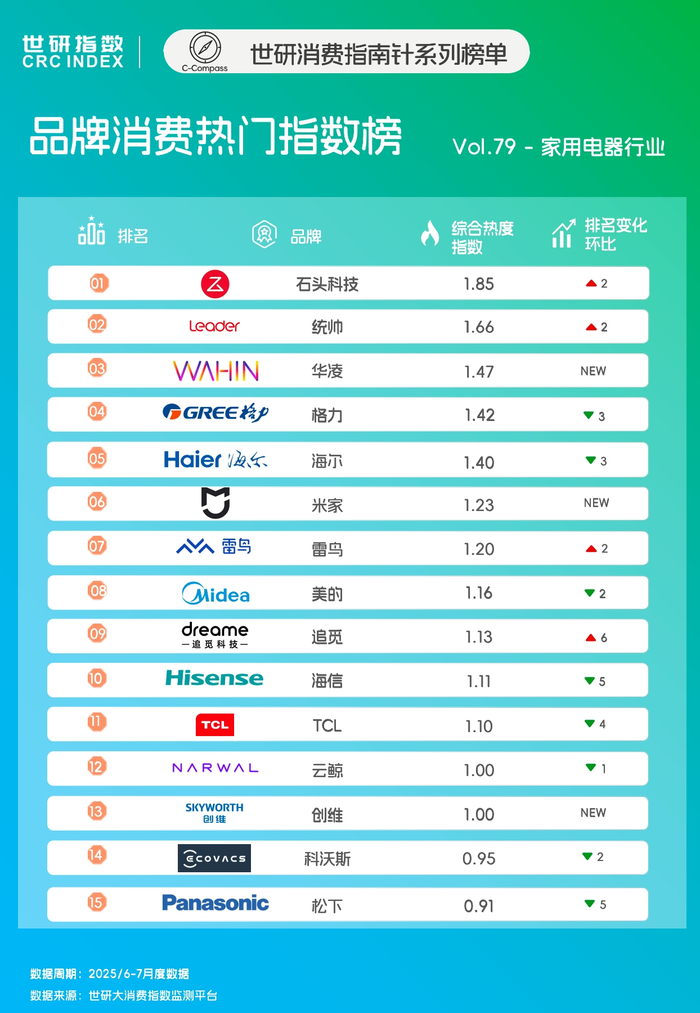
Z世代家电消费升级,品质健康引领技术|世研消费指数品牌榜Vol.79
3 6 Ke· 2025-10-24 04:23
Group 1 - The core viewpoint of the article highlights the strong performance of brands like Stone Technology, Leader, and Hualing in the home appliance market, driven by targeted strategies that cater to the younger generation's consumption needs [1][3][4] - The top three brands in the heat index are Stone Technology with a score of 1.85, Leader at 1.66, and Hualing at 1.47, indicating a competitive landscape in the home appliance sector [2][3] - The article emphasizes the importance of differentiated positioning and understanding specific consumer demands to capture market share, particularly among younger consumers [3][4] Group 2 - The article discusses how Leader and Hualing, as sub-brands under the same group, successfully implement strategies that focus on "deep youthfulness" and "extreme cost performance," respectively, to meet the needs of young consumers [3][4] - Haier and Midea are highlighted as technology-driven brands that leverage comprehensive product matrices and continuous R&D investments to address consumer demands for quality and health [4][5] - The competitive essence of the home appliance industry is underscored as being rooted in ongoing research and development, with a focus on precise consumer insights to create differentiated advantages [4][5]







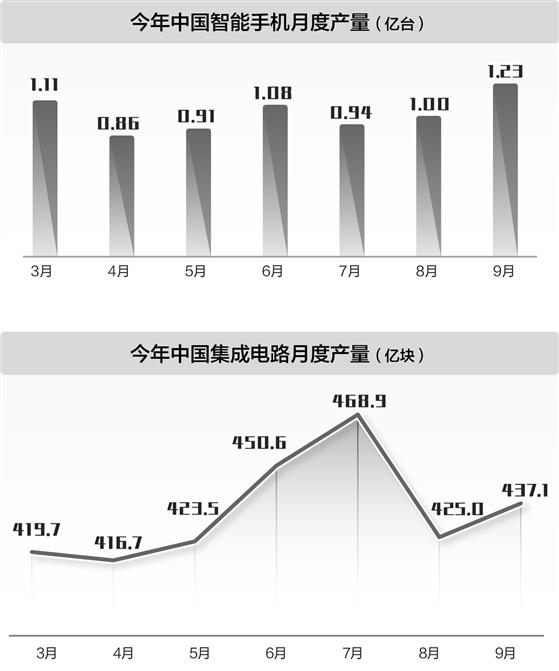
AI赋能+迭代升级电子信息制造业稳增长进行时
Zheng Quan Shi Bao Wang· 2025-10-24 02:32
Core Insights - The electronic information manufacturing industry is a key area for modern industrial systems and new productivity development, with a strong growth trend observed in the first eight months of the year, where the added value of large-scale electronic information manufacturing increased by 10.8% year-on-year [1] - The Ministry of Industry and Information Technology and the State Administration for Market Regulation have jointly released the "Action Plan for Stable Growth in the Electronic Information Manufacturing Industry (2025-2026)," presenting new development opportunities for the industry [1][4] Industry Growth and Policy Response - In August, the added value of large-scale electronic information manufacturing increased by 9.9% year-on-year, indicating a robust industry performance [1] - Several listed companies are actively responding to policy guidance by exploring AI-enabled business transformations and technological innovations to address industry challenges [1] AI Integration and Technological Innovation - TCL Technology is leading in the semiconductor display sector, focusing on integrating AI with terminal products, addressing power consumption issues through innovative technologies like LTPO adaptive partition refresh technology [5] - The AI system developed by TCL has significantly reduced defect detection rates by 85% and improved efficiency in product development by over 90% [5] - Hytera, a leader in professional communication equipment, is also integrating AI into its solutions, enhancing public safety and low-altitude communication capabilities [6] Supply Chain and Core Technology Development - Hytera has established a multi-layered protection system for supply chain security, achieving over 80% localization of core materials, thus reducing reliance on imports [8] - Both TCL and Hytera emphasize the importance of continuous R&D investment and industry collaboration to drive high-quality development in the electronic information manufacturing sector [7] Addressing Industry Competition - The "Action Plan" aims to address "involution" in the industry by promoting fair competition and discouraging low-price strategies that compromise product reliability [10] - Hytera advocates for a value-based competition approach, focusing on customer needs and application scenarios, while also highlighting the importance of reliability and security in extreme environments [10] - TCL is implementing differentiated strategies across its business sectors to strengthen its market position, including acquisitions to enhance its competitive edge [11]

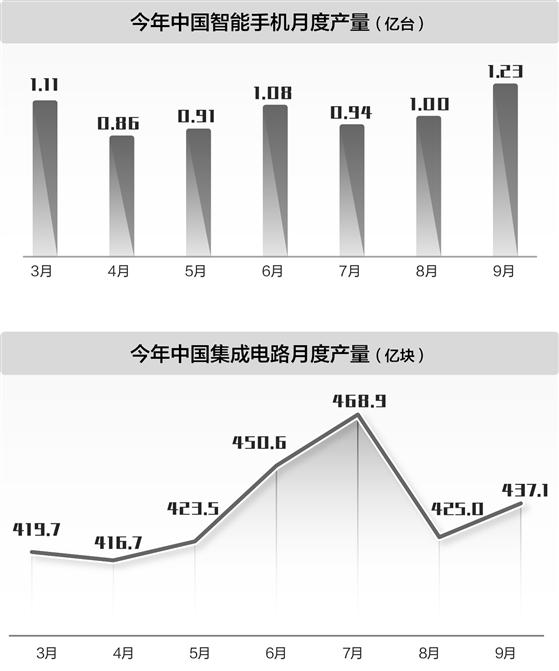
AI赋能+迭代升级 电子信息制造业稳增长进行时
Zheng Quan Shi Bao· 2025-10-23 17:13
Core Insights - The electronic information manufacturing industry is a key sector for modern industrial systems and plays a crucial role in developing new productive forces and promoting new industrialization [2] - From January to August this year, the industry experienced rapid growth, with a year-on-year increase of 10.8% in added value for large-scale electronic information manufacturing [2] - The Ministry of Industry and Information Technology and the State Administration for Market Regulation have jointly released the "Action Plan for Stable Growth of the Electronic Information Manufacturing Industry (2025-2026)," presenting new development opportunities for the sector [2] Industry Growth and Policy Response - The electronic information manufacturing industry is showing a positive development trend, with a 9.9% year-on-year increase in added value in August alone [2] - Several listed companies are actively responding to policy guidance by exploring AI-enabled business transformations and technological innovations to address industry challenges [2][5] AI Integration and Technological Innovation - TCL Technology has made significant strides in integrating AI with terminal products, focusing on low-power display technologies to address power consumption issues [5] - The company has developed an AI architecture that enhances manufacturing processes, achieving an 85% reduction in defect detection rates and over 90% efficiency improvement in product development cycles [5] - Hytera, a leader in professional communication equipment, is also exploring deep integration of AI into its communication solutions, enhancing public safety and low-altitude communication capabilities [6] Supply Chain and Core Technology Development - Hytera has focused on ensuring supply chain stability and core technology independence, achieving over 80% localization of core materials and enhancing performance compared to imported products [8] - The company has established a multi-layered protection system for supply chain security and has increased R&D investments to develop key components in collaboration with leading domestic enterprises [8] Addressing Industry Competition - The "Action Plan" emphasizes the need to address "involution" in the industry, with companies like TCL Technology and Hytera committing to promoting healthy competition and innovation [10] - Hytera advocates for value-based competition, focusing on product reliability and safety while calling for long-term development strategies in the industry [10] - TCL Technology is implementing differentiated strategies across its business sectors to strengthen its market position and enhance performance through acquisitions [11]
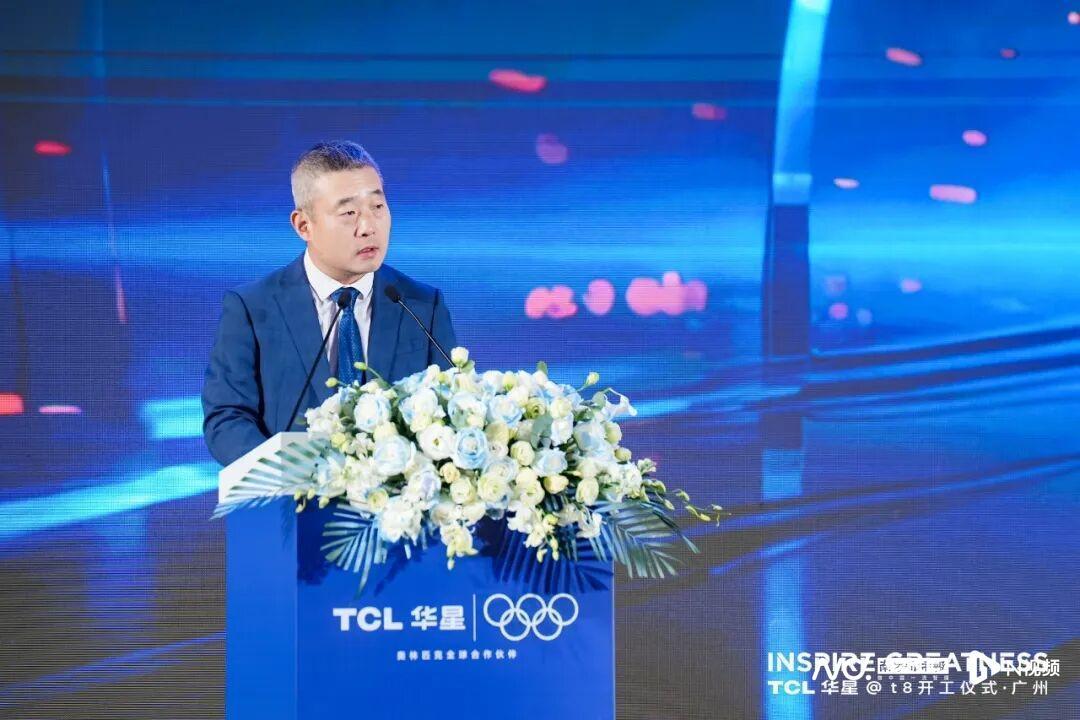
TCL华星295亿产线开工,粤港澳大湾区“强链”迎新落子
Nan Fang Du Shi Bao· 2025-10-23 10:56
Core Insights - TCL Huaxing has launched the T8 project with a total investment of approximately 29.5 billion yuan, marking the world's first mass production G8.6 generation printed OLED production line [1][2] - The T8 project is seen as a critical step in strengthening the semiconductor display industry cluster in the Guangdong-Hong Kong-Macao Greater Bay Area [1][7] Investment and Production Details - The T8 project is designed to process about 22,500 glass substrates measuring 2290mm x 2620mm per month, targeting the mid-size IT market including monitors, laptops, and tablets [2] - The project aims to achieve mass production by the second half of 2027, with a construction period of 24 months [4] Technology and Cost Advantages - The choice of printed OLED technology is based on its unique advantages in cost and display quality, with a material utilization rate exceeding 90%, compared to about 30% for traditional evaporation techniques [2][6] - TCL Huaxing expects a cost advantage of over 15% compared to other OLED technologies once the T8 project is scaled up [2] Competitive Landscape - The global competition in high-generation OLED production lines has intensified, with major players like Samsung Display and BOE investing heavily in G8.6 generation lines, while TCL Huaxing is the only major company betting on the printed route [5] - TCL Huaxing's T8 project is the fourth high-generation OLED line announced in the industry, with the company timing its entry based on its own progress and market demand forecasts [5] Strategic Implications - The T8 project is expected to enhance the collaboration within the Greater Bay Area's semiconductor display industry, leveraging existing production lines in Guangzhou, Shenzhen, and Huizhou [7] - The project aims to achieve a 50% localization rate for equipment in its first phase, addressing previous dependencies on overseas suppliers and enhancing China's capabilities in this field [7]
国创科、先导微电子设备主体组装完成/批量出货
WitsView睿智显示· 2025-10-23 08:46
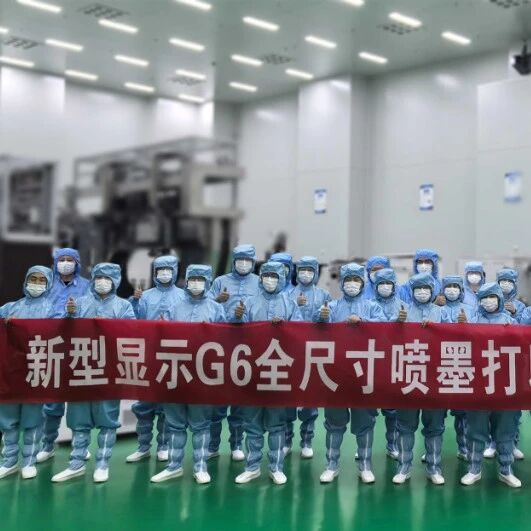
Core Insights - Recent developments in display equipment companies, including TCL Technology and XianDao Technology, highlight advancements in manufacturing capabilities and product offerings [2][8]. Group 1: National Innovation Technology (GuoChuangKe) - GuoChuangKe has completed the assembly of its G6 full-size new display inkjet printing equipment, designed for high-efficiency mass production of key functional layers in new displays [3][6]. - The G6 equipment can accommodate substrate sizes of 1850mm × 1500mm and is capable of printing precise patterns with droplet spacing of only a few microns, meeting the demands of high-generation production lines [6][7]. - GuoChuangKe plans to invest 500 million yuan over the next five years to expand its existing G4.5 and G6H equipment capacity, focusing on developing G6 and 8.X generation inkjet equipment [7]. Group 2: Jiangsu XianDao Microelectronics - Jiangsu XianDao Microelectronics has achieved bulk shipments of its self-developed ion source-assisted precision optical coating equipment [8][11]. - This optical coating equipment is crucial for the production of key optical components in 3C products, enhancing the density, stability, and optical performance of thin films through precise control of ion beam energy [11]. - The company has previously delivered large-size roll-to-roll magnetron sputtering equipment, which significantly improves coating efficiency and maintenance in the flexible display sector [11].
超15%成本优势,TCL华星入局中尺寸OLED竞技赛!
WitsView睿智显示· 2025-10-23 08:46
Core Viewpoint - TCL Huaxing has officially commenced the construction of its G8.6 printed OLED production line (T8 project) with a total investment of 29.5 billion yuan, aiming for a monthly capacity of 22,500 glass substrates by the end of 2027 [2][19]. Summary by Sections Project Launch and Capacity - The T8 project represents a significant investment in printed OLED technology, with a planned capacity of 22,500 pieces per month [2]. - The project is expected to achieve mass production by the end of 2027, following a structured approach to construction and production [2]. Technological Breakthroughs - TCL Huaxing has made three major breakthroughs in printed OLED technology: resolution, material performance, and yield [4][11]. - The latest products showcased at the launch event demonstrate advancements in resolution, including the world's first 2.8K R-angle printed OLED display with a resolution of 2880*1920 [7][9]. Product Innovations - The company introduced the world's first 4K foldable portable display, which features a 28-inch screen and a brightness of 400 nits [8][11]. - The printed OLED products are expected to offer a cost advantage of approximately 15% compared to existing OLED technologies, making them more accessible to consumers [14][21]. Market Trends and Future Outlook - The mid-size OLED market is projected to enter a rapid growth phase starting in 2026, with TCL Huaxing well-positioned to meet this demand through its T12 and T8 production lines [17]. - The overall OLED display market is expected to see a significant increase in shipments, with a forecasted 86% year-on-year growth by 2025 [17]. Competitive Landscape - TCL Huaxing aims to leverage its cost-performance advantage to promote the widespread adoption of OLED technology, collaborating with other industry players to expand the market [21]. - Competitors such as Samsung, BOE, and Visionox are also accelerating their G8.6 OLED production line developments, indicating a competitive environment [18][19]. Environmental and Quality Considerations - The printed OLED technology emphasizes low energy consumption and high material utilization rates, achieving a material utilization rate of 90% compared to 30% for traditional methods [16]. - The technology also focuses on reducing blue light exposure, enhancing visual comfort for users [15]. Future Developments - TCL Huaxing is not only focused on printed OLED technology but also aims to advance quantum dot electroluminescence (QD-EL) technology, which could significantly enhance display performance [23].

光学光电子板块10月23日涨0.25%,深纺织A领涨,主力资金净流出5.12亿元
Zheng Xing Xing Ye Ri Bao· 2025-10-23 08:14
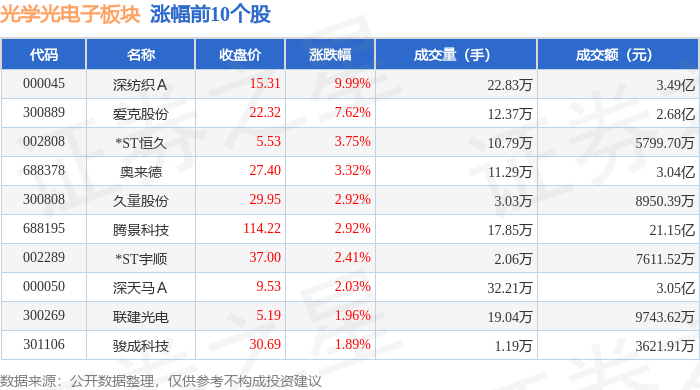
证券之星消息,10月23日光学光电子板块较上一交易日上涨0.25%,深纺织A领涨。当日上证指数报收 于3922.41,上涨0.22%。深证成指报收于13025.45,上涨0.22%。光学光电子板块个股涨跌见下表: 从资金流向上来看,当日光学光电子板块主力资金净流出5.12亿元,游资资金净流入1482.99万元,散户 资金净流入4.98亿元。光学光电子板块个股资金流向见下表: | 代码 | 名称 | 主力净流入(元) | 主力净占比 游资净流入(元) | | 游资净占比 散户净流入 (元) | | 散户净占比 | | --- | --- | --- | --- | --- | --- | --- | --- | | 688195 腾景科技 | | 1.22亿 | 5.79% | -6349.78万 | -3.00% | -5893.64万 | -2.79% | | 000100 TCL科技 | | 1.11亿 | 9.26% | -5829.33万 | -4.88% | -5224.03万 | -4.38% | | 000045 深纺织A | | 7945.73万 | 22.75% | -4591.65万 | ...


TCL华星t8项目开工 OLED显示产业有望迎来新突破
Zhong Guo Jing Ji Wang· 2025-10-23 05:15
Core Insights - The T8 project by TCL Huaxing, in collaboration with the Guangzhou government, marks the establishment of the world's first mass production G8.6 generation printed OLED production line, with a total investment of approximately 29.5 billion yuan [1] - The project aims to enhance the domestic supply chain for printed OLED technology, transitioning from a follower to a leader in the high-generation AMOLED sector [1][2] - The T8 project is expected to significantly contribute to the development of a complete and independent industrial chain, with multiple suppliers already expressing cooperation intentions [1] Investment and Production Capacity - The T8 project is designed to process approximately 22,500 glass substrates per month, with dimensions of 2290mm x 2620mm, targeting applications in displays, laptops, and tablets [1] - The project builds on TCL Huaxing's 12 years of investment in printed OLED technology, leveraging experience from the Wuhan G5.5 generation production line, which achieved mass production in November 2024 [1] Technological Advancements - The T8 project will incorporate advanced technologies such as industrial robots, AI models, and new materials to drive high-quality development in the display industry [2] - AI applications are expected to enhance product development efficiency and yield rates, with defect detection and repair processes largely automated, achieving over 95% stability [2] Environmental Impact - The printed OLED technology utilized in the T8 project is designed to have lower production energy consumption and higher material utilization rates, potentially reducing energy consumption by approximately 300 to 400 million kilowatt-hours annually [2]
江苏“船王”入主杉杉,还有一步之遥
3 6 Ke· 2025-10-23 02:53
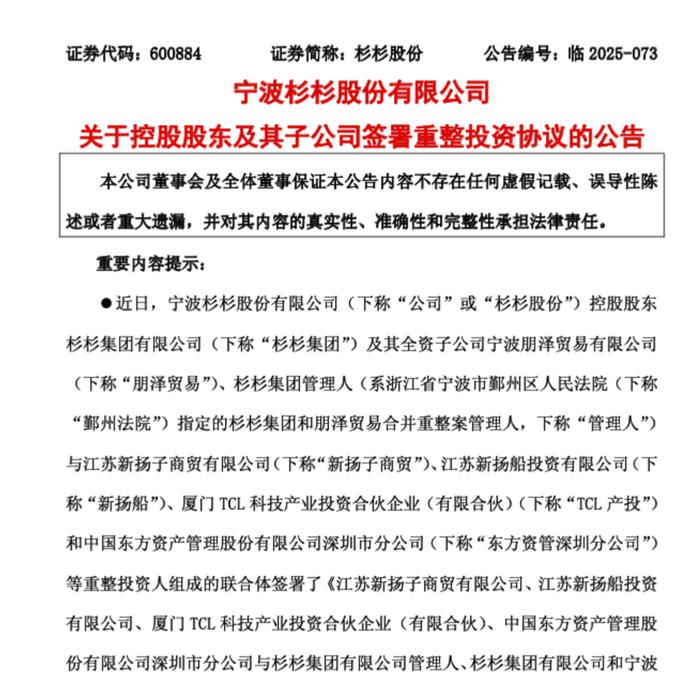
Core Viewpoint - The restructuring plan of Sunwoda is facing unexpected challenges as the original investor, Saimaike, has been replaced by TCL, leading to legal disputes and uncertainties regarding the restructuring process [1][2][3] Group 1: Legal Disputes and Investor Changes - Saimaike has filed a lawsuit against Jiangsu New Yangzi Commerce and the restructuring manager, claiming that their exclusion from the restructuring investor group was unauthorized and seeking to invalidate the restructuring investment agreement signed on September 29 [1][2] - The court has acknowledged the case and is urging the parties involved to negotiate a resolution, indicating that the establishment of the restructuring agreement is uncertain [1][2] - The change in investors from Saimaike to TCL has raised questions about the transparency of the selection process and the validity of the decision made by the restructuring management team [7][8] Group 2: Implications for TCL and Sunwoda - TCL's involvement in the restructuring is expected to strengthen its relationship with Sunwoda and enhance its participation in upstream material research and development, improving supply chain efficiency [6] - The investment from TCL is projected to be under 500 million yuan, with the potential to acquire approximately 4.37 million shares of Sunwoda, translating to about 1.94% ownership [5] - Despite the ongoing legal issues, the overall value of Sunwoda appears to be increasing, as it continues to be a significant player in the lithium battery materials market, holding a leading position in negative electrode materials [9][10] Group 3: Historical Context and Future Outlook - Sunwoda has a remarkable history, transitioning from a clothing company to a global leader in the new energy technology sector, with a strong market presence in lithium battery materials and polarizers [9][10] - The company has achieved significant milestones, including holding 334 patents in negative electrode materials and becoming the largest supplier of polarizers globally [10] - The restructuring process is critical for Sunwoda's future, and its ability to navigate these challenges will determine its success in maintaining its market position [11][12]

投资295亿元 TCL华星印刷OLED产线广州落地
2 1 Shi Ji Jing Ji Bao Dao· 2025-10-22 23:05
Core Insights - The groundbreaking of the world's first G8.6 generation printed OLED production line in Guangzhou marks a significant milestone for TCL Huaxing and the Chinese display industry [1][4] Investment and Project Overview - The T8 project, with an investment of approximately 29.5 billion yuan, is a collaboration between TCL Huaxing, the Guangzhou Municipal Government, and the Guangzhou Economic and Technological Development Zone Management Committee [1] - The T8 project is expected to accelerate the mass production of printed OLED technology, which is anticipated to reduce costs and enable large-scale production of full-size screens [1][2] Technology and Production Capacity - The T8 project is designed to process approximately 22,500 glass substrates (2290mm x 2620mm) per month, enhancing the capacity for high-generation printed OLED production [2] - The T12 G5.5 generation printed OLED production line has already achieved mass production and product delivery since November 2024, providing valuable experience for the T8 project [2][6] Market Position and Competitive Landscape - The global AMOLED panel shipment is projected to reach 1.01 billion units in 2024, with an expected increase to 1.33 billion units by 2030, indicating a growing market for OLED technology [6] - Major competitors in the OLED market, including Samsung, BOE, and Visionox, have also established G8.6 generation OLED production lines, intensifying competition [6][7] Strategic Importance and Ecosystem Development - The T8 project is positioned to strengthen the semiconductor display industry in the Guangdong-Hong Kong-Macao Greater Bay Area, which is recognized for its comprehensive electronic information industry ecosystem [4][5] - TCL Huaxing aims to create a complete ecosystem covering materials, equipment, panels, and terminal products, with a focus on domestic supply chain development [5][7] Future Outlook - The first products from the T8 project are expected to focus on the mid-size high-end OLED display market, with mass production anticipated in the second half of 2027 [3][8] - The company forecasts a 15% cost advantage over existing OLED technologies, positioning itself favorably in the competitive landscape [7]