
ZANGGE MINING(000408)

Search documents
有色金属ETF(512400)开盘跌1.80%,重仓股紫金矿业跌1.03%,洛阳钼业跌2.02%
Xin Lang Cai Jing· 2026-03-03 13:49
Group 1 - The core viewpoint of the article highlights the performance of the Nonferrous Metals ETF (512400), which opened down by 1.80% at 2.453 yuan [1] - Major holdings in the Nonferrous Metals ETF include Zijin Mining, which opened down by 1.03%, and other companies like Luoyang Molybdenum down by 2.02%, Northern Rare Earth down by 0.58%, and Huayou Cobalt down by 1.05% [1] - The ETF's performance benchmark is the CSI Shenwan Nonferrous Metals Index return, managed by Southern Fund Management Co., Ltd., with a return of 154.70% since its inception on August 3, 2017, and a return of 14.07% over the past month [1]



A股异动丨锂矿股集体下挫,赣锋锂业、盐湖股份跌超4%
Ge Long Hui A P P· 2026-03-03 05:21
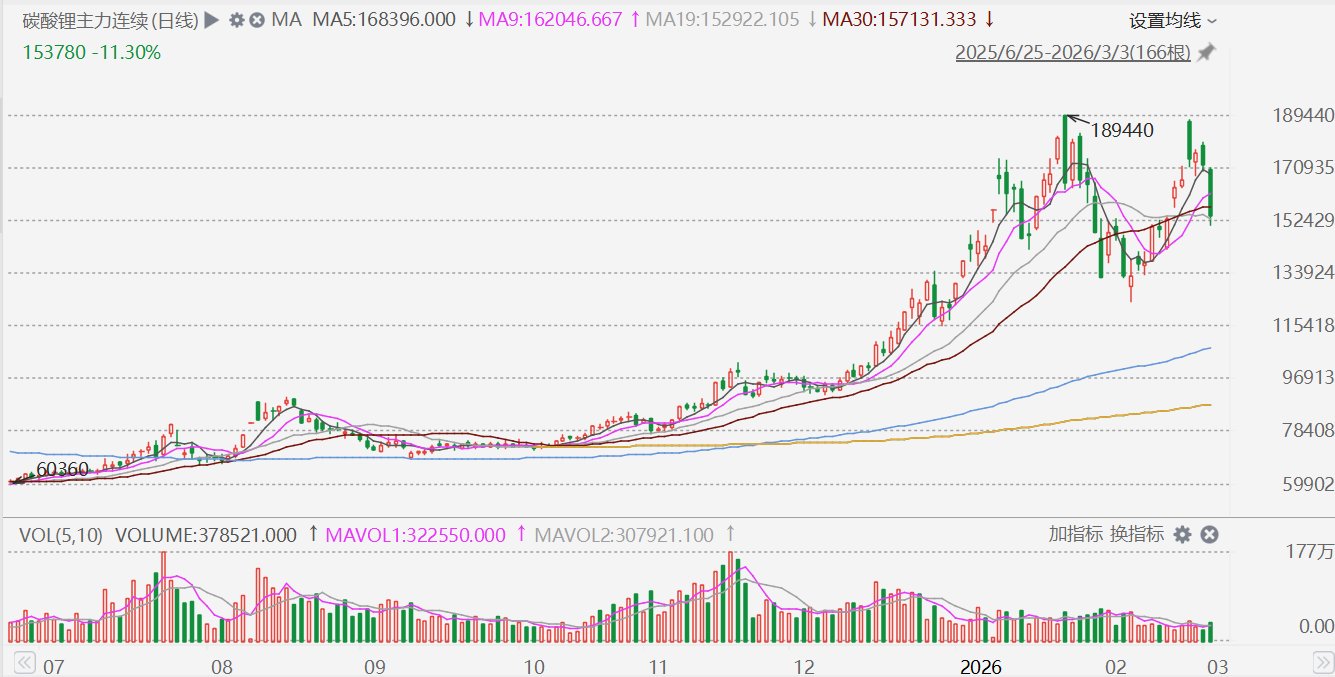
Group 1 - The A-share market saw a collective decline in lithium mining stocks, with companies such as Huayou Cobalt and Zhongmin Resources dropping over 6% [1] - Other companies like Tibet Summit and Western Mining also experienced significant declines, falling over 5%, while companies including Cangge Mining, Erkang Pharmaceutical, Ganfeng Lithium, Salt Lake Industry, and Tianqi Lithium dropped over 4% [1] - The main contract for lithium carbonate experienced a substantial drop, reaching a maximum decline of 12.99% during the trading session, with a price of 150,860 yuan per ton [1]


有色:能源金属行业周报:节后多数金属价格继续回暖,后续仍看好关键金属全面行情
HUAXI Securities· 2026-03-01 10:35
Investment Rating - The industry rating is "Recommended" [3] Core Views - The report highlights that the supply disruptions in Indonesia are raising expectations for tighter market conditions, which may support nickel prices. As of February 27, the LME nickel spot price was $17,685 per ton, up 3.09% from February 20, with total LME nickel inventory at 287,976 tons, an increase of 0.09% [1] - The cobalt raw material supply remains tight, with expectations for continued price increases. As of February 27, electrolytic cobalt was priced at 440,000 yuan per ton, up 2.92% from February 13 [2] - The report indicates that the overall supply of antimony is slightly contracting, which may support antimony prices. The average price of domestic antimony ingots was 167,500 yuan per ton as of February 26, up 1.82% from February 12 [6] - The report notes that the supply of lithium carbonate is expected to remain tight, with prices rising to 176,000 yuan per ton as of February 27, an increase of 17.82% from February 13 [8] - The report emphasizes that the supply of praseodymium and neodymium is likely to remain short, which may support prices in the rare earth magnetic materials sector. As of February 27, the average price of praseodymium oxide was 955 yuan per kilogram, up 6.70% from February 14 [9] - The report discusses the ongoing tensions in northern Myanmar, which are raising concerns about the supply chain for tin, with the LME tin spot price reaching $57,425 per ton, up 26.21% from February 20 [11] - The report indicates that the supply shortage of tungsten is worsening, with white tungsten concentrate priced at 796,000 yuan per ton as of February 28, up 14.86% from February 13 [13] - The report highlights that expectations for tight uranium supply are continuing to develop, with the global uranium market price at $69.71 per pound as of January, remaining high despite some fluctuations [14] Summary by Sections Nickel and Cobalt Industry - Nickel prices are expected to find support due to supply constraints from Indonesia, with a significant reduction in approved mining quotas [1][16] - Cobalt supply is projected to remain structurally tight, with potential for further price increases benefiting cobalt resource companies [2][17] Antimony Industry - Antimony supply is tightening, with domestic prices expected to rise as export controls and supply chain issues persist [6][19] Lithium Industry - Lithium carbonate prices are expected to remain strong due to supply constraints and increased demand from battery manufacturers [8][20] Rare Earth Industry - The supply of praseodymium and neodymium is expected to remain tight, with price support anticipated due to regulatory changes and supply chain disruptions [9][21] Tin Industry - Ongoing geopolitical tensions in Myanmar and supply chain uncertainties are expected to support tin prices [11][22] Tungsten Industry - The tungsten market is facing supply shortages, with prices expected to rise further due to production constraints and regulatory measures [13][23] Uranium Industry - The uranium market is experiencing tight supply conditions, with prices remaining elevated due to geopolitical factors and production delays [14][24]


藏格矿业(000408) - 关于持股5%以上股东部分股份解除质押的公告
2026-02-27 12:30
证券代码:000408 证券简称:藏格矿业 公告编号:2026-009 藏格矿业股份有限公司 本公司及董事会全体成员保证信息披露的内容真实、准确、完整,没有虚 假记载、误导性陈述或重大遗漏。 | 藏格创业 | 166,085,383 | 10.58 | 27,897,482 | 16.80 | 1.78 | 0 | 0.00 | | 0 | 0.00 | | --- | --- | --- | --- | --- | --- | --- | --- | --- | --- | --- | | 投资 | | | | | | | | | | | | 四川省永 | | | | | | | | | | | | 鸿实业有 | 49,315,886 | 3.14 | 20,345,750 | 41.26 | 1.30 | 0 | 0.00 | 12,880,000 | | 44.46 | | 限公司 | | | | | | | | | | | | 肖永明 | 100,685,746 | 6.41 | 70,000,000 | 69.52 | 4.46 | 0 | 0.00 | | 0 | 0.00 | | 肖瑶 | 22 ...
藏格矿业跌2.01%,成交额7.21亿元,主力资金净流入2778.20万元
Xin Lang Cai Jing· 2026-02-27 03:31
Core Viewpoint - Cangge Mining's stock price has shown fluctuations, with a recent decline of 2.01% and a total market capitalization of 133.86 billion yuan, while the company continues to generate significant revenue from its main business in potassium fertilizer production and sales [1]. Financial Performance - For the period from January to September 2025, Cangge Mining achieved a revenue of 2.401 billion yuan, reflecting a year-on-year growth of 3.35%, and a net profit attributable to shareholders of 2.751 billion yuan, which represents a substantial increase of 47.26% compared to the previous year [2]. Shareholder Information - As of September 30, 2025, the number of shareholders for Cangge Mining reached 36,800, an increase of 25.24% from the previous period, while the average number of circulating shares per person decreased by 20.15% to 42,667 shares [2]. Dividend Distribution - Cangge Mining has distributed a total of 9.629 billion yuan in dividends since its A-share listing, with 5.998 billion yuan distributed over the last three years [3]. Institutional Holdings - As of September 30, 2025, among the top ten circulating shareholders, Hong Kong Central Clearing Limited held 27.7006 million shares, a decrease of 3.4507 million shares from the previous period, while Shenwan Hongyuan Securities Limited held 15.9071 million shares, down by 2.2110 million shares [3].
多重积极因素提振!化工ETF天弘(159133)标的指数大涨超3%,今年以来净流入近20亿元
Mei Ri Jing Ji Xin Wen· 2026-02-26 09:55
Group 1 - The chemical sector is experiencing a positive trend, with the chemical ETF Tianhong (159133) seeing a 3.24% increase in its index during trading, with a subscription amount of 7.5 million units and a transaction volume of 41.76 million yuan [1] - The Tianhong chemical ETF has achieved a net inflow of 1.953 billion yuan over the last 30 trading days, reaching a new high in total assets of 2.764 billion yuan as of February 24, 2026 [1] - The index tracked by the Tianhong chemical ETF has increased by 56.38% over the past year, with major allocations in chemical products (26.18%), agricultural chemicals (22.71%), and chemical raw materials (14.01%) [1] Group 2 - The chemical sector is being boosted by multiple positive factors, including ongoing "anti-involution" policies that are optimizing supply through joint production cuts in polyester and organic silicon sub-industries [2] - There are positive signals in product pricing, with significant price increases for key intermediates in disperse dyes and an upward adjustment in export prices for vitamin E [2] - A recent U.S. Supreme Court ruling has lowered certain tariffs, improving export expectations for chemical products, while the development of robotics and AI is driving demand for new materials [2]



碳酸锂专题:需求超预期,开启26-27年向上新周期
Soochow Securities· 2026-02-26 05:10
Investment Rating - The report maintains a positive outlook on lithium carbonate, predicting a price upcycle over the next two years, with a reasonable price center at 150,000 CNY/ton, and potential spikes above 200,000 CNY/ton due to supply constraints [2][3]. Core Insights - Demand for lithium carbonate is expected to exceed expectations, driven by robust growth in electric vehicle (EV) and energy storage sectors, with projected global lithium battery demand reaching 2,886 GWh in 2026, a 30% increase [2][3]. - Supply is anticipated to be tight in 2026, particularly in Q1 and Q4, with a forecasted global lithium supply of 2.14 million tons, an increase of 440,000 tons from the previous year [2][3]. - The report highlights significant contributions from domestic salt lakes and various mining projects, with a focus on the production ramp-up in the second half of 2026 [2][3]. Supply Summary - The supply forecast indicates that in a neutral scenario, global lithium supply will reach 2.14 million tons in 2026, with an increase of 440,000 tons, primarily from domestic salt lakes and various mining projects [6][7]. - Key contributors to supply growth include domestic salt lakes, domestic mines, and overseas projects, with significant contributions expected from companies like Ganfeng Lithium and Zijin Mining [7][8]. Demand Summary - The demand for lithium carbonate is projected to grow significantly, with total demand estimates of 210,000 tons in 2026, 250,000 tons in 2027, and 285,000 tons in 2028, driven by the electric vehicle and energy storage markets [2][3]. Price Summary - The report anticipates a two-year price upcycle for lithium carbonate, with a reasonable price center at 150,000 CNY/ton, supported by supply-demand dynamics [2][3]. - Price fluctuations are expected, with potential spikes due to supply constraints, particularly in Q1 and Q4 of each year [2][3]. Stock Recommendations - The report recommends focusing on companies with substantial lithium resources and profit elasticity, highlighting firms such as Ganfeng Lithium, Zhongjin Lingnan, and Yongxing Materials as key investment opportunities [2][3].


碳酸锂行业事件点评:津巴布韦收紧锂精矿出口,供给扰动再现
GUOTAI HAITONG SECURITIES· 2026-02-26 03:11
Investment Rating - The report maintains an "Overweight" rating for the lithium carbonate industry, indicating a positive outlook for the sector [4]. Core Insights - The ban on lithium concentrate exports from Zimbabwe is expected to significantly disrupt global lithium supply in the short term, leading to a strong price performance for lithium [2]. - The report highlights that the tightening supply and continuous inventory depletion in the lithium carbonate market will contribute to a strong price fluctuation [4]. - Key companies recommended for investment include Zangge Mining, Ganfeng Lithium, Tianqi Lithium, Yongxing Materials, and Yahua Group [4]. Summary by Sections - **Supply Dynamics**: Zimbabwe's Ministry of Mines announced an immediate suspension of all raw and lithium concentrate exports, which is anticipated to tighten the supply side significantly. In 2025, China is expected to import 1.19 million tons of lithium concentrate from Zimbabwe, translating to a lithium carbonate production of 148,800 tons [4]. - **Market Conditions**: The report notes that from late January to February 2026, lithium carbonate inventory has been declining for five consecutive weeks, with an accelerating depletion rate. The demand recovery post-Chinese New Year is expected to maintain this trend, leading to a strong price outlook for lithium carbonate [4]. - **Future Outlook**: The demand for lithium carbonate is projected to grow rapidly in 2026, driven by the energy storage and power battery sectors. The supply side remains constrained due to previous disruptions in key mining areas and changes in overseas supply [4].



津巴布韦叫停锂矿出口,碳酸锂价格将要“狂飙”?
Ge Long Hui· 2026-02-26 03:07
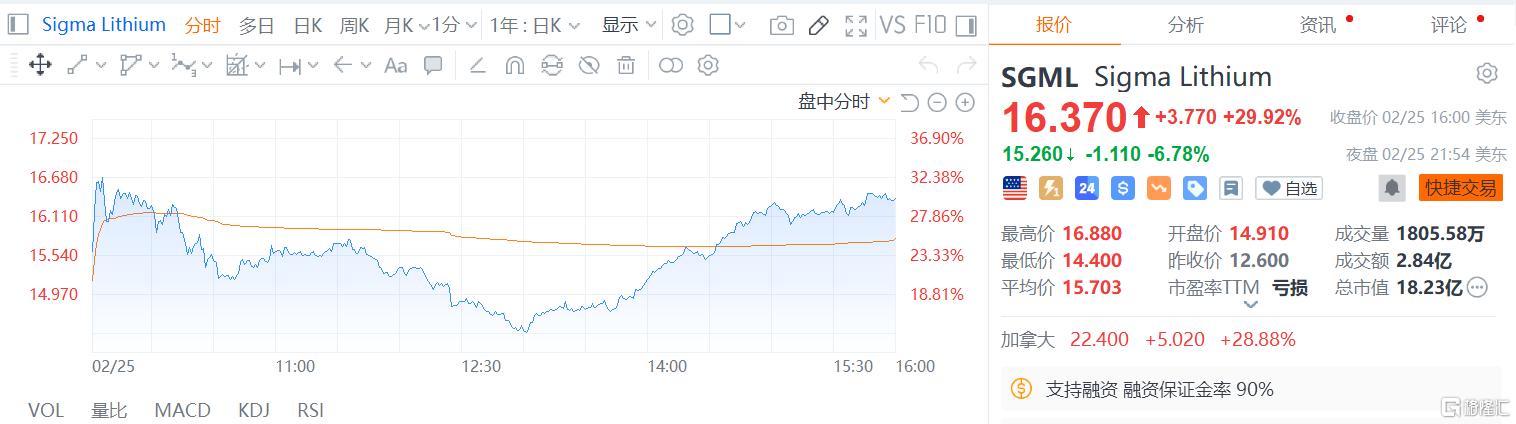
Core Viewpoint - Zimbabwe's Ministry of Mines has announced an immediate suspension of all unprocessed mineral and lithium concentrate exports, significantly impacting the global lithium supply chain [1][5][7]. Group 1: Market Impact - Following the announcement, U.S. lithium producers saw significant stock price increases, with Sigma Lithium rising nearly 30% and Livent up 8% [1]. - In the A-share market, lithium-related stocks were notably active, with companies like Keli Yuan and Jinyuan shares hitting the daily limit, and Salt Lake shares increasing over 8% [3]. - The price of lithium carbonate has surged, with recent contracts reaching 175,960 yuan per ton, reflecting a 4.84% increase [8]. Group 2: Supply Chain Dynamics - Zimbabwe is the fourth largest lithium producer globally and the largest in Africa, with over 90% of its lithium concentrate exported to China [7]. - The suspension of exports is part of a broader trend, as countries like Namibia and Botswana have implemented similar measures, reshaping the global lithium supply chain towards local processing [7]. - By 2025, Zimbabwe's lithium concentrate production is expected to account for 12% of global supply, with China importing 15.5% of its lithium concentrate from Zimbabwe [7]. Group 3: Domestic Industry Response - China's lithium upstream inventory is critically low, with less than 20,000 tons available, which may exacerbate supply shortages due to the export ban [10]. - The ban is expected to create a supply gap of up to 20,000 tons per month, further intensifying the existing supply-demand imbalance in the lithium market [11]. - The situation may lead to a short-term increase in lithium prices, benefiting domestic lithium companies and prompting them to accelerate overseas mining investments [13]. Group 4: Beneficiary Companies - Huayou Cobalt holds a 51% stake in Zimbabwe's Arcadia lithium mine, with a lithium carbonate equivalent of 245,000 tons, and is developing a processing plant [14]. - Zhongkuang Resources fully controls Zimbabwe's Bikita lithium mine, which is the largest operational lithium mine in Africa, with a high lithium oxide grade [14]. - Tianqi Lithium has full control over the Talison lithium mine, ensuring a self-sufficient resource rate and benefiting from rising lithium prices [14]. - Ganfeng Lithium, a global leader in the lithium industry, has a diversified resource layout and is well-positioned to avoid risks from Zimbabwe's export ban [15].

上市公司多措并举全力保障化肥供应
Zheng Quan Ri Bao· 2026-02-25 15:45
Group 1 - The A-share fertilizer sector has seen a significant price increase, with companies like Chuanjinnuo, Chitianhua, Yuntianhua, and others reaching their daily price limits [1] - Fertilizer prices have generally risen, with urea prices increasing by 20.6%, phosphate prices by 2.5%, potassium prices by 14.8%, and compound fertilizer prices by 19% compared to late January [1] - Factors driving the price increase include rising raw material costs, tightening global supply, and concentrated spring farming demand [1] Group 2 - The phosphate market is expected to maintain a high volatility pattern throughout 2026, influenced by raw material costs, supply-demand adjustments, and policy directions [2] - The potassium fertilizer market will be guided by national policies, with major suppliers securing long-term contracts, while smaller companies will continue to face demand fluctuations [2] - The compound fertilizer market is anticipated to experience a mix of factors affecting its operation, including seasonal demand changes and ongoing raw material cost disturbances [2] Group 3 - The national government has proactively deployed measures to ensure fertilizer supply and price stability for the spring farming season and the entire year [3] - Specific measures include stabilizing phosphate rock production, supporting domestic sulfur supply for phosphate production, and ensuring that phosphate producers prioritize domestic market supply [3] Group 4 - Several listed companies are implementing diverse measures to ensure fertilizer supply during the critical spring farming period [4] - Salt Lake Co. emphasizes efficient production organization and logistics to maintain market supply and meet customer demand [4] - Cangge Mining is strategically planning to maximize production capacity while ensuring safety, collaborating closely with partners to meet market needs [4]