
ZGXT(000831)

Search documents
美企向中国稀土“宣战”,只要1年时间,就能缓解特朗普心腹大患
Sou Hu Cai Jing· 2025-06-14 07:37
Core Viewpoint - The article discusses the ongoing struggle between the United States and China over rare earth elements, highlighting the U.S. efforts to develop its own rare earth capabilities while facing challenges in breaking China's dominance in this strategic resource. Group 1: U.S. Efforts and Challenges - The U.S. is attempting to control global rare earth sources while negotiating with China, but has not achieved its goals after ten years of research and development [1][3][20] - A U.S. rare earth manufacturer claims it can make progress in one year, which could alleviate concerns for the Trump administration [5][32] - The U.S. military and industrial sectors are heavily reliant on rare earth elements, and the lack of domestic production poses significant challenges [20][22] Group 2: China's Dominance - China holds the largest rare earth reserves at 44 million tons and has a production capacity of up to 270,000 tons per year, making it the world's leading supplier [16][18] - China's rare earth processing technology has reached a purity level of 99.9%, and it has developed environmentally friendly extraction methods [18][30] - The U.S. has struggled to establish a competitive rare earth supply chain, relying heavily on imports from China [20][28] Group 3: Future Prospects - The U.S. government is actively supporting domestic rare earth projects and seeking international partnerships to build a non-China dependent supply chain [25][27][33] - Analysts suggest that while breakthroughs in rare earth technology are possible, achieving the same level as China will take several years and significant investment [30][35] - The U.S. rare earth companies acknowledge the challenges ahead but are determined to gradually advance their capabilities in the sector [32][38]


2025年中国稀土新材料行业产业链、市场规模、行业政策、竞争格局、代表企业经营现状及发展趋势研判:"双碳"战略驱动下,产业正从规模扩张向价值跃升[图]
Chan Ye Xin Xi Wang· 2025-06-14 01:53
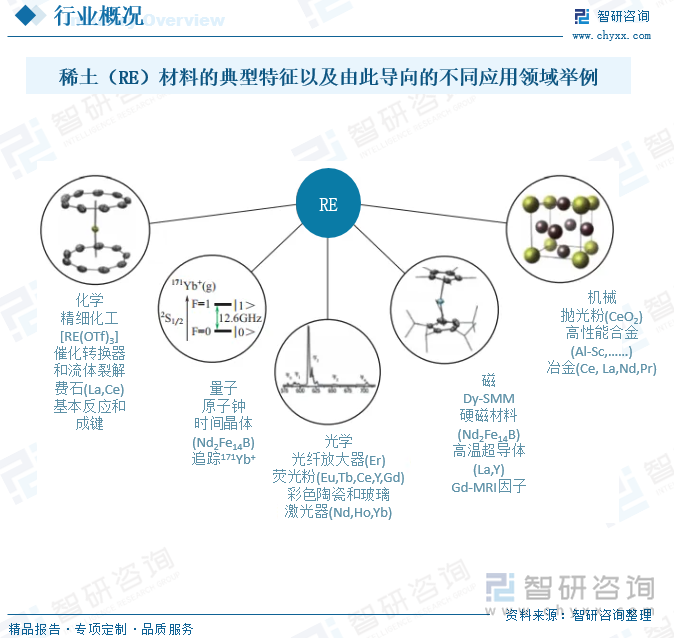
Industry Overview - Rare earth new materials, including permanent magnets, hydrogen storage, catalysis, polishing, and alloys, are essential for modern high-tech industries and support rapid advancements in fields such as electronic information, new energy, and aerospace [1][9] - In 2024, the market size for rare earth luminescent materials is projected to be 0.702 billion yuan, catalysis materials at 9.111 billion yuan, polishing materials at 0.768 billion yuan, and magnetic materials at approximately 80 billion yuan [1][9] - The total rare earth mining volume in China is expected to reach 270,000 tons in 2024, with light rare earths accounting for 250,850 tons and medium-heavy rare earths for 19,150 tons [6] Market Dynamics - The domestic rare earth industry is experiencing accelerated integration, leading to increased industry concentration and improved supply-demand relationships [8] - Demand for rare earth products continues to grow in sectors such as new energy and high technology, providing strong momentum for industry development [8] - The Chinese government is enhancing policy support to promote the development of strategic emerging industries, including rare earth new materials [8][13] Competitive Landscape - Major companies in the rare earth new materials sector include: - KOHEN Co., Ltd. specializes in lithium-ion battery materials and rare earth functional materials [22][23] - Northern Rare Earth (Group) High-Tech Co., Ltd. is the only domestic company covering all five major rare earth functional materials industries [25] - Guangsheng Nonferrous Metals Co., Ltd. has established a complete industrial chain in the rare earth sector [18] - Other notable companies include Xiamen Tungsten Co., Ltd., Shanghai Keyan Optoelectronic Technology Co., Ltd., and Jiangsu Tiancai Technology Materials Co., Ltd. [1][19] Industry Development Trends - The rare earth materials industry is crucial for national technological advancement, economic growth, and defense construction [27] - The industry is expected to undergo a transformation towards high-end, green, and intelligent development, creating a trillion-level industrial cluster over the next five years [28]


中证稀土产业指数下跌1.08%,前十大权重包含卧龙电驱等
Jin Rong Jie· 2025-06-13 11:25
Core Viewpoint - The China Rare Earth Industry Index has shown a recent decline, but it has experienced significant growth year-to-date, indicating a mixed performance in the rare earth sector [1][2]. Group 1: Index Performance - The China Rare Earth Industry Index decreased by 1.08% to 1793.49 points, with a trading volume of 34.123 billion yuan [1]. - Over the past month, the index has increased by 5.22%, by 1.03% over the last three months, and by 14.51% year-to-date [2]. Group 2: Index Composition - The index includes companies involved in rare earth mining, processing, trading, and applications, reflecting the overall performance of listed companies in the rare earth industry [2]. - The top ten weighted companies in the index are: Northern Rare Earth (14.63%), China Rare Earth (6.14%), Wolong Electric Drive (4.72%), Xiamen Tungsten (4.56%), Lingyi Technology (4.4%), Shenghe Resources (4.32%), Greeenmei (4.27%), Baotou Steel (4.2%), China Aluminum (4.2%), and Goldwind Technology (4.14%) [2]. Group 3: Market and Sector Breakdown - The Shanghai Stock Exchange accounts for 51.34% of the index holdings, while the Shenzhen Stock Exchange accounts for 48.66% [2]. - In terms of industry composition, raw materials make up 66.35%, industrial sectors account for 26.72%, and information technology comprises 6.93% [2]. Group 4: Index Adjustment and Fund Tracking - The index samples are adjusted biannually, with changes implemented on the next trading day following the second Friday of June and December, with a sample adjustment limit of 20% [3]. - Public funds tracking the rare earth industry include various ETFs from companies such as Harvest, Huatai-PB, and E Fund [3].


商务部最新官宣,中国稀土出口突然开闸,美国为什么更慌了?
Sou Hu Cai Jing· 2025-06-13 10:50
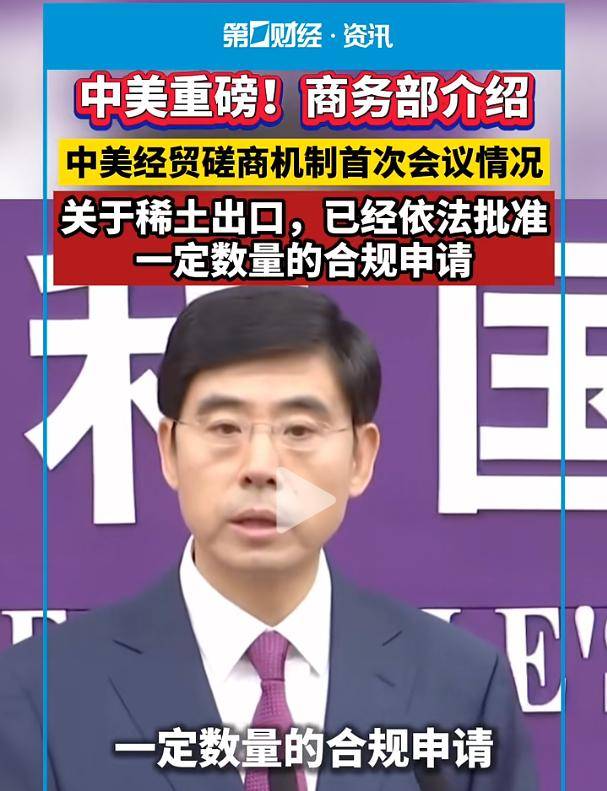
Core Viewpoint - The recent approval of certain rare earth export licenses by China is a strategic move that highlights the importance of rare earth materials in the ongoing geopolitical tensions, particularly between China and the United States [1][6]. Group 1: Rare Earths as Strategic Assets - Rare earth materials are increasingly viewed as a "nuclear weapon" in the context of great power competition, especially for the U.S. military, which relies heavily on these materials for advanced weaponry like the F-35 fighter jet [3][4]. - The U.S. Department of Defense acknowledges that 97% of its heavy rare earth supply is dependent on China, indicating a significant vulnerability in U.S. military production capabilities [4]. Group 2: U.S.-China Negotiations - During recent trade talks in London, the U.S. aimed to address rare earth supply issues, with high-ranking officials suggesting that U.S. export controls would be relaxed if China increased its rare earth exports [6]. - China has strategically linked rare earth exports to broader trade negotiations, demanding concessions from the U.S. such as the removal of tariffs and the opening of markets, showcasing a calculated approach to leverage its position [6][10]. Group 3: China's Strategic Control - China's control over the entire rare earth supply chain—from mining to refining—gives it a dominant position in the global market, with 92% of refining capacity concentrated in China [4][10]. - The Chinese strategy involves a gradual tightening of export controls on various materials, which could leave the U.S. unprepared for the consequences of a supply disruption [10][12]. Group 4: Implications for Global Trade - The situation underscores a shift in global trade dynamics, where China aims to reshape international rules and break the U.S.-led technological hegemony, promoting a more equitable global supply chain [12]. - The ongoing tensions and strategic maneuvers indicate that the ultimate winner in this geopolitical contest will be the nation that can maintain a long-term vision and stability in its approach [12].
没了中国稀土,全世界连车都造不了了?
3 6 Ke· 2025-06-13 10:37
Core Viewpoint - The global automotive industry is facing significant challenges due to China's recent export controls on rare earth elements, which are essential for manufacturing permanent magnets used in electric motors [1][2][4]. Group 1: Impact on Automotive Industry - China's export controls on seven rare earth elements have led to a 50% reduction in rare earth exports in April, causing severe supply shortages for automotive manufacturers worldwide [2][4]. - Major automotive companies in Europe and the U.S. are experiencing production halts, with reports of a German magnet manufacturer potentially shutting down operations due to rare earth shortages [4][6]. - Indian and Japanese automotive manufacturers are also facing production issues, with Maruti Suzuki indicating potential shutdowns if the rare earth situation is not resolved [6][7]. Group 2: Importance of Rare Earth Elements - Rare earth elements, particularly neodymium, are crucial for creating strong permanent magnets used in electric motors, which are integral to electric vehicles [8][10]. - The absence of rare earths would significantly degrade the performance of electric motors, as alternatives like asynchronous motors are less efficient and have limitations [12][16]. - Rare earths are not only vital for electric vehicles but also play a role in traditional combustion engine vehicles, affecting various components such as starters, generators, and sensors [17][19]. Group 3: Global Supply Chain Dynamics - China dominates the global rare earth supply chain, controlling 70% of rare earth mines and 85% of refining capacity, making it difficult for other countries to find alternative sources [2][23]. - Despite some efforts from companies in the U.S. and Australia to develop their rare earth capabilities, they face challenges in cost and technology, often relying on China for processing [23][25]. - The Chinese government has proposed a "green channel" for rare earth exports to the EU, indicating a willingness to facilitate trade and potentially alleviate some supply pressures [25].
再推稀土磁材:板块全面看多,首推中稀、广晟
2025-06-12 15:07
Summary of Rare Earth Industry Conference Call Industry Overview - The rare earth sector is experiencing a bullish trend, with a focus on companies such as China Rare Earth and Guangsheng Nonferrous [1][2] - The price gap between domestic and international rare earths has widened, with overseas heavy rare earth prices exceeding a 200% premium [1][2] - Domestic procurement intentions remain unclear due to policy uncertainties, leading to a lack of significant price increases in the domestic market [1][4] Key Insights and Arguments - The expectation is that if the domestic rare earth index growth rate is below 15% in 2025, supply-demand improvements are highly certain [1][6] - Demand for rare earths is projected to grow over 20% due to high-frequency needs from sectors like new energy vehicles [1][6] - Global effective supply of rare earths may decline by approximately 5% in 2025, primarily due to reduced imports [1][7] - Export controls have resulted in overseas rare earth prices being twice as high as domestic prices, which is expected to drive domestic price increases [1][8] Company-Specific Insights - China Rare Earth is positioned to benefit from price increases and asset injection expectations, with a conservative target market value of over 60 billion, compared to its current market value of 40 billion [2][9][12] - Guangsheng Nonferrous, as a leading player in South China, is undervalued with high growth potential, expecting profits of around 1 billion once its mining operations commence [2][10][12] - The supply-side structural reforms in the rare earth industry will favor leading companies like China Rare Earth Group and Northern Rare Earth, as these reforms will reduce non-compliant supply [1][11] Potential Investment Opportunities - The rare earth sector is viewed positively, with China Rare Earth and Guangsheng Nonferrous as primary investment targets [2][9][14] - Companies like Jinli Permanent Magnet and Zhongke Sanhuan, which are involved in emerging demand areas such as new energy and robotics, are also recommended for investment [2][13] Additional Considerations - The current policy environment has not fully materialized, but the synchronization of domestic and international market prices is expected to benefit leading companies [1][14] - The overall sentiment towards the rare earth sector remains bullish, with a focus on the potential for significant price increases and market recovery [1][2][14]
港股收盘,恒指收跌1.36%,科指收跌2.2%;中国稀土(00769.HK)跌超14%,小鹏汽车(09868.HK)、百威亚太(01876.HK)跌超6.5%,云锋金融(00376.HK)涨近56%,中国生物制药(01177.HK)涨超19%。
news flash· 2025-06-12 08:12
Market Performance - The Hang Seng Index closed down by 1.36% and the Tech Index fell by 2.2% [1] - Notable declines included China Rare Earth (00769.HK) which dropped over 14%, and Xpeng Motors (09868.HK) and Budweiser APAC (01876.HK) both falling more than 6.5% [1] Notable Stock Movements - Yunfeng Financial (00376.HK) experienced a significant increase, rising nearly 56% [1] - China Biologic Products (01177.HK) saw a gain of over 19% [1]
6月12日电,香港恒生指数收跌1.36%,恒生科技指数跌2.2%,金山软件涨超6%,中国稀土跌超14%,小鹏汽车跌超6%,平安好医生涨超10%,公司日前宣布,推出全场景、全周期、全生态的“7+N+1”AI医疗产品矩阵。
news flash· 2025-06-12 08:10
Group 1 - The Hang Seng Index closed down by 1.36% [1] - The Hang Seng Tech Index fell by 2.2% [1] - Kingsoft Corporation saw an increase of over 6% [1] Group 2 - China Rare Earths experienced a decline of over 14% [1] - Xpeng Motors dropped by over 6% [1] - Ping An Good Doctor rose by over 10% after announcing a comprehensive "7+N+1" AI medical product matrix [1]

港股中国稀土跌超12%
news flash· 2025-06-12 01:40
Group 1 - The stock of China Rare Earth (000831) has dropped over 12% [1] - The trading volume exceeded 60 million Hong Kong dollars [1]
中国稀土:中稀集团核心上市平台,受益稀土行业多重催化-20250612
Guoxin Securities· 2025-06-12 00:45
Investment Rating - The report gives an "Outperform" rating for the company [4][6]. Core Views - The company is the core listed platform of China Rare Earth Group, benefiting from multiple catalysts in the rare earth industry. Its performance is closely tied to rare earth prices, and it has strengthened resource security through acquisitions [1][9]. - The company has a clear expectation of integration within the group, as it is actively cooperating to resolve competition issues with other subsidiaries [3][50]. Financial Performance - In 2024, the company achieved revenue of 3.03 billion yuan, a decrease of 24.09% year-on-year, and a net profit of -287 million yuan, a decline of 168.69% [1][12]. - For Q1 2025, the company reported revenue of 728 million yuan, a year-on-year increase of 141.32%, and a net profit of 73 million yuan, marking a turnaround from losses [1][12]. Production and Sales - The company's main products include rare earth oxides, rare earth metals, and rare earth ores, with 2024 production figures of 7,785 tons for rare earth oxides and 2,384 tons for rare earth ores [2][33]. - From 2024, all rare earth ore produced will be used internally, with no external sales [2][33]. Market Position and Strategy - The company holds a significant position within the China Rare Earth Group, with its mining and separation indicators being a small portion of the group's total [49][50]. - The company is expected to benefit from the overall growth in the rare earth market, with projected revenues for 2025-2027 of 5.00 billion, 5.88 billion, and 6.85 billion yuan, respectively [4][5]. Financial Projections - The company forecasts net profits of 390 million, 529 million, and 658 million yuan for 2025, 2026, and 2027, respectively, with significant growth rates [4][5]. - The earnings per share (EPS) are projected to be 0.37, 0.50, and 0.62 yuan for the same years, indicating a strong recovery trajectory [4][5].