ZGXT(000831)

Search documents
为打破中国稀土垄断,俄罗斯印度勾肩搭背,关键时刻,我方有动作
Sou Hu Cai Jing· 2025-05-24 07:02
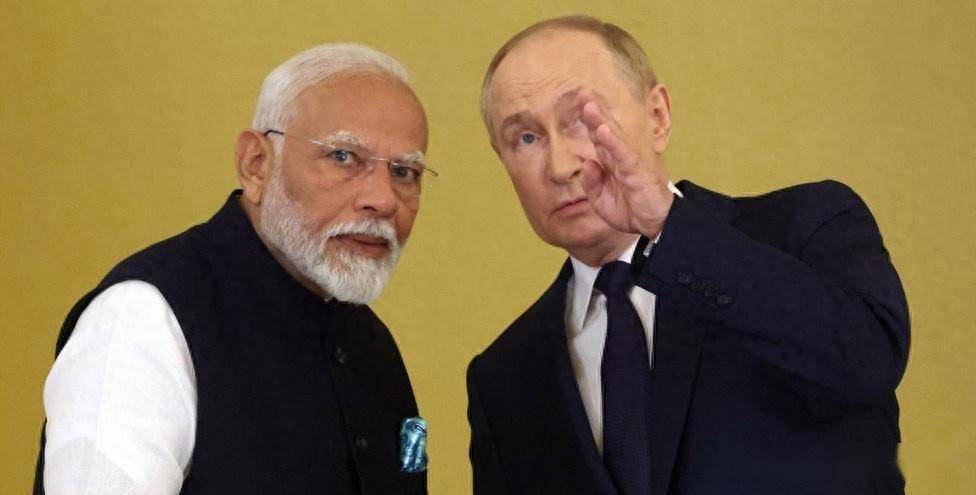
Core Viewpoint - China is accelerating the integration and control of rare earth exports to safeguard national security, prompting concerns from Western countries and even Russia and India, which are now collaborating to challenge China's dominance in the rare earth sector [1][5]. Group 1: Russia and India's Collaboration - Russia and India have reached an agreement to enhance technical cooperation in the field of rare earth and strategic metals, focusing on the development of processing and extraction technologies to ensure supply for their industries and reduce dependence on external sources [3]. - Despite having significant rare earth reserves (3.8 million tons for Russia and 6.9 million tons for India), both countries heavily rely on China for downstream processing technologies [5]. Group 2: China's Strategic Moves - China Rare Earth Group and China National New Group have signed a strategic agreement, indicating increased state capital involvement in the rare earth sector, which will provide strong financial and asset management support for future expansions [7]. - Chinese rare earth companies are accelerating overseas integration by acquiring Australian-listed rare earth company PEK and its associated Tanzanian and UK assets, marking a significant step in consolidating the rare earth supply chain [9]. - The Baotou Rare Earth Research Institute has announced the development of magnetic refrigeration technology in the rare earth field, indicating a surge in new technologies that strengthen China's patent monopoly in the international rare earth market [9]. Group 3: Challenges for Other Countries - While other countries seek to reduce reliance on China, the rare earth sector is characterized by long-term returns, making it difficult for latecomers to catch up as long as China maintains its competitive edge [11]. - There is a concern about internal security within China's rare earth sector, emphasizing the need for strict controls to prevent leaks that could undermine national interests [11].


中国稀土行业协会:今日稀土价格指数与前一日持平
news flash· 2025-05-23 08:02
Core Viewpoint - The rare earth price index remained stable at 177.9 as of May 23, according to the China Rare Earth Industry Association, showing no change from the previous day [1] Industry Summary - The rare earth price index is reported at 177.9, indicating a steady market condition for rare earth elements [1]
重磅!2025年中国及31省市稀土行业政策汇总及解读(全)“加强保护、提高创新应用能力是政策主旋律”
Qian Zhan Wang· 2025-05-22 02:02
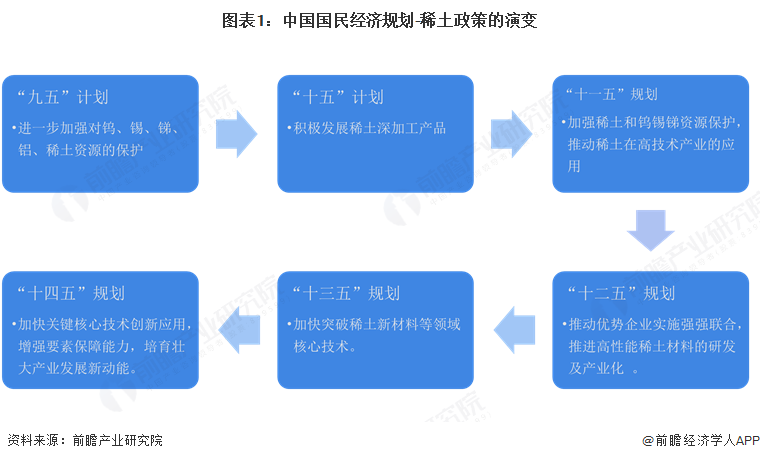
Core Insights - China is a major player in the rare earth industry, holding significant global market share, with a production of 270,000 tons in 2024, accounting for 69.2% of the total global output of 390,000 tons [1] - The government has implemented various policies at both national and local levels to support the development of the rare earth industry, focusing on resource protection and technological innovation [2][4] National Policy Summary - The Chinese government has issued multiple policies to guide the rare earth industry, emphasizing the importance of sustainable development and technological advancement [2] - Key policies include the "Rare Earth Management Regulations," which will take effect on October 1, 2024, aimed at enhancing resource protection and establishing a comprehensive management system for the entire industry chain [14] - The "14th Five-Year Plan" outlines goals for the rare earth industry, including promoting high-quality development and ensuring resource security [10][12] Local Policy Summary - Various provinces have introduced specific policies to enhance their rare earth industries, such as Sichuan's goal to establish itself as a major rare earth production base by 2027, targeting an industry scale exceeding 100 billion yuan [17] - Inner Mongolia aims to become a leading base for rare earth new materials and applications, focusing on technological innovation and sustainable practices [17] - Zhejiang's plan emphasizes the development of high-performance rare earth materials and their applications in various industries [19] Development Goals - The rare earth industry aims to achieve a self-sufficiency rate of over 80% by 2025, transitioning from a follower to a leader in the field of rare earth functional materials [10] - By 2035, the goal is to establish China as a global leader in rare earth materials, with significant advancements in innovation and competitiveness [10][12]


中国稀土卡脖子没用了?澳企成功生产稀土产品,已与美欧接洽供货
Sou Hu Cai Jing· 2025-05-21 07:05
Core Viewpoint - The emergence of Lynas Rare Earths in Australia poses a challenge to China's dominance in the rare earth industry, as it aims to establish itself as a significant player outside of China [3][11][16]. Group 1: Importance of Rare Earths - Rare earths are essential strategic resources for modern industries, impacting various sectors from agriculture to defense [5][7]. - China holds a dominant position in the global rare earth market, with significant reserves and a complete industrial chain for extraction and processing [7][9]. Group 2: Lynas Rare Earths' Position - Lynas has developed a heavy rare earth production line in Western Australia and is negotiating supply agreements with Western countries [14][19]. - Despite its ambitions, Lynas's production capacity is only about 5% of China's annual output, indicating a significant gap in production capabilities [22][19]. Group 3: Challenges for Lynas - Lynas's production costs are over twice that of China's, which could hinder its competitiveness in the market [26][27]. - Environmental concerns and logistical challenges have previously affected Lynas's operations, leading to increased costs [26][27]. Group 4: China's Continued Dominance - China is not stagnant; it continues to innovate and upgrade its rare earth industry, maintaining its competitive edge [37]. - Recent export licenses granted by China are subject to strict regulations, ensuring that exported rare earths do not contribute to military applications [33][35].
从被五国收割到卡死美军工,中国稀土翻身战有多硬核?
Sou Hu Cai Jing· 2025-05-21 04:25
Core Viewpoint - The transformation of China's rare earth industry from a low-cost exporter to a strategic resource powerhouse has significant implications for global power dynamics, particularly in military and high-tech sectors [1][5][6]. Group 1: Historical Context - Thirty years ago, China sold rare earth resources at low prices to five countries, which were then used for military and technological applications [1]. - In the 1990s, rare earth prices plummeted, with domestic miners selling below cost while international prices for processed materials soared [3]. Group 2: Key Turning Points - A pivotal moment occurred in 2010 when China cut off rare earth supplies to Japan during a diplomatic dispute, highlighting its control over 90% of global rare earth production [5]. - In 2025, the U.S. faced a crisis when China restricted access to key rare earth elements, severely impacting military production capabilities, particularly for the F-35 fighter jet [6]. Group 3: Strategic Advantages - China maintains complete control over the rare earth supply chain, from mining to production, with significant capabilities in refining and manufacturing [6]. - The complexity of rare earth separation technology has been a barrier for foreign competitors, with Chinese engineers developing processes that remain elusive to U.S. laboratories [6]. - Environmental regulations have been tightened, leading to the closure of small mines and the establishment of six major rare earth groups that collaborate to stabilize prices [6][9]. Group 4: Current Challenges for the U.S. - Despite the reopening of the Mountain Pass mine in the U.S., the country still relies on China for processing, revealing a dependency in the supply chain [7]. - The U.S. military's secret stockpile of 15 tons of dysprosium is only sufficient for six months of operations, underscoring the urgency of the situation [7]. Group 5: Environmental and Economic Impact - The cost of pollution control in China's rare earth mining regions has reached 13 billion yuan, reflecting the environmental challenges associated with the industry [9]. - China has implemented strict environmental standards and advanced recycling technologies, achieving both resource control and pollution management [10].
中国稀土: 关于召开2024年年度股东大会的提示性公告
Zheng Quan Zhi Xing· 2025-05-21 04:14
证券代码:000831 证券简称:中国稀土 公告编号:2025-032 中国稀土集团资源科技股份有限公司 关于召开 2024 年年度股东大会的提示性公告 本公司及董事会全体成员保证信息披露内容的真实、准确、完整, 没有虚假记载、误导性陈述或重大遗漏。 中国稀土集团资源科技股份有限公司(以下简称"公司")于 2025 年 4 月 《中国证券报》和巨潮资讯网(http://www.cninfo.com.cn) 发布了《关于召开 2024 年年度股东大会的通知》。为保护投资者合法权益,方 便股东行使股东大会表决权,现发布关于召开公司 2024 年年度股东大会的提示 性公告: 一、召开会议的基本情况 件和《公司章程》的规定。 现场会议召开时间:2025 年 5 月 27 日(星期二)14:50。 网络投票时间:2025 年 5 月 27 日(星期二)。其中,通过深交所交易系统 进行网络投票的具体时间为 2025 年 5 月 27 日 9:15~9:25,9:30~11:30,13:00~ (1)于股权登记日 2025 年 5 月 20 日(星期二)15:00 收市时在中国证券 登记结算有限责任公司深圳分公司登记在册的 ...
中国稀土(000831) - 关于召开2024年年度股东大会的提示性公告
2025-05-21 03:44
证券代码:000831 证券简称:中国稀土 公告编号:2025-032 中国稀土集团资源科技股份有限公司 关于召开 2024 年年度股东大会的提示性公告 本公司及董事会全体成员保证信息披露内容的真实、准确、完整, 没有虚假记载、误导性陈述或重大遗漏。 中国稀土集团资源科技股份有限公司(以下简称"公司")于 2025 年 4 月 28 日在《证券时报》《中国证券报》和巨潮资讯网(http://www.cninfo.com.cn) 发布了《关于召开 2024 年年度股东大会的通知》。为保护投资者合法权益,方 便股东行使股东大会表决权,现发布关于召开公司 2024 年年度股东大会的提示 性公告: 一、召开会议的基本情况 现场会议召开时间:2025 年 5 月 27 日(星期二)14:50。 网络投票时间:2025 年 5 月 27 日(星期二)。其中,通过深交所交易系统 进行网络投票的具体时间为2025年5月27日9:15~9:25,9:30~11:30,13:00~ 15:00;通过深交所互联网投票系统投票的具体时间为 2025 年 5 月 27 日 9:15~ 15:00 期间的任意时间。 5、召开方式:现场记 ...
中国稀土磁材出口许可审批提速,多家头部企业获准海外供货
Xuan Gu Bao· 2025-05-20 15:36
Group 1 - Six rare earth magnet companies, including Zhongke Sanhuan and Ningbo Yunsheng, have obtained export licenses as of mid-May [1] - The approval process for export licenses is ongoing for several listed companies, including Northern Rare Earth and Guangsheng Youse [1] - The first batch of export products from Tianhe Magnetic Materials will be delivered to a German automotive company, with subsequent orders requiring individual applications [1] Group 2 - The implementation of export controls on medium and heavy rare earths is leading to a strategic revaluation, with prices rising due to higher overseas premiums and increased demand for inventory replenishment [2] - The rare earth sector is expected to see a dual increase in performance and valuation, driven by new demand from humanoid robots and the low-altitude economy [2] - The rare earth industry is positioned as a globally leading sector in the context of de-globalization, which is likely to increase overall attention on the sector [2] Group 3 - Northern Rare Earth is focusing on high-end applications such as new energy vehicles and robotics, reinforcing its strategic value as part of China's "rare earth national team" [3] - Shenghe Resources is the only mixed-ownership listed company in China's rare earth industry that spans both light and heavy rare earths, transitioning towards becoming a global supplier of key green low-carbon raw materials [3]
中国稀土出口遭遇阻力,澳大利亚莱纳斯公司高调出击,西方能自给自足吗?
Sou Hu Cai Jing· 2025-05-20 11:12
Core Viewpoint - The ongoing geopolitical and economic competition surrounding rare earth elements highlights the challenges faced by Western countries in reducing their dependence on China for these critical materials [1][3]. Group 1: Market Dynamics - Approximately 80% of the global supply of rare earth elements comes from China, creating anxiety among countries amid trade tensions [1]. - Lynas Corporation aims to challenge China's dominance in the rare earth sector, recently announcing successful production of heavy rare earth oxide dysprosium in Malaysia [3]. - Despite Lynas's technological advancements, its extraction costs and efficiency lag significantly behind China's, with dysprosium prices at $10 to $15 per kilogram for Lynas compared to $4 to $7 for China [3]. Group 2: Production Capacity - Lynas's future production target is only 1,500 tons, while China’s annual separation capacity for heavy rare earths is between 10,000 to 15,000 tons, raising doubts about Lynas's ability to meet Western demand [3][5]. - The global rare earth market is projected to reach $20 billion in 2022, with most supply chains still under China's control [5][6]. Group 3: Social and Environmental Challenges - Lynas faces strong local opposition in Malaysia due to environmental concerns and unmet commitments, which could hinder its operations [5]. - The increasing global awareness of environmental issues necessitates that companies address social responsibilities to avoid amplifying their developmental shortcomings [5]. Group 4: Long-term Outlook - The competition for rare earths reflects broader East-West geopolitical tensions, with historical evidence suggesting that no single country or company can fully dominate this market [5][6]. - Significant investment and coordinated efforts over a long period will be required for Western countries to establish an independent rare earth supply chain [6].
中美16小时交锋,中方向全球公布谈判结果,中国稀土王牌成关键
Sou Hu Cai Jing· 2025-05-20 10:48
Group 1 - The core viewpoint of the news is that the recent joint statement from the US and China regarding trade talks indicates a positive tone, which may help ease the current tensions in US-China economic relations and reduce global uncertainties caused by the US tariff war [1][3]. - The US has not reduced tariffs by 80% or 50%, but has instead canceled two recent tariff increases from April 8 and 9, and suspended a 24% tariff from April 2, leaving only a 10% additional tariff in place [3]. - China has also reduced its tariffs to 10%, but the tariffs imposed after April 2 have not been directly canceled, only "suspended or canceled" [3]. Group 2 - The US is facing a significant drop in Chinese goods inventory due to a halt in shipments from China, which necessitates resolving tariff issues to ensure American retailers have products to sell [3]. - The US is particularly interested in securing a stable supply of rare earth elements from China, which are crucial for military and industrial applications, and the current restrictions on exports from China have raised concerns in the US [5]. - Despite the potential for a trade agreement, there are uncertainties, including the unpredictable nature of US President Trump and the bipartisan consensus in the US that views China as a major challenge [5][7]. Group 3 - China has shown resilience in the face of the US tariff and trade wars, maintaining a stronger economic fundamental compared to the US, suggesting that prolonged trade conflicts may ultimately harm the US more [7]. - The willingness of China to engage in direct dialogue with the US, despite being the primary victim of the trade war, indicates a desire for constructive negotiations, which the US should recognize and appreciate [7]. - The global perception of China's sincerity in negotiations is growing, while the US's approach is increasingly seen as one of isolation due to its hegemonic practices [7].