
AHTHGC(000901)

Search documents
一天两枚火箭发射失利 中国航天科技集团、星河动力两家公司发文:具体原因正排查
Mei Ri Jing Ji Xin Wen· 2026-01-18 05:26
Group 1: Rocket Launch Failures - On January 17, two rocket launch failures were reported, including the Long March 3B rocket and the private company Star River's Gushen II rocket [1][2] - The Long March 3B rocket experienced an anomaly during its third stage, leading to mission failure, while the Gushen II rocket also faced flight anomalies during its first test flight [4][6] Group 2: Long March 3B Rocket Overview - The Long March 3B rocket is China's first rocket model to exceed 100 launches, with a total of 115 launches, 110 successful and 3 failures [6] - It is primarily used for launching heavy satellites into geosynchronous transfer orbits and is a key player in China's commercial launch services [4][5] Group 3: Star River Company Profile - Star River, established in 2018, is the first private company in China to achieve mass production and high-density launches of rockets [8] - The company has raised over 5.3 billion yuan through multiple funding rounds, with a post-investment valuation of 15-16 billion yuan after a recent 2.4 billion yuan Series D financing [8][9] Group 4: Industry Context and Challenges - The Chinese commercial space industry is transitioning from technology validation to large-scale operations, facing challenges such as low rocket supply and high launch costs [12][13] - The industry is experiencing a downturn following a surge in stock prices, with significant declines in commercial space concept stocks observed recently [14][16]


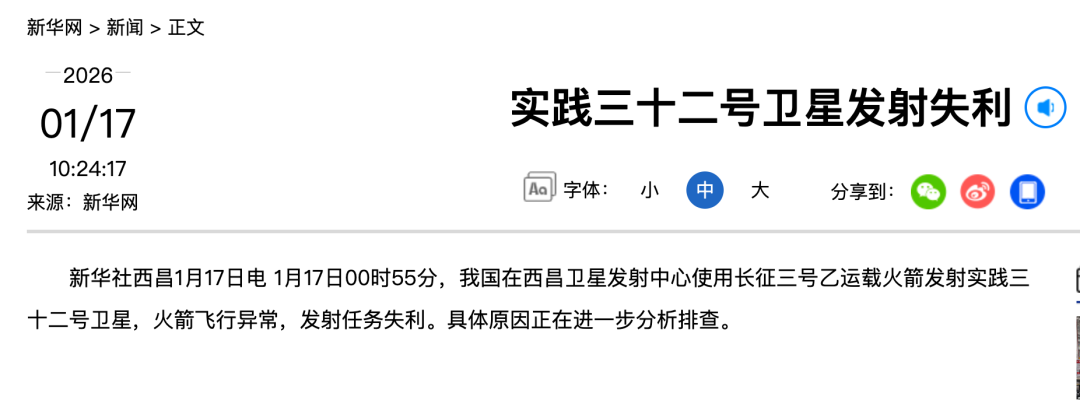
一天两枚火箭发射失利,中国航天科技集团、星河动力两家公司发文:具体原因正排查
Mei Ri Jing Ji Xin Wen· 2026-01-18 05:08
Core Viewpoint - The aerospace sector is experiencing volatile reactions in the capital market, highlighted by two recent rocket launch failures on January 17, 2024 [1]. Group 1: Long March 3B Rocket - The Long March 3B rocket launched the Shijian-32 satellite but experienced flight anomalies, resulting in mission failure. The specific cause is under further analysis [3][4]. - The Long March 3B is notable for being the first Chinese rocket model to exceed 100 launches, with a total of 115 launches, 110 successful, 3 failures, and 2 partial successes [10]. - This rocket is primarily used for launching heavy satellites into geosynchronous transfer orbits and is a key player in China's commercial launch services [8]. Group 2: Star River Dynamics - Star River Dynamics, established in 2018, is the first private company in China to achieve mass production and high-density launches of rockets. It focuses on solid and liquid rocket launch services [11]. - The company has raised over 5.3 billion yuan through multiple funding rounds, with a recent D-round financing of 2.4 billion yuan, achieving a post-investment valuation of 15-16 billion yuan [11]. - The company’s main product, the Gushenxing series of rockets, has successfully completed six sea launch missions, with the latest on January 16, 2024, marking a significant achievement in commercial space launches [12]. Group 3: Industry Trends and Challenges - The Chinese aerospace industry reached a record 92 launches in 2023, with a notable contribution from private companies, although the overall launch success rate still lags behind the Long March series [15]. - The industry faces challenges such as low total rocket supply, insufficient single-rocket capacity, and high launch costs, which are seen as bottlenecks in the development of the aerospace ecosystem [15]. - There is a growing expectation for private rocket companies to complement state-owned enterprises in meeting the high-frequency launch demands [15].
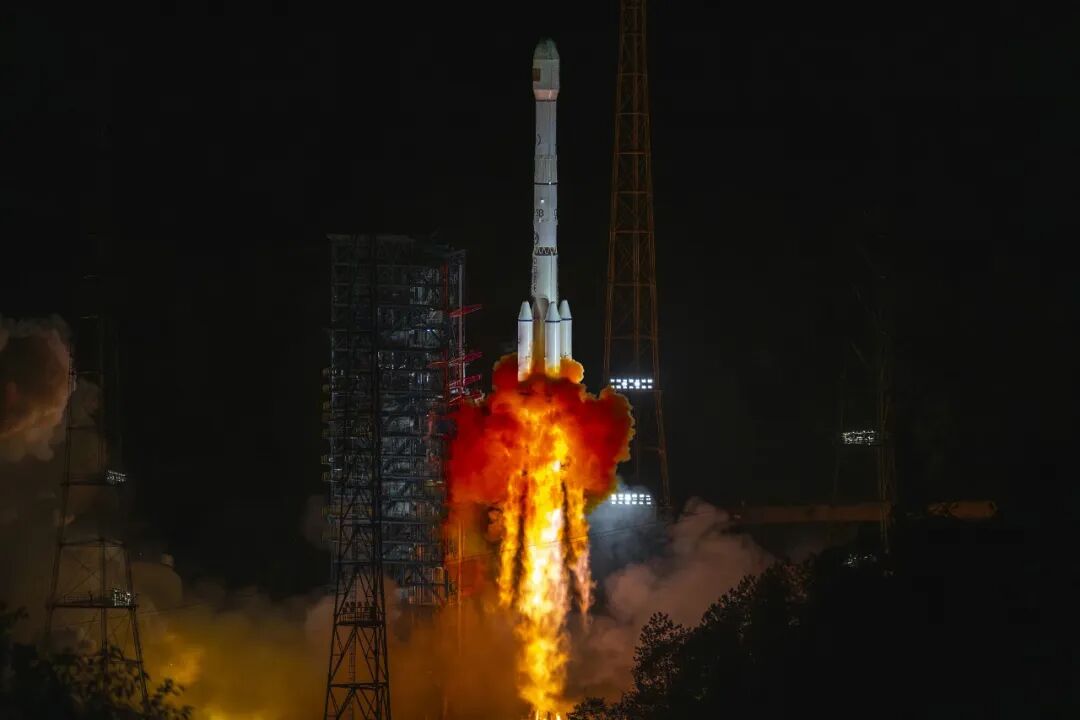
山东海上新年首“箭”升空,商业航天迎来“开门红”!
Feng Huang Wang Cai Jing· 2026-01-18 00:22
Core Viewpoint - The successful launch of the Vesta-1 maritime rocket marks a significant achievement for China's commercial space sector, indicating a strong start to 2026 with multiple successful launches already recorded [3][10]. Group 1: Launch Details - The Vesta-1 maritime rocket was launched from the Yantai Haiyang Dongfang Spaceport, successfully deploying four satellites of the Tianqi constellation into their designated orbits [1]. - This launch is the first maritime launch in Shandong for the year 2026, contributing to China's "four victories" in space launches at the beginning of the year [3][10]. Group 2: Rocket Specifications and Performance - The Vesta-1 maritime rocket is a four-stage solid commercial launch vehicle, approximately 20 meters long, with a launch mass of about 33 tons and a payload capacity of 300 kilograms [4]. - The rocket has demonstrated advantages such as technical maturity, low cost, high reliability, and quick response, making it suitable for launching various small satellites into low Earth orbit [4]. Group 3: Launch Support and Preparation - The launch was supported by the "DeFu 15001" vessel due to scheduling conflicts with the usual launch ship, ensuring a reliable launch environment [6]. - The preparation for the launch took approximately two weeks, showcasing the efficiency of the launch team and the maturity of the equipment and technology involved [6]. Group 4: Satellite Constellation and Services - The Tianqi constellation is China's first low-Earth orbit IoT communication constellation, designed to provide global coverage and enhanced signal stability for users [7]. - The successful deployment of the Tianqi-06 satellites will enhance the constellation's service capabilities, promoting the large-scale application of new satellite communication services in China [7]. Group 5: Industry Trends and Future Prospects - The year 2026 is expected to see a variety of new rocket models, including the upcoming Vesta-2 medium-lift rocket and the liquid rocket ZhiShen-1, which is anticipated to make its maiden flight this year [11]. - The industry is also focusing on breakthroughs in reusable rocket technology, with several companies planning to introduce new reusable rocket models throughout the year [11][12]. - As of January 16, 2026, a total of 11 rocket launches have been completed globally, with China contributing four successful launches, indicating a competitive landscape in the space industry [12].
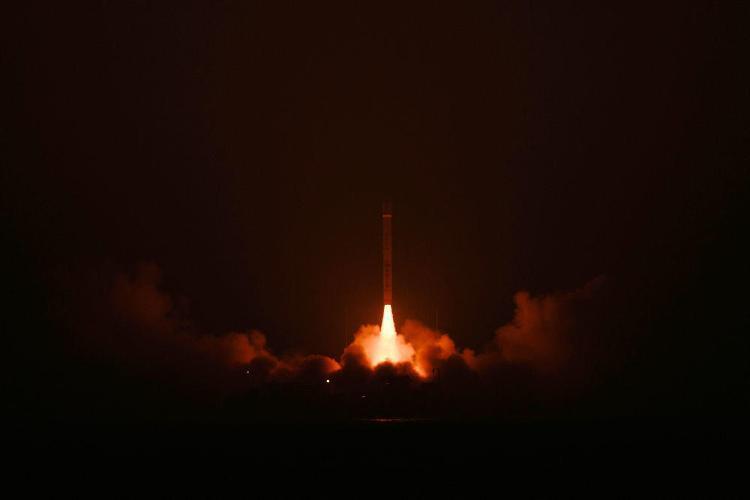
新一代4米级可重复使用火箭长征十二号乙运载火箭静态点火试验圆满成功
Zheng Quan Shi Bao Wang· 2026-01-17 00:28
Core Viewpoint - China Aerospace Science and Technology Corporation's commercial rocket division successfully completed a static ignition test for the Long March 12 Y rocket, demonstrating the rocket's design feasibility and reliability, paving the way for future flight tests [1] Group 1: Test Details - The static ignition test simulated the real launch process, validating key steps such as propellant loading, ignition, and timing control [1] - All systems on the rocket operated stably with normal parameters during the test, confirming the rocket's design viability [1] Group 2: Rocket Specifications - The Long March 12 Y rocket is a new generation 4-meter reusable rocket designed to meet China's commercial launch needs for low Earth orbit satellite constellations [1] - It features a two-stage configuration and a full liquid oxygen-kerosene propulsion system, with a payload capacity of 20 tons to low Earth orbit [1] Group 3: Launch Facility - The test was conducted at a launch facility capable of supporting various propellants, including liquid oxygen, kerosene, and methane, which was independently invested in and managed by the commercial rocket division [1] - This facility can support the flight test requirements for multiple types of 4-meter class launch vehicles [1]
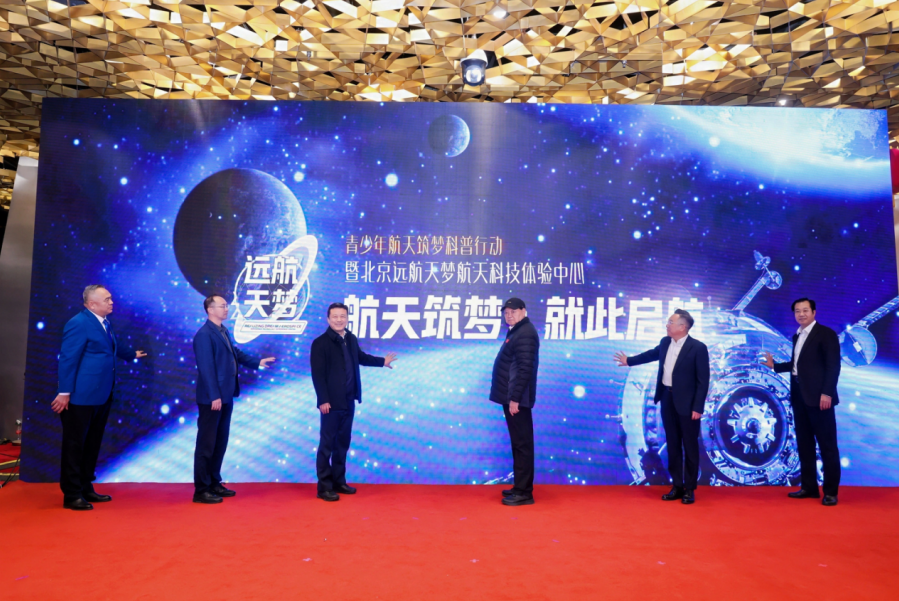
北京“远航天梦”航天科技体验中心项目正式落成
Zhong Guo Jing Ji Wang· 2026-01-16 14:36
Core Viewpoint - The "Youth Space Dream Science Popularization Action" and the Beijing Far Horizon Space Technology Experience Center aim to promote aerospace knowledge, spirit, and innovation among youth, contributing to China's strategy of becoming a technology and talent powerhouse [1] Group 1: Project Overview - The Far Horizon Space Technology Experience Center is designed by the China Aerospace Planning and Design Group and operated by Beijing Weiyujiahe Cultural Creative Co., Ltd. and Beijing Far Horizon Space Technology Development Co., Ltd. [2] - The center is the first immersive aerospace cultural science education brand in China, targeting youth aged 6 to 18 and their families, integrating science, art, sports, and education [2] - The center features three main functional areas: Aerospace Sci-Fi Art Exhibition Center, Future Exploration Center, and Astronaut Mission Simulation Center, providing a comprehensive and immersive platform for youth exploration [2] Group 2: Immersive Experience - The experience center offers a unique immersive experience, allowing visitors to journey through time to the year 2099, following the protagonist "Meng Yuanhang" on a thrilling space adventure [3] - It incorporates project-based learning and features four thematic exploration challenges and 17 interactive experience scenarios, promoting scientific literacy and innovation among youth [3] - The center also showcases the XR film "Motherland's Territory: Deep Space," which won awards at the 2025 China Golden Rooster and Hundred Flowers Film Festival, celebrating 70 years of Chinese aerospace achievements [3] Group 3: Expert Insights - The event featured prominent experts emphasizing the importance of aerospace science education for youth, linking it to national strategy and the cultivation of exploration and innovation spirit [4] - The event highlighted the commitment to integrating aerospace spirit into science popularization experiences, with a focus on engaging youth in meaningful educational activities [5] Group 4: Strategic Partnerships - Two significant cooperation agreements were signed during the event, including a strategic consensus to promote the "Far Horizon Youth Science Popularization Project" in Shanghai, enhancing the outreach of aerospace education [6] - A sponsorship agreement was signed with Guangdong Foshan COSO Sanitary Ware Co., Ltd., demonstrating the support from various sectors for the aerospace education initiative [6] Group 5: Upcoming Initiatives - The Far Horizon Space Technology Experience Center is expected to receive over 1 million visitors annually and has designed specific routes for educational activities and tourist groups [7] - To celebrate the 2026 New Year holiday, the center will launch the "Aerospace Dream New Year Science Season," featuring various interactive experiences and activities to engage youth in aerospace technology [7] - The successful launch of the "Youth Space Dream Science Popularization Action" and the establishment of the experience center will inject new momentum into the development of aerospace science popularization in China [7]
青少年航天筑梦科普行动在京启动——北京“远航天梦”航天科技体验中心项目正式落成
Zhong Guo Zhi Liang Xin Wen Wang· 2026-01-16 13:34
Core Viewpoint - The "Youth Space Dream Science Popularization Action" and the Beijing Far Horizon Space Technology Experience Center aim to promote space knowledge, spirit, and innovation among youth, marking the launch of a comprehensive space science project that integrates education, technological innovation, and cultural heritage [1][19]. Group 1: Event Overview - The event was guided by the China Aerospace Science and Technology International Exchange Center and supported by the China Science and Technology Development Foundation and the Cultural Industry Professional Committee of the China Cultural Information Association, attracting over a hundred guests from the aerospace field, education sector, industry associations, and mainstream media [3]. - The Far Horizon Space Technology Experience Center, designed by the China Aerospace Planning and Design Group, is operated jointly by Beijing Weiyu Jiahe Cultural Creative Co., Ltd. and Beijing Far Horizon Space Technology Development Co., Ltd. [3]. Group 2: Project Vision and Features - The project aims to create an immersive space culture education brand targeting youth aged 6 to 18 and their families, exploring a new model of cross-disciplinary integration of "space + sports + arts + education" [4]. - The experience center features three main functional areas: a space sci-fi art exhibition center, a future exploration center, and an astronaut mission simulation center, providing a comprehensive and immersive platform for youth exploration [6]. Group 3: Educational Approach - The center incorporates a "project-based learning" concept, creating an immersive technological space with themes such as "Future Interstellar Explorer" and "Space Culture Diplomat," guiding youth to think like artists, scientists, engineers, and astronauts [8]. - The center also features the "Motherland Territory: Deep Space" XR large space viewing project, which pays tribute to significant events in China's space history over the past 70 years [8]. Group 4: Expert Insights - Experts emphasized the importance of space science education for youth, highlighting that aerospace technology symbolizes national scientific strength and that immersive education can cultivate exploration and innovation spirit [11]. - The event included a video presentation of Qian Xuesen, showcasing the aspirations for youth science education and the importance of integrating aerospace spirit into science popularization experiences [13]. Group 5: Strategic Collaborations - Two significant cooperation agreements were signed during the event, including a strategic consensus to promote the "Far Horizon Youth Science Popularization Project" in Shanghai, enhancing the outreach of aerospace science education in the Yangtze River Delta region [16]. - A sponsorship agreement was signed with Guangdong Foshan COSO Sanitary Ware Co., Ltd., demonstrating the commitment of various sectors to support the construction of a strong aerospace nation [16]. Group 6: Future Plans - The Far Horizon Space Technology Experience Center is expected to receive over 1 million visitors annually, with specially designed routes for educational activities and tourist groups [17]. - To celebrate the upcoming 2026 Spring Festival, the center will launch the "Space Dream New Spring Science Season" featuring various interactive experiences related to space technology and sports [19].
长征十二号乙运载火箭静态点火试验圆满成功
Mei Ri Jing Ji Xin Wen· 2026-01-16 10:25
Core Viewpoint - The successful static ignition test of the Long March 12B rocket by China Aerospace Science and Technology Corporation marks a significant milestone in the development of commercial space launch capabilities in China [1] Group 1: Company Developments - China Aerospace Science and Technology Corporation's commercial rocket division successfully completed a static ignition test for the Long March 12B rocket on January 16 [1] - The test was conducted at the Dongfeng Commercial Aerospace Innovation Test Area, indicating progress in China's commercial space sector [1] Group 2: Industry Implications - The successful test reflects China's growing capabilities in the commercial space launch market, which may enhance competition in the global aerospace industry [1] - This development could lead to increased opportunities for commercial satellite launches and other space-related services in the future [1]
商业航天2026年“首飞” 谷神星一号成功发射
Zheng Quan Shi Bao Wang· 2026-01-16 06:44
Core Viewpoint - The successful launch of the Ceres-1 sea-launched rocket marks a significant milestone for China's commercial space sector, enhancing the capabilities of the Tianqi satellite constellation and expanding its applications across various industries [1][4]. Group 1: Company Overview - Ceres-1 is a core solid launch vehicle developed by Beijing Xinghe Power Aerospace Technology Co., Ltd., representing the company's commercialized model [2]. - Founded in February 2018, Xinghe Power is the first private commercial rocket enterprise in China to achieve mass production and high-frequency launches [2]. - The Ceres-1 rocket has a length of approximately 20 meters and a takeoff weight of 33 tons, with payload capacities of 300 kg to a 500 km sun-synchronous orbit and 270 kg to a 700 km orbit [2]. Group 2: Launch and Performance - The recent launch successfully deployed four satellites into a near-Earth orbit, contributing to the global networking of the Tianqi satellite constellation [1][4]. - Since its first flight in September 2023, the Ceres-1 sea-launched rocket has achieved a 100% success rate across six launches [2]. - The sea-launch model offers flexibility in selecting optimal launch points, improving orbital accuracy and reducing safety risks [4]. Group 3: Market and Financial Insights - The commercial space sector has attracted significant capital, with Xinghe Power raising 2 billion yuan in A-round financing in 2020 and 2.4 billion yuan in D-round financing in September 2025, achieving a post-investment valuation of 15-16 billion yuan [3]. - The company is expected to complete its IPO counseling process within 3 to 12 months, with optimistic projections for filing its prospectus in the second quarter of 2026 [3]. - The demand for low-orbit satellite networking is increasing, providing a broad market space for commercial rocket enterprises with high reliability and low costs [4].
中国航天科技集团:2026年大力发展商业航天
2 1 Shi Ji Jing Ji Bao Dao· 2026-01-16 05:47
Core Viewpoint - The meeting held by China Aerospace Science and Technology Corporation emphasizes the importance of 2026 as the beginning of the "14th Five-Year Plan," focusing on major aerospace projects and industrial transformation [1] Group 1: Major Projects and Initiatives - The company aims to advance significant projects such as manned lunar landings and deep space exploration [1] - There is a strong emphasis on breaking through reusable rocket technology to accelerate the construction of a strong aerospace nation [1] Group 2: Industrial Development and Market Expansion - The company plans to optimize its industrial layout and adjust its industrial structure to promote commercial aerospace and low-altitude economy as new strategic industries [1] - Future industries such as space intelligence will be strategically positioned, with a focus on expanding international markets and ensuring high-quality performance [1]
航天科技股价涨5.06%,广发基金旗下1只基金位居十大流通股东,持有300.57万股浮盈赚取417.79万元
Xin Lang Cai Jing· 2026-01-16 05:31
Group 1 - Aerospace Science and Technology Co., Ltd. experienced a stock price increase of 5.06%, reaching 28.84 CNY per share, with a trading volume of 1.729 billion CNY and a turnover rate of 7.74%, resulting in a total market capitalization of 23.02 billion CNY [1] - The company, established on January 27, 1999, and listed on April 1, 1999, is based in Fengtai District, Beijing, and its main business areas include vehicle networking, industrial IoT, aerospace application products, automotive electronics, oil instruments, and electrical equipment [1] - The revenue composition of the company is as follows: automotive electronics 84.98%, aerospace application products 9.36%, platform software and sensing devices 6.62%, and other businesses 0.31% [1] Group 2 - Among the top ten circulating shareholders of Aerospace Science and Technology, GF Fund's ETF, GF CSI Military Industry ETF (512680), entered the list in the third quarter, holding 3.0057 million shares, which accounts for 0.38% of the circulating shares, with an estimated floating profit of approximately 4.1779 million CNY [2] - The GF CSI Military Industry ETF (512680) was established on August 30, 2016, with a current scale of 7.781 billion CNY, and has achieved a year-to-date return of 10.49%, ranking 917 out of 5,531 in its category; over the past year, it has returned 53.9%, ranking 1,099 out of 4,215; and since inception, it has returned 55.18% [2] Group 3 - The fund manager of GF CSI Military Industry ETF (512680) is Huo Huaming, who has been in the position for 8 years and 274 days, managing a total fund asset size of 65.92 billion CNY, with the best fund return during his tenure being 118.34% and the worst being -27.08% [3]