
Haige Communications(002465)

Search documents
大型无人机技术实现新突破 “九天”无人机成功首飞
Huan Qiu Wang· 2025-12-12 01:26
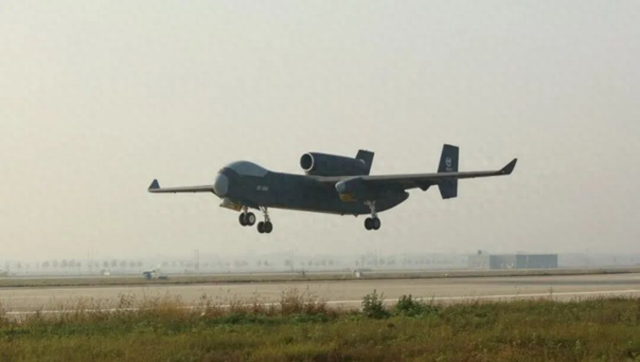
此次首飞成功标志着我国大型无人机技术实现新突破,其规模化应用将加速产业链与创新链的协同融 合,为低空经济高质量发展注入新质生产力动能,助力航空产业创新升级。 "九天"是下一代新型大型无人机,被誉为"无人航空母机",有力填补国内军民两用重型无人机市场空 白。"九天"体现了海格通信西安驰达先进的全链条无人机整机制造能力,进一步增强海格通信在航空航 天、无人业务领域的核心技术能力。 海格通信旗下西安驰达具备重、大型无人机整机和通航小型飞机的生产能力。无人机整机研发制造,是 西安驰达近年拓展的极具市场前景的新业务。"九天"灵活配置重型无人机的投产,标志着西安驰达构筑 了从工艺设计、零件加工、部件装配到整机装配和调试等全链条无人机整机制造能力。 作为我国自主创新的大型通用无人机平台,该机型采用"通用平台+模块化任务载荷"设计理念,依托自 主集成技术创新,具备大载重、高升限、宽速域、短起降等核心优势,——机长16.35米,翼展25米, 最大起飞重量16吨,载荷能力达到6000kg,航时12h、转场航程7000km,性能指标位居同类产品前列。 通过模块化任务载荷换装,"九天"无人机可广泛适配多元场景:既能承担偏远山区、海岛 ...


影响市场重大事件:马斯克确认SpaceX明年IPO,估值约1.5万亿美元;华为、支付宝、中移互联网合作布局AI+5G新通话DC生态
Mei Ri Jing Ji Xin Wen· 2025-12-11 22:33
Group 1 - Huawei, Alipay, and China Mobile Internet signed a cooperation agreement to launch an intelligent communication era with "call as a service" [1] - The collaboration aims to innovate the AI + 5G new call DC ecosystem, transitioning traditional calls to intelligent and service-oriented solutions [1] - China Mobile Internet will leverage its extensive 5G network and user base for reliable communication support, while Alipay will integrate its digital ecosystem capabilities [1] Group 2 - Elon Musk confirmed that SpaceX plans to go public next year, aiming to raise over $30 billion with an estimated valuation of $1.5 trillion [2] - The IPO could potentially break the record for the largest fundraising in history, surpassing Saudi Aramco's $29 billion in 2019 [2] - SpaceX intends to use part of the IPO proceeds to develop a space data center [2] Group 3 - The Zhejiang Province is launching a major technology initiative for brain-computer interfaces, aiming to create a competitive industry cluster [3] - An international standard for brain-computer interface technology is being established to promote healthy and orderly development in the field [3] Group 4 - The China Internet Finance Association held a meeting to discuss self-regulation in supply chain finance, focusing on improving market monitoring and management [4] - The association aims to guide the industry towards reasonable control of financing costs and orderly exit of weaker platforms [4] Group 5 - The Ministry of Commerce plans to introduce policies to accelerate innovation and transformation in the retail sector during the 14th Five-Year Plan [5] - The focus will be on enhancing product and service quality and promoting fair competition between online and offline channels [5] Group 6 - The Xi'an Chida Aircraft's "Jiutian" drone successfully completed its maiden flight, showcasing versatility for both military and civilian applications [6] - The drone can be used for logistics, emergency rescue, and various surveying services, covering multiple sectors of the national economy [6] Group 7 - The National Development and Reform Commission and the National Energy Administration issued guidelines for centralized pricing of renewable energy generation [7] - The new rules restrict centralized pricing to renewable energy companies within the same group and province, preventing cross-group and cross-province pricing [7] Group 8 - Goldman Sachs predicts that gold prices could rise to $4,900 per ounce by the end of 2026, driven by increased investment in gold ETFs [8] - The current allocation of gold in U.S. financial portfolios is low, suggesting significant potential for price increases with higher ETF investments [8] Group 9 - Liaoning Province is soliciting opinions on a three-year action plan for high-quality development of ice and snow tourism [9] - The plan aims to enhance the province's ice and snow tourism brand and develop multiple tourism routes and resorts [9] Group 10 - In November, China's automobile exports reached 728,000 units, marking a 9.3% month-on-month increase and a 48.5% year-on-year increase [10] - The total exports for the first eleven months of 2025 reached 6.343 million units, with expectations to reach 7 million units for the entire year [10]
这家GE、罗罗的供货商,造出了“无人航空母机”
Xin Lang Cai Jing· 2025-12-11 14:24
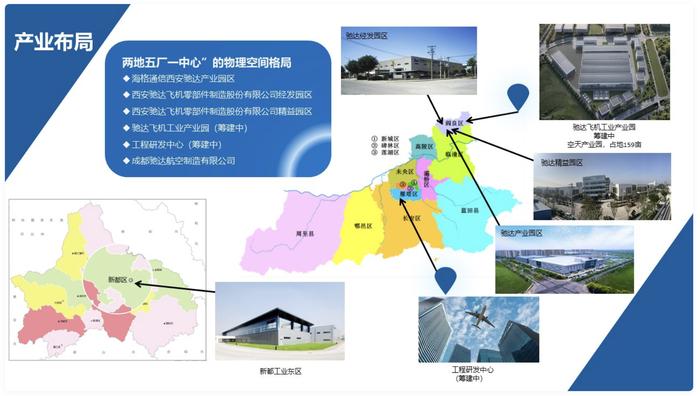
Group 1 - The "Jiutian" drone successfully completed its maiden flight on December 11, 2023, and is recognized as a new generation model that fills the market gap for heavy dual-use drones in China [1] - The drone has a length of 16.35 meters, a wingspan of 25 meters, a maximum takeoff weight of 16 tons, and a payload capacity of 6 tons, capable of carrying various types of munitions and has a unique "heterogeneous hive mission cabin" [1] - The drone is produced by Xi'an Chida, a subsidiary of Haige Communication, which has transitioned from a focus on military applications to include civil products [1][2] Group 2 - Xi'an Chida has established a complete industrial chain and has capabilities in the production of large drones and general aviation aircraft [3] - The company has developed a "two locations, five factories, and one center" industrial layout, including several established parks and a planned industrial park and engineering research center [3] - In 2024, Xi'an Chida is expected to hold a 16.1% market share in the core precision structural components for large civil aviation transport aircraft [5] Group 3 - Xi'an Chida's revenue reached 250 million yuan in the previous year, reflecting a year-on-year increase of 38.1%, with a total profit of 69.1025 million yuan, up 23.5% [5] - The company has undergone multiple changes in its shareholding structure and has faced a complex listing process, with Haige Communication becoming the controlling shareholder in 2017 [9][10] - Xi'an Chida was delisted from the New Third Board in 2019 to reduce operational costs and focus on enhancing competitive advantages [12]
“九天”无人机成功首飞 海格通信旗下西安驰达承制
Zheng Quan Ri Bao· 2025-12-11 11:13
此次首飞成功标志着我国大型无人机技术实现新突破,其规模化应用将加速产业链与创新链的协同融 合,为低空经济高质量发展注入新质生产力动能,助力航空产业创新升级。 "九天"是下一代新型大型无人机,被誉为"无人航空母机",有力填补国内军民两用重型无人机市场空 白。"九天"体现了海格通信西安驰达先进的全链条无人机整机制造能力,进一步增强海格通信在航空航 天、无人业务领域的核心技术能力。 海格通信旗下西安驰达具备重、大型无人机整机和通航小型飞机的生产能力。无人机整机研发制造,是 西安驰达近年拓展的极具市场前景的新业务。"九天"灵活配置重型无人机的投产,标志着西安驰达构筑 了从工艺设计、零件加工、部件装配,到整机装配和调试等全链条无人机整机制造能力。 (文章来源:证券日报) 本报讯 (记者丁蓉)12月11日,由陕西无人装备科技有限责任公司委托,航空工业第一飞机设计研究 院设计、广州海格通信集团股份有限公司(以下简称"海格通信")旗下西安驰达飞机零部件制造股份有 限公司(以下简称"西安驰达")承制的"九天"无人机在陕西蒲城圆满完成首飞任务。 作为我国自主创新的大型通用无人机平台,该机型采用"通用平台+模块化任务载荷"设计理念 ...

“九天”无人机首飞,海格通信回应!
Shang Hai Zheng Quan Bao· 2025-12-11 08:35
海格通信称,海格通信旗下西安驰达具备重、大型无人机整机和通航小型飞机的生产能力。无人机整机 研发制造,是西安驰达近年拓展的极具市场前景的新业务。"九天"灵活配置重型无人机的投产,标志着 西安驰达构筑了从工艺设计、零件加工、部件装配,到整机装配和调试等全链条无人机整机制造能力。 12月11日,"九天"无人机在陕西蒲城圆满完成首飞任务。记者从海格通信获悉,"九天"无人机由陕西无 人装备科技有限责任公司委托,航空工业第一飞机设计研究院设计、海格通信旗下西安驰达承制。 企查查显示,西安驰达是一家从事飞机零部件制造的企业,以飞机零部件制造为主业,掌握大型飞机零 部件制造技术,致力于为用户提供飞机零部件从制造到装配的完整产业链服务。海格通信为西安驰达的 第一大股东,持股比例56.4050%。 海格通信表示,此次首飞成功标志着我国大型无人机技术实现新突破,其规模化应用将加速产业链与创 新链的协同融合,为低空经济高质量发展注入新质生产力动能,助力航空产业创新升级。"九天"是下一 代新型大型无人机,被誉为"无人航空母机",有力填补国内军民两用重型无人机市场空白。"九天"体现 了海格通信西安驰达先进的全链条无人机整机制造能力,进 ...
海格通信:控股子公司西安驰达飞机承制的“九天”无人机在陕西蒲城圆满完成首飞任务
Xin Lang Cai Jing· 2025-12-11 07:16
海格通信在互动平台表示,2025年12月11日,由陕西无人装备科技有限责任公司委托,航空工业第一飞 机设计研究院设计、公司控股子公司西安驰达飞机承制的"九天"无人机在陕西蒲城圆满完成首飞任务。 ...
海格通信(002465.SZ):控股子公司西安驰达飞机具备重、大型无人机整机和通航小型飞机的生产能力
Ge Long Hui· 2025-12-11 07:04
格隆汇12月11日丨海格通信(002465.SZ)在投资者互动平台表示,2025年12月11日,由陕西无人装备科 技有限责任公司委托,航空工业第一飞机设计研究院设计、公司控股子公司西安驰达飞机承制的"九 天"无人机在陕西蒲城圆满完成首飞任务。 通过模块化任务载荷换装,"九天"无人机可广泛适配军民两 用多元场景:既能承担偏远山区、海岛的重型物资运输与精准物流投送,也能在应急救援中快速恢复通 信、投送救灾装备,还可提供地理测绘、灾情评估、矿产普查等服务,覆盖文物勘测、海巡执法、森林 灭火等多个国民经济领域。 此次首飞成功标志着我国大型无人机技术实现新突破,其规模化应用将加 速产业链与创新链的协同融合,为低空经济高质量发展注入新质生产力动能,助力航空产业创新升级。 公司控股子公司西安驰达飞机具备重、大型无人机整机和通航小型飞机的生产能力。无人机整机研发制 造,是西安驰达飞机近年拓展的极具市场前景的新业务。"九天"灵活配置重型无人机的投产,标志着西 安驰达构筑了从工艺设计、零件加工、部件装配,到整机装配和调试等全链条无人机整机制造能力。 ...
国防军工行业2026年度投资策略:“十五五”军民贸有望共振,看好新质战斗力、两机和商业航天等方向
Orient Securities· 2025-12-11 02:58
Core Insights - The defense industry is expected to experience a recovery in 2025, marking a turning point in demand, with a new round of growth anticipated as the "14th Five-Year Plan" concludes and the "15th Five-Year Plan" begins [2][8][24] - The focus on new combat capabilities, including unmanned systems, deep-sea technology, and military AI, is expected to drive significant advancements in the industry [2][8][32] - The commercial aerospace and gas turbine markets are projected to grow, driven by increased demand and recovery in the aviation sector post-pandemic [2][8][31] Group 1: Industry Overview - The defense industry has stabilized and is showing signs of recovery after a period of demand stagnation from 2023 to 2024, with revenue growth returning in 2025 [8][14] - The "15th Five-Year Plan" is anticipated to create synergies between military and civilian sectors, enhancing overall industry growth [8][29] - Geopolitical uncertainties are increasing, leading to heightened military spending globally, with defense budgets expected to continue rising [26][30] Group 2: New Combat Capabilities - New combat capabilities are expected to focus on unmanned systems, deep-sea operations, and information technology, with an emphasis on modernizing military capabilities [2][32][36] - The development of unmanned systems is seen as critical, with a growing emphasis on both offensive and defensive capabilities in modern warfare [2][43][44] - The integration of AI into military operations is expected to enhance decision-making and operational efficiency across various combat scenarios [2][32][36] Group 3: Commercial Opportunities - The commercial aerospace sector is poised for significant growth, particularly in the gas turbine market, driven by increased orders and recovery in engine deliveries [2][31][32] - The commercial space sector is also expanding, with advancements in satellite technology and launch capabilities expected to accelerate growth [2][31][32] - The military trade market is anticipated to strengthen, with Chinese equipment gaining recognition and market share in international markets, particularly in the Middle East [2][31][32]


商业航天行情火热!卫星ETF(159206)强势冲击6连涨
Sou Hu Cai Jing· 2025-12-11 02:17
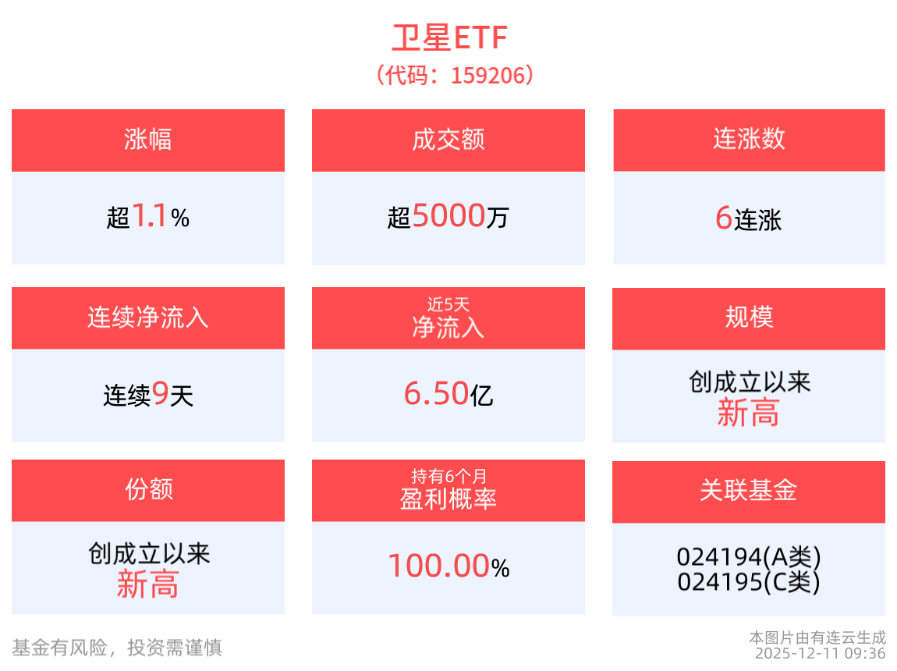
Core Viewpoint - The satellite ETF (159206) has seen a significant increase, rising 1.36% and achieving a six-day consecutive gain, driven by strong performances from constituent stocks like China Satellite (600118) and others [3][4]. Group 1: ETF Performance - The satellite ETF's latest scale reached 2.536 billion yuan, marking a new high since its inception [4]. - The ETF's shares have also reached 1.921 billion, setting a record since its establishment [5]. - Over the past nine days, the ETF has experienced continuous net inflows, totaling 793 million yuan, with a peak single-day net inflow of 294 million yuan [5]. Group 2: Industry Outlook - According to the Satellite Industry Association, the global commercial satellite industry is expected to dominate the aerospace sector, accounting for 71% of global aerospace business in 2024 [7]. - The Chinese commercial aerospace market is projected to exceed 2.8 trillion yuan by 2025, indicating a robust growth outlook for the satellite industry [7]. - The satellite communication industry is anticipated to reach a market size of 200 to 400 billion yuan by 2030, with an annual compound growth rate between 10% and 28% [7]. - The satellite ETF (159206) focuses on commercial aerospace and satellite communication, positioning it for potential growth under the "strong aerospace nation" backdrop [7].



海格通信:在卫星通信领域,公司深度参与国家卫星互联网重大工程项目
Zheng Quan Ri Bao Zhi Sheng· 2025-12-10 12:45
(编辑 丛可心 王雪儿) 证券日报网讯 12月10日,海格通信在互动平台回答投资者提问时表示,在卫星通信领域,公司深度参 与国家卫星互联网重大工程项目。公司积极拓展空间段新领域,从核心部件切入,布局卫星通信载荷领 域(含激光通信)。 ...