
SUNWODA(300207)

Search documents
欣旺达(300207) - 关于控股股东部分股份质押及解除质押的公告
2026-01-09 07:54
证券代码:300207 证券简称:欣旺达 公告编号:<欣>2026-001 欣旺达电子股份有限公司 关于控股股东部分股份质押及解除质押的公告 本公司及董事会全体成员保证信息披露内容的真实、准确和完整,没有 虚假记载、误导性陈述或重大遗漏。 截至2026年1月9日,上述股东及其一致行动人所持质押股份情况如下: 欣旺达电子股份有限公司(以下简称"公司")于 2026 年 1 月 9 日接到公 司控股股东王明旺先生的函告,获悉其将所持有本公司的部分股份办理了质押及 解除质押业务。具体事项如下: 一、本次控股股东部分股份质押及解除质押的基本情况 | 股东名 | 是否为控 股股东或 第一大股 | 本次质押数 | | 占其所持 股份比例 | 占公司总 股本比例 | 是否为限 售股(如 | 是否为 补充质 | 质押起始 | 质押到 | 质权人 | 质押用途 | | --- | --- | --- | --- | --- | --- | --- | --- | --- | --- | --- | --- | | 称 | 东及其一 | 量 | | 注 1 | 注 2 | 是,注明限 | 押 | 日 | 期日 | | | | | ...

二线电池厂,活在巨头阴影下
创业邦· 2026-01-09 04:44
Core Viewpoint - The article discusses the financial and operational challenges faced by second-tier battery manufacturers in the Chinese electric vehicle market, particularly focusing on the lawsuit involving XINWANDA and its implications for the industry [6][7][29]. Group 1: Lawsuit and Financial Impact - XINWANDA announced a lawsuit against it by Geely's subsidiary, claiming damages of 2.314 billion yuan due to alleged quality issues with battery cells supplied to its vehicles, which has led to a significant drop in XINWANDA's stock price and market value [6][7]. - The lawsuit amount is equivalent to XINWANDA's net profit over the past two years, raising concerns about its financial health and the impact on its planned "A+H" listing [6][9]. - The lawsuit highlights the broader financial struggles of second-tier battery manufacturers, who are increasingly facing profitability issues despite rising revenues [9][10]. Group 2: Financial Performance of Battery Manufacturers - In the first three quarters of 2025, XINWANDA reported revenues of 43.53 billion yuan, with a net profit of only 1.41 billion yuan, indicating a challenging profit landscape [10]. - Other second-tier players like EVE Energy and Guoxuan High-Tech also show similar trends, with rising revenues but declining or minimal profits, reflecting a common issue of "increasing sales but decreasing profits" [10][11]. - The financial difficulties stem from high operational costs and low bargaining power against larger competitors like CATL and BYD, which dominate the market [11][12]. Group 3: Market Dynamics and Competitive Landscape - The Chinese battery market is characterized by a "two giants and many strong players" structure, with CATL and BYD controlling over 65% of the market share, leaving second-tier manufacturers to compete for a shrinking portion [22][25]. - The profitability gap is stark, with CATL earning significantly more per watt-hour compared to second-tier manufacturers, which struggle to maintain profitability [22][25]. - The competitive pressure forces second-tier manufacturers to engage in price wars, further eroding their margins and financial stability [13][20]. Group 4: Customer Relationships and Dependency - Second-tier manufacturers often rely heavily on a few major clients, which can lead to a loss of bargaining power and increased vulnerability to market fluctuations [17][18]. - The strategy of binding to large clients can backfire, as it exposes these manufacturers to risks associated with client demands and market changes [17][20]. - The trend of automakers increasingly developing their own battery technologies poses a significant threat to second-tier manufacturers, as it reduces their market share and bargaining power [20][29]. Group 5: Future Strategies and Survival - To survive, second-tier manufacturers may need to focus on niche technologies, expand into international markets, or seek strategic partnerships to stabilize their operations [27][28]. - The article suggests that only a few second-tier players with unique advantages or cost control capabilities will survive in the increasingly competitive landscape [28][29].




年度榜单丨2025年中国动力锂电池TOP10发布
起点锂电· 2026-01-09 02:41
Group 1 - The core viewpoint of the article is the analysis and forecast of the Chinese power lithium battery market for 2025, highlighting significant growth in shipment volumes and market size due to increasing penetration of new energy vehicles [2] - In 2025, the shipment volume of power lithium batteries in China is expected to reach 936 GWh, representing an 18% year-on-year increase [2] - By 2030, the shipment volume is projected to grow to 2550 GWh, indicating a continuous upward trend in the automotive power battery market [2] Group 2 - The price trend for lithium batteries in 2025 indicates that the average price for lithium iron phosphate batteries will be 0.38 yuan/wh, while the average price for ternary lithium batteries will be 0.65 yuan/wh [3] - Future price fluctuations will depend on market demand, with ternary lithium batteries expected to oscillate between 0.5-0.7 yuan/wh and lithium iron phosphate batteries between 0.35-0.5 yuan/wh [3] - The price difference between ternary lithium batteries and lithium iron phosphate batteries is anticipated to remain between 0.1-0.2 yuan/wh [3] Group 3 - The top 10 power lithium battery companies in China for 2025 include CATL, BYD, Zhongchuang Xinhang, Guoxuan High-Tech, Yiwei Lithium Energy, Hive Energy, Ruipu Lanjun, Xinwanda, Inpai Battery, and Funeng Technology [5]

四部门联合召开动力和储能电池行业座谈会,十余家头部企业参与
Cai Jing Wang· 2026-01-09 02:05
Group 1 - The core focus of the meeting held on January 7 was to further regulate the competitive order in the power and energy storage battery industry [1] - The meeting was attended by 16 companies, including 13 power and energy storage battery manufacturers such as CATL, BYD, and others [1] - Additionally, 3 system integrators participated in the meeting, indicating a collaborative effort across different sectors within the industry [1]

汽车早餐 | 四部门联合召开动力和储能电池行业座谈会;吉利获L3级自动驾驶道路测试牌照;广汽国际与Grab达成战略合作
Zhong Guo Qi Che Bao Wang· 2026-01-09 01:21
Group 1: Battery Industry - A joint meeting was held by four government departments to discuss the regulation of the power and energy storage battery industry, involving 16 companies including major players like CATL and BYD [2] Group 2: Automotive Industry - The Ministry of Industry and Information Technology is soliciting public opinions on seven proposed mandatory national standards for intelligent connected vehicles, including safety requirements for automatic parking systems [3] - Geely has obtained a Level 3 autonomous driving road test license for its Zeekr 9X model in Hangzhou [9] - Xpeng Motors' CEO predicts that 2026 will mark the true beginning of autonomous driving in China and the U.S., with the company's second-generation VLA achieving Level 4 autonomous driving capabilities [11] - Dongfeng Motor is in discussions to produce passenger vehicles in Turkey, with plans to start production within the year [12] Group 3: Strategic Partnerships and Investments - GAC International has formed a strategic partnership with Grab to collaborate on delivering 20,000 high-performance electric vehicles in Southeast Asia over the next two years [10] - Intramco, a company under Xincheng Capital, has partnered with Leap Motor to supply charging products for its future electric vehicles produced in Europe [14] - Faraday Future aims to achieve positive cash flow and a gross margin of 20% within three years, as announced during its shareholder day event [15] Group 4: Technology and Innovation - Hyundai's stock price surged following the announcement of increased investments in robotics and artificial intelligence, alongside a meeting between its chairman and NVIDIA's CEO [6] - Elon Musk's AI startup xAI completed a $20 billion funding round, exceeding its initial target of $15 billion, with investors including NVIDIA and Cisco [7] Group 5: Economic Cooperation - The Ministry of Commerce is accelerating negotiations for the second phase of the China-South Korea Free Trade Agreement, focusing on enhancing economic cooperation and exploring new areas such as high-end manufacturing and green industries [4] - Guangzhou's government has released a plan to cultivate strategic industries, including artificial intelligence and new energy storage, as part of its advanced manufacturing strategy [5]


1月9日投资早报|中国石化与中国航油实施重组,万科董事、执行副总裁郁亮辞职,华夏幸福2025年年度经营业绩将出现亏损
Xin Lang Cai Jing· 2026-01-09 00:34
Market Overview - On January 8, 2026, the A-share market saw all three major indices rise, with the Shanghai Composite Index closing at 3888.60 points, up 0.34%, and the Shenzhen Component Index at 12984.08 points, up 0.85% [1] - The Hong Kong stock market declined, with the Hang Seng Index falling 1.17% to 26149.31 points, and the Hang Seng Tech Index down 1.05% to 5678.34 points [1] - In the U.S. stock market, the Dow Jones Industrial Average rose by 270.03 points, or 0.55%, closing at 49266.11 points, while the Nasdaq Composite fell by 104.26 points, or 0.44% [1] Corporate News - On January 8, 2026, the State-owned Assets Supervision and Administration Commission announced the restructuring of China Petroleum & Chemical Corporation (Sinopec) and China National Aviation Fuel Group [2] - China Aviation Fuel is recognized as Asia's largest provider of aviation fuel services, while Sinopec is the world's largest refining company and China's top aviation fuel producer [2] Industry Developments - On January 8, 2026, the Ministry of Industry and Information Technology (MIIT) led a meeting to address irrational competition in the lithium battery industry, involving 16 major companies including CATL and BYD [3] - The meeting aimed to promote self-regulation within the industry, with participation from industry associations [3] Regional Initiatives - Guangzhou has issued a plan to accelerate the construction of advanced manufacturing, supporting market-driven intelligent computing infrastructure and telecom companies in building smart computing centers [4] - The plan aims to integrate artificial intelligence across various sectors by 2035, fostering over 1000 AI industry models and creating numerous application scenarios in fields such as manufacturing and healthcare [4]

供应商遭索赔,极氪品牌增速承压!一场23亿元电池纠纷的双重冲击
Xin Lang Cai Jing· 2026-01-08 10:04
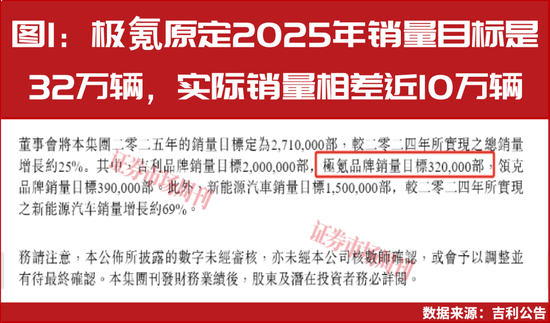
Group 1 - Zeekr's subsidiary, Weirui, has filed a lawsuit against Aisin Wanda for 2.314 billion yuan due to battery quality issues [1][2][13] - The lawsuit claims that the battery cells delivered from June 2021 to December 2023 had quality problems that caused financial losses [2][15] - Aisin Wanda is currently undergoing IPO guidance while also pursuing a Hong Kong IPO [1][13] Group 2 - The lawsuit is based on numerous complaints from owners of the Zeekr 001 model, reporting issues such as reduced charging speed and inaccurate battery capacity [3][16] - In response, Zeekr initiated a "Winter Care Activity" to offer free battery health checks for affected vehicle owners [4][17] Group 3 - Prior to the lawsuit, the partnership between Geely and Aisin Wanda was seen as a model of industry collaboration, with significant awards and recognition for their joint efforts [5][18] - Aisin Wanda's financial performance has raised regulatory concerns, with reported revenues of 11.12 billion yuan in 2023 and a net loss of 1.56 billion yuan [5][18] Group 4 - Analysts had previously viewed the collaboration with Geely as a positive factor for Aisin Wanda's future performance, with expectations of significant growth in their battery business [6][19] - Following the lawsuit, optimistic profit forecasts for Aisin Wanda may need to be reassessed, as the case has been accepted by the court but not yet formally heard [6][19] Group 5 - Zeekr aims for a 34% increase in sales for 2026, targeting 300,000 units, following a disappointing 2025 performance where actual sales were only 70% of the target [10][21] - The latest subsidy policies for 2026 are expected to positively impact Zeekr, particularly for mid-to-high-end electric vehicles [11][25]
遭吉利23亿天价索赔,电池龙头欣旺达错了吗?
阿尔法工场研究院· 2026-01-08 00:05
Core Viewpoint - The recent lawsuit between XWANDA and Geely highlights significant quality issues in battery production, which may jeopardize XWANDA's upcoming IPO and reflects broader industry challenges related to rapid expansion and quality control [6][11][20]. Group 1: Lawsuit and Financial Impact - XWANDA announced a major economic loss due to quality issues in battery cells, resulting in a compensation claim of 2.314 billion yuan from Geely's subsidiary, which accounts for 90% of XWANDA's net profit for 2023 and 2024 [6][11]. - Following the announcement, XWANDA's stock plummeted by 15.97% at the opening and closed down 11.39%, leading to a market value loss of 6.3 billion yuan in a single day [6][11]. - The lawsuit could potentially derail XWANDA's plans for a Hong Kong IPO, which was submitted in July 2025 [6][11]. Group 2: Quality Issues and Industry Context - The lawsuit reveals underlying quality problems in the battery industry, exacerbated by rapid production expansion and intense competition, which have led to compromised quality control [20][23]. - XWANDA's production capacity surged from 4 GWh in 2018 to a planned 140 GWh by 2025, with a significant increase in battery shipments, reflecting the industry's aggressive growth strategy [17][20]. - The electric vehicle market's explosive growth has resulted in numerous quality complaints from major automakers, indicating that XWANDA's issues are part of a larger trend affecting the industry [20][23]. Group 3: Customer Reactions and Brand Image - Following battery quality complaints, Geely's brand, Zeekr, faced significant backlash, leading to a costly battery replacement program estimated at 2 to 2.4 billion yuan for around 40,000 vehicles [8][12]. - XWANDA's reputation has suffered as consumers express concerns over battery quality, with some customers of Li Auto opting to cancel orders when informed their vehicles would be equipped with XWANDA batteries [12][14]. - The negative publicity surrounding battery quality issues has resulted in a broader loss of consumer trust in XWANDA and potentially other manufacturers in the industry [14][20]. Group 4: Industry-Wide Challenges - The rapid expansion of battery production capacity has led to a significant increase in output, from 83.4 GWh in 2020 to an estimated 826 GWh by 2024, raising concerns about quality management [20][21]. - The intense price competition in the battery market has prompted some manufacturers to cut corners, leading to safety risks and quality failures [21][22]. - Regulatory bodies are beginning to address these quality issues, with new safety standards being implemented to ensure battery safety and reliability [31][33].

欣旺达陷23亿元索赔风波 港股IPO进展或停滞 订单需求端压力显现 生产基地建设资金链承压
Xin Lang Zheng Quan· 2026-01-07 06:24
出品:新浪财经上市公司研究院 作者:喜乐 2025年12月26日,欣旺达公告称子公司欣旺达动力被吉利控股集团旗下的威睿电动汽车技术(宁波)有限公司起诉,索赔金额高达23.14亿元,案由为2021 年6月至2023年12月交付的电芯存在质量问题。目前,这一案件尚未开庭,后续判决结果存在不确定性。对于欣旺达来说,这次诉讼金额巨大,不仅会影响 公司与主机厂的合作,也会对后续的资本运作造成影响。 根据财报数据,欣旺达 2023 年和 2024 年的归母净利润总和约为 25.44 亿元,这次的索赔金额几乎相当于其过去两年的净利润总和。事发至今,欣旺达股价 跌超 10%,市值蒸发约 60 亿元。 前期高频募资 近三年资本运作遇阻 作为2011年登陆深交所的上市公司,欣旺达此前一直保持较为高频的融资节奏:2018年定增募资近26亿元,2020年发行11亿元可转债,2021年再获39亿元定 增(瑞银、巴克莱、易方达等中外知名机构均参与),2022年更通过GDR在瑞士上市,募资约合4.4亿美元。根据欣旺达2025年7月公告,2020年可转债、 2021年定增分别仅结余1.3亿元、3.2亿元,2022年GDR募资则已全部耗尽。 ...
欣旺达跌2.01%,成交额6.93亿元,主力资金净流出1.18亿元
Xin Lang Cai Jing· 2026-01-07 02:44
Core Viewpoint - The stock price of Xinwanda has experienced a decline, with a current trading price of 25.90 CNY per share and a market capitalization of 47.849 billion CNY, reflecting a downward trend in recent trading days [1] Financial Performance - For the period from January to September 2025, Xinwanda achieved a revenue of 43.534 billion CNY, representing a year-on-year growth of 13.73% [2] - The net profit attributable to shareholders for the same period was 1.405 billion CNY, showing a year-on-year increase of 15.94% [2] Shareholder Information - As of September 30, 2025, the number of shareholders for Xinwanda increased to 135,300, up by 18.08% from the previous period [2] - The average number of circulating shares per shareholder decreased by 15.23% to 12,669 shares [2] Dividend Distribution - Xinwanda has cumulatively distributed dividends of 1.772 billion CNY since its A-share listing, with 755.6 million CNY distributed over the past three years [3] Institutional Holdings - As of September 30, 2025, Hong Kong Central Clearing Limited is the second-largest circulating shareholder, holding 69.2789 million shares, a decrease of 21.4163 million shares from the previous period [3] - The top ten circulating shareholders include new entrants such as the Guangfa National Standard New Energy Vehicle Battery ETF, holding 14.9013 million shares [3]